 by
by 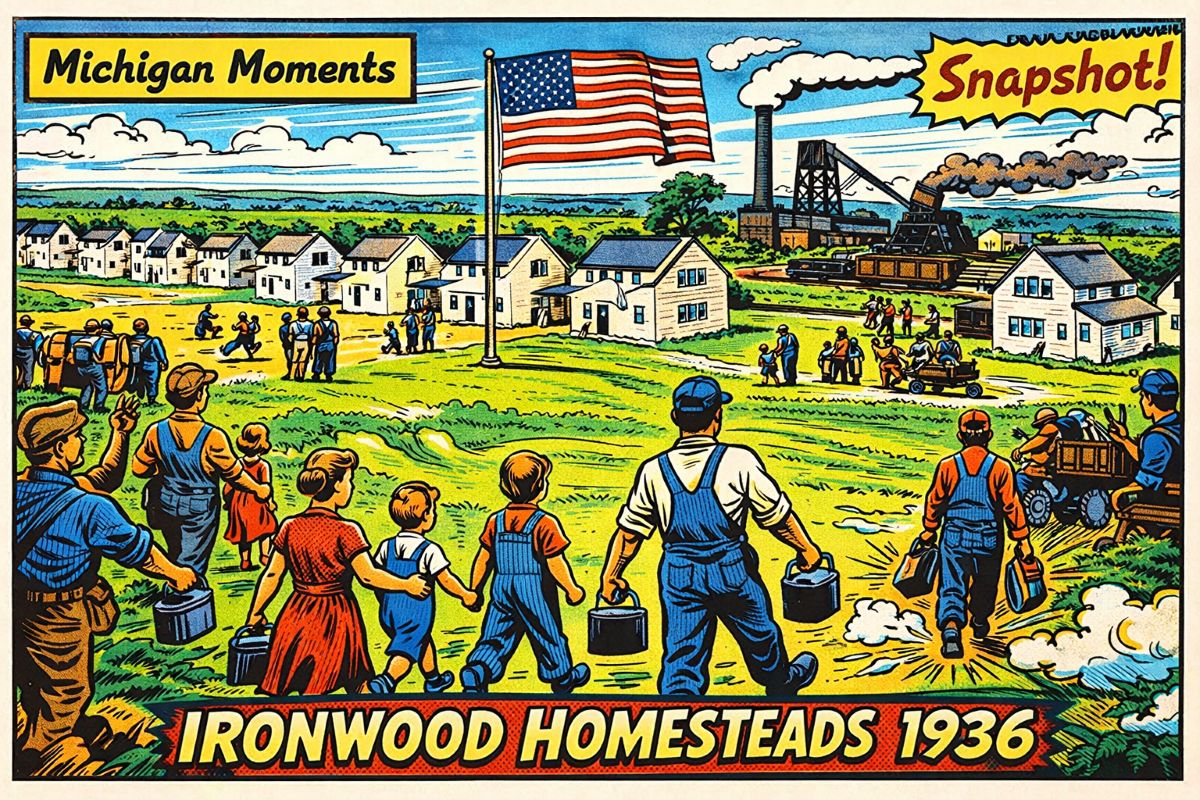
Michigan Moment Snapshot
Ironwood Homesteads: Michigan’s New Deal Town of 1936
A planned community north of Ironwood gave mining families modern homes, gardens and shared facilities during the hardest years of the Great Depression.
Watch “Ironwood Homesteads: Michigan’s New Deal Town, 1936,” a Michigan Moment Snapshot from Thumbwind Publications.
What Were the Ironwood Homesteads?
Ironwood Homesteads was a federally planned garden community built about three miles north of Ironwood during the Great Depression. The U.S. Resettlement Administration began the project to improve housing for low-income mining families and create construction work.
The plan called for 132 homes on a 1,758-acre tract. Each household received space for a garden, while residents shared agricultural, commercial and recreational facilities.
The project did not end unstable employment in the Gogebic Range. Instead, it tried to give families better housing and a way to supplement part-time industrial wages with garden produce and shared farm resources.
How the New Deal Community Worked
132 Modern Homes
The project included one-, two- and four-family dwellings built with concrete block and brick. The homes had gable roofs and enclosed entrances suited to heavy Upper Peninsula snow and cold.
Federal records said the houses ranged from three to six rooms and included plumbing, sanitary facilities and electricity.
Food Grown Close to Home
Each family received a garden averaging about one-half acre. Residents could raise vegetables and other crops to reduce household food costs.
The garden program was intended to supplement income from part-time work in nearby mines and industries.
A Community Farm
Families had access to a shared dairy, hog and poultry operation. The community farm included barns, livestock shelters and poultry houses.
This cooperative system allowed households to benefit from agricultural facilities that would have been costly to maintain alone.
Stores, Recreation and Services
Plans included a general store, drugstore, barber shop and shoe-repair shop. A community building contained an auditorium, firehouse and cannery.
About 25 acres were set aside for playgrounds and an athletic field. Roads, telephone service and a central sewage system were also included.
Housing Tied to Employment
Many residents continued working part time in the mines, mills and related industries around Ironwood. The homesteads were not designed as isolated farming settlements.
The homes and gardens were intended to provide greater household stability when industrial work became irregular.
A Limited but Notable Experiment
Ironwood Homesteads did not eliminate unemployment or restore the Gogebic Range economy. The federal program addressed one part of the crisis: poor housing among families dependent on unstable industrial work.
Its streets and surviving homes remain evidence of an era when federal planners tried to connect housing, food production and community services.
“The federal program turned housing policy into homes, gardens, roads and shared facilities for working families.”
Why Ironwood Homesteads Was Built
The Great Depression hit mining communities hard. Ore demand fell, operations slowed and many workers faced reduced hours or unemployment. Families living in poor company housing had few resources to fall back on when paychecks stopped.
The Resettlement Administration sought to address that problem through planned communities. At Ironwood, the agency combined modern housing with gardens and shared agricultural land.
The program expected residents to remain connected to nearby industrial jobs. Household gardens and cooperative farming were meant to provide food and reduce expenses during periods of part-time employment.
Construction Began During the Mid-1930s
Library of Congress photographs show foundations and project buildings under construction in August 1936. Other images taken in 1937 show several house types as crews continued work.
The buildings were designed for the local climate. Enclosed entrances reduced exposure to winter weather, while concrete-block and brick construction offered a major improvement over poorly built mining housing.
Families began occupying the community on Dec. 1, 1937. Federal records described many residents as former relief recipients who remained employed part time in area industries.
More Than a Collection of Houses
Ironwood Homesteads included more than private residences. The plan covered roads, utilities, retail services, recreation and shared agricultural operations.
The trade center was designed to provide basic goods and services without requiring every trip to go into Ironwood. The community building supplied space for public gatherings, food canning and fire protection.
The project also included playgrounds and an athletic field. These features reflected a broader federal effort to design a functioning community rather than construct houses alone.
Key Facts About Ironwood Homesteads
- The project stood about three miles north of Ironwood in Gogebic County.
- The U.S. Resettlement Administration started the planned community during the Great Depression.
- Federal plans called for 132 homes on 1,758 acres.
- The homes ranged from three to six rooms.
- Houses included plumbing, sanitary facilities and electricity.
- Each household had a garden averaging about one-half acre.
- Residents shared dairy, hog and poultry facilities.
- The trade center included stores and personal-service businesses.
- The community center included an auditorium, cannery and firehouse.
- Families began occupying the community on Dec. 1, 1937.
Edited Video Transcript
Open the complete Ironwood Homesteads transcript
A Michigan Moment Snapshot.
In the mid-1930s, just north of Ironwood, Michigan, the federal government tried something new.
During the Great Depression, an open field became a planned community called Ironwood Homesteads.
Built by the U.S. Resettlement Administration, the goal was to replace poor mining housing with solid homes, gardens and paid construction work.
More than 100 houses rose here in a planned community, each with land for growing food and construction suited to Upper Peninsula winters.
Participating families worked for wages, used shared community land and remained connected to Ironwood’s mines and mills.
The project did not solve unemployment, but it showed how housing, community facilities and careful planning could support working families.
It was federal intervention on a human scale, tested in the western Upper Peninsula during one of America’s most uncertain decades.
Historical Sources
Watch More Michigan Moments
See more short videos about Michigan communities, industries, historic buildings and Great Lakes history.
View All Michigan MomentsVideo presented as part of the Michigan Moments history series from Thumbwind Publications LLC.
Related Posts