 by
by 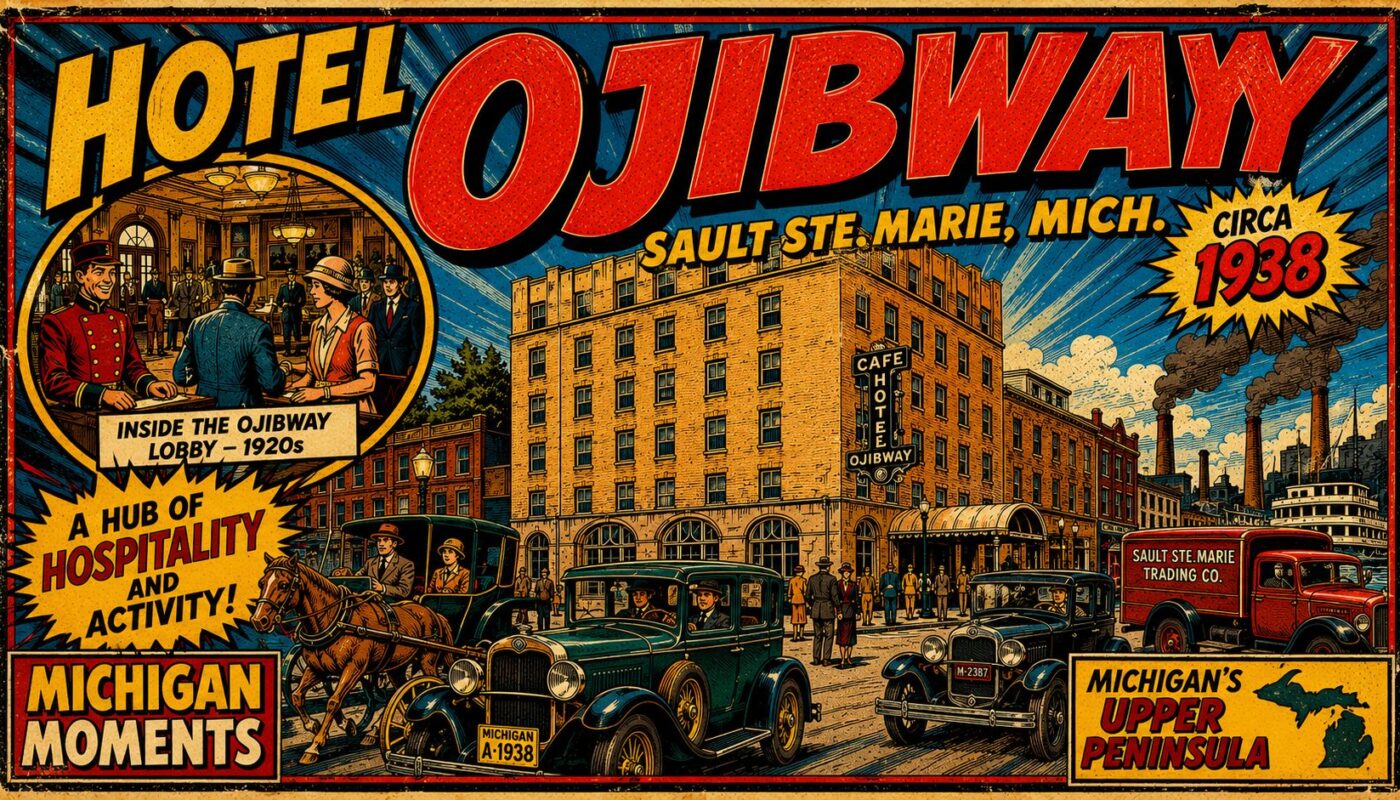
Step back to downtown and visit Hotel Ojibway Sault Ste. Marie in the late 1930s, when the Hotel Ojibway stood as one of northern Michigan’s premier destinations. Opened on New Year’s Eve in 1927, the hotel quickly became a landmark for tourists, business travelers, and visitors arriving to see the famous Soo Locks.
Watch: The Hotel Ojibway: Luxury, Legends, and Life Along the Soo Locks
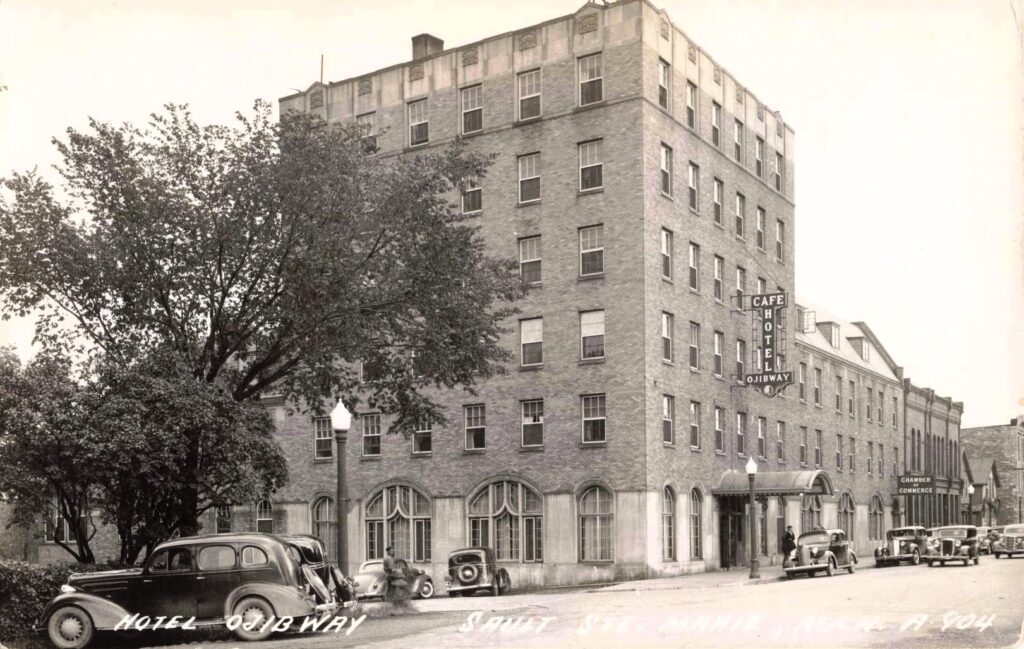
This Michigan Moments video features a historic postcard view of the Hotel Ojibway around 1938. The scene captures a busy street lined with automobiles, the hotel’s distinctive vertical sign, and a thriving downtown during the years just before World War II. For many travelers, the Ojibway represented modern comfort in Michigan’s Upper Peninsula, offering elegant accommodations, dining, and easy access to one of North America’s busiest shipping corridors.
Origins of the Hotel
The project was driven by Chase S. Osborn, a former Michigan governor and prominent Upper Peninsula figure.
- Osborn donated the land and $50,000 toward construction.
- The final cost reached about $250,000, a substantial investment for the time.
- His vision was to build an elegant hotel that could match the importance of the Soo Locks shipping gateway.
When the hotel opened on New Years Eve in 1927, it quickly became the most upscale lodging in the city.
What the Hotel Was Like in the Early Years
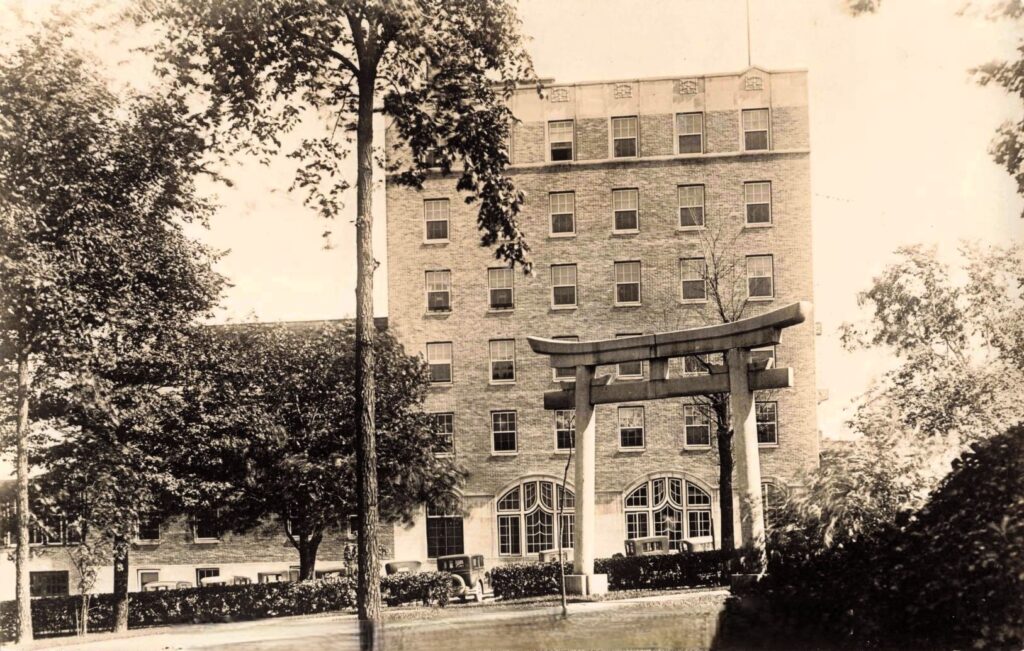
The Ojibway was built as a six-story brick hotel overlooking the St. Marys River, offering guests a direct view of ships passing through the locks.
Early features included:
- About 90 guest rooms at opening
- A formal dining room
- Barbershop and beauty parlor
- Coat-check room and lounges
- Modern plumbing in many rooms, including bathtubs and showers
These amenities were considered modern luxury in the late 1920s.
Architecturally, the hotel used Egyptian-influenced design elements, a popular decorative style of the period.
A Social Center for the Soo
During the 1930s and 1940s, the Ojibway became a social hub for Sault Ste. Marie.
It hosted:
- Banquets and civic meetings
- Visiting shipping executives
- Tourists traveling through the Upper Peninsula
- Summer visitors escaping urban heat
The hotel’s location next to the Soo Locks made it ideal for travelers who wanted to watch Great Lakes freighters pass through the canal day and night.
An Unusual Tourist Trend: Hay Fever Refuge
One surprising chapter in the hotel’s history involved allergy sufferers.
In the late summer, people traveled to the Soo because winds off Lake Superior carried clean, low-pollen air. Guests gathered at the Ojibway and formed a social club jokingly called the “CaChoo Club of America.”
For several decades, the hotel functioned as an informal health retreat for hay-fever sufferers.
Famous Guests at Hotel Ojibway Sault Ste. Marie
Over time, the hotel hosted notable visitors, including:
- Jack Dempsey
- Joe Louis
- Hockey great Gordie Howe
- U.S. President George H. W. Bush
Its reputation spread across the Great Lakes shipping and tourism network.
Hotel Ojibway Sault Ste. Marie’s Legend of Room 616
Like many grand hotels built during the early 20th century, the Hotel Ojibway has accumulated its share of ghost stories. The best-known centers on Beatrice Deglman, who managed the hotel for decades after she and her husband, Leon, purchased it in 1947. Following Leon’s death, Beatrice continued overseeing daily operations until her own passing, becoming closely associated with the property.
According to local tradition, Beatrice never truly left. Her former suite is said to be today’s Room 616, where guests and hotel employees have reported hearing unexplained footsteps, noticing unusual sounds, or glimpsing the figure of a woman. The room has become a regular stop on local ghost walks and paranormal tours, and some visitors specifically request it, hoping for an encounter.
While these stories are an enduring part of the hotel’s reputation, they remain folklore rather than documented history. No contemporary newspaper accounts or primary historical records have been found that verify claims of hauntings connected to Beatrice. Whether viewed as a ghost story or simply another chapter in the Ojibway’s colorful past, Room 616 continues to add an air of mystery to one of Michigan’s most recognizable historic hotels.
Hotel Ojibway Sault Ste Marie Today
Today, the Hotel Ojibway trademark collection by Wyndham remains one of Sault Ste. Marie’s best-known historic buildings, connecting visitors with nearly a century of Upper Peninsula history. The Ojibway underwent extensive interior renovations in the 1980s, preserving the historic lobby while modernizing the banquet halls and adding the Freighters Restaurant. It was officially placed on the National Register of Historic Places in June 2009.
Watch the short video above for a remarkable snapshot of Michigan’s past, and imagine what it was like to arrive in the Soo during the golden age of automobile travel.