 by
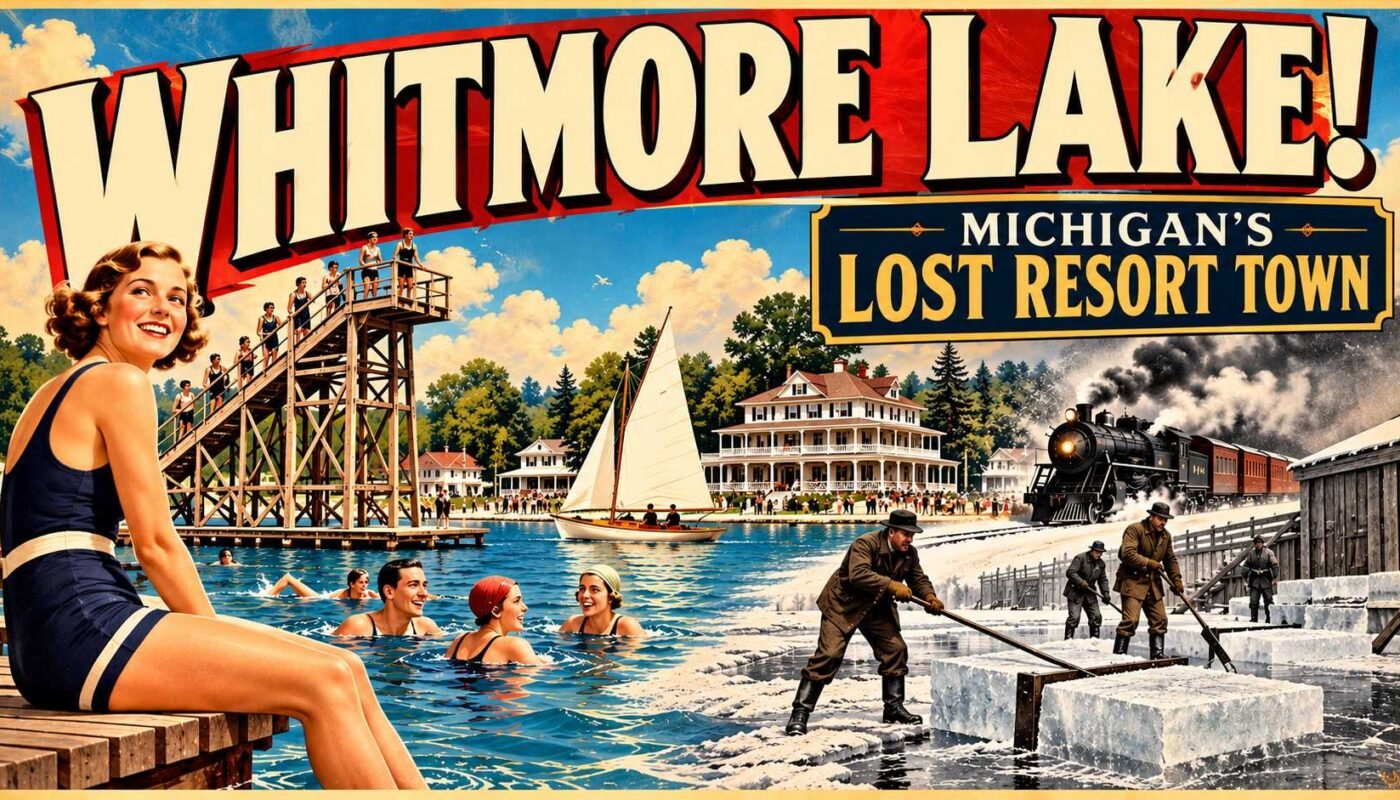
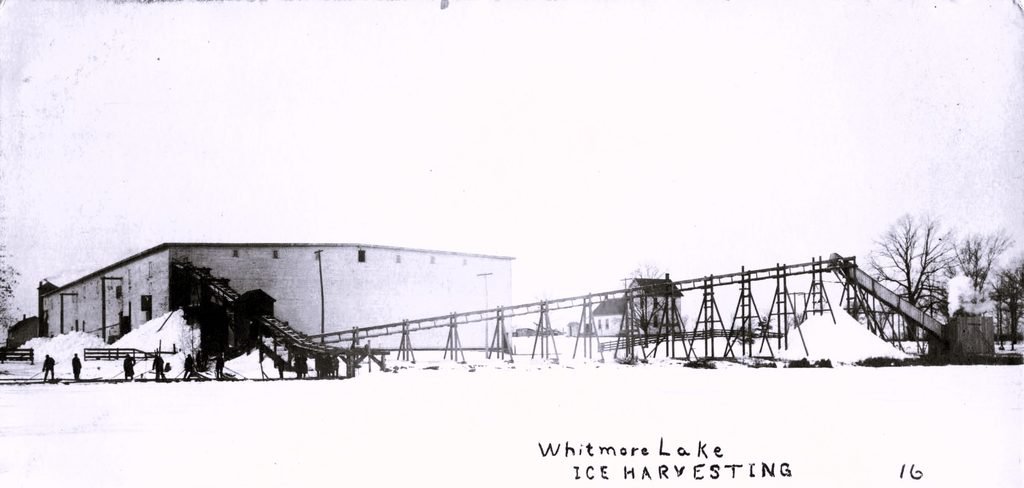
In 1903, businessmen Frank Lemen and Henry Dodge built an enormous icehouse beside Whitmore Lake, Michigan. During winter, workers cut blocks of ice from the frozen surface and stored them for shipment by railroad. When summer came, that same water attracted crowds of visitors who came to swim, sail, fish and dance.
The history of Whitmore Lake, Michigan, includes railroads, resort hotels, popular waterfront attractions, and a winter industry that made the frozen lake valuable. People worked here in January and entertained guests in July.
Table of Contents
Watch: The History of Whitmore Lake, Michigan: The Lost Resort Town That Worked Year-Round
History of Whitmore Lake Michigan: From Settlement to Resort
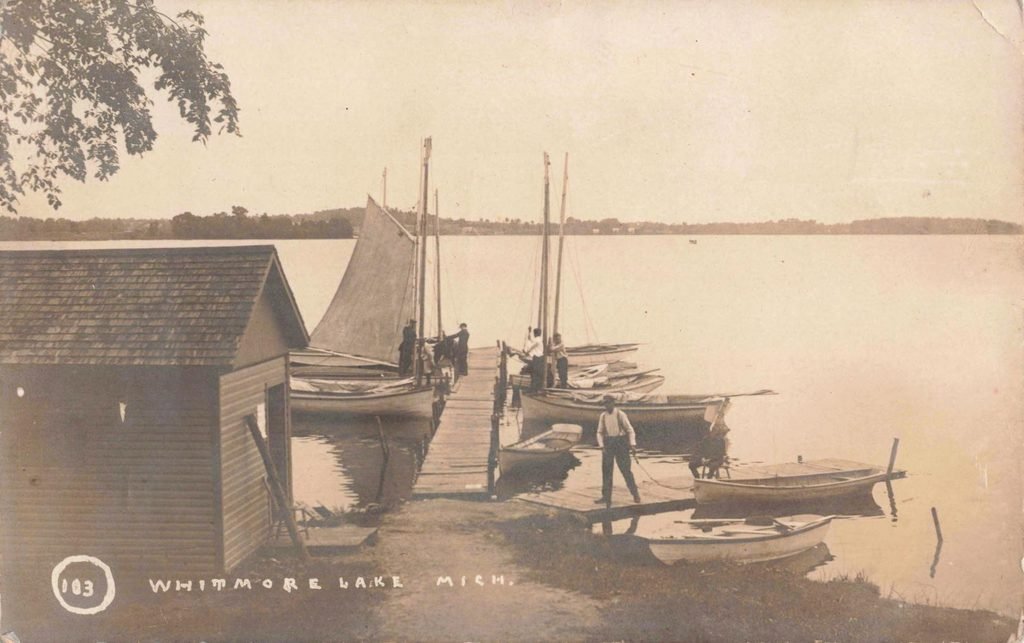
Before European American settlers arrived, Native peoples, including the Potawatomi, lived in the area. The lake and surrounding wetlands supported fishing, hunting, and travel through southeastern Michigan.
European American settlement increased in the 1820s. Local histories link the lake’s name to Luke Whitmore, an early landowner, and identify Jonathan Stratton as one of the area’s first surveyors. A post office opened in 1834 as Northfield; it became Whitmore Lake in 1854.
Farming provided much of the early economy. John Rane opened a general store on Main Street in 1851, and other merchants served families living along the lake and on nearby farms. The waterfront, however, created a different opportunity: travelers were willing to pay for a room and a few days of recreation.
The Lakeside Hotels That Drew Vacationers
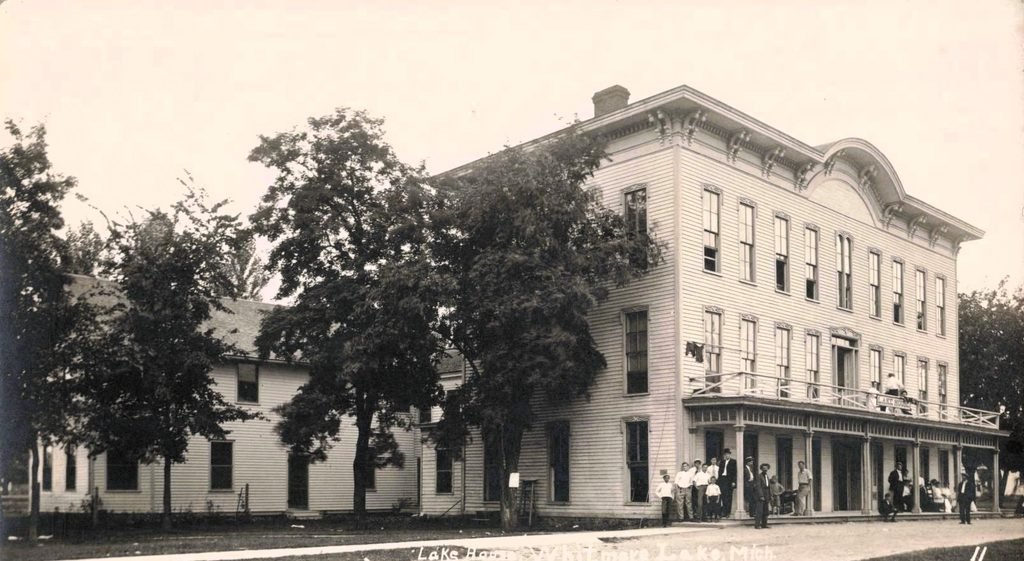
The community’s early resort business included an establishment dating to 1842 that later became the Clifton House, and West’s Lake House, which opened in 1852. The latter was a three-story building near Barker Road and Main Street. Both places played an important role in the summer trade.
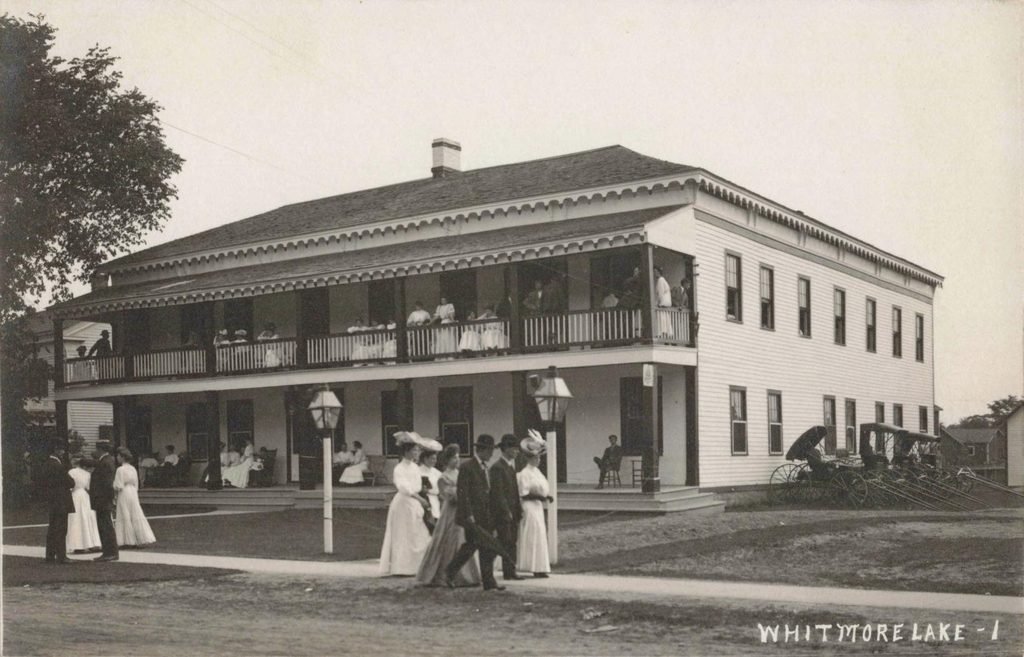
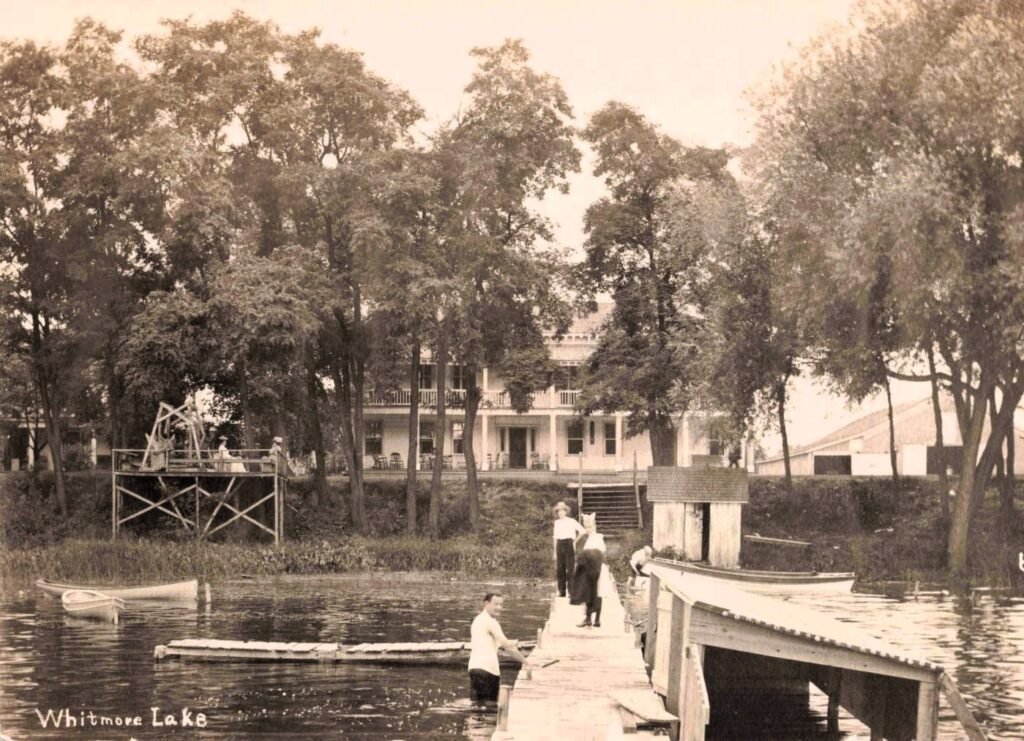
Visitors came to swim, boat, and fish. The hotels supplied meals, rooms, and places to gather. The Clifton House later operated under other names, including the Lake View Hotel. The resort era also left behind postcards of the Lake View House, its long porch and waterfront setting.
For local merchants, visitors meant more customers. Hotel kitchens needed food and supplies, travelers rented boats, and families staying in cottages bought goods along Main Street. A vacationer’s ordinary weekend helped sustain jobs well away from the shoreline.
How Railroads Changed Whitmore Lake
Railroad service reached the community during the 1880s. By 1886, the Toledo, Ann Arbor and Northern Michigan route connected Whitmore Lake with larger communities, and additional regional connections helped visitors arrive from farther away.
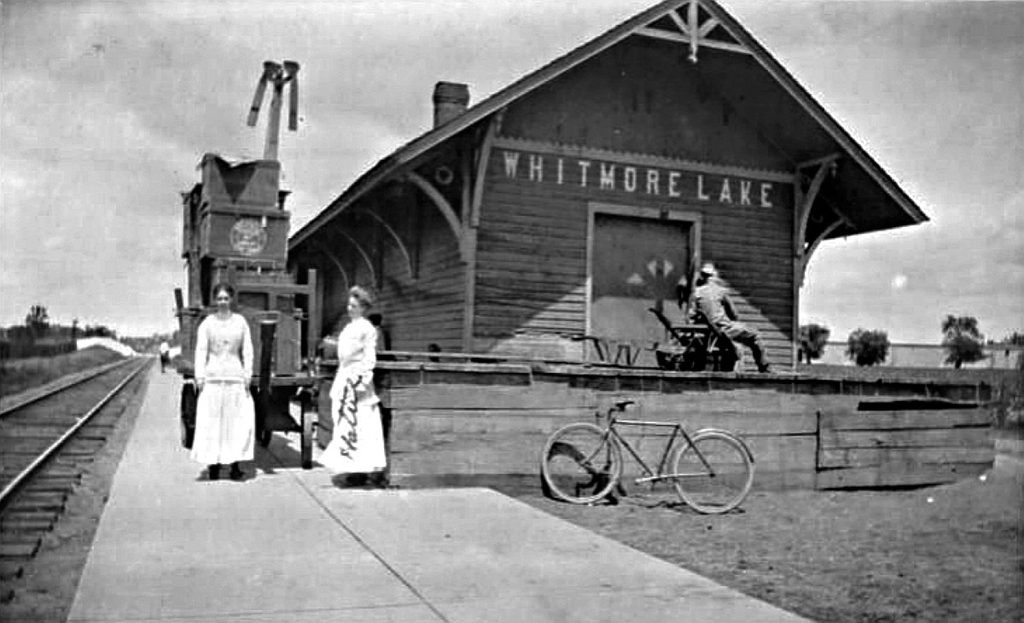
A train was a practical alternative to a long trip on rough roads. It allowed travelers to leave a city and spend time at the lake without owning a horse or, later, an automobile. Freight service also benefited farms and local businesses.
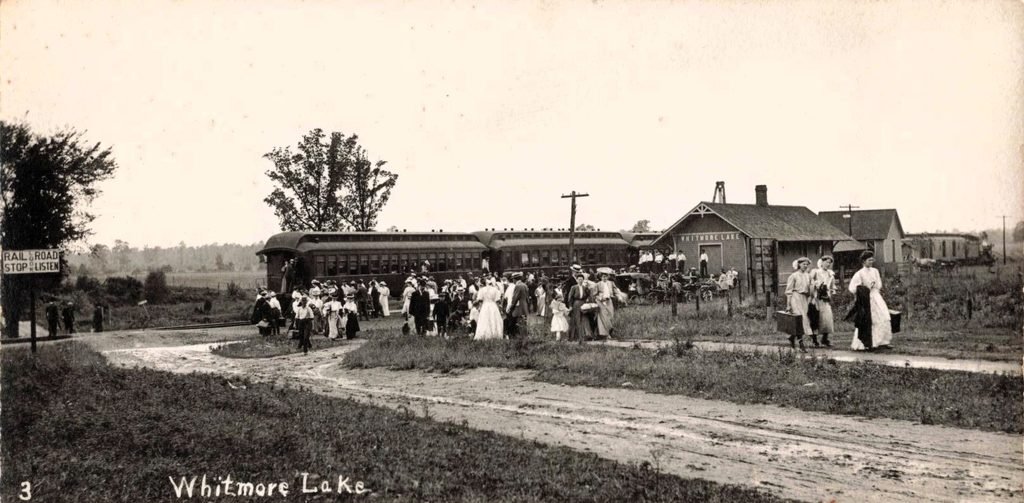
That access increased Whitmore Lake’s appeal as a summer resort. Hotels, cottages, stores and boat operators could serve a wider market. Passenger arrivals also made the railroad depot one of the community’s important public places.
Swimming Towers, Sailboats and a Summer Vacation Economy
By the turn of the 20th century, the waterfront had grown into a center for organized recreation. Wooden docks extended into the water. Sailboats moved past lakeside hotels, while fishermen used small boats to reach their favorite spots.
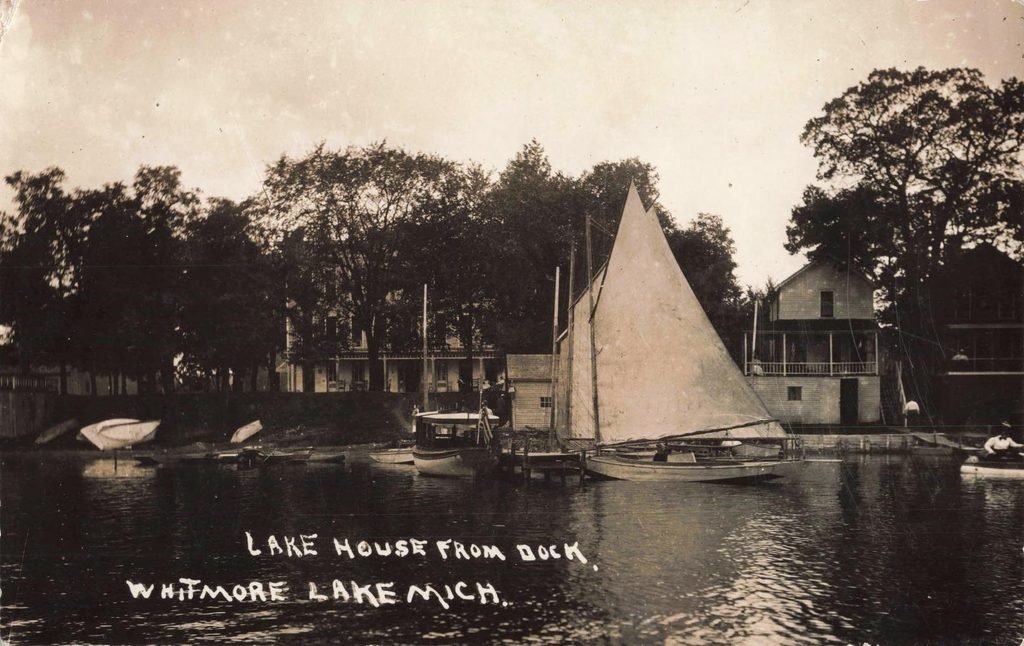
Some operators went further and installed large wooden swimming structures. These were major attractions, with elevated platforms and slides that led directly into the lake. Crowds gathered to watch swimmers climb and plunge in.
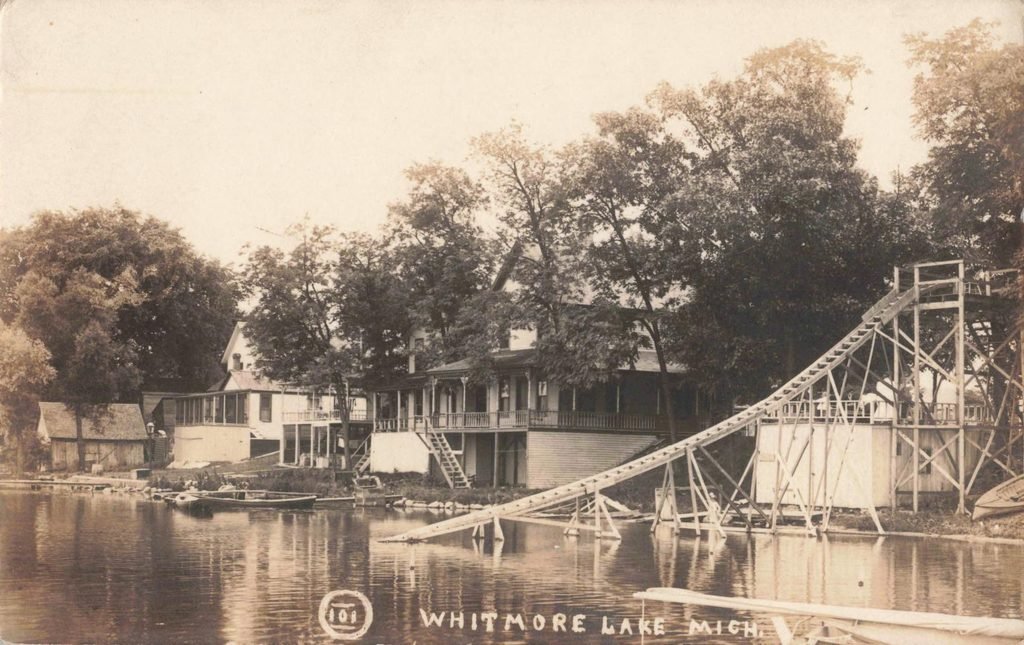
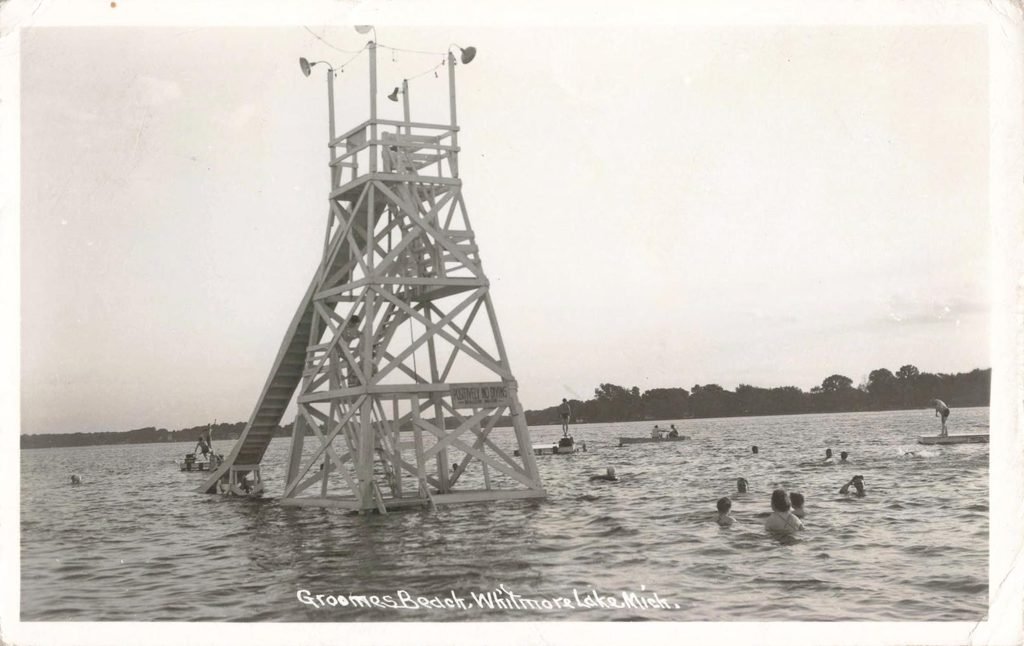
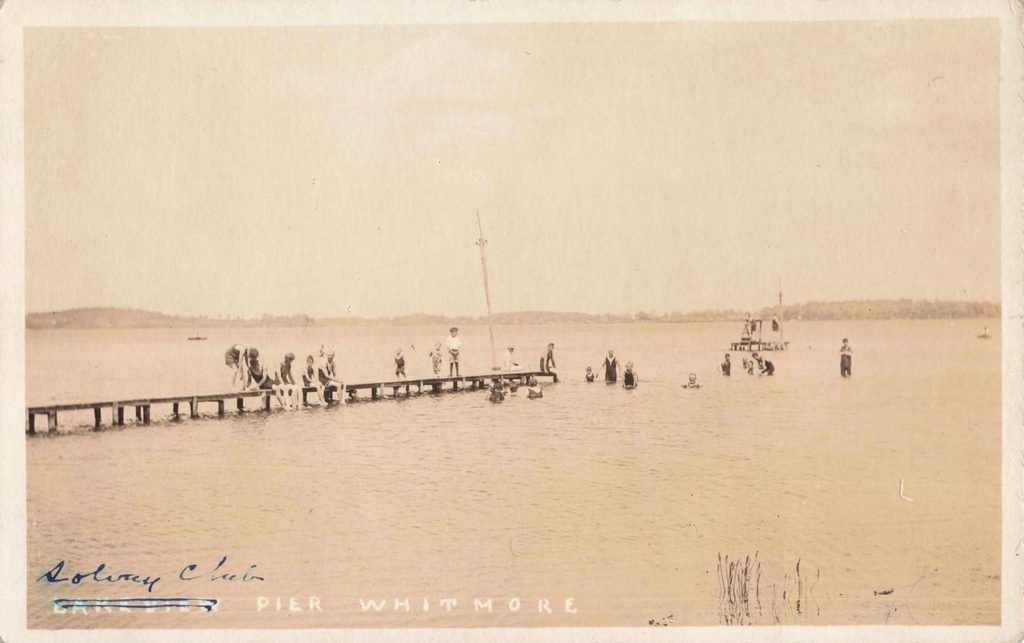
A postcard mailed in August 1906 described arriving at Whitmore Lake, preparing for a dance and enjoying the food. Another card, from 1921, praised the meals at the Solway Athletic Club. The letters record small pleasures, but those pleasures supported a serious business: the summer vacation trade.
The University of Michigan Football Connection
Whitmore Lake also served as a training site for University of Michigan football teams during the early 1900s. Coach Fielding H. Yost brought his players to the area to prepare for the season. Bentley Historical Library preserves images of Yost and his teams training there in 1903, 1904, 1908, and 1910.
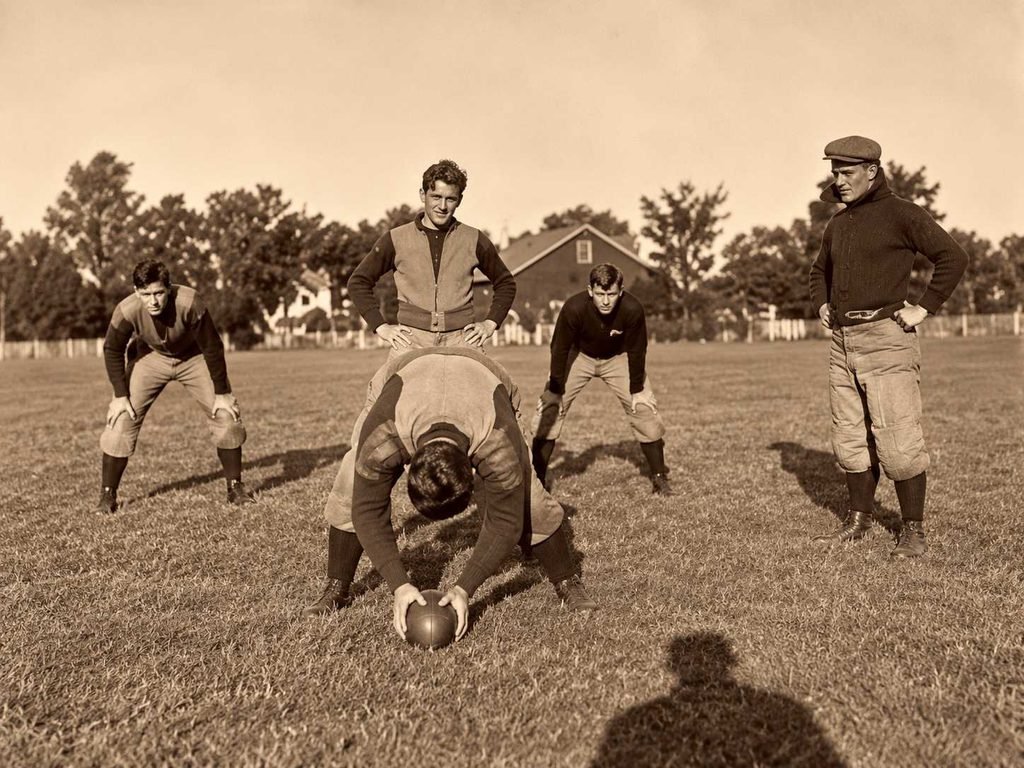
Whitmore Lake was near enough to Ann Arbor to make the trip convenient, but far enough away to provide an alternative to everyday campus routines. Its football connection brought another kind of visitor to a community already known for recreation.
A Dance Pavilion and an Unexpected Transportation Problem
In 1923, Roe Stevens built a dance pavilion across from the Lake House. It drew local residents and visitors, including University of Michigan students. The building was part of a broader entertainment economy built around dancing, food, and lakeside outings.
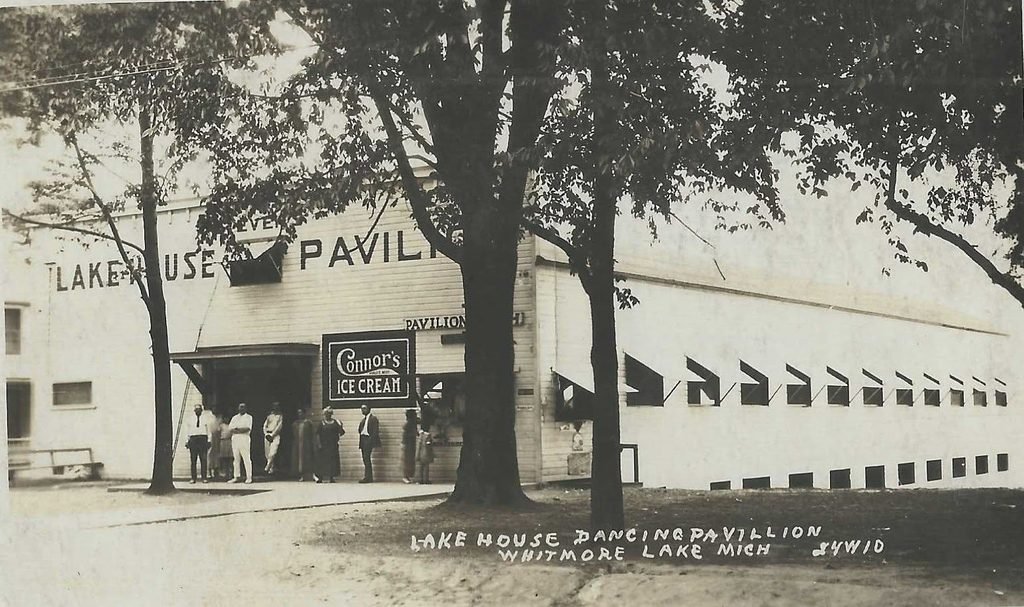
In 1927, university restrictions on student automobile use threatened that business. Stevens helped arrange bus transportation from Ann Arbor so students could continue visiting the lake. The restriction created a problem, and the resort owner found a practical workaround.
The pavilion closed as a dance venue in the 1930s. In later years, the building hosted other activities, including roller skating and sporting events. Changing recreation habits meant changing the business along with them.
The Frozen Lake Was a Workplace
The history of Whitmore Lake, Michigan, also includes a commercial activity that would have surprised summer vacationers: ice harvesting. Before electric refrigeration became common, people used blocks of natural ice to keep food and other goods cold.
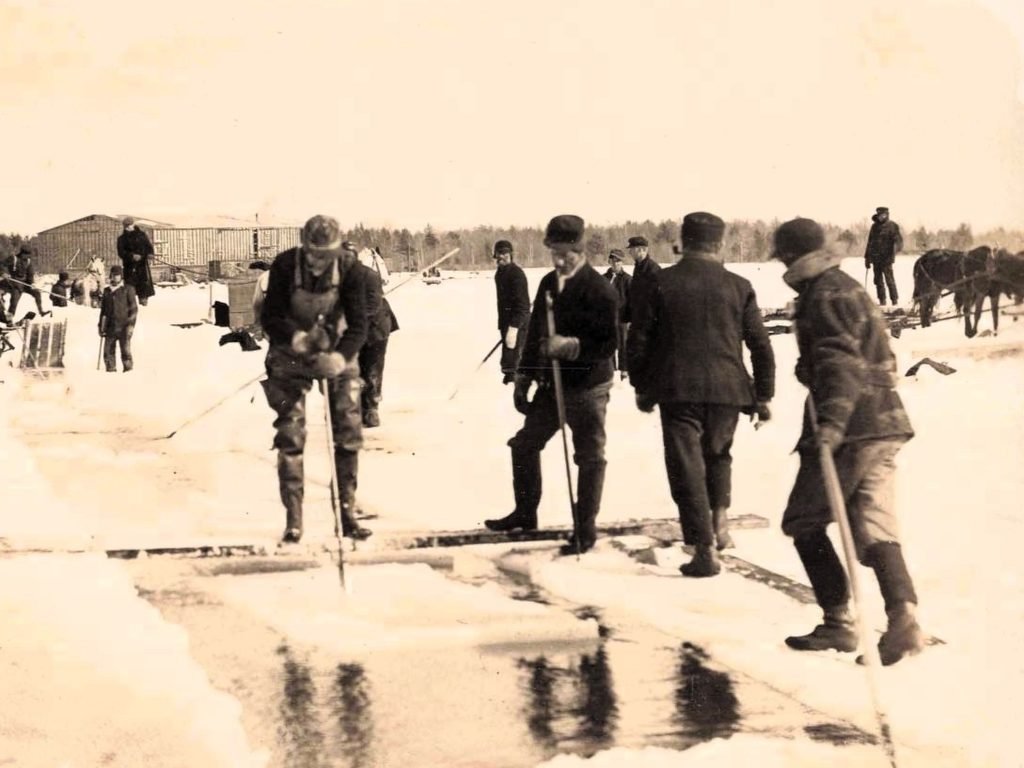
Frank Lemen and Henry Dodge built a substantial icehouse in 1903, measuring about 200 by 300 feet. The Ann Arbor Railroad also maintained ice-storage facilities in the area. Crews needed thick ice, lifting equipment, storage space, and dependable transportation to move the winter harvest to customers.
The contrast was striking. In warm weather, swimmers climbed the towers, and vacationers sailed across the lake. In winter, workers cut the frozen surface into blocks. Both activities depended on the same body of water, but they supplied different customers in different seasons.
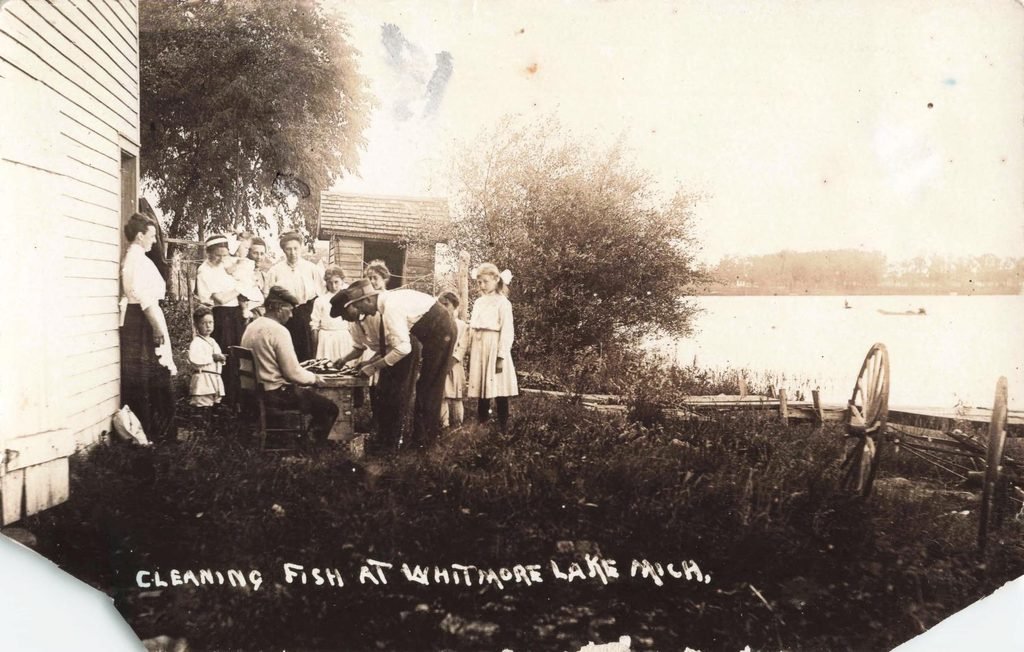
Fishing, Shops and Everyday Life Beyond the Resorts
Whitmore Lake was a permanent home for farmers, teachers, shopkeepers, and families as well as a destination for vacationers. Children attended local schools, and Main Street businesses supported the surrounding farms.
A new brick school replaced an earlier wooden building in 1906. The new structure began with three rooms. The community also supported stores and other businesses that remained important when the summer crowds went home.
By 1940, local historical accounts reported hundreds of cottages, along with resorts and boat liveries. The community had a substantial seasonal population, but its year-round institutions continued growing.
The Fires That Ended the Old Hotel Era
Several fires damaged important public and commercial buildings. In 1911, a fire destroyed the Ann Arbor Railroad depot; a boxcar temporarily replaced it. In 1935, fire destroyed the former Clifton House property, which had operated under several names over the years.
The Stevens Lake House burned in 1942, removing another building that had welcomed visitors for generations. In 1943, a fire that began in the furnace room destroyed the five-room local school. No injuries were reported.
These losses coincided with changing travel habits. More Americans could reach destinations by automobile. Traditional railway vacations and large lakeside hotels faced increasing competition from private cottages and new ways of spending summer weekends.
War Workers and the Shift to Year-Round Living
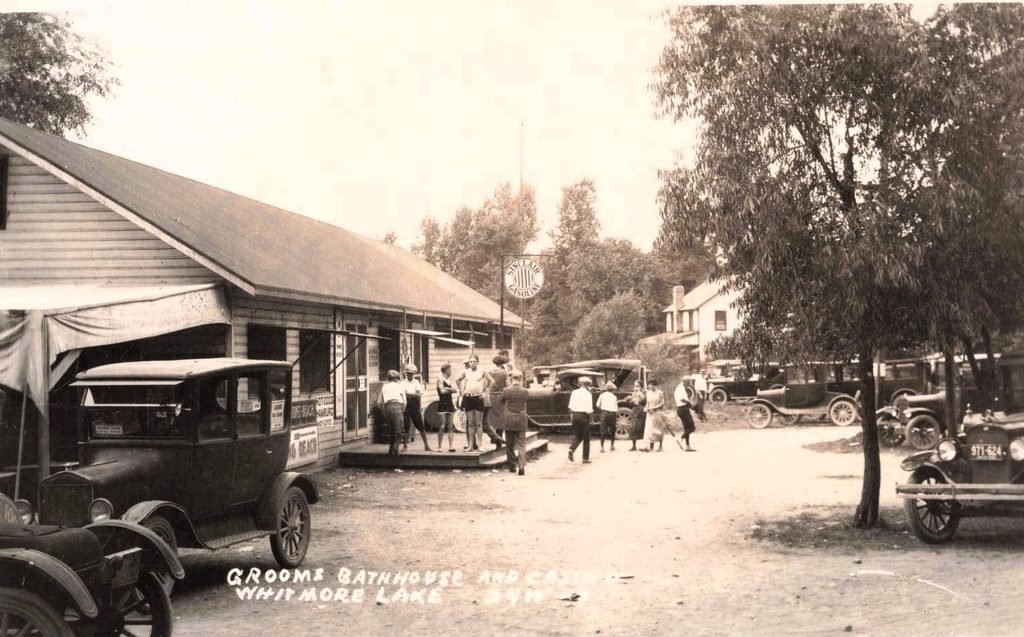
World War II changed employment patterns across southeastern Michigan. Ford Motor Co.’s Willow Run bomber plant opened near Ypsilanti in 1942, creating demand for industrial workers. Some lived in Whitmore Lake and Northfield Township and used regional transportation to reach their jobs.
Whitmore Lake was increasingly connected to the region’s working economy, not just its vacation trade. After the war, private homes and automobile travel encouraged more year-round residential development. Whitmore Lake Public Schools was established in 1944, and the high school began graduating students in the early 1950s.
From Railroad Resort to a Lakeside Hometown
The history of Whitmore Lake, Michigan, still shows in the streets and along the shoreline, though the great hotels, industrial icehouses, and wooden swimming towers have disappeared. Boating, fishing and swimming remain associated with the lake.
The annual Fourth of July fireworks celebration began in 1959. Today, Whitmore Lake is an unincorporated community extending into Northfield Township in Washtenaw County and Green Oak Township in Livingston County. The railroad visitors are gone, but the water still shapes local recreation and identity.
The history of Whitmore Lake, Michigan, shows how one lake could support freight shipments in winter, resort guests in summer, and, eventually, a community built for permanent residents.
Whitmore Lake Historical Timeline
Michigan Moments · Interactive History
Whitmore Lake: The Years That Changed Everything
One lake. Two busy seasons. A town transformed by resort hotels, train whistles, ice crews and devastating fires. Follow the turning points from 1825 to 1959.
Select an era to focus the timeline, or open any historical moment for more detail. Archival thumbnails show the people, buildings and activities associated with these periods; they are not all images taken in the event year.
The lake receives its name
European American settlement grows in the area, and the lake is named for early landowner Luke Whitmore.
Read the full moment
Potawatomi people lived in the region long before this settlement period. The surrounding lake and wetlands had supported local communities for generations.
A post office anchors the settlement
A post office opens under the name Northfield, establishing a regular connection with other communities.
Read the full moment
The post office was one of the institutions that made the small agricultural settlement a recognizable community.
A lakeside hotel begins welcoming travelers
An early hotel opens, laying the groundwork for the Clifton House and the resort trade that follows.

Read the full moment
The establishment later operated as the Clifton House and under other names. The image is a later view of Whitmore Lake resort lodging, not a view dated to 1842.
West’s Lake House opens
William West opens the Lake House, a major hotel near Barker Road and Main Street.

Read the full moment
The hotel later became a destination for dinners, music, dancing and boat excursions. The image is a later lakeside scene identified with the Lake House.
Northfield becomes Whitmore Lake
The post office adopts the Whitmore Lake name, linking the growing village more closely to the water.
Read the full moment
The lake was already central to the community’s identity. In later decades, the same name would appear on resort postcards, railroad schedules and business signs.
Rail service opens the resort era
The Toledo, Ann Arbor and Northern Michigan route reaches Whitmore Lake, bringing easier travel for summer visitors.

Read the full moment
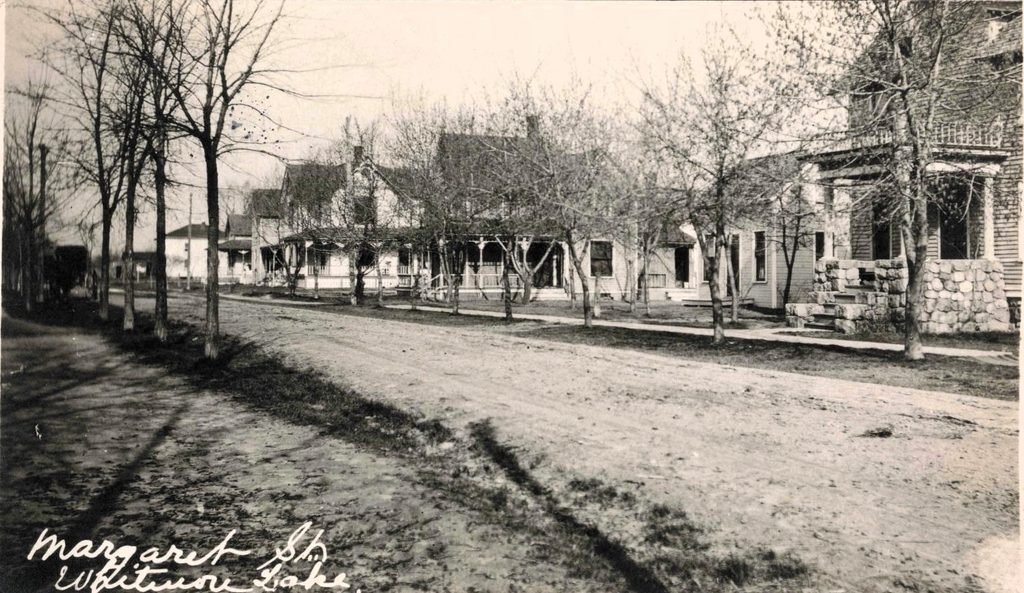
Rail access supported hotels, boat rentals and local shops while also helping farmers ship goods. The scene shown is a later village roadway, not a railroad image.
Ice harvesting becomes big business
Frank Lemen and Henry Dodge build an icehouse measuring roughly 200 by 300 feet near the northwest shore.

Read the full moment
Workers cut and stored natural ice while railroad connections made shipment possible. The same lake served a summer recreation market and a winter ice market.
Michigan football trains at the lake
University of Michigan coach Fielding H. Yost brings football players to Whitmore Lake for preseason training.

Read the full moment
The Bentley Historical Library holds documented training images from the first decade of the 1900s. The supplied football scene illustrates the era; individual identities are not assigned here.
A brick school replaces an older building
A new schoolhouse opens while the village serves both permanent families and a rising summer population.
Read the full moment
The brick school originally had three classrooms. That building remained an important part of community life until the 1943 fire.
The railroad depot burns
Fire destroys the Ann Arbor Railroad depot, leaving the community temporarily served by a railroad boxcar.
Read the full moment
The makeshift station kept rail service available at a time when passenger trains remained important to Whitmore Lake businesses.
The resort piers fill with guests
Visitors use shoreline piers and clubs; a surviving postcard from the Solway Athletic Club praises the food and the stay.

Read the full moment
Pier scenes show how structured the waterfront had become. Fishing, boating and swimming all contributed to the local economy.
A new pavilion brings music and dancing
Roe Stevens opens the Lake House Pavilion, drawing crowds and university students from Ann Arbor.

Read the full moment
When university student driving restrictions took effect in 1927, Stevens helped arrange bus travel so students could still visit. The accompanying scene documents resort-era swimming, not the pavilion itself.
Fire ends the Clifton House era
The former Clifton House property, later operated as the Lake View Hotel and Whitmore Country Club, is destroyed by fire.

Read the full moment
The fire removed an important part of the old resort business. Surviving postcards capture the type of waterfront leisure the hotels had supported.
The Lake House is lost to fire
The Stevens Lake House burns after nearly 90 years as a local lodging and entertainment landmark.

Read the full moment
That same year, the Willow Run bomber plant brought new wartime employment to the region. Some local residents traveled to jobs near Ypsilanti.
Smoke rises from the Whitmore Lake school
A fire starting in the furnace room destroys the school building and nearly all its contents.

Read the full moment
Contemporary reporting estimated damages at $25,000 and described the roof giving way as smoke rose above the building. No injuries were reported.
The public school district takes shape
Whitmore Lake Public Schools is established as the community becomes more strongly rooted in year-round family life.
Read the full moment
Postwar decades brought more permanent residents and fewer trips by passenger rail. Schools and local services became even more important to the town.
A Fourth of July tradition begins
An annual community fireworks celebration starts, giving the lake another role as a local gathering place.

Read the full moment
The resort hotels and ice operations had largely faded, but boating, swimming and waterfront celebrations continued to bring neighbors and visitors together.
Images: Historic Whitmore Lake views from the supplied Michigan Moments collection and user-provided historical photographs. Captions identify later images when they illustrate an earlier milestone. Verify reuse rights and archival credit before publication.
Frequently Asked Questions
Why did people vacation at Whitmore Lake?
The lake offered swimming, boating, fishing, dancing and hotel lodging, with rail service that made travel from other towns more convenient.
Which early hotels served the community?
The Clifton House, later known as the Lake View Hotel, and West’s Lake House were two important early hotels.
Why did workers harvest lake ice?
Before mechanical refrigeration became common, businesses needed natural ice to keep perishable goods cold
Is Whitmore Lake a city?
No. It is an unincorporated community spanning parts of Washtenaw and Livingston counties.
Do You Remember Old Whitmore Lake?
Did your family spend summers at Whitmore Lake? Share memories of old businesses, lake cottages or former waterfront attractions in the comments.
Works Cited
Bentley Historical Library. “Fielding H. Yost Photos, 1901-1920.” University of Michigan.
Firefly Preservation Consulting. “Architectural Survey of Northfield Township.” 2021.
Michigan Railroads. “Toledo, Ann Arbor & North Michigan Railroad.” MichiganRailroads.com.
Total Local. “Whitmore Lake: A History.” Total Local.
University of Michigan Library. “Whitmore Lake Ice Harvesting.” David V. Tinder Collection.
University of Michigan Library. “Solway Club Pier.” David V. Tinder Collection.
University of Michigan Library. “Whitmore Lake Village.” David V. Tinder Collection.
Whitmore Lake Public Schools. “Our History.” Whitmore Lake Public Schools.
Historical images: David V. Tinder Collection of Michigan Photography, William L. Clements Library, University of Michigan. Review archival reuse permissions before publication.