 by
by 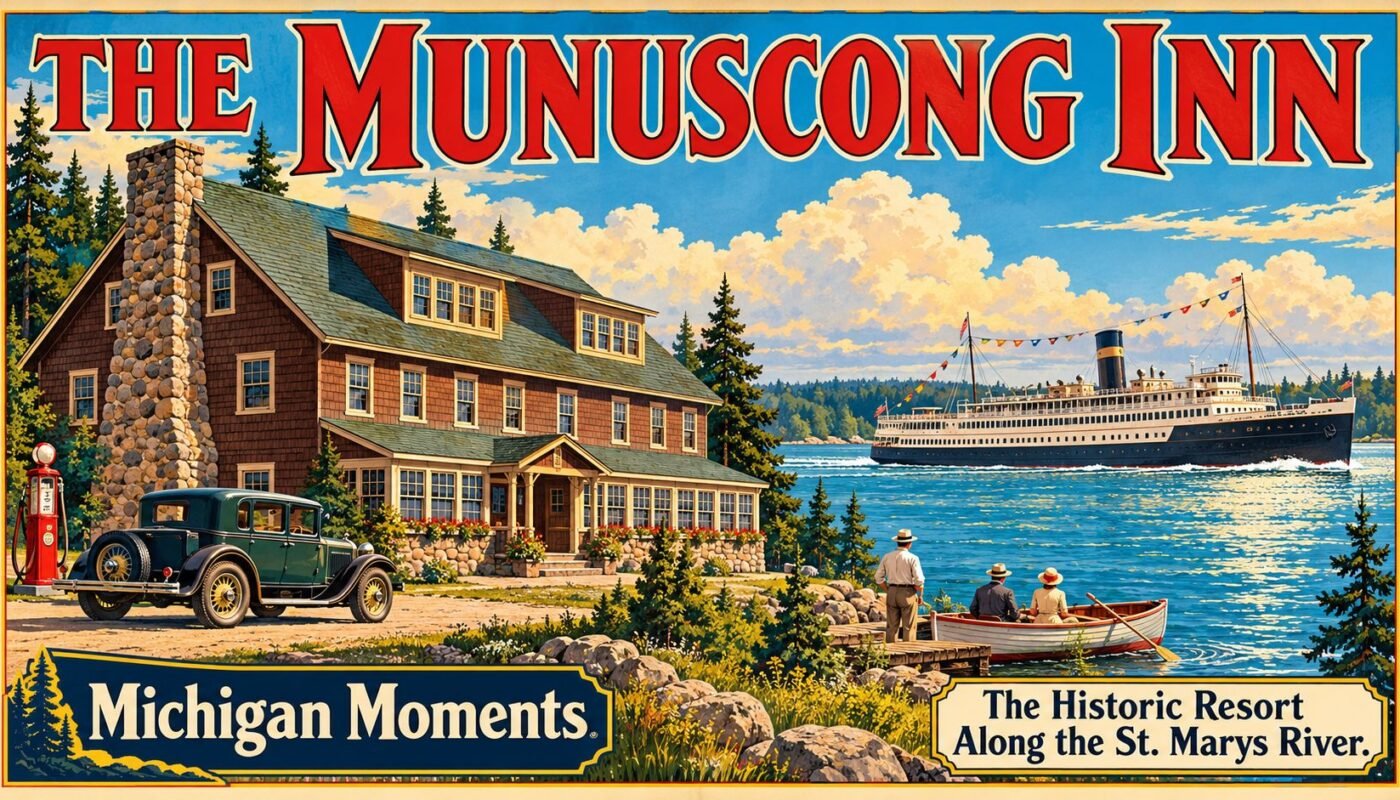
The Munuscong Inn offered a northern vacation on the banks of a busy river. Guests could step into a small boat, sit by a stone fireplace, or watch a passenger steamer pass the grounds. Cars gathered near gasoline pumps, while the post office drew another kind of visitor.
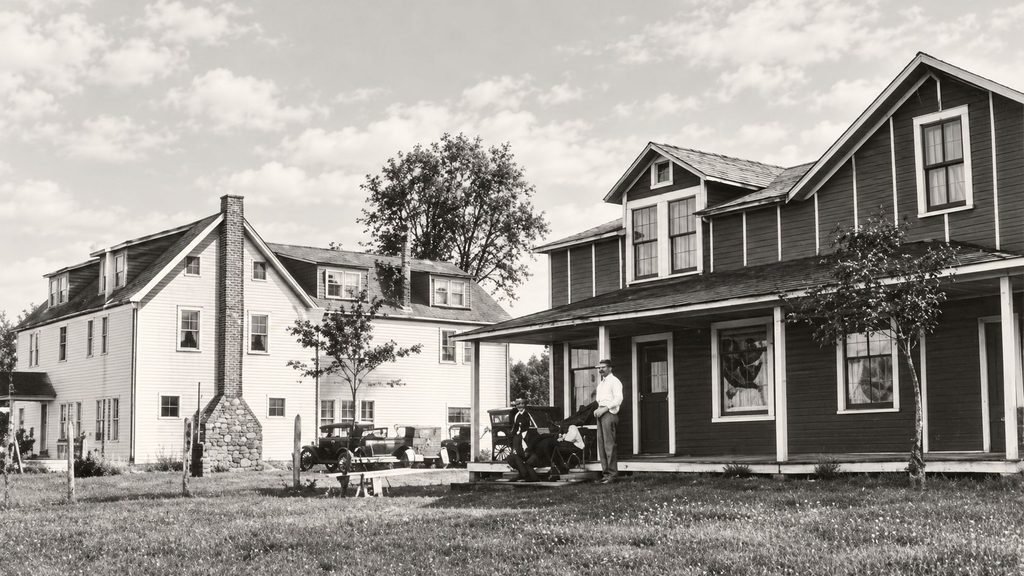
Michigan’s Munuscong Inn history follows a resort with several jobs. It stood in Munuscong, Chippewa County, near Barbeau in the eastern Upper Peninsula. The St. Marys River, which links Lake Superior and Lake Huron, ran through it. That location shaped both its business and its appeal.
Sources: Petosky, Paul; Bishop Dedicates New Conely Camp.
Watch: The Munuscong Inn, Michigan: The Riverfront Resort Along the St. Mary River
A Thumb Couple Starts Over Near the Soo
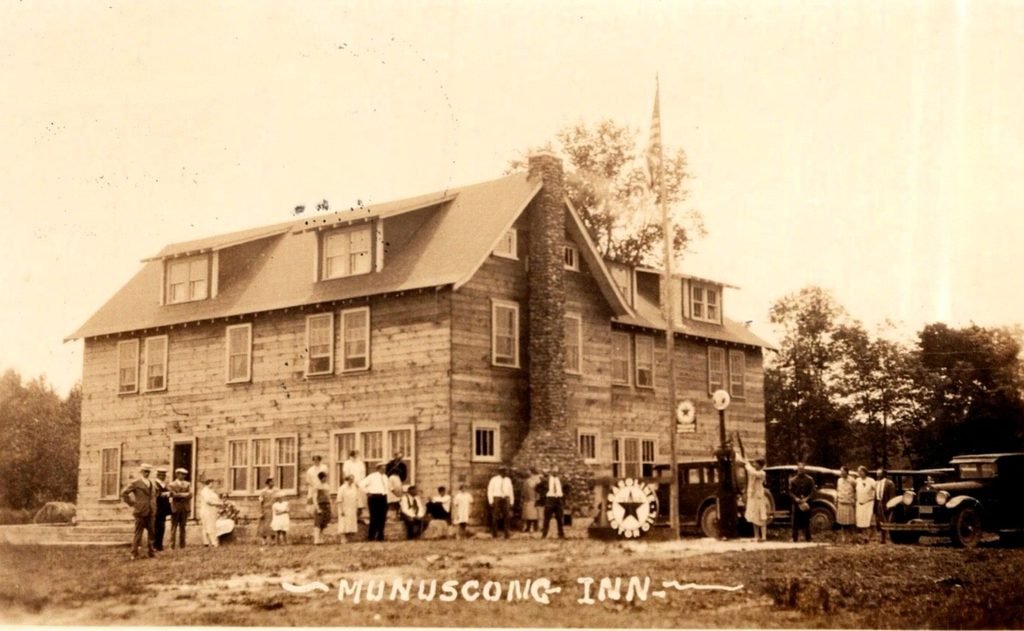
Clyde and Jeanette Conely brought a connection to Michigan’s Thumb. Jeanette was born in Brown City, and Clyde came from Sandusky. They married in 1910. Her obituary records their move to the Soo area in 1920 and credits them with establishing the inn and resort.
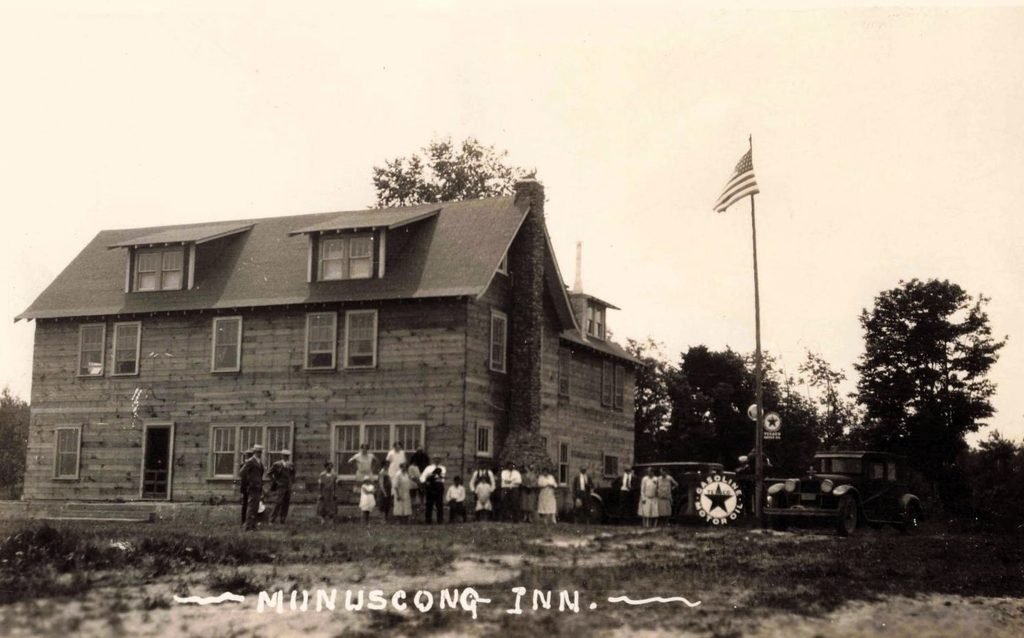
A 1958 report says the couple acquired the property during the 1920s and developed the resort buildings. Taken together, the records place the Conelys’ work in the first years of automobile tourism. The inn’s later appearance shows the substantial lodging business they created.
Sources: Mrs. Jeanette M. Conely; Bishop Dedicates New Conely Camp.
History of The Munuscong Inn Michigan: A Working Riverfront
One of the more interesting views puts us among the small boats at the landing. A man holds an oar close to the camera, while others gather near the water. The inn and a neighboring building with a porch stand behind them. We aren’t sure who these people were, but the arrangement makes the waterfront’s appeal easy to understand.
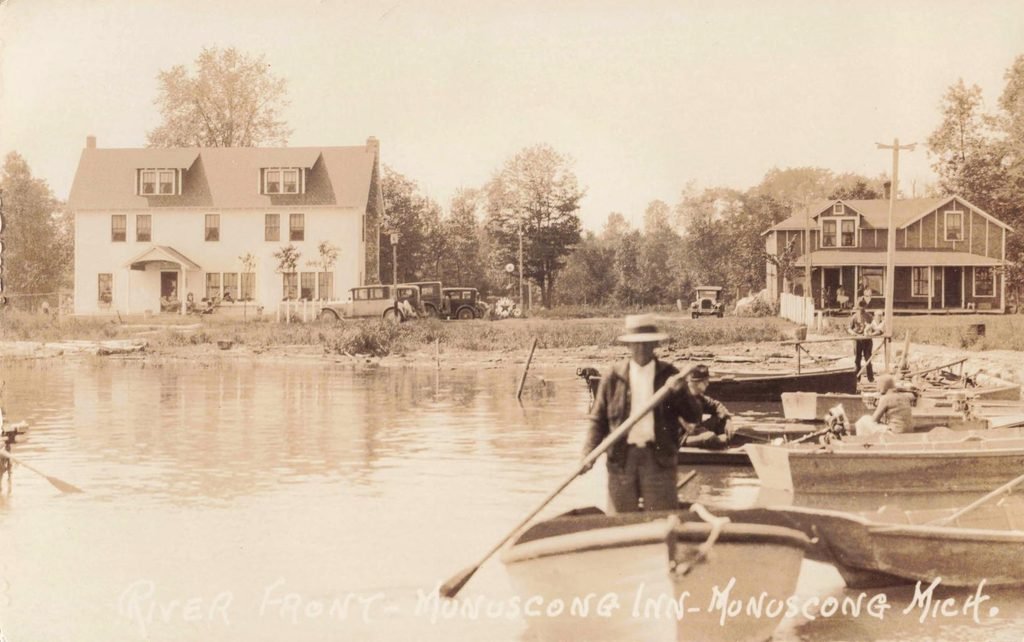
Guests could boat close to their rooms. State fishing information identifies walleye, pike, muskellunge, bass and perch in the wider Munuscong and St. Marys system today. That describes the area’s fishing appeal, rather than proving anyone’s catch a century ago. The boats supply the strongest evidence of how visitors used this particular shore.
Sources: Michigan Department of Natural Resources.
The Big Ship Outside the Small Resort
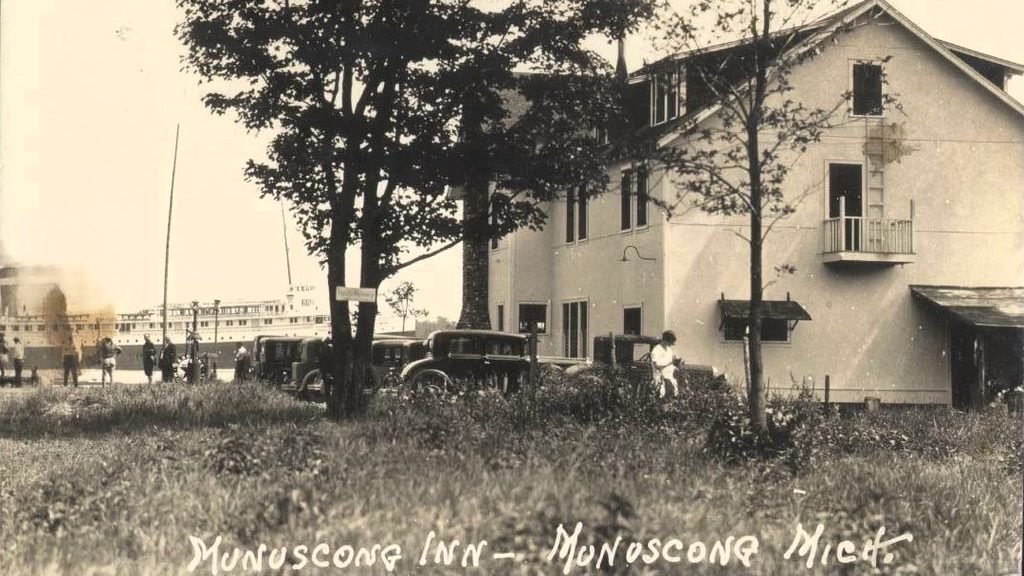
Another view supplies the story’s best surprise. A large passenger steamer passes the inn while people on shore raise their arms toward it. We cannot confidently establish its name from this view. There is also no evidence it stopped to pick up the inn’s guests.
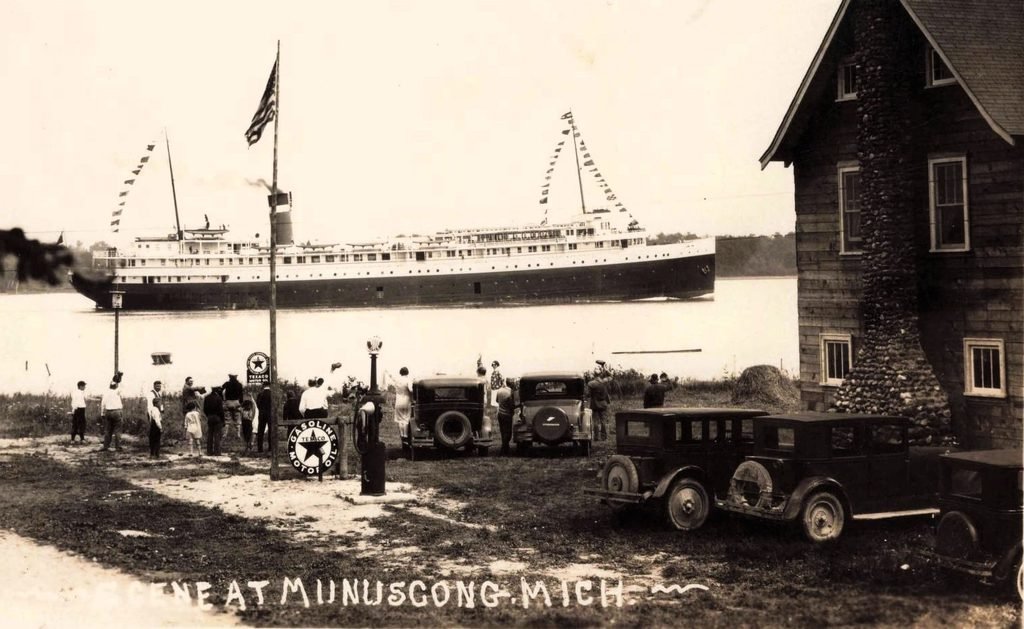
We can see the vessel’s scale and the attention it drew. This was a quiet getaway beside an active Great Lakes travel route. That combination could make the waterfront entertaining even for someone who never cast a fishing line. A passing ship brought its own audience outdoors.
Sources: scene at munuscong, mich..
A Fireplace, a Piano and Somewhere to Sit
Inside, the inn offered a comfortable place between outings. Wicker rockers and chairs surrounded a stone fireplace. A large table gave guests somewhere to gather, and curtains framed the windows. The room looks practical enough for regular use, with a little care taken over its appearance.
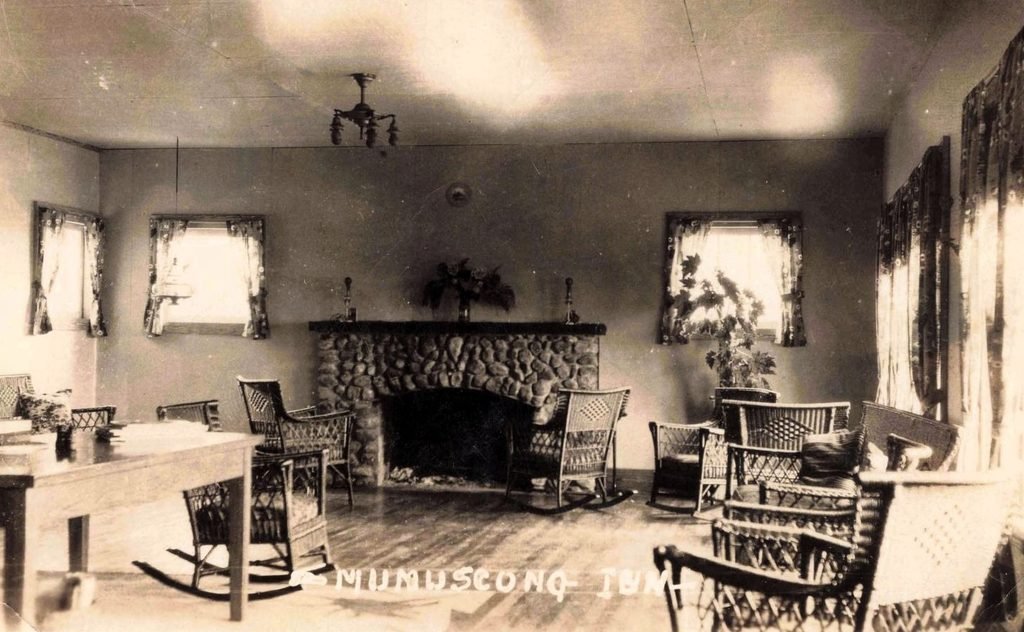
A similar room appears in another shot associated with a 1929 postcard. A further lobby view is cataloged under 1930. Furniture and decorations differ between the views, but the sequence of those changes is uncertain. The important shared feature is the space devoted to company.
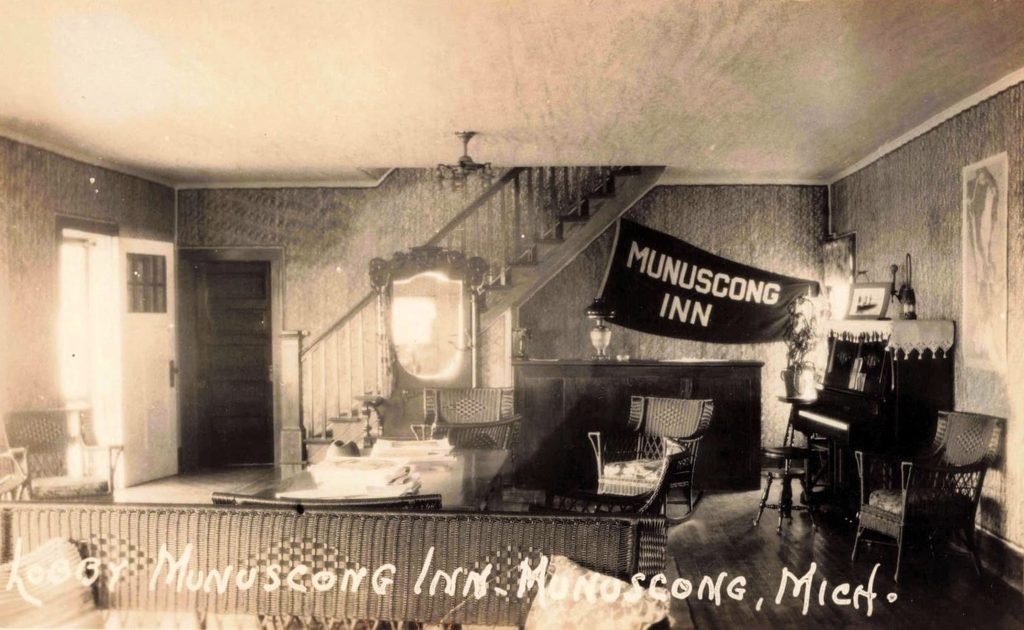
An upright piano appears in another part of the lobby, beneath the staircase. A large banner bears the inn’s name. We do not know who played the instrument or what they played. Its presence shows that the common room offered more than a chair by the fire.
The catalog dates need care, too. A postcard could be mailed after the scene was originally recorded. The 1929 and 1930 entries therefore give us useful dates associated with the cards, but they do not precisely settle when every chair was moved or when the room was first furnished.
Sources: munuscong inn; lobby munuscong inn – munuscong mich..
Two Beds and a Straightforward Promise
The room labeled Double Bed Room contains two separate metal beds. White linens, folded bedding and a chair complete the scene. Patterned wall covering adds decoration without crowding the room. It is a useful glimpse of the accommodations offered to visitors.
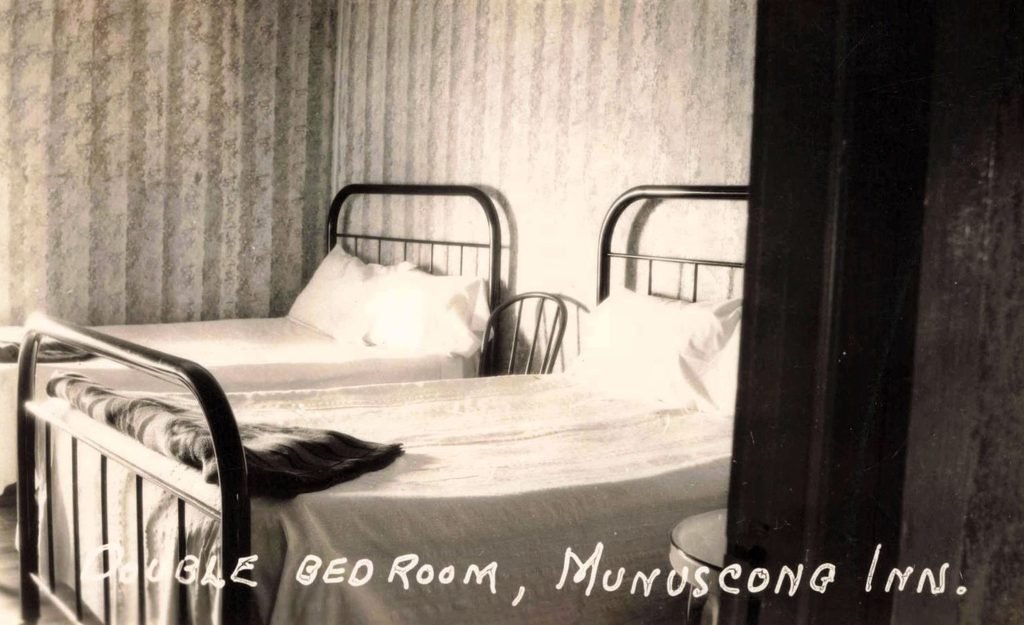
The distinction between the label and the two beds is worth keeping in the account. We can describe the furnishings without guessing the room rate or a guest’s identity. The setting suggests that the inn sold a comfortable place to return to after time outdoors. Its rooms supported the holiday taking place around them.
Sources: double bed room, munuscong inn..
Fuel, Mail and a Place for the Trailer
The gasoline pumps outside are a strong clue to the business’s reach. Texaco signs advertised fuel and motor oil beside parked automobiles. Motorists could meet a practical travel need where they stayed. The resort’s grounds brought road travel close to boating.
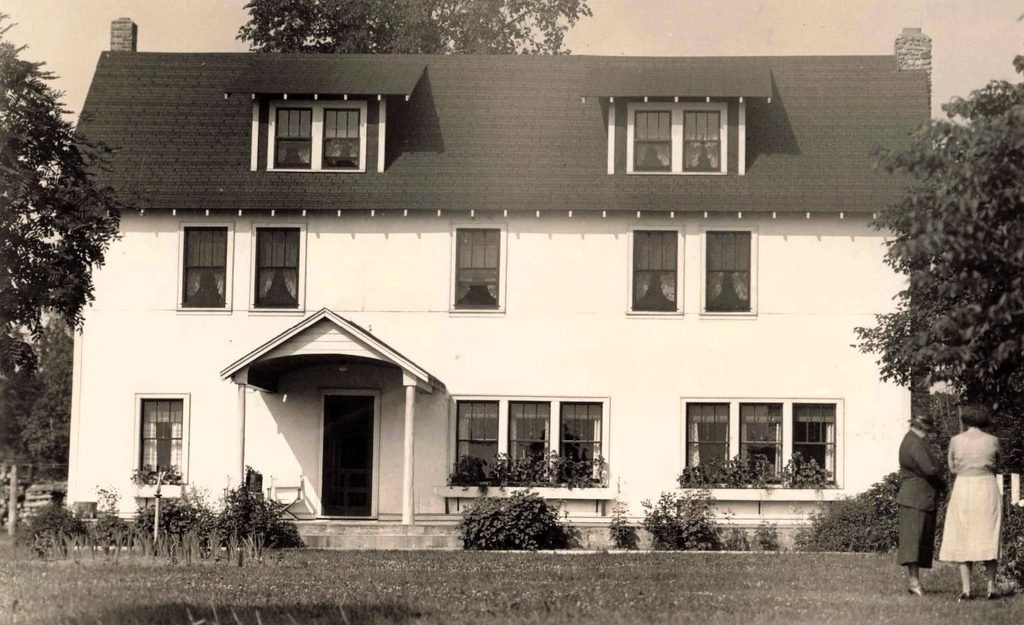
An exterior postcard identifies the inn and post office together. Postal material lists Clyde as postmaster from 1921 through the office’s closure in 1958, when service moved to Barbeau. That role made the property useful to residents and vacationers alike. Earlier postal interruptions are recorded, but their causes remain unestablished.
The inn’s white front appears in a card cataloged under 1936. A separate, undated view advertises an inn and camp site, with travel trailers among the trees. Its vehicles suggest a later interwar or early postwar period. That estimate should remain separate from a confirmed date.
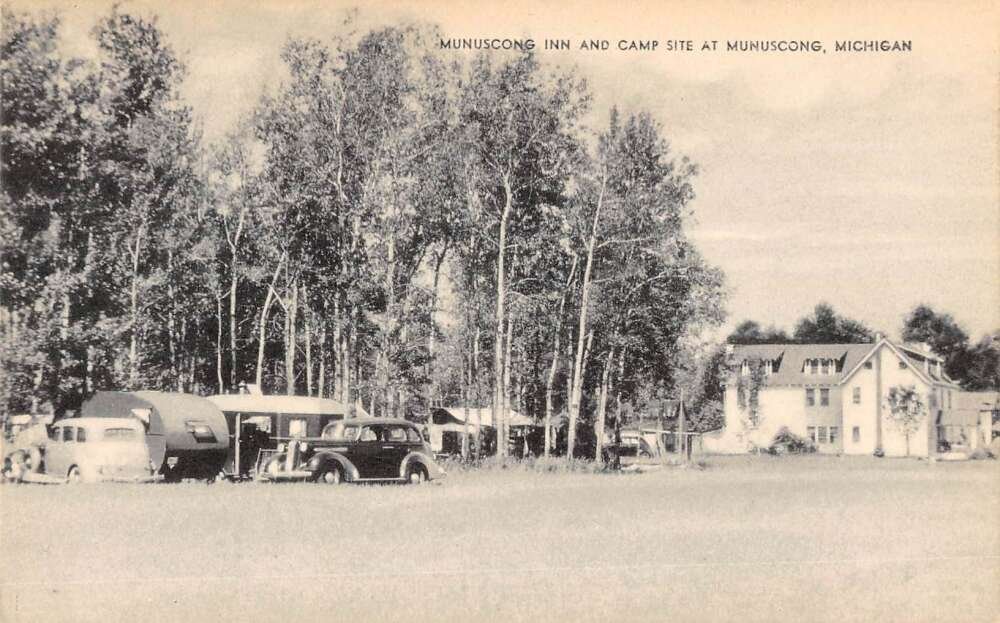
Sources: Petosky, Paul; munuscong.
A Stop on a Longer Northern Trip
A message associated with the 1936 card adds a human detail. Dorothy and Elmer reported that they had stayed nearby and intended to look around the Soo that day. Their message does not establish an overnight stay at the inn. It does place Munuscong within a journey that included Sault Ste. Marie.
That is a familiar pattern for a Michigan vacation. A riverside stop could provide time to rest before another day’s drive. The inn’s fuel pumps, accommodations and boats gave travelers reasons to pause. The village and the larger river route were both part of the trip.
Sources: Munuscong.
Wetlands Added Another Reason to Visit
The nearby marshes help explain why the wider Munuscong area appealed to waterfowl hunters. A federal ecological profile documents nesting and migrating ducks in the St. Marys River system. It describes Munuscong marsh habitat used by several species. Those findings support the area’s outdoor appeal.
The surviving views emphasize boats, buildings and the grounds rather than a day’s catch. That distinction keeps the account honest. No verified guest list supports claims about celebrity sportsmen. The resort’s location is interesting enough without adding famous names.
Sources: Duffy, Walter G.
The River Had a History Before the Holiday
The Sault Tribe describes Anishinaabeg fishing communities throughout the St. Marys River system long before resort tourism. That history gives the water a meaning beyond recreation. Later visitors entered a region where fishing had supported communities for generations.
The Munuscong Inn’s history also belongs to the story of travel along those waters. The Soo’s State Locks opened in 1855, improving passage around the rapids. By the inn’s era, boating holidays and larger vessel traffic could share the same river. The resort benefited from that combination of movement and recreation.
Sources: Sault Ste. Marie Tribe of Chippewa Indians; United States Army Corps of Engineers.
A New Welcome at Camp Conely
The property later became available to the Detroit Methodist Conference. Camp Conely was formally dedicated Aug. 1, 1958. The resort’s buildings and waterfront provided a setting for families and church groups.
A 1986 program combined grounds work with fishing and relaxation. Its announcement still emphasized the camp’s position beside the downbound shipping channel. The History of The Munuscong Inn Michigan is especially memorable for that shared address: lodging, local services, and the Great Lakes traffic passing by.
Sources: Bishop Dedicates New Conely Camp; Ward, Ken.
? Works Cited For Munuscong Inn History
“Bishop Dedicates New Conely Camp”. Michigan Christian Advocate, 7 Aug. 1958, p. 6. Accessed 5 Oct. 2026.
“Double Bed Room, Munuscong Inn.”. Catalog date 1930. Postcard, David V. Tinder Collection of Michigan Photography, William L. Clements Library, University of Michigan Library Digital Collections, item 11608. Accessed 5 Oct. 2026.
Duffy, Walter G., et al. The St. Marys River, Michigan: An Ecological Profile. U.S. Fish and Wildlife Service, 1987. Accessed 5 Oct. 2026.
[Fireplace and wicker seating at Munuscong Inn]. Postcard, David V. Tinder Collection of Michigan Photography, William L. Clements Library, University of Michigan Library Digital Collections, item 11602. Accessed 5 Oct. 2026.
“Lobby Munuscong Inn – Munuscong Mich.”. Catalog date 1930. Postcard, David V. Tinder Collection of Michigan Photography, William L. Clements Library, University of Michigan Library Digital Collections, item 11607. Accessed 5 Oct. 2026.
[Lobby of Munuscong Inn with upright piano]. Postcard, David V. Tinder Collection of Michigan Photography, William L. Clements Library, University of Michigan Library Digital Collections, item 11609. Accessed 5 Oct. 2026.
Michigan Department of Natural Resources. “Munuscong River State Forest Campground”. Michigan.gov. Accessed 5 Oct. 2026.
“Mrs. Jeanette M. Conely”. Michigan Christian Advocate, 5 Sept. 1968. Accessed 5 Oct. 2026.
“[Munuscong]”. Catalog date 1936. Postcard, David V. Tinder Collection of Michigan Photography, William L. Clements Library, University of Michigan Library Digital Collections, item 11604. Accessed 5 Oct. 2026.
“Munuscong Inn”. Catalog date 1929. Postcard, David V. Tinder Collection of Michigan Photography, William L. Clements Library, University of Michigan Library Digital Collections, item 11606. Accessed 5 Oct. 2026.
“Munuscong Inn”. Postcard, David V. Tinder Collection of Michigan Photography, William L. Clements Library, University of Michigan Library Digital Collections, item 11600. Accessed 5 Oct. 2026.
Petosky, Paul, contributor. “Munuscong”. Genealogy Trails: Chippewa County Michigan Genealogy & History. Accessed 5 Oct. 2026.
[Riverfront at Munuscong Inn]. Postcard, David V. Tinder Collection of Michigan Photography, William L. Clements Library, University of Michigan Library Digital Collections, item 11603. Accessed 5 Oct. 2026.
Sault Ste. Marie Tribe of Chippewa Indians. “The Origins of Sault Tribe”. Updated 28 Jan. 2017. Accessed 5 Oct. 2026.
“Scene At Munuscong, Mich.”. Postcard, David V. Tinder Collection of Michigan Photography, William L. Clements Library, University of Michigan Library Digital Collections, item 11605. Accessed 5 Oct. 2026.
United States Army Corps of Engineers. “Soo Locks”. Great Lakes and Ohio River Division. Accessed 5 Oct. 2026.
Ward, Ken. “Family Vacation With a Purpose Set for Summer at Camp Conely”. Michigan Christian Advocate, 24 Mar. 1986, p. 10. Accessed 5 Oct. 2026.