 by
by 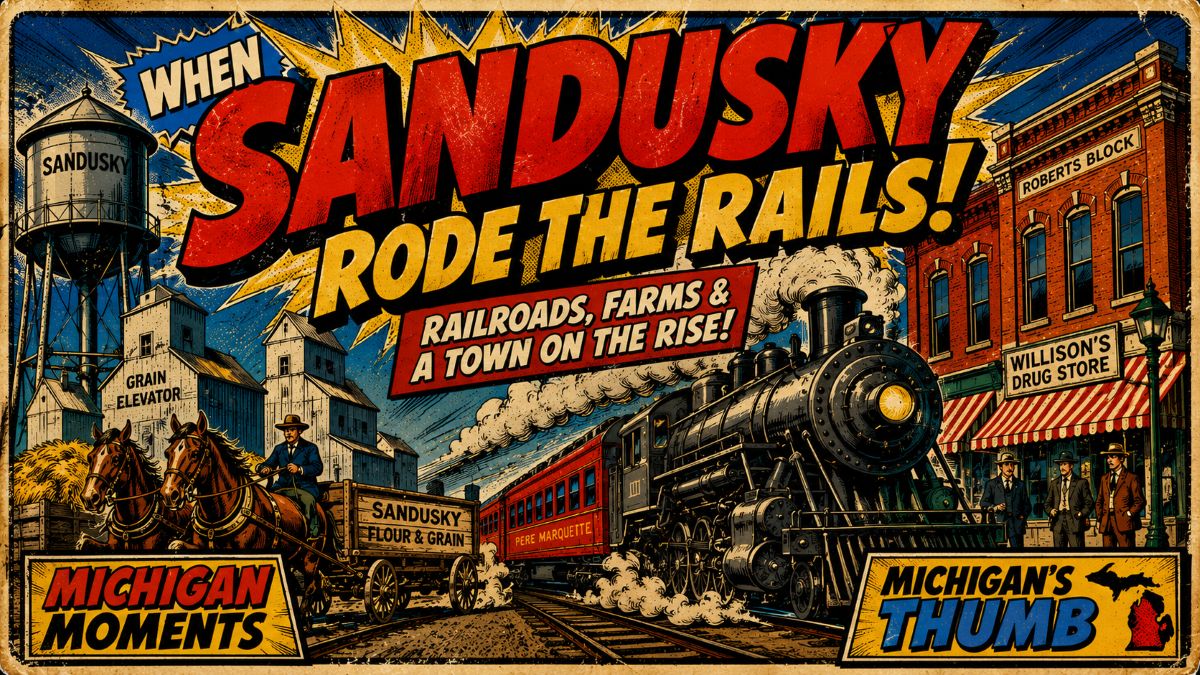
Sandusky, Michigan is a small city in Sanilac County on the shore of Lake Huron. The history of Sandusky Michigan is typical of many towns in the region: lumbermen first cut the forests, then farmers settled, and railroads brought trade.
Early Beginnings of Sandusky, Michigan
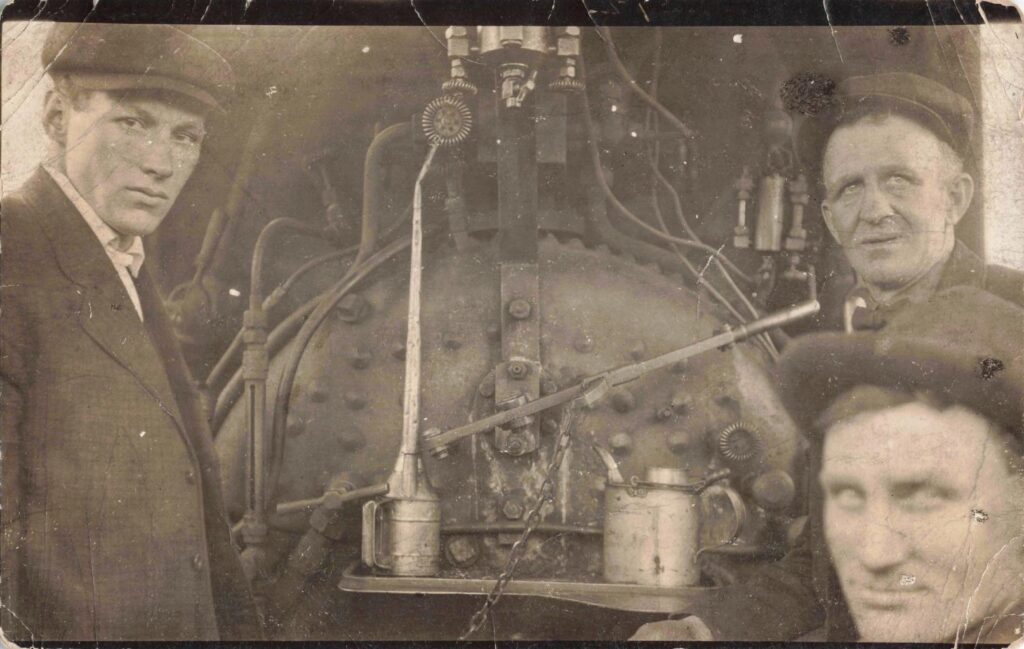
on the Sandusky run at that time, the
fall of 1910. Eng 109. Engineer Jed
Campbell. Fireman Chas Cole & Engine
Watchman Jake Giester
In 1879, the county seat of Sanilac County moved from Lexington to Sandusky. Not long after, lumberman Wildman Mills formally platted the village and named it after his Ohio hometown. Mills arrived in the 1860s, built a sawmill and general store, and even served as postmaster. By 1885, Sandusky was officially established as a village. In 1905, it became an incorporated city.
Railroads Put Sandusky on the Map
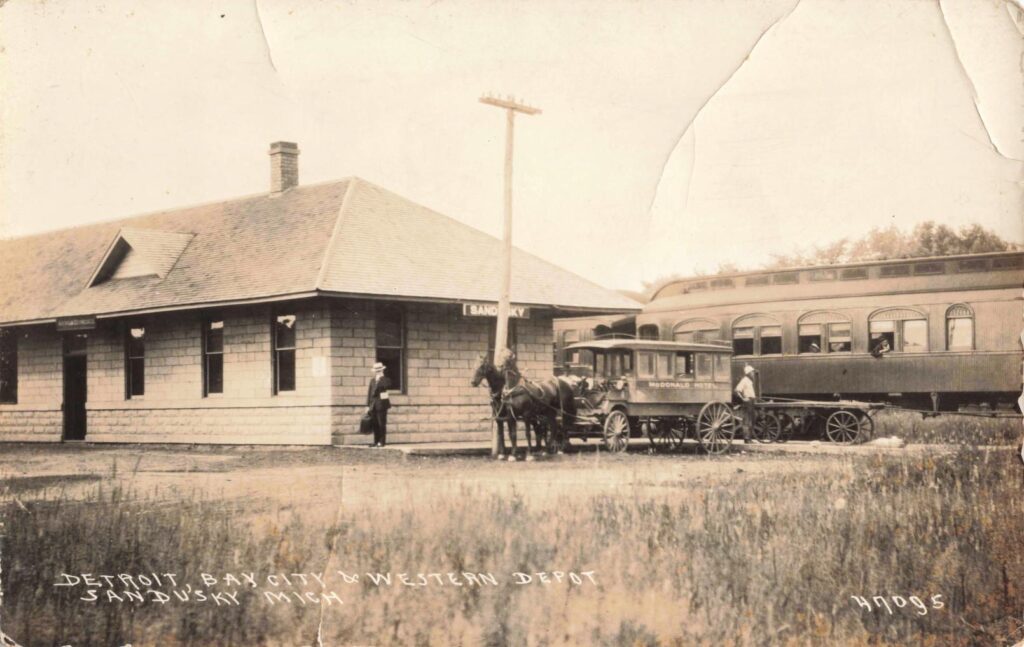
A key turning point in the history of Sandusky Michigan came with the railroads. By 1900, Sandusky was served by two rail lines: the Pere Marquette Railroad and the Detroit, Bay City & Western (a Michigan Central branch). These rail connections were vital. They allowed the transport of lumber, grain, and passengers to and from larger cities like Detroit and Flint.
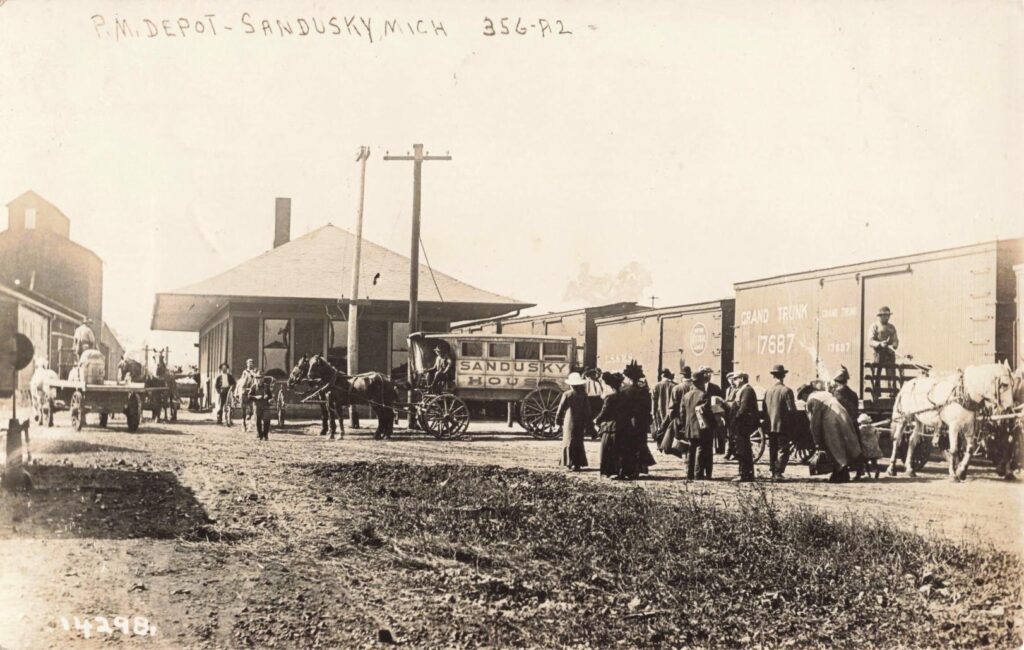
Photos from the period show bustling railroad depots with men in coats and hats waiting for trains. Freight cars were loaded with grain, lumber, and farm equipment. The train station quickly became a center of economic and social life.
Agriculture Replaces Lumber as Main Industry
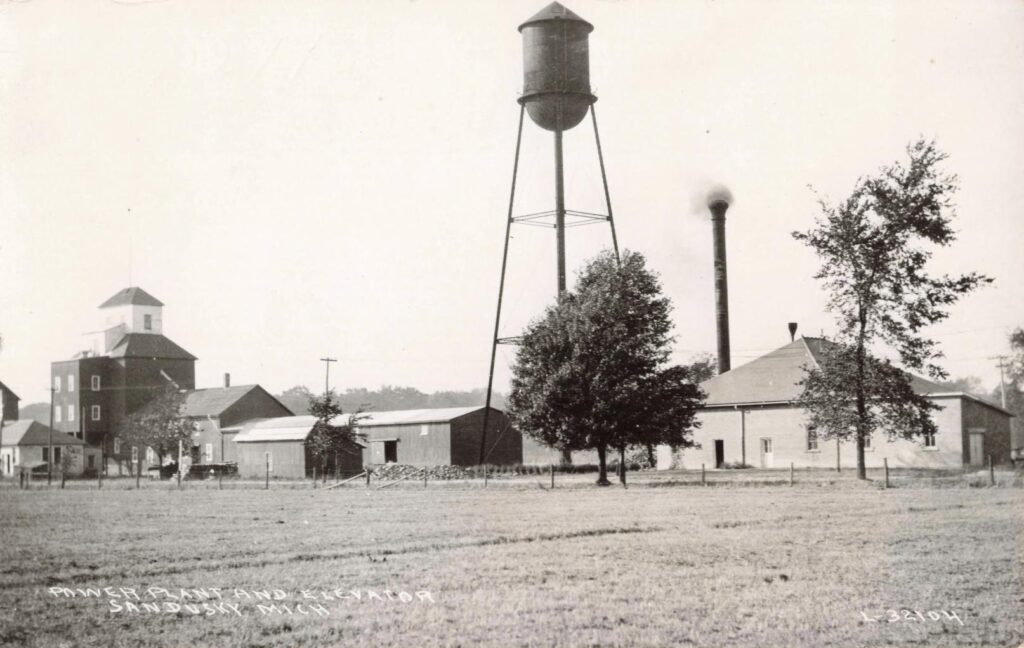
After the original forests were cleared, farming took over. Settlers planted wheat, sugar beets, corn, and beans. By 1910, agriculture had replaced logging as Sandusky’s primary economic driver.
The town built grain elevators and mills to support the shift. One postcard from the early 20th century shows towering wooden elevators, a sign of Sandusky’s growing importance in regional agriculture. With good rail access, local farmers could ship crops to urban markets and boost the town’s economy.
Main Street and Small Business Growth
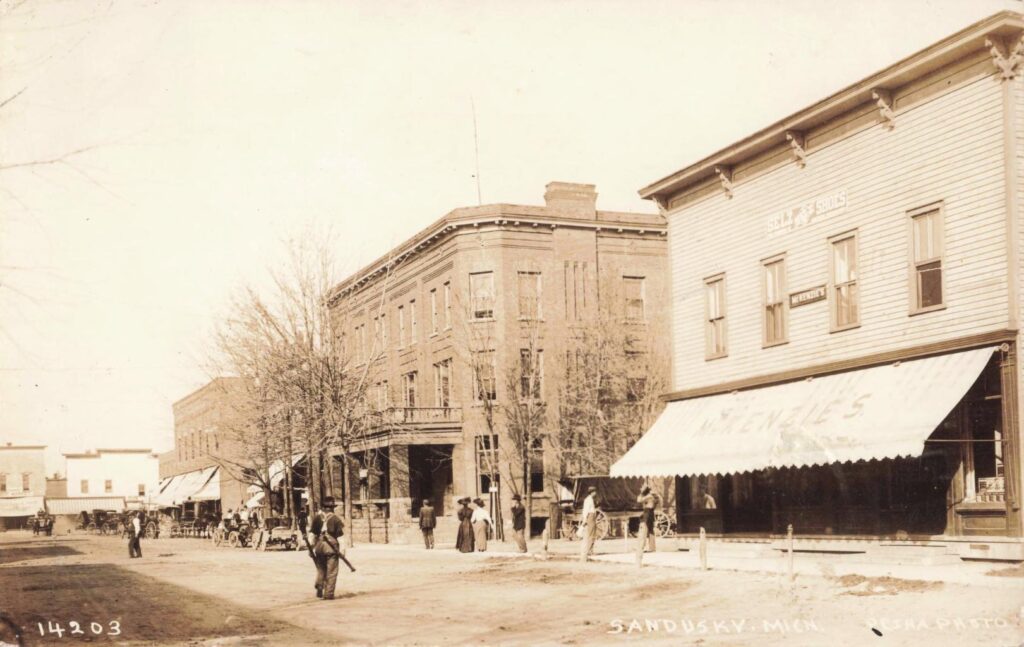
By the 1910s, downtown Sandusky had become a fully formed commercial district. Main Street featured a range of businesses: general stores, a hardware store, a jeweler, barbers, and a hotel.
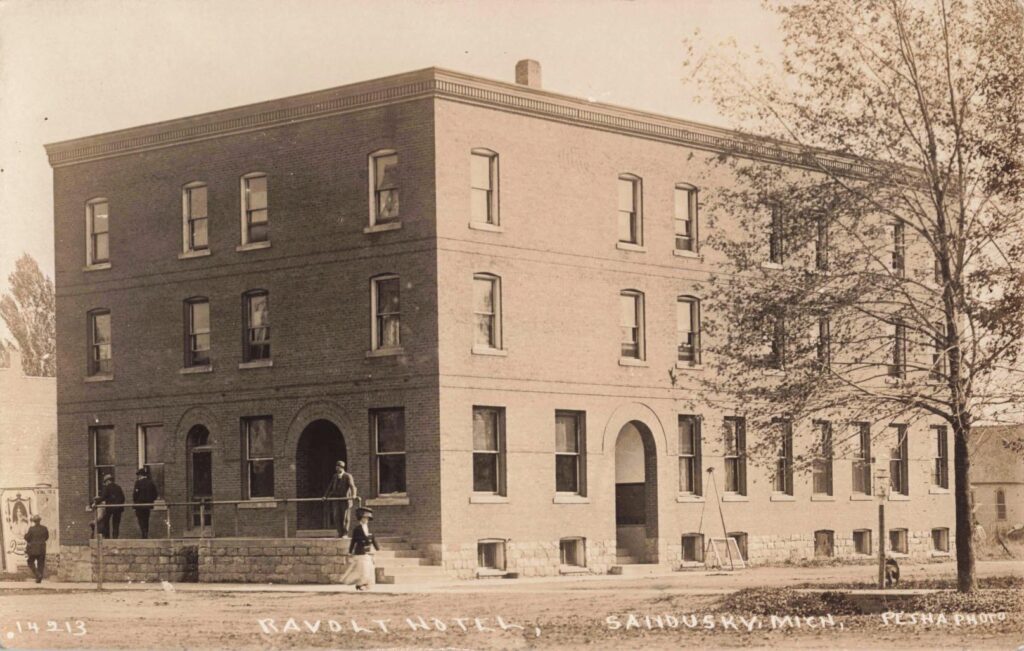
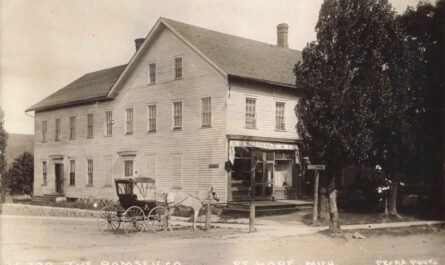
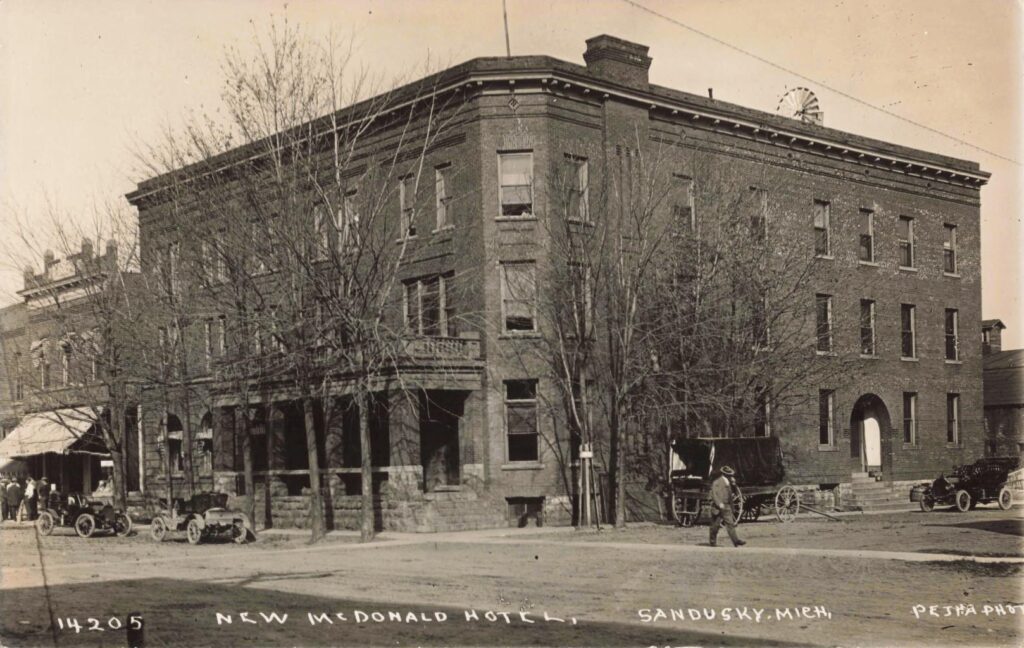
Two brick hotels – the New McDonald Hotel and the Ravolt Hotel – welcomed travelers, railroad workers, and business people. These buildings had multiple floors, balconies, and wide porches. One photograph shows the McDonald Hotel in its prime, with wagons parked out front and a well-dressed doorman at the entrance.
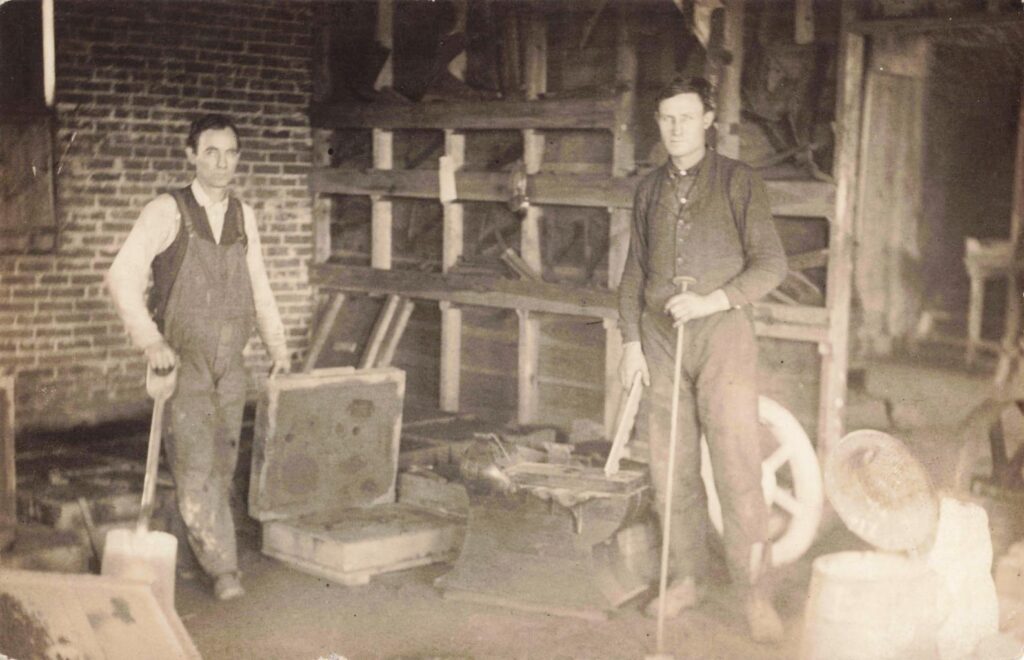
The rise of local businesses made Sandusky a service hub for surrounding farms. A blacksmith, furniture store, lumberyard, and even an opera house supported both the town and county’s growing population.
Community Life and Social Events in the 1900s
Community life in Sandusky during this period was active and closely connected. Local newspapers like the Sandusky Register reported on everything from town elections to barn dances.
Families gathered for seasonal events such as the Harvest Festival and Fourth of July parades. A brass band often performed in the park, and churches organized social events. Church groups, Masonic lodges, and a women’s club offered residents a sense of structure and fellowship.
Sandusky’s central school provided education to the children of merchants and farmers. In winter, kids walked home through snowy streets past storefronts lit by new electric lights.
Pharmacy School Surprise: A Local Institute of Learning
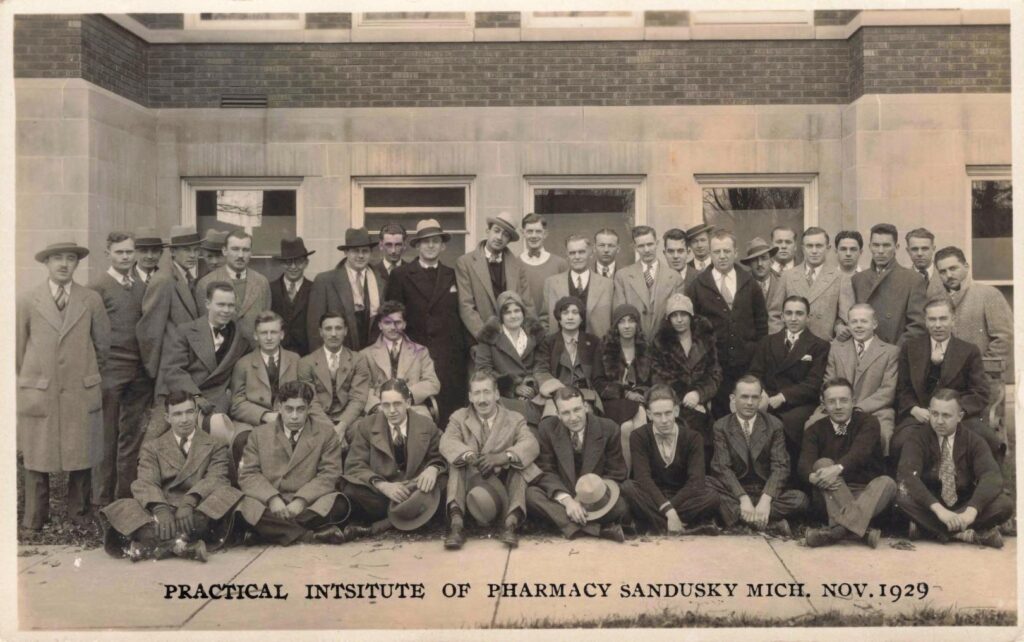
One of the more surprising facts in the history of Sandusky Michigan is that the town briefly hosted its own pharmacy school. A real-photo postcard from 1929 shows a class from the Practical Institute of Pharmacy in Sandusky.
The students, men and women alike, pose proudly in front of a modest brick building. Their presence highlights the town’s brief role in advanced training during the late 1920s. This rare institution brought regional students to Sandusky and reflected its ambition in education and public service.
Public Infrastructure and Civic Pride
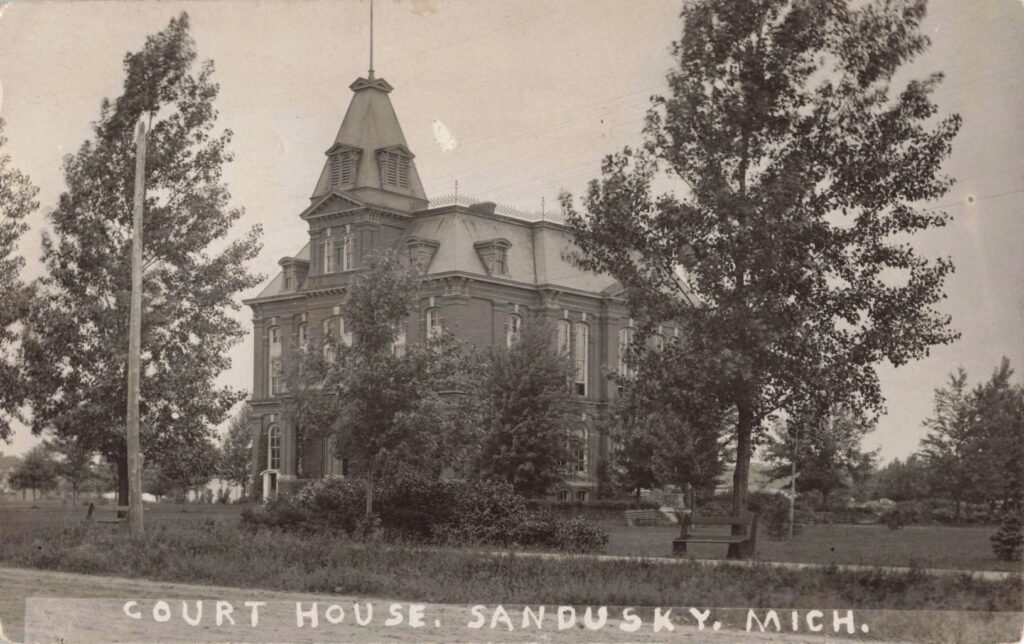
Sandusky’s leadership prioritized infrastructure as the town grew. In 1915, a fire destroyed the original county courthouse. Within a year, a new stone courthouse was built on the same site. That 1916 courthouse still stands and remains one of Sandusky’s most visible landmarks.
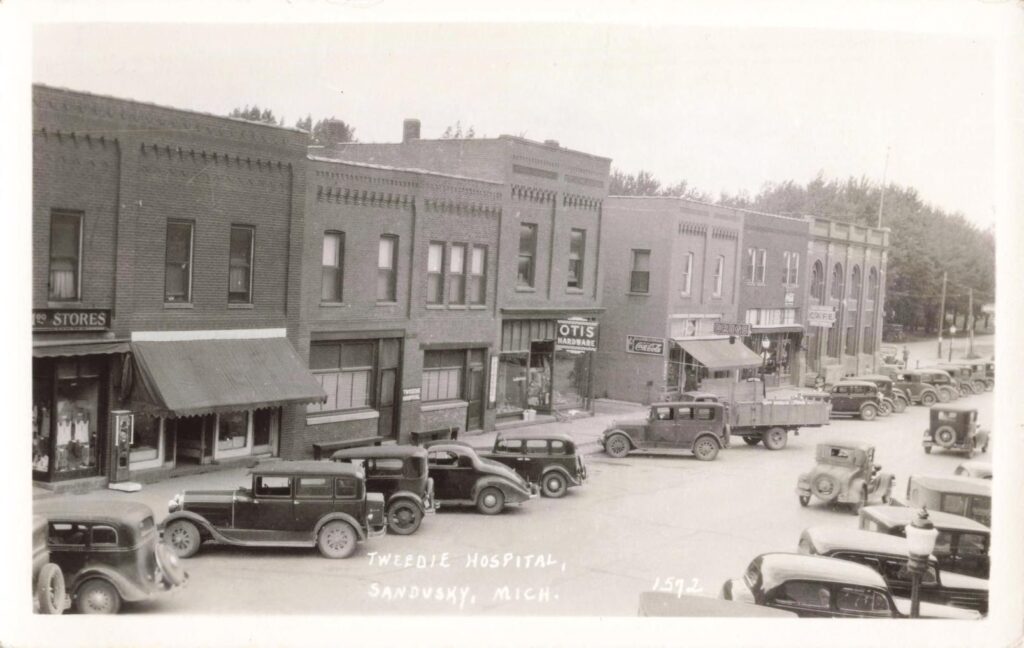
The early 20th century also brought improved streets, paved sidewalks, streetlights, and telephone lines. These changes positioned Sandusky as a modern small town by 1930.
Small-Scale Industry and Local Jobs
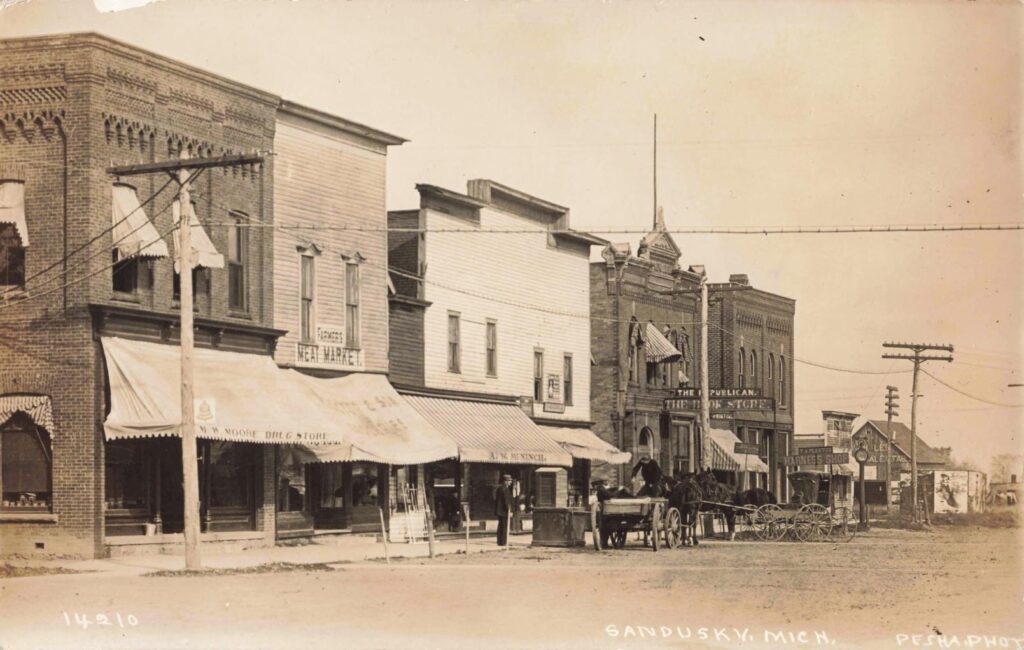
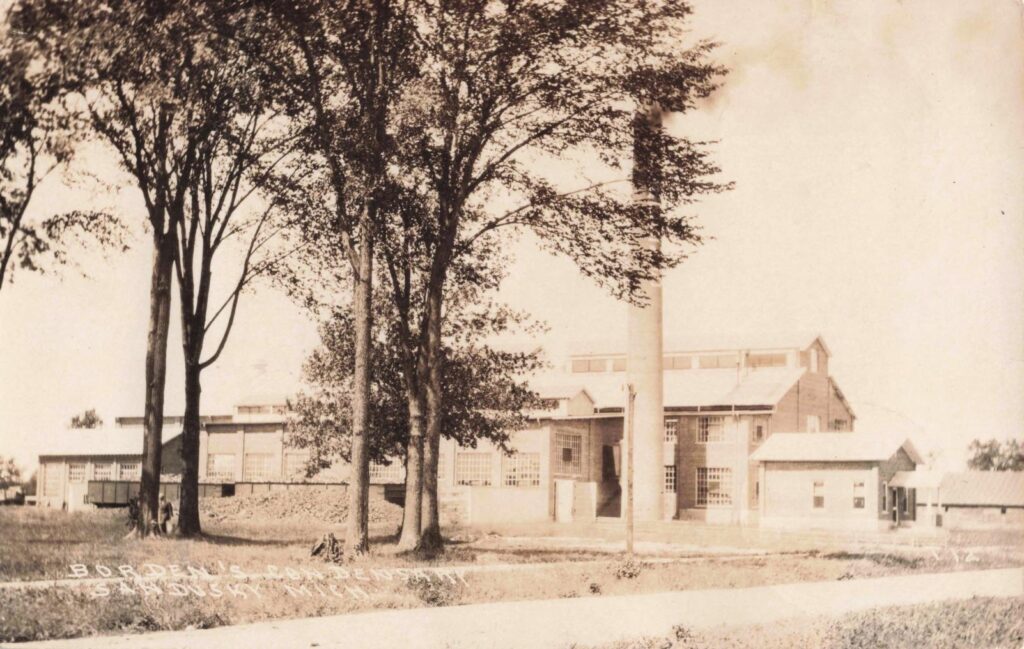
Aside from farming and retail, Sandusky supported a few small industries. Tile and brick manufacturing, grist milling, and auto service garages operated on the town’s edges. Though Sandusky never became an industrial hub, these trades provided stable employment.
The local economy remained balanced between agriculture and small-scale commerce. Sandusky was never dominated by a single large employer, which allowed its downtown to survive the coming Great Depression with moderate losses.
Sandusky’s Legacy and Historical Importance
By 1930, the history of Sandusky Michigan had moved through several distinct phases. What began as a frontier sawmill town had matured into a functioning city with railroads, schools, public buildings, and reliable institutions.
Today, many of the brick buildings seen in vintage postcards still line Main Street. The courthouse remains in daily use, and local historical societies work to preserve the story of the town.
Sandusky reflects the broader experience of Michigan’s Thumb and Great Lakes region – shaped by natural resources, railroads, and the transition from lumbering to agriculture. For anyone studying the region’s small-town development, Sandusky provides a well-documented and visual example.
Works Cited for the History of Sandusky Michigan
Hardy, Michael. “These 12 Vintage Postcards Of Michigan Small Towns Tell Amazing Stories.” Thumbwind, 27 Apr. 2022, https://thumbwind.com/2022/04/27/vintage-postcards-of-michigan/.
Michigan Railroads. Sandusky, MI. MichiganRailroads.com, https://www.michiganrailroads.com/stations-locations/144-sanilac-county-76/1642-sandusky-mi.
“Practical Institute Of Pharmacy Sandusky Mich. Nov. 1929.” Tinder Collection of Michigan Photography, University of Michigan Library, https://quod.lib.umich.edu/t/tinder/x-tinder-rppc-108643.
“Wildman Mills.” Forest and Stream, History in the Outdoors, 11 Feb. 2022, https://foreststreamhistory.com/wildman-mills-michigan/.