
 by
by 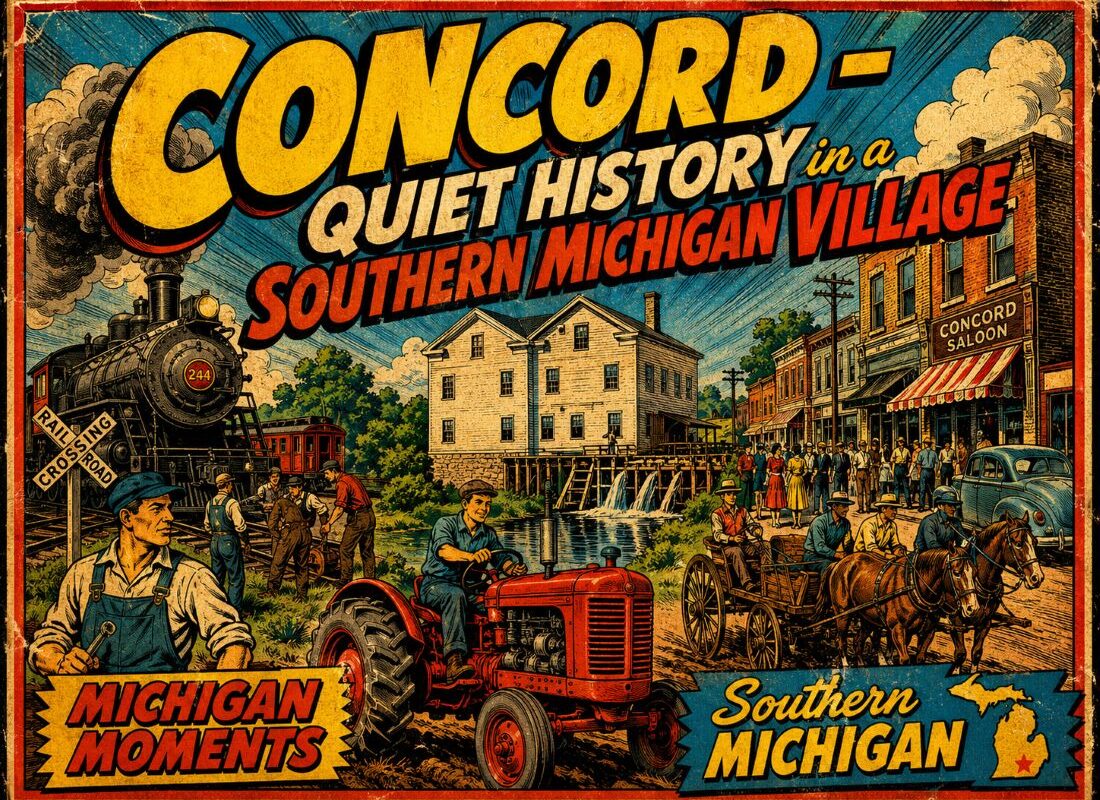
Concord, Michigan has the kind of history that can be easy to miss if you only pass through. It is not a city built around one giant factory. It is not a port town. It is not tied to one national headline.
Its story is quieter and, in many ways, more useful.
The history of Concord Michigan begins with soil, water and work. The Village of Concord says the first settler was John Acker, who arrived in 1831. Other families followed because the area offered rich soil and a chance to build farms in western Jackson County. The village says the name Concord was chosen because it reflected peace, harmony and neighborly feeling among early residents.
That name has aged well. Concord’s old streets still suggest a village built around cooperation: mills, farms, schools, churches, shops and rail service all working in the same small orbit.
Table of Contents
Watch: Concord, Michigan: The Mill Town That Grew Along the Rails
The History of Concord Michigan Starts With Waterpower
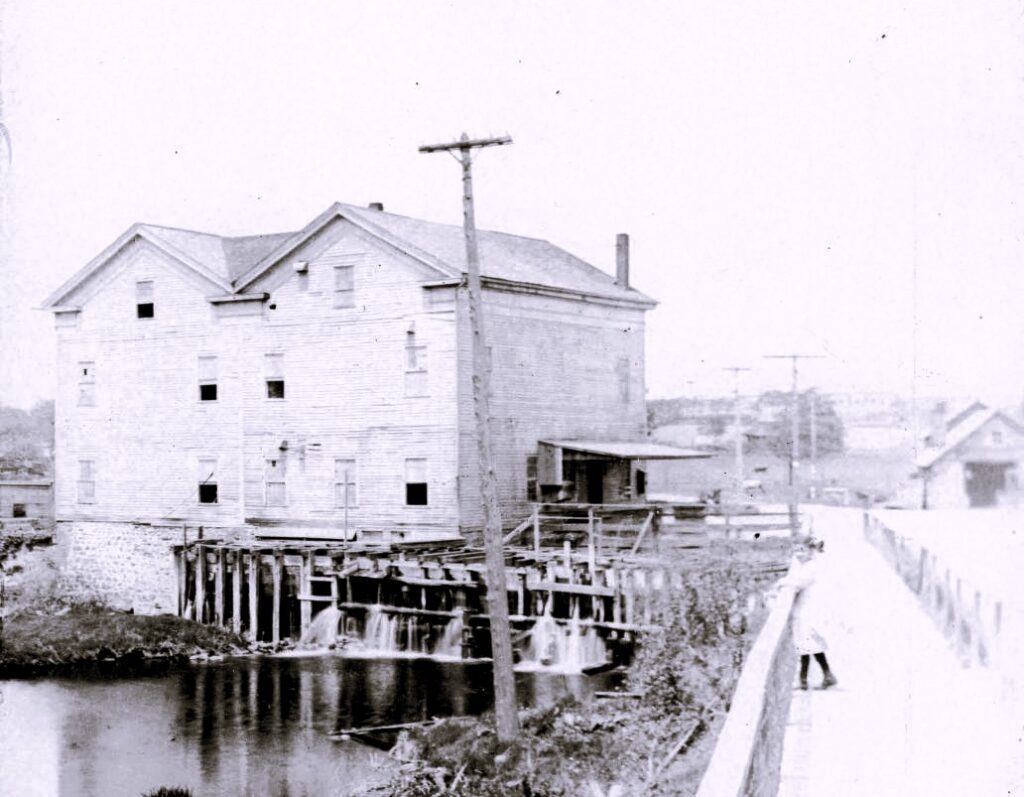
Before Concord became a railroad stop, it was a mill village.
Jackson County’s Falling Waters Trail history says the first dam was built in Concord in 1833, when the settlement was still called Van Fossenville. Sawmill equipment followed in 1835 west of the railroad bridge on Main Street.
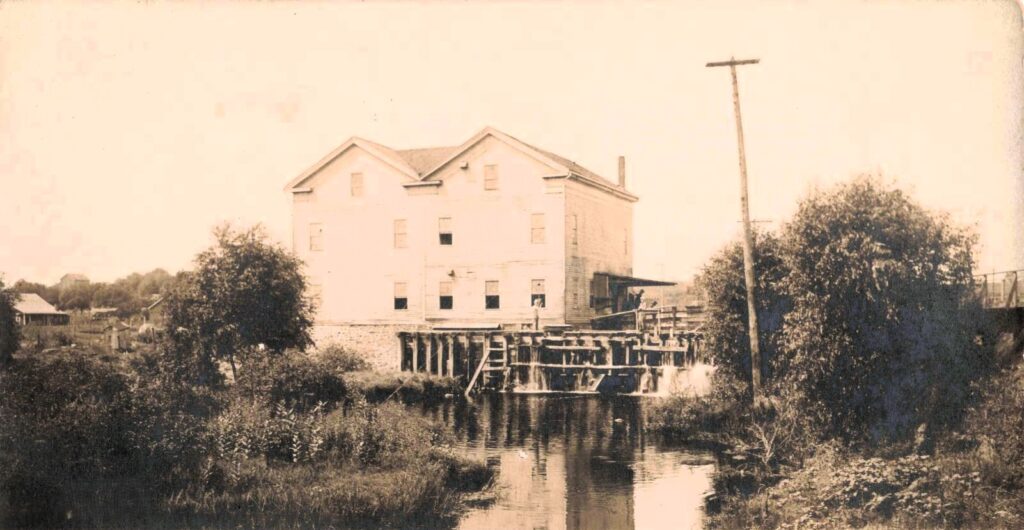
That one fact explains much of early Concord. Waterpower was not scenery. It was industry. A dam and mill could turn timber into boards and wheat into flour. They gave farmers a reason to come into town. They helped create traffic for blacksmiths, merchants, wagon teams and later railroad freight.
The old mill images show a broad, plain building beside the water. It is not ornate. It is not trying to impress anyone. It is a practical structure built to do work. That is why it is important.
From Van Fossenville to Concord
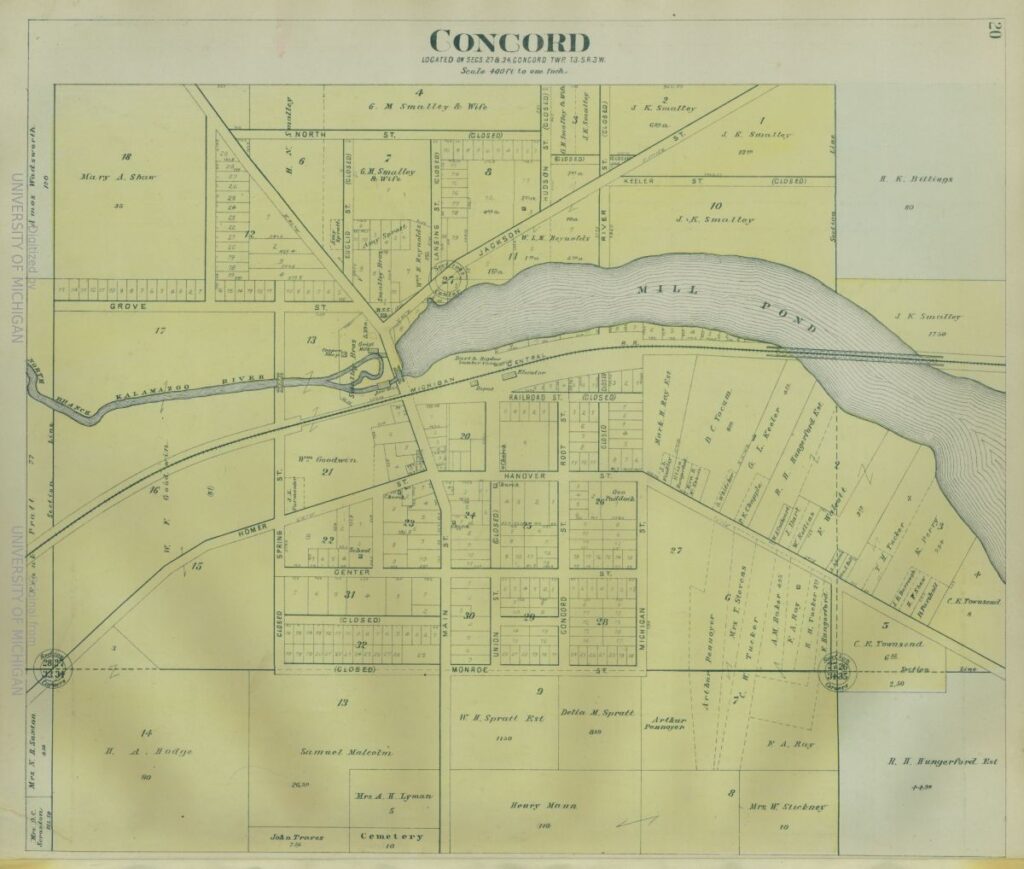
compiled and published by the American Atlas Co. 1894
Concord was first known as Van Fossenville, a name tied to early settlement. MichiganRailroads.com says Concord was settled in 1832, was also known as Van Fossenville, was renamed Concord in 1836 and was incorporated as a village in 1871.
The name change was more than a formality. New communities often used names to market themselves. Concord suggested social order. It made the village sound stable, respectable and ready for families.
The community grew in stages. The river and mill came first. Houses and stores followed. Schools and churches gave the village a civic frame. Then the railroad changed the scale of everything.
The Depot Made Concord Part of a Larger System
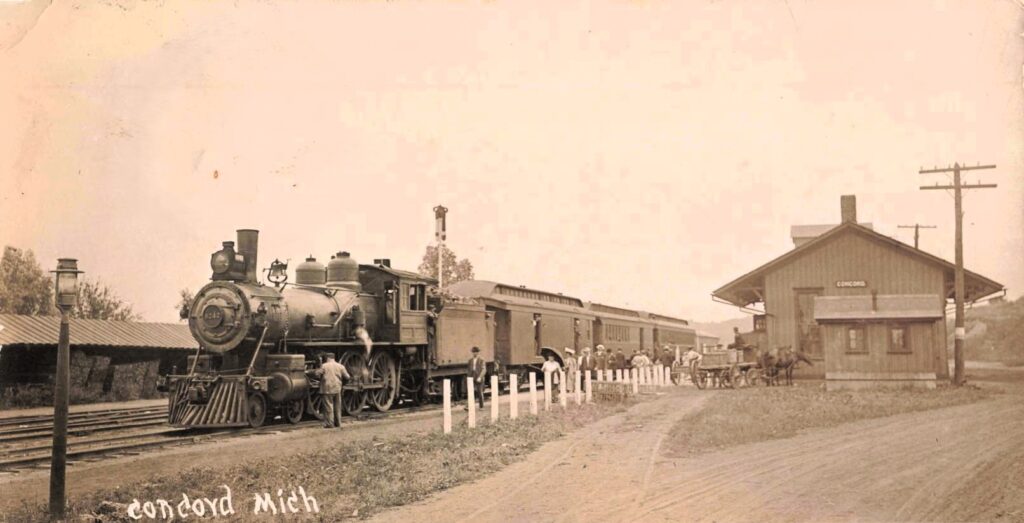
The Michigan Central depot images are among the strongest in the Concord set. They show tracks, a depot, a water tower, grain handling, horse teams and steam locomotives. The village was tied to the Michigan Air Line, later Michigan Central and New York Central. MichiganRailroads.com places Concord about 14 miles southwest of Jackson on that line.
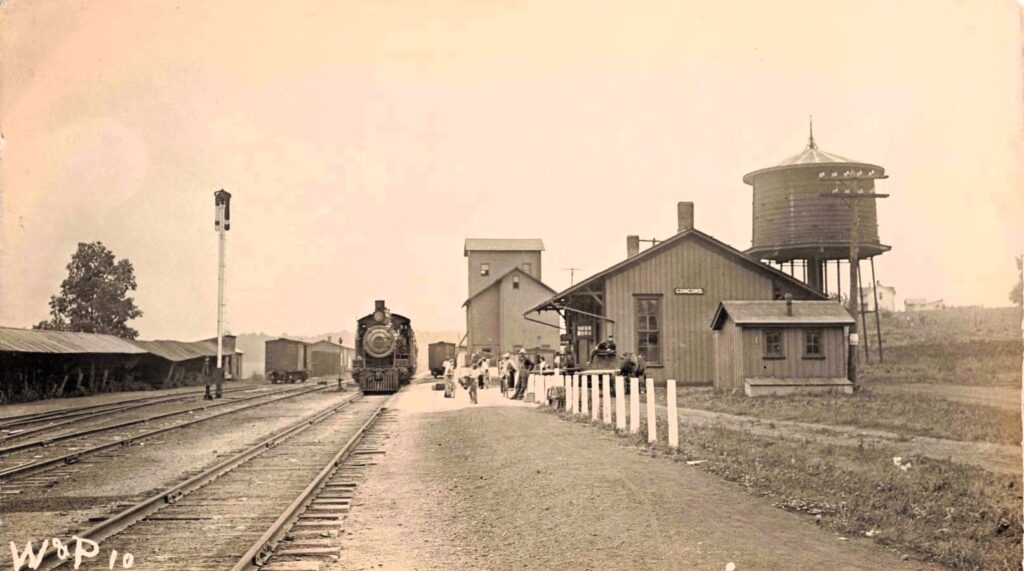
The depot did not simply move people. It moved farm goods, mail, news, freight, tools and opportunity. By 1917, the railroad had an agent-operator in Concord around the clock. In 1920, Concord still handled passenger, freight and express service.
This was a serious operation for a small village. The water tower served steam engines. The elevator served farmers. The depot served everyone who needed to go somewhere or send something.
Main Street Shows a Town in Transition
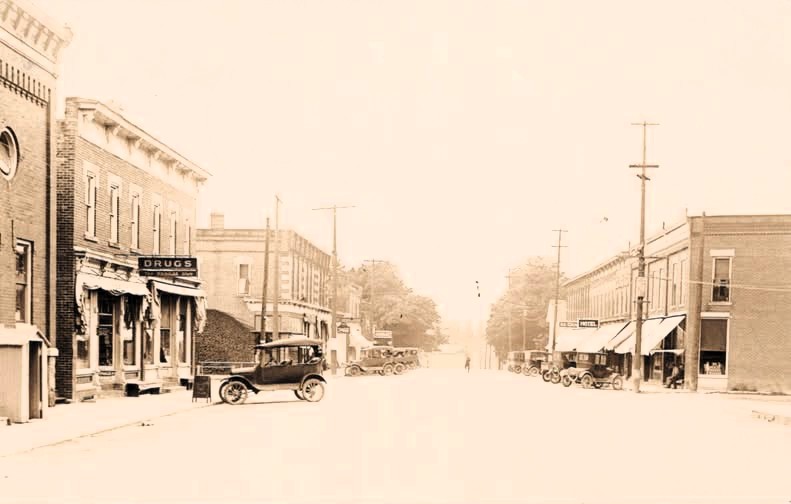
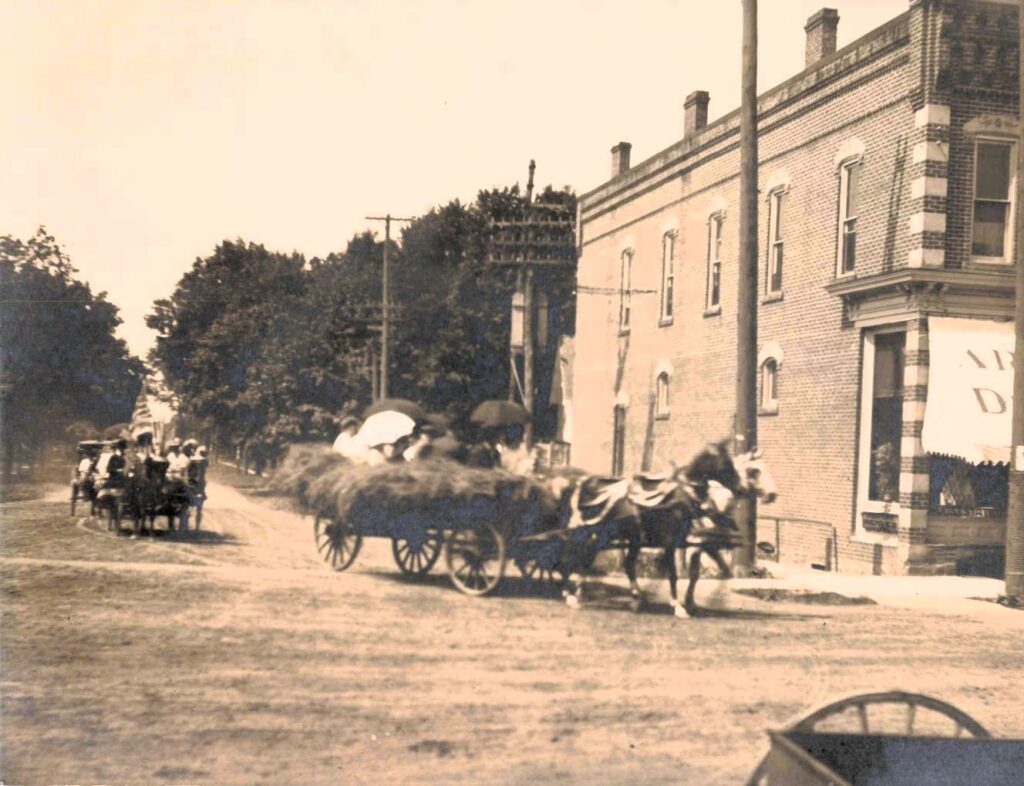
The Main Street views show Concord between eras. Dirt roads and wagons appear beside brick blocks, commercial signs, early autos and public utility poles. That mix tells a lot.
A saloon sign, drug store, bank and garage all appear in the image group. These were not tourist props. They were the daily business of town life. Concord’s Main Street sold medicine, feed, groceries, services and credit. It also provided gathering places.
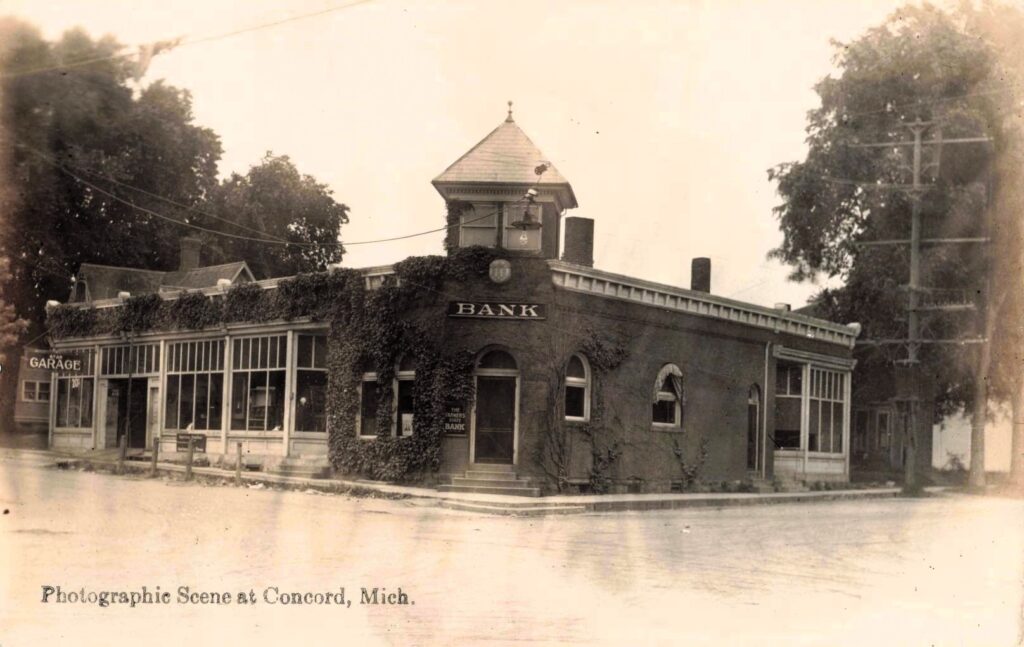
The Farmers State Bank image is especially strong. The corner bank sits under a small tower, wrapped in ivy, with a garage nearby. The scene captures the early 20th century in one frame: money, machines and Main Street confidence.
The Woodmen Hall and the Public Life of Concord
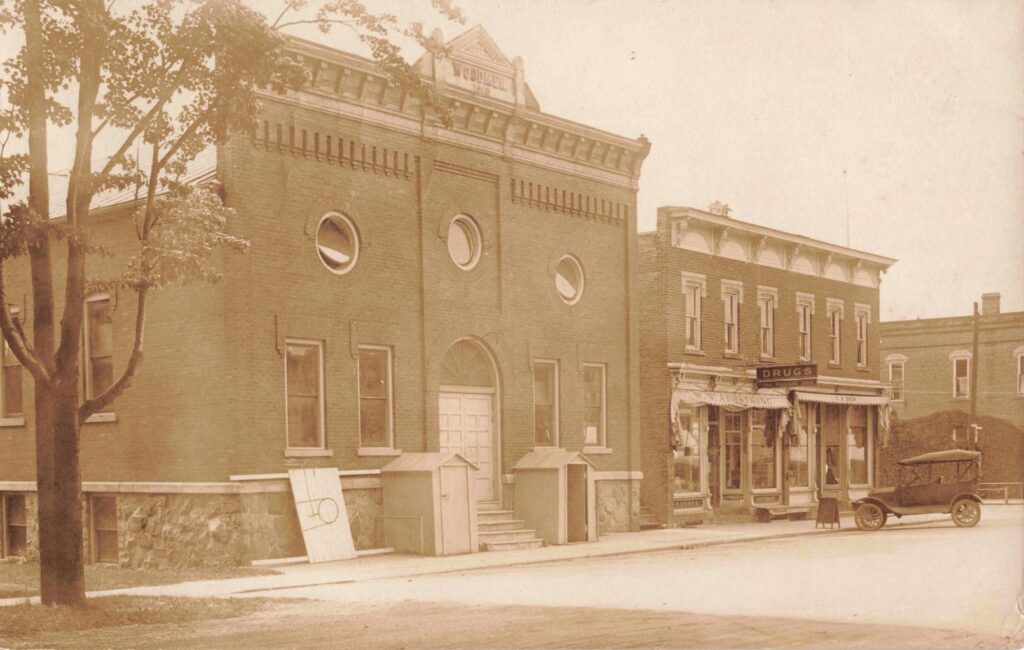
The large brick building with round windows is one of the most memorable structures in the set. The National Register summary for the Concord Village Historic District identifies agriculture, architecture and settlement as key areas of significance. It lists the district’s period of significance from the 1840s into the 1920s.
Buildings like the Woodmen Hall and Opera House, stores and banks help explain why. Concord’s history is not locked in one structure. It is held in the pattern of a village.
A hall gave people a place to meet. It helped turn a business district into a public center.
Schools, Churches and the Mann House
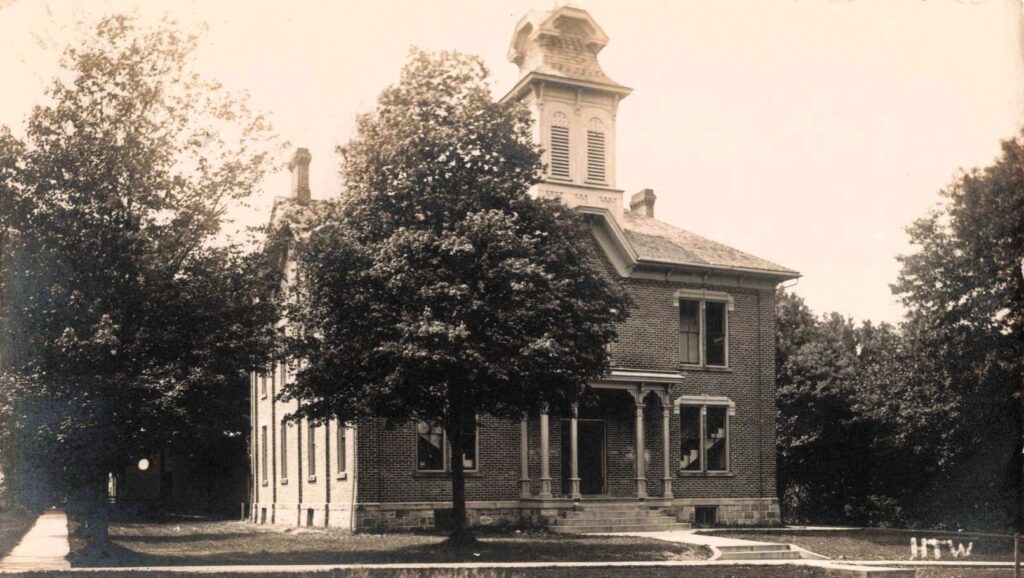
The schoolhouse images add another layer. Concord was not only a farm and freight town. It valued education.
The Mann House makes that point clearly. Built by Daniel and Ellen Mann in 1883, the house brought a successful farm family closer to village schools and social life. The Michigan History Center says the Mann family installed Concord’s first telephone in 1900. It also notes that Daniel and Ellen Mann were college educated, which was unusual for the period.
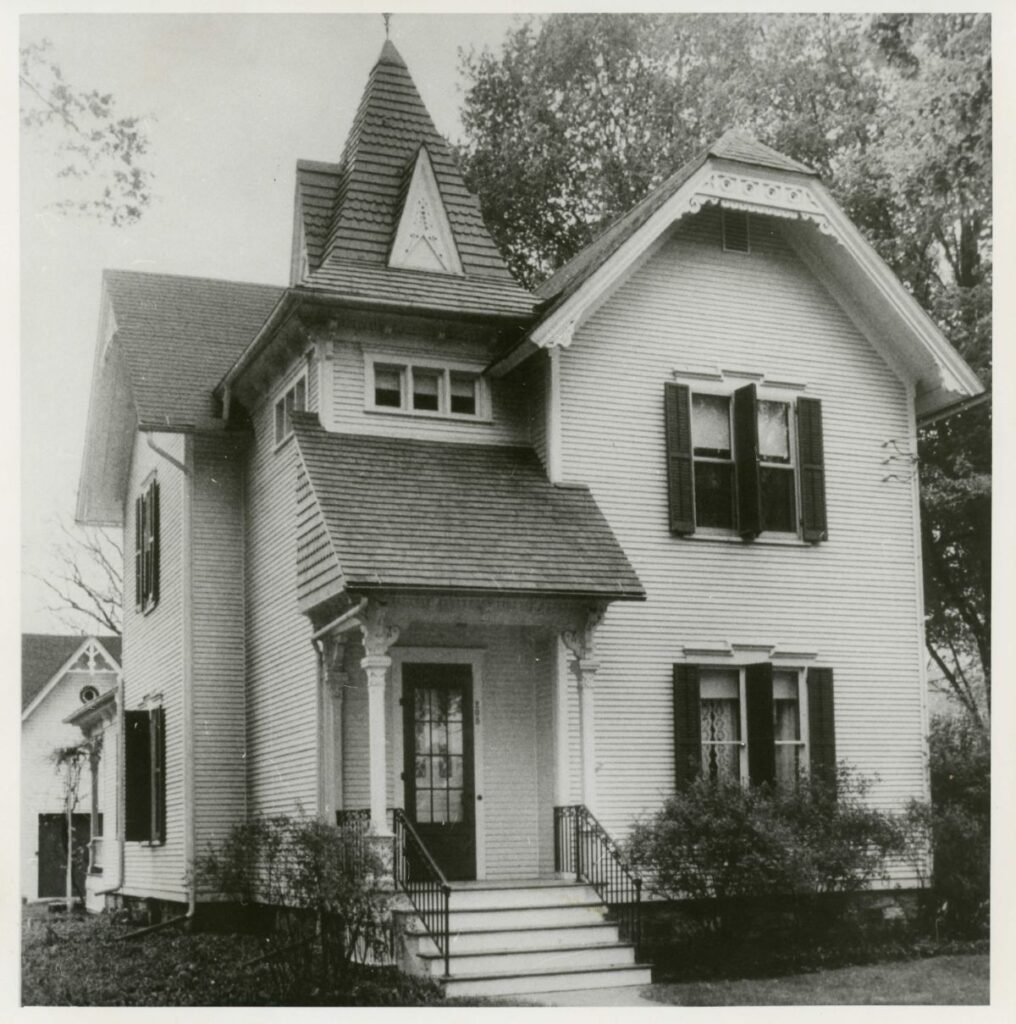
Their daughters, Mary Ida and Jessie Mann, became part of a broader story about women, education and public memory. Jessie earned a mathematics degree from the University of Michigan in 1906, according to the Michigan DNR’s historical account.
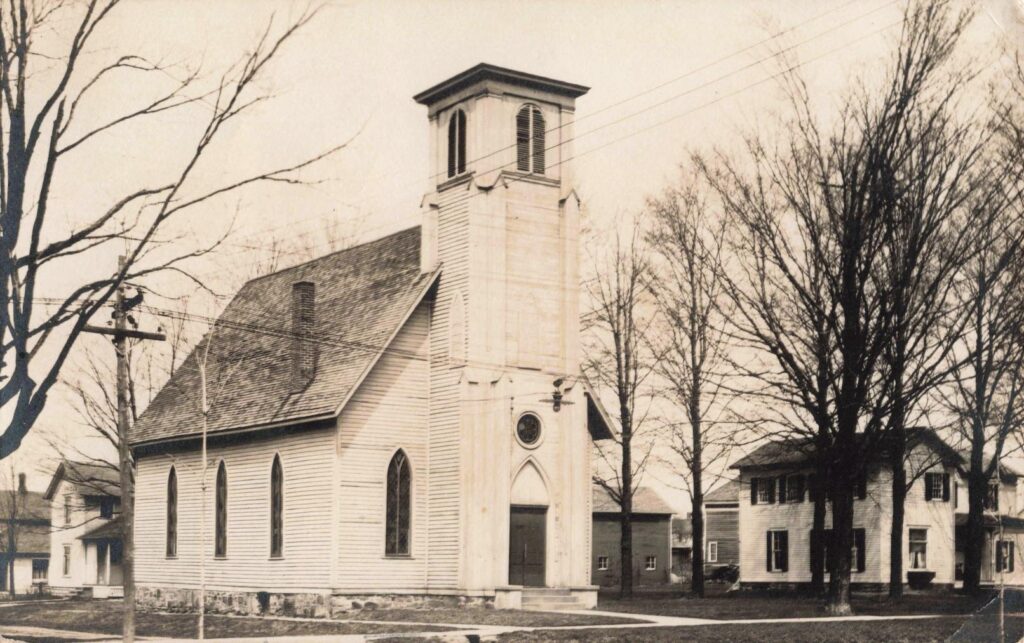
The First Universalist Church and other church images point to another force in Concord life. Churches served worship, social order, music, lectures, family events and moral debate. In a small town, church buildings were community anchors.
Baseball, Springs and the Human Side of Town
The 1911 Concord baseball team image gives the story a face. The men pose in uniforms marked with a large “C.” They stand with gloves, bats and catcher’s gear. Their expressions are serious because baseball was serious.
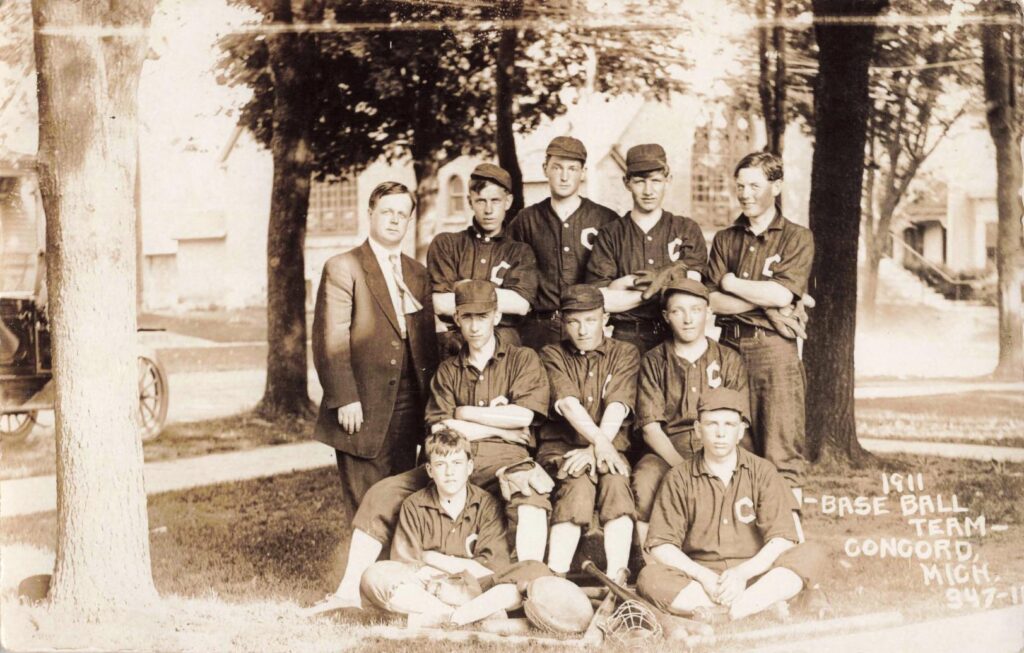
Small-town baseball helped connect communities. Teams traveled, competed and brought people together. A local victory gave residents something to talk about at the depot, store, mill and church steps.
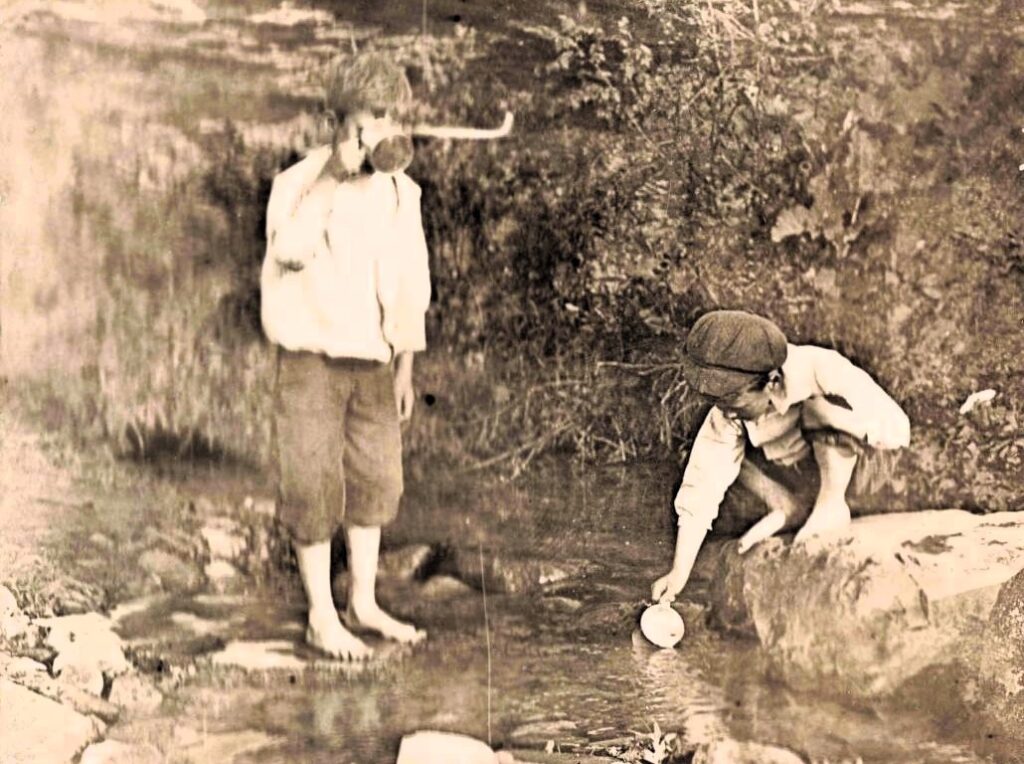
The Spring image gives the story a different tone. Two children stand in shallow water near a rocky spring. One drinks. Another reaches down with a cup. It is simple, but it is powerful.
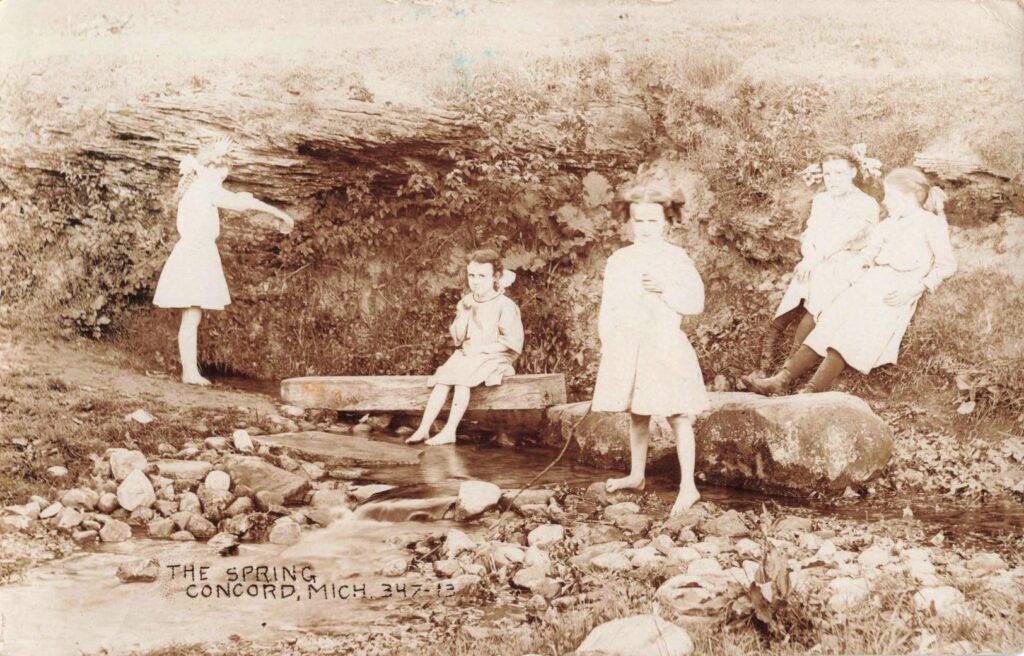
The spring connects back to Concord’s oldest theme: water. In this town, water powered mills, shaped settlement and became part of childhood memory.
Concords Area Farms, Stone Walls and Soybeans
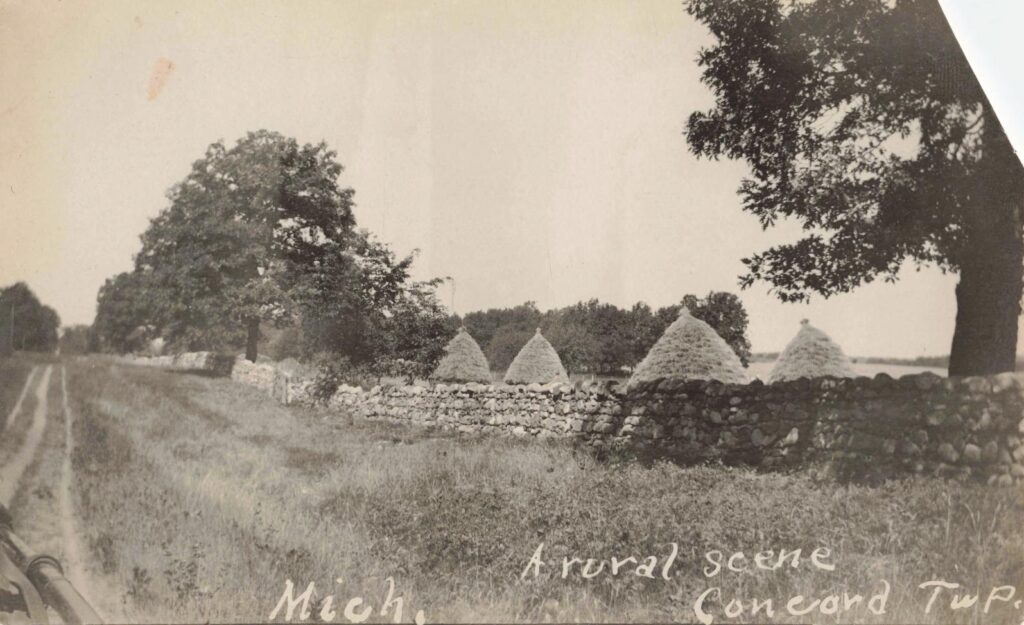
The rural scene in Concord Township shows hay stacks, stone walls, pasture and open road. It reminds us that the village existed because farms surrounded it.
The soybean mill image pushes the story forward. By the early and mid-20th century, Michigan agriculture was changing. Concord changed with it. Older flour and grain work gave way to other farm processing and shipping.
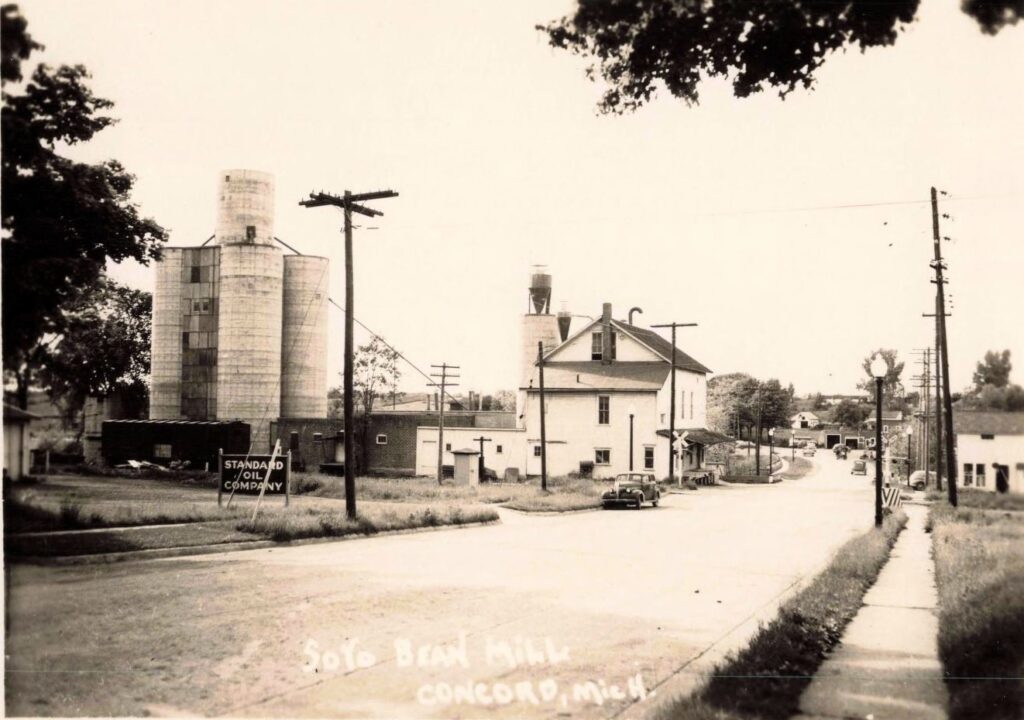
That is the key to the history of Concord Michigan. The village did not survive by standing still. It adapted while keeping much of its older form.
The Counterintuitive Lesson of Concord
Here is the surprising part: being bypassed by some forms of later growth may have helped Concord.
Many Michigan towns lost their old commercial cores to widening roads, gas stations, parking lots and midcentury rebuilding. Concord still holds a readable pattern of mill, depot, Main Street, homes, churches and civic buildings. The National Register listing recognizes that broader village pattern.
The railroad line no longer serves Concord the way it did in 1920. But the Falling Waters Trail now follows an abandoned stretch of the Michigan Central route between Concord and Jackson.
That is not just reuse. It is continuity.
Why the History of Concord Michigan Still Counts
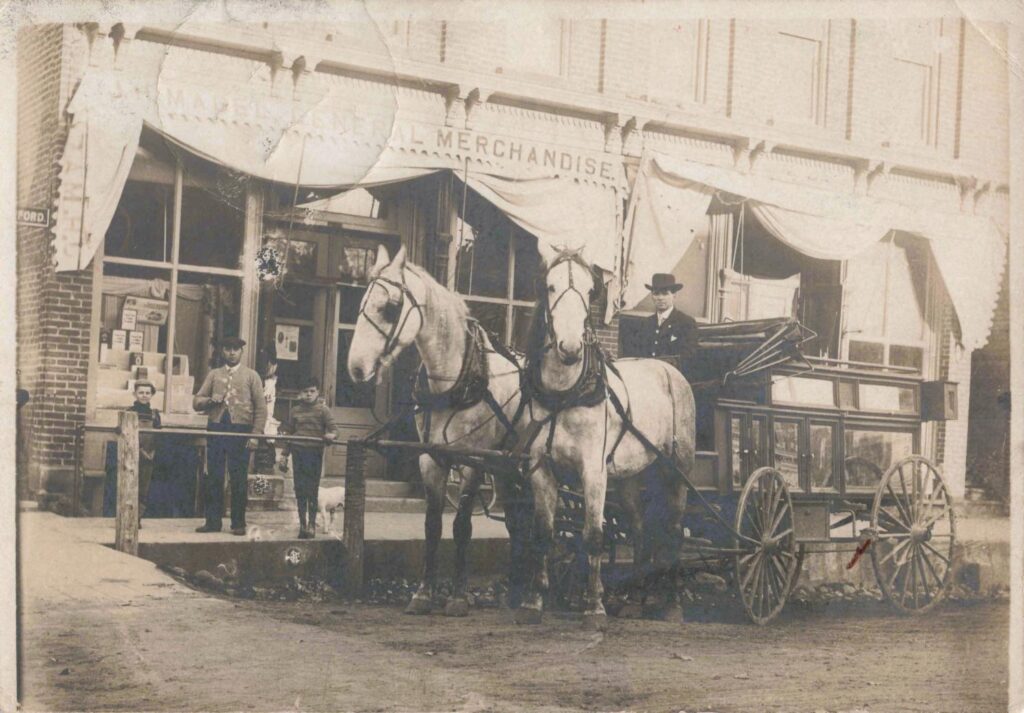
The history of Concord Michigan is not a story of a lost boomtown. It is a story of a practical village that served farms, used water, embraced rail service, educated its children and built a Main Street that still carries meaning.
Concord’s unique historical strength is the way its pieces fit together. The mill explains the river. The depot explains the farms. The bank explains trade. The school explains ambition. The baseball team explains pride. The Mann House explains education, technology and family memory.
Concord is a small place with a complete story.
For Michigan history readers, that is exactly why it belongs in the Michigan Moments series.
Concord vs. Marshall: Two Southern Michigan Towns, Two Different Stories
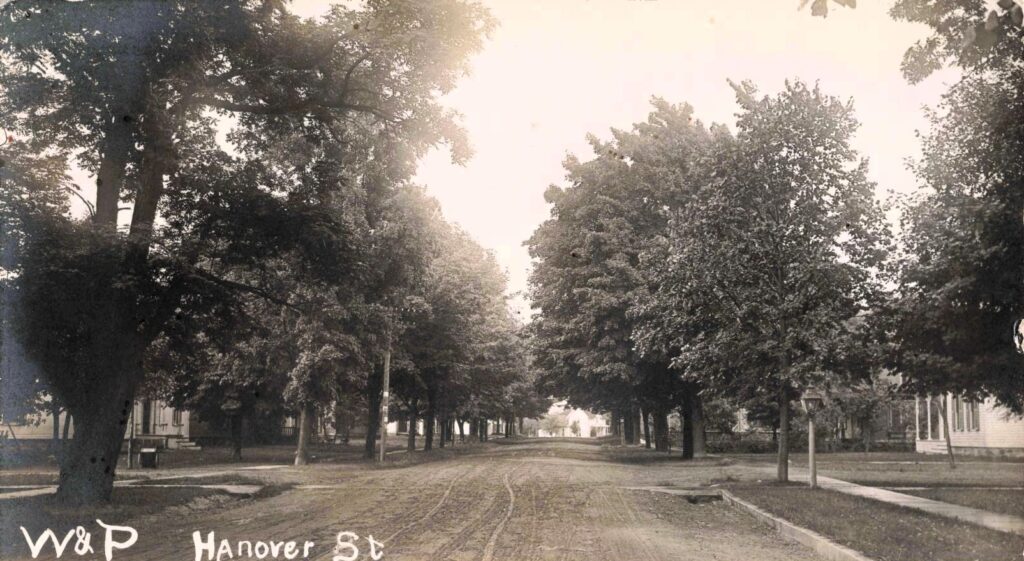
Concord and Marshall sit in south-central Michigan, but they tell very different stories.
Marshall was built with larger ambitions. Founded in 1830, it became a major commercial, political and social center for the surrounding farm region. It was once viewed as a possible state capital. Its streets filled with large homes, civic buildings, hotels, churches and public spaces. Today, Marshall is known for one of Michigan’s most important collections of 19th- and early 20th-century architecture.
Concord grew on a smaller scale. It was not a political center. It did not become a showplace city. Its story began with waterpower, a dam, mills, farm roads and later the Michigan Central depot. Concord served the countryside around it. Farmers came to grind grain, ship goods, use the bank, visit stores and meet neighbors.
Marshall presents history with size and polish. Concord presents history through use and function.
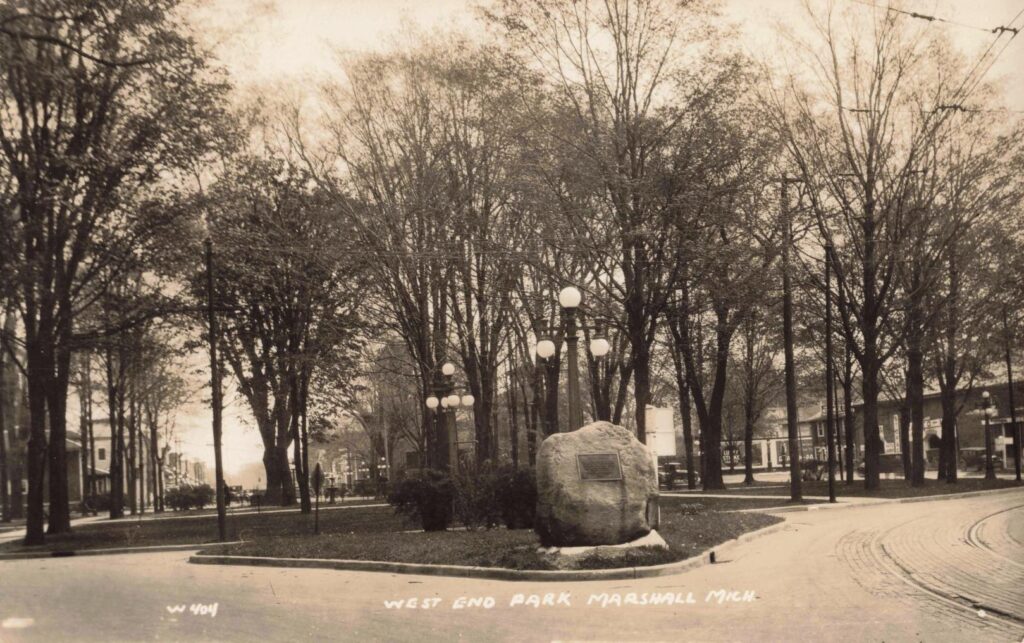
That difference is important. Marshall shows what a prosperous Michigan county seat and regional center could become when wealth, politics and architecture came together. Concord shows how a working farm village survived by being useful. Its mill, depot, Main Street, school, baseball team and soybean mill tell a story rooted in daily life.
Marshall asks viewers to look at architecture. Concord asks them to look at work.
Marshall’s great strength is preservation at scale. Concord’s strength is clarity. You can still read the town’s old purpose: water turned the mill, rails moved the farm goods and Main Street held the village together.
Both towns matter to Michigan history, but for different reasons. Marshall shows ambition. Concord shows function. One became a historic showpiece. The other remained a practical village with a story that still holds together.
Works Cited For The History of Concord Michigan
Jackson County, Michigan. “Falling Waters Trail.” Jackson County Parks, accessed 19 June 2026.
Michigan History Center. “Mann House.” Michigan Department of Natural Resources, accessed 19 June 2026.
MichiganRailroads.com. “Station: Concord, MI.” MichiganRailroads.com, accessed 19 June 2026.
National Park Service. “National Register of Historic Places — Michigan.” National Archives and Records Administration, 2021, accessed 19 June 2026.
University of Michigan Library Digital Collections. “David V. Tinder Collection.” William L. Clements Library, University of Michigan, accessed 19 June 2026.
Village of Concord. “History.” Village of Concord, accessed 19 June 2026.