 by
by 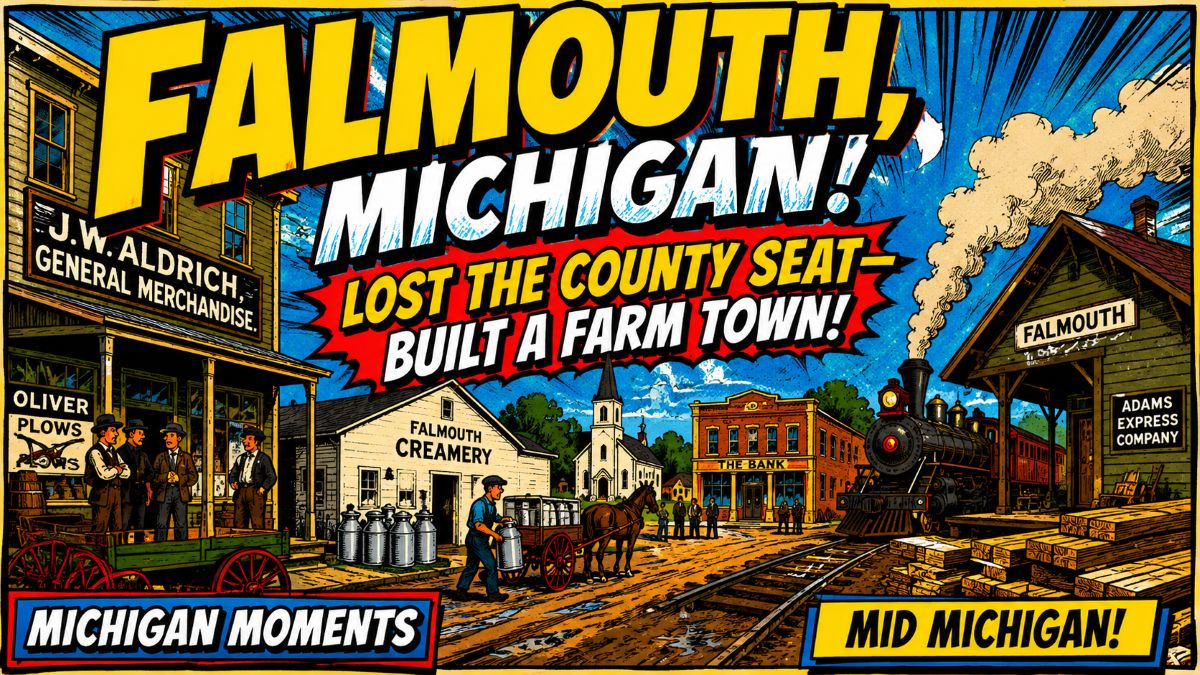
Falmouth Michigan history begins with timber, rail lines and a political prize that became out of reach for this small town in north mid Michigan.
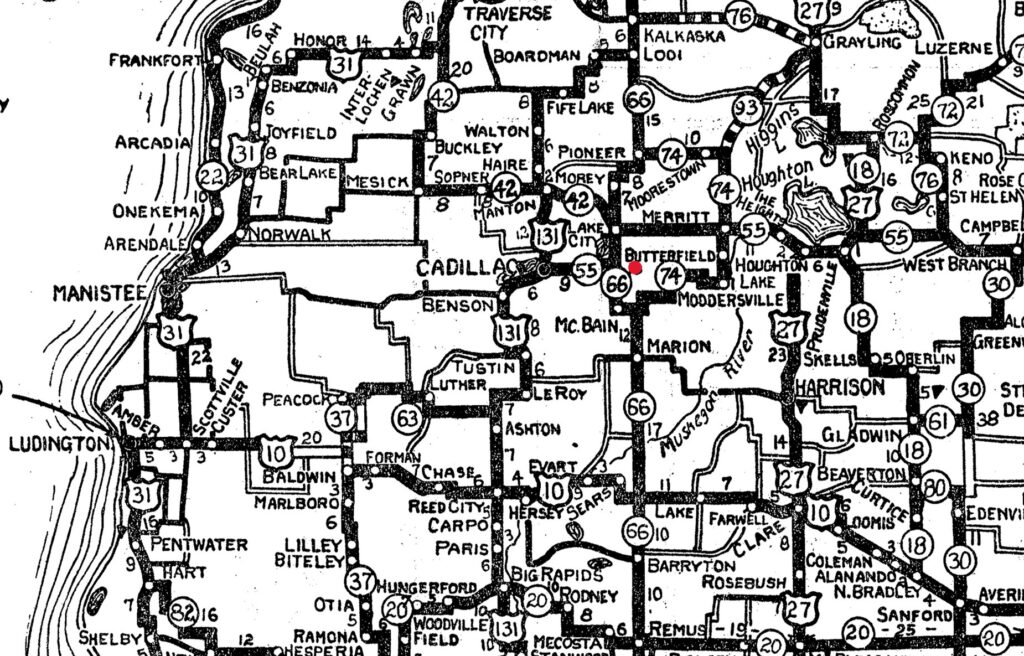
Falmouth, in south-central Missaukee County, was settled about 1871 as a lumber community. It had a sawmill, shingle mill and grist mill, all signs of a place moving quickly from forest camp to permanent settlement. The town was also reached by a Grand Rapids & Indiana Railroad branch, through a four-mile spur from Veneer Junction.
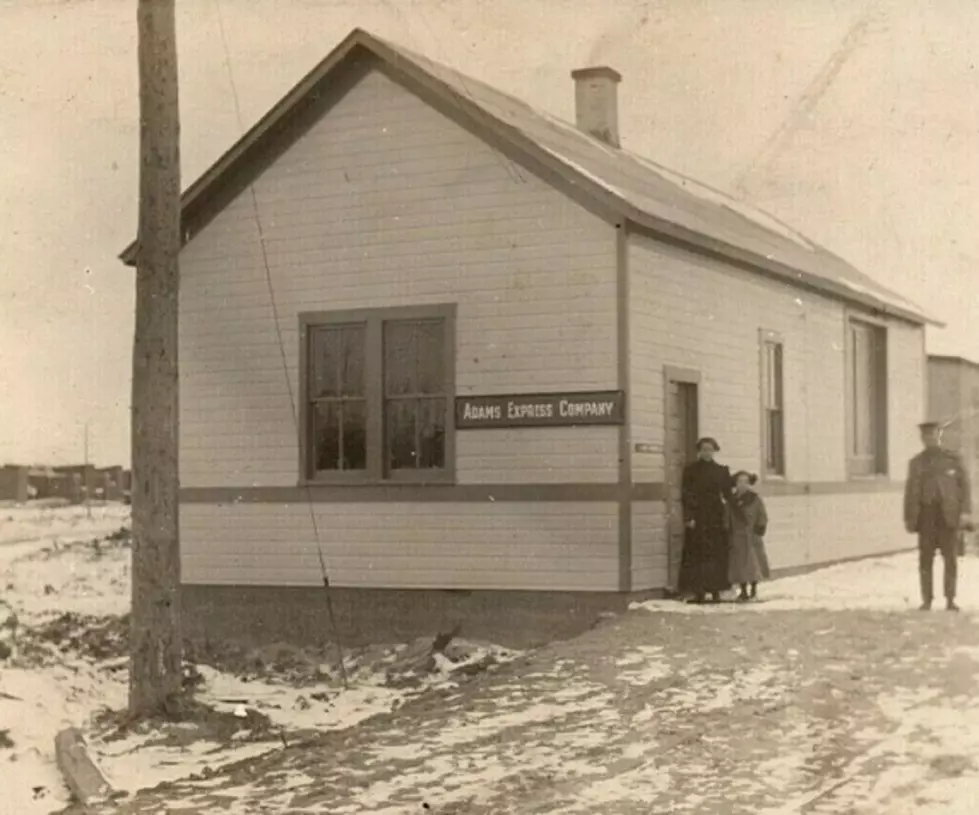
That small spur helped connect Falmouth to the wider economy. It moved lumber, freight, farm goods, parcels and people. It also gave the town a reason to build stores, depots, mills and warehouses.
Falmouth’s Short Time Near County Power
One of the most important facts in Falmouth Michigan history is also one of the least known. Falmouth was tied to Missaukee County’s first county-seat period after the county was organized in 1871. A temporary courthouse was built there, and early county business passed through the settlement.
That status did not last. By 1873, county government had shifted to Lake City. Courthouse records note that Falmouth was selected when the county was organized, but the county seat moved to Lake City soon afterward.
In many places, that would have ended the story. Government offices brought lawyers, clerks, public sales, travelers and hotel trade. Losing that activity could damage a young town.
Falmouth adjusted. It did not become the county’s political center. It became a service center for farm families and local businesses.
Timber Built the First Economy
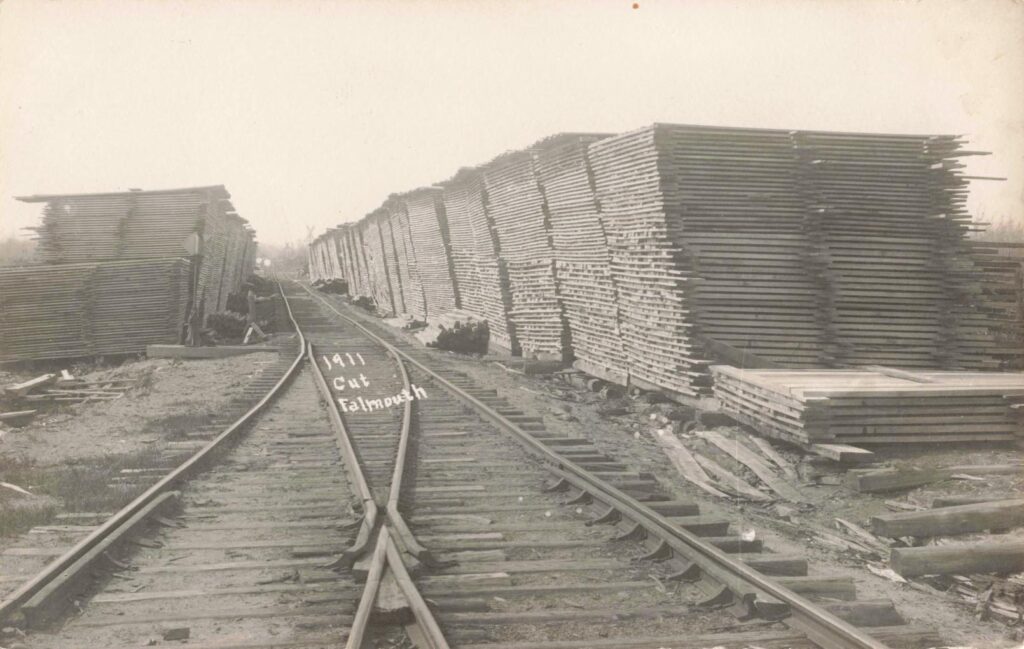
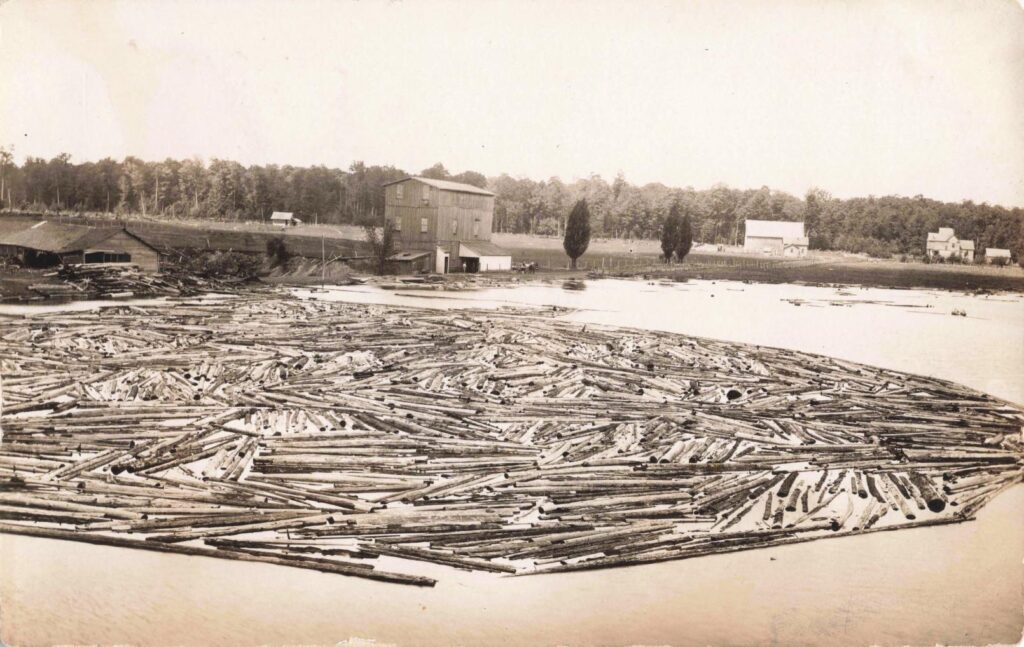
The lumber scenes tied to Falmouth show logs in water, cut boards near rail tracks and mill work in full swing. That fits what county and railroad histories report. Falmouth began as a lumber settlement, and its early mills handled sawed lumber, shingles and grain.
The timber era gave Falmouth its first push. But timber towns faced a hard math. Trees could be cut once. A town that wanted to last needed more than lumber.
That is where farming entered the story.
Cream, Bees and Rural Cash
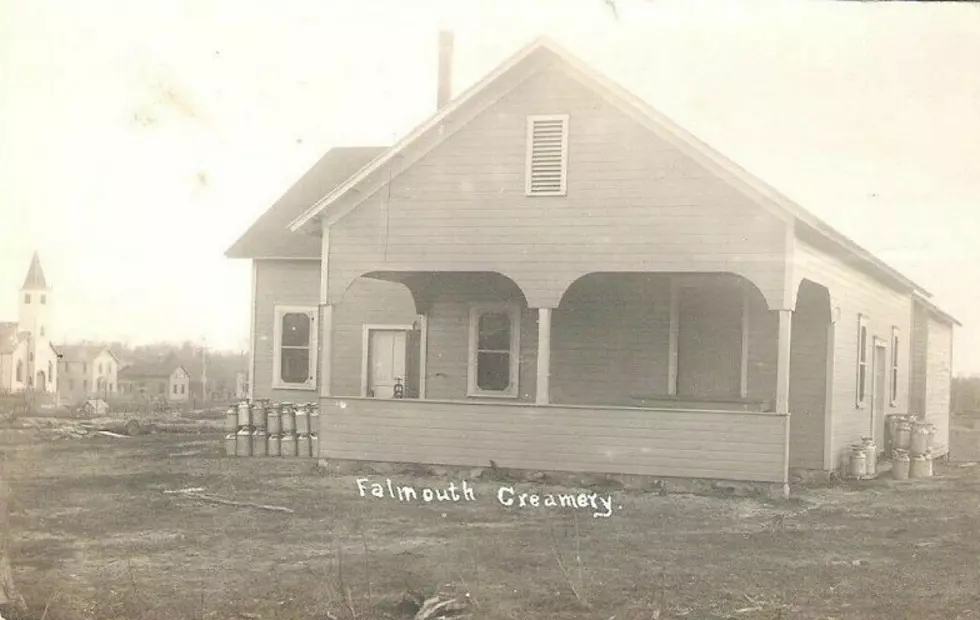
A 1912 county history described Falmouth as having a creamery, a saw and grist mill, a bank and agricultural implement trade. It also called the surrounding area good country for settlement and farming.
That description is important. It shows Falmouth after the first lumber rush, when local farms had become the town’s base.
The creamery turned milk into money. Before modern refrigeration and large dairy systems, rural creameries helped farm families sell butterfat and cream. Milk cans were part of the weekly cash cycle. A creamery did not just process dairy. It tied farms to markets.
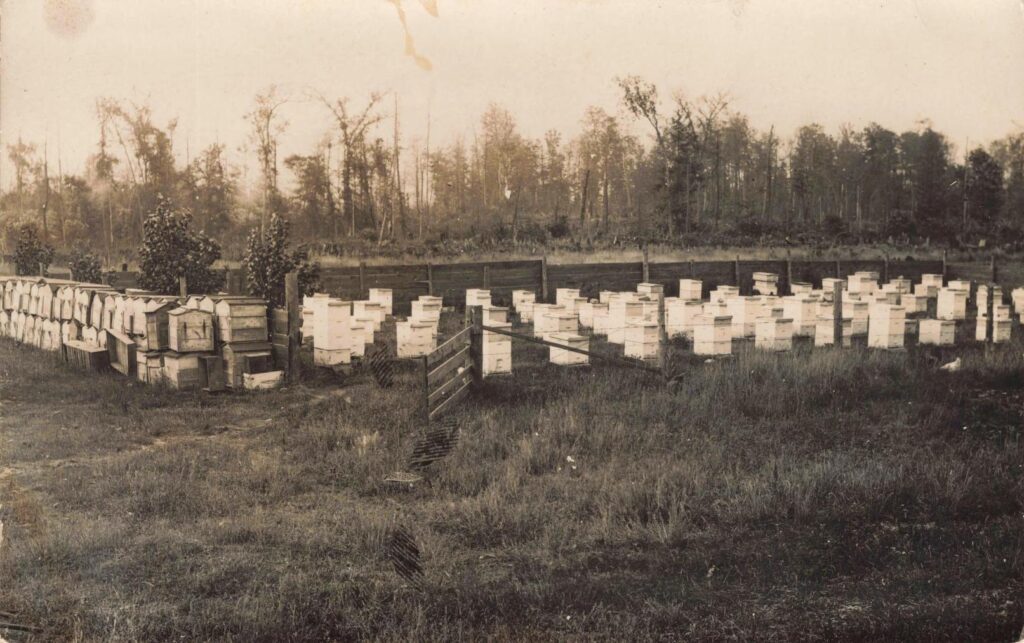
The beehive yard tells a similar story. Bees meant honey, pollination, orchards, clover and garden crops. In a mixed farm economy, even a row of hives could add income.
The General Store Was the Town’s Switchboard
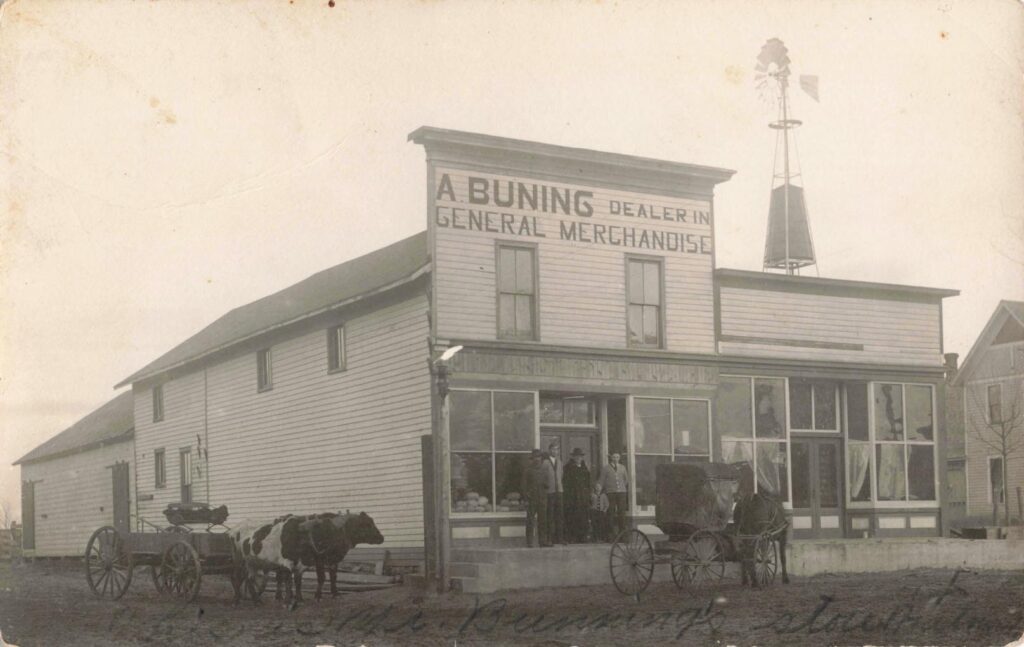
Falmouth Michigan history cannot be told without its general stores.
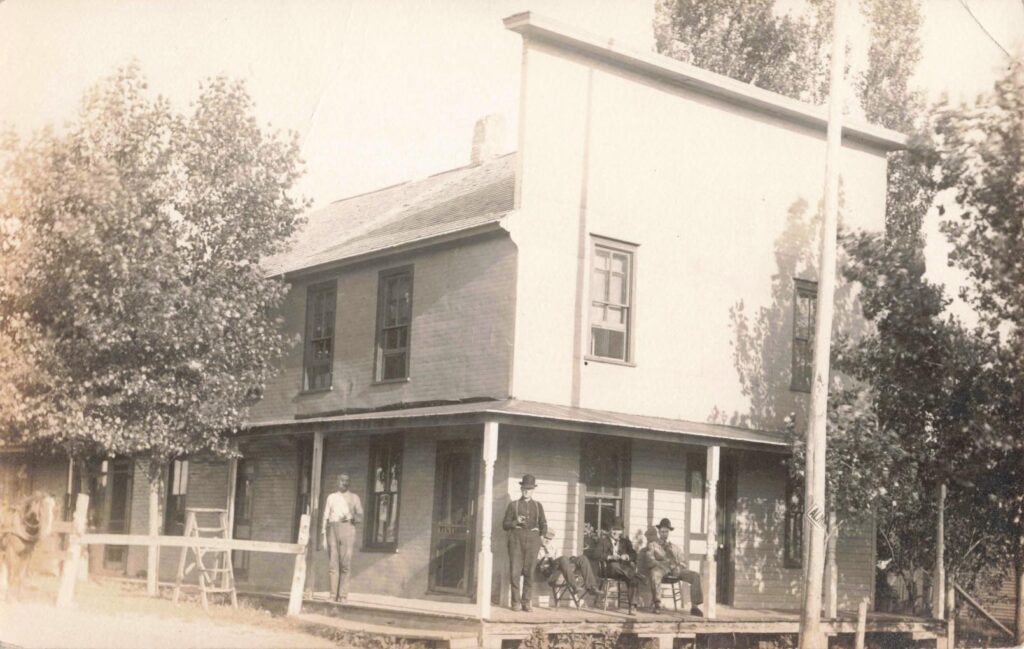
A. Buning’s general merchandise store appears in a 1914 Calvin University postcard record. The record describes a front business view with a team, wagon, horse and buggy, and people gathered outside. It was postmarked from Falmouth in August 1914.
The store signs tell the story. General merchandise meant groceries, hardware, dry goods, farm supplies and household needs. It also meant news, credit, errands, deliveries and conversation.
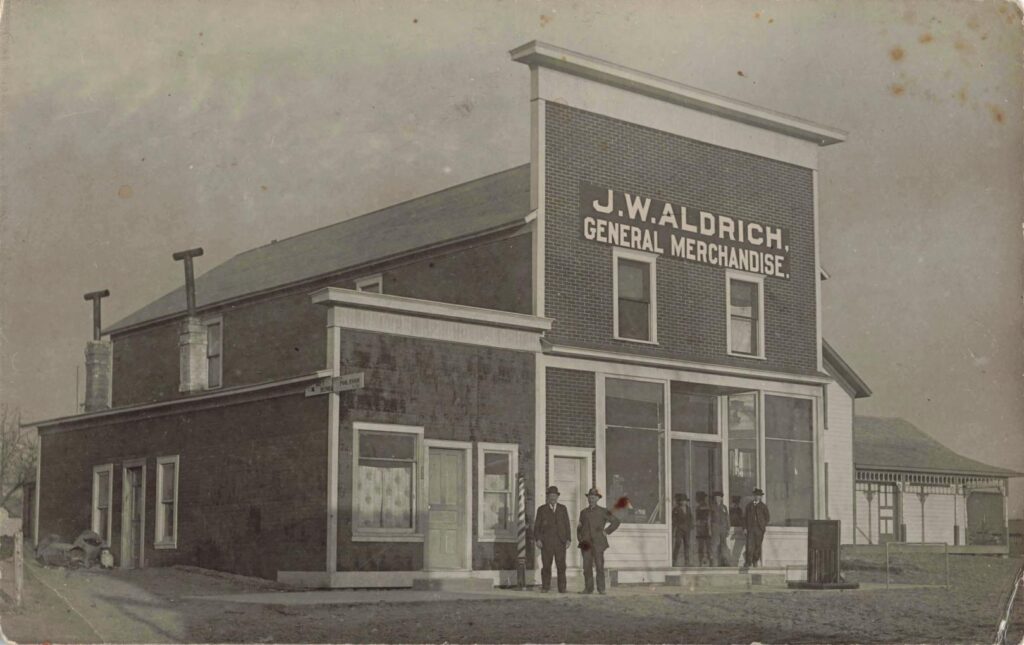
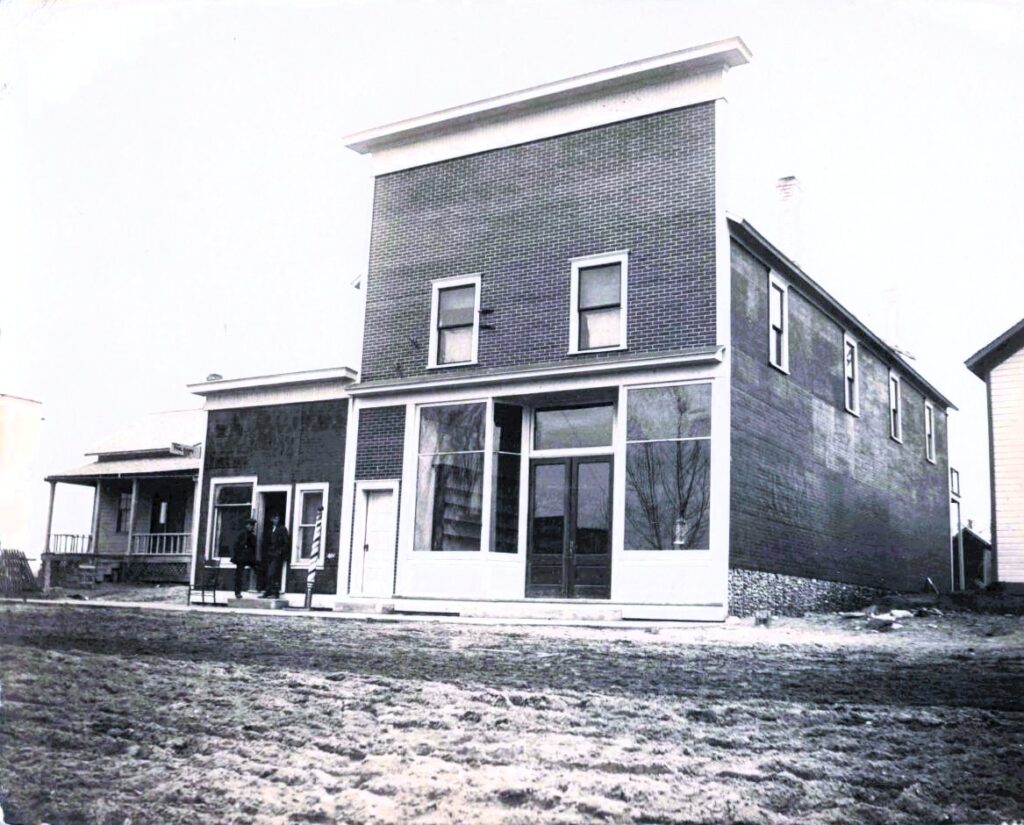
J.W. Aldrich’s general merchandise building appears more permanent, with a brick front and large windows. It suggests a town confident enough to build for the long term.
Hardware, Implements and the Working Farm Belt
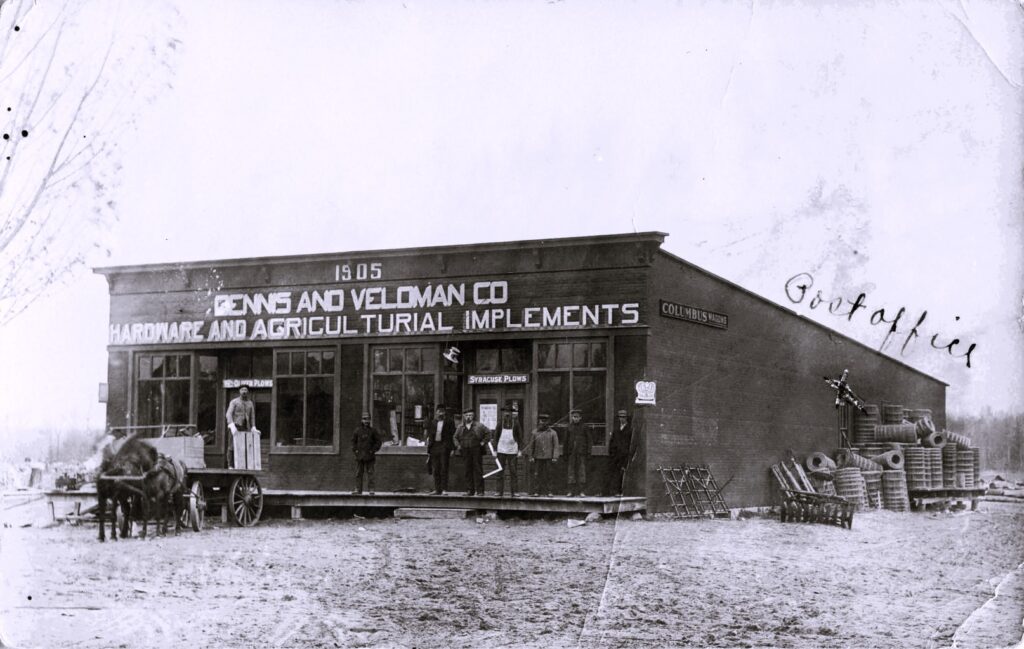
The implement store is another key part of the History of Falmouth Michigan. Its signs advertised agricultural implements, hardware, Oliver plows, Syracuse plows and Columbus wagons.
Those signs were not decorative. They were tools of survival and income. Farmers needed plows, wagon parts, fencing, nails, hinges, seed tools, harness equipment and repair materials.
Marketing in Missaukee county Michigan Falmouth with implement dealers was not just selling to residents. It was serving a farm district.
A Bank Meant Confidence
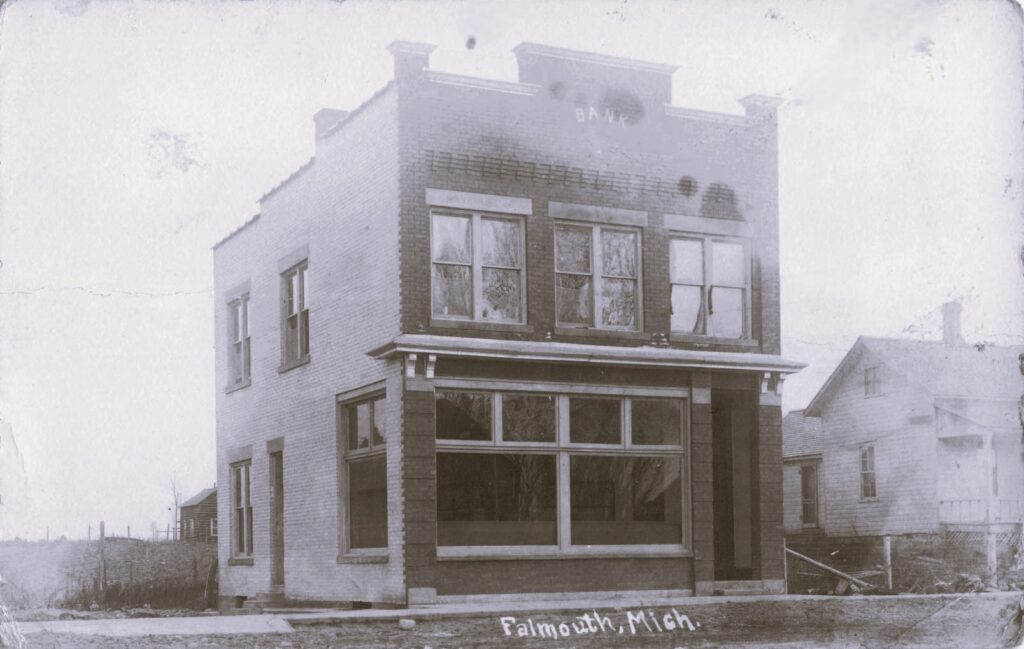
The bank image adds another layer. A bank in a small town was a statement. It meant there was enough trade, savings and credit demand to support a financial business.
Farmers needed loans for livestock, land, equipment and seed. Merchants needed working cash. Families needed safe deposits and savings. In a rural place, a local bank shortened the distance between ambition and action.
A 1912 county history specifically described Falmouth as a banking point for a considerable district.
Schools, Churches and a Town Built to Last
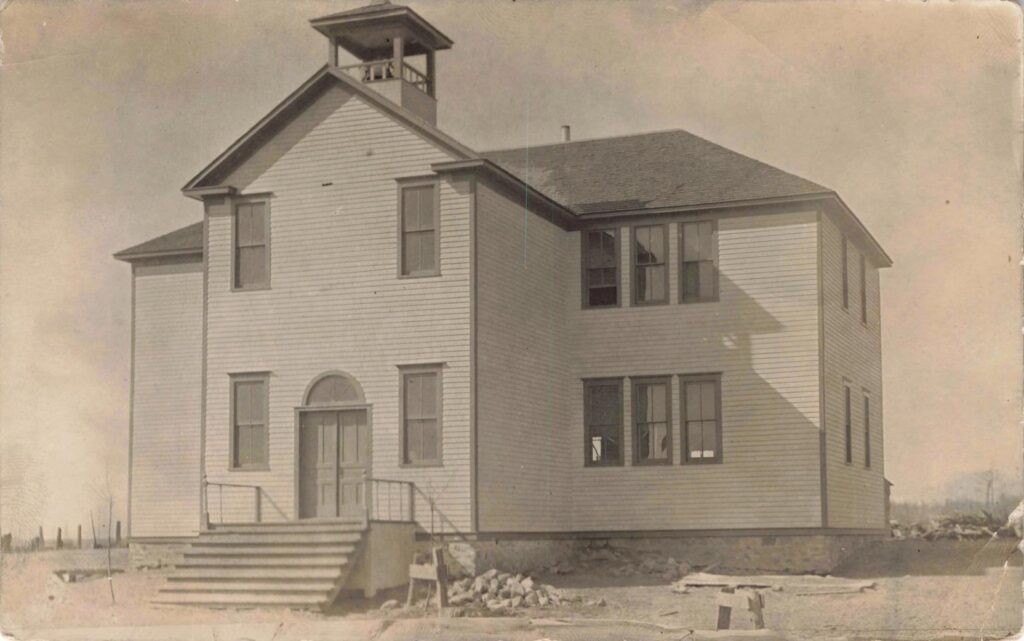
Falmouth’s school and church views show a community moving past the rough first years of settlement. Schools marked permanence. Churches gave the town a weekly calendar and a center for weddings, funerals, meetings and moral authority.
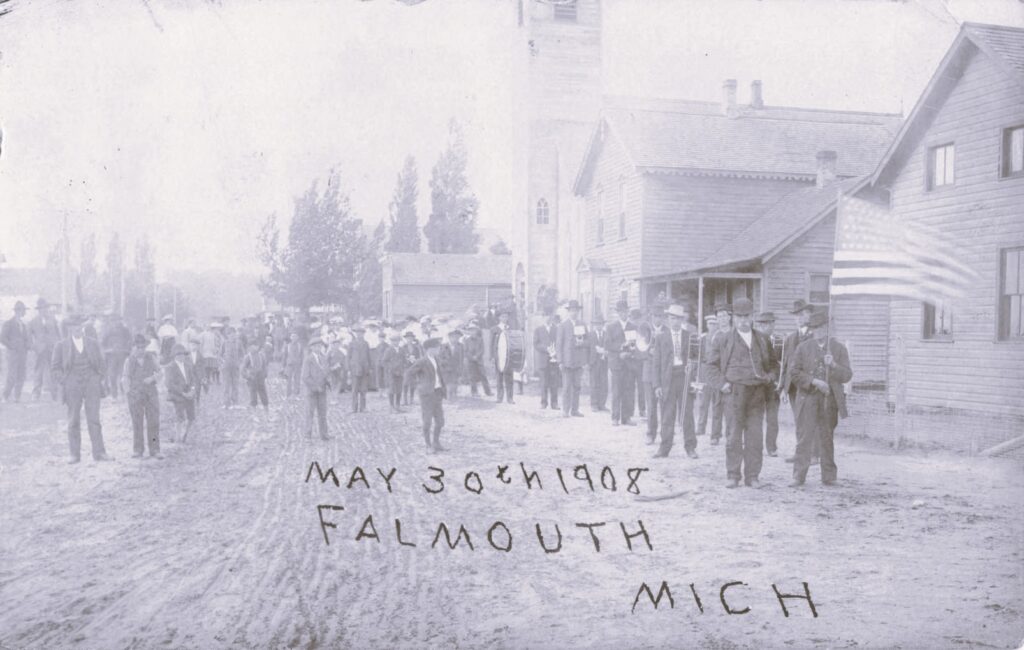
The May 30, 1908 street scene is especially useful. It shows a settled village environment, with people gathered in the road and buildings lining the street. That was Falmouth between eras: still horse-powered, still rail-dependent, but already part of the 20th century.
Ebels and the Living Link
In 1920, Chris Ebels began operating Ebels General Store in Falmouth. According to the company’s history, he first delivered food and essentials by horse-drawn wagon. In 1927, he moved the store building to its present Falmouth site, and later generations expanded the business.
That makes Ebels one of the strongest living links between old Falmouth and modern Falmouth.
The store’s story fits the town’s larger arc. Falmouth survived because it stayed useful. It served farms, families and travelers. It handled dairy, lumber, credit, tools, groceries and freight.
Final Thoughts on Falmouth Michigan History
The History of Falmouth Michigan is not a story about size. It is a story about function.
Falmouth lost the county seat, but it kept serving the people around it. Its depot, creamery, bank, lumber yards, bee yards, school, churches, implement dealers and general stores show how a small Michigan town worked.
It began with timber. It adapted to farming. It used the railroad while the railroad still ruled local trade. It built stores that acted as supply centers and gathering places.
That is why Falmouth still deserves attention. It shows how many Michigan towns were built: not by fame, but by daily usefulness.