
 by
by 
The History of Camp Jeannette Waterford Michigan begins with a bus from Detroit and boys who could not afford a summer vacation.
The camp sat on Lester Lake in Waterford. The postcards spell the name “Camp Jeanette,” while some reference it as “Camp Jeannette.” It was a full cabin camping experience, not like the summer day camps of today.
The camp served underprivileged boys brought by bus from Detroit. Many reportedly came from Corktown and other working-class neighborhoods where a two-week summer stay at a lake was out of reach for many families.
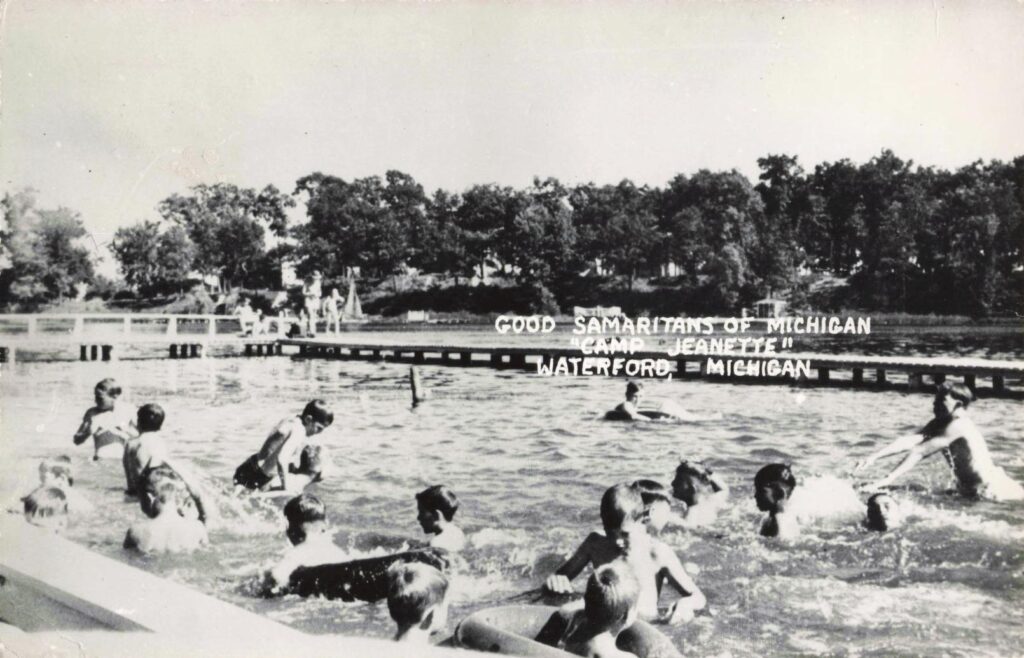
For boys from Detroit families who could not afford a vacation, it offered two weeks on Lester Lake in Waterford. A bus brought them from the city. At the camp, there were cabins, meals, swimming, a church, a small hospital, a library and even a shed where canoes could be built.
But behind the camp was a much larger Detroit operation.
The Good Samaritans of Michigan did not simply ask for cash. It asked people to give cast-off goods: clothing, furniture, mattresses, rugs, dishes, magazines and newspapers. Those goods were collected, sorted and sold. What began in 1932 with one truck reportedly grew into a large salvage business with 27 trucks, 119 employees, a warehouse, offices at 1424 Sherman and seven retail outlets.
Watch: Camp Jeanette in Waterford, Michigan: How Corktown Boys Found Two Weeks at the Lake
A Detroit Charity With One Truck
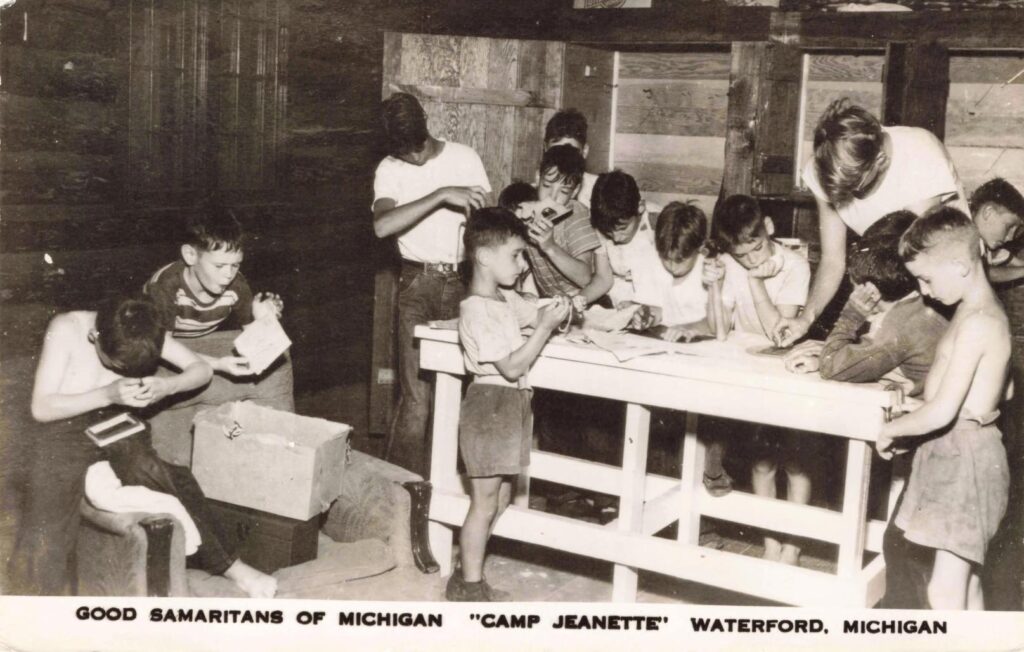
The Good Samaritans of Michigan began in 1932, according to a 1948 Detroit Free Press account. Charles S. Tripp, the first president, reportedly started the operation with one truck and collected cast-off articles himself.
The group’s business model was direct. It asked residents for used clothing, furniture, mattresses, rag rugs, dishes, magazines and newspapers. Those goods were picked up, sorted and sold. The money was supposed to support charity work, including aid to the needy and a mission at 1032 Michigan Ave. in Detroit.
This was not a small neighborhood collection by the late 1940s. Investigators quoted in the Free Press said the Good Samaritans had 27 trucks, 119 employees, seven retail outlets, a warehouse and offices at 1424 Sherman. They also said the group had grossed more than $1 million over six and a half years.
Why Waterford’s Camp Jeannette Offered More Than Swimming
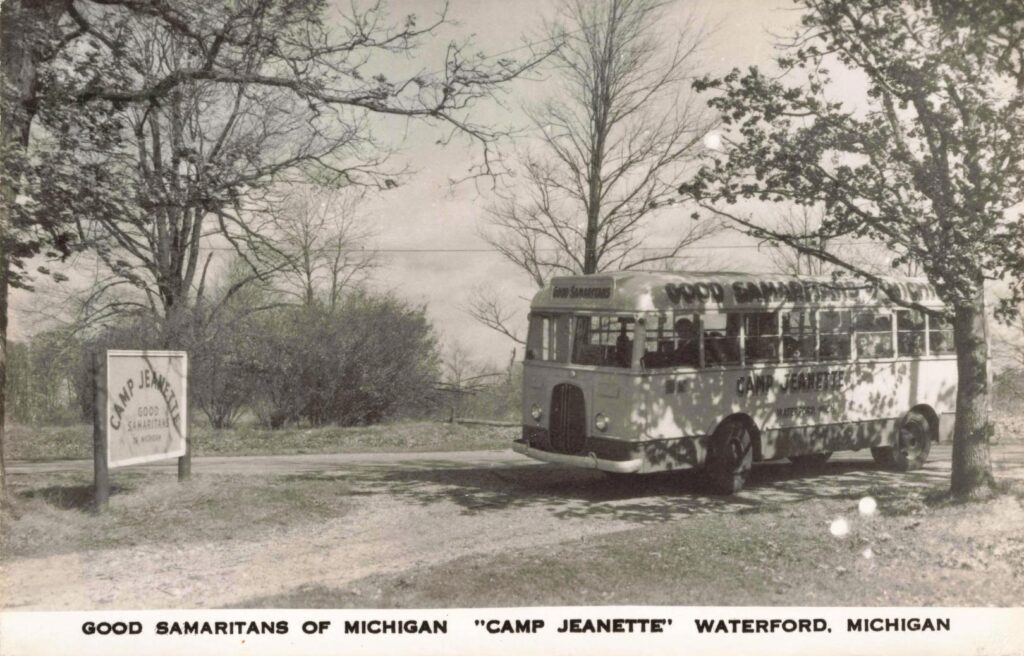
The family account adds detail that the postcards alone do not show. The Lester Lake camp had a church, a small hospital, a canoe-building shed, a library and several other buildings.
The camp is described has having about 37 acres on Andersonville Road in Waterford. It included 27 log cabins, a kitchen and dining building, a utility building, a church and recreation building, a service garage, a hospital building, an administration or overseer’s building, bathing docks and boat docks.
This was not a token camp. It was a large seasonal facility with enough buildings and equipment to serve many boys at once.
A postcard appeal connected to the camp said the Good Samaritans were giving about 1,000 boys a free two-week vacation each summer. For Detroit families living on tight budgets, that would have been a serious offer.
The Daily Order of Camp Life
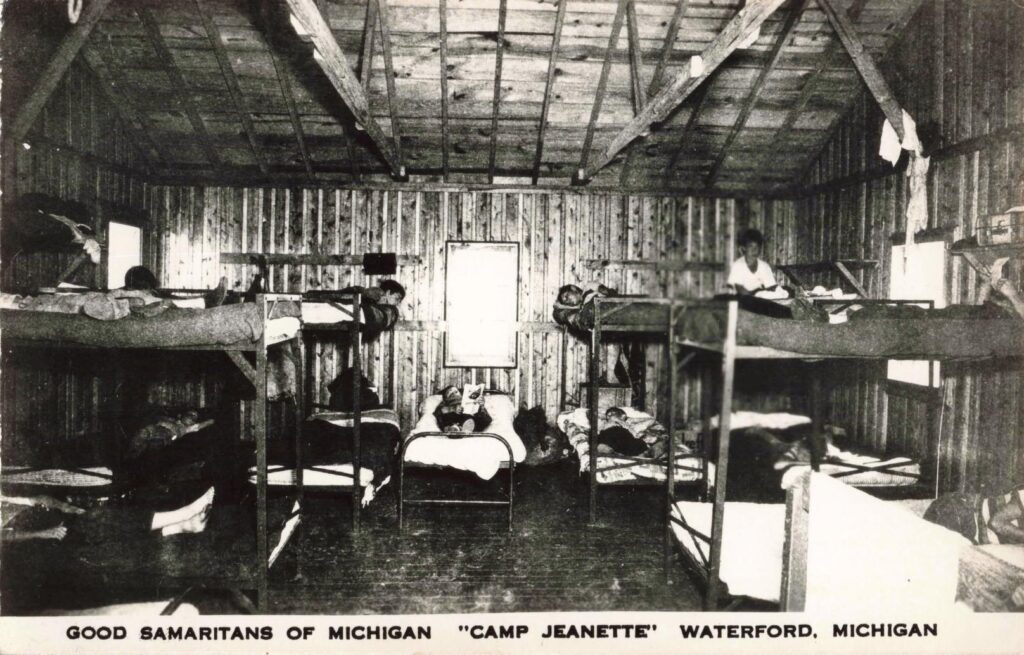
The images show a camp built around routine. Boys sat at long tables in a dining hall. They slept in bunk rooms. They gathered outside log cabins. Counselors supervised meals, swimming and cabin life.
A free camp still had rules. Boys had to line up, eat together, clean up and follow directions. A “Cleanest Cabin” award seen in one camp view suggests that order and personal responsibility were part of the program.
That was common in midcentury youth camps. Recreation came with discipline. Fun came with schedule. Waterford gave the boys the lake, but the camp gave them structure.
For a boy from Detroit, the stay may have been unforgettable. The city was only miles away, but the setting was different. There were cabins, trees, lake water and meals served in a room full of boys who had arrived for the same reason.
They were getting a vacation their families likely could not buy..
Part of a Wider Fresh-Air Tradition
Camp Jeanette fits into a larger American movement often called the fresh-air camp tradition. Beginning in the late 1800s, reformers and charities sent city children to rural homes and camps for summer stays. Cornell University Press notes that such programs began in 1877 and eventually brought hundreds of thousands of urban children to rural homes and camps.
These programs were built on a belief that city children needed rest, clean air, play and time away from crowded neighborhoods. Some of those ideas came with class bias, and not every adult view of city children was fair. But the basic need was real. Many families had little money for summer recreation.
Camp Jeanette brought that national idea into Southeast Michigan.
Dining Hall, Bunks and Camp Order
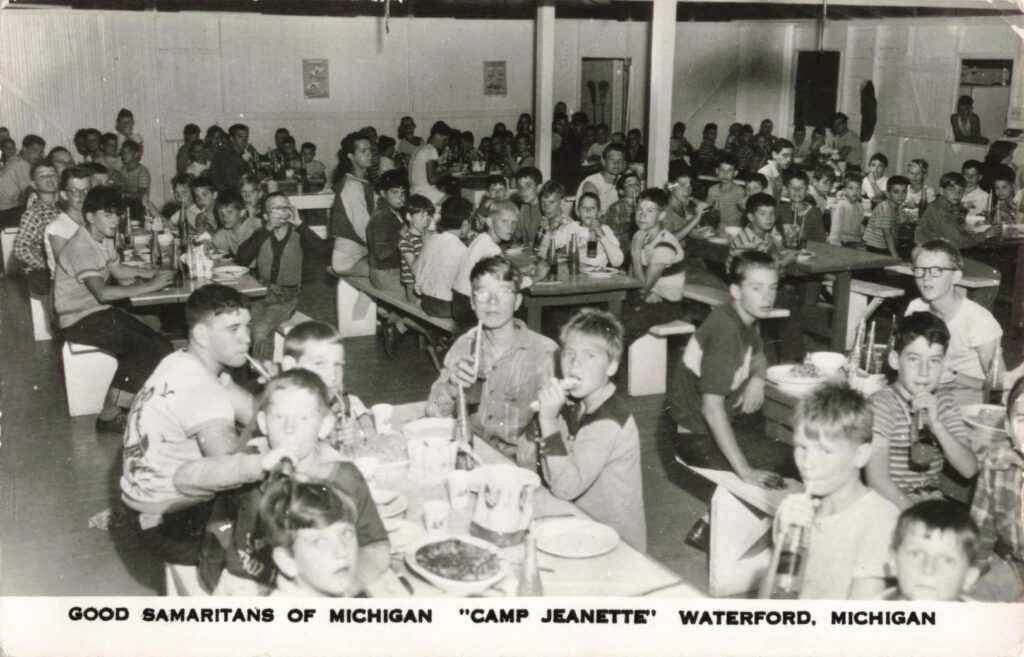
The attached views show a camp built for routine. Boys sit at long tables in a large dining hall. They sleep in bunks inside wooden cabins. They gather outdoors near log buildings. They appear under the direction of young male counselors.
This was not a luxury camp. It was organized, plain and busy.
That plainness is important. Camp Jeanette was designed to serve many boys. Long tables fed them efficiently. Bunk rooms housed them simply. Group activities kept order. Cabin awards and inspections likely taught boys to care for their shared space.
The camp was meant to be fun, but it was not unstructured.
The Cleanest Cabin Award
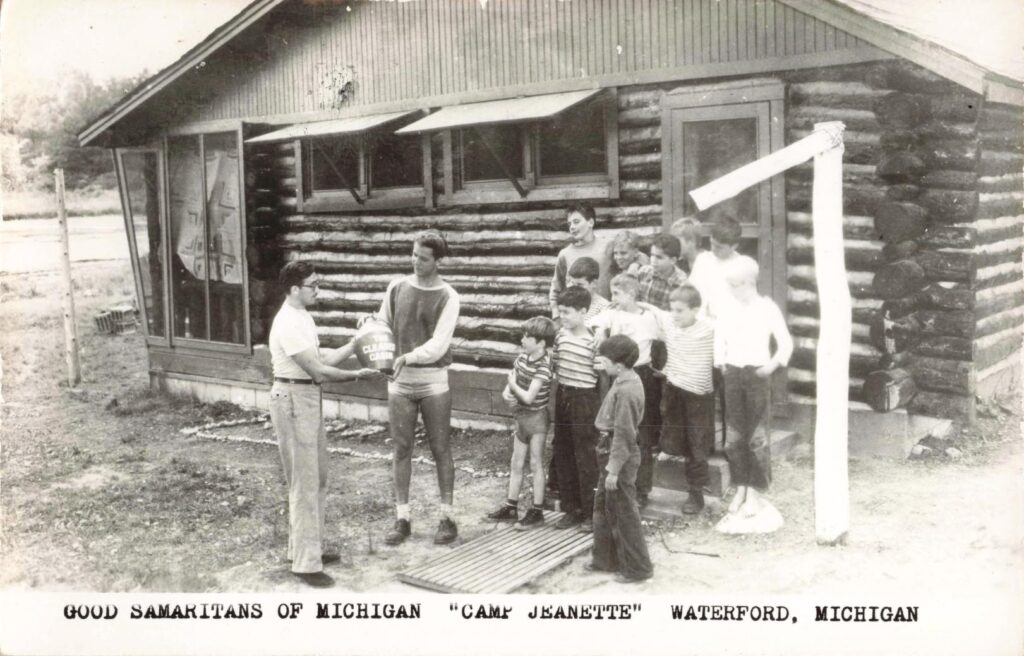
One image shows boys gathered outside a log cabin while a counselor receives a “Cleanest Cabin” award. That small moment says a lot about camp culture.
Clean cabins were not only about hygiene. They were about responsibility. In camp life, boys learned that shared spaces required shared effort. A swept floor or a made bed became part of the program.
Adults in the mid-20th century often viewed camps as places to shape character. Camp Jeanette likely followed that pattern. It gave boys a break, but it also taught habits.
A Camp Between City and Suburb
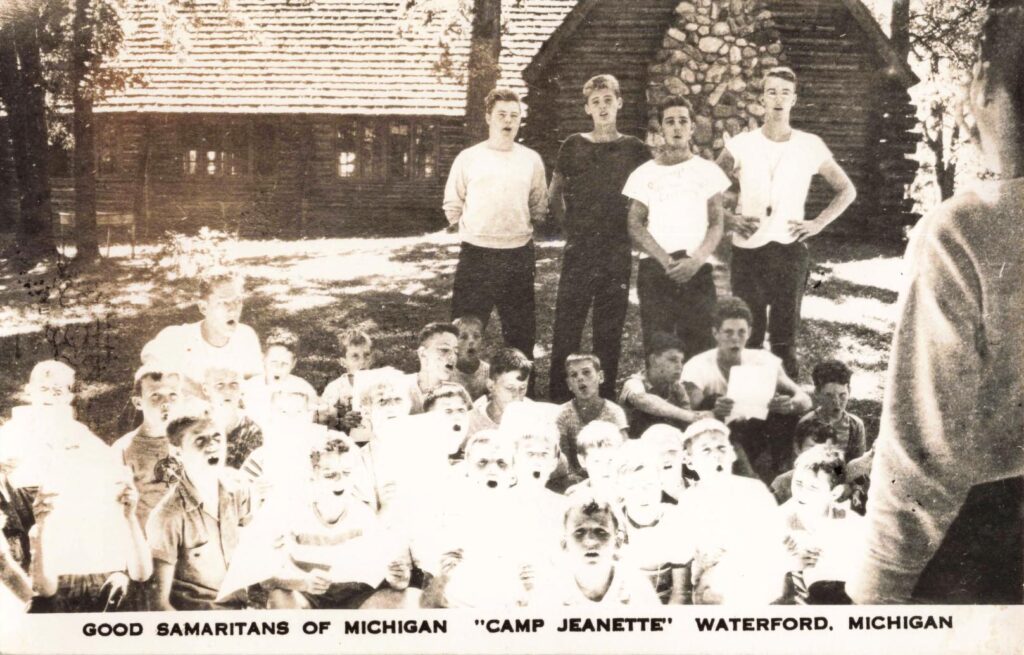
The History of Camp Jeanette in Waterford Michigan also sits at a key moment in Southeast Michigan. After World War II, Detroit remained the industrial center of the region, while Oakland County was growing. Roads improved. Families moved outward. Lake communities became easier to reach.
Camp Jeanette used that geography before suburban growth fully remade Waterford. The camp stood between two Michigans: Detroit’s dense neighborhoods and Oakland County’s lake-based summer life.
That makes the camp historically useful. It shows how regional connections worked before today’s travel patterns, youth programs and public recreation systems became common.
What Happened to Camp Jeannette?

The later history of Camp Jeannette adds a more complicated ending to an otherwise generous story.
By the late 1940s, the Good Samaritans of Michigan had grown far beyond a small charity. Newspaper accounts said the organization operated trucks, retail outlets and a warehouse that handled donated clothing, furniture, mattresses, dishes, magazines and other household goods. Those items were collected and sold to support the group’s charitable work, including the Waterford camp.
In October 1948, John E. Tripp, president and treasurer of the Good Samaritans of Michigan, was indicted after a charity rackets grand jury investigation. Prosecutors accused him of misusing organization funds. The case drew sharp newspaper coverage, and the headlines made the situation look grim.
But the final court outcome is important. The criminal case against Tripp was later dismissed in November 1950. His defense argued that he had authority from the board to use funds as he did, including furnishing his home as an office. The defense also challenged the one-man grand jury process used in the indictment.
A fair reading of what happened is that the Good Samaritans operation appears to have suffered from weak oversight, family control, tax problems and a blurry line between charity work and business activity.
The organization’s financial trouble did not end with the dismissed criminal case. In September 1953, the Good Samaritans of Michigan filed a formal admission that it owed the federal government back taxes and penalties. By 1954, the Waterford camp property was listed for auction through U.S. District Court bankruptcy proceedings.
The 1954 Auction: A Camp Broken Into Lots
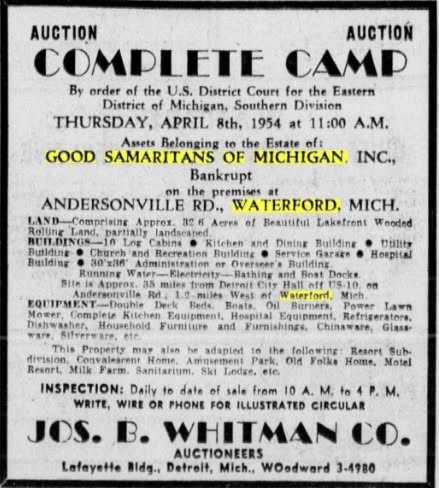
The 1954 auction notice reads like the inventory of a vanished summer.
The sale included land on Andersonville Road in Waterford, about 37 acres of lakefront wooded land, 27 log cabins, a kitchen and dining building, a church and recreation building, a hospital building, a service garage, docks, boats, beds, kitchen equipment, refrigerators, dishes, tables, benches and other camp equipment.
The ad also suggested possible new uses: resort subdivision, convalescent home, amusement park, old folks home, motel resort, sanitarium or ski lodge.
That sale appears to mark the end of Camp Jeannette as a Good Samaritans boys’ camp.
For the boys, the camp may have been remembered through meals, swimming and bunks. For the courts, it became an asset in bankruptcy. That contrast is what gives the story its force.
The Boys Should Not Be Lost in the Scandal
It is a sad ending, but not a simple one. The camp seems to have provided real summer vacations for boys who needed them. The family behind it may have been overwhelmed by the size and complexity of the operation they built. What remains is a story of good intentions, weak controls and a Waterford camp that gave Detroit boys two weeks at the lake before the charity behind it collapsed.
The camp served children from families that could not afford a summer break. The Good Samaritans bus brought them from Detroit to Waterford. They slept in cabins, ate in a packed dining hall and swam in Lester Lake. They were given time away from crowded streets and tight family budgets.
Camp Jeannette deserves to be remembered for both parts of its history: the boys who got a summer at Lester Lake, and the hard lesson that even well-meant charity work needs clear records, strong oversight and public trust.
Works Cited For The History of Camp Jeannette Waterford Michigan