 by
by 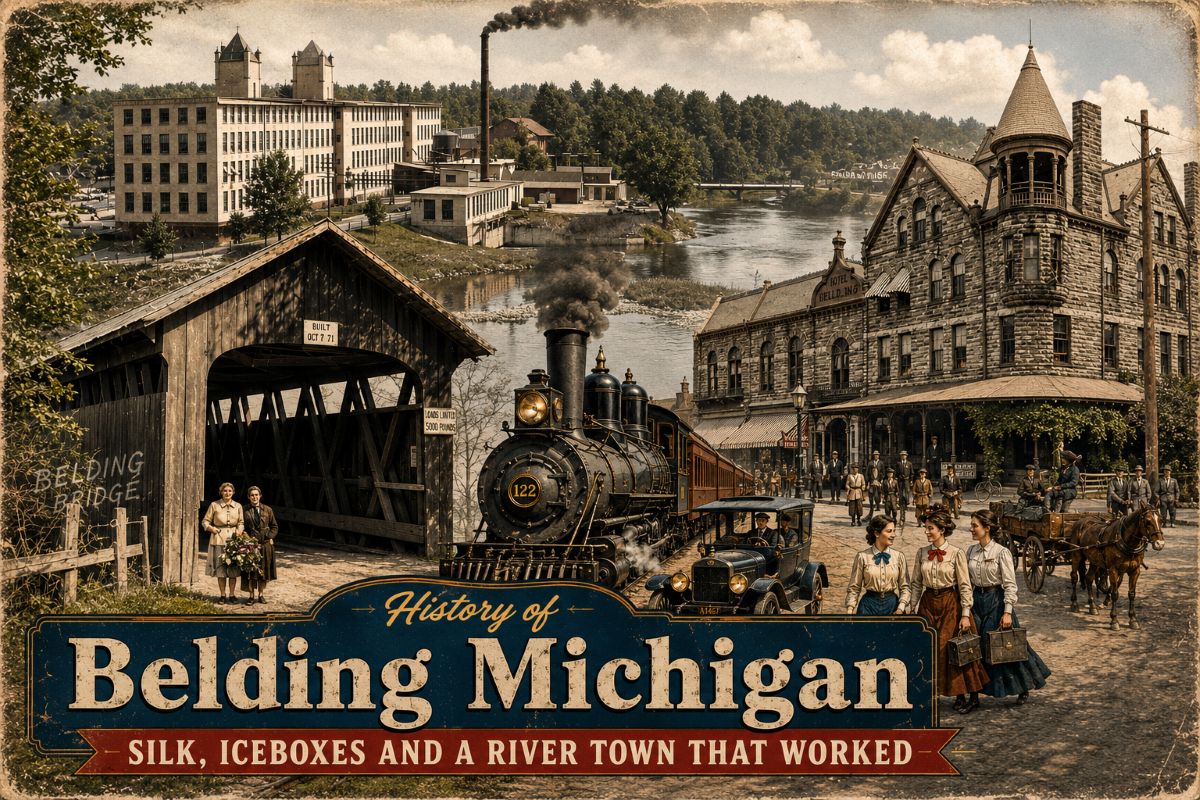
Belding, Michigan, did not begin as “Silk City.” It began with the Flat River, sawmills, settlers and a rough reputation.
Before the Belding name took hold, the settlement was known as Broas Rapids, then Patterson Mills, and during its logging years, Hog Wallow. The name Belding was chosen in 1871 to honor the Belding family, whose business would later turn the town into one of Michigan’s most unusual industrial stories.
The History of Belding Michigan is not only about mills and money. It is also about young women, company boarding houses, rail lines, Main Street shops and a small town that worked like a much larger city.
Table of Contents
Watch – Belding, Michigan: How a Flat River Town Became a Silk Power
History of Belding Michigan Starts With the Flat River
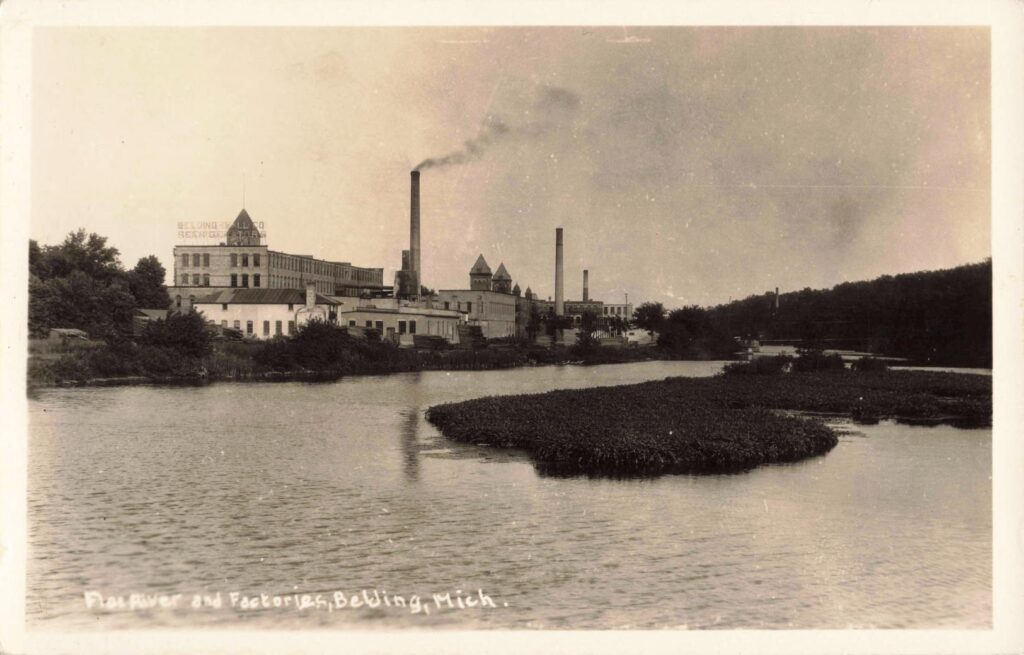
The Flat River shaped early Belding. Like many Michigan towns, the first industries leaned on timber, water power and local transportation. Levi Broas was among the earliest settlers. The river supported the first sawmill activity, and the settlement slowly gathered homes, shops and trade.
By itself, that would have made Belding one of many small river towns in lower Michigan. The difference came when a family silk business returned to the place that carried its name.
Hiram H. Belding and Alvah N. Belding began selling silk in 1860. Their brother Milo helped supply them from Massachusetts. The business first spread through sales routes, then manufacturing. In 1866, the Belding brothers began making silk thread in Rockville, Connecticut. By 1872, they had expanded to Northampton, Massachusetts.
Then came the West Michigan expansion.
The Silk Mills That Changed Belding
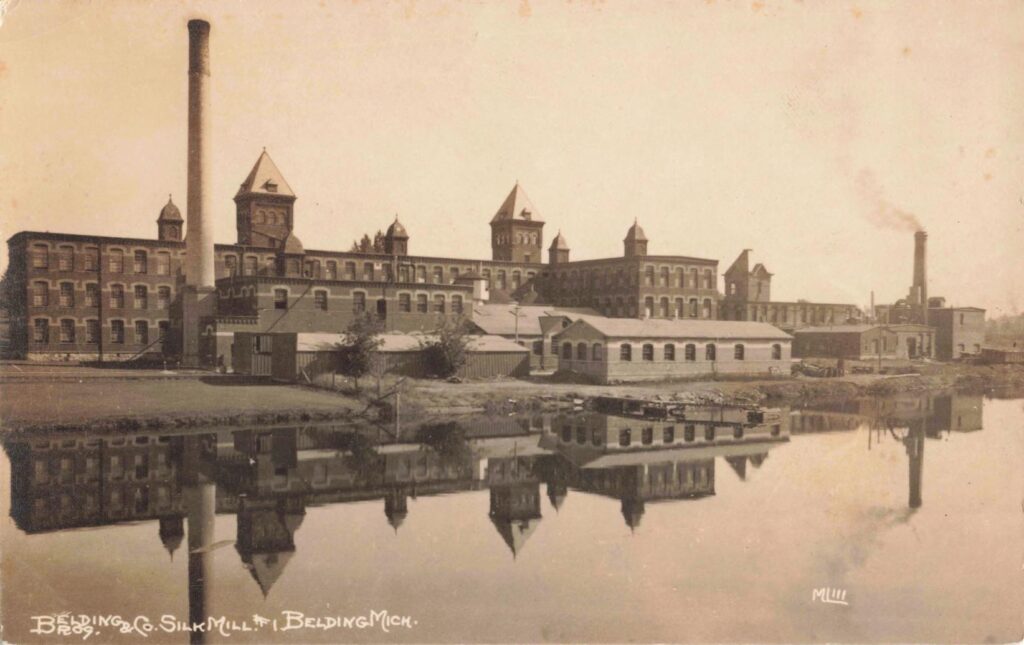
The Richardson Silk Mill was built in the late 1880s and became one of the key industrial sites in Belding. The Belding Brothers operation grew quickly after that. The company established itself in Belding in 1890, and the Belding location became its largest single enterprise, with four mills.
The mills made silk thread, fabrics, sewing silk, embroidery silk and crochet cotton. Salesrooms operated in major cities, and traveling salesmen carried Belding goods across the country.
That reach is easy to miss today. Belding was not a large city. But for a period, the name printed on thread and sewing goods connected this West Michigan town to national markets.
Suggested image placement: Belding Bros. & Co. silk mill view across the water.
Caption: Belding Bros. & Co. silk mills helped make the city one of Michigan’s best-known factory towns.
The Women Who Powered the Silk City
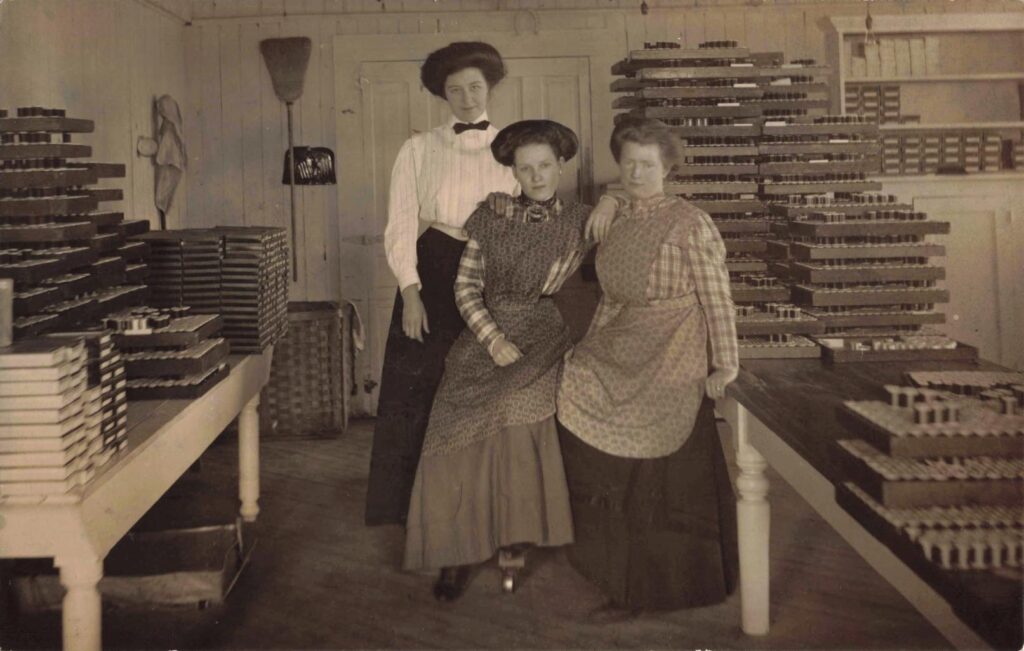
The most important social story in the History of Belding Michigan may be the company housing system.
The silk mills needed many workers. Belding could not supply enough labor on its own. Belding Brothers recruited young women from the region and built three large boarding houses: The Ashfield, The Belrockton and The White Swan. Each offered housing for more than 100 residents.
These buildings were not crude factory quarters. They had steam heat, hot and cold water, baths, electric lights and libraries. They also had matrons and rules. The women gained wages and a measure of independence, but they lived under company control.
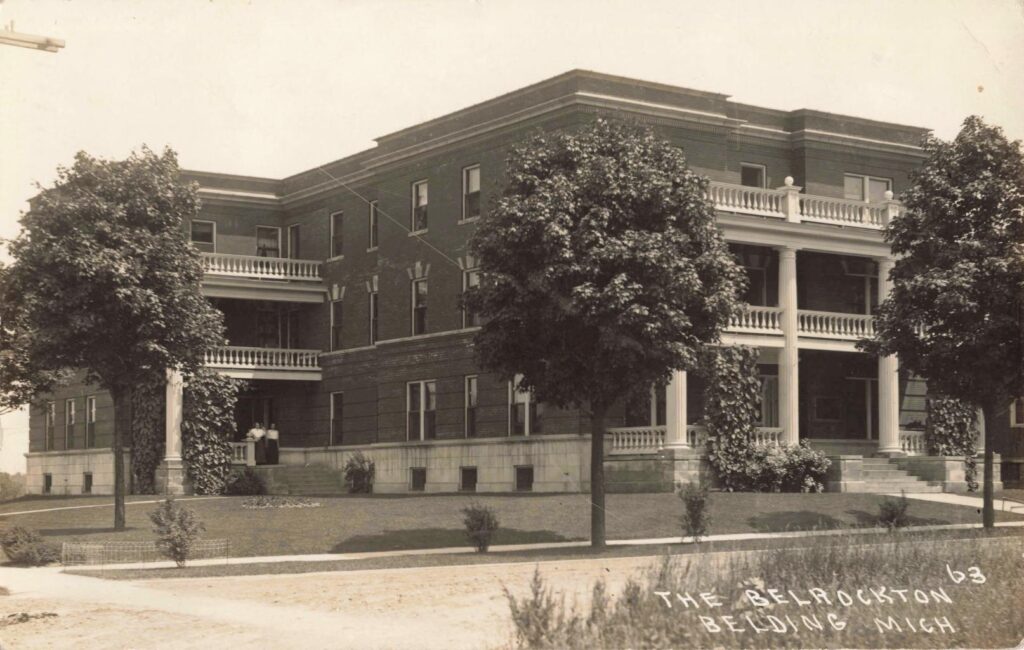
The Belrockton, built in 1906, is the last remaining boarding house of the three. It later served the National Youth Administration during the Depression, became a youth center, and now houses the Belding Museum and Community Center.
Belding’s Railroad Link
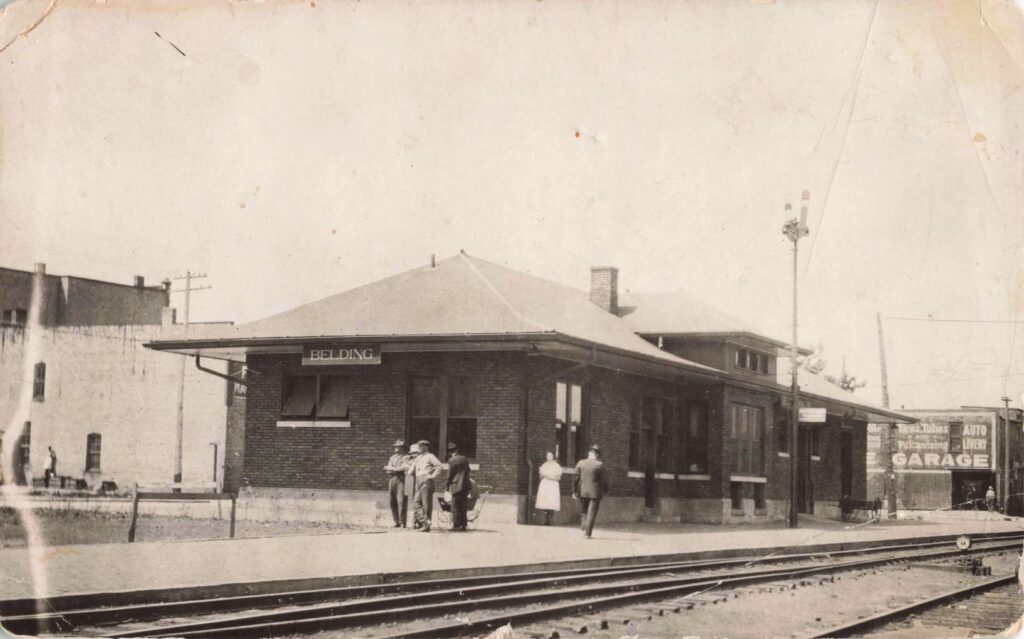
Belding’s rise depended on rail service.
The Pere Marquette Railway Depot tied the town to freight and passenger movement. By 1900, 19 passenger trains passed through Belding each day except Sunday, according to the depot’s historical marker record. Passenger service ended in 1941.
That rail traffic explains the busy feel of early Belding. Trains carried workers, salesmen, raw materials and finished goods. They also brought speed and contact with larger markets.
Main Street Was the Public Stage
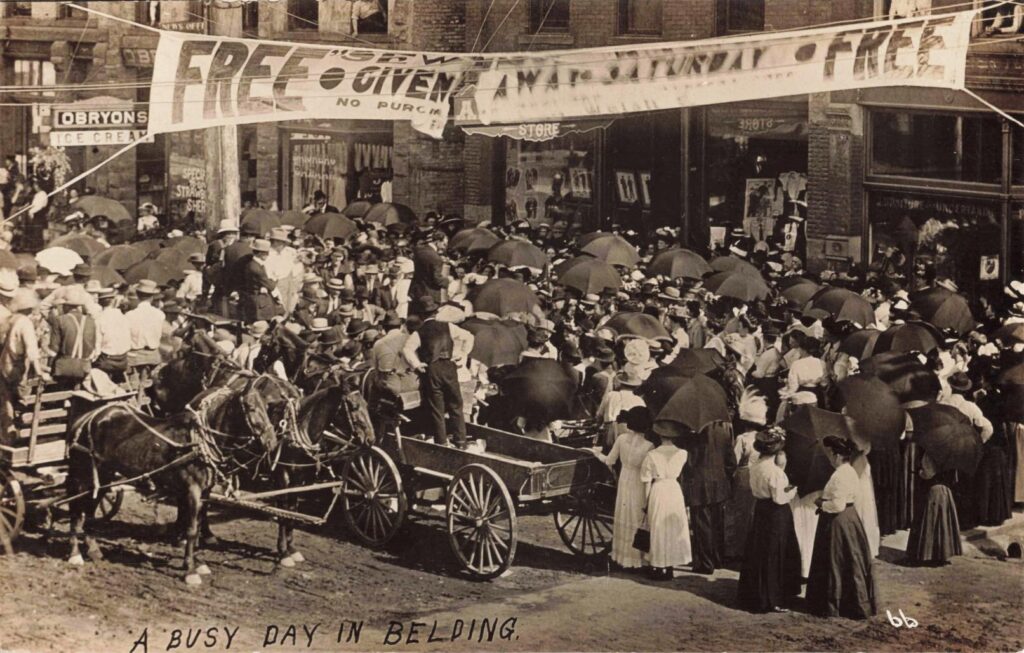
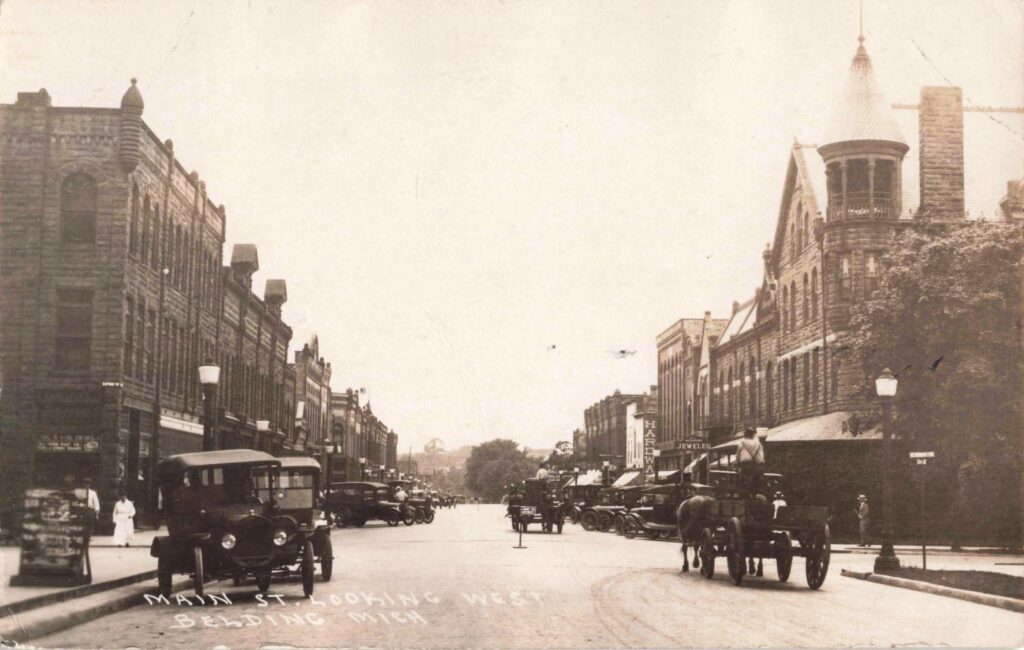
The “Busy Day in Belding” street scene captures the social side of the town. Crowds, wagons, umbrellas and storefront signs suggest a community used to public events and heavy sidewalk traffic.
The attached downtown views show a city with motion and purpose. Main Street had drug stores, markets, hardware shops, repair businesses, taverns, theaters and service trades. Horses and automobiles shared the same streets during the transition years.
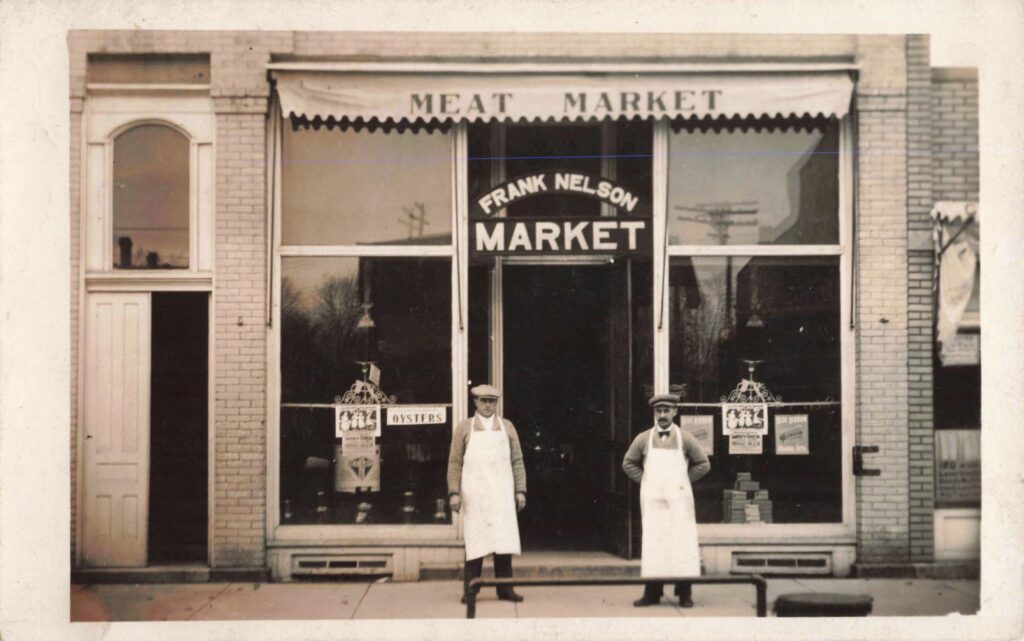
This was not a sleepy Main Street. It was a business center serving factory workers, rail passengers, farm families and residents from nearby rural areas.
More Than Silk: Iceboxes, Baskets and Shoes
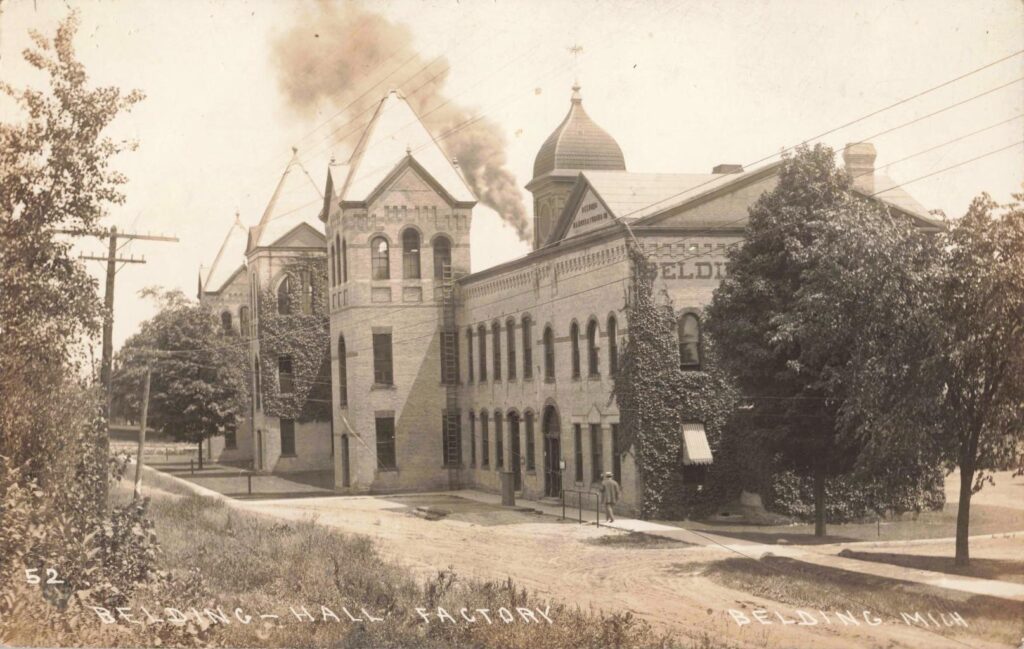
The History of Belding Michigan is often told through silk, but the town’s industry was broader.
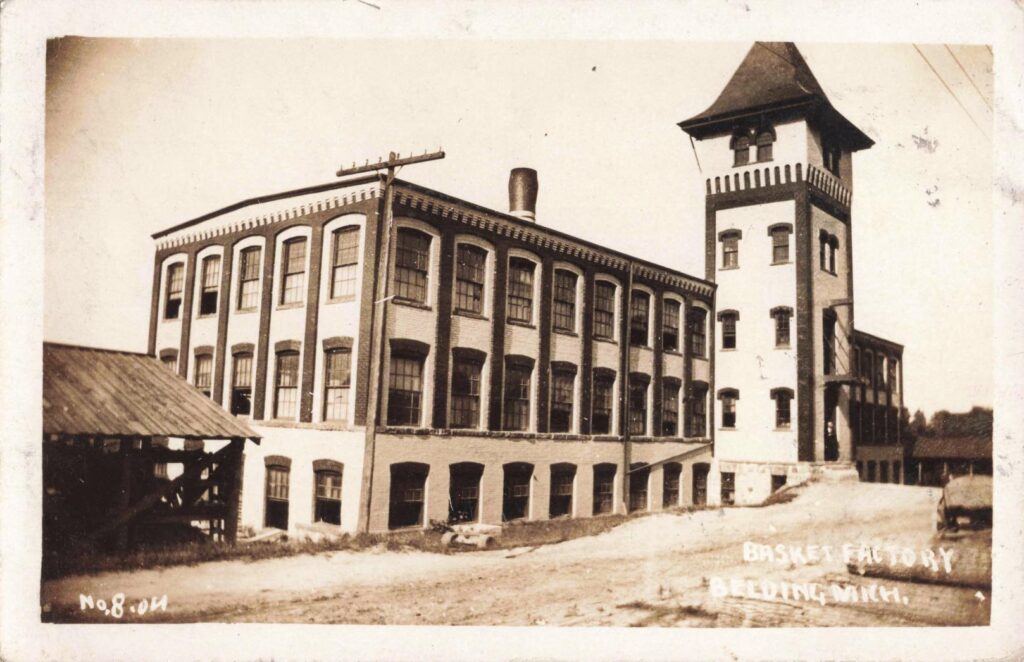
The attached views show several factory names tied to Belding’s wider manufacturing base. Belding-Hall was linked to refrigerators and iceboxes. The Smithsonian’s Warshaw Collection includes material for Belding Manufacturing Company, identified with Belding refrigerators and ice chests.
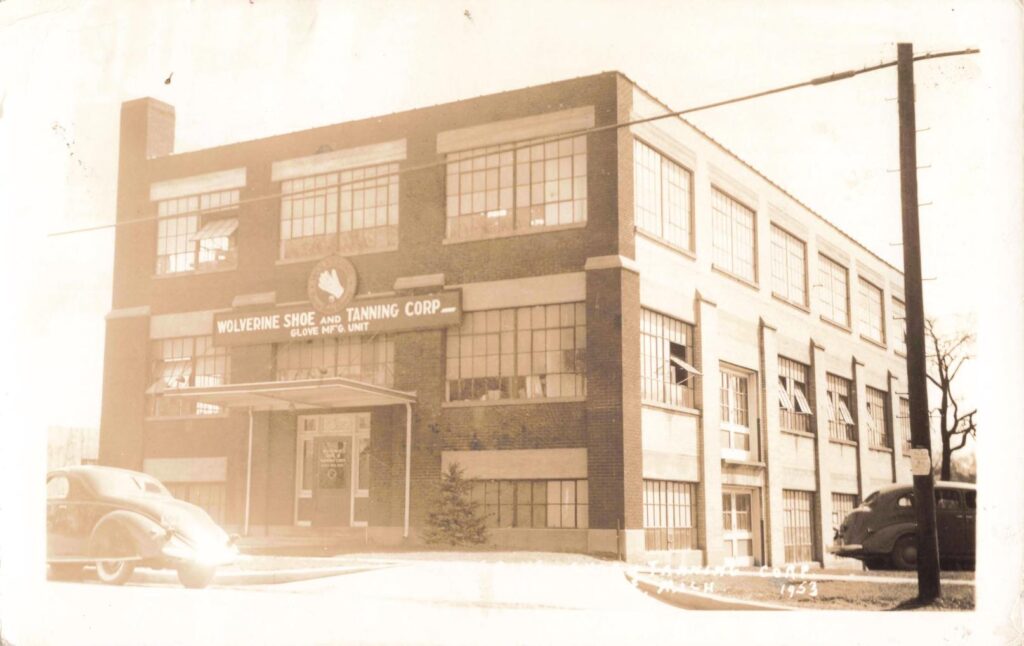
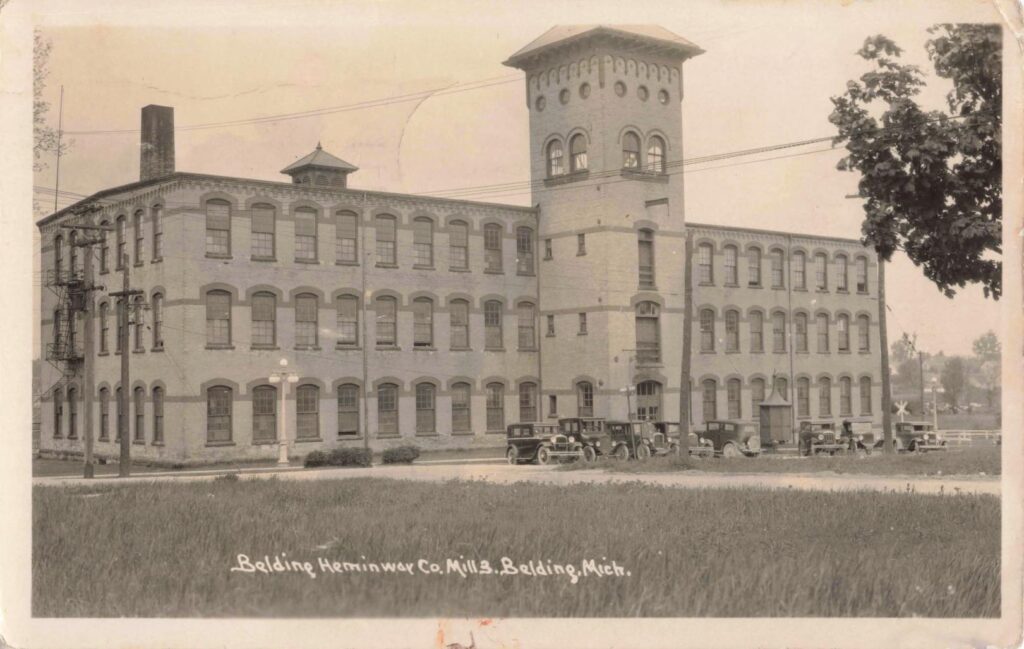
Other images show the Basket Factory, Belding-Heminway mills, Wolverine Shoe and Tanning Corp. and Ballou Manufacturing Co. These businesses show a town that did not depend only on one shop or one trade, even if silk became the headline.
Civic Pride and the Alvah N. Belding Library
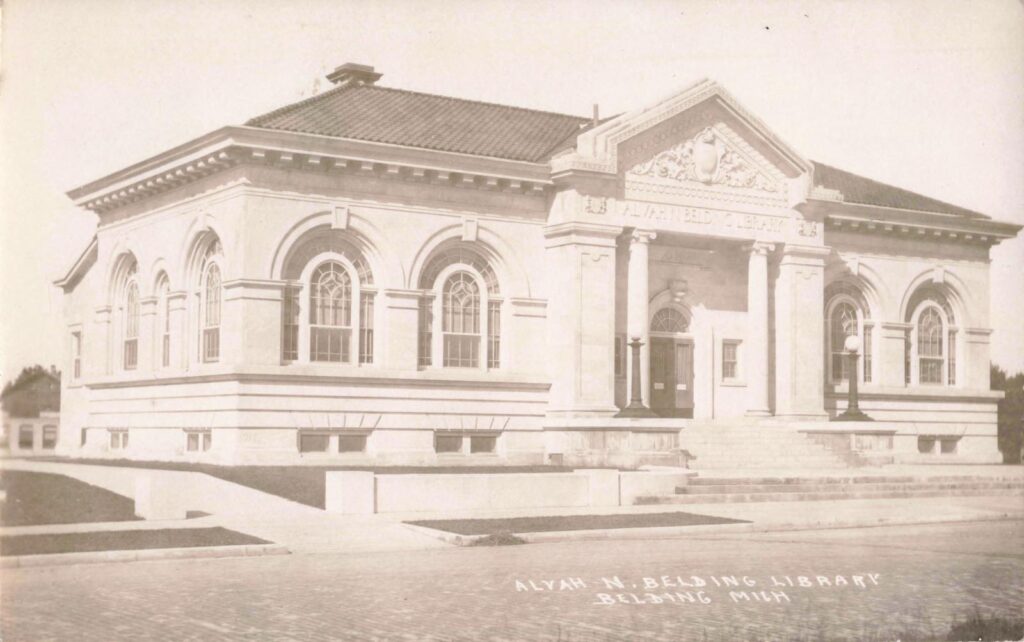
Industry also left civic landmarks.
The Alvah N. Belding Memorial Library was built after Alvah Belding offered to give a permanent library to the city. Construction began in 1917, and the building was dedicated on May 14, 1918, in memory of Hiram and Mary Wilson Belding. It cost $50,000 and was later listed as a State of Michigan Historic Site and placed on the National Register of Historic Places.
The library is important because it shows how factory wealth helped shape public life. Belding’s story was not only work. It included reading rooms, civic meetings, clubs and public memory.
The Silk Era Ends
Belding’s silk years did not last forever.
Belding Brothers & Company merged with Heminway Silk Company in 1925. Later, the business became tied to Corticelli. The last Belding mill closed in 1932, according to the Alvah N. Belding Memorial Library’s history page.
The reasons were familiar across American factory towns: changing technology, changing markets, corporate shifts and the Depression. The industry that gave Belding its identity faded, and the town had to adjust.
Some buildings were lost. Others changed use. The Belrockton survived. The Richardson Silk Mill later found new life as housing. Downtown changed with the automobile age.
The Hotel Belding – 1888 – 1940
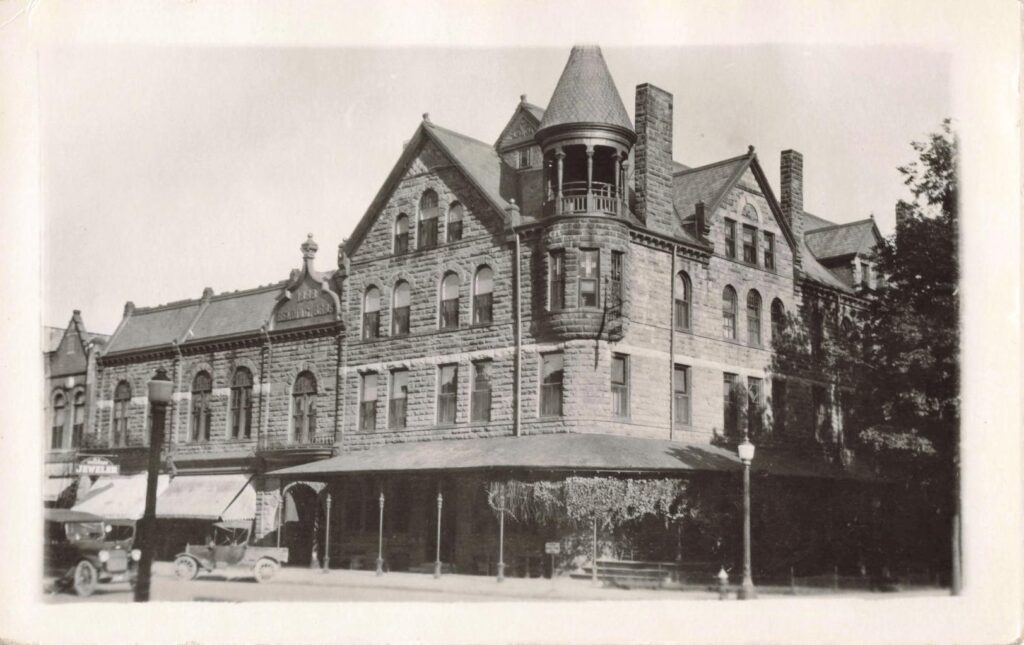
The original Hotel Belding was built by the Belding Brothers, the silk manufacturing family whose mills transformed a small village on the Flat River into a thriving industrial center. The hotel opened on August 1, 1888, just as rail service and silk production were expanding rapidly. It was intended to serve traveling businessmen, silk buyers, railroad passengers, and visitors arriving to see the growing community. W. P. Hetherington was listed as the hotel’s first manager.
At the time, Belding was experiencing explosive growth. The silk mills employed hundreds of workers, and new businesses, banks, and civic institutions were appearing almost yearly. The hotel quickly became the social center of town.
The Great Fire of 1893
One of the most significant events in Belding history occurred in 1893 when a major downtown fire swept through Main Street. Historical references indicate the original Hotel Belding was destroyed or heavily damaged during that fire. The hotel was subsequently rebuilt, creating the larger and more elaborate Victorian structure seen in many surviving photographs and postcards.
In many Michigan towns of the late 19th and early 20th centuries, the principal hotel served as an unofficial city hall, chamber of commerce, and social club all rolled into one. Hotel Belding filled that role for more than fifty years.
The Long Decline
The fortunes of Hotel Belding were tied closely to the fortunes of the silk industry.
As automobile travel changed transportation patterns and the local silk industry weakened during the Great Depression, fewer guests passed through Belding. The closure of the Belding silk mills in the 1930s further reduced demand for hotel accommodations. By the late 1930s the grand Victorian hotel no longer enjoyed the business it once had.
Historical references indicate the hotel continued operating into the late 1930s and finally ceased operations around 1940. Former mayor Ernest McNally reportedly co-managed the hotel after the silk mills closed, keeping it open during its final years.
What Happened to the Building?
The hotel no longer stands. The site was eventually cleared, and modern commercial development replaced it. Today, only photographs, postcards, and a few surviving artifacts remain.
One interesting survivor is the large chandelier that once hung in the Hotel Belding. It was later moved to the Alvah N. Belding Memorial Library, where it remains a reminder of the hotel’s glory days.
Why the History of Belding Michigan Still Stands Out
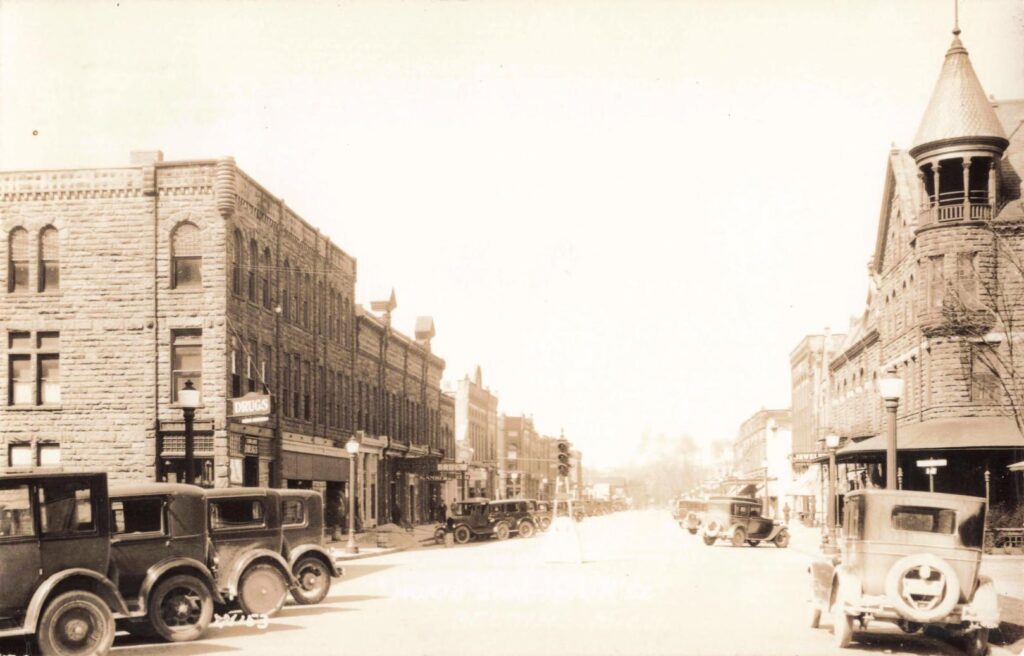
The History of Belding Michigan stands out because it combines several Michigan themes in one town: river settlement, rail growth, women’s factory labor, company housing, Main Street commerce and industrial change.
Its most surprising lesson is simple. Belding’s softest product — silk — required a hard industrial system. It needed factories, sales networks, rules, boarding houses, railroads and workers willing to leave home for wages.
That makes Belding more than a pretty old mill town. It was a working city with a national role. Its streets, factories and surviving civic buildings still carry the outline of that story.
Sources Used for the History of Belding Michigan