 by
by 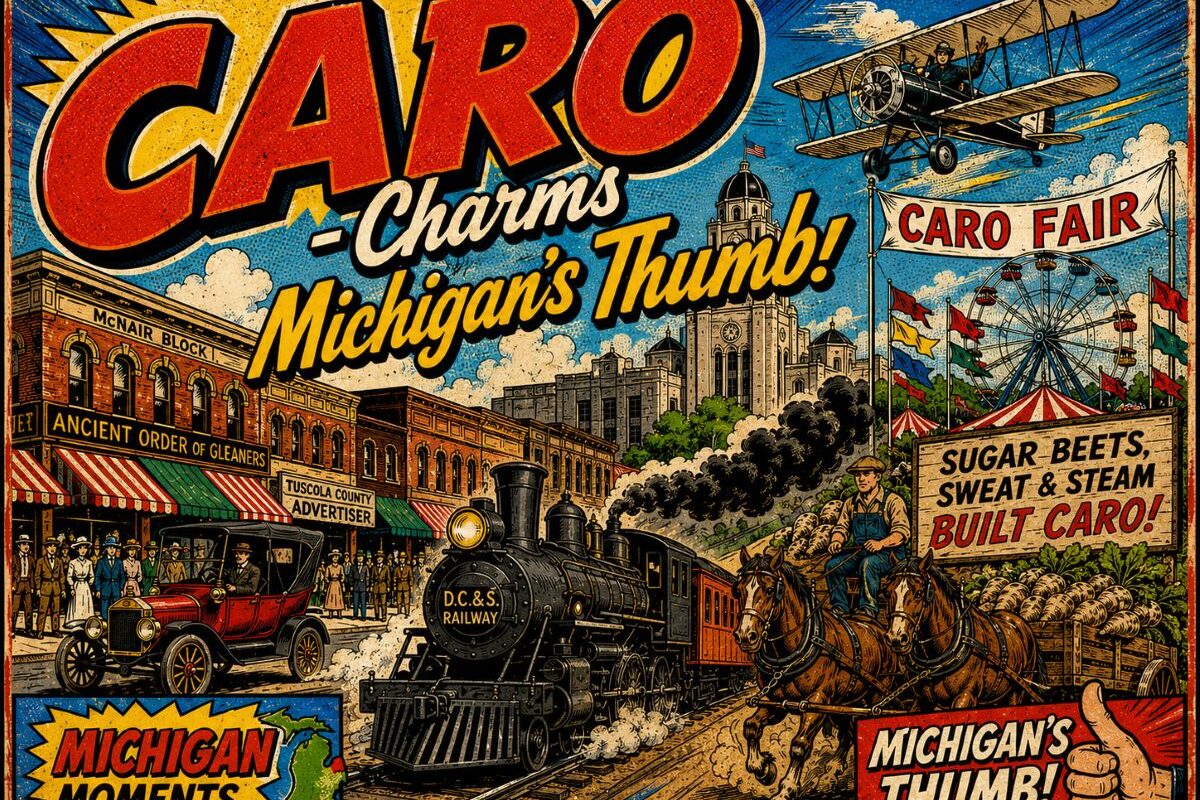
Today we visit one of our favorite towns in Michigan’s Thumb. Caro, Michigan, has never been easy to place in a single category. It was a courthouse town. It was a farm market. The history of Caro Michigan tells us it was a sugar town. It was a railroad town. It was also a hospital town, a fair town and a place where the Thumb’s rural economy met the modern age.
That mix is what makes the History of Caro Michigan so useful for understanding Tuscola County. Caro did not grow because of one event. It grew because it served many needs at once.
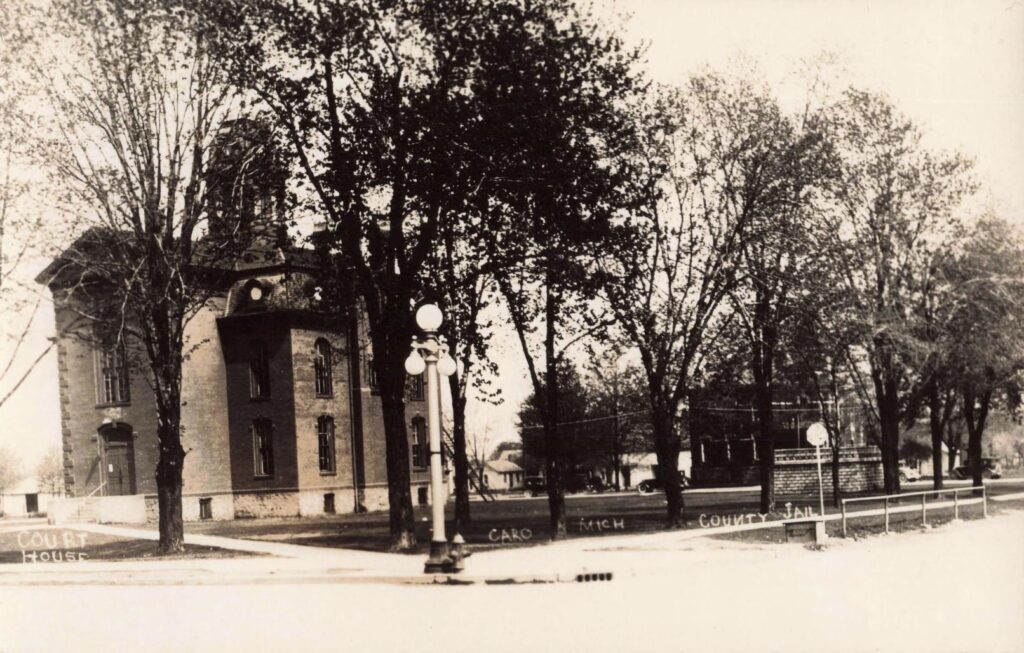
Tuscola County is part of Michigan’s Thumb region. The county was established in 1840, and the Legislature gave residents authority to organize county government in 1850. Caro later became the county seat, which gave the town a public role that helped shape its future.
Video – A Brief History of Caro, Michigan – Tuscola County’s Focal Point
It Was Once Called Centerville
Before it was Caro, the settlement was known as Centerville. The name was practical. It reflected the town’s location near the center of Tuscola County. In the 1860s, when county business became a major force in local life, that central location became a long-term advantage.
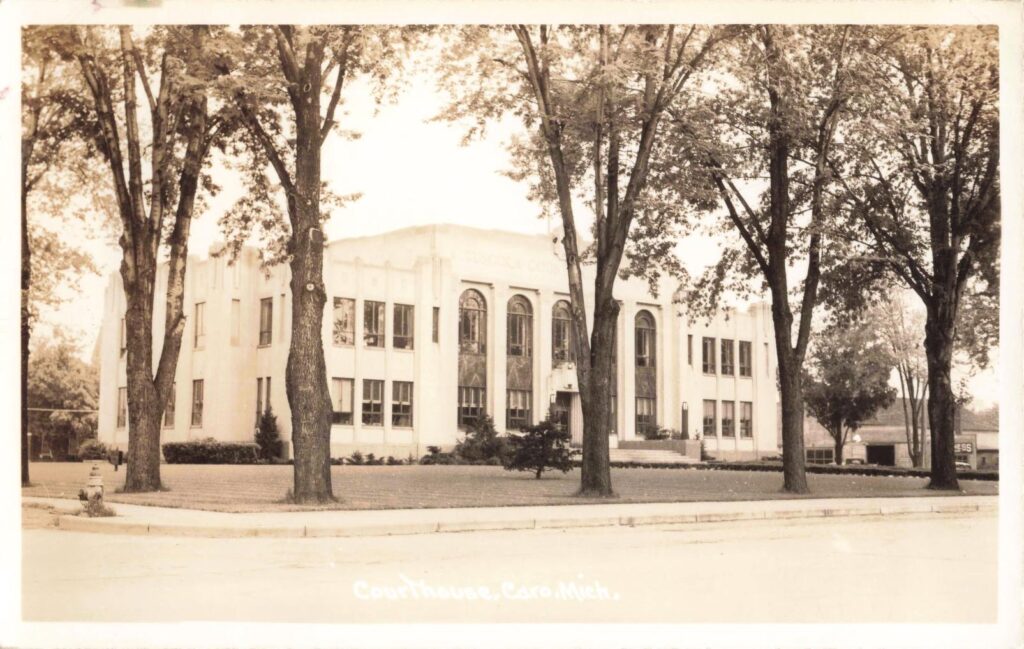
The courthouse square became one of Caro’s anchors. Peter DeWitt Bush, an early resident, donated the courthouse site in 1866. A former church was moved there to serve as the first courthouse. In 1873, a brick courthouse replaced it. The present courthouse, completed in the early 1930s, came later and gave the county seat a stronger civic image.
History of Caro Michigan and the Power of Main Street
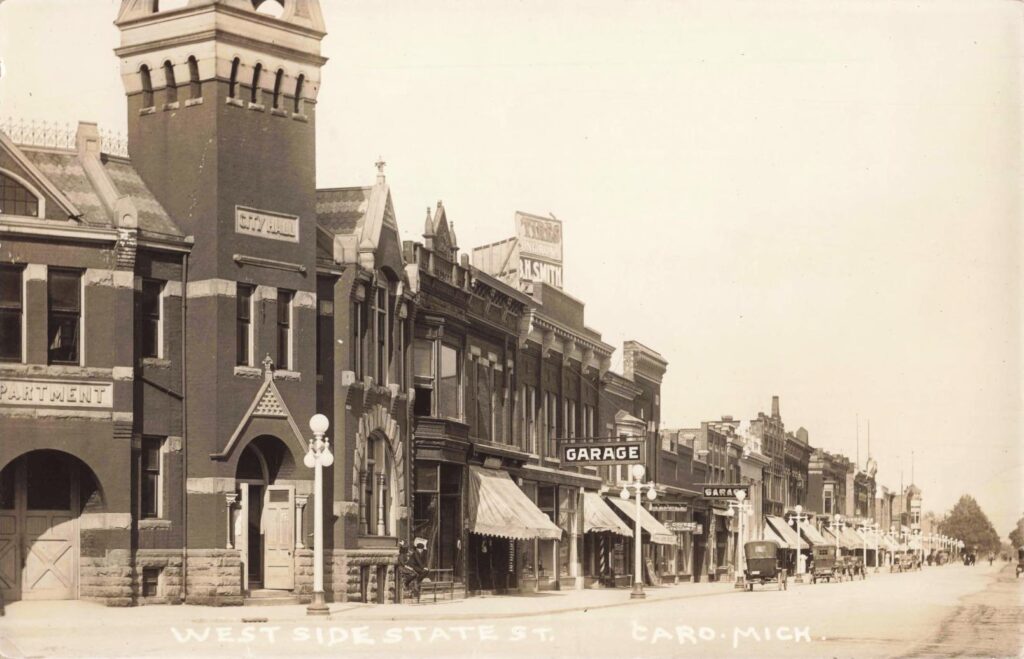
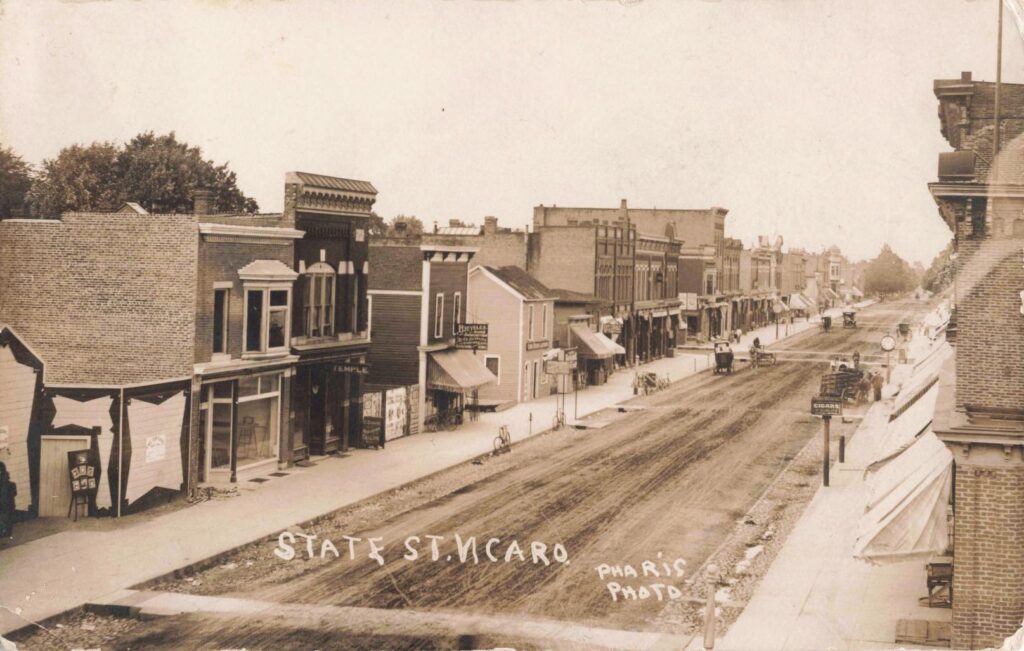
State Street was where Caro showed its ambition. The street scene from the early 1900s reveals a town with strong commercial bones. Brick blocks stood beside older frame buildings. Awnings shaded shop windows. Garages appeared as automobiles gained ground. Sidewalks tied together banks, stores, offices and meeting places.
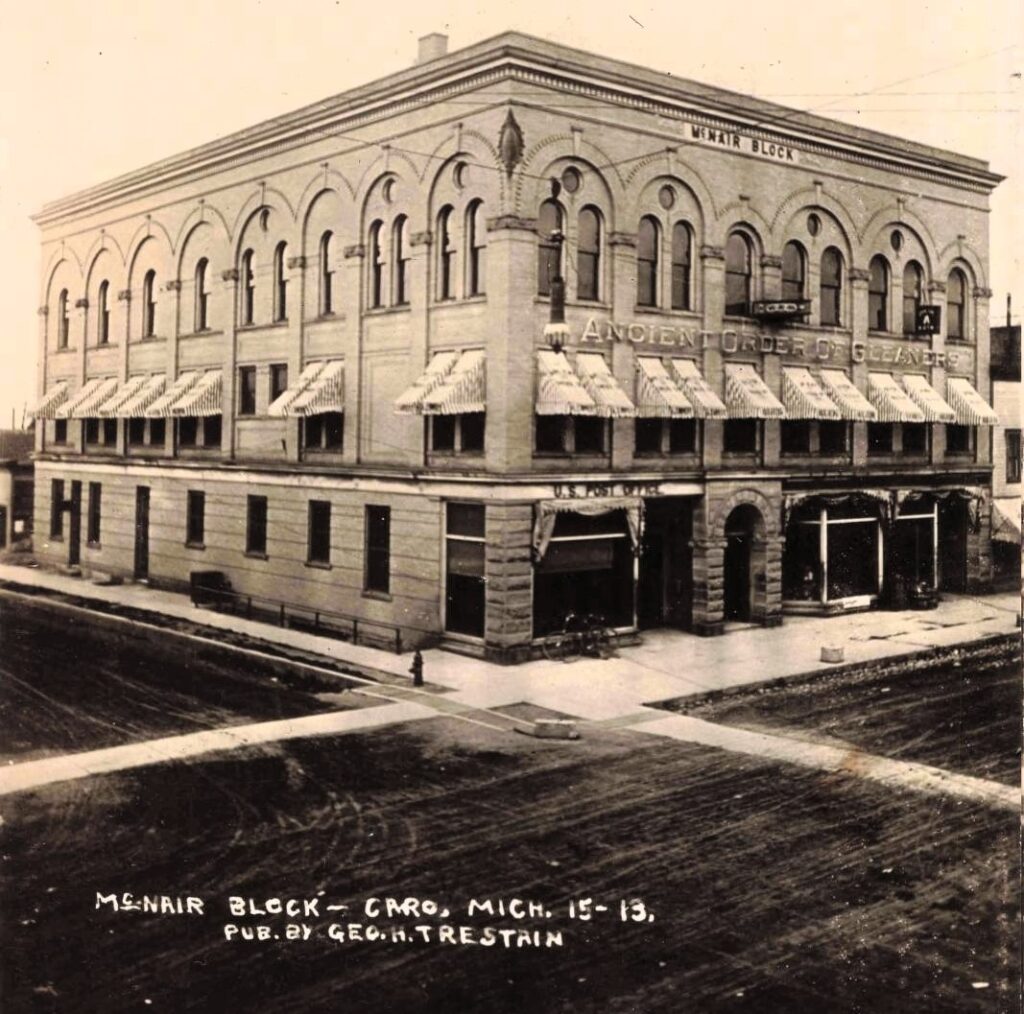
The McNair Block adds another layer. Michigan History Trail notes that the Caro Masonic Temple occupied one of the first brick buildings on Caro’s main street. Businessman and philanthropist Charles Montague built the structure as a bank and general store, and when it was enlarged in 1887, the second story became the Masonic Temple.
Across the upper facade is a sign for the Ancient Order of Gleaners, the farmer-focused fraternal insurance society founded in Caro in 1894. Its presence downtown shows how Caro was not only a farm market and county seat, but also the birthplace of a mutual aid movement that grew across Michigan and into other states. The order later became Gleaner Life Insurance Society, now based in Adrian.
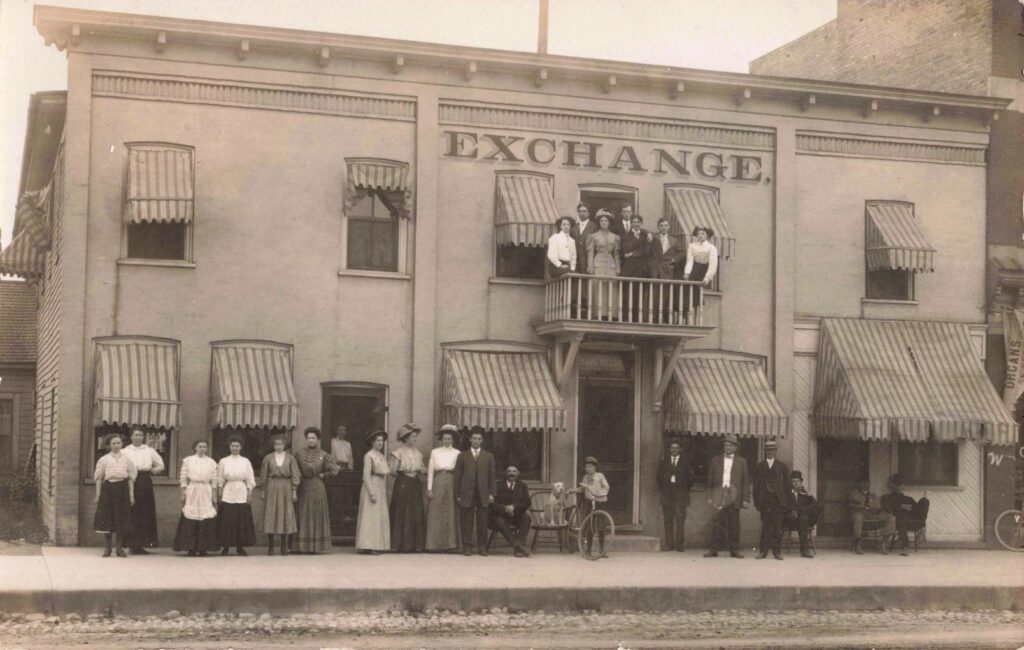
The Tuscola County Advertiser also helped shape Caro’s public identity. The paper began publishing Aug. 21, 1868, and has been identified as the city’s oldest surviving business establishment. In small-town Michigan, a newspaper was more than a business. It was the public record.
The Sugar Beet Factory That Changed Caro
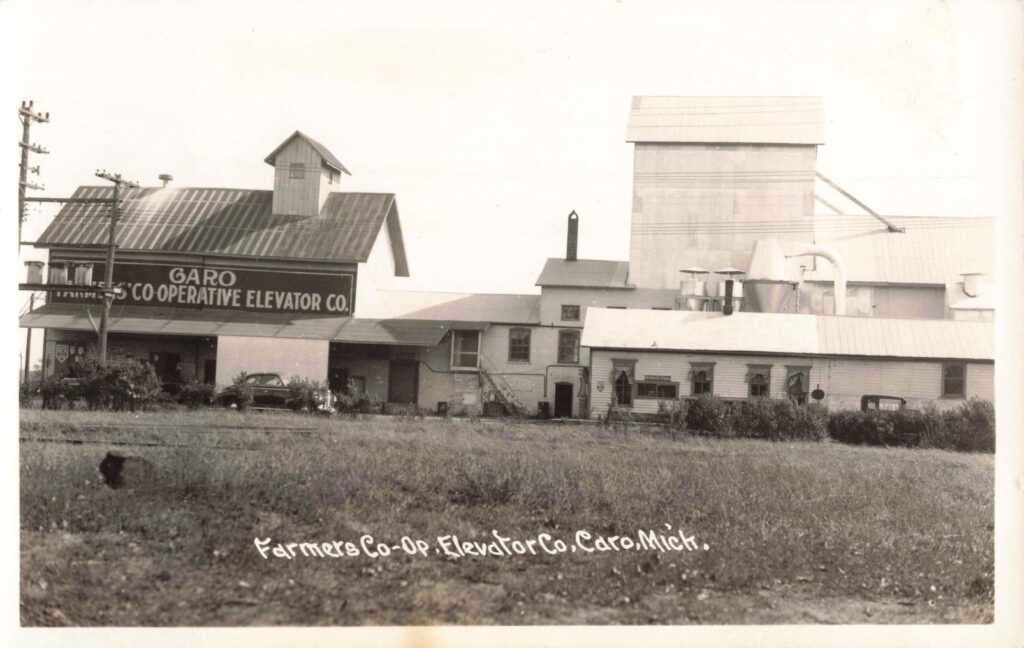
The biggest industrial chapter in the History of Caro Michigan began with sugar beets.
The Peninsular Sugar Refining Company was organized in 1898 as the Caro Sugar Company. A German firm built the factory in 1899 on land donated by the community. The Tuscola County Advertiser promoted the project, and Charles Montague helped raise capital. Farmers hauled beets to the factory in horse-drawn wagons and sleighs. The first season began in October 1899.
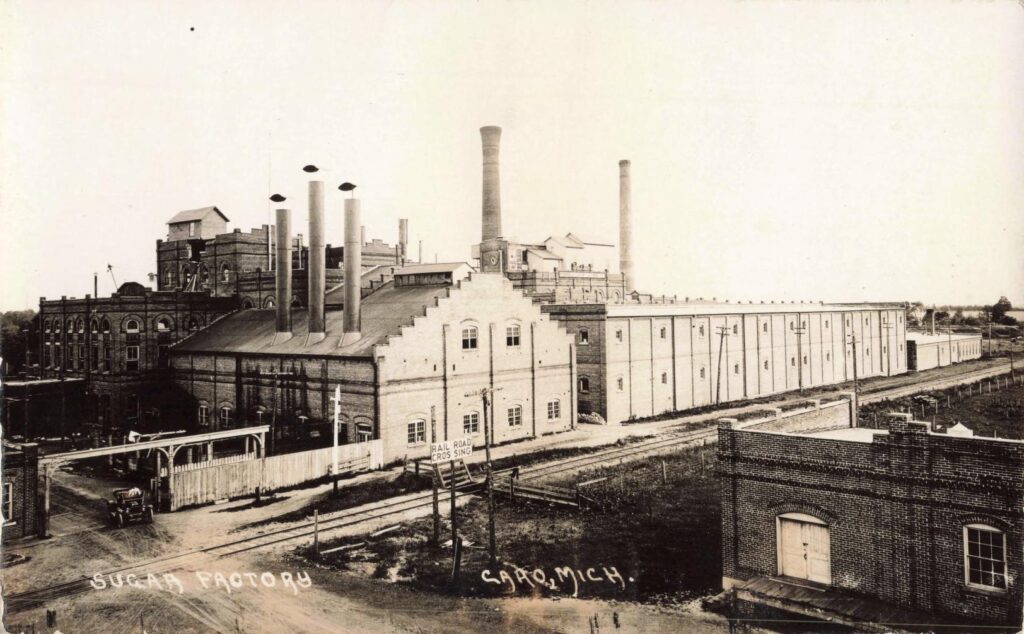
That was a major shift. Caro’s industrial growth did not replace farming. It depended on farming. The beet field and the factory floor became parts of the same system.
The sugar plant began as part of Michigan’s late-1890s sugar beet boom. The company was organized in 1898, first called the Caro Sugar Company, then developed as the Peninsular Sugar Refining Company. Its success depended on area farmers agreeing to grow sugar beets for the factory.
Michigan Sugar says the Caro factory, built in 1899, is the oldest sugarbeet processing facility in the United States. It is also the only Michigan Sugar factory that produces liquid sucrose. That gives Caro a rare link between a 19th-century industry and modern food production.
Caro Michigan: 1900s Life in Tuscola County’s Historic Small Town
Railroads Kept the Town Moving
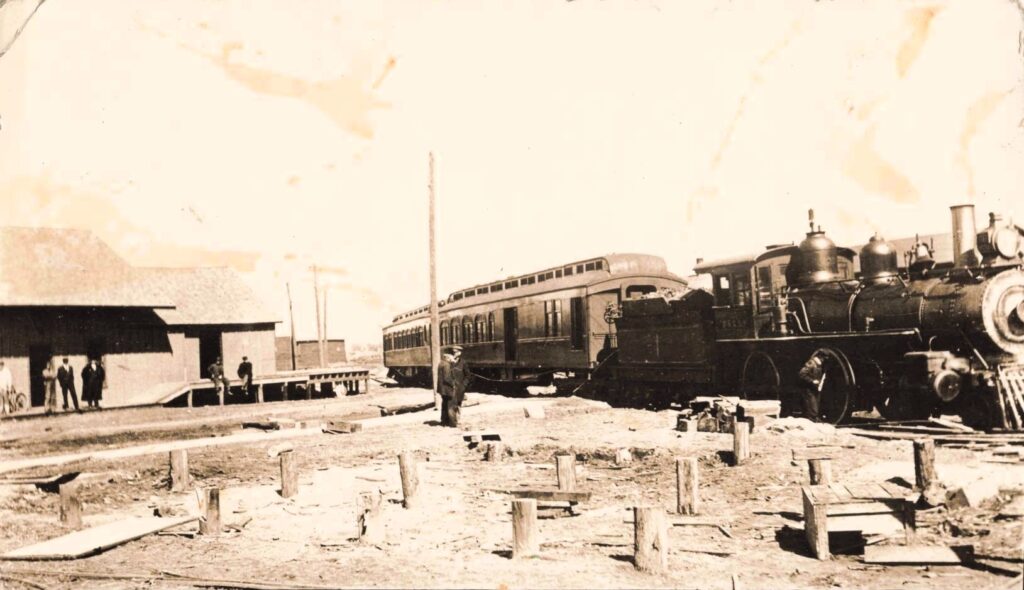
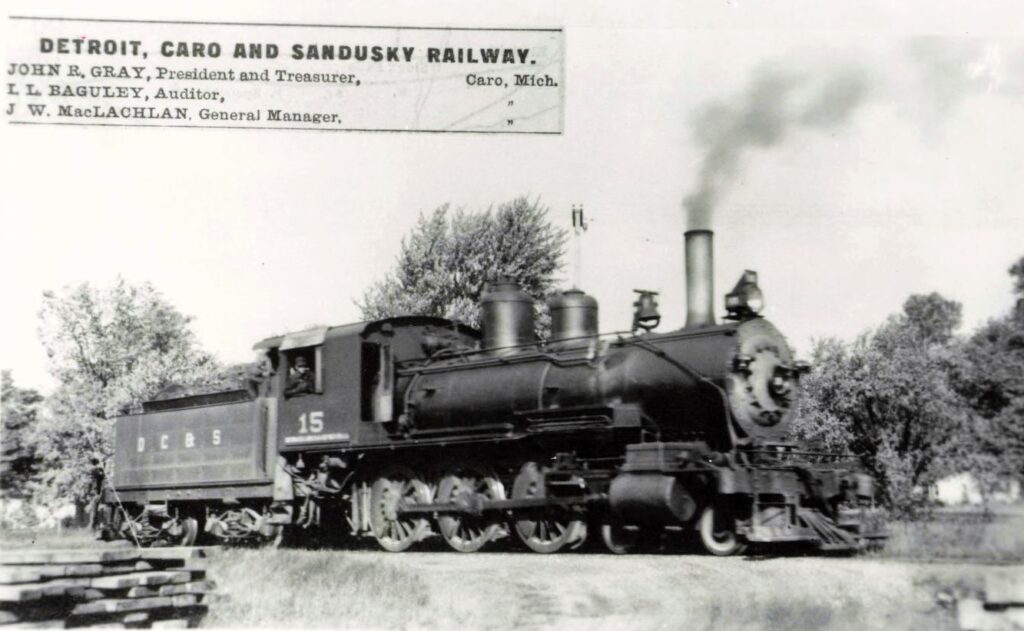
Railroads gave Caro reach. The attached depot and locomotive views show the town’s connection to the wider region. In the early 20th century, rail service carried people, goods, farm products, machinery, mail and newspapers.
The Detroit, Caro & Sandusky Railway grew out of the Detroit, Bay City & Western after that earlier line entered bankruptcy. In 1925, the new railway began operating under Mills & Gray, and its headquarters moved from Bay City to Caro. John MacLachlan became general manager.
This is a unique part of the History of Caro Michigan. Caro was not only a stop along a line. For a time, it was a railroad headquarters.
Power, Water and the Cass River
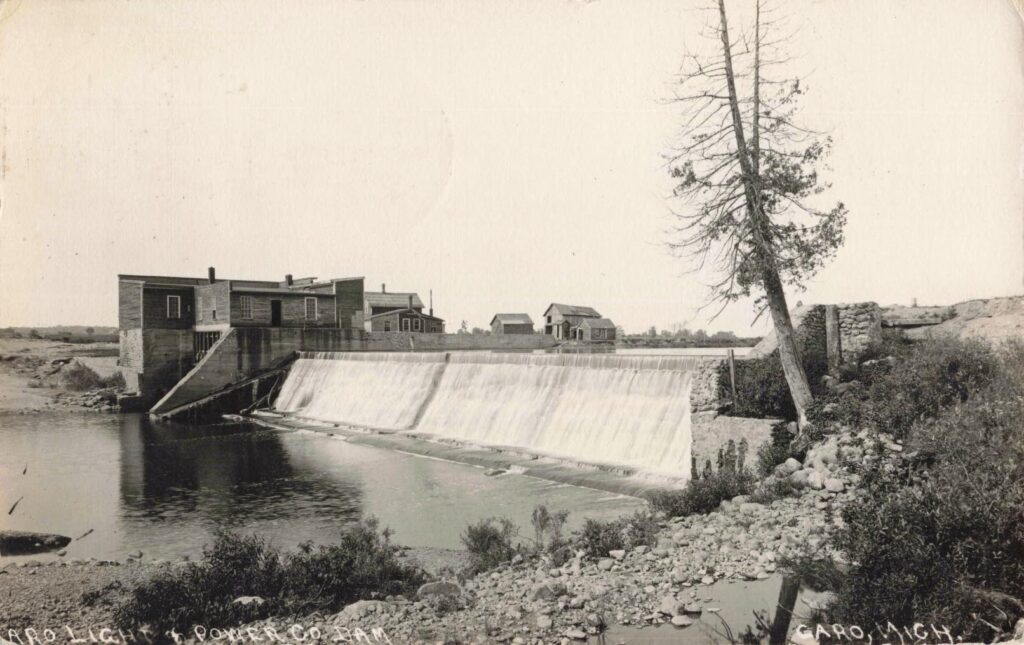
The Caro Light & Power dam shows how the town entered the electric age. The Caro dam was first built in the early 1900s for water supply to Michigan Sugar and was later rebuilt to generate power for Caro, according to a Michigan environmental report.
That dam tells a practical story. Caro’s growth needed more than stores and crops. It needed water, power and machinery.
Hospitals and Public Institutions
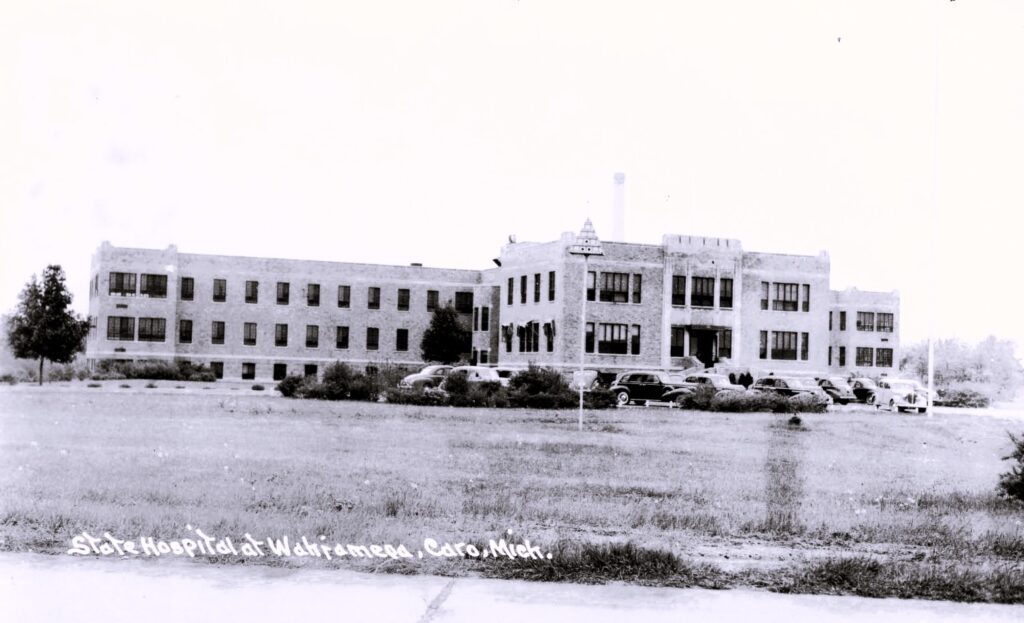
Caro also became a place where public services reached far outside the town limits. The state hospital at Wahjamega began in 1914 as a Farm Colony for Epileptics. Over time, changing medical treatment reduced the need for an epilepsy facility, and the institution later became a psychiatric hospital.
This part of Caro’s history should be handled with care. Early institutions often separated people from families and communities. Their history includes public service, but also policies that would be questioned today.
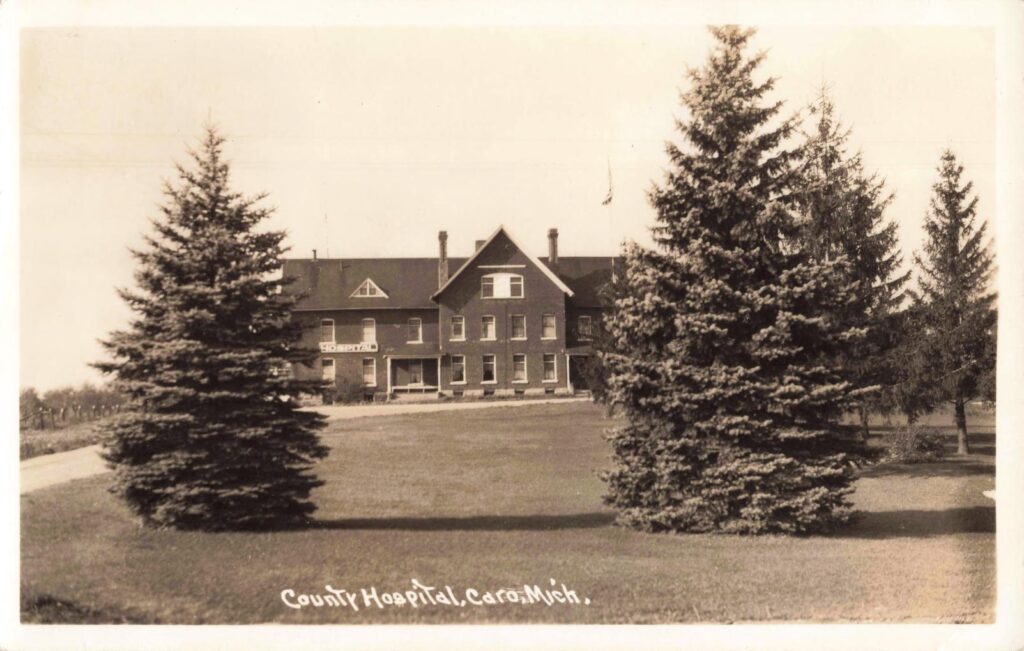
The county hospital image adds a second medical chapter. It points to a time when rural health care was becoming more organized. Small towns needed hospitals, nurses and modern medical services. Caro helped fill that role for Tuscola County.
The Caro Fair and a Glimpse of the Sky
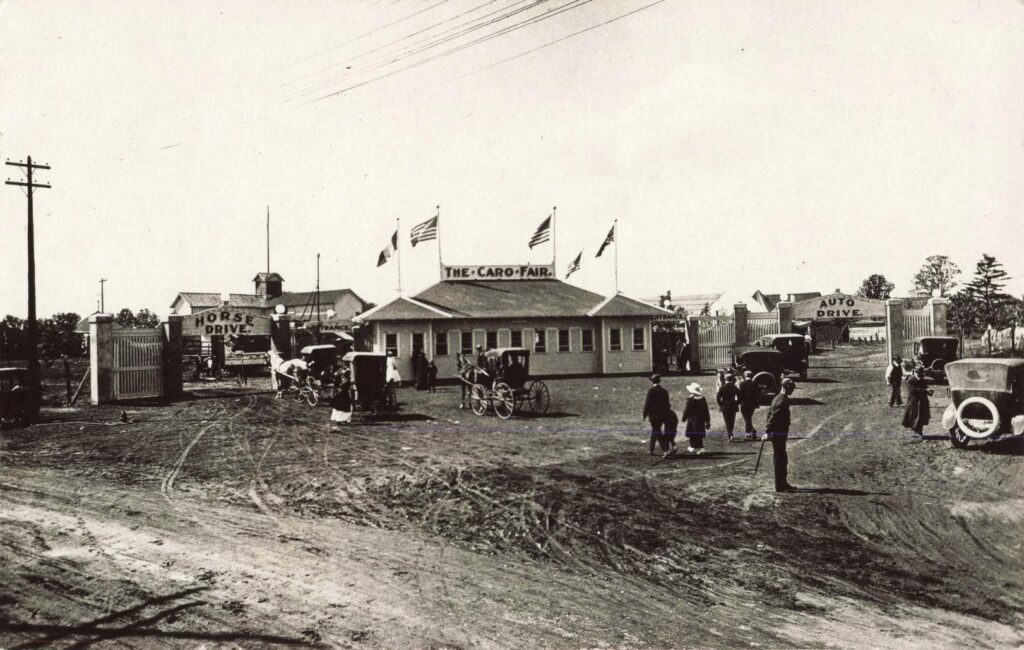
There is no way to discuss the history of Caro Michigan without a mention of their historic fair. The Tuscola County Fair was organized March 11, 1882, as the Caro District Agricultural Association. It became one of the best ways for the county to see itself. Farmers showed livestock and crops. Families came for entertainment. Merchants met customers. Politicians worked the crowd.
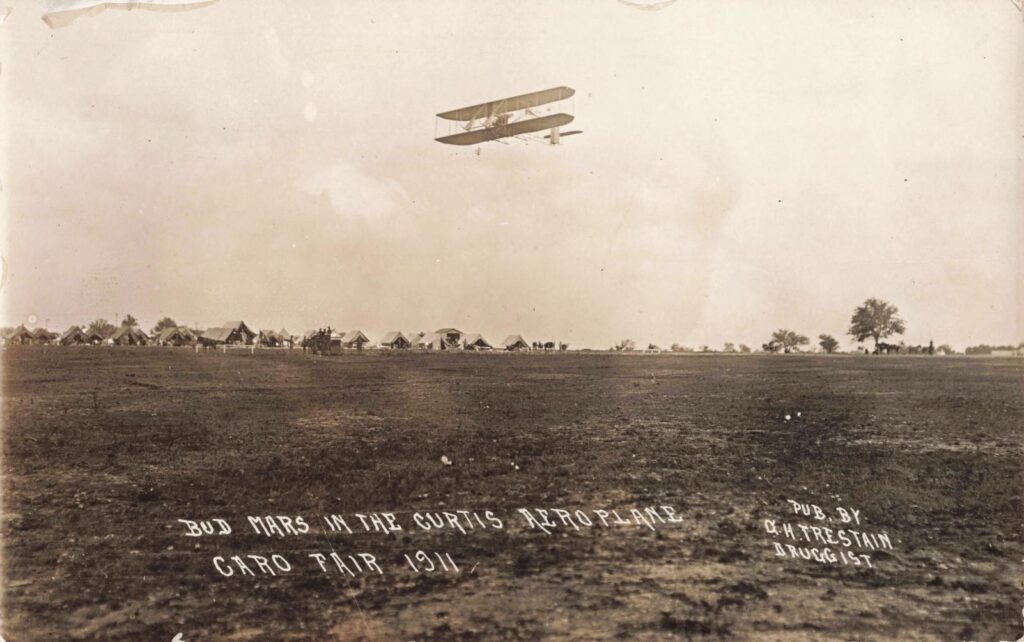
In 1911, the fair also brought aviation to Caro. The attached image of Bud Mars in a Curtiss-style aeroplane shows how quickly the modern age reached small-town Michigan. Mars was part of the early aviation world and took part in international demonstration flights during the same era.
Why Caro Still Counts
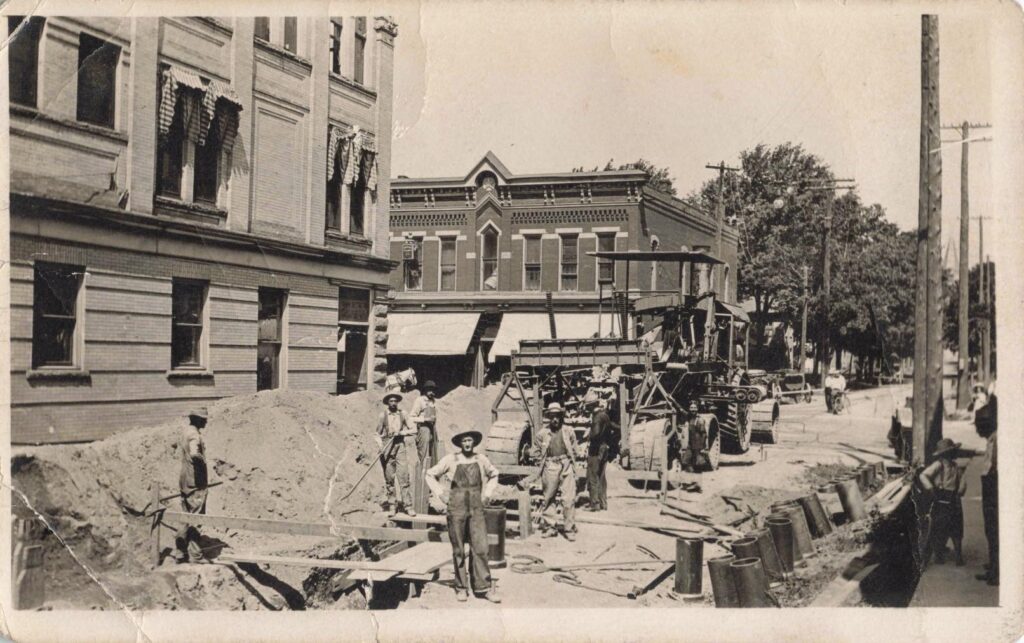
The History of Caro Michigan is not a single-event story. It is a layered story of steady function. Caro grew because it connected people to law, markets, railroads, power, health care, news and public gathering.
Its most important lesson may be this: Caro did not have to become a large city to become important. It became important by serving the rural world around it.
The old images show a town in motion. Wagons and motorcars share the streets. Factories stand near elevators. Trains wait at depots. Hospitals rise outside downtown. Fair crowds gather. Airplanes arrive before many people fully understand what flight will mean.
Caro was never just a quiet Thumb town. It was a working center, built by farmers, business owners, railroad men, public officials, nurses, printers, mechanics and families who needed a place where county life could come together.
That is why the History of Caro Michigan remains one of the strongest small-town stories in Michigan’s Thumb.
Works Cited On The History of Caro Michigan
Canfield, Edward J. The Caro Center. Tuscola County, 2017. Accessed 2 June 2026.
“Biological Survey of Selected Stations in the Cass River Watershed in Saginaw, Tuscola, Genesee, Lapeer, Sanilac, and Huron Counties, Michigan, June-September 2016.” Michigan Department of Environmental Quality, Water Resources Division, Sept. 2017. Accessed 2 June 2026.
“Curtiss Model D of J.C. Mars.” Wikimedia Commons, Wikimedia Foundation. Accessed 2 June 2026.
“Curtiss 1911 Model D.” National Museum of the United States Air Force. Accessed 2 June 2026.
“Curtiss D-III Headless Pusher.” National Air and Space Museum, Smithsonian Institution. Accessed 2 June 2026.
“Facility Locations.” Michigan Sugar Company. Accessed 2 June 2026.
“Gleaners Temple.” Historic Detroit. Accessed 2 June 2026.
“Gleaner Celebrates 125 Years.” Gleaner Life Insurance Society. Accessed 2 June 2026.
“History of the Detroit, Caro and Sandusky Railway.” MichiganRailroads.com. Accessed 2 June 2026.
“J.C. ‘Bud’ Mars.” Hawaii Aviation, State of Hawaii. Accessed 2 June 2026.
“Our History.” Gleaner Life Insurance Society. Accessed 2 June 2026.
Schnettler, Justin. “Peninsular Sugar Refining Company.” Michigan History Trail. Accessed 2 June 2026.
“Photos of Bud Mars Flight.” Hawaii Aviation, State of Hawaii. Accessed 2 June 2026.
“Tuscola.” Library of Michigan, Michigan Department of Education. Accessed 2 June 2026.
“Tuscola County.” Michigan History Trail. Accessed 2 June 2026.
“Tuscola County Courthouse — Michigan Historical Marker.” Lost in Michigan. Accessed 2 June 2026.