 by
by 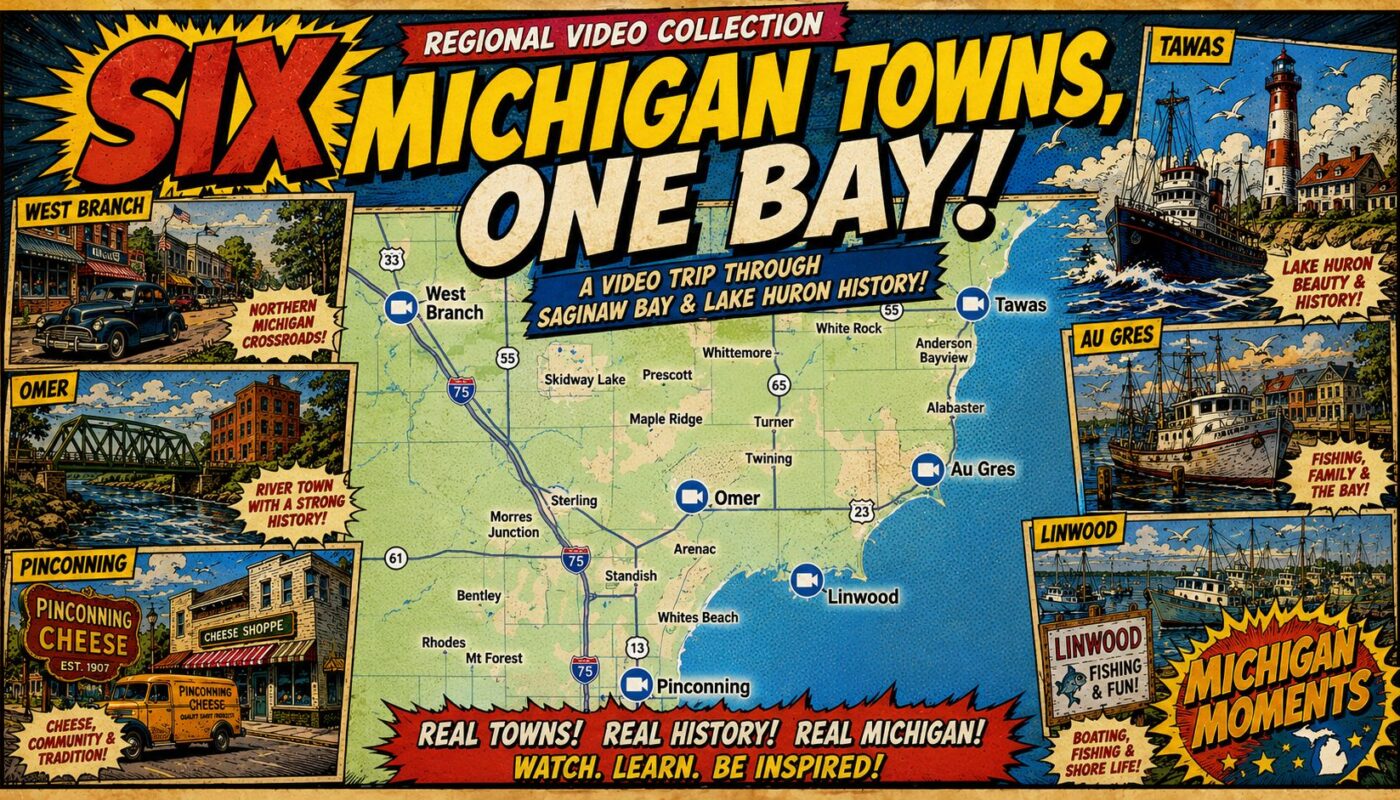
The towns in this Michigan Moments video collection may look separate on a map. Tawas sits along Lake Huron. Au Gres looks out toward Saginaw Bay. Omer rests along the Rifle River. Pinconning became known for cheese and highway travel. West Branch grew as an inland stop. Linwood holds its place near the bay’s western shore.
Yet these towns share a larger story.
They belong to a part of Michigan shaped by water first, then timber, then railroads, then roads. The bay and rivers moved logs. Lake Huron carried freight and passengers. Rail lines helped small towns reach bigger markets. Later, highways brought tourists, anglers, cottage owners and weekend traffic.
That is what makes this region worth watching as a group. Each episode tells one town’s story. Together, they show how northern Saginaw Bay and the Lake Huron shore changed over time.
Tawas: Where Lake Huron Framed the Story
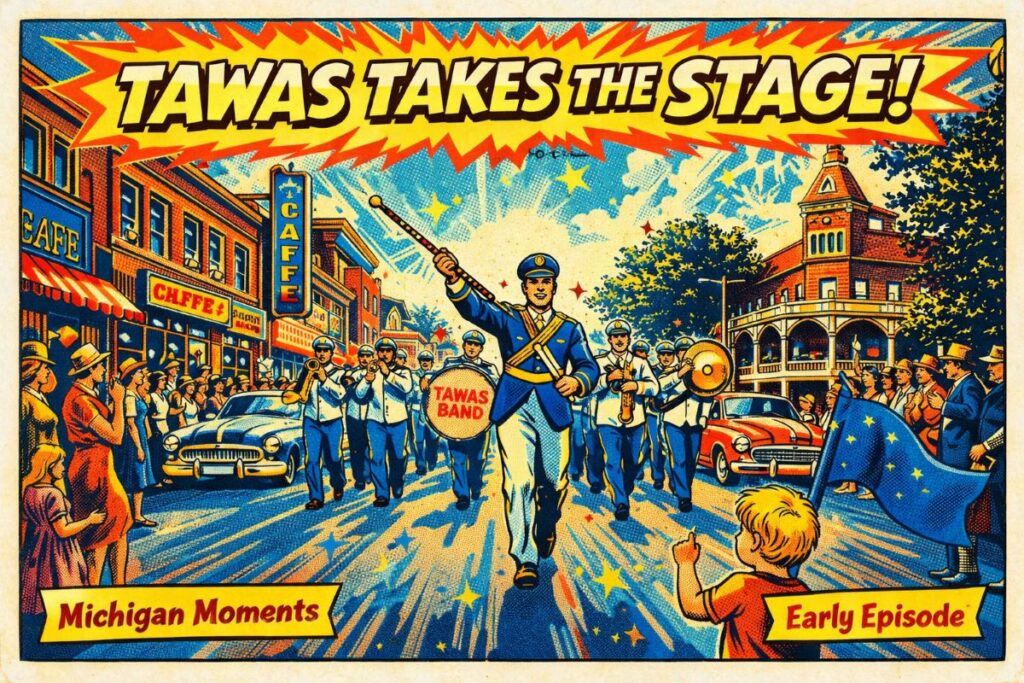
Tawas begins the trip with water in nearly every scene. It sits where Saginaw Bay meets Lake Huron, a place that drew settlers, lumber interests and travelers. The town became a working waterfront community, but it also grew into a place people visited for air, scenery and summer rest.
The Tawas episode fits this regional story because it shows how the coast created opportunity. Lake traffic mattered. Fishing mattered. Tourism followed. The same water that once served commerce later drew vacationers and cottage families.
Tawas also helps explain the region’s long change from extraction to recreation. The early economy cut, hauled and shipped. The later economy welcomed visitors.
Au Gres: A Bay Town With Shallow Water and Long Memory
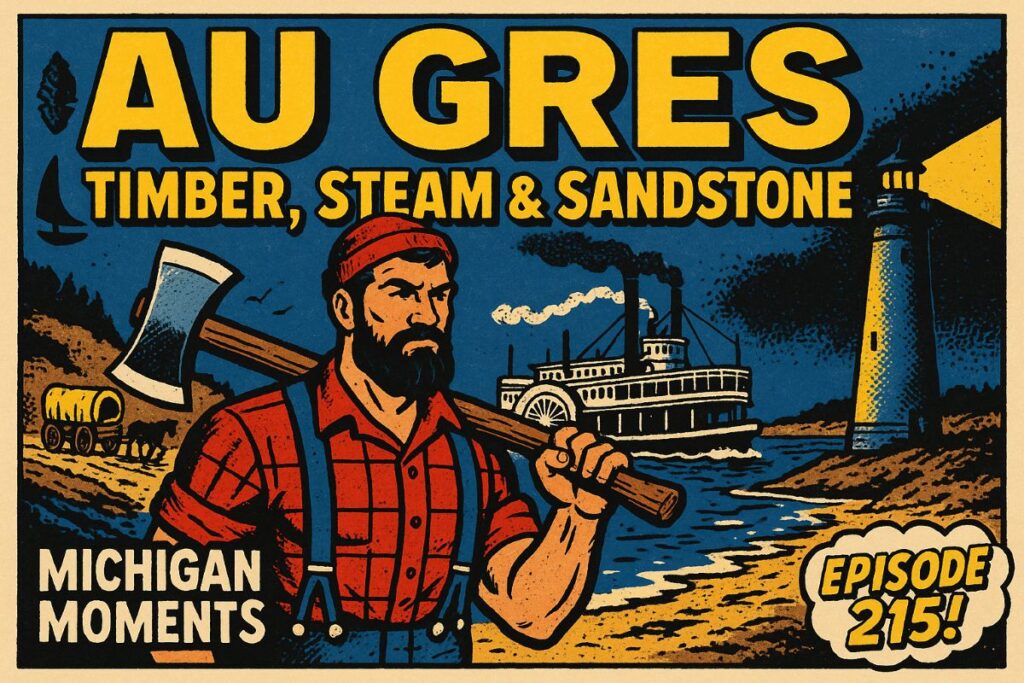
Au Gres sits farther south, closer to the broad waters of Saginaw Bay. Its story is tied to fishing, boating and the hazards of a low, shifting shoreline.
In the Au Gres episode, the town becomes a reminder that bay communities were never easy places to build. Shallow water could help fishermen and frustrate navigation. Storms could change a season. Sand, ice and distance affected daily work.
Yet Au Gres held on because the bay had value. It offered fish, transport and access. Later, it offered recreation. That pattern appears again and again across this region. The same water that made life difficult also made life possible.
Omer: The Small City That Refused to Fade Quietly
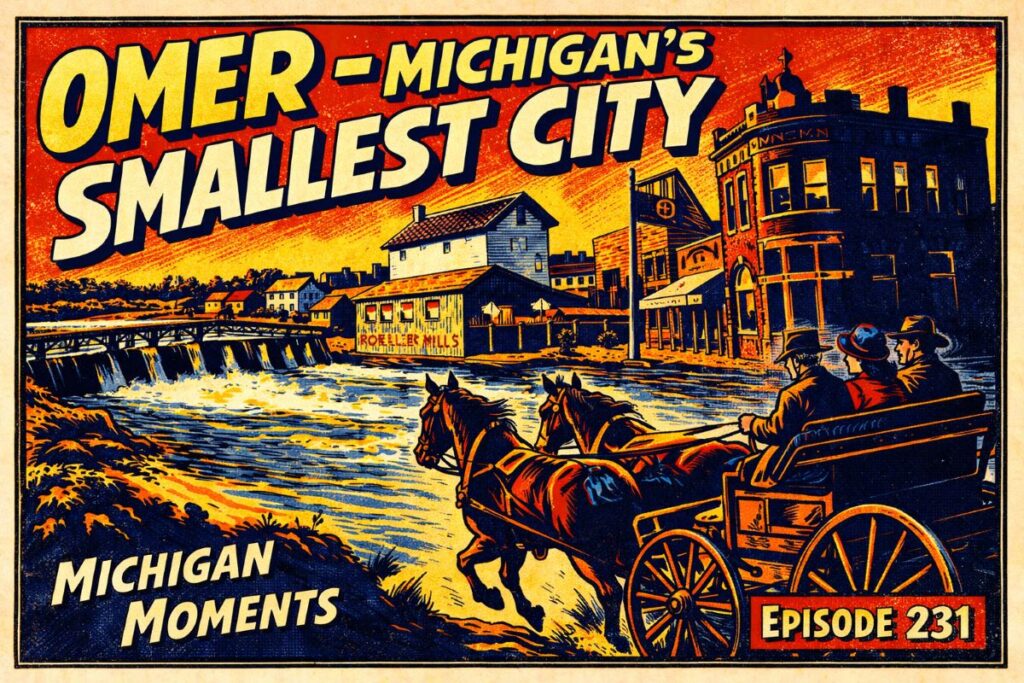
Omer brings the story inland, but not far from the water system that shaped the bay. The Rifle River gave the place its early reason for growth. Lumber and local trade helped build a town that later became known as one of Michigan’s smallest cities.
The Omer episode adds a different tone. This is not a shoreline resort story. It is a small-city survival story. Omer faced hard blows, including fire and flood, yet it remained part of Arenac County’s local identity.
Omer shows how inland towns fed the bay economy. Rivers carried goods and people toward larger markets. Local roads tied farms, mills, stores and depots together. Small towns like Omer made the region work from the inside out.
Pinconning: Cheese, Highways and a Name Michigan Knows

Pinconning gives the region one of its most recognizable calling cards: cheese. What began as local dairy work became a Michigan food identity.
The Pinconning episode shows how a town can become linked to one product so strongly that the name travels farther than the place itself. Cheese gave Pinconning a public image. Highway traffic helped keep that image alive. Families driving north knew the name from road signs, shops and roadside stops.
Pinconning’s place in this video group is important. It shows the shift from lumber and rail traffic to automobile travel and food tourism. In many Michigan towns, the highway became the new main street. Pinconning used that change better than most.
West Branch: The Inland Crossroads
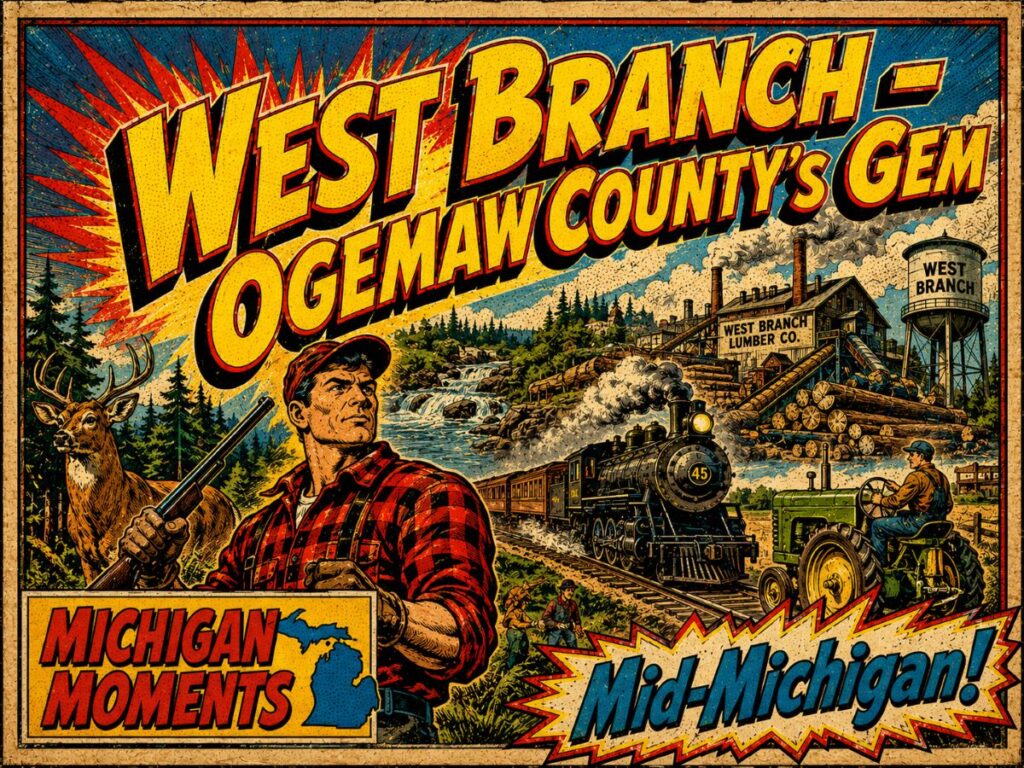
West Branch sits away from the bay, but it belongs in this regional set because roads made it a meeting point. It became a northern Michigan stop for shopping, services, health care and travel.
The West Branch episode helps connect the shore towns with the inland route north. Not every important Michigan town grew from a harbor. Some grew because people had to pass through them. Roads, rail lines and regional services gave West Branch its role.
This makes West Branch a useful counterpoint to Tawas and Au Gres. The shoreline towns looked to the water. West Branch looked to movement across land. Both patterns shaped the same region.
Linwood: Fishing, Shore Life and the Western Bay
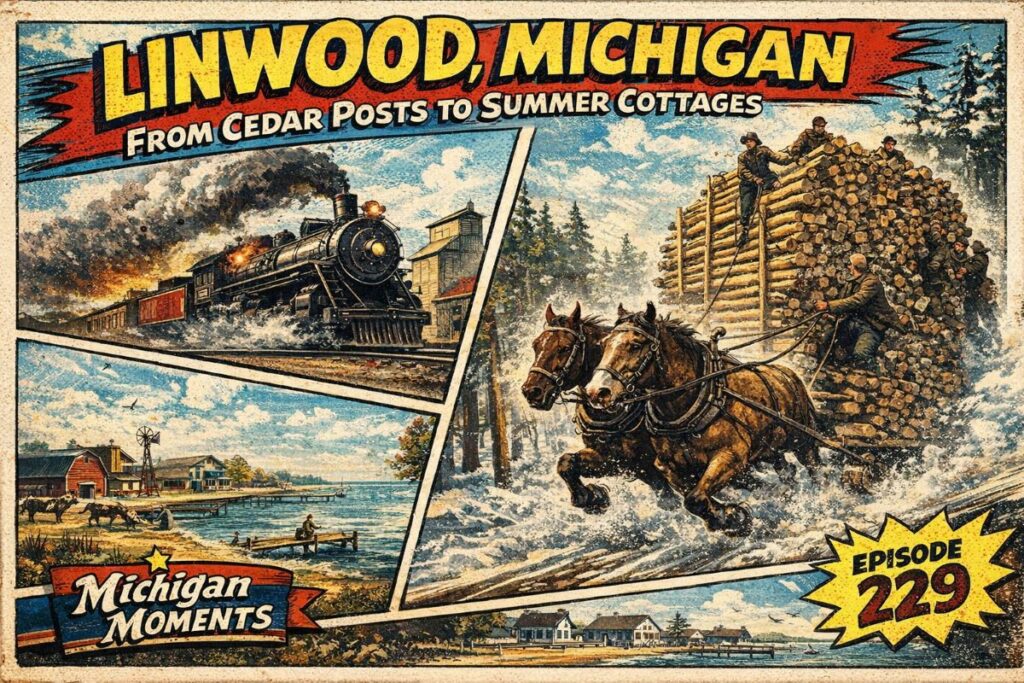
Linwood brings the story back to Saginaw Bay. It is a Bay County community tied to fishing, boating, marinas and summer traffic.
The Linwood episode shows the bay’s modern identity clearly. The old lumber economy is gone, but the water still drives activity. Anglers come for walleye and perch. Boaters come for access. Restaurants, bars, campgrounds and marinas serve people who still see the bay as a working part of life, even when the work now looks different.
Linwood is a fitting final stop because it shows how the bay’s role changed without disappearing. The water still pulls people in.
Why These Michigan Moments Episodes Belong Together
A viewer could watch one video and learn about one town. But watching all six gives a fuller picture of northeast Michigan and the Saginaw Bay region.
Tawas shows the Lake Huron shore. Au Gres shows the bay’s edge. Omer shows the river town. Pinconning shows food and highway identity. West Branch shows the inland crossroads. Linwood shows the fishing and boating culture of the western bay.
“`html
Watch More Michigan Town Stories From This Region
These Michigan Moments episodes feature communities tied to Saginaw Bay, Lake Huron, railroads, farming, fishing, tourism and small-town change. Watch another nearby town story and see how each place fits into Michigan’s larger past.
Tawas
A Lake Huron town shaped by waterfront travel, regional trade and the pull of Michigan’s sunrise coast.
Watch TawasAu Gres
A Saginaw Bay community tied to fishing, boating, shore life and changing coastal commerce.
Watch Au GresOmer
One of Michigan’s smallest cities, with a story tied to rail service, river traffic and Arenac County life.
Watch OmerPinconning
Famous for cheese, Pinconning also reflects farming, highways and small-town trade near Saginaw Bay.
Watch PinconningWest Branch
A northern Michigan crossroads shaped by rail lines, highways, shopping and regional travel.
Watch West BranchLinwood
A Saginaw Bay town tied to shoreline life, fishing, boating and the working communities of Bay County.
Watch LinwoodEach town adds a chapter. None tells the whole story alone.
That is the value of this collection. It turns local history into a regional view. It shows how small places shaped Michigan in quiet but lasting ways.
Watch the Regional Video Collection
Use the video guide to watch each Michigan Moments episode. Start with any town you know best. Then follow the road, the river or the bay to the next one.
The story is bigger than one stop. It is a trip through a region that helped build Michigan’s coast, farms, roads and vacation routes.