
 by
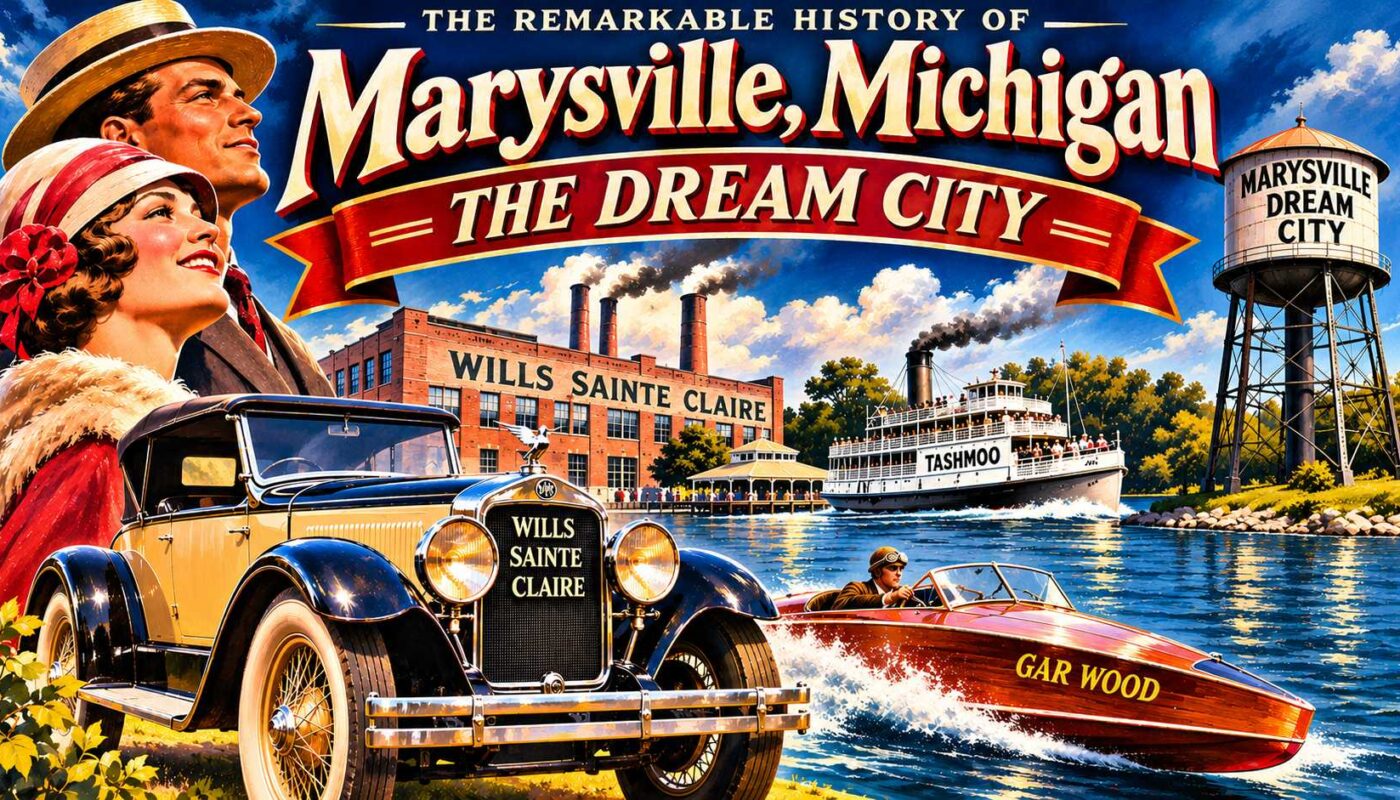
On Oct. 23, 1919, construction began on a new automobile factory in Marysville, Michigan. C. Harold Wills, one of Henry Ford’s most experienced early engineers, led the project. He intended to manufacture a luxury automobile and build a modern industrial community around the plant.
The history of Marysville, Michigan, would take a remarkable turn over the next few years. Crews laid out new streets, installed utilities, and built houses. Businesses followed, and a settlement of roughly 200 people began developing into the community that became known as the Dream City.
Table of Contents
Watch: Marysville, Michigan: The Dream City Built by Henry Ford’s Engineer
Marysville’s earlier history was closely tied to the St. Clair River. Lumber mills, commercial vessels, local stores, and summer resort connections supported generations of residents long before Wills arrived.
History of Marysville Michigan Before the Automobile
The St. Clair River provided an important transportation route for communities between Lake Huron and Lake St. Clair. During the 19th century, lumber companies used the waterway to ship timber and manufactured lumber to markets throughout the Great Lakes region.
Marysville became one of the smaller lumber settlements along the river. Sawmills operated near local creeks, while vessels carried lumber south toward Detroit and other ports. The Mills family became particularly prominent in the industry.
Nelson and Barney Mills ran a substantial lumber business that stretched back to the 1800s. The company owned timber interests and helped sustain local employment through its sawmills and shipping operations.
The lumber business supported merchants, laborers, ship crews, and tradesmen. Stores supplied groceries and household necessities to families who lived near the mills and along the river. The local economy depended heavily upon the continued availability of timber.
By the turn of the 20th century, that arrangement was becoming difficult to maintain. Michigan’s great white pine harvest had reduced the available timber supply. Mills closed, commercial activity declined and Marysville became a quieter settlement.
Main Street, the Post Office and the Electric Railway
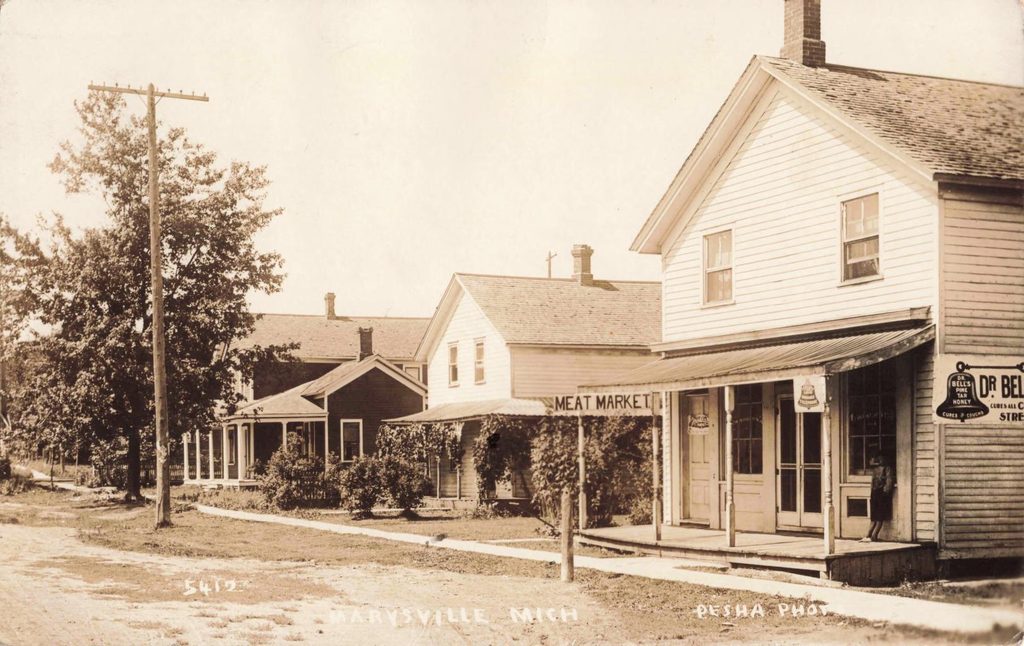
Early Marysville was small enough that its commercial buildings stood close to residential properties. A surviving view of Main Street shows wooden buildings, a meat market and advertising for everyday products. It resembles the main street of many small Michigan communities before automobiles became common.
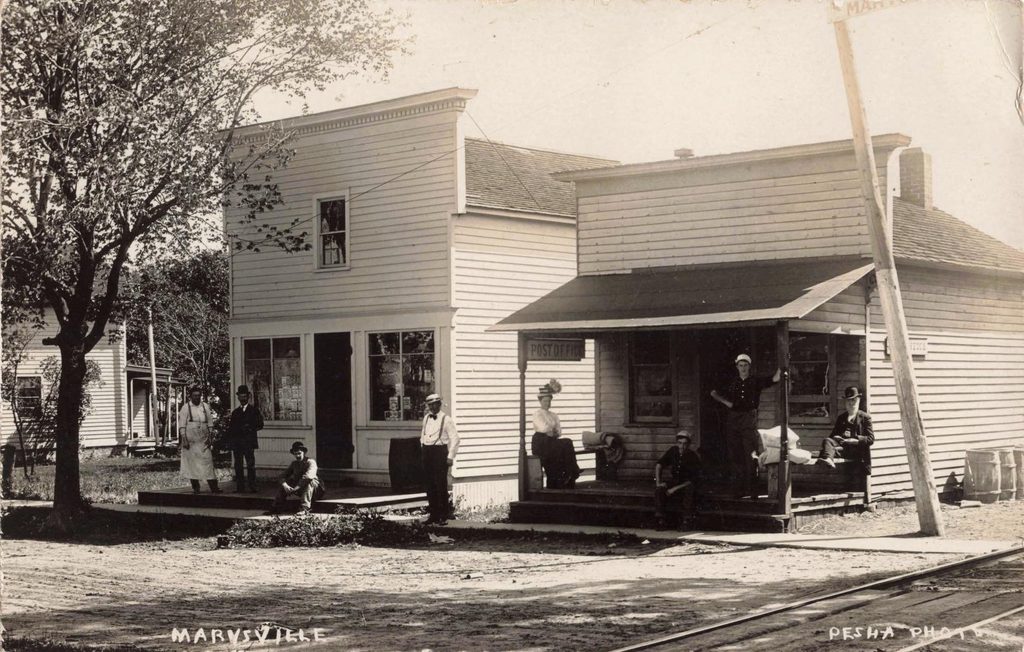
Another early view shows residents gathered outside the post office and neighboring business buildings. Tracks running along the street hint at how people moved through the community.
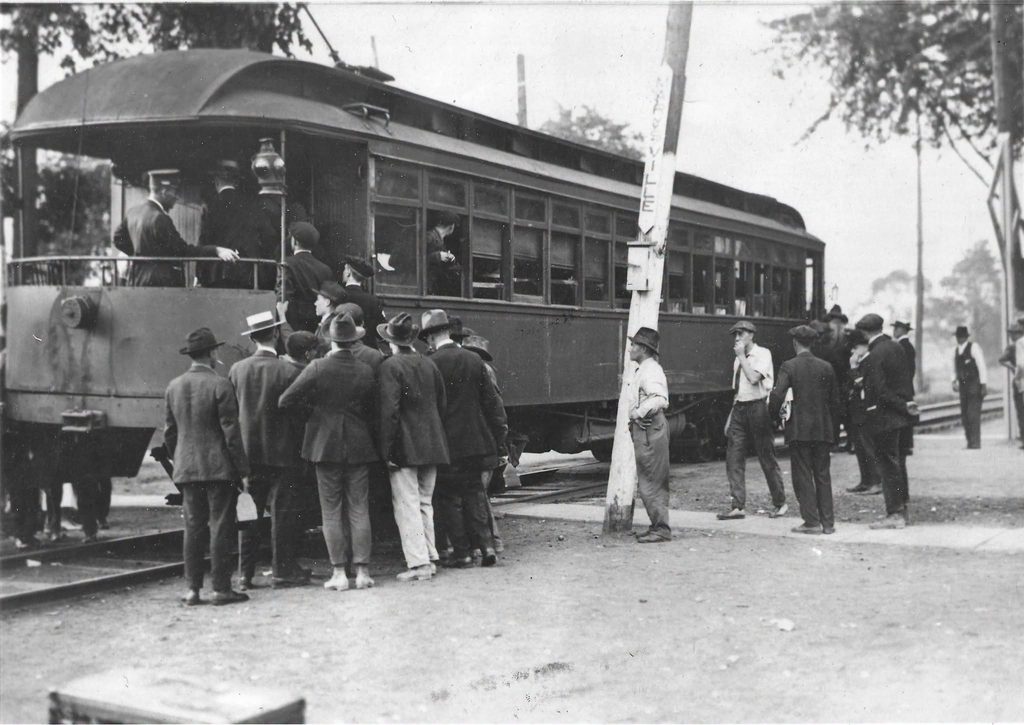
The Detroit United Railway’s electric interurban service connected Marysville with Port Huron and communities farther south. When personal automobiles were expensive, and roads were often poor, the railway gave residents a useful alternative.
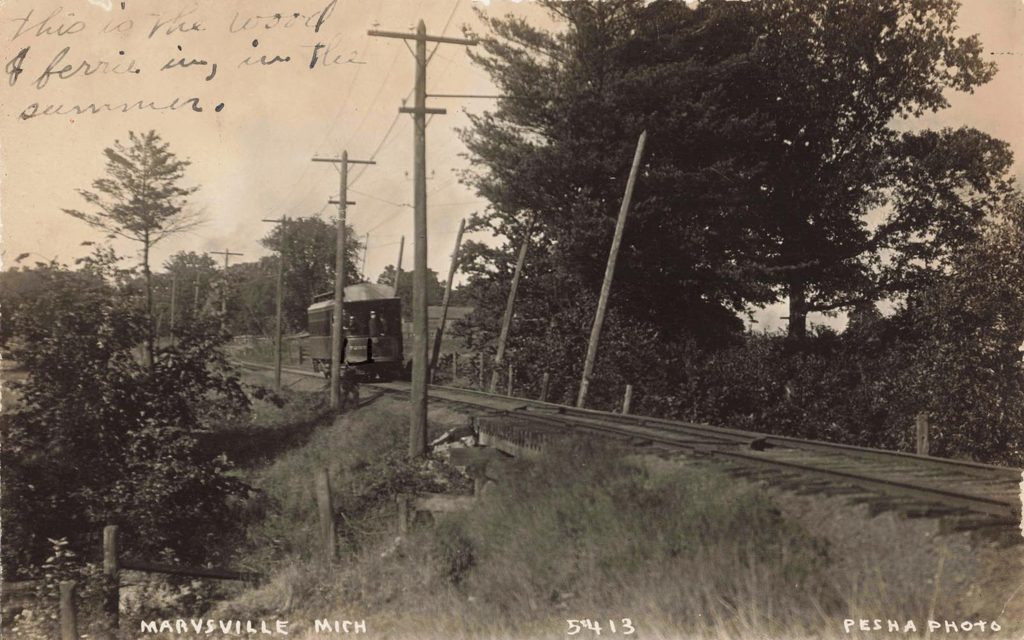
Freight railroad service also became important as manufacturing grew. The Port Huron & Detroit Railroad eventually served major industries, including Morton Salt, Detroit Edison, and the Wills automobile operation. The railroad’s historical customer records document the range of businesses that depended upon freight service.
The School and Neighborhoods of Early Marysville
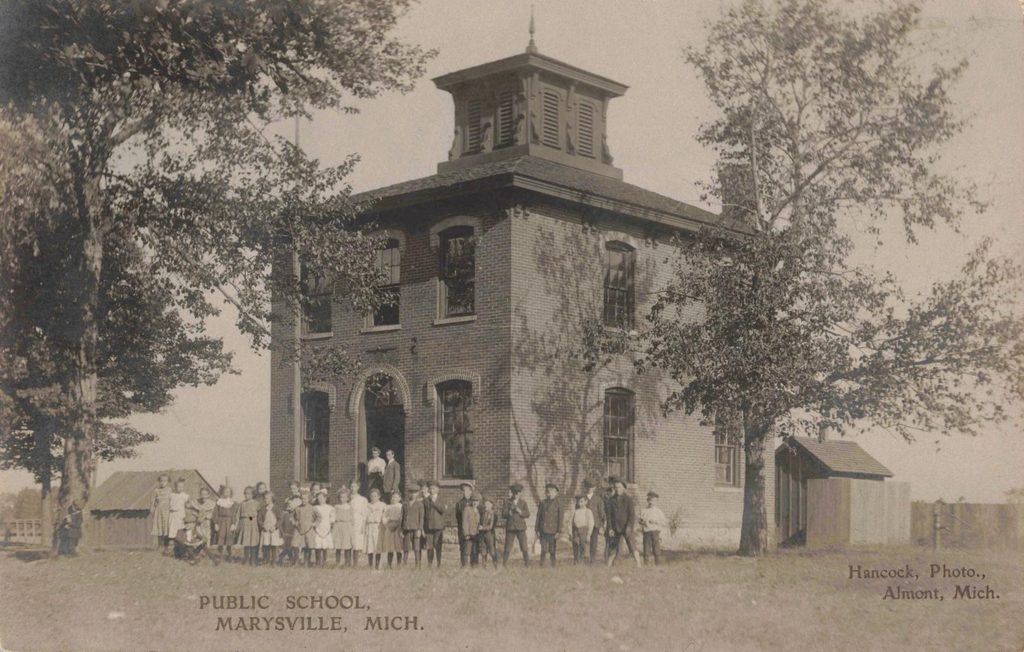
Life in Marysville continued even as its lumber industry declined. Families still needed schools, local businesses, and community institutions. The surviving postcard collection offers several views of the settlement’s residential character.
One depicts the public school, a substantial building with a small tower, with a group assembled outside. The building represents an important part of the community before the rapid industrial growth of the 1920s.
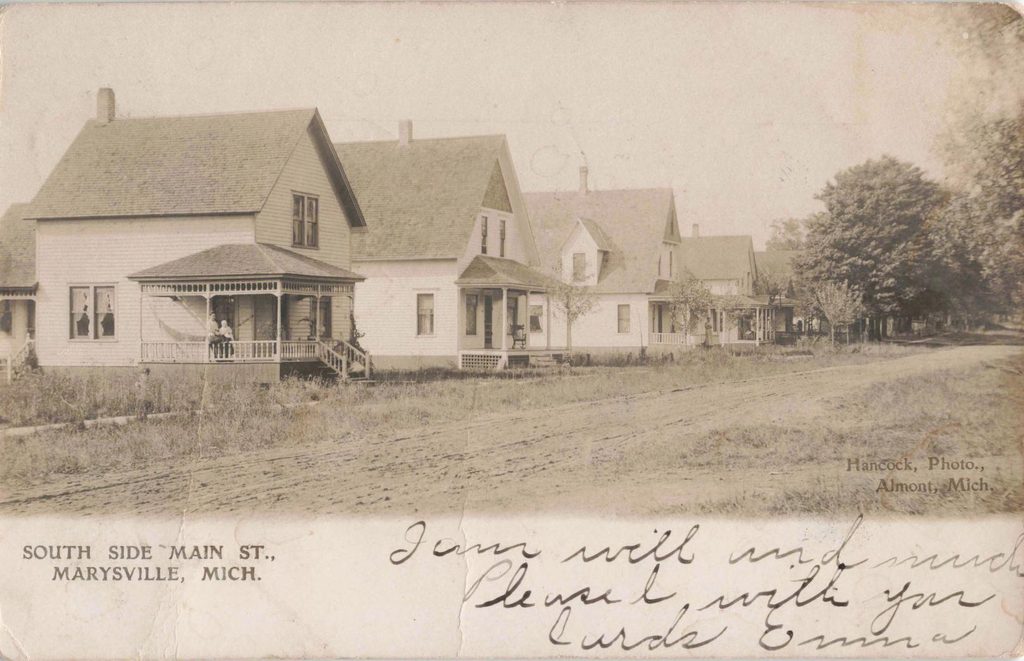
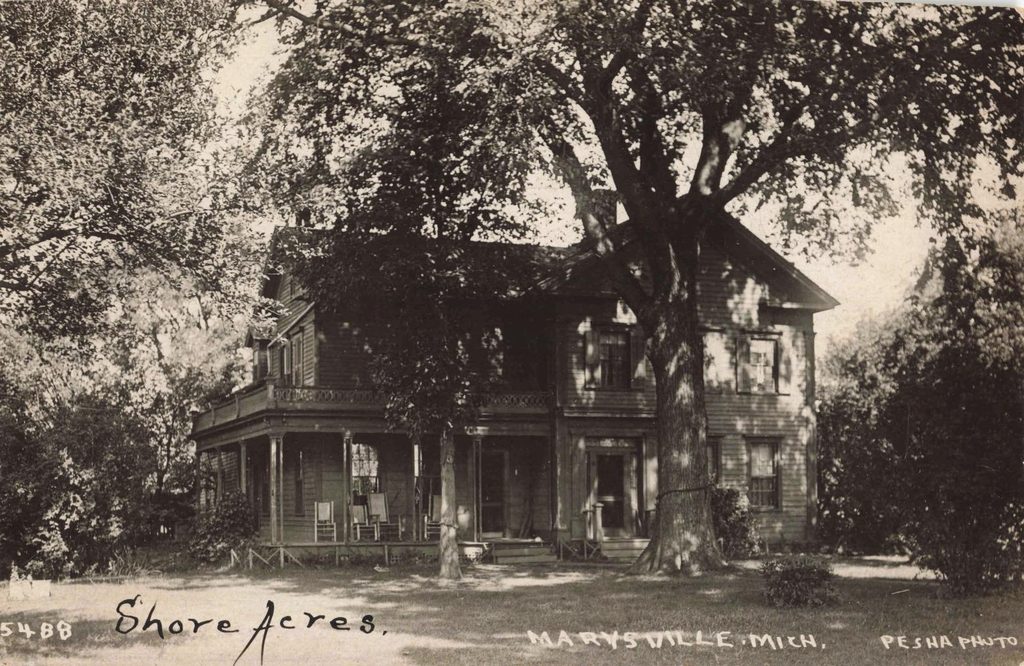
Other postcards show modest houses along unpaved streets. Wooden homes, shade trees, telephone poles, and simple porches were familiar features of early community life. These were established neighborhoods, not the new industrial housing that Wills would later sponsor.
Stag Island: Marysville’s Connection to a Canadian Summer Resort
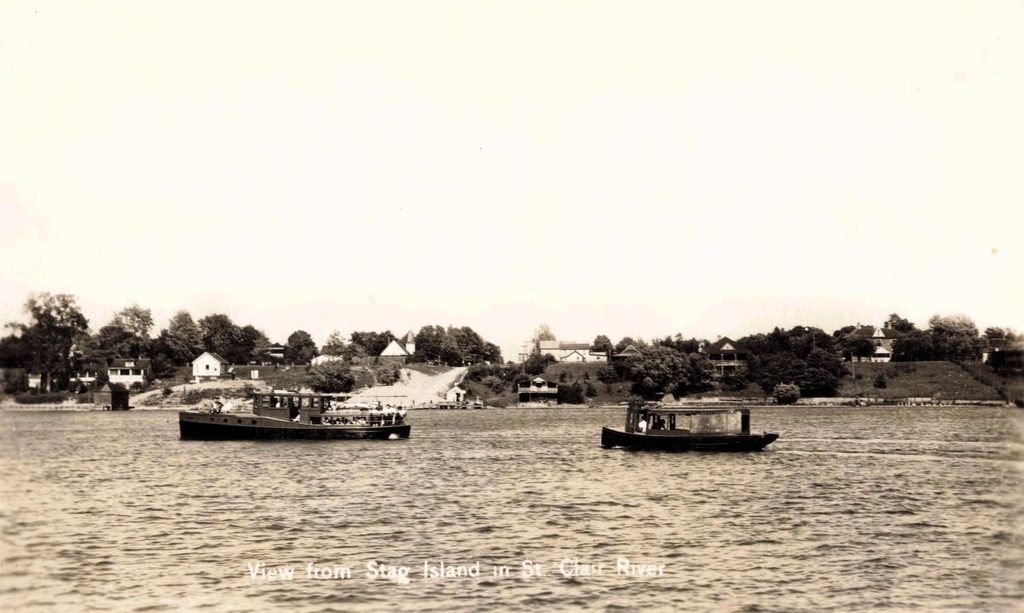
While Marysville’s lumbering declined, summer tourism was developing across the river. Around 1890, local businessman Nelson Mills began developing Stag Island, on the Canadian side of the St. Clair River, as a resort.
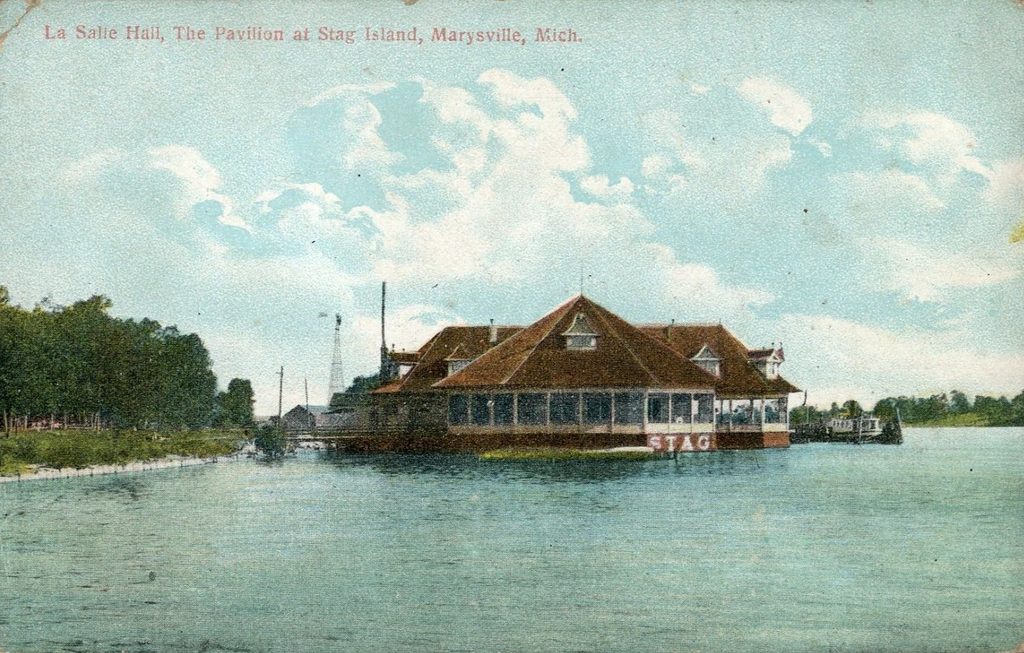
The island offered cottages, hotels, dining facilities, boating, and outdoor entertainment. The Hotel Griffon and Hotel Nelson were two of its prominent establishments. Visitors could also enjoy the waterfront pavilion known as La Salle Hall.
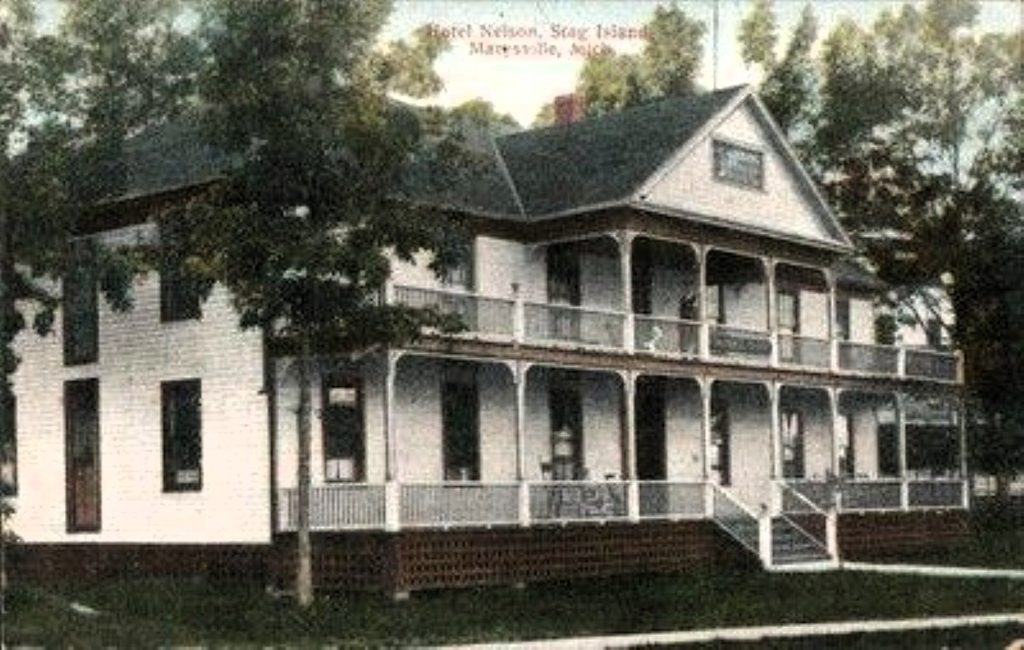
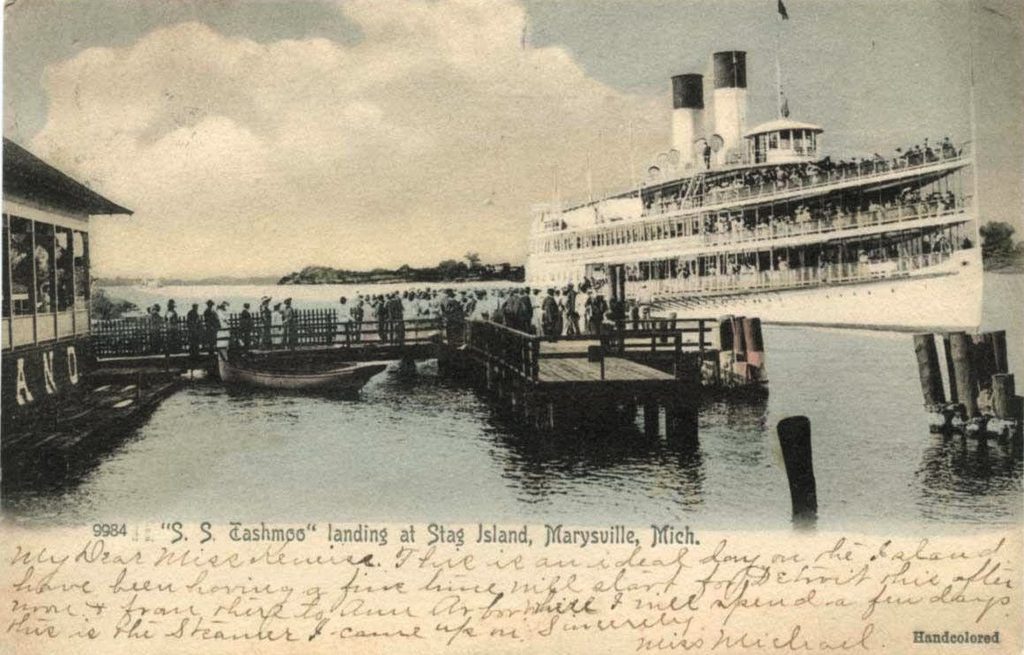
Passenger steamers made the island accessible to travelers from Detroit and other cities. The famous Tashmoo was among the vessels associated with excursions on the St. Clair River.
According to the Moore Museum’s history of Stag Island, excursion operators also offered smaller sightseeing trips and tintype portraits. One memorable attraction involved supposedly rare white turtles, which later proved to be painted.
Marysville, Michigan, also has this unusual international tourism connection, even though the resort operated across the border. As automobile travel grew, steamer excursions declined, and Stag Island gradually became a private cottage community.
1919: C. Harold Wills Begins Building the Dream City
C. Harold Wills arrived in Marysville after years of working with Henry Ford. A gifted engineer and metallurgist, he had helped design Ford automobiles and understood the demands of mass production.

Wills wanted to build his own automobile, and he wanted the manufacturing operation to be part of a carefully planned community. With associate John R. Lee, he helped establish the Marysville Land Company to acquire property and arrange new development.
Construction moved rapidly. Engineering surveys began June 12, 1919, and road grading started Sept. 19. Workers broke ground for the automobile factory Oct. 23, and construction of the first 66 planned houses began Nov. 4.
Water and sewer work, roads, electric service and community buildings were all part of the project. A contemporary account in Automobile Topics described the scale of the construction and housing program.
The settlement incorporated as a village Dec. 12, 1919. By August 1920, the development had its first store, while other manufacturers began projects in the area.
The Wills Sainte Claire Automobile Comes to Marysville
Wills Sainte Claire began producing its first automobiles in 1921. They were expensive, technically advanced cars intended for buyers willing to pay for engineering and quality.
The original model used an overhead-camshaft V-8 engine and extensive molybdenum steel components. The automobile became recognizable by its distinctive flying goose radiator emblem.
The Wills Sainte Claire Auto Museum documents the company’s engineering achievements. A surviving 1926 roadster in The Henry Ford’s collection also demonstrates the distinctive design of these Marysville-built automobiles.
The engineering was impressive, but the business struggled financially. Production costs remained high, while the automobile market experienced difficult conditions during the early 1920s.
The original company entered receivership in 1922 and underwent reorganization. Automobile manufacturing continued for several years, but production ended in 1926. Liquidation followed in 1927.
Marysville Becomes a City and Outlasts the Factory
The company’s financial problems did not stop Marysville from growing. Residents had established homes, schools, businesses, and a local government. Marysville became a city in 1924 and adopted a council-manager system.
That same year, the city established its own police department. Fred C. Snay became the first police chief, initially working out of modest facilities shared with the fire service.
The Marysville Police Department’s historical account records the community’s early municipal organization.
Marysville, Michigan, did not stop after the Wills factory closed. The new streets, utilities, and industrial property made the city attractive to other businesses. Wills and his associates had helped establish an economic foundation that could support additional manufacturers.
Gar Wood Boats and Chrysler Open Another Industrial Chapter
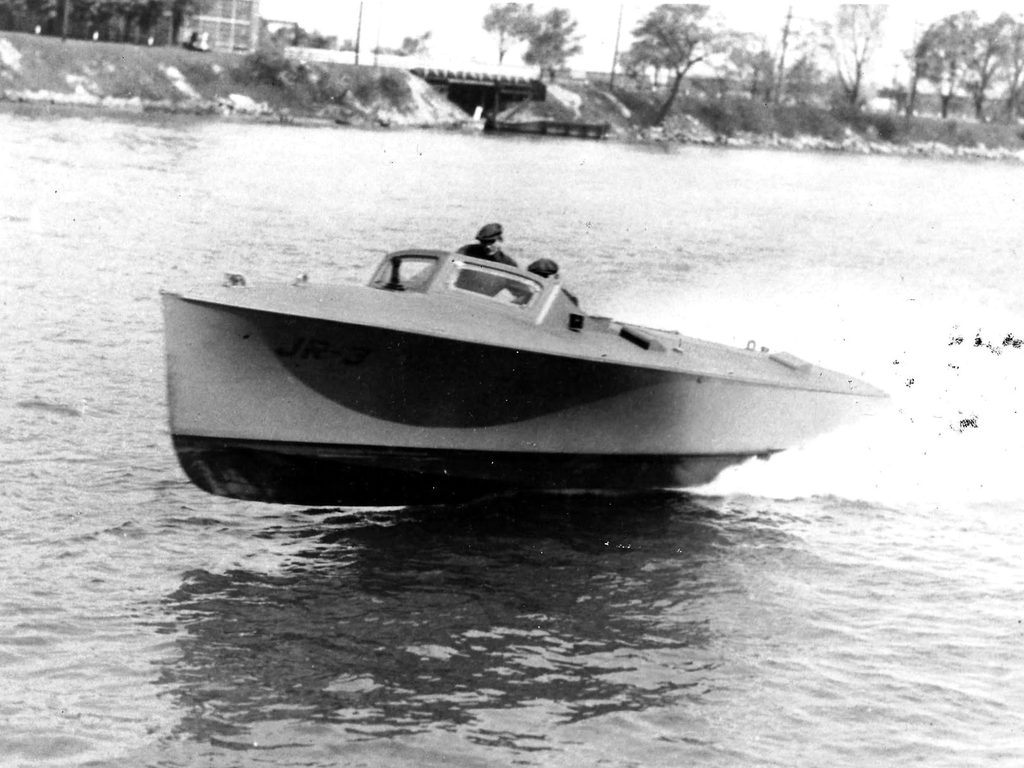
In 1930, celebrated speedboat racer Gar Wood opened a new motorboat factory in Marysville. The facility was designed to produce high-quality recreational boats on a larger scale, including the company’s famous wooden runabouts.
The timing was difficult. The stock market had crashed only months before the plant opened, and the Great Depression reduced demand for costly pleasure boats. Nevertheless, Gar Wood Industries became an important manufacturer in Marysville.
Gar Wood’s company history describes the Marysville plant and its role in recreational boat production. The development gave the city another connection to American transportation engineering.
In 1935, Chrysler Corporation purchased the former Wills automobile property. The factory buildings, originally built for an independent luxury car manufacturer, became part of a major automobile company’s industrial operations.
Salt manufacturing, electric power production, rubber products and other industries also supported employment and municipal finances.
What Marysville Looked Like by 1940
By 1940, Marysville had changed considerably from the small lumber settlement Wills encountered two decades earlier. A contemporary city directory described paved streets, public water and sewer service, schools, industrial facilities and a riverfront municipal park.
The directory identified Chrysler, Morton Salt, Gar Wood Industries, St. Clair Rubber and Detroit Edison as major industrial taxpayers. Its description of Marysville provides a valuable contemporary account of the city’s economy and public services.
Wills died in 1940 after returning to the automotive industry as a metallurgist at Chrysler. His own automobile had been out of production for years, but the city he helped develop had established other sources of employment.
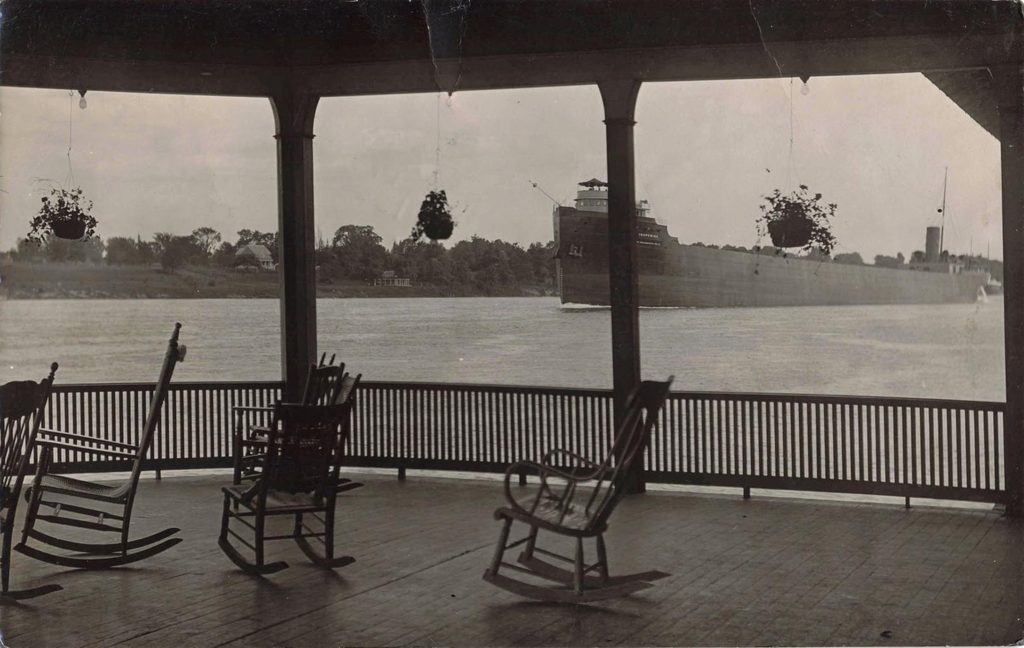
Marysville’s early lumber mills had disappeared. Steamship excursions to Stag Island were losing popularity. The Wills Sainte Claire factory had passed into different hands. Yet the city retained its industrial base, established neighborhoods and close relationship with the St. Clair River.
The Wills Sainte Claire Auto Museum and local historical collections now preserve important parts of this history. The Dream City’s most ambitious automobile left production in 1926, while the industrial community built around it kept growing.
Marysville, Michigan: Historical Timeline
MARYSVILLE
THE DREAM CITY
From lumber mills and steamboat excursions to luxury automobiles and motorboats: the events that transformed Marysville, Michigan.
OPEN THE INTERACTIVE HISTORICAL TIMELINE
- 19th Century
Lumber Mills Shape Marysville
Sawmills and shipping along the St. Clair River support Marysville’s early economy. Nelson and Barney Mills become prominent lumber businessmen.
Read historical detail
River transportation connects local mills with Great Lakes markets. As Michigan’s white pine harvest declines, Marysville begins losing much of its original industrial activity.
-
About 1890
Stag Island Becomes a Summer Resort
Marysville businessman Nelson Mills helps develop Stag Island, across the river in Canada, as a destination for summer visitors.
Read historical detail
The island eventually offers hotels, cottages, dining facilities and recreational attractions. The Hotel Griffon and Hotel Nelson become familiar resort establishments.
Thumbnail: Hotel Nelson, 1909. -
Early 1900s
Electric Railway Connects the River Towns
The Detroit United Railway links Marysville with Port Huron and communities to the south, offering residents regional passenger service.
Read historical detail
Electric interurbans provide transportation for workers, shoppers and families before personal automobiles become common. Freight rail connections also support industries along the St. Clair River.
-
About 1905
S.S. Tashmoo Serves River Excursionists
Large passenger steamers bring visitors to resorts along the St. Clair River, including Stag Island’s hotels and waterfront attractions.
Read historical detail
Steamboat excursions allow travelers from Detroit and other cities to enjoy summer recreation without owning a private boat. The Tashmoo becomes a familiar vessel on the river.
Thumbnail: Stag Island landing, about 1905.
- June-September 1919
C. Harold Wills Plans a New City
Former Ford engineer C. Harold Wills and his associates begin developing an automobile manufacturing community in Marysville.
Read historical detail
Engineering surveys begin June 12. Road grading follows Sept. 19. The plans include industrial sites, streets, utilities, housing and public facilities rather than an isolated factory.
- October 23, 1919
Construction Begins on the Wills Factory
Work starts on the automobile factory that will produce the Wills Sainte Claire, the centerpiece of Marysville’s new industrial development.
Read historical detail
Wills intends to produce an advanced, higher-priced automobile using his experience in engine design, metallurgy and automotive engineering.
- November 4, 1919
Workers Begin Building New Homes
Construction starts on the first 66 planned houses. Residential development becomes a central part of the new industrial community.
Read historical detail
The project includes streets and municipal utilities intended to support employees and their families. New housing helps distinguish Marysville from an ordinary factory location.
-
December 12, 1919
Marysville Incorporates as a Village
The community formally becomes an incorporated village during its rapid industrial expansion.
Read historical detail
The new municipal government provides a foundation for local administration as population, housing and industry expand. The school pictured here illustrates early community institutions, not the incorporation ceremony.
-
1921
The Wills Sainte Claire Enters Production
Marysville workers begin manufacturing luxury automobiles known for advanced engineering and a flying goose radiator emblem.
Read historical detail
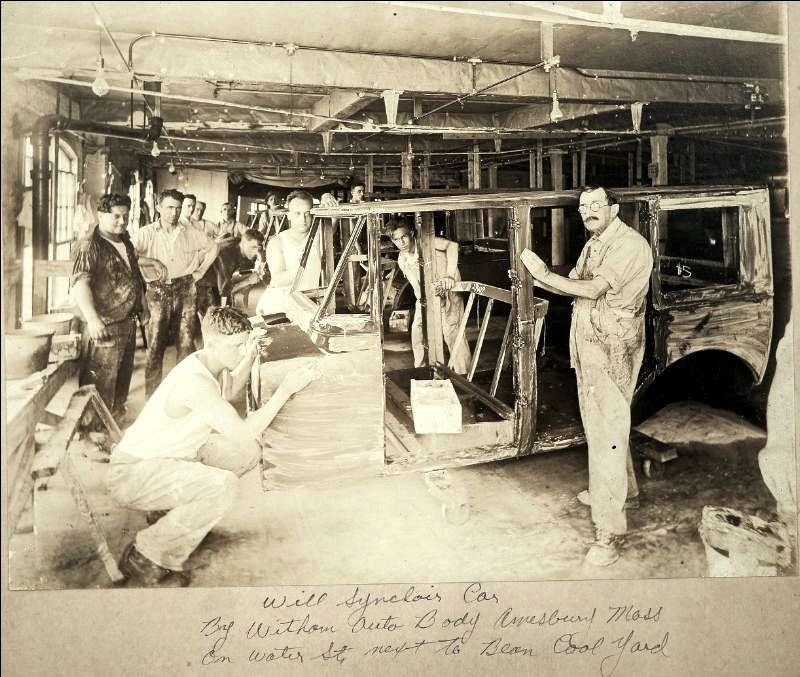
Early cars feature an overhead-camshaft V-8 engine and extensive use of molybdenum steel. The thumbnail is a later 1927 image from California, not a photograph of the Marysville factory.
- November 1922
The Automobile Company Faces Financial Trouble
The original C. H. Wills Company enters receivership. An effort to reorganize allows automobile manufacturing to continue.
Read historical detail
Producing expensive automobiles requires substantial investment. Engineering quality alone cannot guarantee a profitable business in a competitive market.
-
1924
Marysville Becomes an Incorporated City
Marysville adopts city government and establishes its own police department. Fred C. Snay becomes the first police chief.
Read historical detail
The city uses a council-manager form of administration. Local government assumes greater responsibility for services as neighborhoods and industrial facilities develop.
- 1926-1927
The Wills Sainte Claire Era Ends
Automobile production ends in 1926, followed by the company’s liquidation in 1927. Marysville loses the manufacturer that inspired its planned development.
Read historical detail
The factory’s closing creates uncertainty, but the city retains its houses, streets, utilities and industrial property. Those investments help support later businesses.
- 1930
Gar Wood Opens a Motorboat Factory
Famous speedboat racer Gar Wood opens a major manufacturing plant in Marysville, producing high-quality recreational motorboats.
Read historical detail
The new factory opens during the difficult opening years of the Great Depression. Despite weak demand for expensive recreational products, Gar Wood Industries becomes part of Marysville’s manufacturing economy. Read Gar Wood’s company history.
- 1935
Chrysler Purchases the Former Wills Property
Chrysler Corporation acquires the former Wills automobile factory property, bringing the historic manufacturing complex under the ownership of a major automobile company.
Read historical detail
The acquisition gives the former Wills industrial facilities a new role. The property remains tied to automobile-related manufacturing after the end of the original Wills Sainte Claire company.
- 1940
Marysville Has Become an Industrial City
A contemporary directory lists Chrysler, Morton Salt, Gar Wood Industries, St. Clair Rubber and Detroit Edison among the city’s major industrial taxpayers.
Read historical detail
By this time, Marysville has paved streets, schools, municipal utilities and a public park. C. Harold Wills dies in 1940, but the industrial community he helped plan continues operating.
Frequently Asked Questions About Marysville History
When was Marysville, Michigan, founded?
Marysville developed as a river settlement during the 1800s. It incorporated as a village on Dec. 12, 1919, and became a city in 1924.
What was Marysville’s Dream City?
The Dream City was a planned industrial community that C. Harold Wills and associates began developing in 1919. It included factories, housing, streets, utilities and community facilities.
What automobile was manufactured in Marysville?
Marysville manufactured the Wills Sainte Claire from 1921 through 1926. It was a luxury automobile known for its advanced engineering, overhead-camshaft V-8 engine, and flying-goose radiator emblem.
What other famous products were made in Marysville?
Gar Wood Industries began producing recreational motorboats in Marysville in 1930. The city also became an important location for automobile-related manufacturing, salt production, power generation and rubber products.
Help Preserve Marysville’s History
Do you remember former Marysville businesses, old schools, railroad stops or the city’s early factories? Perhaps your family has postcards, newspaper clippings or stories about the Wills Sainte Claire years. Share what you know in the comments. These details can help identify people and places that are not always documented in published histories.
Works Cited for the History of Marysville Michigan
Crampton, Emeline Jenks. History of the Saint Clair River. The St. Clair Republican, 1921.
Gar Wood Boats. “Gar Wood History.” Gar Wood Boats.
Historic New England. “How They Live and Build in Marysville.” Automobile Topics, 1921. Archival catalog record.
Marysville Police Department. “MLEAC Onsite Assessment Report.” Michigan Association of Chiefs of Police, 2023.
Moore Museum. “Stag Island.” Moore Museum.
Port Huron & Detroit Railroad Historical Society. “Customers Served.” Port Huron & Detroit Railroad.
St. Clair County Library System. Port Huron City Directory, 1940-1941. Earl A. Lester & Sons, 1940.
The Henry Ford. “1926 Wills Sainte Claire Roadster.” The Henry Ford Collections.
Wills Sainte Claire Auto Museum. “About Us.” Wills Sainte Claire Auto Museum.