 by
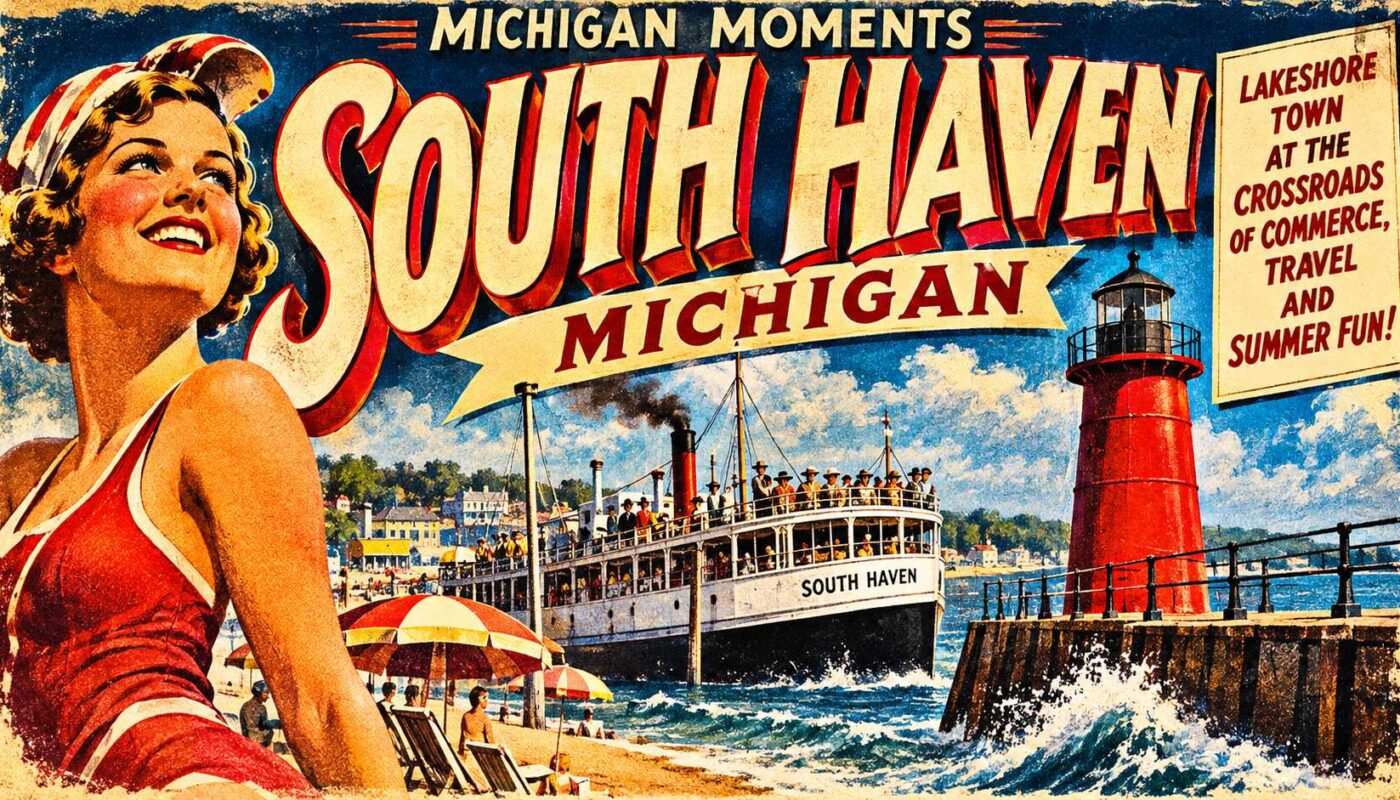
In South Haven, Michigan, a boardinghouse sign could promise a meal and a bed while a steamer tied up a few blocks away. This southwestern Michigan waterfront in Van Buren County handled goods bound for city markets and people arriving for summer holidays. The history of South Haven, Michigan follows those connections between work, transportation, and the business of taking time off.
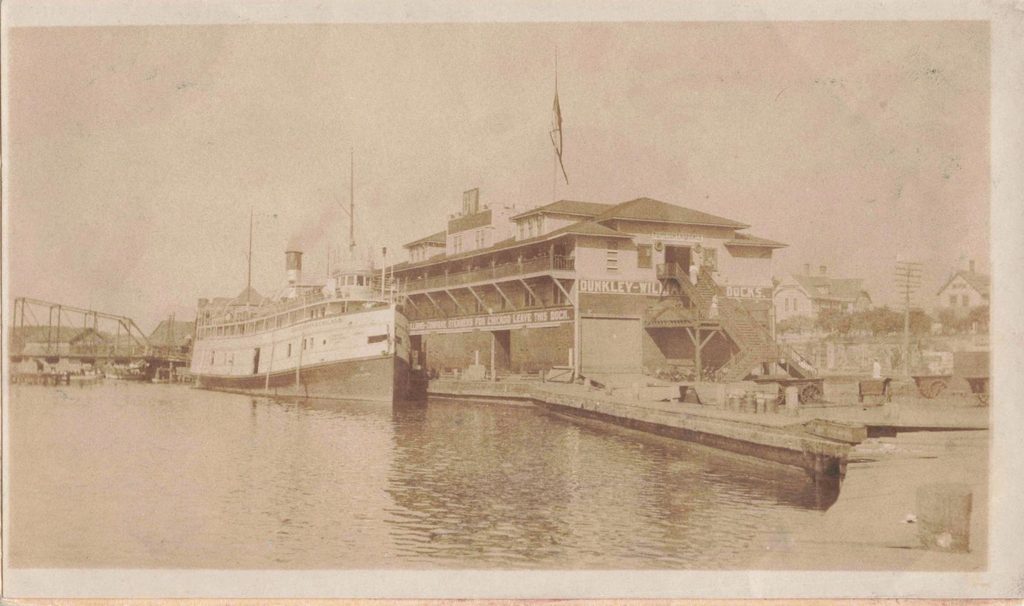
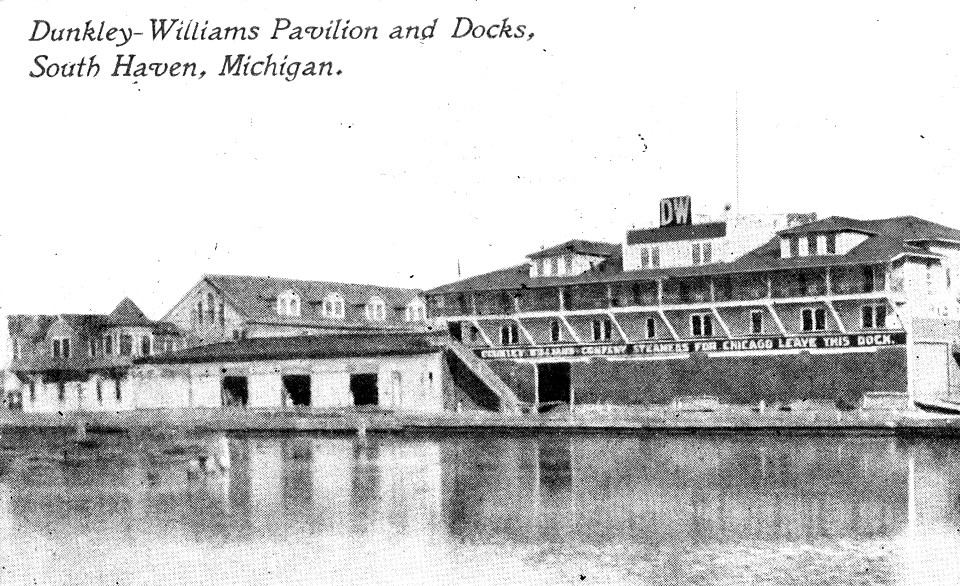
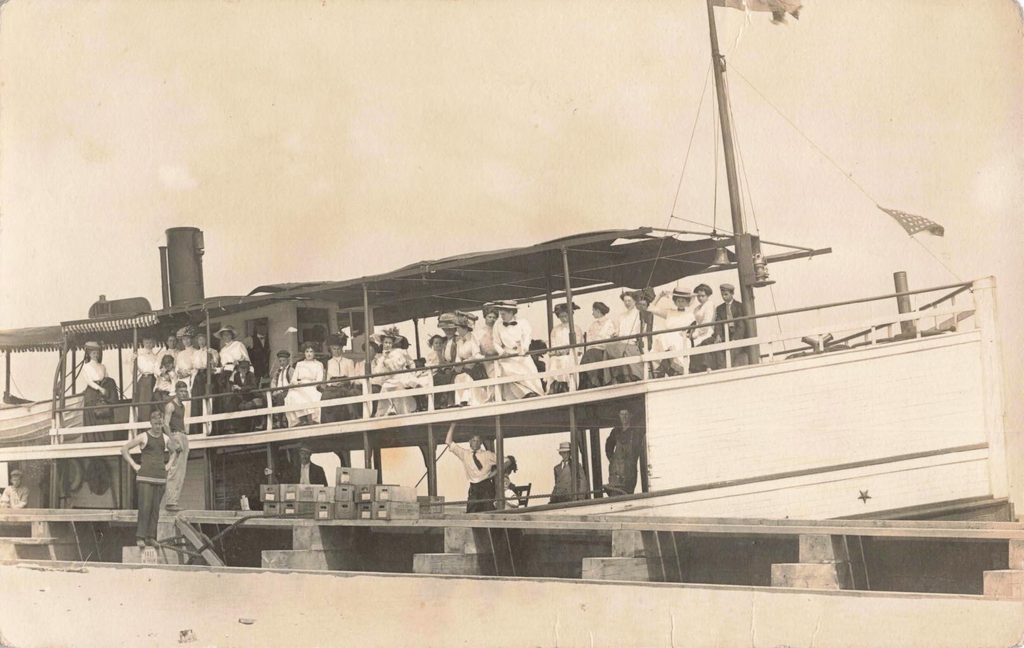
The supplied postcards preserve both sides of town. A passenger vessel rests beside the Dunkley-Williams pavilion, whose long verandas overlook the river. Elsewhere, shops line Phoenix Street, guests gather outside hotels and the Everett Piano Company marks its factory roof with large letters. The resort and the industrial town occupied the same streets.
History of South Haven Michigan: A Harbor Built for Trade
South Haven’s commercial growth began on land already used by Native communities already used. Jay R. Monroe obtained a federal land patent near the mouth of the Black River in 1833. Sawmills drew settlers, and the village incorporated in 1869. Lake vessels carried lumber to customers across the water.
As settlers cut timber, orchards spread onto cleared land. Growers needed to move perishable fruit quickly, making the harbor an advantage for farmers and lumber dealers alike. Peaches and apples also created demand for packing materials. The Pierce-Williams Basket Company, established in 1882, manufactured more than 2 million baskets in 1896.
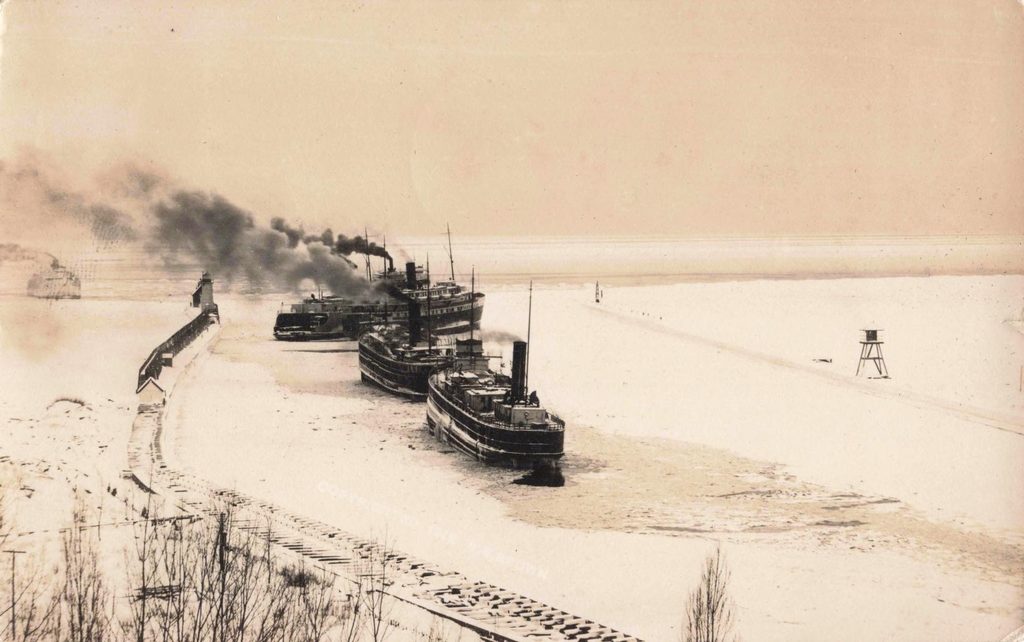
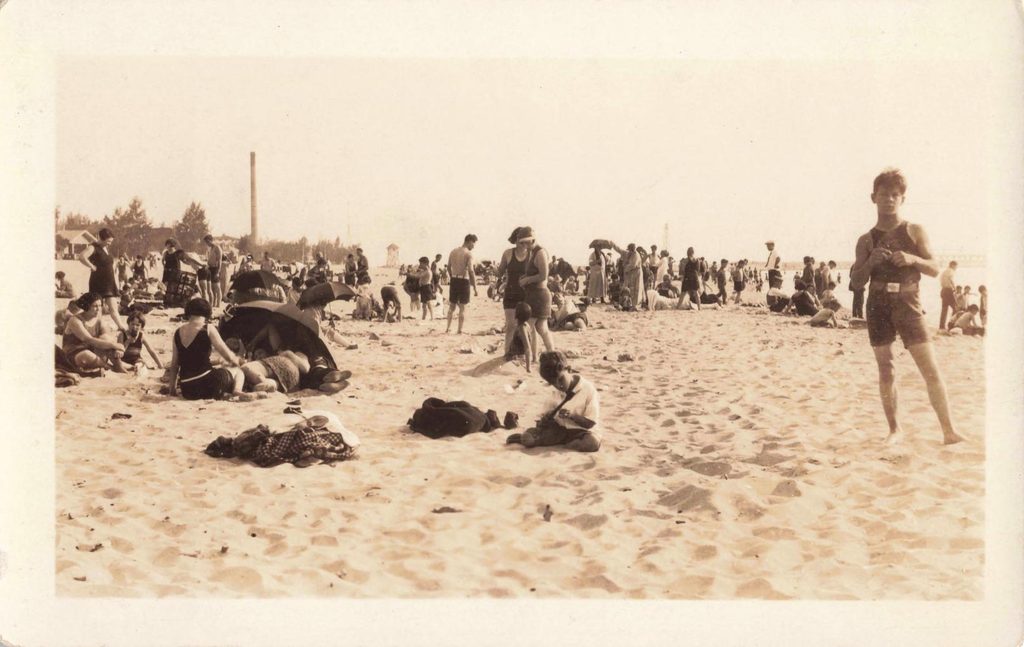
This was a regional economy with a waterfront address. Farms outside town supplied products that supported jobs in transportation and manufacturing. Chicago’s appetite for Michigan fruit sustained the connection, while the same lake crossing gave city residents a route to the beach.
The Depot and the Dock Brought Customers
The Kalamazoo and South Haven Railroad began regular service in January 1871. Michigan Central’s financial support helped complete the line, giving inland communities access to South Haven’s port. The depot became another point where travelers and local businesses met.
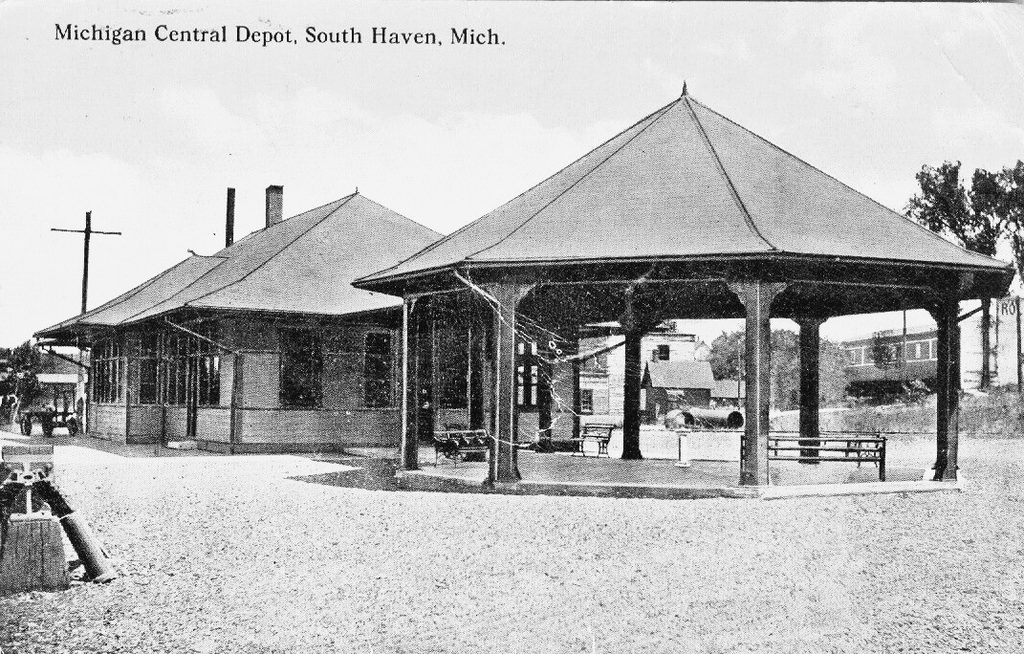
Steamship operators developed the Chicago trade alongside that rail connection. Henry Williams established a transportation line in 1885 after leaving the lumber business. Samuel Dunkley bought a controlling interest in 1902, forming Dunkley-Williams. The pavilion bearing their names offered a substantial arrival point for the passenger business.
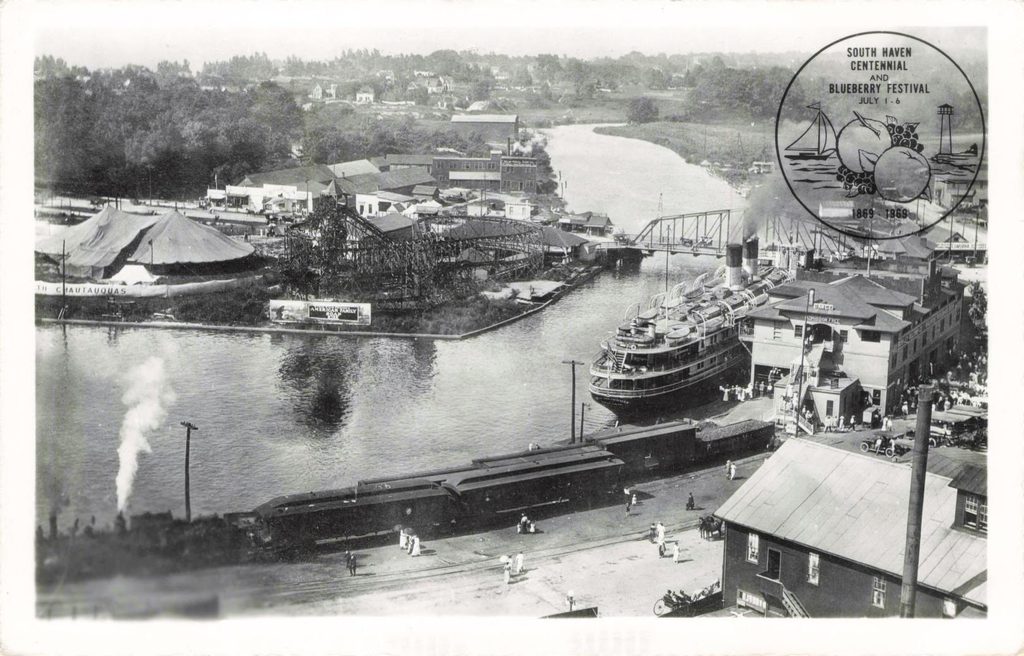
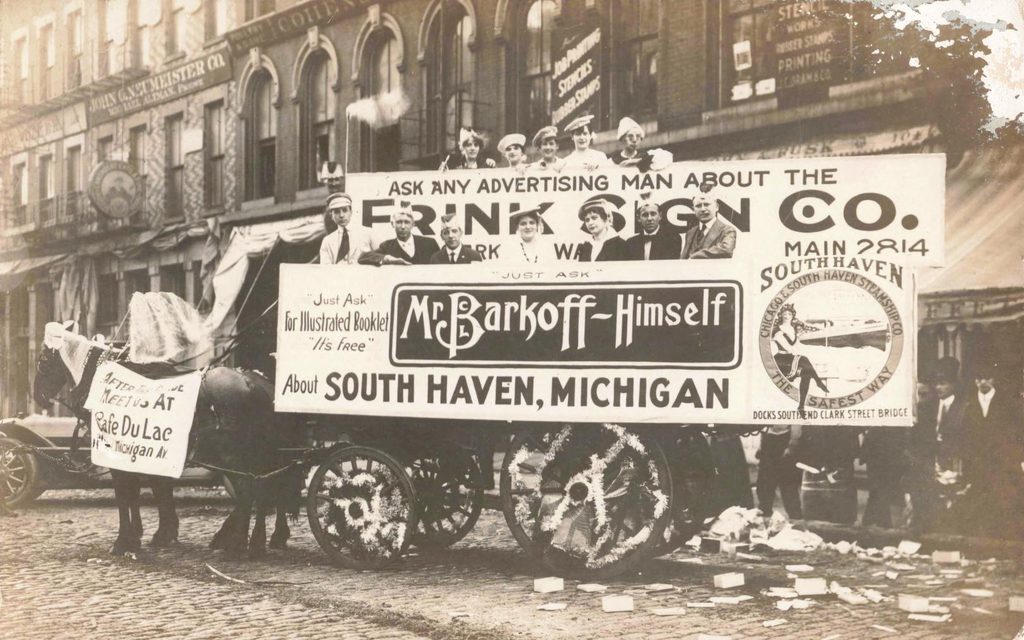
The steamers also appeared in advertising aimed directly at Chicago customers. A July 1, 1913, newspaper advertisement paired the City of South Haven with an outdoor recreation scene. The crossing was part of the product: buy passage, leave the city and arrive where a holiday could begin.
A Light for the Working Harbor
The lighthouse was part of the infrastructure behind those crossings. In October 1903, a Lighthouse Service crew prepared the foundation for a replacement tower. The tender Hyacinth brought the new light to South Haven. Its purpose was practical: helping vessels find the harbor entrance.
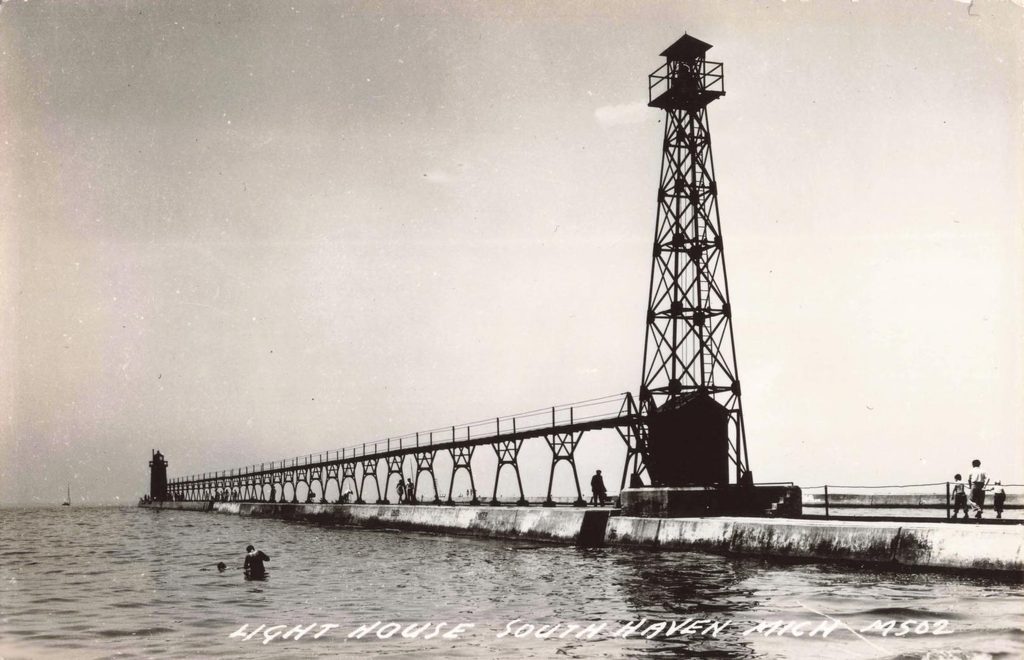
The excursion trade also connects South Haven to the Eastland disaster. The ship had served the Chicago–South Haven route before overturning at its Chicago River dock on July 24, 1915, killing 844 people. That day, it was preparing to carry a company picnic party to Michigan City, Indiana. The distinction separates the vessel’s South Haven service from its fatal final passenger trip.
Phoenix Street Served Visitors and Residents
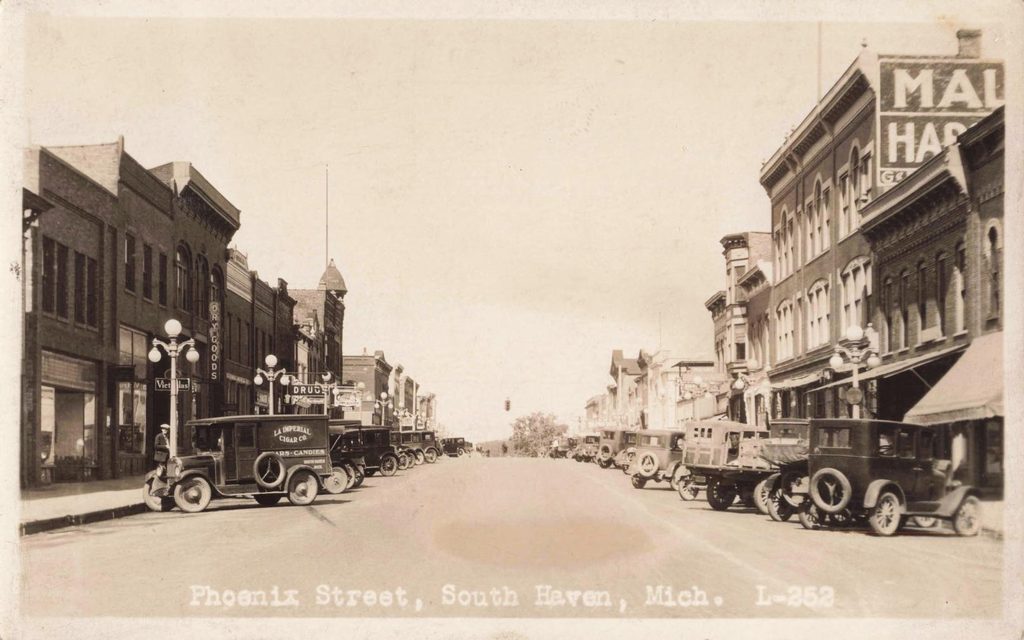
The early automobile-era view of Phoenix Street shows closely spaced commercial buildings and cars along the curbs. Storefronts made the town center useful to residents and visitors alike. The commercial district connected everyday shopping with the spending generated by summer arrivals.
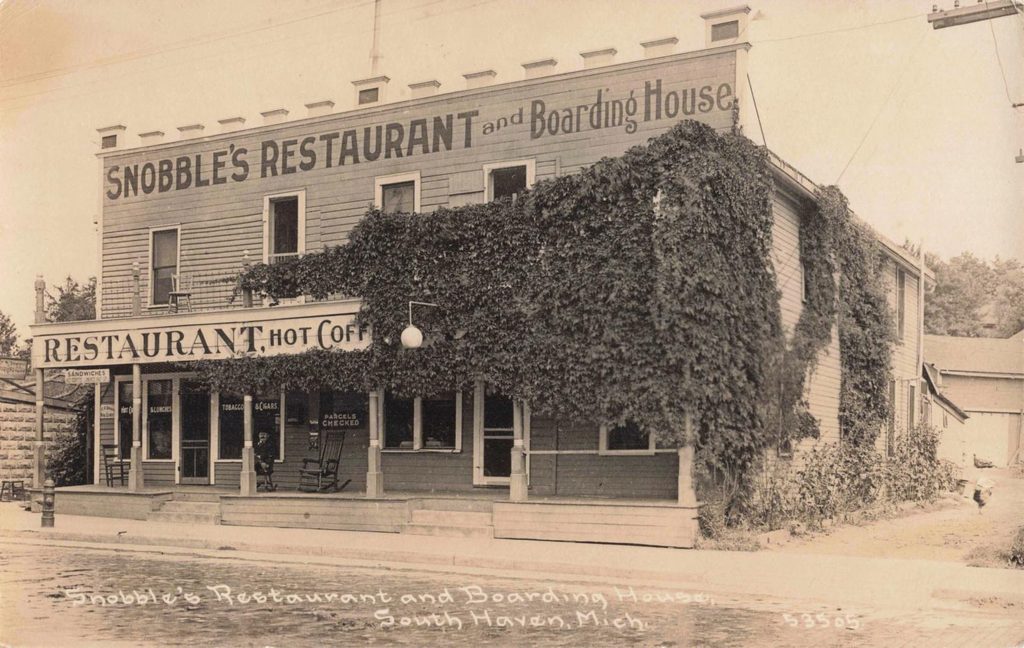
Snobble’s advertised its two functions across the upper facade: restaurant and boardinghouse. A traveler could obtain food and lodging from one establishment, an arrangement simpler than a large resort with a full entertainment program. In the history of South Haven Michigan, these smaller businesses belong alongside the better-known hotels.
Jewish Families Built Places to Stay
The lodging trade expanded through different kinds of ownership and accommodation. South Haven’s 1902 directory listed more than 200 places receiving guests, including homes and farms. That total describes a broad hospitality economy, rather than hundreds of grand hotels.
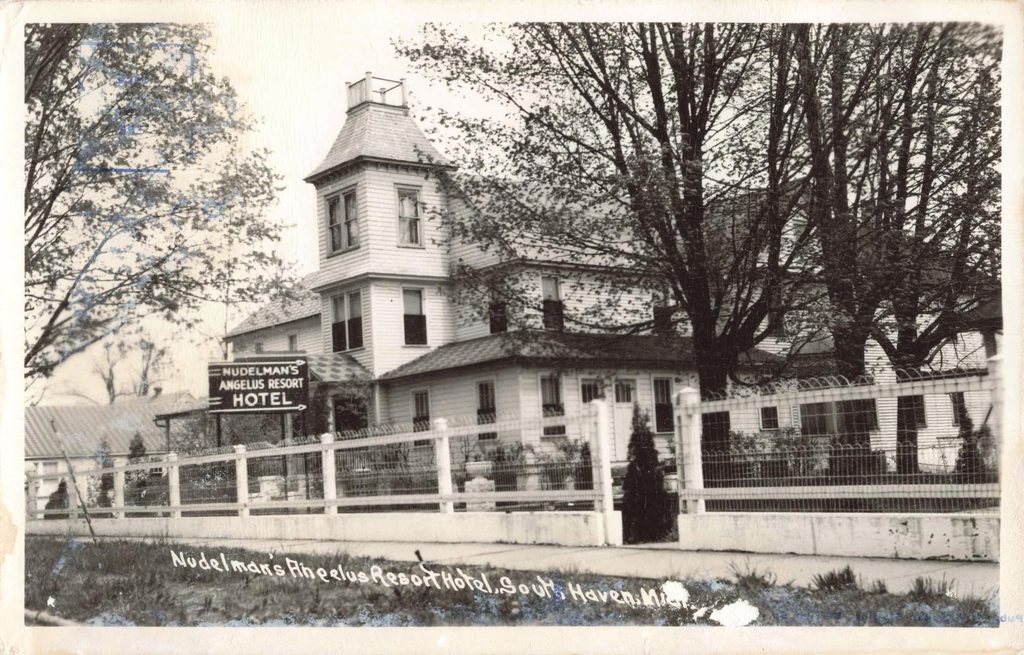
Jewish families helped reshape it while facing discrimination at other vacation destinations. They established boardinghouses, farm resorts and larger properties where guests could find familiar food and social customs. A postcard identifying Nudelman’s Angelus records one of the named hotels in the supplied collection, with a substantial porch and shaded grounds.
Family memories reveal the labor behind these businesses. Si Reznik recalled a farm that received summer visitors, with a former horse barn adapted as a dining room and relatives preparing meals. The family met arriving steamer passengers with a horse-drawn vehicle. Visitors watched milking and harvesting, activities that were work for their hosts and recreation for them.
Roselyn Schwartz remembered helping her mother at Roseline Cottages, making beds and pressing curtains. Art Samson recalled washing dishes, cleaning bathrooms and driving the resort bus. Their accounts make the history of South Haven Michigan personal: a guest’s relaxing week depended on someone else’s long working day.
The businesses could also change the course of a visitor’s life. Anne Shapiro came to Fidelman’s as a guest in 1936, later married Hyman Fidelman and joined the family operating the resort. Her recollections included kitchen work and managing dining-room seating. A vacation connection became a family and a livelihood.
Piano Manufacturing Supplied Work Beyond Summer
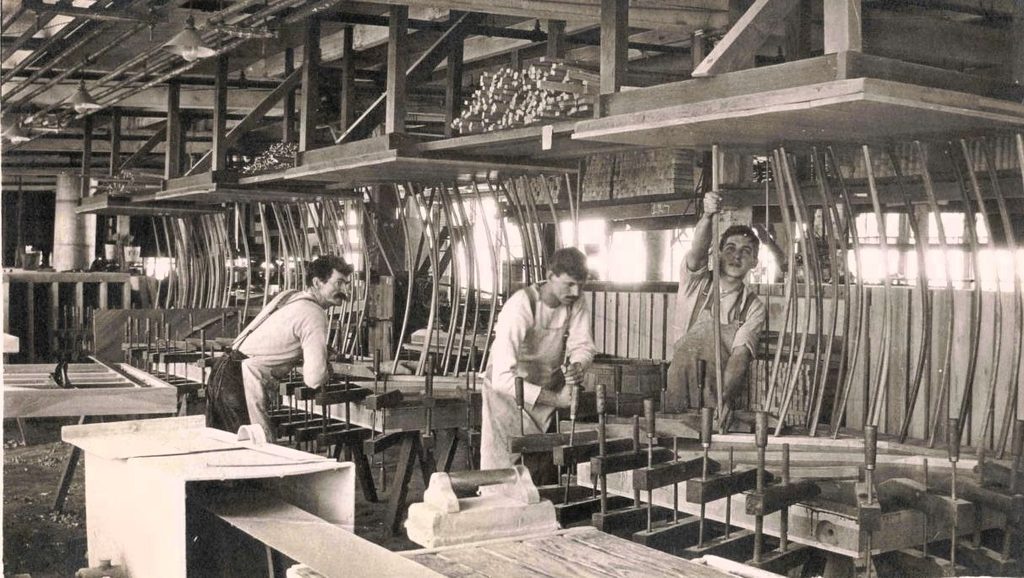
City boosters sought industries that could provide employment outside the tourist season. Musical-instrument businesses became part of the answer. Cable-Nelson manufactured pianos, and S.E. Overton supplied wooden components before expanding into other products. Everett manufacturing arrived in South Haven in 1926.
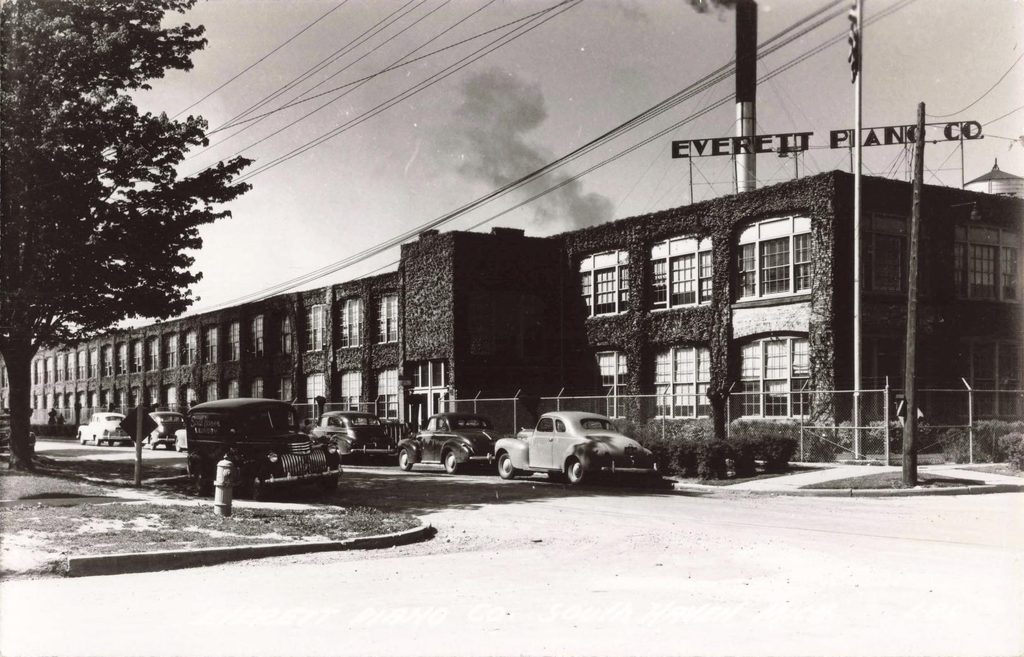
The later factory view shows the Everett name above a long brick building. It adds an essential part of the town’s story: manufacturing continued while summer visitors came and went. South Haven’s connection to music included the workers making instruments, as well as the musicians entertaining resort guests.
New Travel Habits and a Rebuilt Sleepy Hollow
Automobiles gave vacationers more control over their journeys and brought them directly to cottages and hotels. Passenger service on the former Kalamazoo and South Haven line ended in 1937, though freight continued. The town’s transportation system changed as families gained alternatives to scheduled trains and boats.
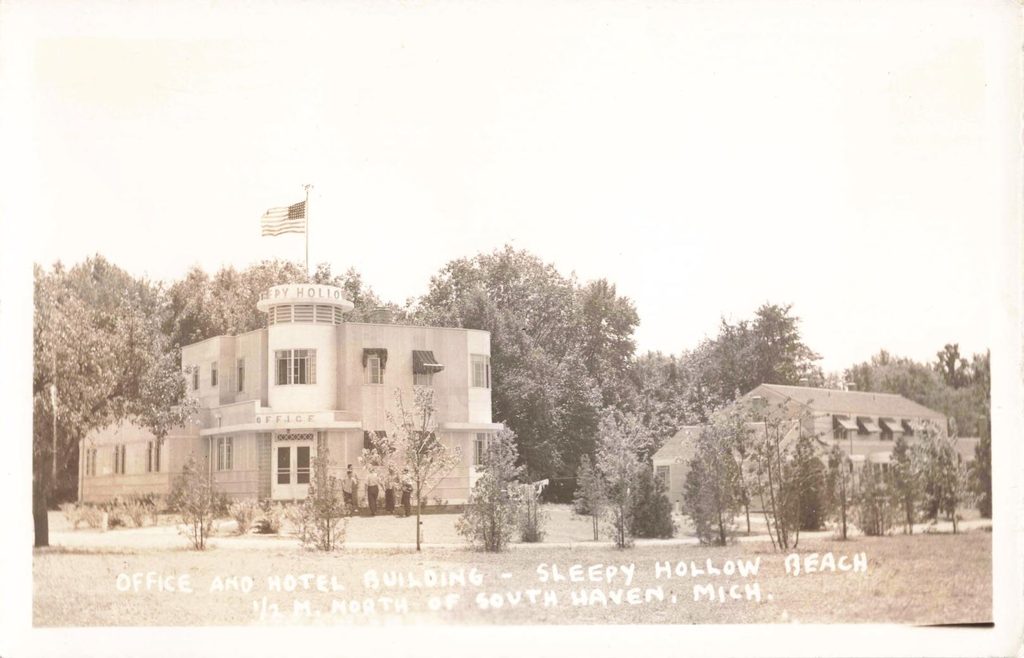
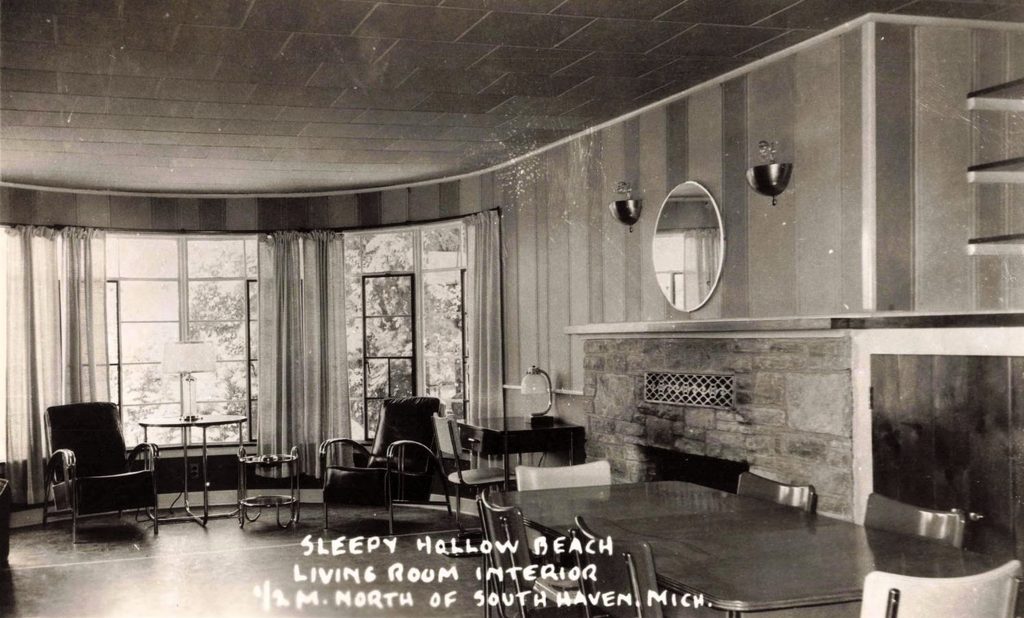
Sleepy Hollow changed its accommodations, too. An earlier hotel burned in 1910; a rebuilt resort opened in 1938 with cottages offering electric kitchens and private bathrooms. The interior postcard shows upholstered seating and a fireplace within a room designed for comfort away from the beach. Such improvements gave guests reasons to choose one property over another.
The history of South Haven Michigan continued beyond the great resort decades. The railroad corridor became the Kal-Haven Trail, and piano manufacturing survived until the local factory closed in 1986. An Everett piano donated to the city that year went to the public library with employees’ names inside its cabinet pieces. It preserves a record of the people whose work helped support the town after the summer season ended.
Two Details Behind the Summer Trade
Why did a fruit town need a basket factory?
Growers needed containers to move their crops to market. Pierce-Williams connected South Haven’s agricultural and manufacturing economies by producing baskets on a large scale.
What was a farm resort?
A farm resort combined agricultural work with paying guests. In Si Reznik’s family account, an old barn became a dining room and visitors took an interest in milking, animals and harvesting.
South Haven: From Working Port to Resort Town
Open the timeline, then select a date for its place in the story.
Michigan Moments · 1833–1986
South Haven: From Working Port to Resort Town
Lumber, fruit, steamships and summer guests helped shape this Lake Michigan town. Open the timeline, then select a date to read its story. Select a thumbnail to view the original image.
Open the timeline — 15 turning points
1833 A land patent at the river mouth
Jay R. Monroe obtains a federal land patent for 65 acres near the mouth of the Black River. The growing settlement develops on land already inhabited and used by Native communities.
1850 Steam power expands the lumber trade
A steam-powered sawmill begins operating. South Haven’s mills turn timber into lumber for local construction and shipment across Lake Michigan to Chicago and Milwaukee.
1869 South Haven becomes a village
South Haven incorporates as a village. Its commercial waterfront serves a community growing around lumber, agriculture and lake transportation.
1871 The railroad connects the harbor inland

Regular service on the Kalamazoo and South Haven Railroad begins in January. Michigan Central’s financial backing helps complete the route, connecting inland communities with South Haven’s docks.
1882 Fruit growers need baskets
The Pierce-Williams Basket Company begins manufacturing containers. Packing fruit for shipment supports factory work as well as farming and transportation.
1885 Williams enters the steamship business
After selling his lumber business, Henry Williams establishes a transportation line between South Haven and Chicago. Passenger and freight traffic strengthen the town’s connection with customers across the lake.
1896 More than 2 million baskets
Pierce-Williams manufactures more than 2 million baskets in a year. The output shows how fruit shipping supports a substantial packaging business alongside the region’s orchards.
1902 A city with a busy summer trade
South Haven incorporates as a city. Samuel Dunkley acquires a controlling interest in the Williams transportation business, forming Dunkley-Williams. The year’s resort directory lists more than 200 places receiving guests, including private homes and farms.
1903 A new tower for the harbor light
A Lighthouse Service crew prepares the foundation for a replacement lighthouse. On Oct. 21, the tender Hyacinth arrives carrying the new tower to replace the wooden structure.
1910 Fire destroys the earlier Sleepy Hollow hotel
The hotel, then operating as the Brighton Beach Hotel, burns in May before the summer opening. The later cottage resort belongs to a separate rebuilding effort in the 1930s.
1915 The Eastland disaster
On July 24, the Eastland capsizes at its Chicago River dock, killing 844 people. The ship had served the Chicago–South Haven route, but that day’s outing was bound for Michigan City, Indiana.
1926 Everett piano manufacturing arrives
Everett manufacturing comes to South Haven, joining an established musical-instrument industry. Piano production supplies work beyond the summer tourist season.
1937 Passenger trains leave the old route
Passenger service ends on the former Kalamazoo and South Haven line. Freight continues afterward as automobiles give vacationers more control over their trips.
1938 Sleepy Hollow welcomes guests again
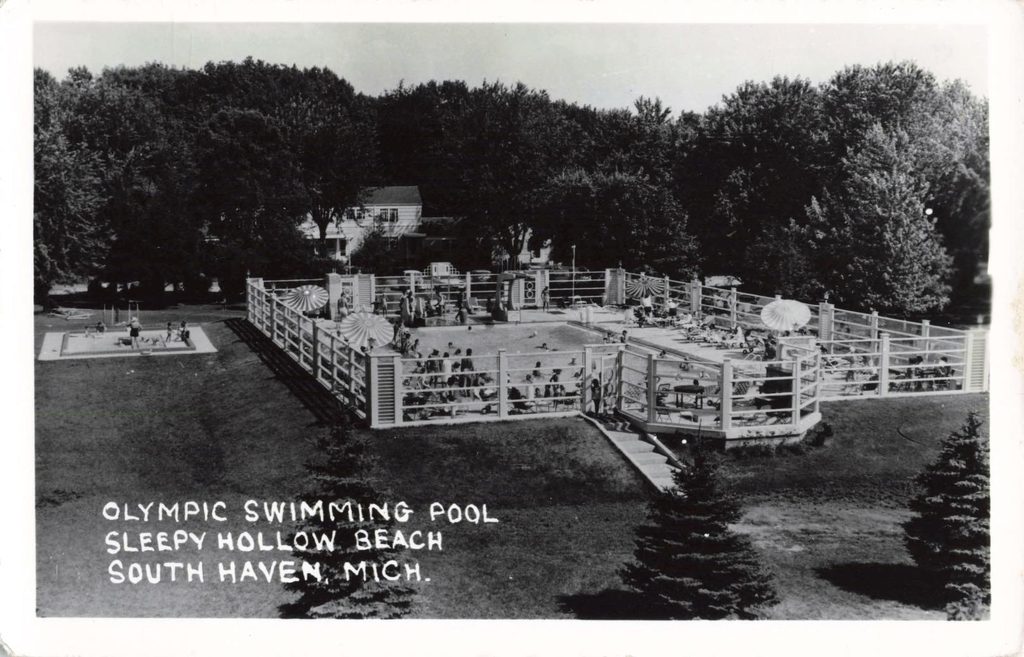
The rebuilt Sleepy Hollow opens with cottages offering electric kitchens and private bathrooms. Its Olympic-style heated swimming pool comes later, in the early 1950s.
1986 The piano factory closes
Piano manufacturing ends at the South Haven factory. An Everett piano donated to the city goes to the public library with employees’ names signed inside its removable cabinet pieces.
Questions About South Haven’s History
When was South Haven founded?
Jay R. Monroe obtained a federal land patent in 1833. South Haven incorporated as a village in 1869 and as a city in 1902. Native communities lived in the area before that settlement.
Why did South Haven become a resort town?
Lake Michigan beaches and transportation links to Chicago and inland Michigan supported hotels, boardinghouses, cottages and farm resorts.
Did South Haven manufacture pianos?
Yes. Cable-Nelson and Everett were part of a local instrument-making industry. Everett manufacturing arrived in 1926, and the South Haven piano factory closed in 1986.
Was Sleepy Hollow’s swimming pool part of the 1938 reopening?
No. The resort’s own history dates its Olympic-style heated pool to the early 1950s, after the rebuilt resort opened in 1938.
Did your family work at a South Haven resort, board a lake steamer or build pianos here? Share a name, date or family record in the comments to help connect these places with the people who knew them.
? Works Cited
Chicago & South Haven Steamship Company. “South Haven: The Big Steel Steamship.” Chicago Daily Tribune, 1 July 1913, sec. 1, p. 10. Michigan State University Libraries, Janet A. Ginsburg Collection. Accessed 4 Nov. 2026.
City of South Haven et al.. “Captains of Industry.” Historical marker, 2022. The Historical Marker Database. Accessed 4 Nov. 2026.
Eastland Disaster Historical Society. “Timeline.” Accessed 4 Nov. 2026.
Fidelman, Anne. “Interview with Anne Fidelman.” Interview by Alan Hoff, 10 Aug. 1995. Kalamazoo Valley Museum. ScholarWorks at Western Michigan University. Catalog description consulted. Accessed 4 Nov. 2026.
Foundry Hall. “About.” “More History” section. Accessed 4 Nov. 2026.
Kal-Haven Heritage Trail. “Building the Railroad.” Michigan State University. Accessed 4 Nov. 2026.
Kal-Haven Heritage Trail. “South Haven Resorts.” Michigan State University. Accessed 4 Nov. 2026.
Kal-Haven Heritage Trail. “The Chicago Connection.” Michigan State University. Accessed 4 Nov. 2026.
Kalamazoo Public Library. “Dunkley, Samuel J.” Local History. Indexed source text consulted. Accessed 4 Nov. 2026.
Kalamazoo Public Library. “Kalamazoo & South Haven Railroad.” Adapted from David C. Hager’s Next Stop Kalamazoo!, 1976; edited Feb. 2025. Accessed 4 Nov. 2026.
Michigan Department of Natural Resources. “Kal-Haven Trail State Park.” Accessed 4 Nov. 2026.
National Archives. “Steamship Eastland Disaster.” Accessed 4 Nov. 2026.
National Park Service. “Gill-Net Tug Elsie J.” Historic American Engineering Record, HAER MI-426, p. 29. Library of Congress. Accessed 4 Nov. 2026.
Reznik, Simon. “Interview with Si Reznik.” Interview by Alan Hoff, 9 Aug. 1995. Kalamazoo Valley Museum. ScholarWorks at Western Michigan University. Catalog description consulted. Accessed 4 Nov. 2026.
Samson, Art. “Interview with Art Samson.” Interview by Alan Hoff, 9 Aug. 1995. Kalamazoo Valley Museum. ScholarWorks at Western Michigan University. Catalog description consulted. Accessed 4 Nov. 2026.
Schwartz, Roselyn. “Interview with Roselyn Schwartz.” Interview by Alan Hoff, 9 Aug. 1995. Kalamazoo Valley Museum. ScholarWorks at Western Michigan University. Catalog description consulted. Accessed 4 Nov. 2026.
South Haven / Van Buren County Convention and Visitors Bureau. “South Haven History.” Timeline compiled by Tom Renner, updated 10 Jan. 2025. Accessed 4 Nov. 2026.
Stieve, Jeanette. “First Lighthouse 1871–1903.” South Haven Light, Historical Association of South Haven, 4 Jan. 2015. Excerpt from The Harbor Light 1872–1940. Accessed 4 Nov. 2026.
Stieve, Jeanette, and Lynn M. Lyon. “A Brief History of Sleepy Hollow Resort.” Sleepy Hollow Beach Resort, 2005. Accessed 4 Nov. 2026.
Thumbwind Publications. “South Haven Historical Image Folder.” User-supplied working collection. Individual file references appear in image captions; original creators and dates are not established for every item. Accessed 4 Nov. 2026.