 by
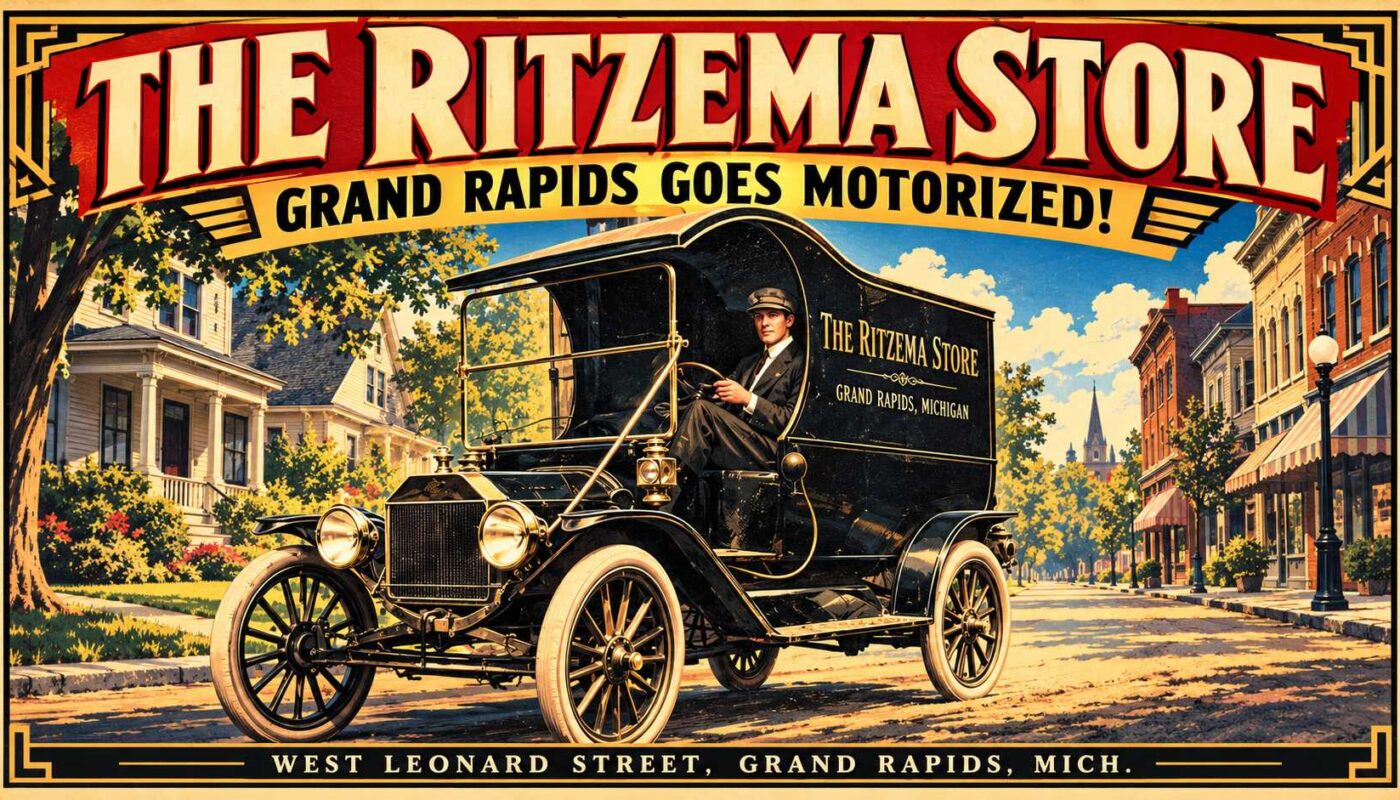
An early delivery automobile on West Leonard Street captures a changing Michigan city.
At first glance, the photograph looks almost ordinary: a delivery vehicle parked on a narrow driveway beside a large wooden house. A man wearing a cap and dark clothing sits behind the steering wheel, looking toward the camera.
But the lettering on the vehicle tells us something important.
THE RITZEMA STORE
This remarkable photograph takes us back to an era when neighborhood merchants in Grand Rapids, Michigan, were learning to use a technology that would transform American commerce: the automobile.
A Store on West Leonard Street
The Ritzema Store was located on West Leonard Street near Broadway Avenue on Grand Rapids’ northwest side.
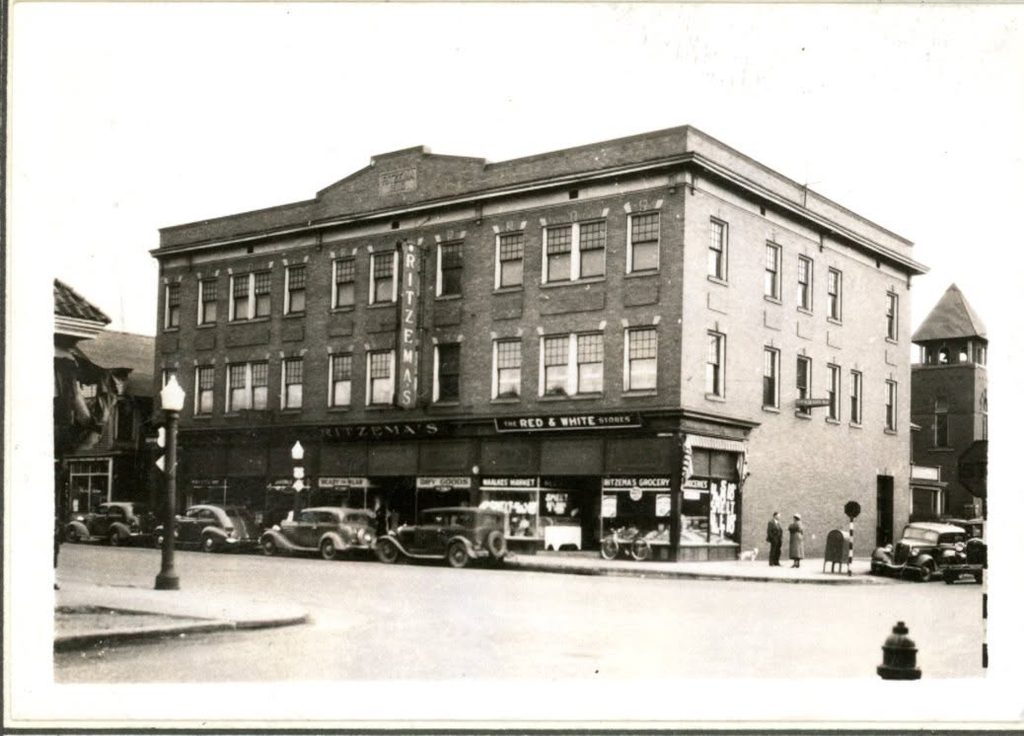
Historical records identify the Ritzema Building at 418–422 Leonard St. NW, on the southeast corner of Leonard and Broadway. The building was constructed in 1910.
That date places the business district in an especially interesting period of Michigan history.
At the beginning of the 20th century, Grand Rapids was an important manufacturing center, nationally recognized for its furniture industry. Its growing population supported neighborhood merchants who sold goods to residents who often lived within walking distance of their favorite stores.
West Leonard Street was one of those commercial corridors.
Streetcars, horse-drawn wagons and the growing number of automobiles connected these neighborhoods with the rest of the city.
A New Kind of Delivery Vehicle
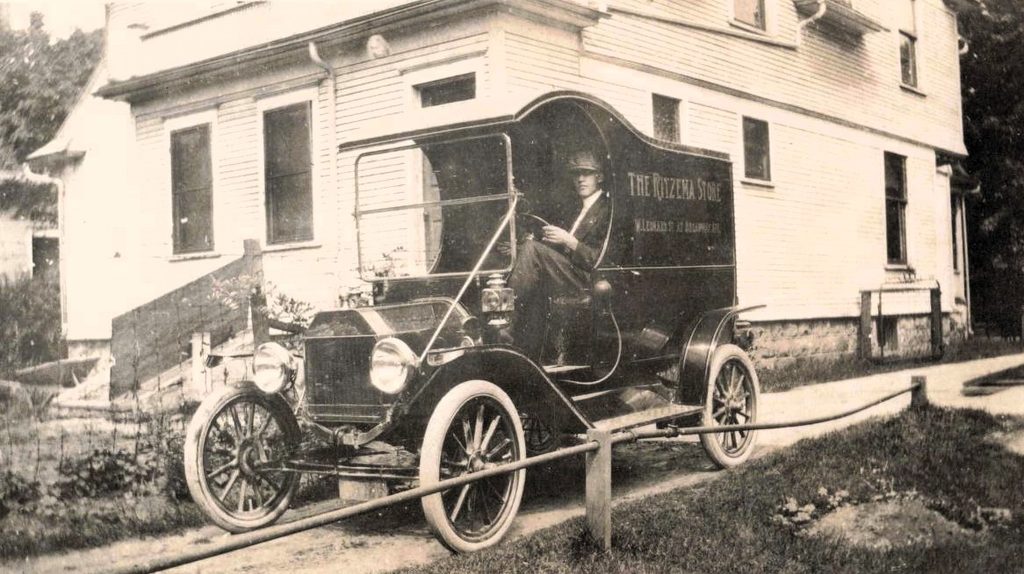
The automobile in the Ritzema photograph represents a fascinating transition.
Its upright passenger compartment, narrow wheels, large headlights and enclosed cargo body distinguish it from the streamlined delivery trucks that appeared in later decades. Early commercial vehicles often adapted passenger automobiles, and their construction varied widely. This particular vehicle proudly advertises the store’s name directly on its cargo compartment.
It was a delivery machine, but it was also a traveling advertisement.
Wherever the driver went, the business name went with him. Before television commercials, internet advertising or social media, that kind of local visibility mattered. A familiar vehicle traveling through neighborhood streets could help customers remember the business behind it.
Grand Rapids Embraces the Automobile
Grand Rapids had seen motor vehicles long before this photograph was taken. According to the Grand Rapids Historical Commission, Harry A. Winter owned the city’s only motor vehicle in 1896. The machine could travel approximately 12 mph.
For residents accustomed to horses and wagons, even that modest speed was remarkable.
By the 1910s, automobiles were becoming more familiar on city streets. A Grand Rapids historic preservation study records nearly 3,000 automobile owners in the city by 1915. Just two years later, the city recorded 9,364 automobiles and 1,316 trucks.
Automobiles offered merchants greater independence from horse teams and created new opportunities to transport goods around growing urban neighborhoods. They also introduced new problems, including maintenance, fuel supplies and roads originally designed for slower traffic.
The transition was not instantaneous. For years, horses and automobiles shared the same streets.
More Than a Delivery Truck
One of the most interesting aspects of this photograph is its setting. There is no crowded downtown intersection, factory complex or elaborate storefront. Instead, the vehicle stands beside a substantial wooden building with a stone foundation.
A narrow walkway leads toward the street. Grass surrounds the driveway. The scene feels personal, almost domestic. It reminds us that commercial history was also neighborhood history.
Small businesses were connected to families, homes, and daily routines. Their vehicles helped move goods through the city while advertising the merchants who operated them. The people behind those businesses rarely became famous, yet their work helped transform Grand Rapids.
A Michigan Moment Worth Remembering
Today, delivery trucks are so common that we barely notice them. They travel through neighborhoods carrying groceries, packages, furniture, and countless other goods.
But at one point, an automobile bearing a neighborhood store’s name represented a major business investment and a visible sign of change.
The Ritzema Store photograph preserves one of those moments.
A driver, an early automobile and a name painted on the side of a vehicle tell a surprisingly rich story about Grand Rapids.
The exact date and the driver’s identity remain uncertain. What is clear is the broader historical context: Michigan’s growing cities were entering the automobile age, and neighborhood businesses found ways to participate.
More than a century later, this quiet photograph reminds us that transportation revolutions are not shaped only by great manufacturers and famous inventors. They also happen on ordinary neighborhood streets.
Michigan Moments — Bringing Michigan’s Past to Life.