
 by
by 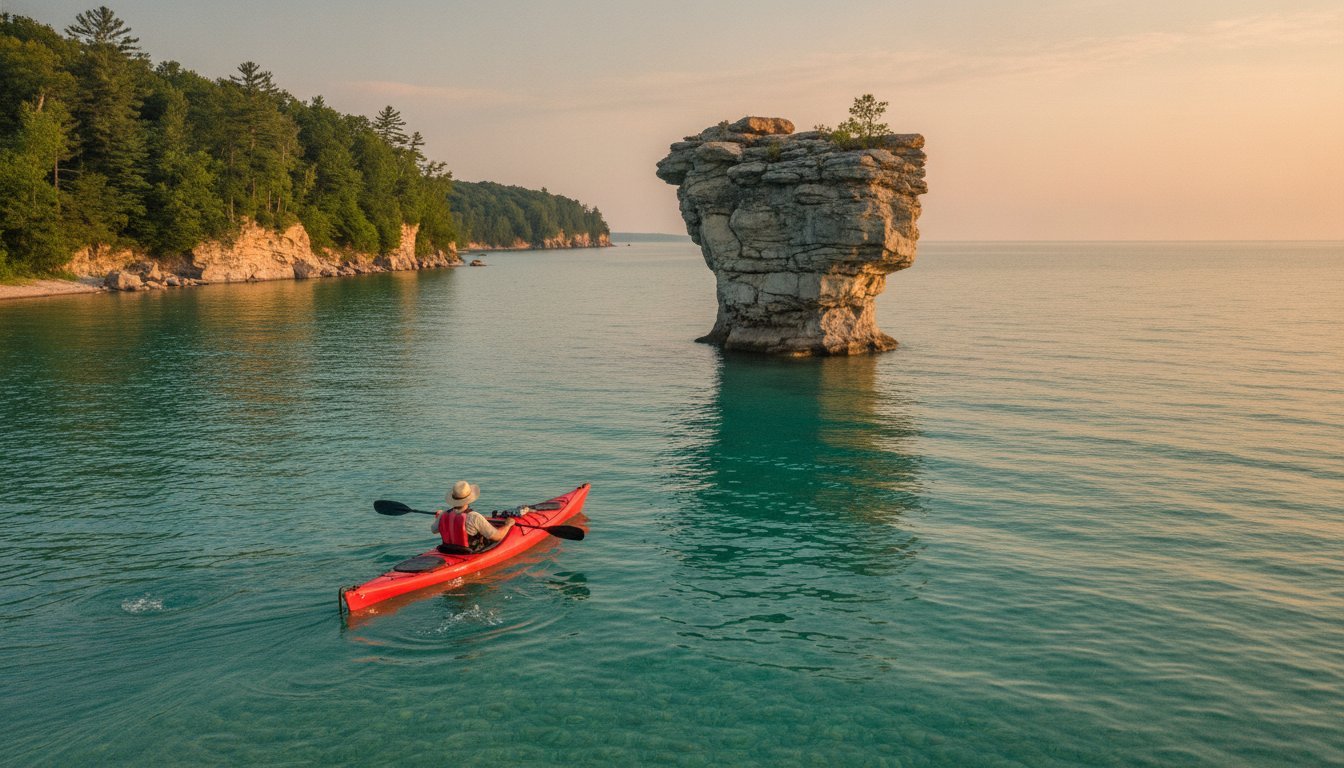
What if the most authentic Great Lakes experience isn’t found on the crowded boardwalks of the west coast, but in the quiet, rugged tip of Michigan’s mitten? For many travelers, the frustration of fighting for a parking spot in Saugatuck or Traverse City has become a summer tradition they’d rather skip. You aren’t alone if you’re looking for a shoreline that feels more like a discovery than a tourist trap. Michigan Thumb tourism offers a refreshing alternative, where the pace slows down and the history of the Great Lakes feels close enough to touch.
We’ve curated this guide to help you navigate this underrated peninsula, from the towering limestone of Turnip Rock to the silent stories carved into the Sanilac Petroglyphs. Whether you’re planning to kayak the Port Austin coast for $45 or explore the Pointe aux Barques Lighthouse for a $5 admission, we’ll show you how to find the hidden spots that most maps overlook. You’ll gain a clear itinerary that balances the region’s industrial heritage with its serene natural beauty. We’re going to take a methodical look at the M-25 corridor, providing the local context and real-time tools like our regional webcams to ensure your trip is as seamless as a summer breeze.
Key Takeaways
- Map out your journey along the M-25 corridor by understanding the geographical differences between the sheltered Saginaw Bay and the wilder Lake Huron shore.
- Discover the specific seasonal windows and logistics required to visit iconic landmarks like Turnip Rock and the historic lighthouses dotting the coast.
- Uncover the deep heritage of the region, from the ancient Anishinabe carvings at Sanilac Petroglyphs to the resilient history shaped by the Great Fire of 1881.
- Enhance your Michigan Thumb tourism experience with local secrets for finding Petoskey stones and timing your visit to avoid the busiest festival weekends.
- Learn how to use live regional webcams as a unique trip-planning tool to monitor weather and crowds in real-time before you arrive.
Defining the Thumb: Michigan’s Undiscovered Coastal Frontier
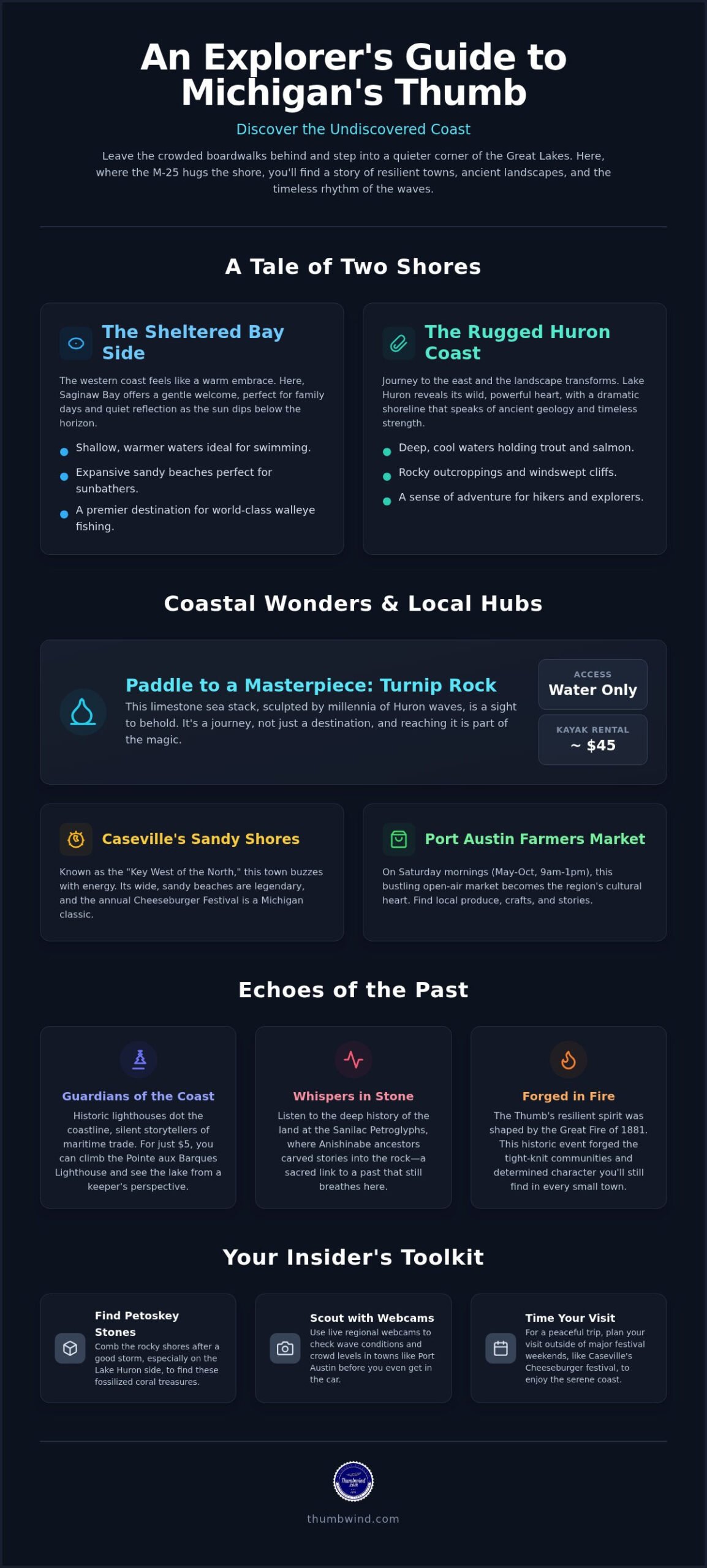
To understand the Thumb, you have to look at the palm of your own hand. While most of Michigan’s travelers head straight for the “fingertips” of the north, this region encompasses the distinct peninsula formed by Huron, Sanilac, and Tuscola counties. Known officially as Michigan’s Thumb Region, this area offers over 150 miles of coastline that remains largely untouched by the commercial sprawl seen elsewhere in the state. The geography here is a study in contrasts, split between two very different waterfront experiences.
On the western side, the Saginaw Bay offers shallow, warmer waters and expansive sandy beaches. This makes it a favorite for family gatherings and sunset watchers. Move toward the tip and down the eastern shore, and you encounter the deep, cool, and often temperamental waters of Lake Huron. This side is characterized by rocky outcroppings and a ruggedness that feels worlds away from the manicured resorts of West Michigan. Michigan Thumb tourism thrives on this variety, allowing visitors to choose between a calm afternoon on a bay beach or a dramatic hike along a wind-swept cliff.
The M-25 highway serves as the primary artery for the region. It’s a scenic, unhurried drive that hugs the coast, passing through small harbor towns that have retained their original charm. Unlike the fast-paced interstates, M-25 encourages a slower rhythm. For those looking to upgrade their vehicle’s audio or electronics for the journey, Music In Motion offers custom installation services that can enhance any Michigan road trip. You won’t find many chain hotels or crowded intersections here. Instead, you’ll find locally owned diners and quiet parks that have served the community for generations.
The Cultural Identity of the Thumb
The small towns dotting the shoreline didn’t start as vacation spots; they were born from grit. In the 1800s, the lumber and shipping industries defined the landscape, leaving behind a legacy of sturdy architecture and deep-water harbors. While “Up North” often feels like a seasonal playground, the Thumb maintains a year-round identity rooted in agriculture and maritime trade. There is a quiet pride here that prioritizes preservation over expansion, ensuring the “hidden gem” status remains intact for those who value authenticity over tourist traps.
Coastal Wonders: From Turnip Rock to Caseville’s Sandy Shores
The shoreline of the Thumb is defined by its geological variety, ranging from soft sandy dunes to ancient rock formations. At the very tip of the peninsula lies Turnip Rock, a stack of limestone carved by centuries of Lake Huron waves. Seeing this landmark requires a bit of effort. Because it’s surrounded by private property, it’s accessible only by water. A four hour single kayak rental from Port Austin costs $45, and it’s essential to book ahead for weekends. Keep in mind that tandem kayaks aren’t permitted on this specific trail due to the potential for rough lake conditions.
If you prefer your feet on solid ground, Caseville County Park offers a different kind of coastal energy. Often called the “Key West of the North,” this area is famous for its wide, sandy beaches and the vibrant atmosphere of the annual Cheeseburger festival. For those seeking a quieter experience, the MSU Extension guide to the Thumb highlights how these coastal towns offer a slower pace than the better known resorts on the western side of the state. Michigan Thumb tourism isn’t just about the big landmarks; it’s about finding the small, unnamed stretches of sand between the state parks where you can skip stones in peace.
On Saturday mornings from May to October, the Port Austin Farmers Market becomes the region’s cultural hub. It operates from 9:00 am to 1:00 pm and serves as the largest open air market in the region. It’s the perfect place to grab local produce or handmade crafts before heading out to explore the rest of the coast. You can find more details on local events in our travel and tourism guides.
On the Water: Boating and Fishing
The “armpit” of the Thumb, where the peninsula meets the Saginaw Bay, is a premier destination for walleye fishing. Launching from Caseville provides easy access to these shallower, productive waters. Conversely, the Port Austin harbor serves as the gateway to the deep water trout and salmon fishing of Lake Huron. Each side of the point requires a different approach, but both offer world class opportunities for anglers.
The M-25 Road Trip Itinerary
A drive along M-25 is a collection of small moments rather than a race to a destination. Stop at the scenic overlooks between Port Sanilac and Harbor Beach to see the expansive horizon where the blue of the water meets the sky. Planning your Michigan Thumb tourism route is easier when you check Thumbwind’s live webcams to see the current lake conditions. These real time views help you decide whether it’s a day for a calm kayak trip or a brisk walk along the pier.
Stepping Back in Time: Lighthouses, Petroglyphs, and Ghost Towns
The history of the Thumb isn’t just found in textbooks; it’s etched into the very stones of the shoreline and the brickwork of its oldest buildings. In September 1881, a massive fire consumed over one million acres in less than a day, forever changing the landscape. This disaster forced residents to rebuild with fire-resistant materials, which is why you see so many sturdy, red-brick structures in towns like Port Hope today. This resilience is a core part of the local identity that defines Michigan Thumb tourism.
For a much older perspective, a visit to Sanilac Petroglyphs Historic State Park reveals the “ezhibiigaadek asin,” or knowledge carved on stone, left by the Anishinabe people. Admission to the park is free. For the 2026 season, guided tours of these ancient carvings are available from May 22 to September 6, operating Wednesday through Sunday. It’s a rare, quiet place where the modern world feels miles away.
Industrial history also left its mark at Grindstone City. Once the world’s capital for producing abrasive wheels, the village saw its industry vanish almost overnight when synthetic materials were invented. Today, you can still see massive, discarded sandstone wheels abandoned along the coast. Explore our deep-dives into local lore by browsing our regional news and history articles.
The Lighthouses of the Thumb
Sentinels like the Harbor Beach, Port Hope, and Fort Gratiot lighthouses have guided sailors for generations. Pointe Aux Barques remains a highlight, with its museum and gift shop opening for the 2026 season on May 22. Adult admission to the museum is $5, while a combination ticket that includes a tower climb is $8. Lake Huron contains an estimated 1,000 shipwrecks, earning the waters surrounding the peninsula the nickname “Graveyard of the Great Lakes.”
Ghost Towns and Abandoned History
Beyond the active harbors lie the remnants of failed dreams, such as the Ora Labora colony. This utopian religious community was founded in 1862 but vanished within a decade. While hunting for these “hidden” spots is a favorite pastime for many, it’s vital to respect private property lines. Much of the region’s history sits on land that is still working farmland or private residence, so always stick to public access points and marked trails.
Planning Your Thumb Escape: Insider Tips and Local Secrets
Planning your journey to the peninsula requires a balance between seeking the vibrant energy of summer and finding the quiet stillness of the off-season. If you enjoy a festive atmosphere, timing your visit for the “Cheeseburger in Caseville” festival in August is a must. However, those who prefer a more reflective experience should consider a trip in late September or October. During this time, the M-25 corridor transforms as the fall colors peak, and the summer crowds thin out, leaving the beaches open for peaceful exploration.
Rock hunting is a favorite pastime for locals and visitors alike. The shoreline near Port Austin and Grindstone City is particularly productive for finding Petoskey stones and unique Great Lakes agates. These treasures are often easiest to spot after a brisk wind has churned the Lake Huron waters, washing new stones onto the sand. For a different view of the sky, head to Port Austin State Day Park. This area offers exceptional dark sky opportunities for stargazing, as the lack of light pollution reveals a density of stars rarely seen in more developed parts of the state. You can stay informed about weather shifts and community gatherings by using Thumbwind for local event updates and news during your stay.
Where to Stay: From State Parks to Boutique Inns
Accommodation options in the region cater to every style of traveler. Sleeper State Park, open from April 1 to October 31, offers camping rates between $35 and $120 per night. Alternatively, Port Crescent State Park provides electric sites starting at $33. If you prefer the charm of a historic bed and breakfast, Port Austin features several boutique inns that offer a nostalgic, neighborly atmosphere. Regardless of your choice, remember that a Michigan Recreation Passport is required for vehicle entry to all state parks.
The Insider’s Checklist
- Pack for the “Lake Effect”: Even in the heat of July, a brisk wind off Lake Huron can make the evening air feel chilly. Always bring a sturdy hoodie or light jacket for sunset walks along the pier.
- Sample Local Flavors: Michigan Thumb tourism isn’t complete without tasting the regional fare. Look for harbor-side diners serving fresh-caught whitefish and local shops offering Michigan-made ice cream. For travelers who appreciate using specialized dining guides like The Menu Mag when exploring coastal areas, discovering these local spots is a key part of the experience.
- Check the Webcams: Before you head out for a day of kayaking or rock hunting, use our live webcams to verify the current lake conditions and wave heights.
Start Your Journey Along the Undiscovered Coast
The Michigan Thumb is more than just a shape on a map; it’s a living archive of Great Lakes history and a sanctuary for those who value quiet shorelines. By exploring the M-25 corridor, you’ve seen how the region balances its industrial past with a serene, modern coastal life. From ancient stone carvings to the resilient brickwork born from the Great Fire of 1881, this peninsula tells a story of endurance. Each harbor town and hidden beach offers a new perspective on what it means to be part of the Great Lakes community.
Michigan Thumb tourism offers a rare chance to step away from the frantic pace of modern travel and reconnect with a landscape that feels largely unchanged by time. As a trusted regional source since 2009, Thumbwind is dedicated to providing the tools you need for a successful trip. We offer real-time weather and lake views via live regional webcams and maintain the deepest archive of Thumb history available online.
Plan your next adventure with the latest Thumb Area News and Guides and discover for yourself why this coast remains Michigan’s most rewarding secret. The road along the water is waiting for you.
Common Questions About Michigan Thumb Tourism
What is the best month to visit the Michigan Thumb for tourism?
August is the most popular month for Michigan Thumb tourism if you want to experience the region at its liveliest, especially during the Cheeseburger in Caseville festival. For those who prefer a quieter experience with milder weather, June and September are excellent choices. If you plan to visit the Port Austin Farmers Market, ensure your trip is scheduled between May 16 and October 24, 2026, when the vendors are active.
Can you see the Northern Lights from the Michigan Thumb?
Yes, you can see the Northern Lights from the tip of the peninsula, particularly at Port Austin State Day Park. This location is a designated dark sky area, providing the necessary lack of light pollution for clear night sky viewing. Because the park sits at the top of the “Thumb,” it offers an unobstructed northern horizon over the waters of Lake Huron, which is ideal for spotting aurora activity during periods of high solar flares.
How long does it take to drive the entire M-25 coastal loop?
Driving the entire M-25 coastal loop takes approximately three to four hours if you travel without stopping. The route spans about 150 miles, beginning near Bay City and hugging the shoreline all the way to Port Huron. Most visitors find that a full day or a weekend is necessary to properly explore the small harbor towns, lighthouses, and scenic overlooks that define this unhurried stretch of highway.
Are there Petoskey stones in the Thumb region?
Yes, Petoskey stones can be found along the rocky beaches of the Thumb, particularly near Port Austin and Grindstone City. While they are more famous on the western side of the state, these fossilized corals do wash up on the Lake Huron shore after heavy winds or storms. Rock hunters also frequently find unique Great Lakes agates, jasper, and fragments of the local sandstone that once made the region a global leader in grinding wheels.
Is Turnip Rock accessible by land or only by water?
Turnip Rock is accessible only by water because it is entirely surrounded by private property. There are no public trails or roads leading to the formation, and walking across the land is considered trespassing. Most visitors choose to kayak the seven mile round trip from Port Austin to see the rock. It’s important to check lake conditions before heading out, as the shallow waters around the rock can become difficult to navigate in high winds.
Disclaimer
Information published on Thumbwind.com is provided for general informational purposes. While we make reasonable efforts to keep articles accurate and current, details such as prices, hours, regulations, access conditions, and other information may change without notice. Readers should verify important details with the appropriate business, agency or official source before making travel, financial or other decisions. Thumbwind.com is not responsible for the content, availability or practices of third-party websites linked from our articles.