 by
by 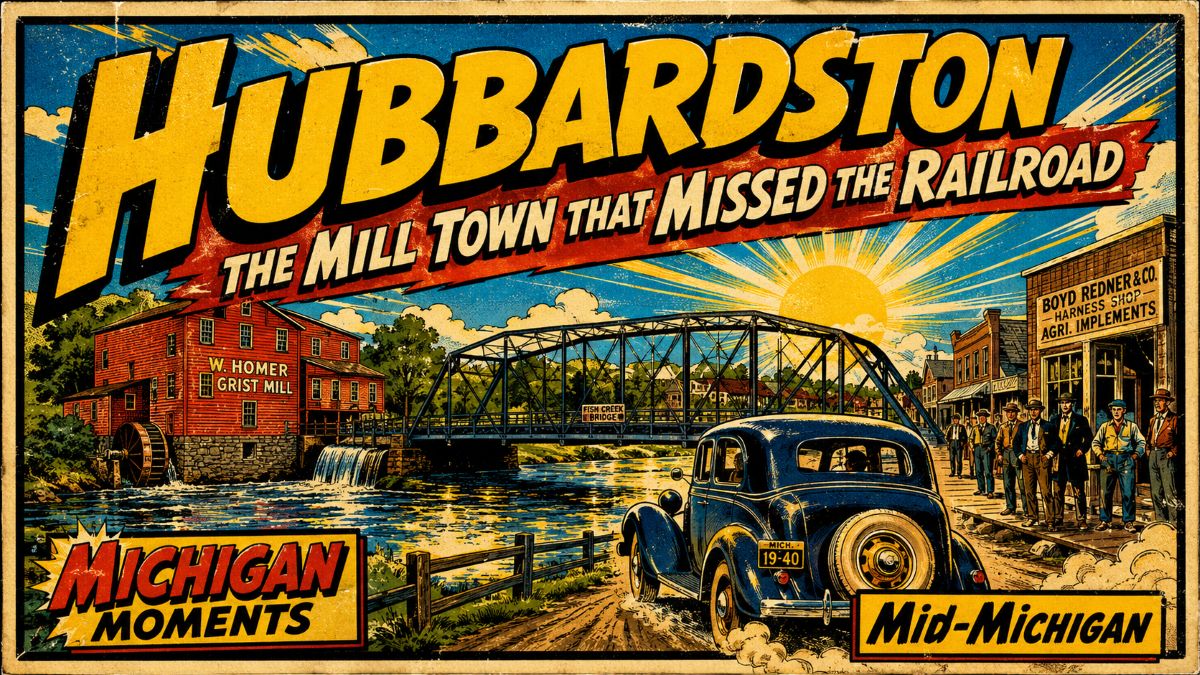
The History of Hubbardston, Michigan, began long before the first sawmill cut a log or the first merchant opened a store. Fish Creek and the surrounding woods were already used by Native people for hunting, travel, and seasonal gatherings.
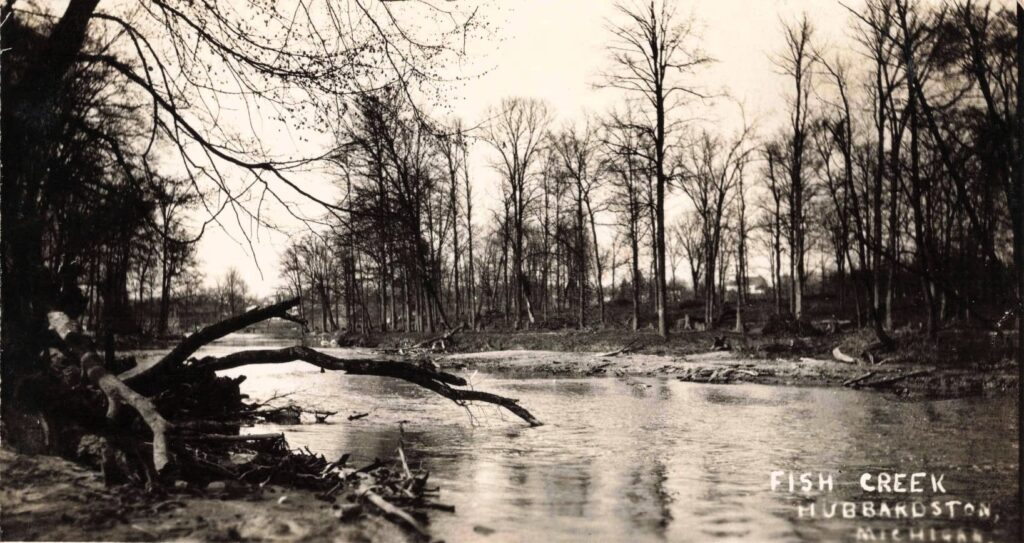
A local history of Hubbardston, Michigan, compiled in 2000, noted an Indigenous camp called Deer Lick, located about a mile north of Fish Creek. It also recorded a childhood memory from Paddy Roach, who said he heard drums and chanting connected to fall gatherings on Dugway Hill.
These accounts are local recollections rather than a full tribal history. Still, they establish an important point. Hubbardston was not founded on unused ground.
Early Settlement in North Plains Township
Settlement began in North Plains Township before Hubbardston existed as an organized village.
Local records name William Lincoln as an early settler in 1837, followed by J.A. Lincoln in 1846 and John Cowman in 1849. George W. Holmes and Thomas Cusack arrived during the 1850s.
Many of the early families were Irish. The rolling farmland west of the village of Hubbardston reminded some settlers of Ireland. Cowman reportedly helped other Irish immigrants settle nearby, creating a strong Catholic farming community.
History of Hubbardston Michigan, Begins With a Dam
James R. Langdon owned land along Fish Creek. Joseph Brown bought part of the tract and built a dam and sawmill. When Brown ran short of money, he sold the operation to Thomas Hubbard and several partners.
The settlement later took Hubbard’s name.
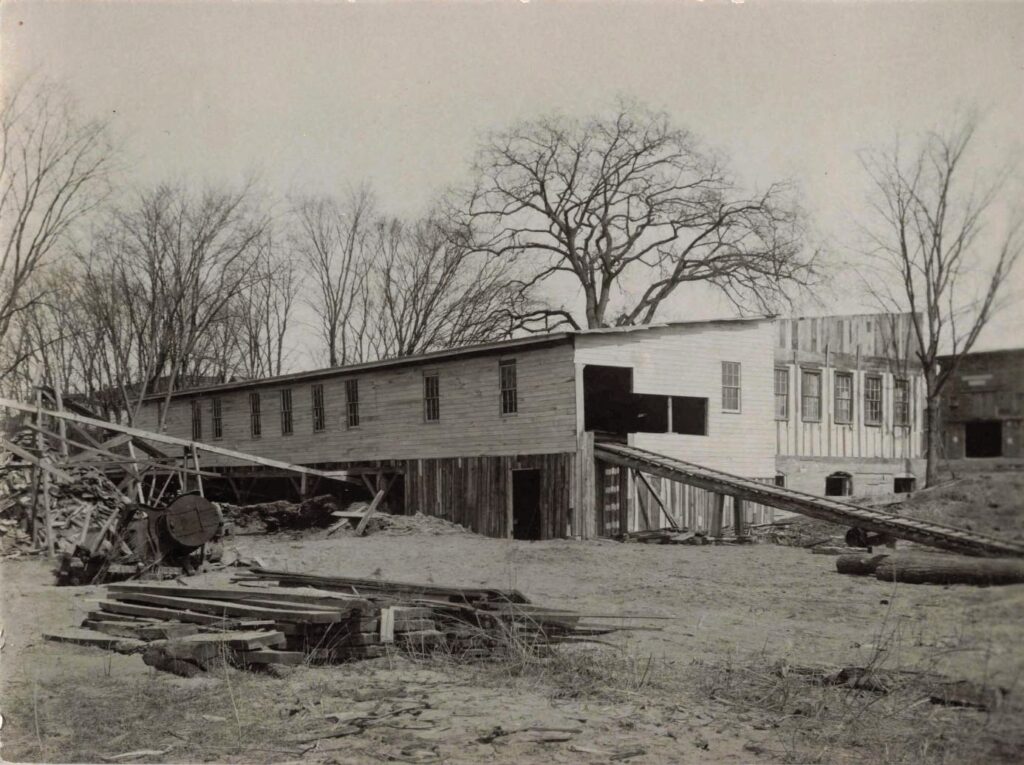
By 1853, the growing community had a sawmill, boarding houses, and a tavern. Mill owners improved the dam, hired about 20 workers, and installed a 100-horsepower steam engine.
Local accounts placed sawmill production at about 25,000 board feet per day.
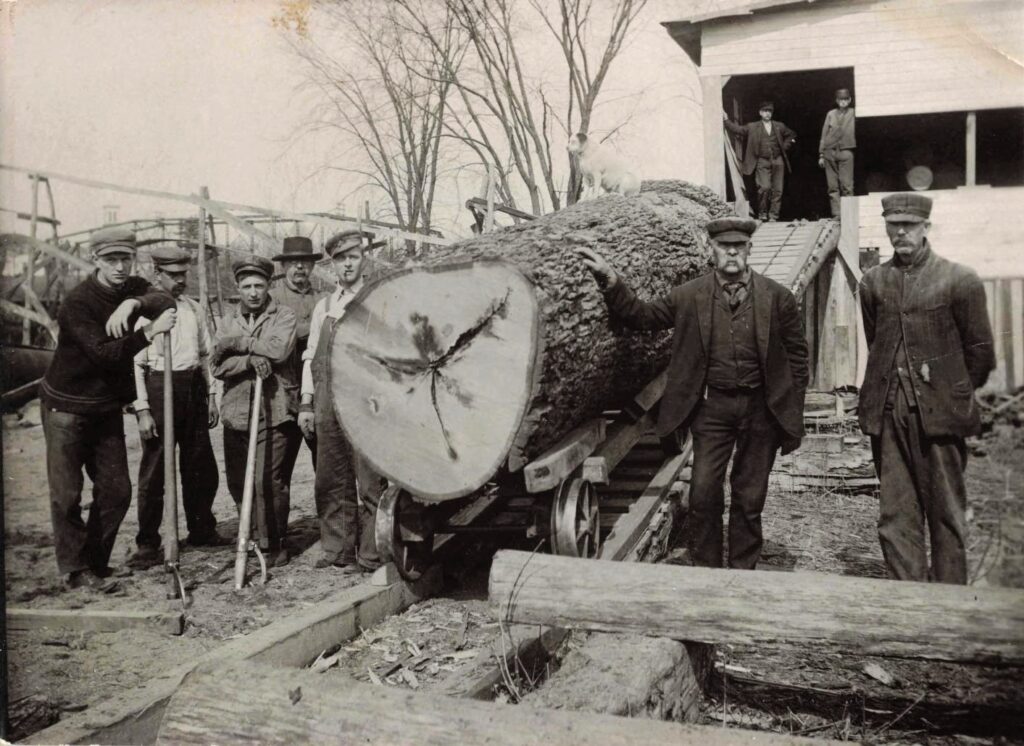
Hubbardston timber was cut into building lumber, railroad ties, telegraph poles and ship masts. Local histories also credited Hubbardston lumber and finished millwork with reaching Chicago.
The Hubbardston Sash and Blind Company shipped doors, window sash and related products. The Stuck and Lusk Foundry produced parts used in Studebaker wagons.
This was more than a logging camp. Hubbardston had a small manufacturing economy.
“Pride of the West” Flour
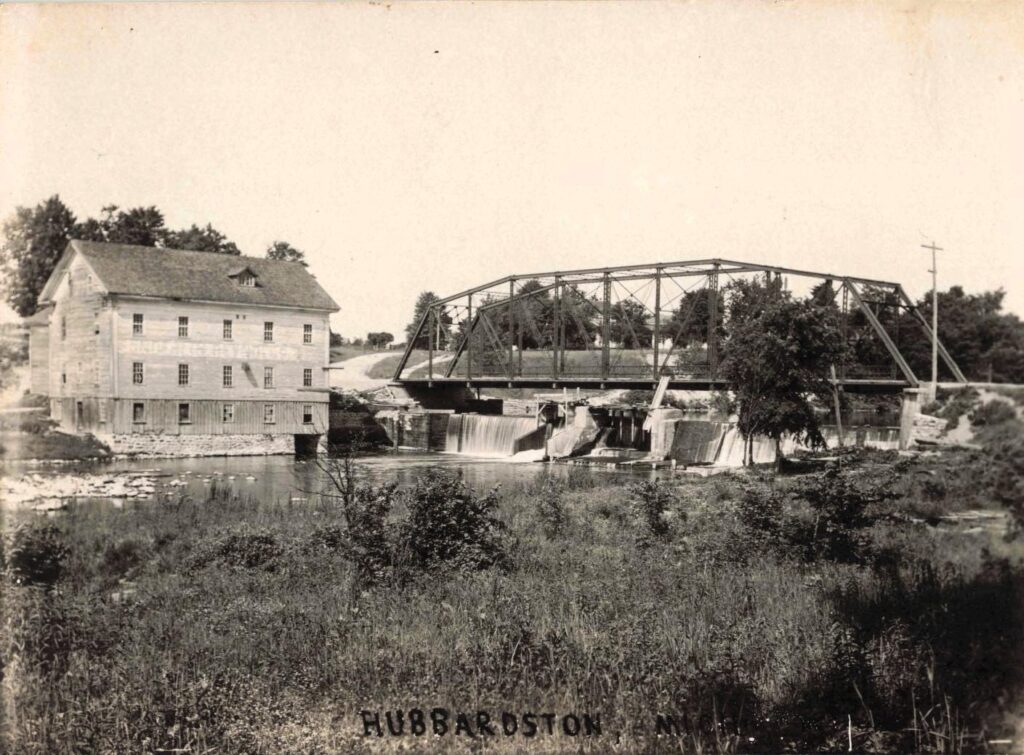
Patrick and Sabin built the Hubbardston grist mill in 1857. It later became the W. Homer Grist and Flouring Mill.
The mill reportedly produced as many as 100 barrels of flour per day. Its best-known brand was “Pride of the West.”
One resident remembered bringing wheat to the mill and taking home flour considered nearly equal to high-grade flour from St. Louis. Another family story involved stored flour becoming infested with weevils. The flour was taken back and milled again.
The mill served farmers for generations. Wheat became household flour, while grain and other crops could be ground for livestock feed.
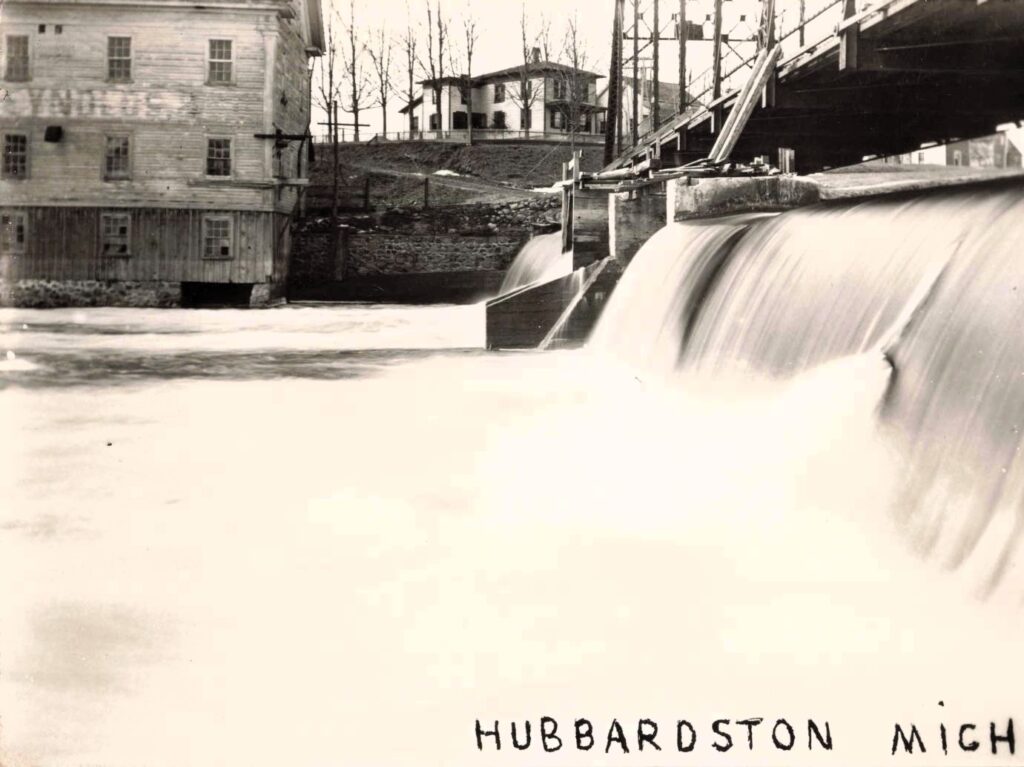
That role became more important as Hubbardston shifted from lumber production toward agriculture and dairy farming.
A Busy Commercial Village
Local commemorative histories reported that Hubbardston reached about 1,200 residents during its peak years. That figure may include nearby settlements beyond the later village boundaries, but the business records confirm that Hubbardston was thriving.
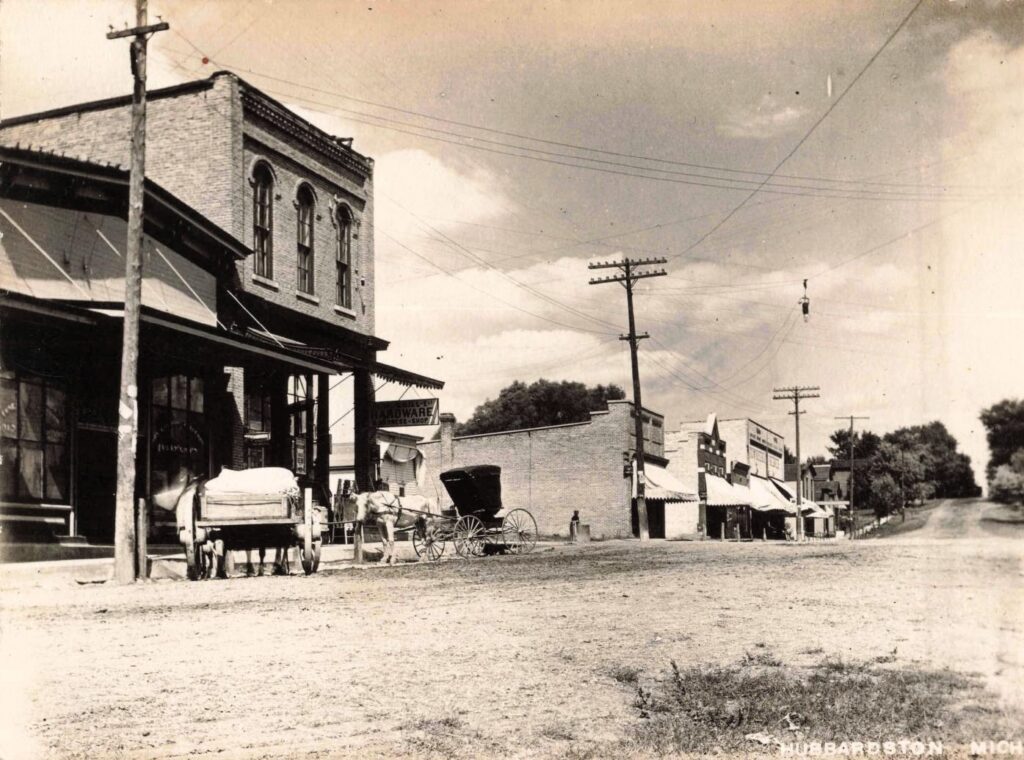
The village supported five hotels, two boarding houses, saloons, doctors, attorneys, wagon makers and merchants.
Boyd Redner and Company sold harnesses and agricultural implements. Robert Gardner made wagons. Other stores offered clothing, shoes, furniture, crockery, trunks, feed and grain.
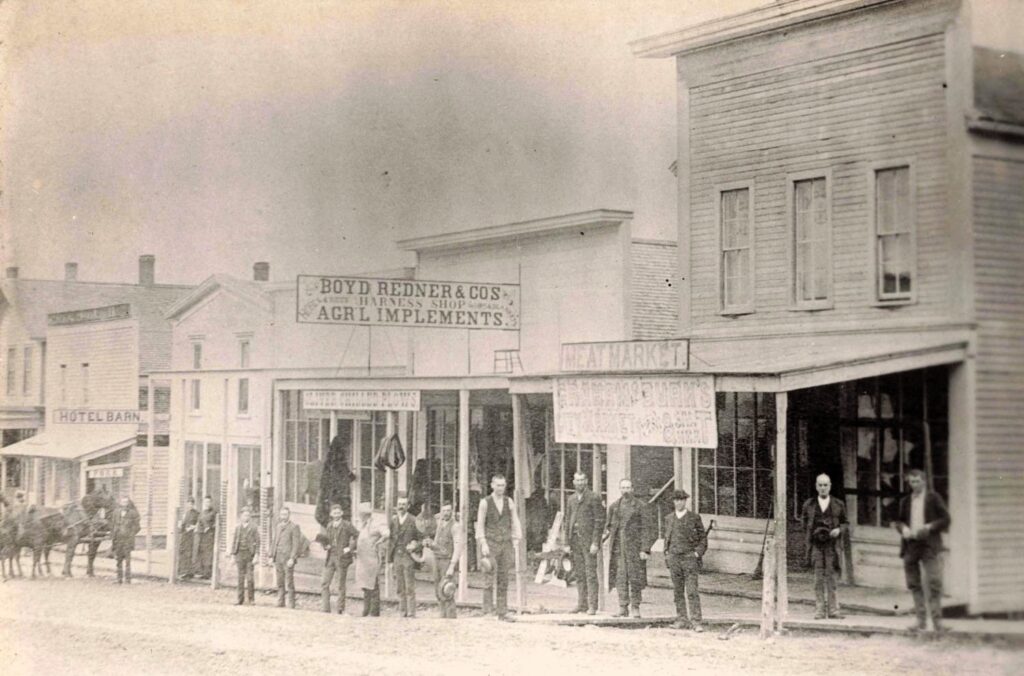
The Howard House was the first hotel, though it burned two years after opening. Fire would remain a recurring threat in a town built largely from wood.
A weekly newspaper also served the community. One local account places a seven-column Hubbardston Advertiser in operation by 1868, while newspaper directories generally date the publication from about 1870.
The exact start date remains uncertain. The newspaper itself is proof that Hubbardston had a busy public and commercial life.
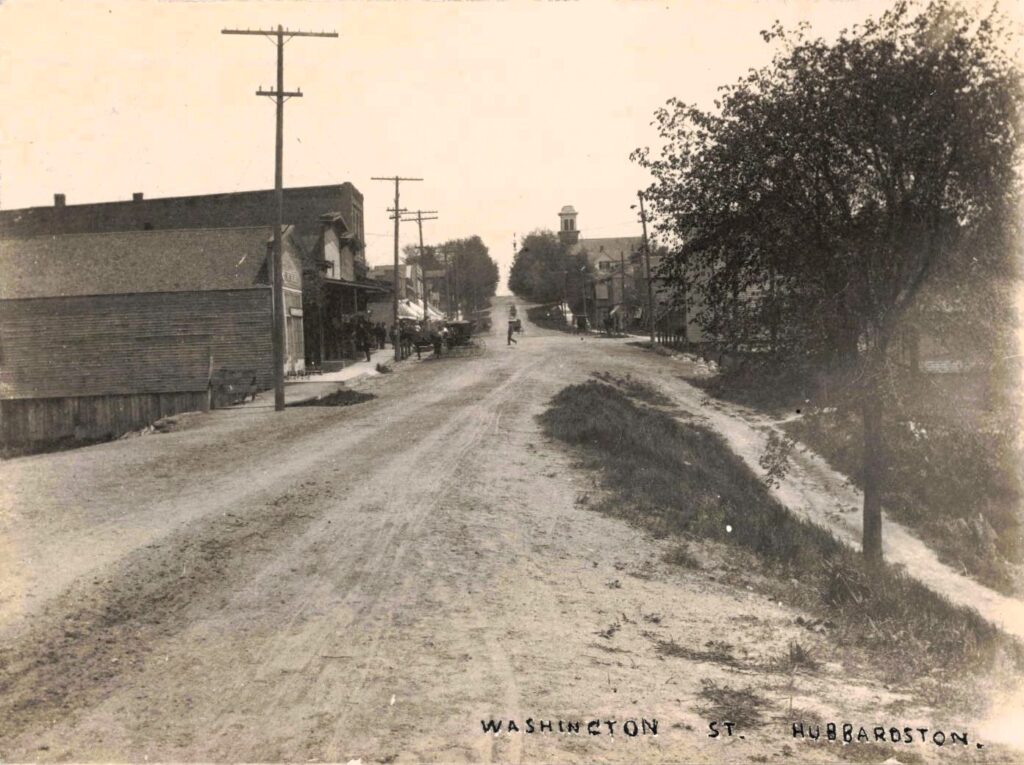
Washington Street During the Horse-and-Buggy Era
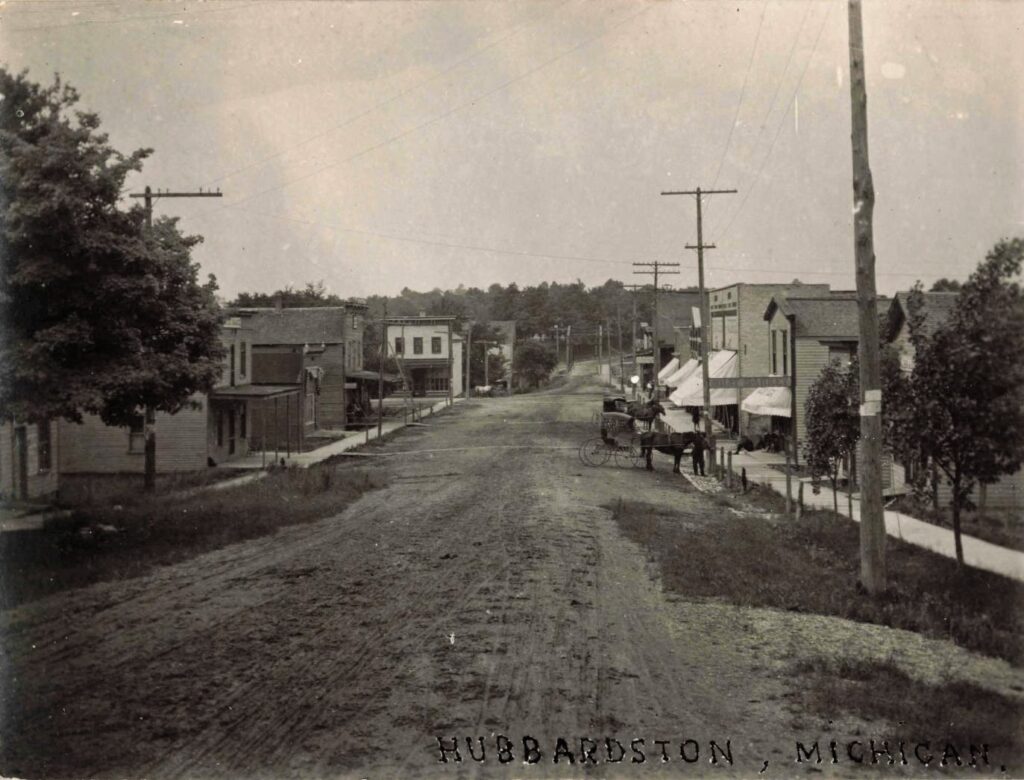
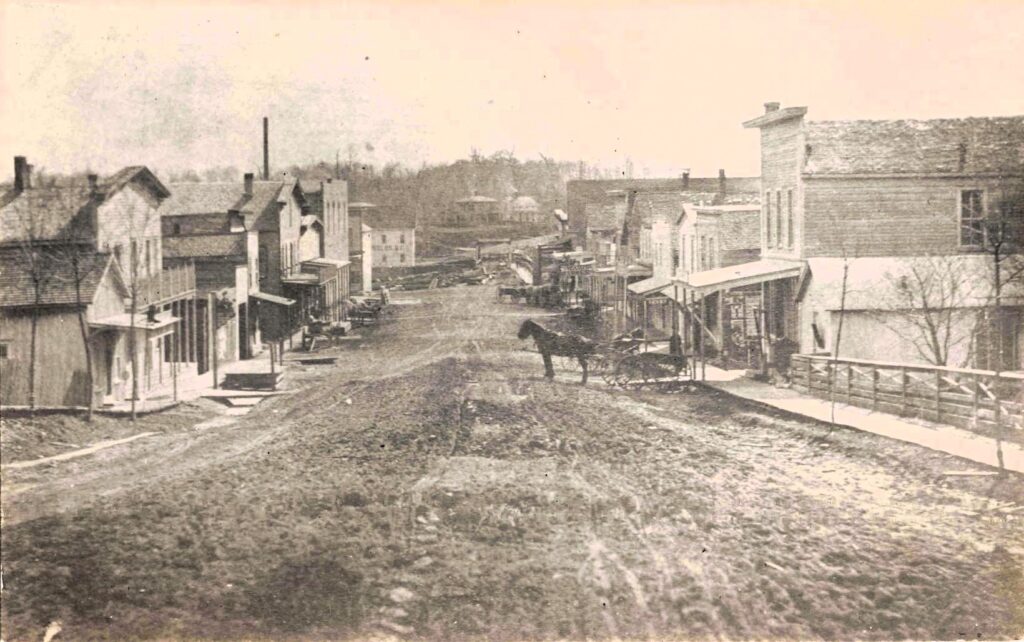
The history of Hubbardston, Michigan, can be read in its street scenes. Early views show a broad dirt road lined with wooden storefronts, boardwalks, and utility poles. Horses and wagons wait near hotels, stores, and the meat market.
A later view shows automobiles parked along brick commercial buildings. One delivery truck stands near a shop advertising soda and ice cream.
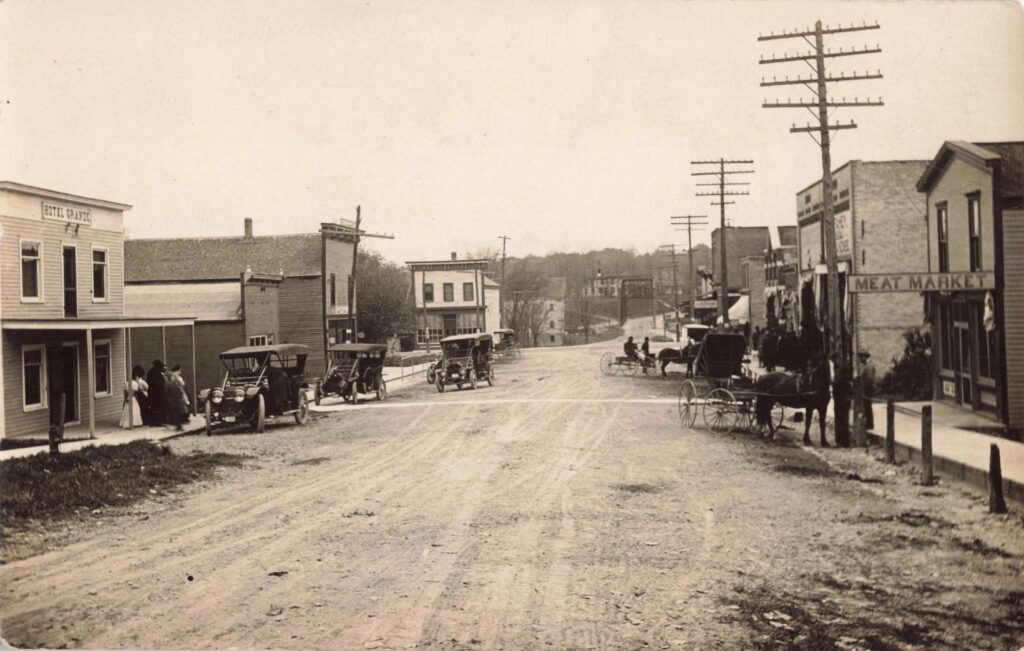
The buildings changed slowly. Transportation changed much faster. For several years, automobiles, delivery trucks, wagons, and horses all used the same streets.
The Railroad Hubbardston Never Received
The railroad campaign is the most consequential chapter in the history of Hubbardston, Michigan.
Local residents reportedly raised about $40,000 to bring a railroad through town. A rail bed was graded, but the tracks were never laid.
Mill owners had expanded production because they expected cheaper transportation. One later sawmill operation reportedly reached a capacity of 40,000 board feet per day.
Without rail service, that output was difficult to move.
The Cuddleback and Cory sawmill burned in 1879. Other wood-products businesses continued for a time, but for Hubbardston’s history, its strongest lumber years were ending.
The surprising result was that the railroad failure may have preserved the village’s small scale. Hubbardston did not become a larger factory town. Its economy turned toward the surrounding farms.
Hubbardston Becomes Part of Michigan’s Dairy Country
The title “Michigan’s Dairy Country” describes Hubbardston’s later role better than its earliest years.
The first economy was built on timber and waterpower. After the lumber era, Hubbardston became a service center for grain farms, livestock operations, and dairy herds.
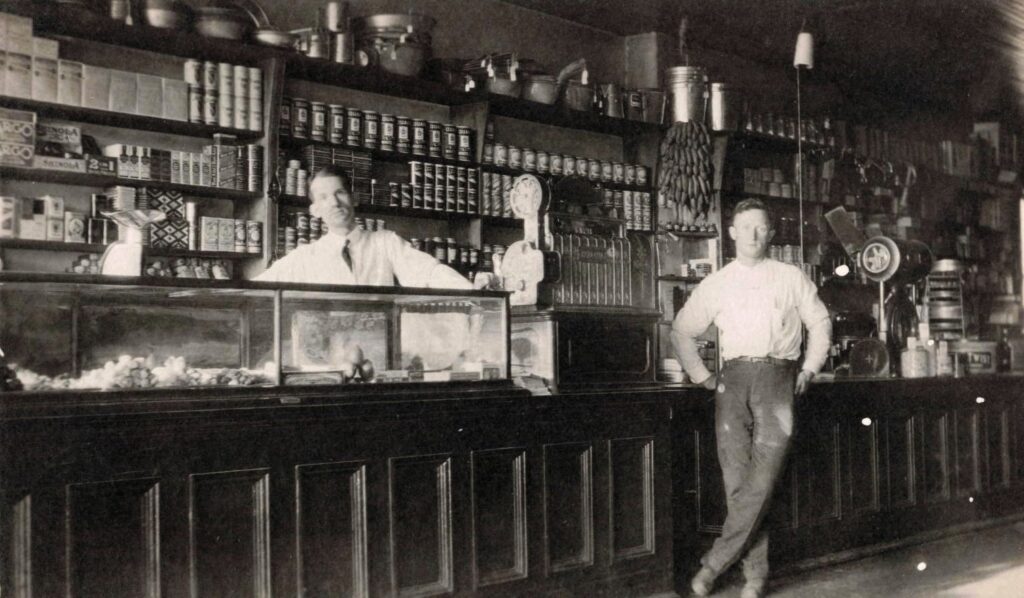
Stores supplied farm tools and harnesses. The grist mill produced flour and feed. Cooperative organizations later helped farmers purchase supplies and market products.
Michigan State University archival records include a Hubbardston Cooperative Association entry from 1934.
St. John the Baptist and Hubbardston’s Irish Community
The history of Hubbardston, Michigan, cannot be told without mention of St. John the Baptist Catholic church. Catholic worship began in the Hubbardston area during the early 1850s. Sources differ on whether the first church or chapel dates to 1851 or 1853.
There is stronger agreement on the larger church built in 1868. It cost a reported $8,000 and was described locally as the largest building in Ionia County.
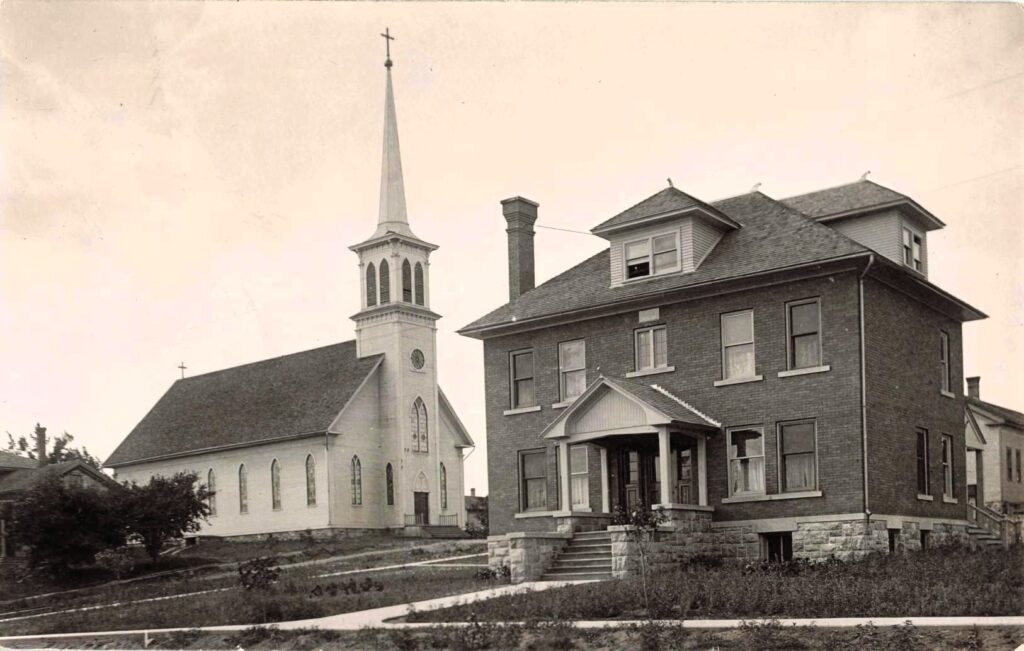
The parish supported worship, education, and family life. Its church, rectory, school, and cemetery created a complex that remained important long after the lumber mills closed.
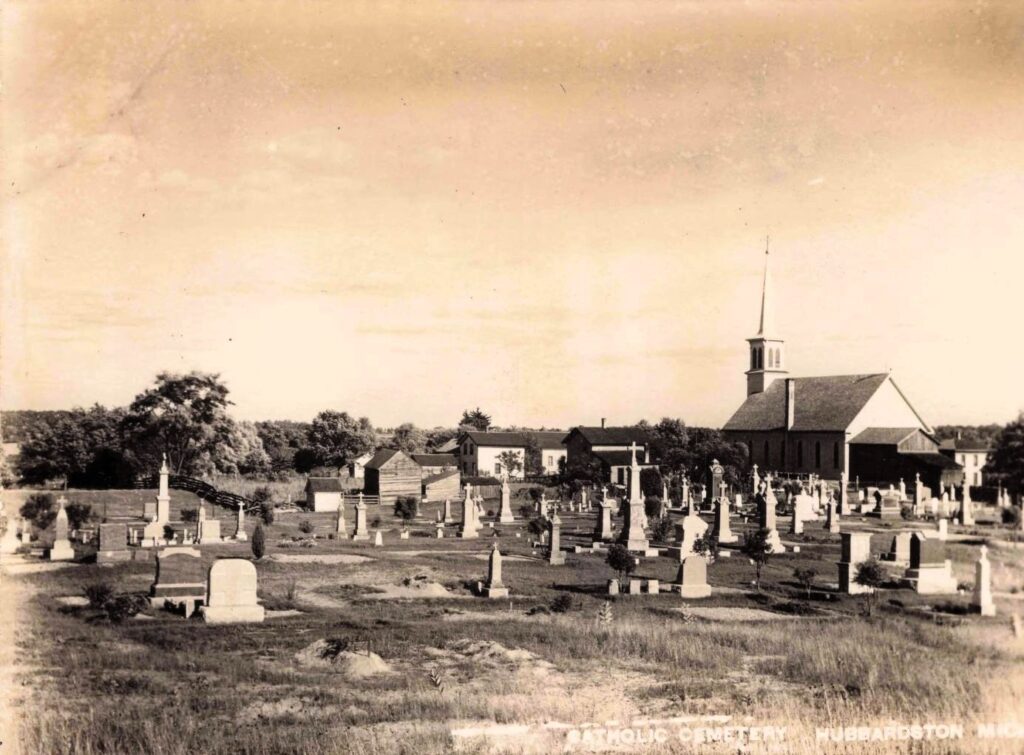
That is a unique historical feature of Hubbardston. Many Michigan mill villages lost the buildings most closely tied to their founding communities. Hubbardston retained a major parish complex connected to its Irish settlement.
Music, Public Gatherings and Village Identity
The Hubbardston band represented another part of town life.
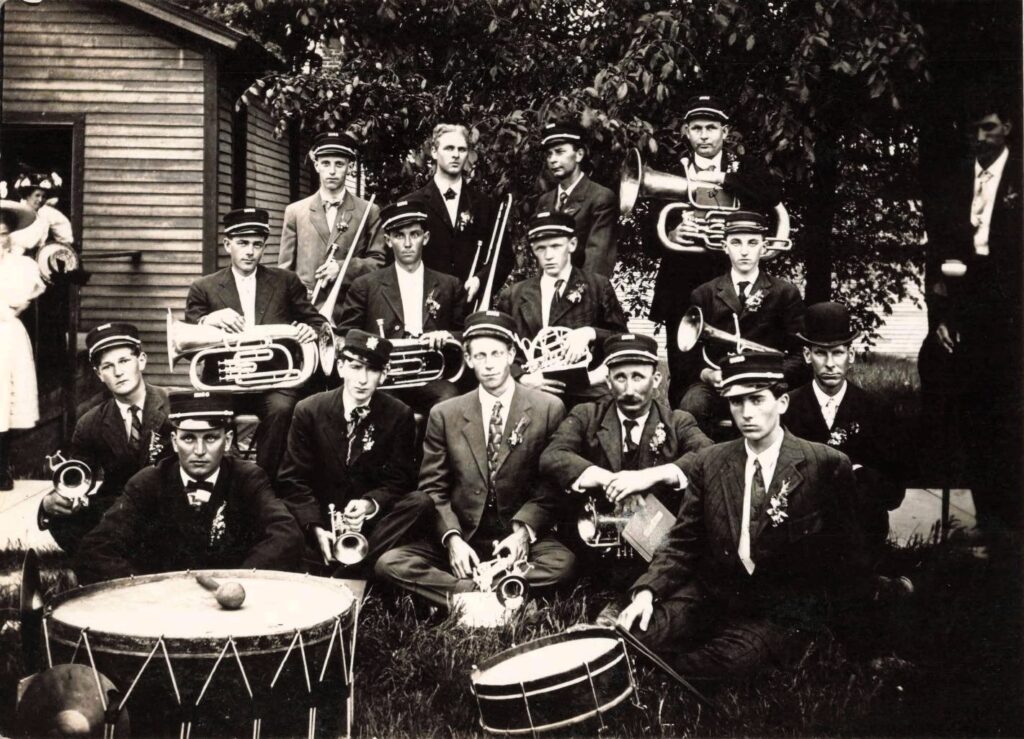
The musicians appear with cornets, drums, horns, and formal uniforms. Such groups played during parades, memorial services, holidays, political gatherings and church events.
The band is significant because it shows that Hubbardston’s residents were not concerned only with mills and farming. They created public traditions and community events.
The Bridge, the Mill, and a Later Loss
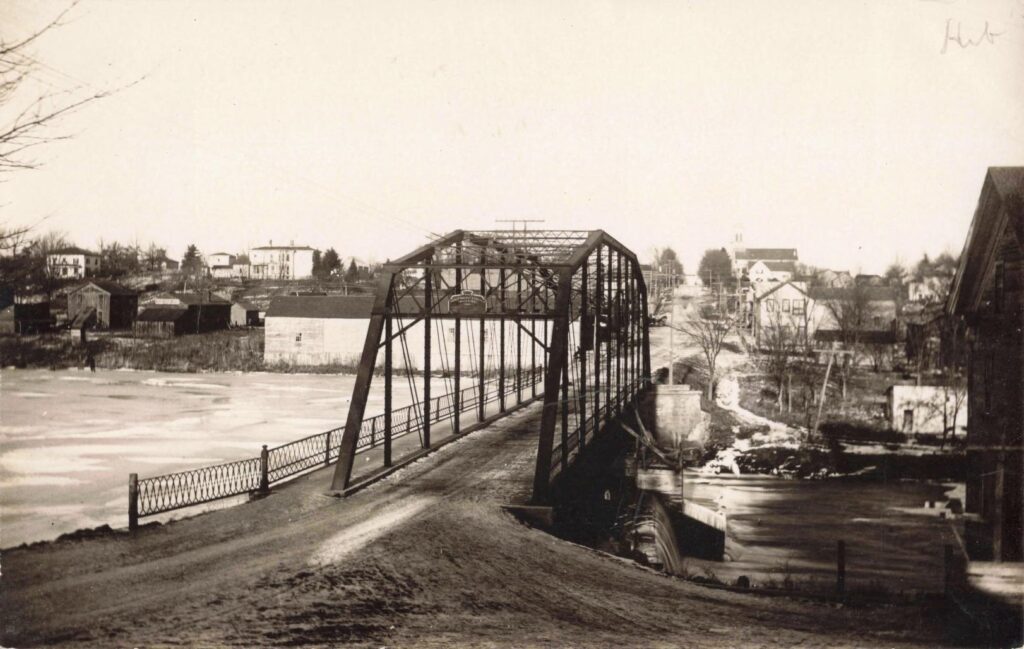
In the history of Hubbardston, Michigan, the iron bridge seems to be a focal point of the community. It spans over Fish Creek and stands beside the dam and grist mill. It linked the business district with roads leading toward nearby farms.
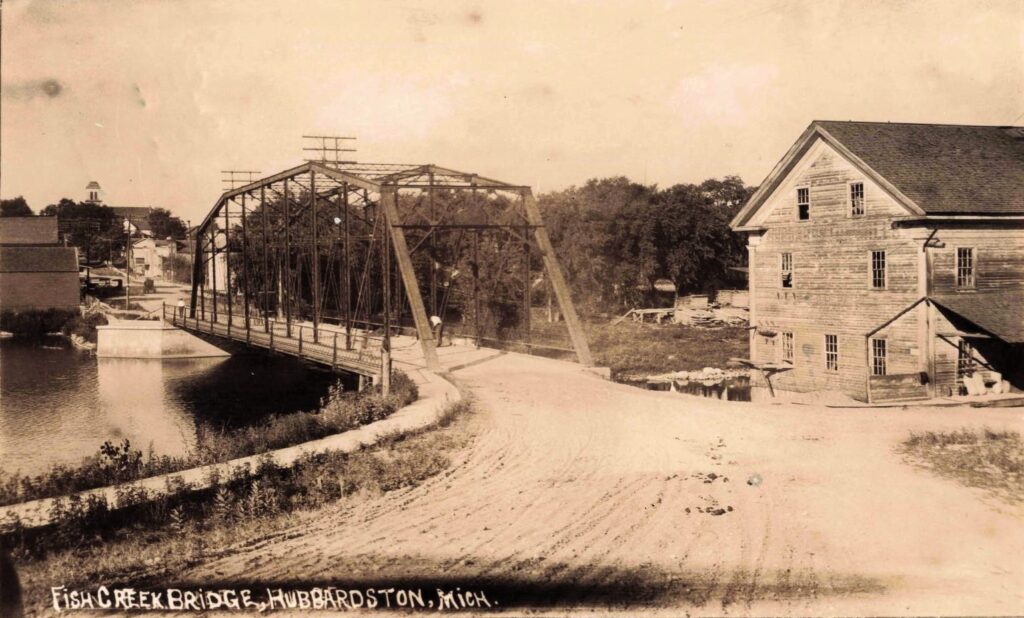
The iron bridge was eventually replaced by a concrete structure. In 1997, the old grist mill burned.
Its destruction removed one of the oldest physical links to Hubbardston’s founding era.
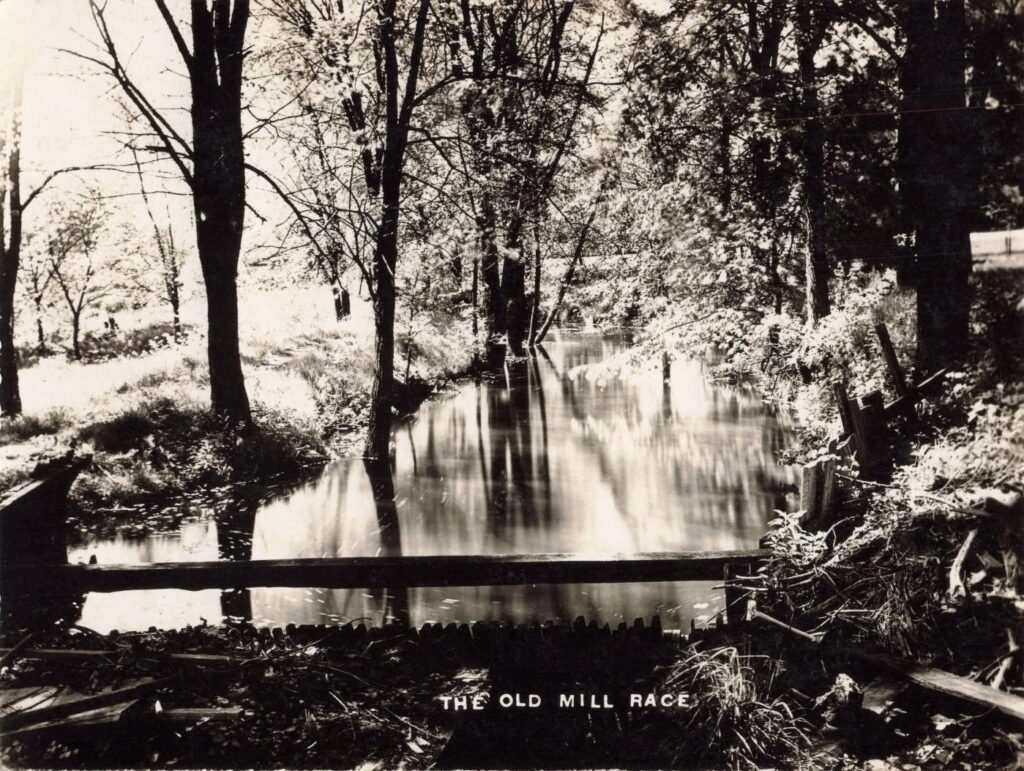
The millrace and creek remain. So do the streets, parish grounds, and agricultural community that followed the lumber years.
The History of Hubbardston, Michigan, is not simply a rise-and-decline story. The village changed from an ambitious mill town into a smaller farm community.
The railroad never came. The pine boom ended. Fires claimed important buildings.
Yet Hubbardston retained a clear sense of how it began: beside Fish Creek, under the influence of Irish settlement, mill labor, and the productive farms of North Plains Township.
Works Cited For the History of Hubbardston, Michigan
“Department of Agricultural Economics Records UA.16.5.” Michigan State University Archives, accessed 19 July 2026.
History of Hubbardston and North Plains Township, 1846-2000. Local historical compilation, 2000. Source text supplied by the author.
“History and Directory of Ionia County, Michigan.” Dillenback, Leavitt & Co., 1872, Internet Archive.
“North Plains Township and Hubbardston Village Timeline.” Hubbardston Area Historical Society, accessed 19 July 2026.
“St. John the Baptist Catholic Church Complex.” National Register of Historic Places, National Park Service, 24 Sept. 2001.
“The History of St. John the Baptist Church, Hubbardston.” St. Mary and St. John the Baptist Parishes, accessed 19 July 2026.
United States Census Bureau. “Population of Michigan by Counties and Minor Civil Divisions.” 1901.
United States Census Bureau. “Michigan Population: Fifteenth Census of the United States.” 1930.