 by
by 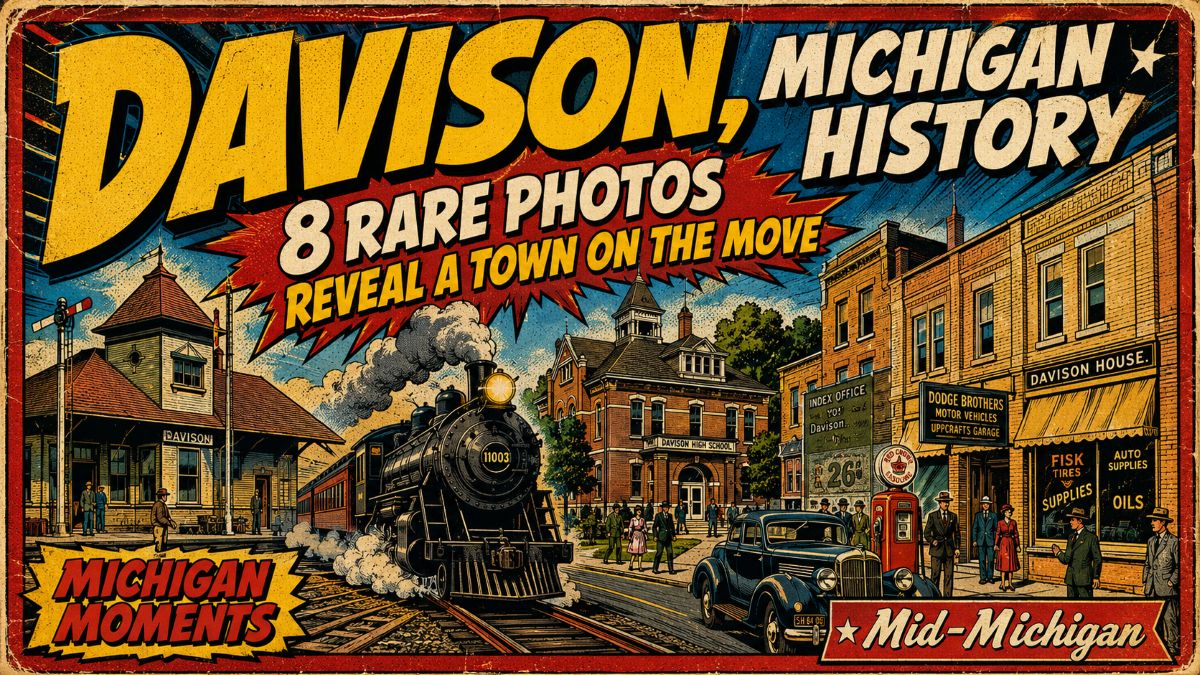
Michigan Moments Video
Davison Michigan History: 8 Rare Photos Show a Town on the Move
Historic photographs show how railroads, brickmaking, local businesses, public buildings and early automobiles helped shape Davison during the early 20th century.
Watch “Davison, Michigan History – 8 Rare Photos Reveal a Town on the Move,” presented by Michigan Moments.
What This Davison History Video Shows
Davison, Michigan, was changing rapidly during the early 20th century. Trains moved passengers and freight through town. Brick manufacturers supplied building materials to outside markets. Horse-drawn wagons began sharing the streets with automobiles.
The eight photographs featured in this video record that period of change. They show the Grand Trunk Depot, Davison High School, Davison Hall, downtown businesses, the local brickyard, Louhelen Ranch, horse racing and an early automobile garage.
Together, the images offer a record of Davison Michigan history when the town was strengthening its transportation links, public institutions and commercial district.
Eight Rare Scenes From Davison’s Past
The Grand Trunk Depot
The Grand Trunk Depot stood near the center of community activity. Trains carried passengers, freight and mail while connecting Davison with Flint and other Michigan communities.
Station agents, traveling salesmen and local families gathered along the platform. A steam locomotive waiting at the station represented access to jobs, goods and distant cities.
Davison High School
The brick high school was one of the town’s most prominent public buildings. Its Romanesque-style details gave the school an appearance meant to convey permanence and civic importance.
The building served as more than a place for classroom instruction. It was also a community landmark during a period when public education was becoming central to small-town life.
Davison Hall
Davison Hall provided a formal gathering place for public life. Its ornate brickwork and corner tower made it one of the town’s most recognizable structures.
Residents used the hall for meetings, lectures, political events and theatrical performances. In a modest-sized town, it offered a large indoor space for civic and cultural programs.
Downtown Davison Businesses
The Commercial Hotel and locally owned shops lined the main business street. Horse-drawn wagons moved alongside early automobiles as transportation methods began to change.
An elevated photograph shows the village layout, including dry-goods stores, barber shops and general-merchandise businesses.
The Davison Brickyard
Brick and clay-product manufacturing became an important local industry. Historic photographs show rows of drying kilns and stacks of cylindrical tiles prepared for shipment.
The brickyard’s location near the railroad allowed manufacturers to ship heavy products more efficiently to buyers across Michigan.
Louhelen Ranch
Louhelen Ranch stood outside Davison’s business center. Photographs show maintained grounds, walking paths, a large white farmhouse and an agricultural barn.
The rural estate later became associated with the Louhelen Bahá’í School, changing from a Michigan homestead into a center for education and spiritual study.
Horse Racing at the Fairgrounds
Horse racing drew large crowds to Davison’s fairgrounds. Spectators filled wooden grandstands while others stood near the track railing.
Racing days combined competition with community entertainment. The events were noisy and dusty, and they could attract hundreds of people from the surrounding area.
Uptegraff’s Garage and Early Automobiles
Uptegraff’s Garage represented a new transportation era. The business sold Dodge Brothers vehicles and Kelly tires while providing oil, parts and repair service.
A mechanic posed beside an early automobile as storefront advertising promoted the products and services required by a growing number of drivers.
“Davison did not grow by accident. Its development was driven by transportation, industry, local commerce and strong public institutions.”
How the Railroad Shaped Davison
The Grand Trunk Railway played a major role in Davison Michigan history. The depot gave local residents and businesses regular access to Flint and larger transportation networks.
Freight service was especially important. A manufacturer producing bricks, clay tile or other heavy materials needed an economical way to reach customers. Rail access allowed Davison businesses to sell products outside the immediate community.
Passenger trains also changed daily life. Residents could travel for work, school, shopping or family visits. Sales representatives arrived with product samples and order books. Mail and newspapers reached town on a dependable schedule.
The depot was therefore more than a passenger shelter. It was a commercial gateway and a public gathering place.
Brickmaking and Davison Industry
Davison’s brickyard turned local raw materials into products needed by a growing state. Workers shaped clay into bricks, pipes or cylindrical tiles before the pieces were dried and fired.
Brickmaking required substantial equipment and physical labor. Workers handled clay, maintained kilns, stacked finished products and prepared shipments for the railroad.
Historic photographs of the operation help show the scale of the business. Long rows of materials and industrial structures stand in contrast to the nearby farms, stores and homes.
From Horses to Automobiles
Several photographs capture Davison during a transportation transition. Horse-drawn wagons remained common, but automobiles were beginning to claim space on local streets.
Garages became a new type of business. Drivers needed fuel, tires, oil, replacement parts and mechanics capable of maintaining unfamiliar machines. Automobile dealerships also brought nationally advertised brands into small communities.
The image of Uptegraff’s Garage records more than a storefront. It marks the point when mechanical skill, retail sales and personal transportation began reshaping Davison’s economy.
Key Points From the Video
- The Grand Trunk Depot connected Davison with Flint and communities beyond Genesee County.
- Davison High School served as both an educational building and a civic landmark.
- Davison Hall hosted public meetings, lectures, political programs and stage performances.
- Downtown businesses served residents as wagons and early automobiles shared the streets.
- The brickyard provided industrial jobs and used the railroad to ship heavy products.
- Louhelen Ranch later developed into a center for Bahá’í education and study.
- Horse racing brought large crowds to Davison’s fairgrounds.
- Automobile garages represented a new phase in local business and transportation.
Edited Video Transcript
Open the complete Davison video transcript
0:00 — This is Michigan Moments, sharing the pioneering moments of the Great Lakes State.
0:07 — Davison, Michigan, in the early 20th century was a town shaped by railroads, industry and civic pride.
0:13 — The Grand Trunk Depot stood at the heart of it all. Trains brought passengers, freight and mail, linking this growing community to Flint and beyond.
0:24 — The depot bustled with activity. Station agents, traveling salesmen and children seeing off family members gathered near the platform.
In one photograph, a steam engine idles at the station as residents linger nearby. It was more than a depot. It was a gateway to the outside world.
0:42 — Just blocks away, Davison High School anchored the town’s educational district. Built of brick with Romanesque details, the school served as a place of learning and a civic landmark.
0:56 — Davison Hall was a center for culture and politics. With its ornate brickwork and corner tower, it hosted meetings, lectures and theatrical performances.
1:08 — In a town of modest size, the building gave the community a grand space for public life.
1:16 — In the business district, the Commercial Hotel and shops lined the main street. Horse-drawn wagons shared space with early automobiles.
1:24 — In one elevated photograph, viewers can trace the layout of a thriving village. Dry-goods stores, barber shops and general-merchandise businesses filled the commercial district.
The image shows how much could be constructed with brick, timber and confidence in the town’s future.
1:41 — Industry played a growing role. The brickyard was a major employer, and a photograph shows rows of drying kilns and stacks of cylindrical tiles ready for shipment.
1:49 — The brickyard’s location near the rail line made it easier to send products to customers throughout Michigan.
1:56 — Louhelen Ranch, later associated with the Louhelen Bahá’í School, was a peaceful estate outside the town center.
2:04 — The grounds were carefully maintained. Photographs show quiet paths, a sprawling white farmhouse and a nearby barn. They record a rural Michigan homestead developing into a place for education and spiritual study.
2:20 — Then there is the horse-racing scene. Crowds packed wooden grandstands. Men in hats clustered near the rail. A blur of hooves streaked through the foreground.
2:32 — Horse racing was a community event that drew hundreds of people to the fairgrounds. It was loud, dusty and difficult to forget.
2:41 — Automobiles soon made their mark.
2:43 — Uptegraff’s Garage sold Dodge Brothers vehicles and Kelly tires. A mechanic stands beside an early automobile.
2:52 — The storefront windows advertise oils, parts and dependable service. It is a moment captured at the meeting point of mechanical skill and commerce.
2:59 — Together, these photographs trace a story of work, ambition and civic life. Davison did not grow by accident. Its legacy remains in the buildings, streets and stories that survive today.
3:16 — This has been Michigan Moments, offering bite-sized stories from Michigan history.
Watch More Michigan Moments
See more short videos about Michigan towns, railroads, historic businesses, industries and Great Lakes communities.
View All Michigan MomentsVideo presented as part of the Michigan Moments history series from Thumbwind Publications LLC.