 by
by 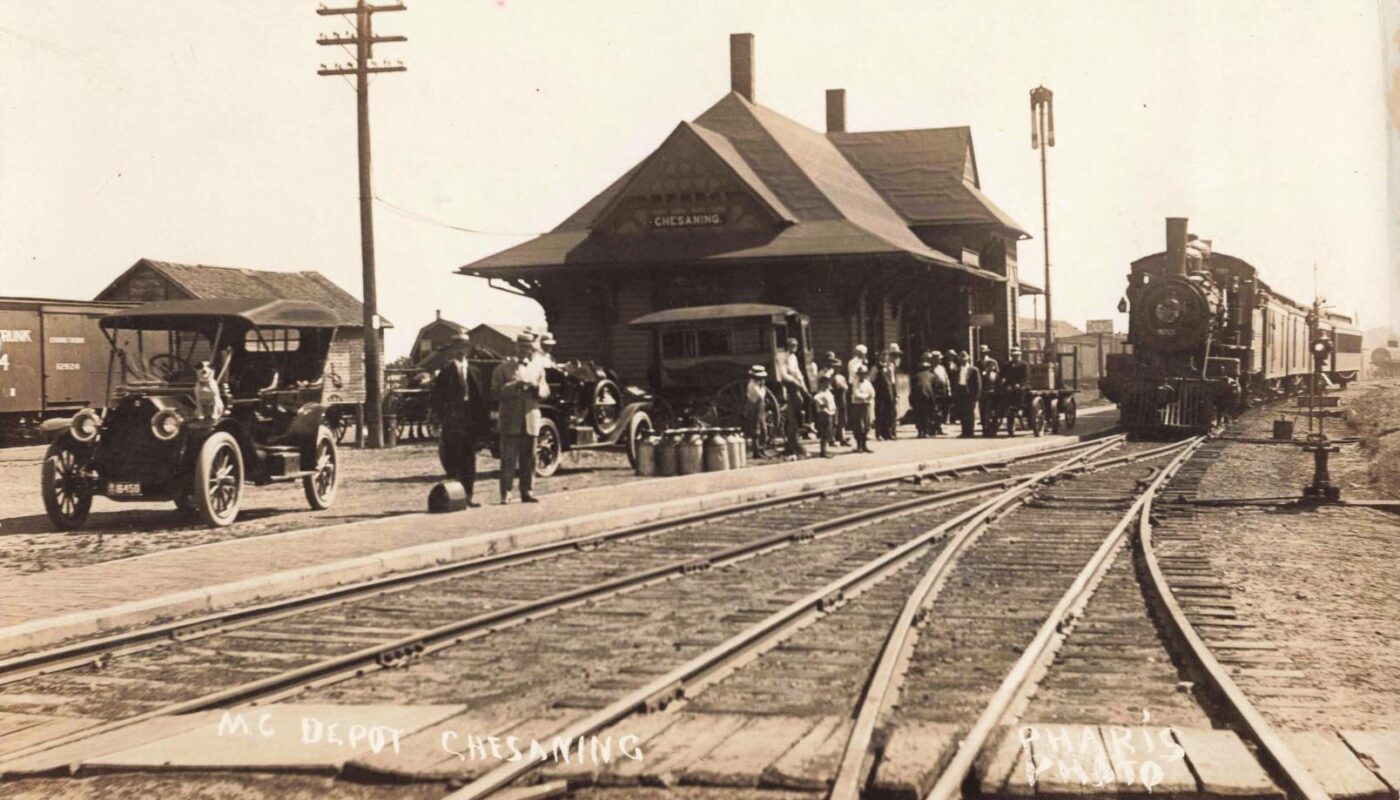
In Michigan’s Saginaw Valley lies Chesaning, a village whose very name recalls a legendary landmark. Chesaning comes from an Ojibwe phrase meaning “Big Rock”. This refers to a huge glacial boulder that once stood nearby. Native Ojibway and Ottawa people held ceremonies by that stone, making it a sacred meeting place. When settlers arrived, they adopted this name. In fact, in 1853 township leaders formally changed the name to Chesaning, honoring the ancient stone. Even today, that story of the history of Chesaning lives on in the town’s name.
Video – History of Chesaning – Big Rock, Big Story A Small-Town Glow-Up
First Settlers and Early Growth
White settlers came to the area in the late 1830s. One of the first was Thomas Wright, who built a log cabin in 1839. Soon others followed – merchants, farmers, and mill operators. In 1847 the new community held its first township elections, which locals regard as Chesaning’s official birthday.
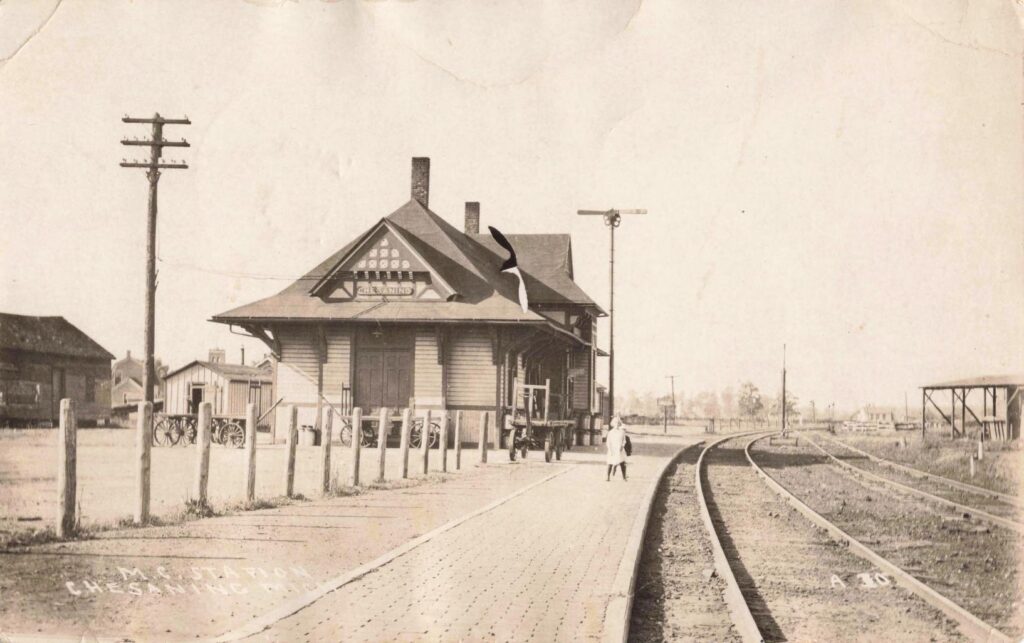
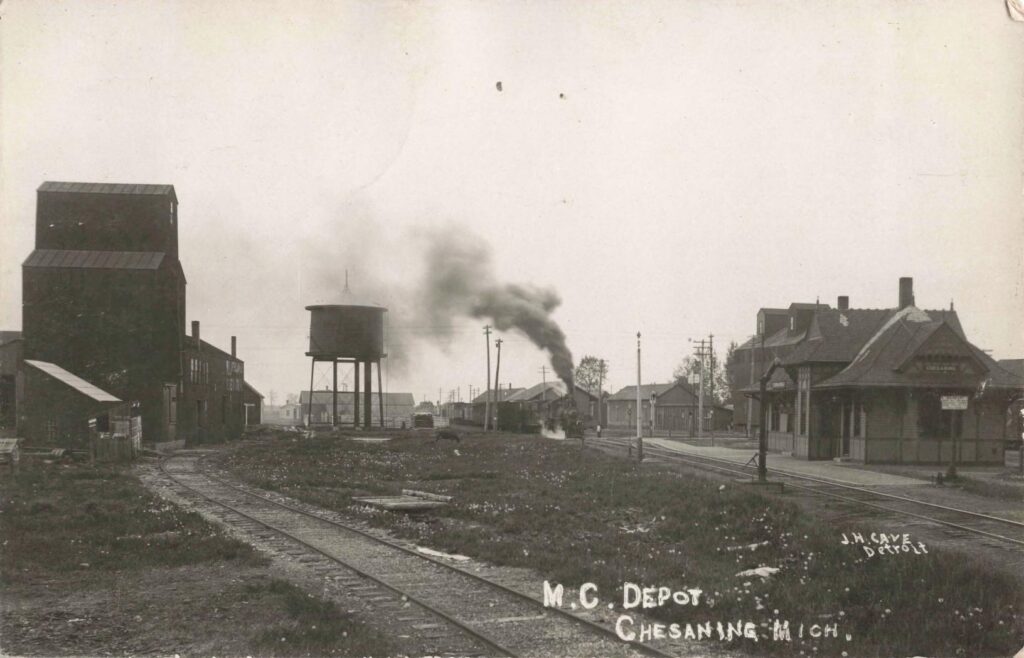
By 1869 Chesaning was incorporated as a village. That same year it gained a railroad station: Chesaning lay on the Jackson, Lansing & Saginaw line of the Michigan Central Railroad. Farmers used the railroad to ship grain and livestock, and it brought goods to the little depot. A 1915 photograph even shows a Michigan Central steam train at Chesaning’s station. The coming of the railroad helped Chesaning grow from a frontier outpost into a settled village.
Lumber Barons and Nason Mansions
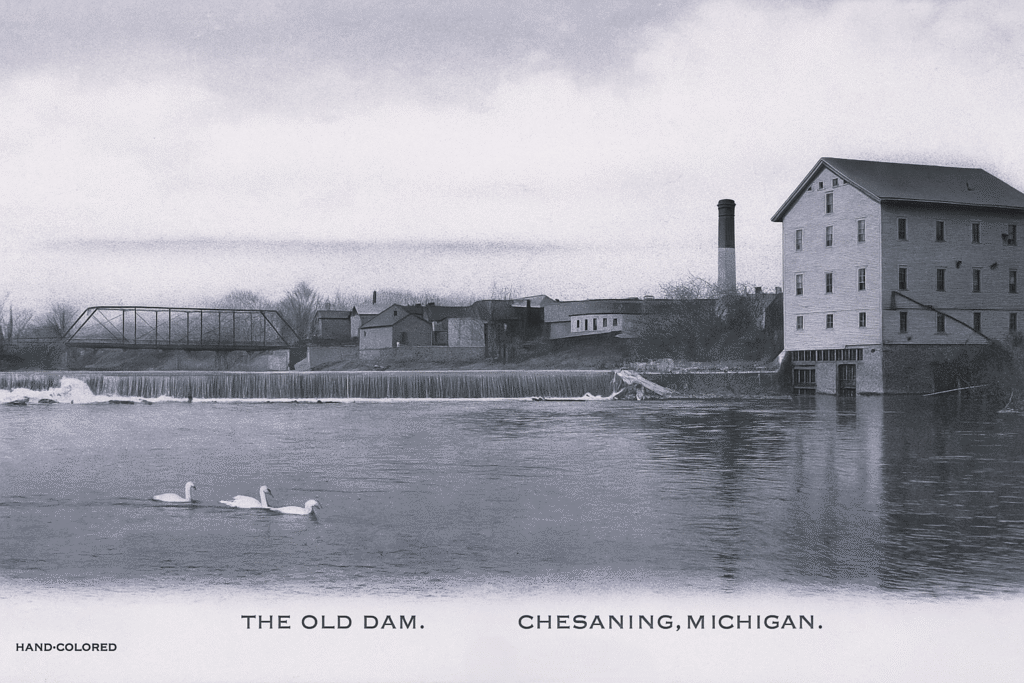
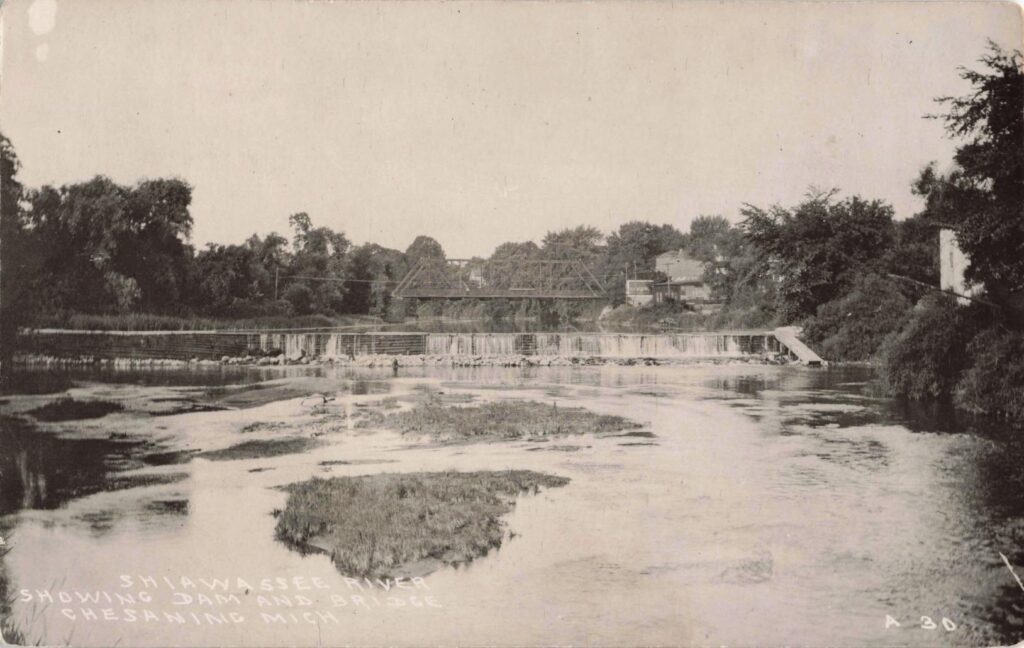
By the mid-1800s, lumber was king in Chesaning. The dense forests around town were full of pine. Sawmills sprang up on the Shiawassee River. In 1852 a young English immigrant named Robert H. Nason arrived and bought the first local mill. He bought timberland and expanded the mill, becoming one of Chesaning’s richest men. He built an elegant brick house on North Front Street in 1865. The Nasons’ success symbolized the era: local families could grow wealthy from Michigan’s lumber industry.
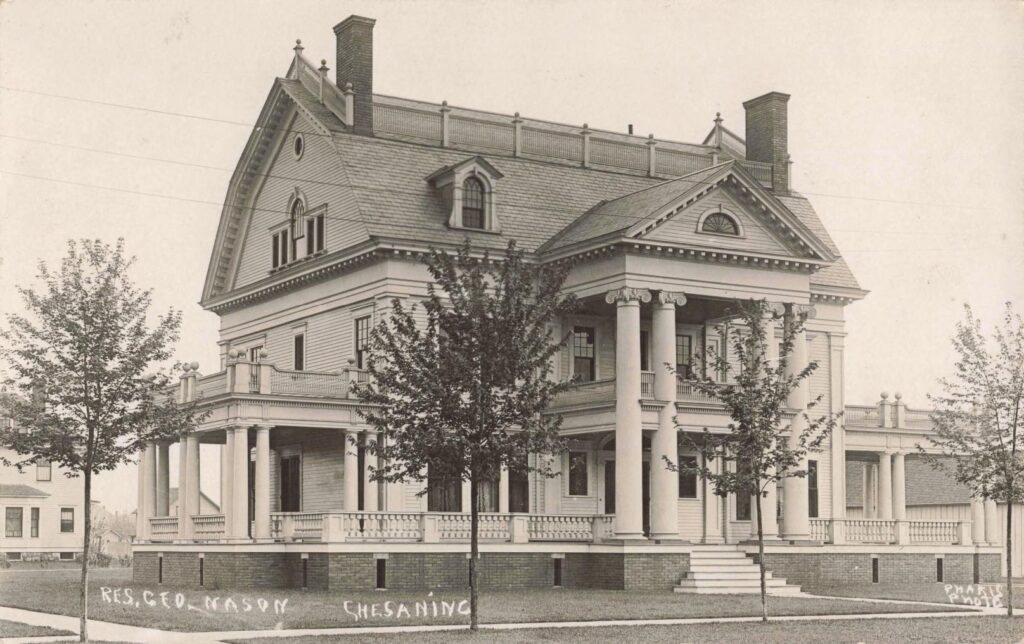
Robert’s son, George M. Nason (1859–1929), continued the legacy. In 1907–1908 George built a grand new home as a monument to the family’s fortune. The two-story Georgian Revival mansion featured stately Ionic columns and a sweeping foyer. We know this home today as the Chesaning Heritage House. (It later became a restaurant, but the building still stands.) The Heritage House was a sign of Chesaning’s prosperity in the early 1900s. It also served as the family’s stately residence for decades.
Main Street and Community Life
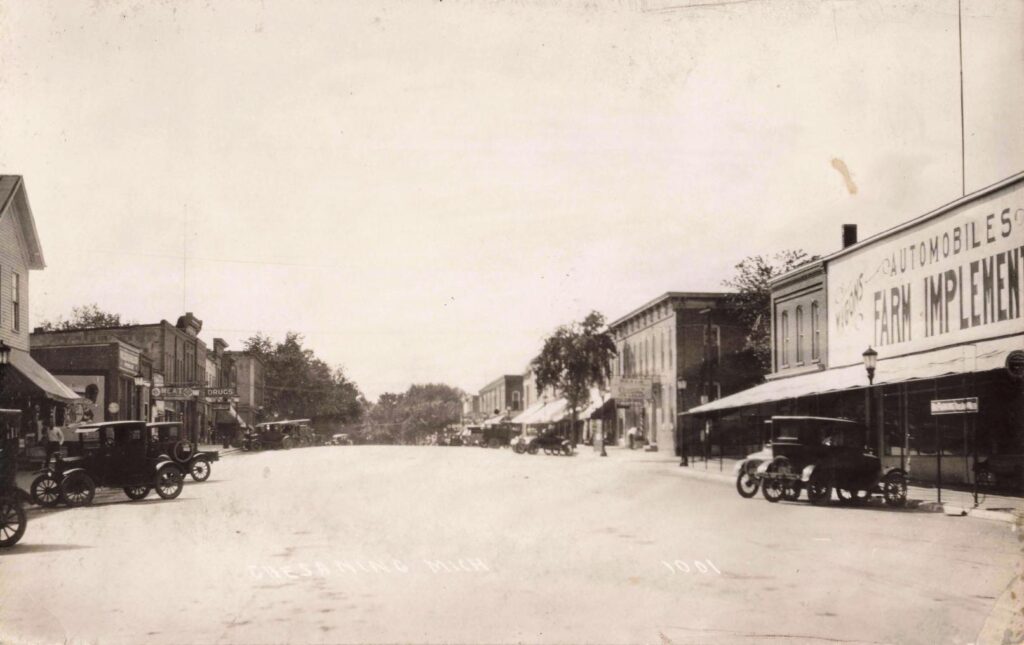
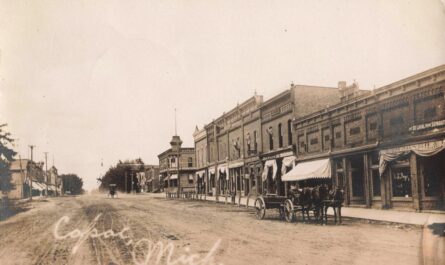
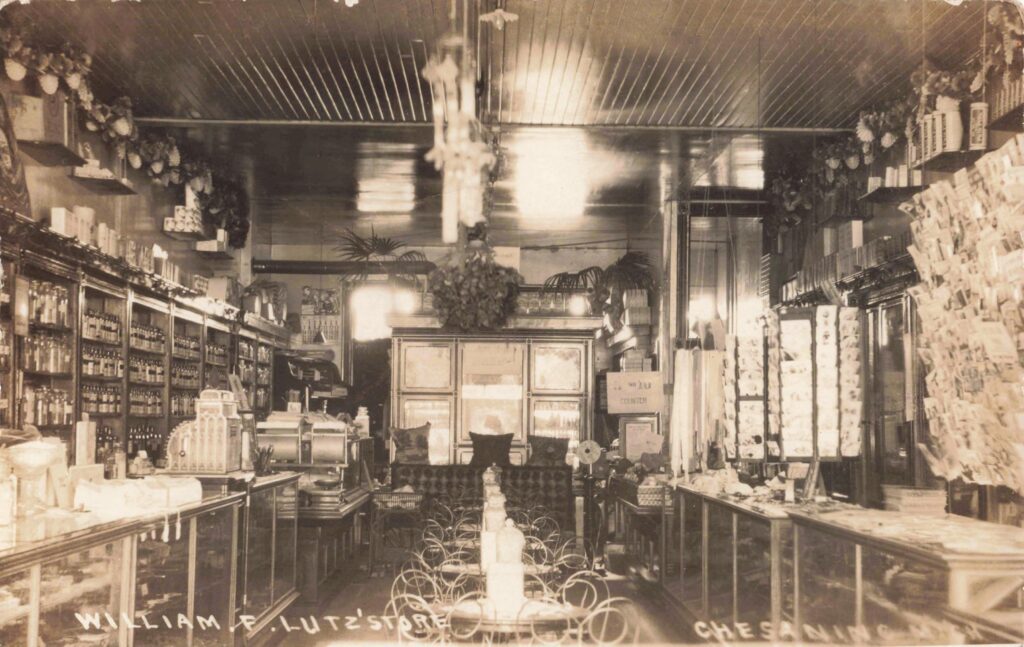
Chesaning’s downtown reflected its days of hope and growth. Broad Street was lined with brick storefronts. Vintage photos show Walser’s Clothing Shop, Lutz’s Drugstore, and the Hotaling Hotel under gaslight. W.F. Lutz even ran an interior to the drugstore with a soda fountain and wooden glass counters, as seen in one 1910s photo. In the evening, electric and gas lamps cast a warm glow on sidewalks as townspeople shopped and chatted. A 1920s postcard shows Broad Street at night, with window signs glowing. “Down East” architecture mixed with Craftsman touches on new buildings, while some older homes still held Victorian trim.
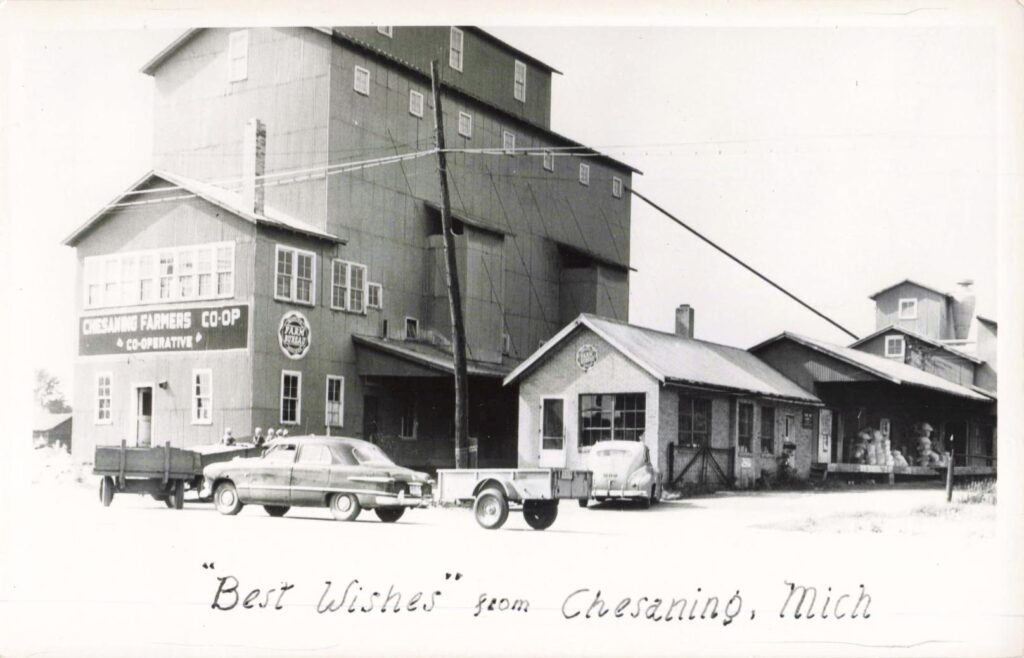
Chesaning was also an agricultural hub. Surrounding farms grew sugar beets, corn, and hay. Local grain elevators and creameries shipped their crops out. Farmers came into town on Market Days for supplies. The weekly newspaper and church bulletins kept people connected. Schoolchildren went to the Lincoln School (opened 1870) and played in tree-lined neighborhoods. Community groups formed: the Masonic Lodge and the Methodist and Catholic churches were busy centers of activity.
Festivals, Parades, and Traditions
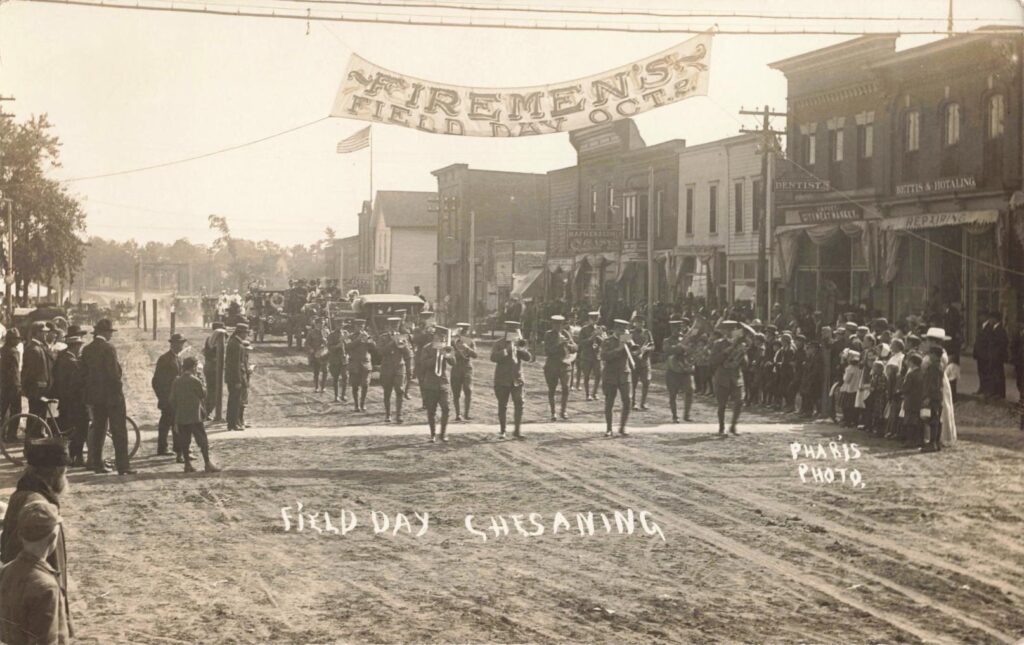
One beloved tradition was the Firemen’s Field Day. Every autumn, Chesaning’s volunteer fire department hosted a big parade and carnival. A banner hung across Broad Street reading “Firemen’s Field Day – Chesaning,” and marching bands led the procession. Neighbors lined the brick sidewalks cheering, and children raced alongside, waving flags. Later they enjoyed a barbeque or lemonade on the riverbank. One vintage photograph captures the field day parade: band members in uniforms, horse-drawn fire wagons, and happy crowd.
Another highlight was the annual Candlelight Walk (a more modern tradition that began after 1930), when the village lit thousands of luminaries on the boulevard. But even before that, holiday and religious gatherings united the town. Christmas programs at church, Fourth of July picnics, and Harvest Festivals kept that small-town spirit alive.
The Big Rock Legacy
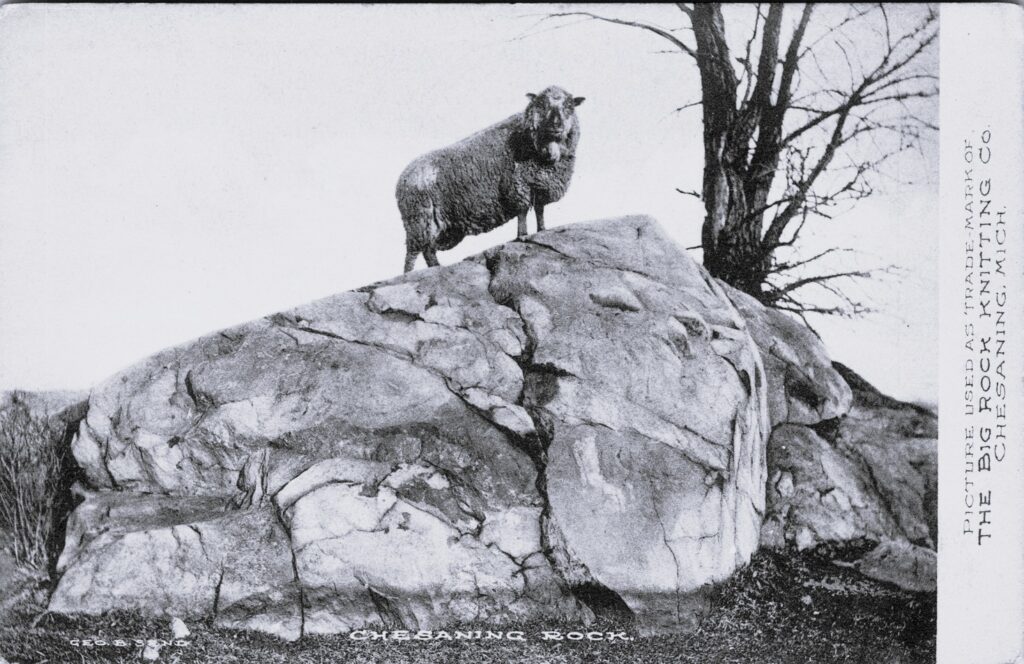
Throughout all these years, Chesaning’s identity remained tied to that original “big rock.” The Saginaw River’s opposite boulder (which had been the town’s namesake) was blasted away for river navigation by the 1840s. The name “Big Rock” was then attached to the woodland monument. Elderly residents in the early 1900s still spoke of the rock in the woods – now surrounded by farms. Today, a local historical marker and park commemorate the site. The town’s seal even shows an engraving of the big rock on the riverbank.
Chesaning’s Ongoing Efforts at Preservation
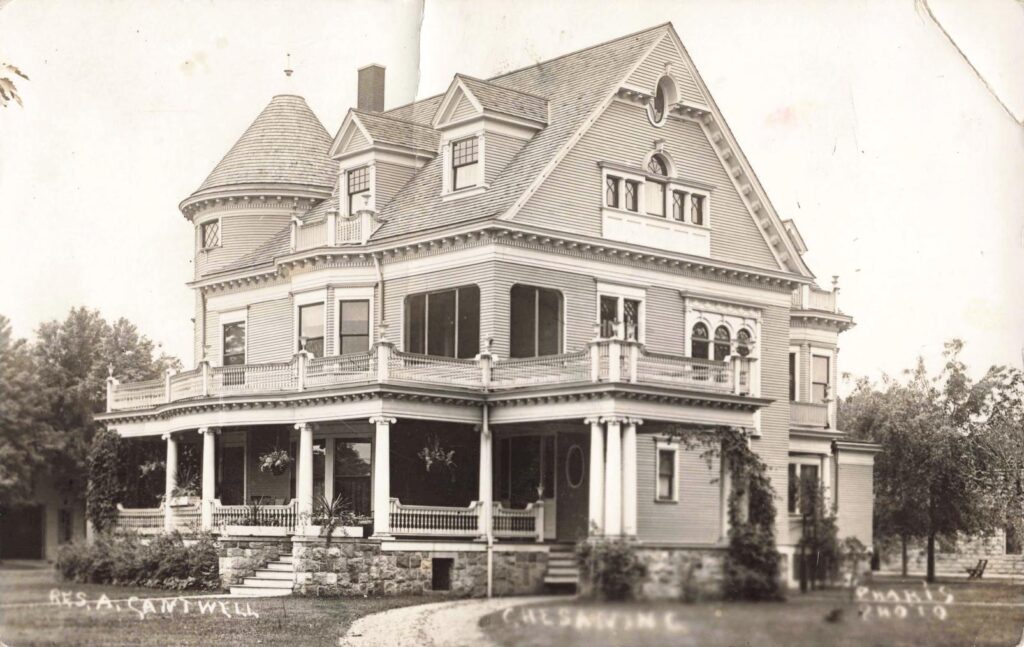
By 1930, Chesaning was a stable village of under 1,000 residents. The railway still ran through town, though passenger service declined in mid-century. Several historic homes from the 1800s – like Robert Nason’s original 1865 house – are still occupied. The downtown saw a 1950s storefront renovation but later efforts restored some original brick facades.
Today, the history of Chesaning includes homoring its past. The Nason Mansion is listed on the National Register of Historic Places. The Saginaw Valley Rail Trail follows the old railroad path north of town. The Chamber of Commerce sponsors events on Broad Street, echoing the old parade days. Locals still tell stories of growing up in the 1920s: of skating on the river near the Pahl Bridge and buying penny candy at Lutz’s. These memories are the treasure of the village.
Chesaning’s story shows how a Michigan town can grow around a river and its forests, and yet never forget its roots. It started with a “Big Rock,” and it lives on with the heritage of those early families. As historian James Mills wrote, the “lonely rock” of Chesaning was more than geology – it was the symbol of a community’s identity. Chesaning may be small, but its history is deep and rich.
Works Cited For The History of Chesaning
- Chesaning Area Historical Society. “Chesaning: The Place of the Big Rock.”
- Chesaning Argonaut. “Homes of Chesaning V: Northside Survivors.”
- Chesaning Chamber of Commerce. “Our History – A Brief History of the Early Chesaning Area.”
- Lost in Michigan (Sonnenberg, Mike). “The Heritage House – Lost In Michigan.” , 9 Dec. 2017
- MichiganRailroads.com. “Station: Chesaning, MI.”
- Swartzmiller Lumber Company. “History.”