 by
by 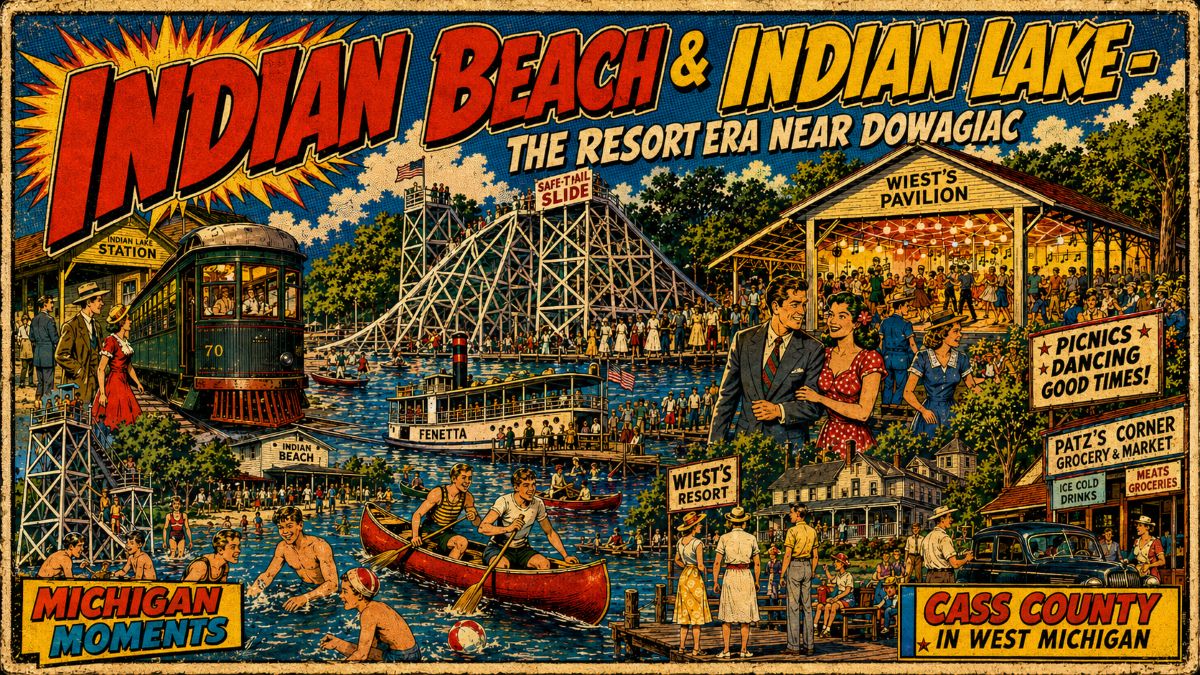
The History of Indian Beach & Indian Lake, Michigan, is not the story of a city, a village, or a courthouse square. It is the story of a lake that became a summer community. While Indian Lake history starts with the indigenous peoples who inhabited the area for generations, our photos show what life was like in the resort era from 1900 until about 1930.
Indian Lake sits west of Dowagiac in Cass County, in the farm and fruit country of southwest Michigan. In the early 1900s, the shore was filled with cottages, hotels, pavilions, docks, markets, and bathing places. The names still carry an old lake-season sound: Indian Beach, Wiest’s Resort, Bird’s Nest Inn, Patz’s Corner, Pottawama, Ongwanada and Gilbert Castle.
This was not a random cluster of cottages. It was a working resort district. People arrived by trolley, steamer, boat, carriage, and, later, automobile. They came for meals, swimming, fishing, boating, dances, picnics, and a few days away from work.
Before Indian Lake: Woolman’s Lake And The Potawatomi Sugar Camps
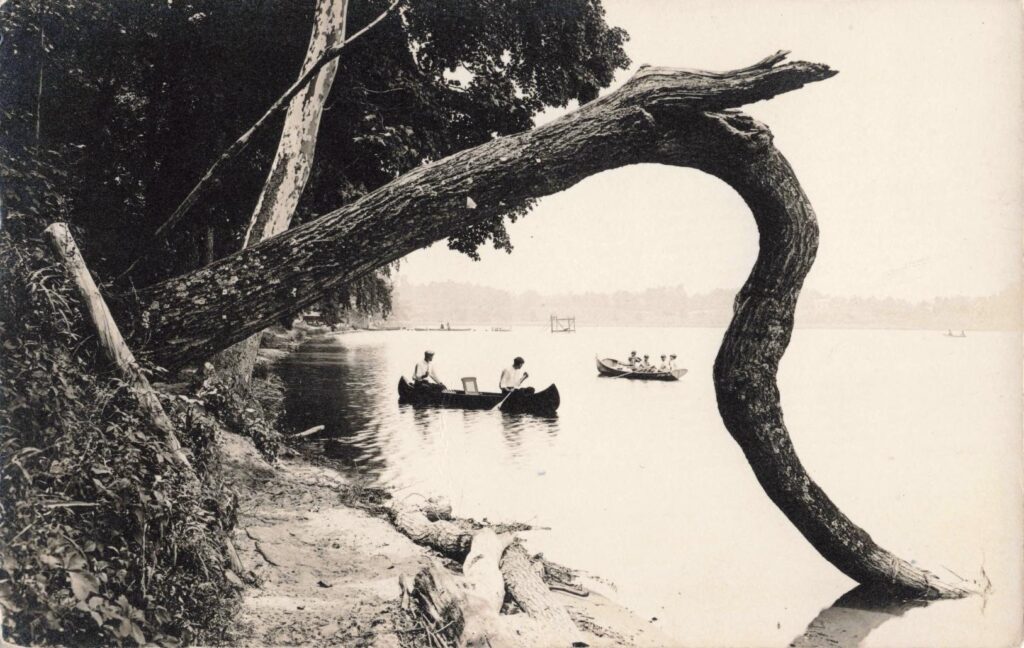
The lake was once known as Woolman’s Lake, a name tied to early settlement in Silver Creek Township. The name later changed to Indian Lake because Potawatomi people maintained maple-sugar camps in the wooded areas near the shore each spring.
That detail gives the resort story a deeper start. Before hotels and pavilions, the lake was part of a seasonal Native food tradition. Maple sugaring required knowledge of weather, trees, timing, and storage. It was not scenery for later visitors. It was work, food, and culture.
That older story should be handled with care. Early resort operators often used Native names or Native-sounding names to market vacation places. Indian Lake’s name should not be treated as decoration. It points back to people who knew the land long before the resort era.
Gilbert Castle And The First Resort Logic
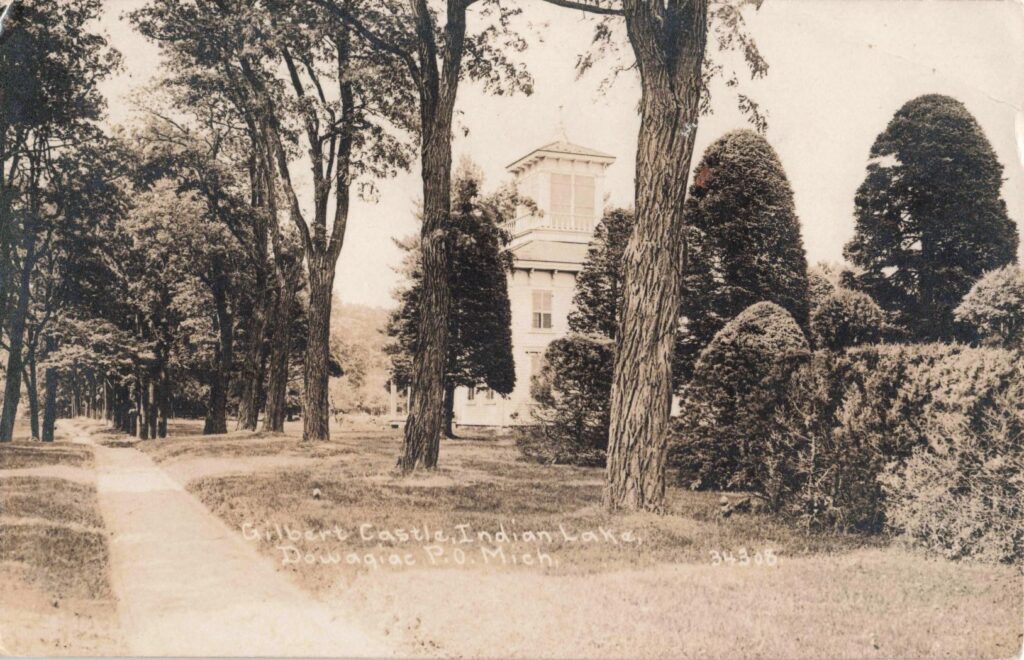
One of the most striking landmarks tied to Indian Lake is Gilbert Castle. William Bragall Gilbert, often called “Uncle Tommy” Gilbert in local histories, settled near Indian Lake in the 1830s. He became a farmer, land speculator, and influential figure in Silver Creek Township.
Gilbert Castle, built on a bluff above the lake, became one of the best-known early landmarks in the area. It also points to a key shift. Lake frontage was becoming valuable. What had been farm and timber country could also become cottage country.
By the late 1800s and early 1900s, Indian Lake’s future was becoming clear. Land near the water could bring income through cottages, resort lots, and seasonal visitors. That helped set the stage for the resort boom.
The Trolley Made The Lake Feel Close
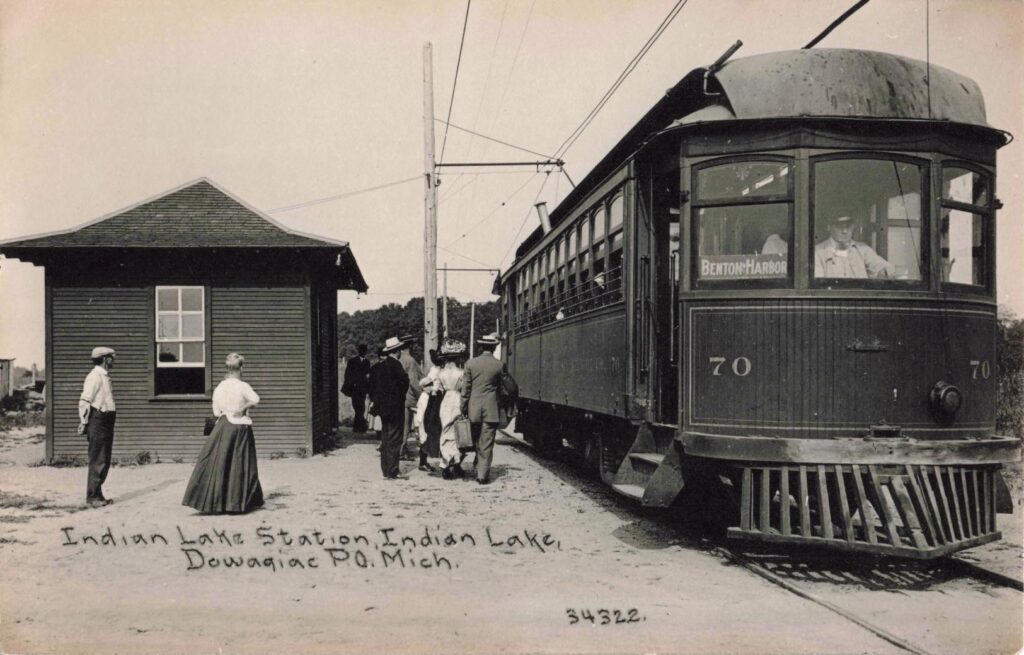
The strange part of the History of Indian Beach & Indian Lake Michigan is this: the lake felt like an escape from modern life, but modern transportation made that escape possible.
In 1911, the Benton Harbor-St. Joe Railway and Light Company completed its track work to Dowagiac. The interurban line connected the lake area to a broader travel route serving resort communities in southwest Michigan. Travelers could ride an electric car toward Dowagiac and reach Indian Lake without owning an automobile.
That changed the lake. A family could leave a city or town, ride the line, step down near the station and spend the day at the water. Business groups could hold picnics. Cottage renters could bring trunks and baskets. Visitors could move from the timetable to the shoreline in a single trip.
Indian Beach And The Steamer Fenetta
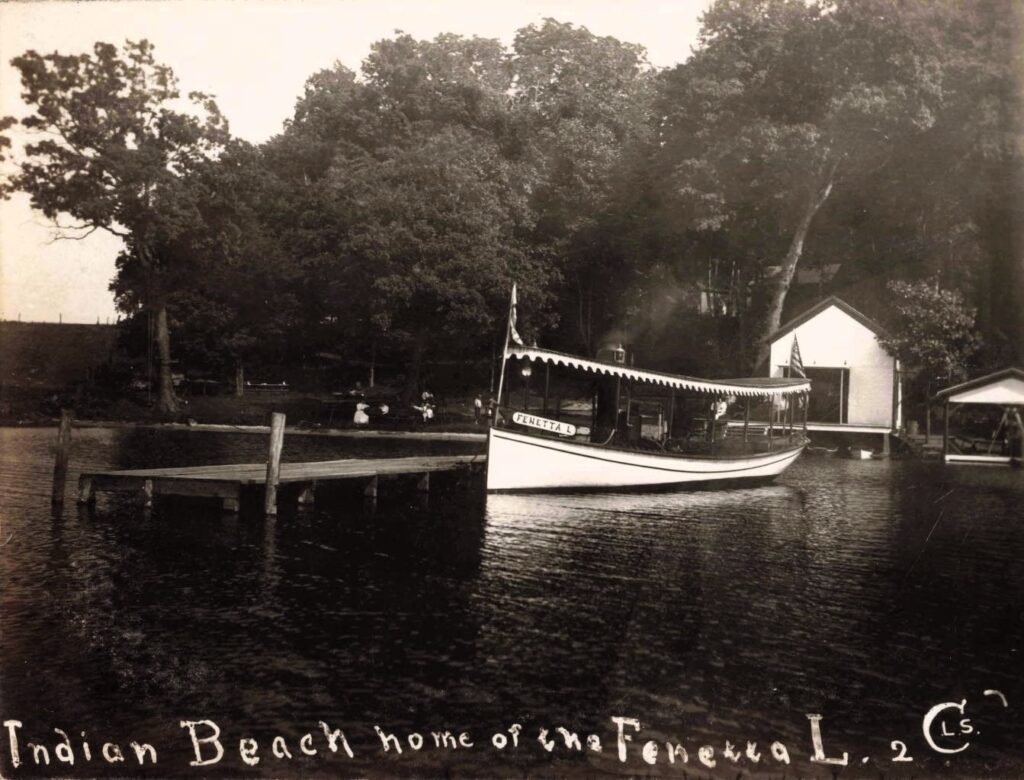
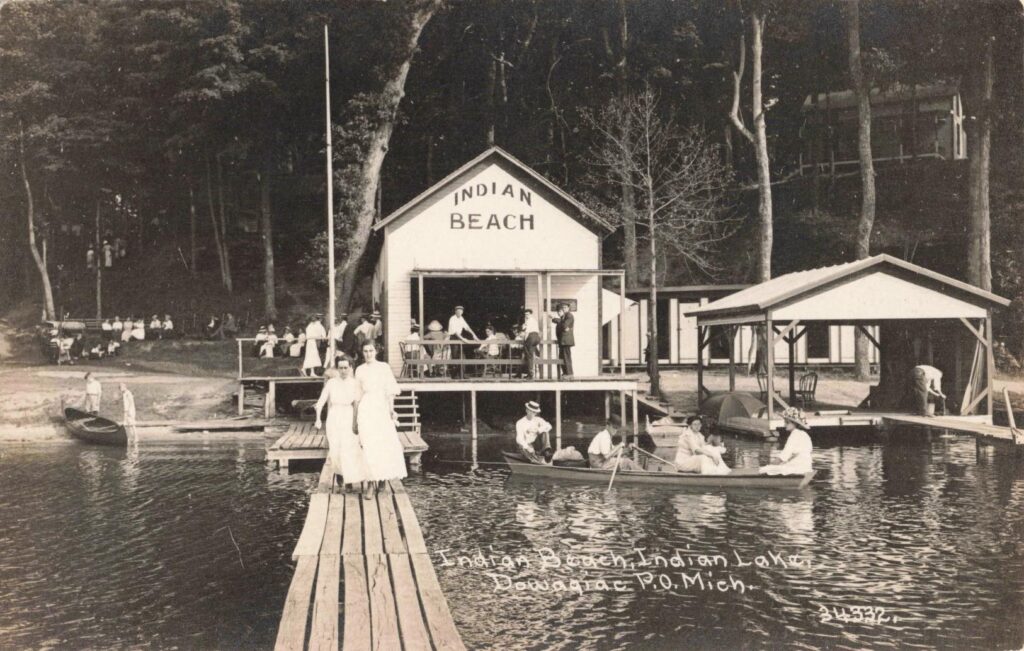
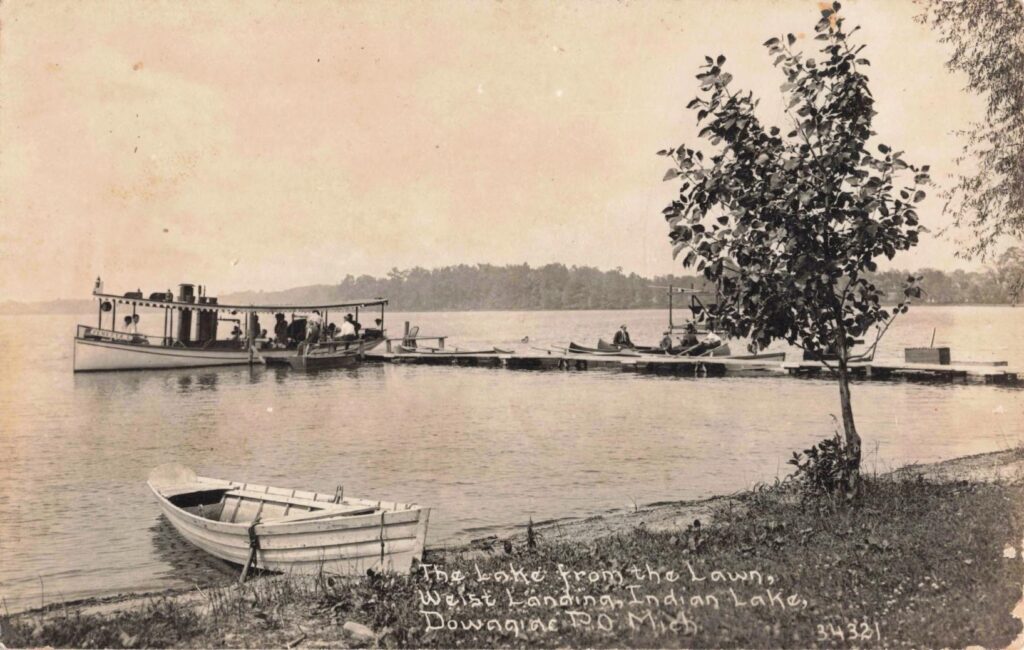
Indian Beach served as one of the lake’s public faces. It had docks, boats, a gathering space, and shore buildings. One of the strongest pieces of evidence is the steamer Fenetta, shown at Indian Beach.
A lake steamer meant organized movement. Visitors did not just stand on shore. They crossed the water, called at landings and moved between resorts. The Fenetta helped turn scattered lakefront places into one connected summer district.
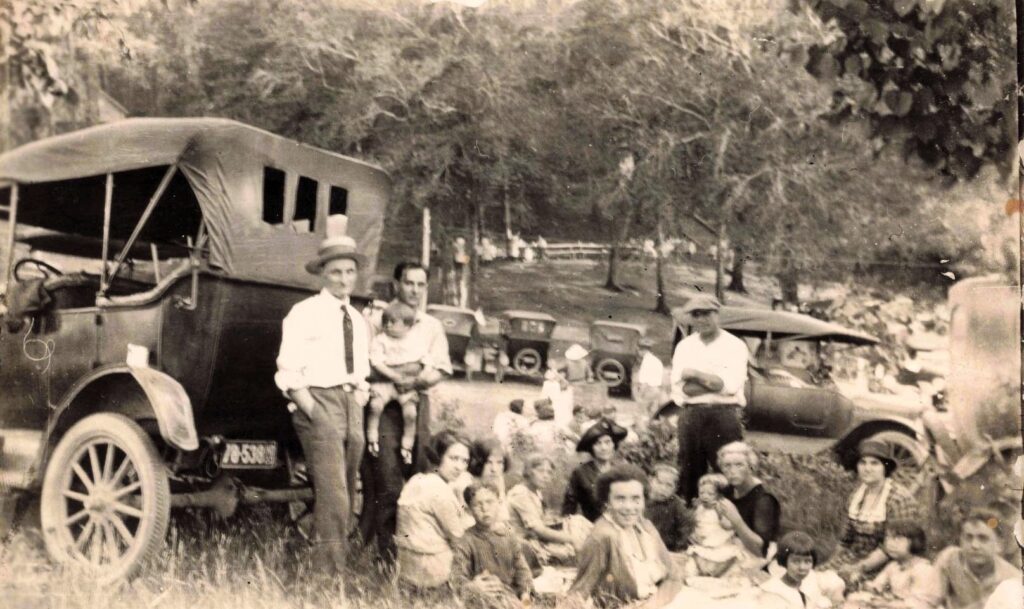
This is a unique part of Indian Lake history. Many inland lakes had cottages. Fewer can be shown with such a full resort system: a trolley station, lake steamer, pavilion, hotel, roadside store, cottages, bathing towers and amusement-style attractions.
Wiest’s Resort And The Rise Of Managed Fun
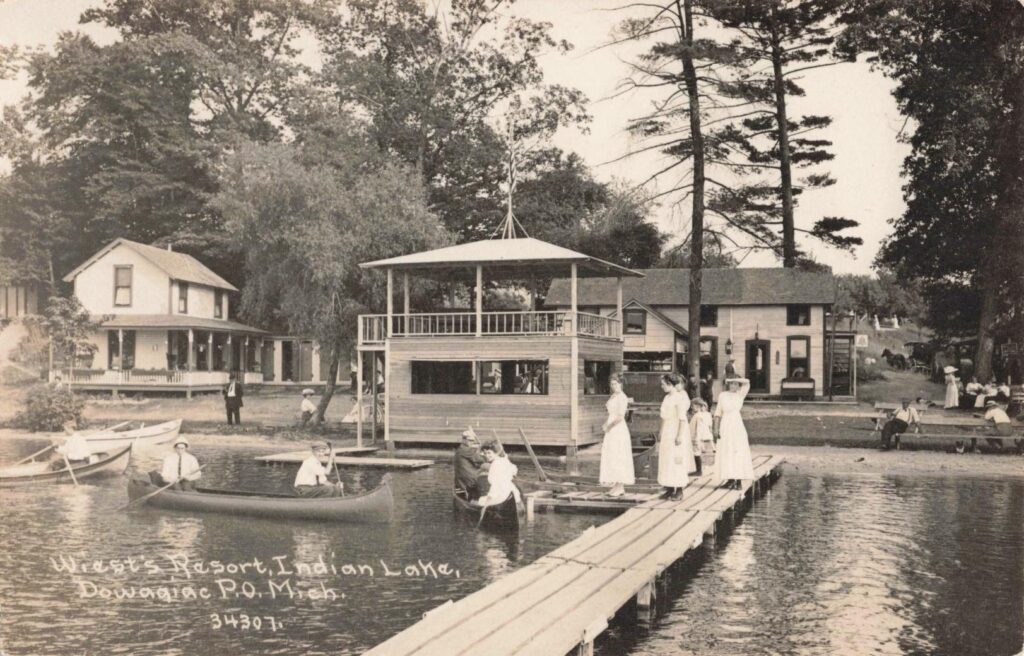
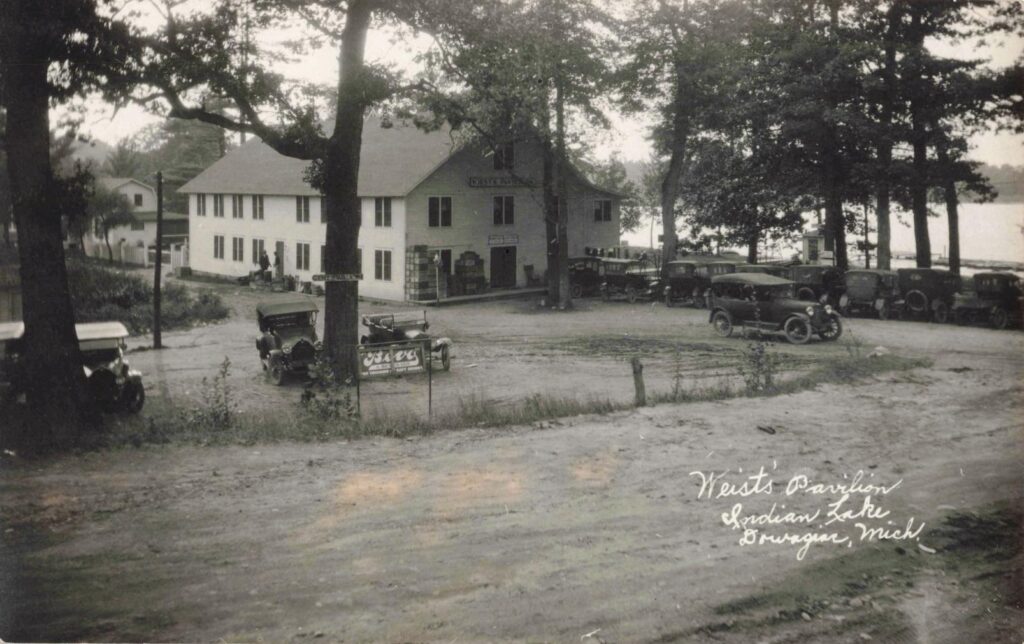
Wiest’s Resort was one of the lake’s major resort names. It offered cottages, docks, boating, bathing and a large pavilion. It was built for more than quiet weekends. It was built for groups.
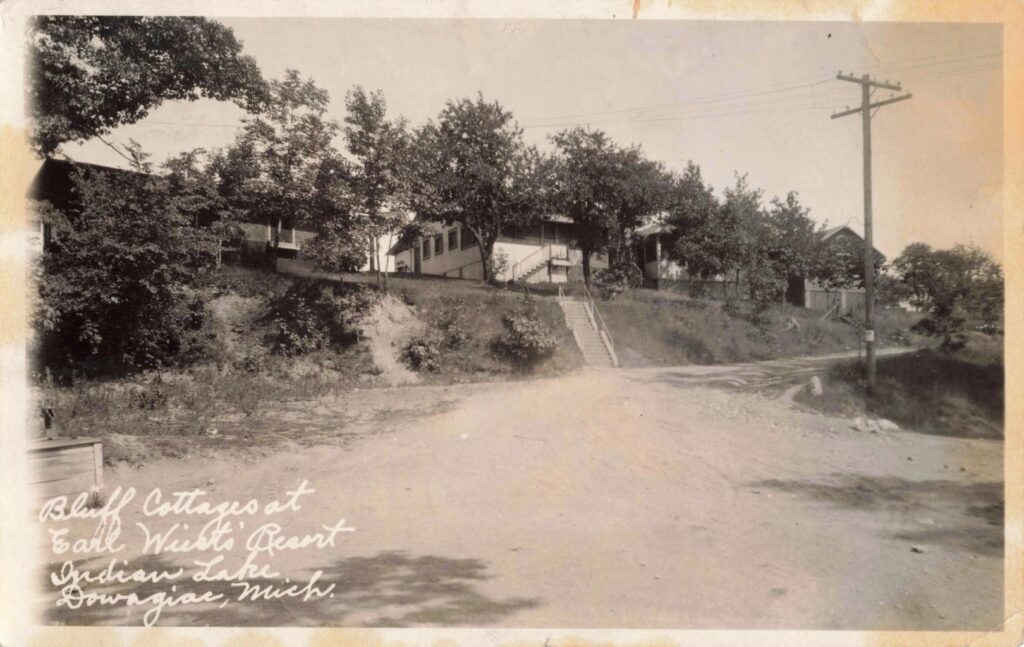
Its cottages stood on the bluff. Its pavilion offered space for gatherings. Its bathing areas drew swimmers. Earl Wiest’s Resort later appears with the Safe T. Rail Slide, a large wooden attraction built over the lake.
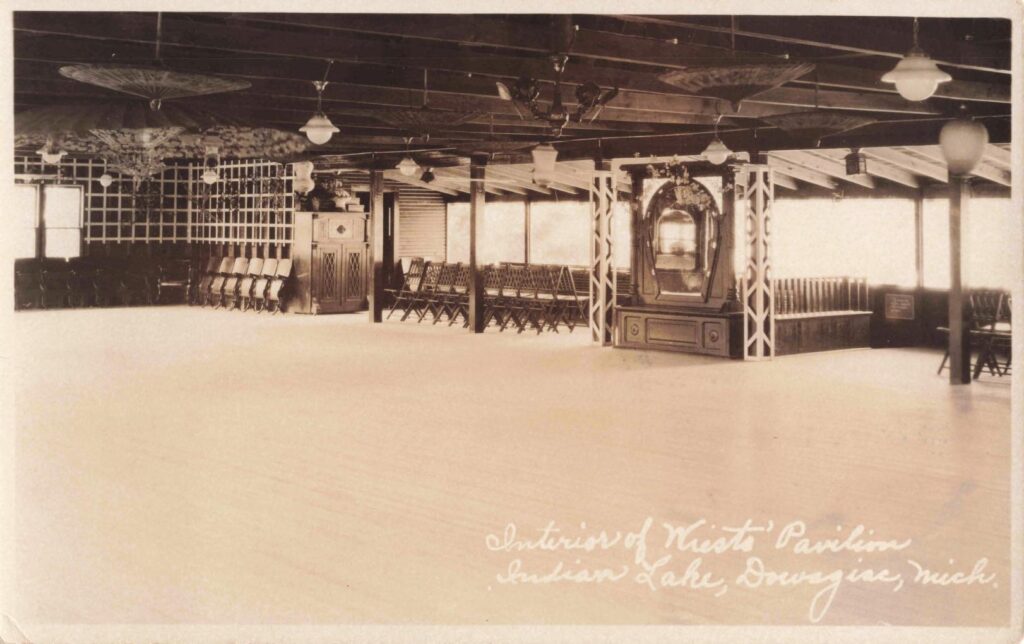
The pavilion interior shows rows of chairs, lights and open floor space. That suggests dances, meetings, programs, music or other gatherings. A good lake resort needed more than water. It needed a place for people to gather after sunset or when rain moved across the lake.
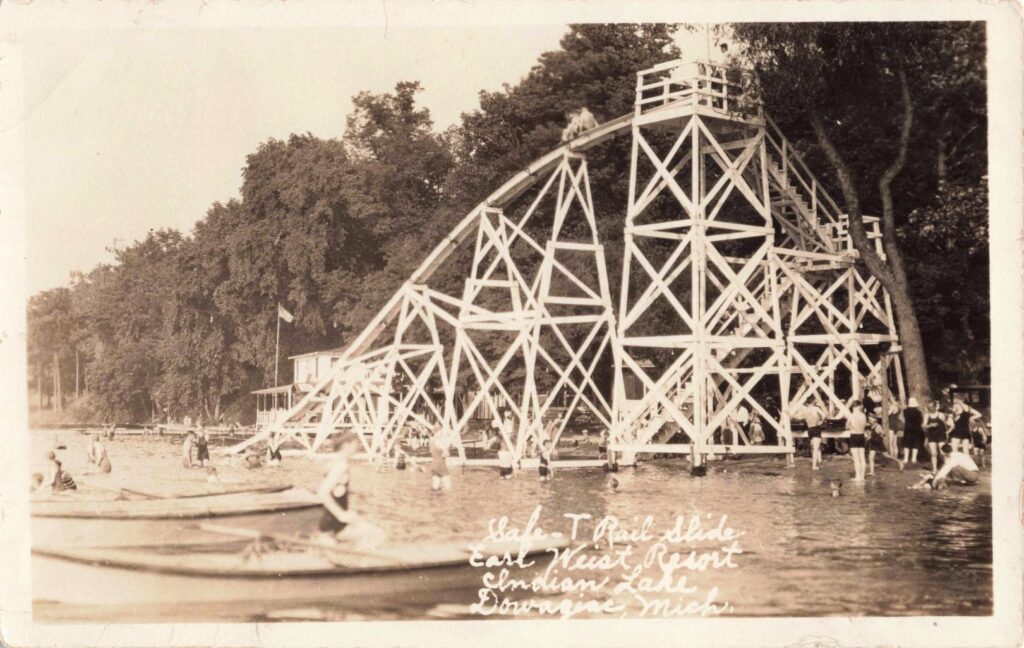
Earl Wiest’s Resort added one of the most unusual attractions in the group: the Safe T. Rail Slide. The large wooden slide stood out over the water like a small amusement park ride. It shows that Indian Lake resorts competed for attention. Families wanted fun. Children wanted a thrill. Resort operators knew they had to offer more than a room and a dock.
The Bathing Towers, Canoes And The Social Life Of Swimming
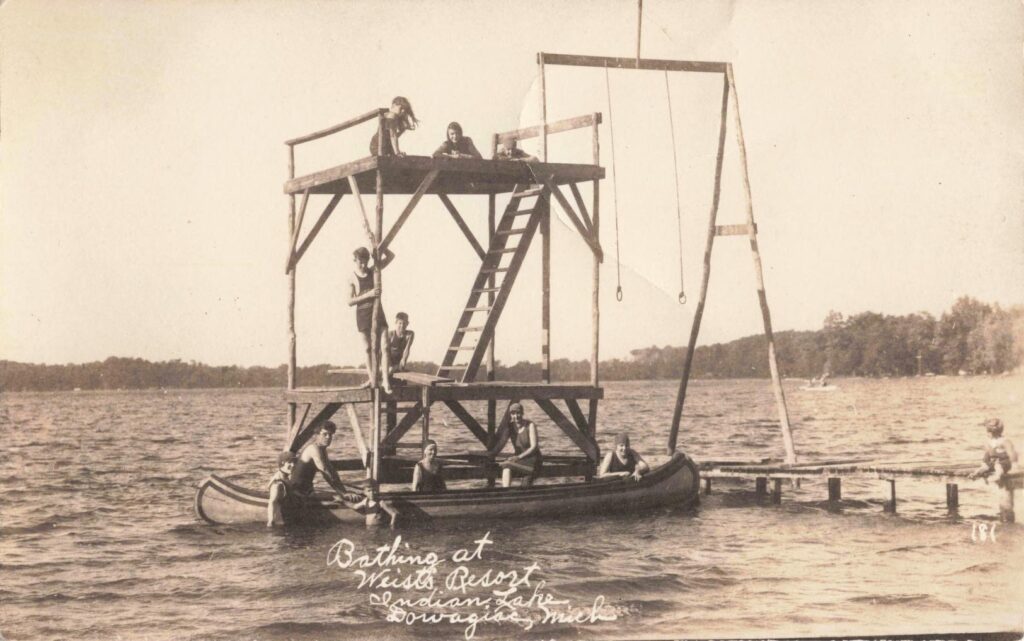
Swimming was a major part of the lake’s appeal. The bathing scenes from 1921 and 1922 show a wooden tower, canoes, swimmers and a busy shoreline. The scenes have the look of a supervised resort area. This was not an empty beach. It was a social place.
This was not casual access to a random shoreline. It was managed recreation. Platforms, towers, boats and docks shaped how people used the water. The resort made the lake feel safe, social and exciting.
Swimming also carried a different look in the early 1900s. Bathing suits were heavier. Families stayed close to the dock. Even recreation kept some formality. Men wore shirts and ties at picnics. Women crossed docks in long white dresses. The lake loosened the rules, but it did not erase them.
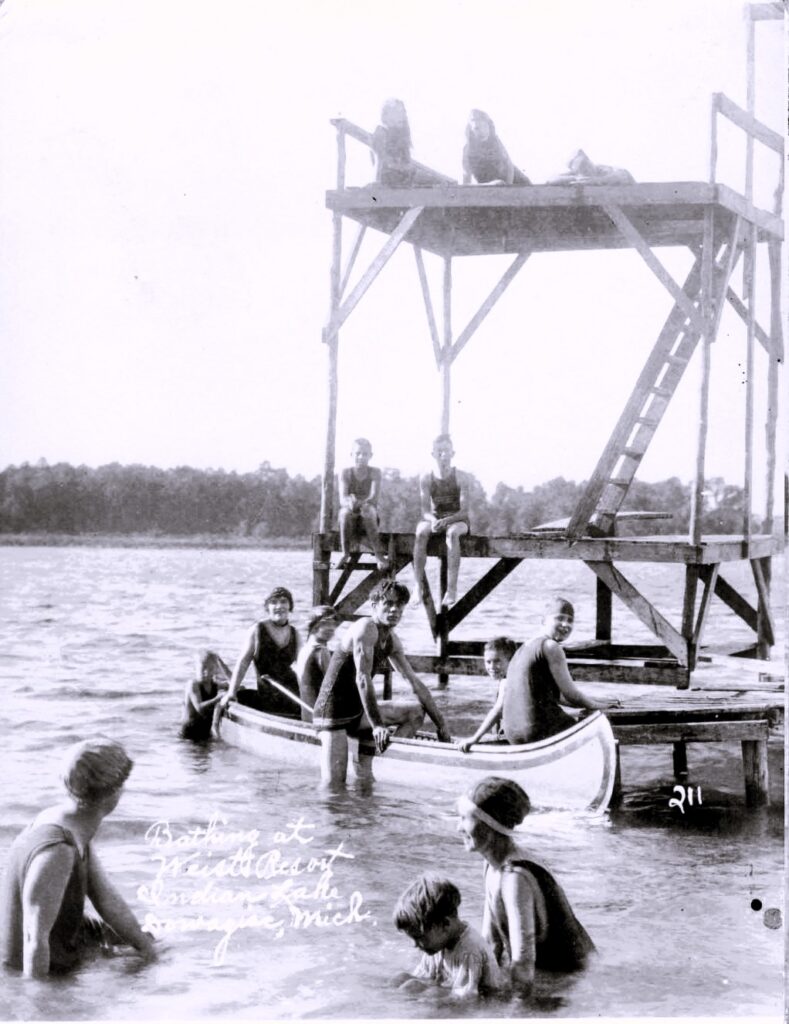
In the early 1900s, lake bathing was still formal by modern standards. People wore heavier swim clothing. Families gathered close to docks. Boats, towers, and platforms created a controlled space for play.
Hotels, Dining Rooms, and Cottage Names
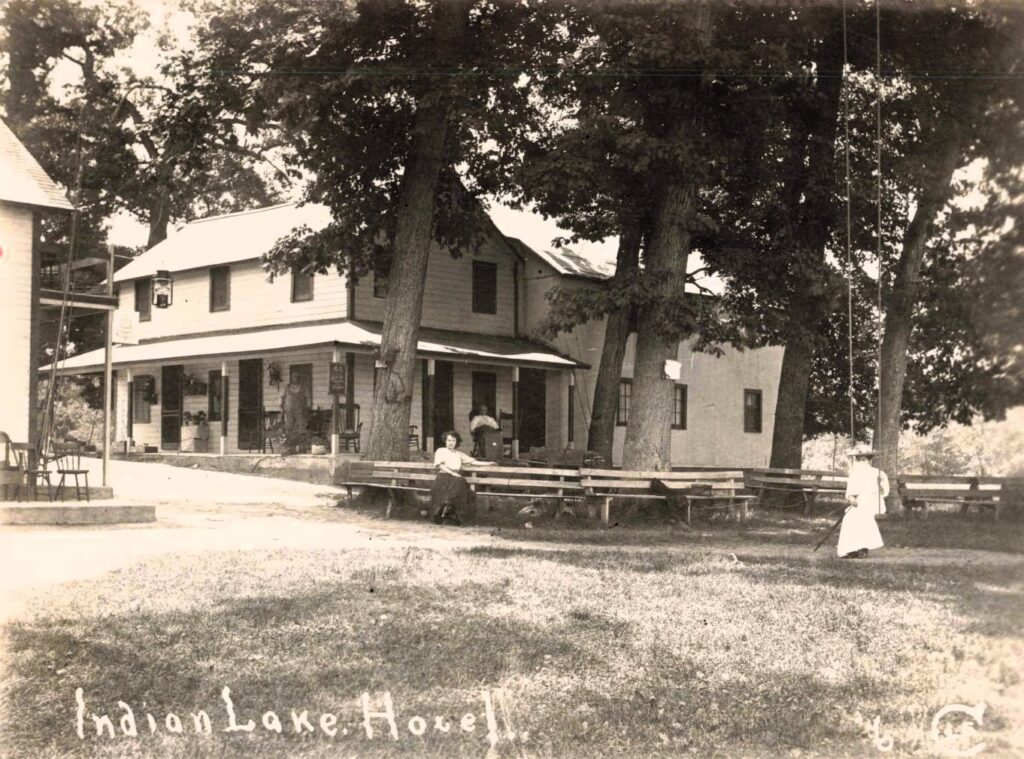
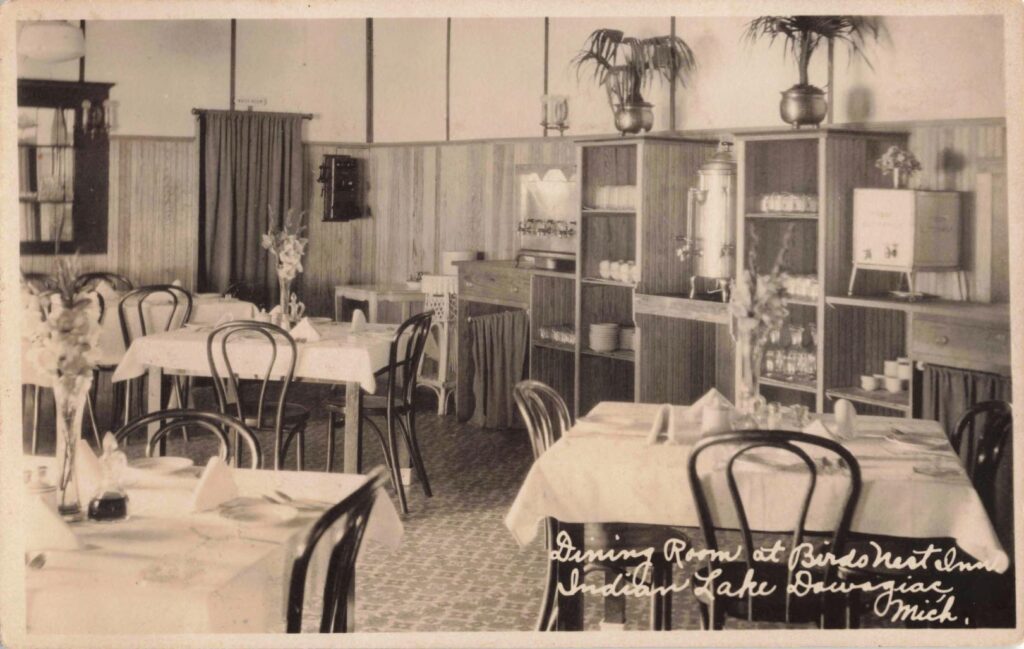
Indian Lake was also a lodging and dining community. The Indian Lake Hotel gave guests a formal place to stay. Bird’s Nest Inn offered a dining room with set tables, chairs and service ware. These were not rough camps. They were hosted vacation places.
The named cottages tell another part of the story. Pottawama and Ongwanada show how seasonal homes became personal landmarks. A cottage name could mark family pride, summer memory or a bit of resort-era branding.
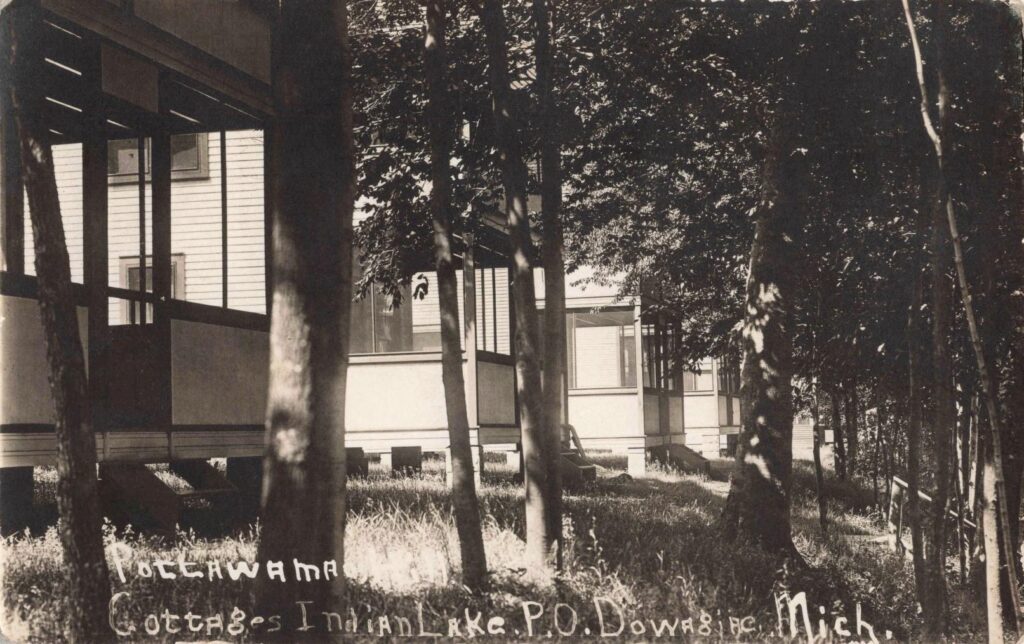
This was the cottage culture that came to define many Michigan lakes. Families returned year after year. Children measured time by swim seasons and porch evenings. Adults built friendships around docks, meals and repeat visits.
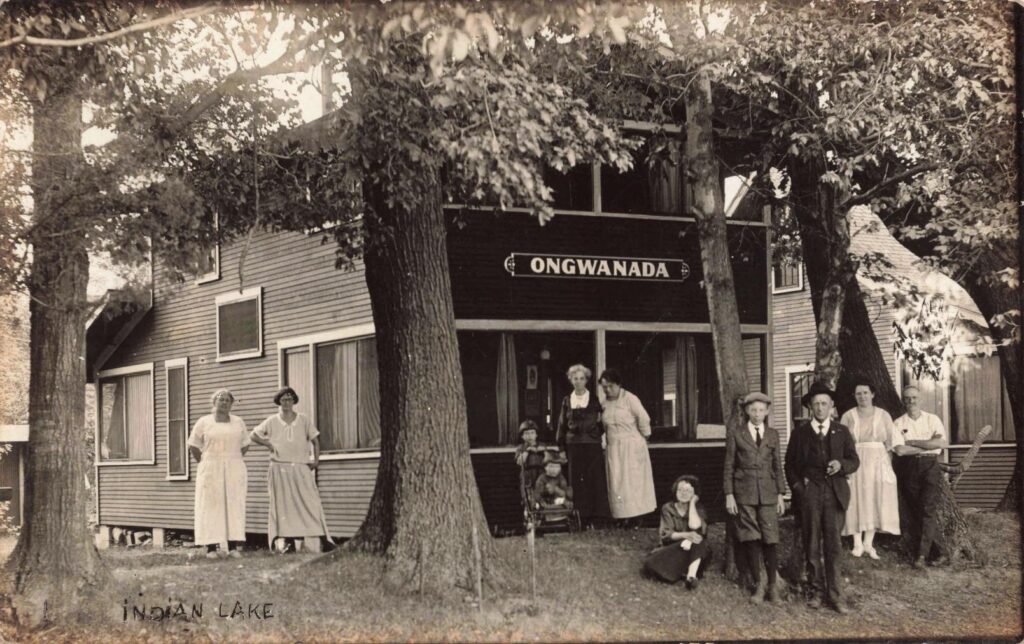
Cottages gave the lake a different feel. Pottawama and Ongwanada appear as named cottages or cottage groups. Gilbert Castle appears as a named landmark, though it should be described carefully unless property records confirm its full story.
Picnics, Business Groups And Shared Summer Time
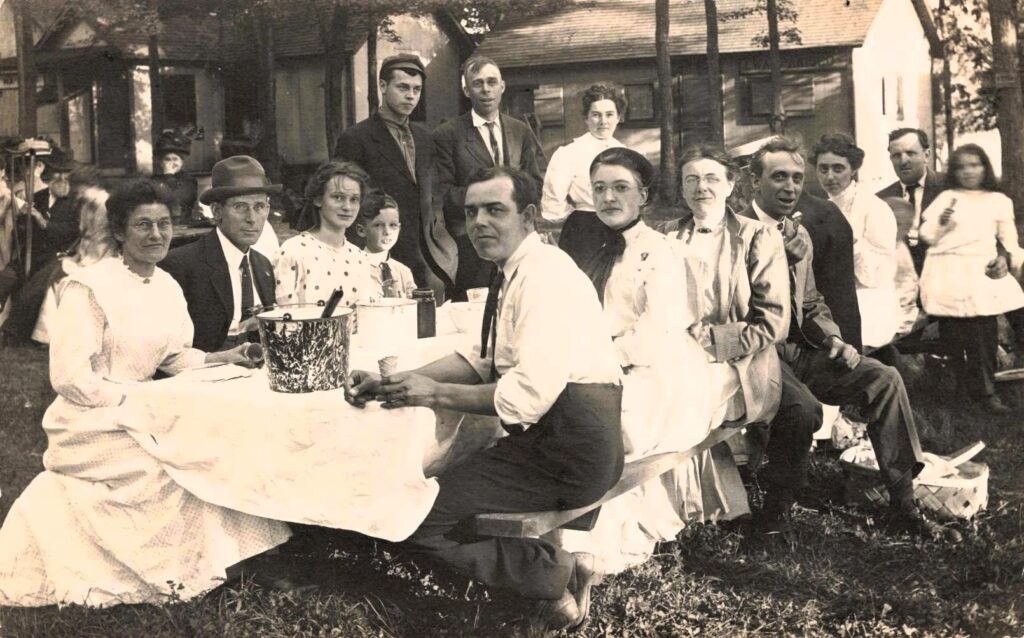
The Business Men’s Picnic from Aug. 4, 1910, is one of the most human images in the group. The table is crowded. Adults and children sit close together. It shows that Indian Lake was not only a family getaway. It was also a civic meeting ground.
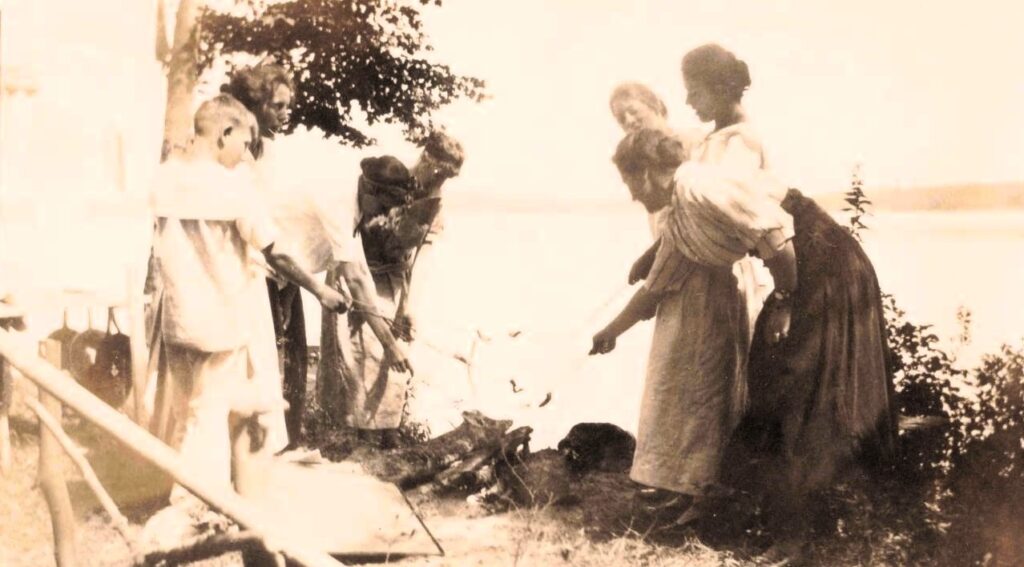
The “wienie wurst roast” from 1916 tells the same story in a smaller way. Children and adults cook outdoors near the water. It is plain, casual and memorable.
Patz’s Corner And The Automobile Age
By 1926, Patz’s Corner shows a new world taking shape. The market, road and gas pump mark the rise of automobile tourism. The lake no longer depended only on the trolley or steamer. Visitors could drive.
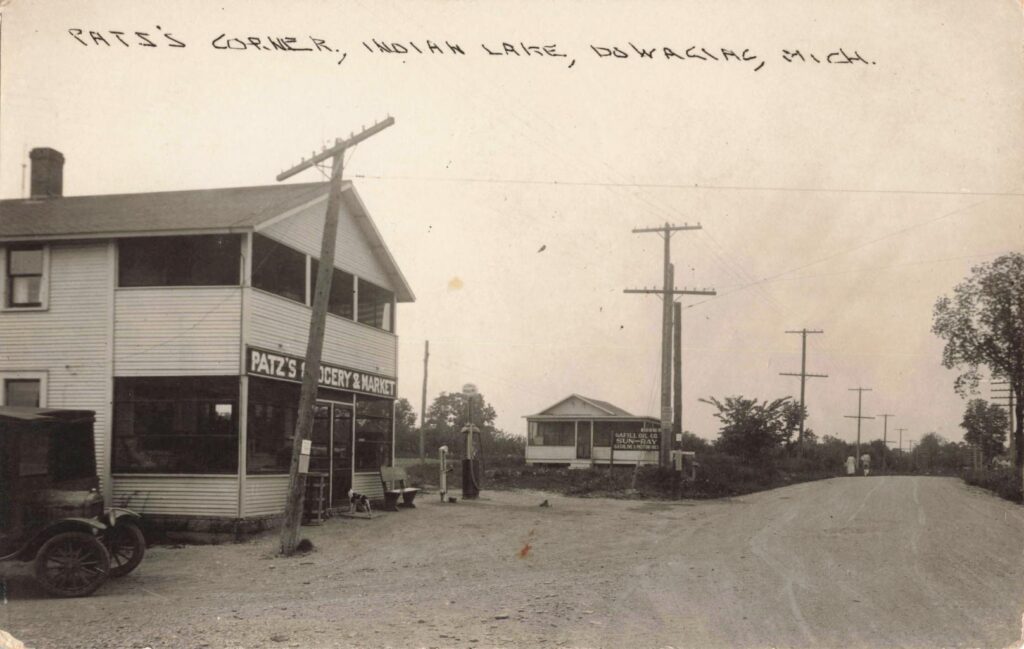
The automobile helped Indian Lake grow. It also helped end the old rail-based resort pattern. A local rail history account says the Benton Harbor-St. Joe Interurban made its last runs in August 1935, after automobiles and the Depression undercut the line.
That is a key shift in the Indian Lake history. The same drive for easy access that created the resort era also changed it.
Older Ground Beneath The Resort Story
The lake’s resort history sits within a much older regional record. The Dowagiac area is tied to Potawatomi history, and the Pokagon Band remains a major presence in southwest Michigan. The Band’s own cultural history notes the continued connection of its people to the region after the removal era.
That history should be handled with care. Early resort culture often used Native names or Native-sounding names to market places. Those names can tell us about the resort era, but they do not replace the deeper Indigenous history of the land.
Indian Lake Today And Why The Old Story Still Counts
The Indian Lake Improvement Association now describes Indian Lake as a southwest Michigan lake community with more than 350 seasonal or year-round residents. The association also notes the lake’s early sewer system as part of a long-term effort to protect water quality.
That modern detail enhances the History of Indian Beach & Indian Lake, Michigan, by showing continuity. The old resort operators built docks, pavilions, and attractions to bring people to the lake. Today’s lake community deals with water quality, recreation, boating, and shared stewardship.
The setting changed. The work changed. The attachment to the lake did not.
Indian Beach and Indian Lake are worth remembering because they show how Michigan vacation life changed in a small place in Cass County. The lake began with older Native use, then became Woolman’s Lake, then Indian Lake, then a trolley resort, then an auto-era cottage community.
That is the strongest point in Indian Lake history: a small inland lake became a public stage for one of Michigan’s great 20th-century habits — going to the lake.
Sources for the Story of the Indian Lake History
“A Dowagiac History Timeline.” Dowagiac Area History Museum.
Graham and Morton Transportation Company. “Graham and Morton Line.” Internet Archive.
“Indian Lake History.” Indian Lake Association.
“Our Culture.” Pokagon Band of Potawatomi.
“Benton Harbor, St. Joe Railway and Light Company Interurban Car at Eau Claire, Michigan, circa 1912.” Pacific Northwest Railroad Archive.
“Trace of Former Interurban in Michigan.” Local Remnants, 15 Oct. 2017.
“Benton Harbor-St. Joe Railway & Light Company (E).” MichiganRailroads.com.
Graham and Morton Transportation Company. “Graham and Morton Line.” Internet Archive.
“Indian Lake Improvement Association — Indian Lake | Dowagiac, MI.” Indian Lake Improvement Association.
“Lake History.” Indian Lake Improvement Association.
Watson, J. M. “William Bragall Gilbert.” Michigan GenWeb, Cass County Profiles, 2011.