 by
by 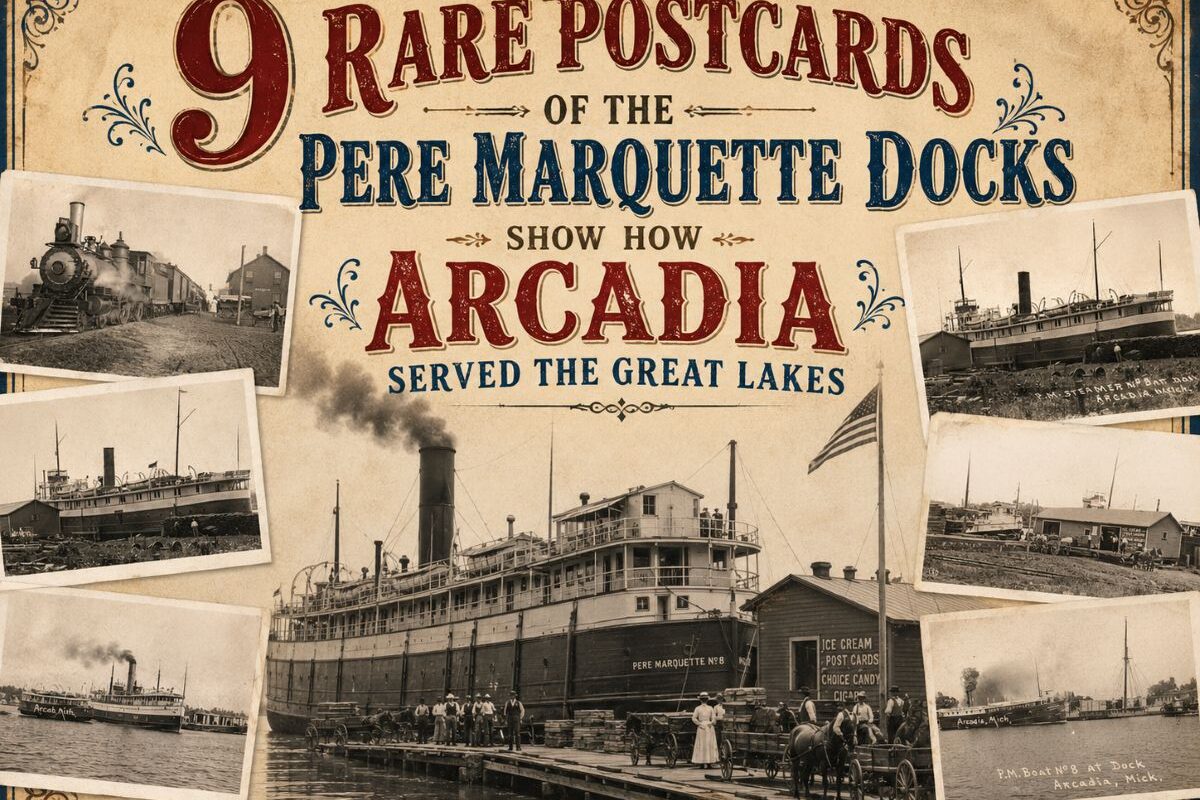
The History of The Pere Marquette Docks in Arcadia Michigan begins with lumber, water and a practical problem. Arcadia had timber. It had workers. It had a Lake Michigan location. What it needed was a reliable way to move goods in and out.
That answer came through a harbor, a railroad and a dock.
In the early 1900s, Arcadia was not just a quiet village along the Lake Michigan shore. It was a working port in Manistee County. Pere Marquette steamers called at the dock. The Arcadia & Betsey River Railway moved passengers, mail and freight inland. Wagons rolled in from nearby farms and mills. Lumber piles sat near the water. People gathered to meet boats and trains.
The dock was the place where all of it came together.
Arcadia’s rise was tied to Henry Starke, a Milwaukee businessman who bought land and helped build the early village. Local history places the town’s first major growth in the lumber era. Starke built a pier, village lots were sold, and the settlement once known as Starkeville became Arcadia.
Arcadia’s Harbor Was Built By Private Effort First

A key part of the History of The Pere Marquette Railroad Docks in Arcadia Michigan is the harbor itself.
Arcadia did not wait for Washington to create its port. A channel between Bar Lake and Lake Michigan was completed in 1893. That changed Bar Lake into a usable harbor for lake vessels. Before then, the older Lake Michigan pier was exposed to rough weather and shifting sand. After the channel opened, steamers and other vessels could enter protected water.
The U.S. Army Corps of Engineers later described Arcadia Harbor as a project that maintained a harbor built by private enterprise. The federal project provided a channel between Lake Michigan and Bar Lake about 1,100 feet long, 103 to 200 feet wide, with parallel piers and revetments.
That is the counterintuitive part of Arcadia’s story. A small village created the foundation of a serious harbor before federal maintenance became part of the record.
The Railroad That Fed the Dock
The dock needed the railroad as much as the railroad needed the dock.
The Arcadia & Betsey River Railway began as a lumber line. It carried timber and supplies, then grew into a standard-gauge connection. By 1895, it reached Henry, where it connected with the Chicago & West Michigan Railway. By 1896, the line reached Copemish and added passenger service.
In 1900, the Pere Marquette Docks Show 7 Powerful Ways Arcadia Reached The Great Lakes became part of the Pere Marquette Railroad system. That linked Arcadia’s local route to a larger Michigan network.
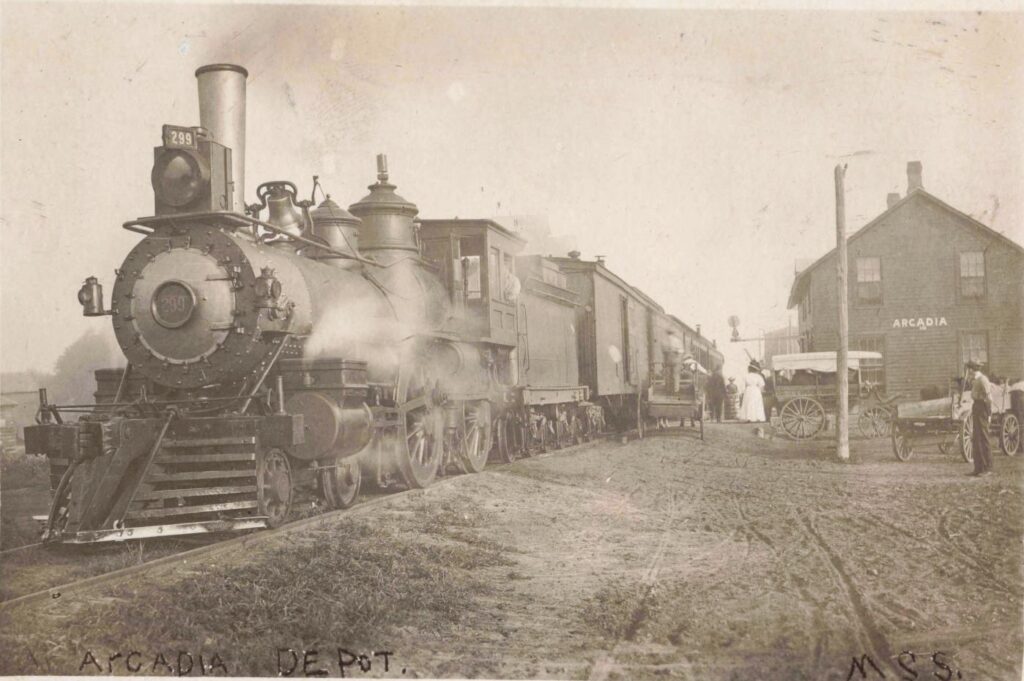
The depot image shows why this mattered. A locomotive sits near the Arcadia depot, with wagons and town traffic nearby. The scene is more than a rail view. It shows the land side of a lake trade system. Freight could come off a steamer and move inland. Goods from farms, mills and factories could come down to the dock.
The Pere Marquette Dock as a Town Gathering Place
The dock was not only an industrial site. It was also a public stage.
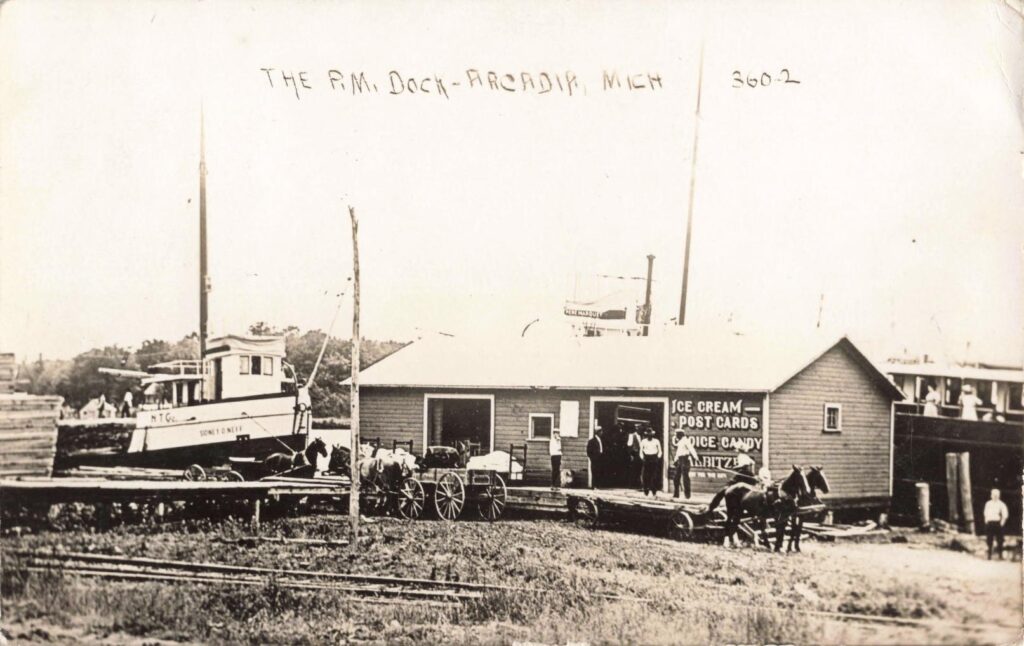
One image shows the Pere Marquette dock with a small building advertising ice cream, postcards and candy. That sign changes how we read the scene. Arcadia’s dock handled freight, but it also served people. Visitors bought postcards. Passengers waited. Local residents came down to the water when boats arrived.
Arcadia Area History identifies the Pere Marquette dock along the northeast shore of Bar Lake, near the present marina, and notes a postcard view dated Oct. 22, 1913.
Steamers No. 6 and No. 8
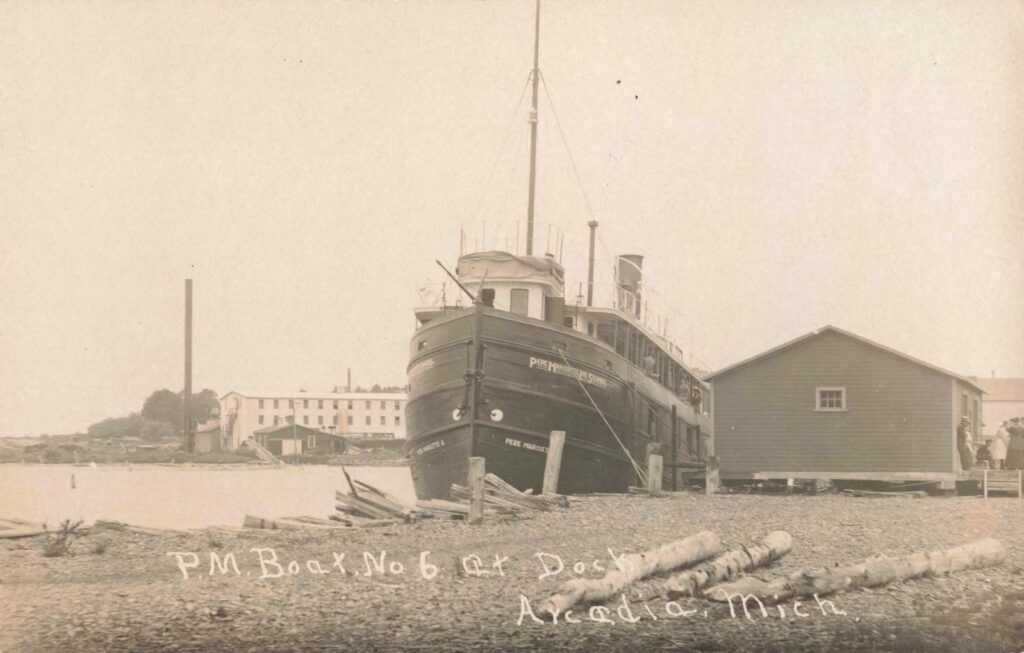
The Pere Marquette steamers gave the dock its most dramatic scenes.
Arcadia Area History notes that Pere Marquette No. 6 replaced the John D. Dewar in passenger and freight service to Arcadia. The same source lists several Pere Marquette Line steamers that stopped regularly in Arcadia, including Pere Marquette No. 8.
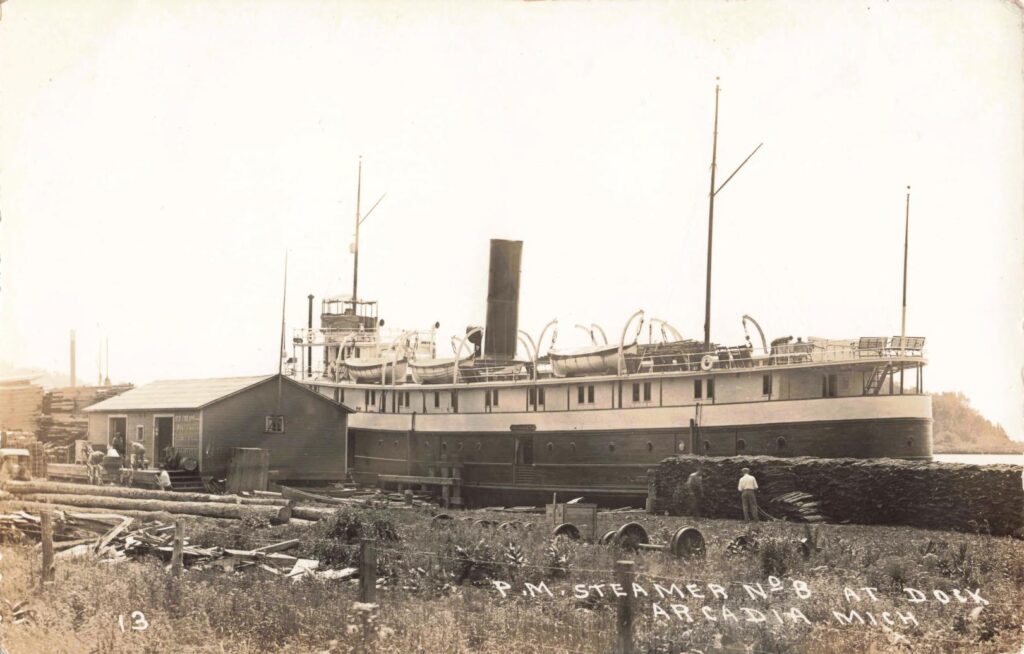
These vessels were not the famous rail-car ferries associated with Ludington. Arcadia’s service was more local and hands-on. Freight was handled at the dock. Passengers walked aboard. Goods moved through a transfer system that depended on people, schedules and weather.
That makes the History of The Pere Marquette Railroad Docks in Arcadia Michigan a smaller but more personal chapter in Great Lakes transportation.
Lumber Built Arcadia, But Furniture Changed Its Future
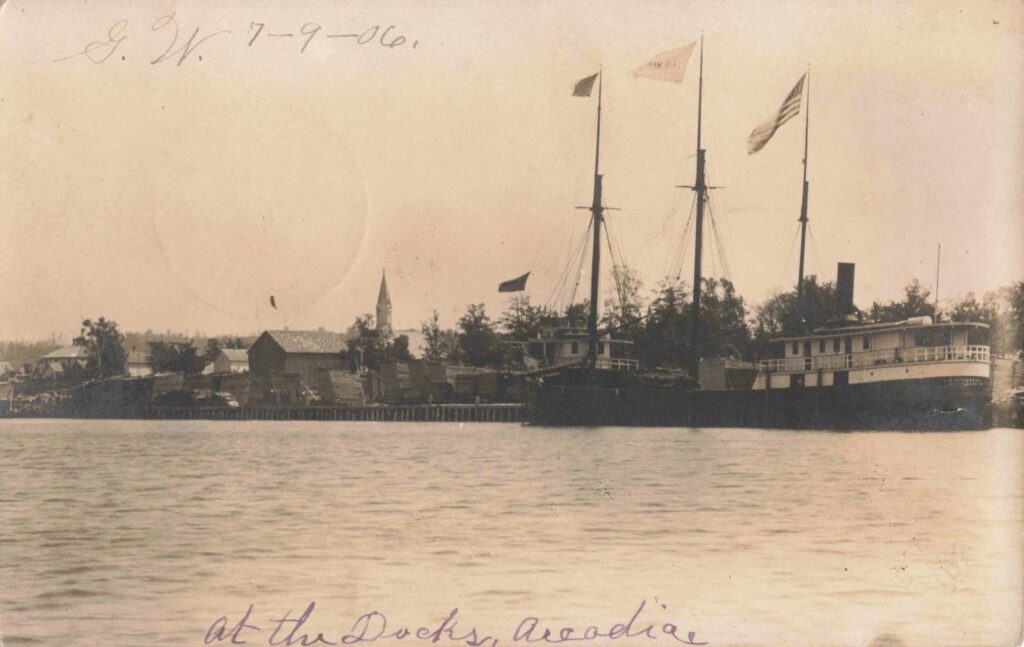
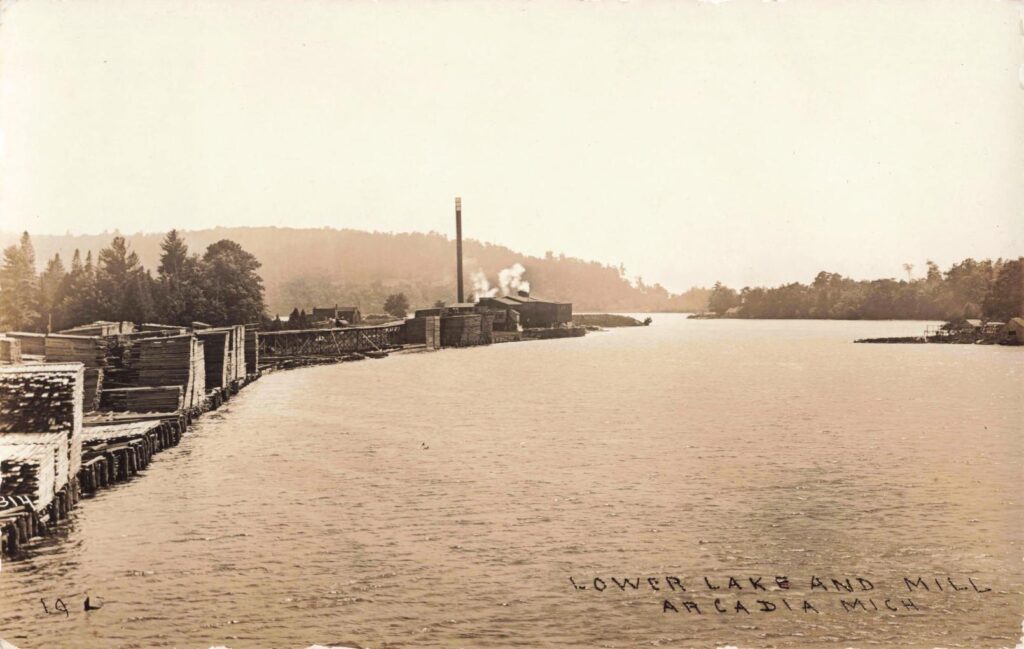
Arcadia’s early economy relied on the Starke Land & Lumber Company sawmill. The steamer Arcadia itself was tied to that trade. Arcadia Area History says the ship carried lumber from the Starke sawmill to Chicago, Wisconsin and other Lake Michigan ports. The vessel was purchased in 1888, and its timbers and planking were cut locally before being shipped to Milwaukee for construction.
Then came 1906.
The Starke sawmill burned. That could have ended Arcadia’s industrial strength. Instead, Charles Starke helped replace the sawmill with the Arcadia Furniture Company. Local accounts say the firm produced bedroom furniture and sold into larger markets.
This is the unique turn in Arcadia’s history. The town did not simply ship lumber away until the trees were gone. It shifted toward finished goods. The dock and railroad helped make that possible.
The Harbor Was Always Fighting Sand
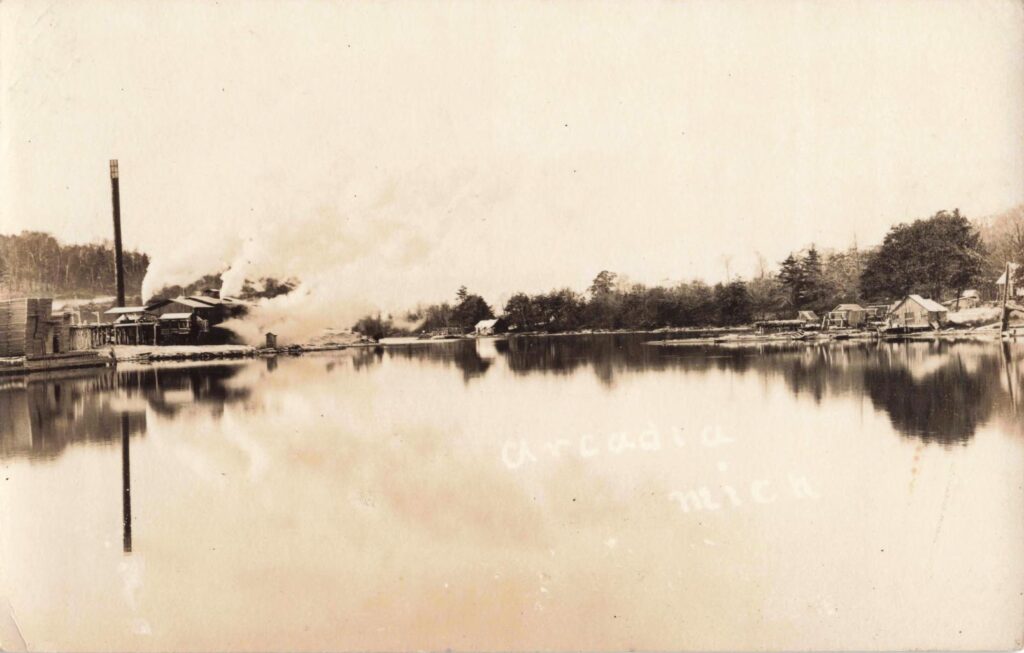
Arcadia’s harbor solved one problem and created another. The channel gave vessels access to Bar Lake, but Lake Michigan sand never stopped moving.
Private owners maintained the harbor in its early years. Federal action began in the early 1900s. The Corps project was authorized by the Rivers and Harbors Act of March 3, 1905.
Keeping the channel open was vital. If the channel filled, the dock lost its purpose. Freight could not move the same way. Steamer service became uncertain. A working harbor depended on constant attention.
That is why Arcadia’s story is not just about boats and trains. It is also about maintenance, cost and geography.
A Small Town in a Big Trade System
The History of The Pere Marquette Railroad Docks in Arcadia Michigan shows how a small town could reach far outside its own limits.
The railroad connected Arcadia inland. The harbor connected it to Lake Michigan. Steamers connected it to other ports. The factory connected it to retail markets. The depot and dock were the local points where those systems became real.
The most human detail may be the dockside postcard business. It shows that Arcadia was already becoming a place people wanted to remember. The dock was doing two jobs at once. It was moving goods, and it was shaping memory.
Why the Pere Marquette Docks Still Count
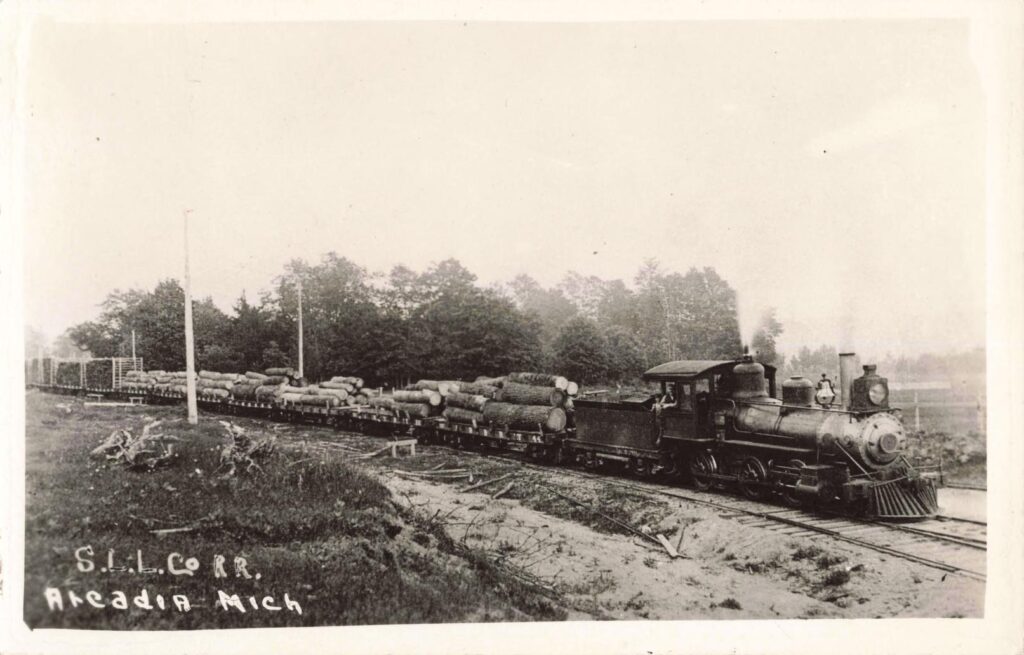
By the late 1930s, the old rail era at Arcadia was ending. The Arcadia & Betsey River Railway was abandoned in the mid-1930s, and local master-plan history places the station’s life from about 1890 until 1937.
Highways, trucks and automobiles changed the way people and goods moved. The harbor remained, but its industrial role changed.
Still, the old dock scenes tell an important Michigan story. They show how lumber towns adapted. They show how water and rail worked together. They show how a village could be small in population but large in reach.
The History of The Pere Marquette Railroad Docks in Arcadia Michigan is not just a transportation story. It is a story about reinvention after fire, private investment before federal support, and a dock that turned a Lake Michigan village into a working link in Great Lakes commerce.
Works Cited in the History of the Pere Marquette Railroad Docks in Arcadia Michigan
“Arcadia Harbor, Michigan.” U.S. Army Corps of Engineers, Great Lakes and Ohio River Division, 10 Jan. 2024. Accessed 21 June 2026.
“Arcadia Historical Museum.” Township of Arcadia, Manistee County. Accessed 21 June 2026.
“Arcadia.” Lakes to Land Regional Initiative. Accessed 21 June 2026.
“Enjoy a Brief History of the Village of Arcadia.” Arcadia Bluffs Golf Club, 31 July 2019. Accessed 21 June 2026.
“Lumbering in the Arcadia Area.” Arcadia Area History. Accessed 21 June 2026.
“Shipping in Early Arcadia.” Arcadia Area History. Accessed 21 June 2026.
“The Steamers.” Arcadia Area History. Accessed 21 June 2026.