 by
by 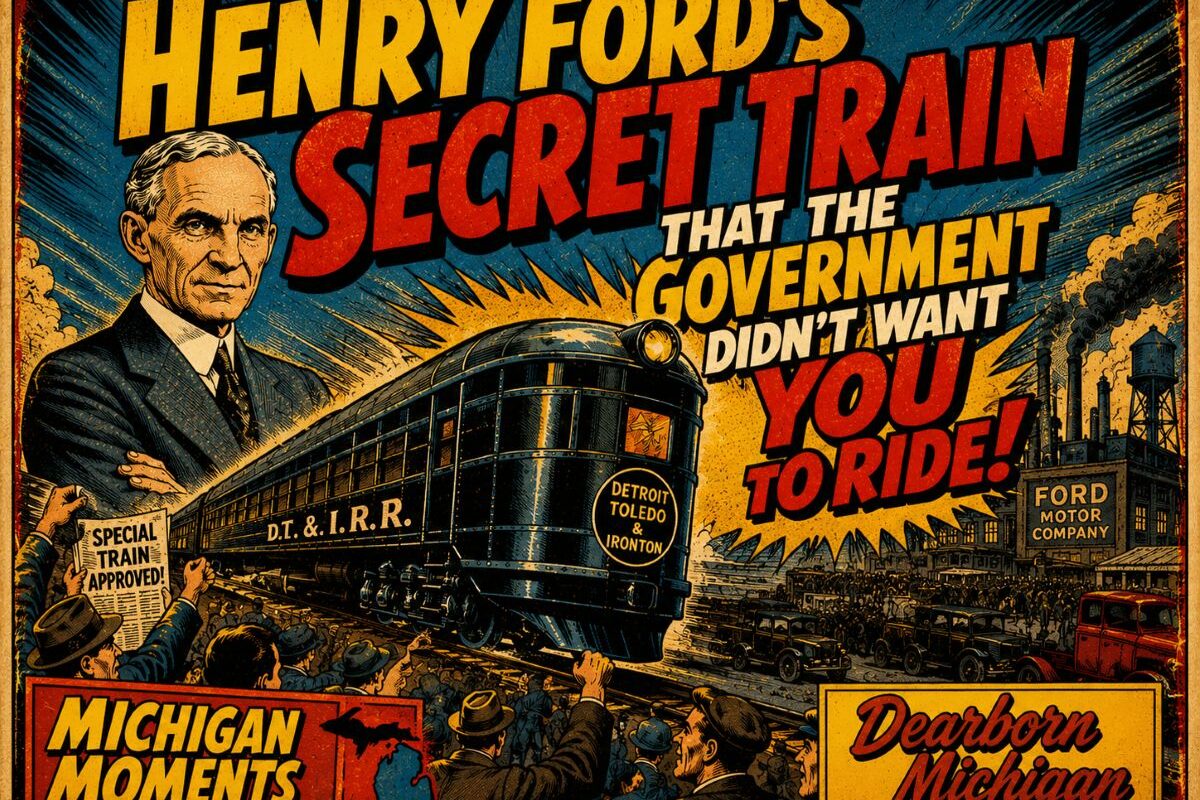
Watch this Michigan Moments short about Henry Ford’s Gas-Electric Train. The 30-second video looks at Gas-Electric Car No. 35 of the Detroit, Toledo & Ironton Railroad during a 1926 run through Tecumseh, Michigan.
About This Video
In the autumn of 1926, Tecumseh, Michigan, became the setting for one of Henry Ford’s rail experiments. The video features Gas-Electric Car No. 35 of the Detroit, Toledo & Ironton Railroad, also known as the D.T.&I. The car appeared during its first regular run on Monday, Oct. 25, 1926.
The gas-electric railcar marked a shift away from steam power on some passenger routes. Instead of relying on a traditional steam locomotive, the self-propelled car offered a different model for local rail service. For smaller towns, that mattered. Railroads connected residents, workers and businesses long before highway travel became dominant.
This short Michigan Moments video uses a historic image to highlight a brief but notable moment in Michigan transportation history. It connects Henry Ford’s industrial reach with Tecumseh and the D.T.&I., a railroad that played a role in Ford’s broader transportation plans.
Video Transcript
A Michigan Moment snapshot, taken in Tecumseh, Michigan, in 1926. This records the first regular run of Henry Ford’s gas-electric railcar on the Detroit, Toledo & Ironton Railroad.
The innovative train replaced a steam locomotive, signaling Ford’s interest in efficiency and modernization beyond automobiles. Ford purchased the rail line in 1920, linking Detroit’s factories with rural depots.
Local spectators gathered to witness this milestone in rail rolling stock.
Key Moments
- 0:00 — A Michigan Moment snapshot
- 0:02 — Tecumseh, Michigan, in 1926
- 0:05 — First regular run of Ford’s gas-electric railcar
- 0:09 — Detroit, Toledo & Ironton Railroad
- 0:12 — Steam locomotive replaced
- 0:18 — Ford’s broader transportation plans
- 0:25 — Local spectators gather