 by
by 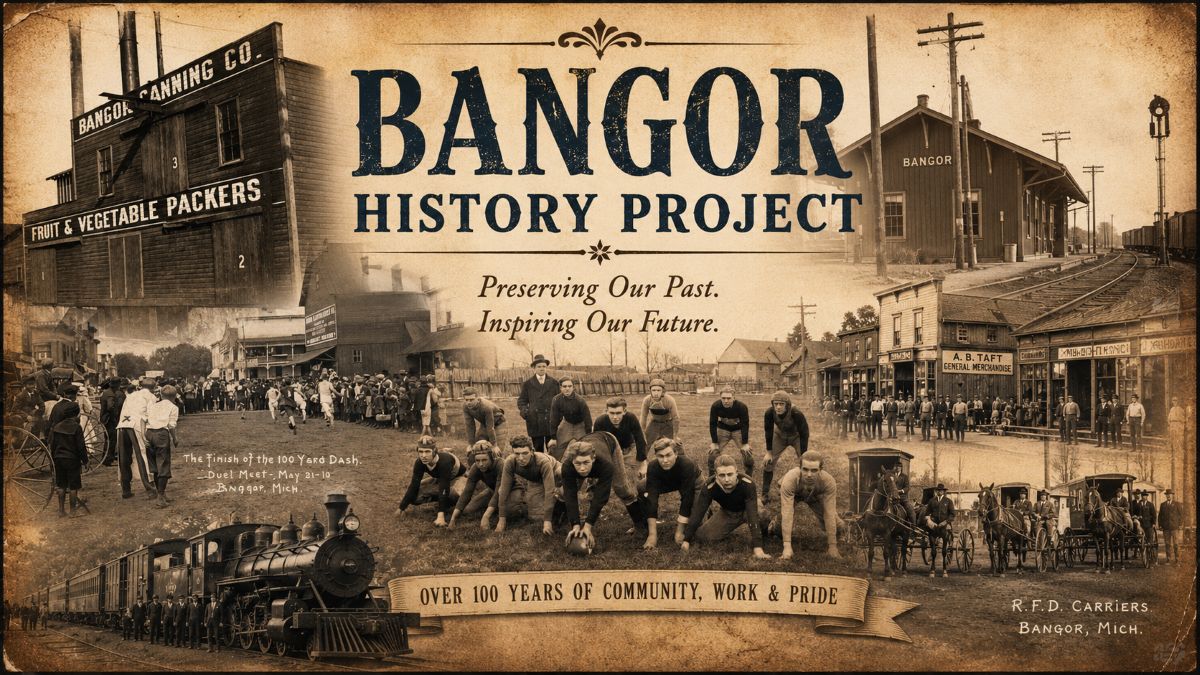
BANGOR, Mich. — A local history project in Bangor is working to turn old photographs, family records and community memory into a public record of how the Van Buren County city changed over more than a century.
The Bangor Historical Society describes the Bangor history project as an organized project to document local life, business and events, with a focus on how Bangor has “looked and lived” for more than 100 years. The project is tied to the society’s broader mission to preserve the history of Bangor, Michigan.
It is the type of work that often starts with boxes in closets, photo albums in spare rooms and courthouse records that few people have time to read. Its value depends on details: names, dates, street corners, storefronts, school groups, parade routes and the people who can still identify them.
The Bangor Historical Society and Museum is located at 229 W. Monroe St. in Bangor. The South Haven Area Chamber of Commerce lists the museum’s purpose as preserving Bangor’s history and says it is open Fridays and Saturdays from 9 a.m. to 3 p.m.
The museum’s collection reflects the city’s broad local record. Visit South Haven says the site includes Bangor memorabilia, model trains, Native American artifacts, and the Edwin Foster Trophy Collection, a taxidermy display of exotic animals.
The Dynamic History of Bangor Michigan
The need for careful recordkeeping is clear from Bangor’s own start. The city’s official history says present-day Bangor began as timberland and waterways. Charles U. Cross came to the area in 1835 with Jay R. Monroe to inspect land Cross’ uncle had acquired from the federal government. By 1846, several families were in the area, and Cross helped build the first water-powered sawmill on the Black River.
Bangor was not always Bangor. The area was part of South Haven Township until October 1853, when it became its own township named Marion. Three days later, the name was changed to Bangor, most likely at the suggestion of a supervisor originally from Maine, according to the city account.
Local growth accelerated after Joseph H. Nyman arrived in 1856. Nyman purchased the Cross sawmill, improved the earthen dam that created the present-day millpond, and helped make water power a foundation for early industry. A cotton mill and grist mill followed. Those operations, along with another mill west of town built by John and Christian Funk, became some of Bangor’s first businesses.
Retail business followed the settlers. M.P. Watson opened a business in 1852 near what are now Monroe and Railroad streets. A.B. Taft opened a general store in 1864, and James and Elias Ferguson opened a north-side store in 1866. Silas DeLong also opened a store during that period.
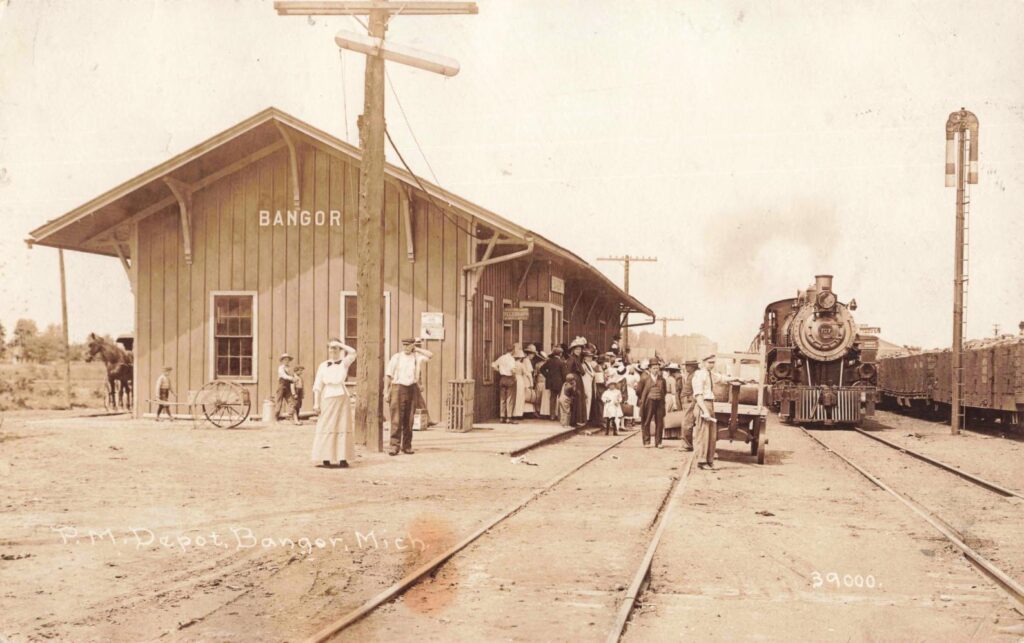
The railroad changed the town’s reach. The Chicago and Michigan Lakeshore Railroad laid tracks through Bangor in 1870, linking local businesses and farms to outside markets. The city account says railcars carried pig iron, lumber, brick, iron ore, wool, grain, livestock and farm products in and out of town.
The railroad also brought the Bangor Furnace Company in 1872. The company needed hardwood for charcoal used in smelting iron ore into pig iron. It employed 150 men in its early years and more than 400 at its peak, with 125 teams of horses and a monthly payroll exceeding $6,000, according to the city’s history.
The furnace cleared large areas of timber, then disappeared as an employer. When it went out of business in the late 1880s, Bangor lost more than 400 jobs. But the cleared land supported farming, especially apple production, and allowed the community to shift from industrial work to agriculture.
Pictures Tell the Story For the Bangor History Project
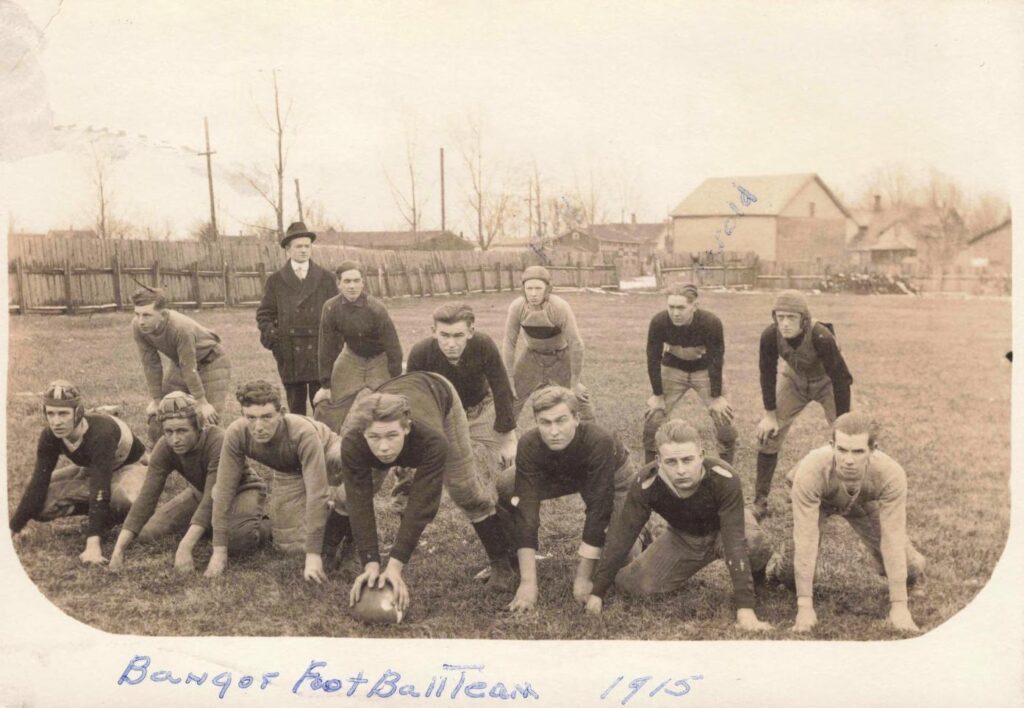
From the mid-1860s to about 1880, Bangor grew from fewer than 100 settlers to more than 1,500 residents. That growth left a paper trail and a photographic record now at risk whenever family collections are thrown away, mislabeled, or split apart.
The history project gives residents a practical way to help protect that record. Its success will depend on whether people bring forward photographs, documents, and stories while they can still be checked against names, places, and dates.
For a city built first on timber, water power, rail shipping, industry, and apples, the work is less about nostalgia than evidence. Bangor’s past is not only in landmark buildings or formal records. It is also in everyday scenes: a storefront on Monroe Street, a millpond view, a school class, a farm wagon, a parade or a family standing outside a house that no longer exists.
That is the record the Bangor History Project is trying to keep from fading.