 by
by 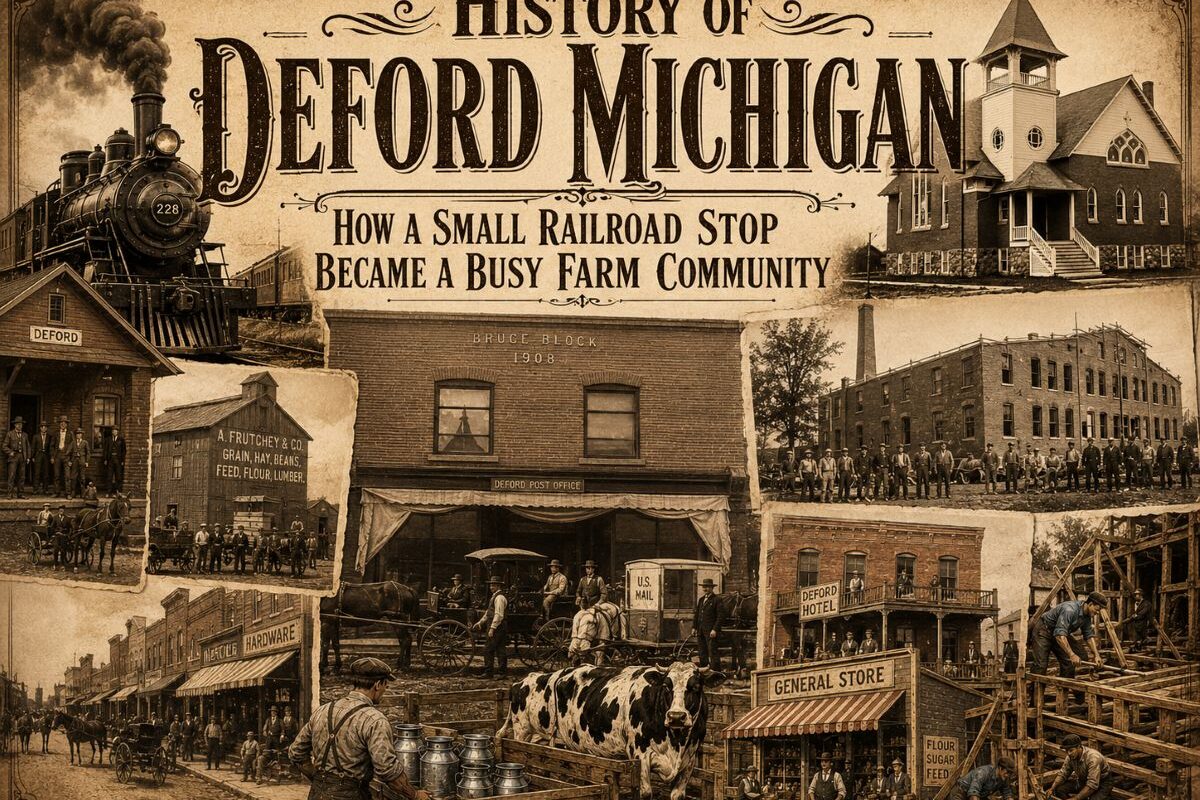
Take a trip back in time to Deford, Michigan between 1900 and 1920—where steam engines met navy bean harvests, and the post office was the pulse of the town. This short film features rare photos of the history of Deford Michigan with its main street, schoolhouse, dairy factory, and train depot. Part of our Michigan Moments series, this episode brings you to the heart of a rural Thumb town during its most active years.
History of Deford Michigan Began at Bruce Station
Deford did not start as a large village that later added a railroad. It started because the railroad came first. In 1883, the rail line reached this part of Novesta Township, and the station was first called Bruce after local landowner Elmer Bruce. Arthur Newton laid out the community in 1884, named it Deford, and the plat was filed on July 10, 1885. A late nineteenth-century timetable on the same line places Deford among the Thumb stops between Wilmot and Cass City, which shows how closely the town’s identity was tied to the rails from the start.
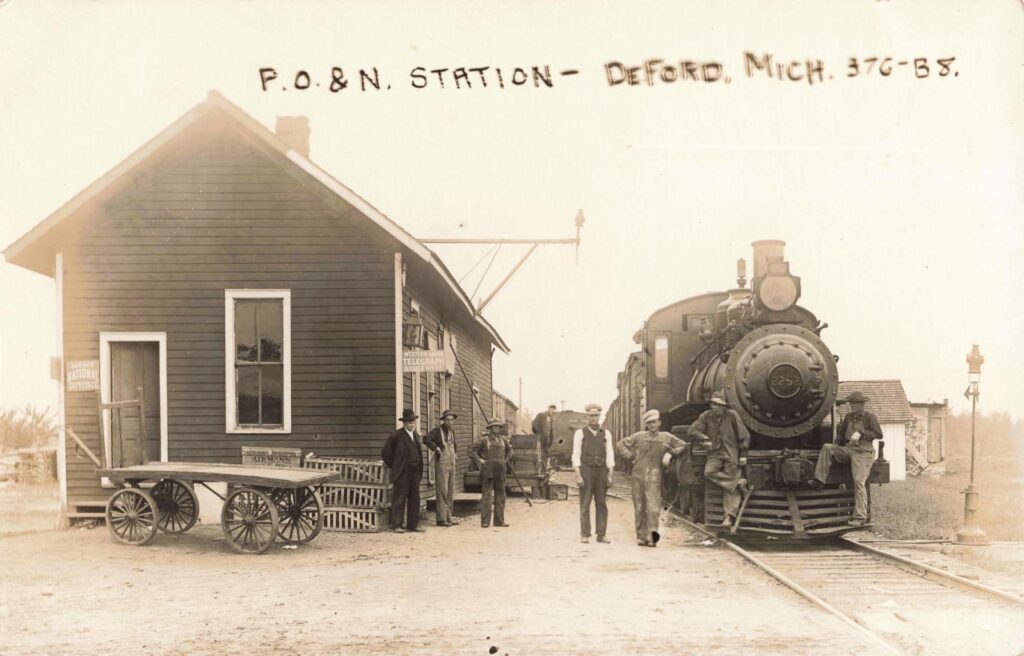
When the Pontiac, Oxford & Northern Railroad—later operated by the Grand Trunk system—reached the area in 1883, it transformed a stretch of timber and farmland into a shipping point. The station was originally named Bruce after local landowner Elmer Bruce. Just a year later, Arthur Newton laid out a village and renamed it Deford, honoring a friend whose surname was Deford. A post office opened in 1884, and the village plat was officially recorded in 1885.
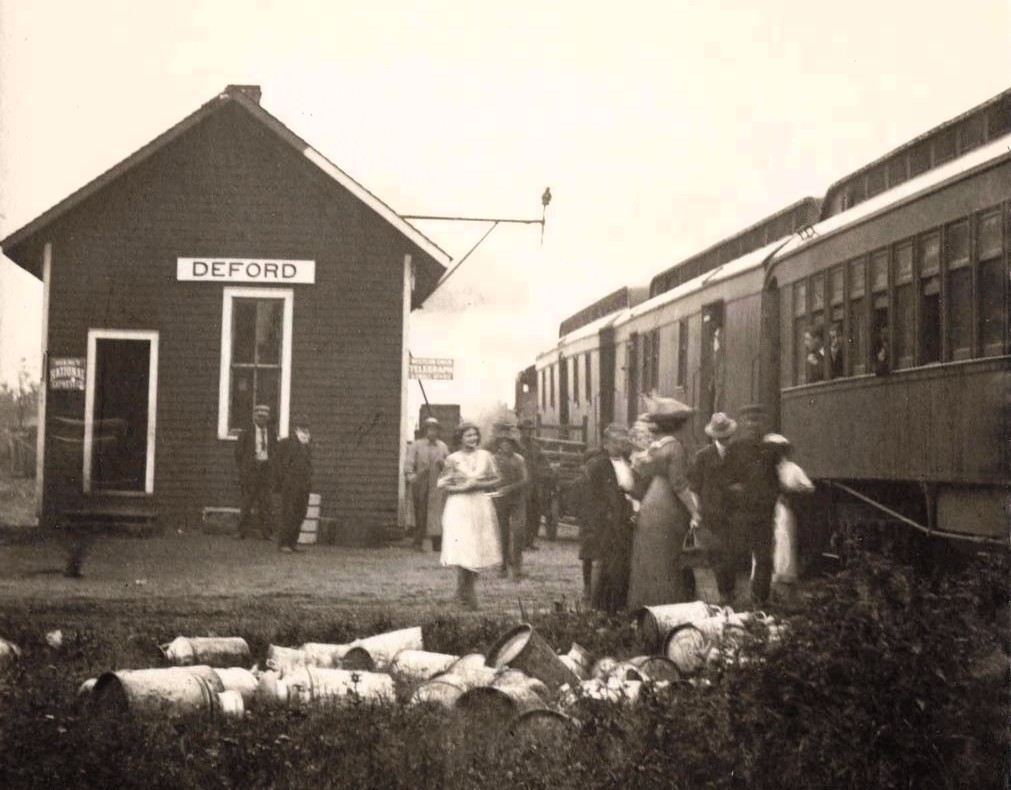
Like dozens of Michigan railroad communities, Deford owed its existence to transportation. Farmers could finally move grain, livestock, lumber, and dairy products to larger markets with far greater speed than wagon roads allowed.
By the early 1900s, Deford had become the commercial center for surrounding farms in Novesta Township.
Main Street Was the Town’s Business District
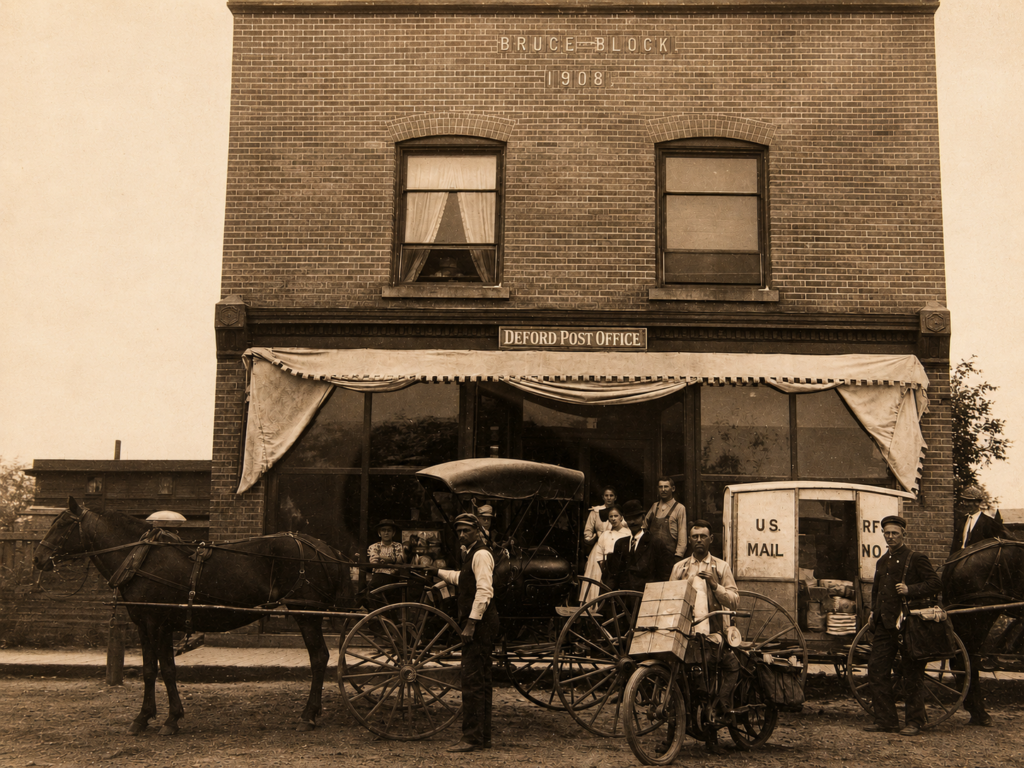
By the early 1900s, Deford had built a compact business district around Bruce Street and the depot. The photos of Main Street and Market Street show unpaved roads, hitching areas, storefronts, wagons, and people standing in doorways or on boardwalks. The streets were not polished, but they were active. A 1914 Chronicle item described Deford as a place “well laid out,” with many sidewalks and a centrally located post office. That brief notice is easy to believe once the photos are set beside it.
The Bruce Block stood near the center of that business district. The post office photo clearly shows “BRUCE BLOCK 1908” on the brick front and “DEFORD POST OFFICE” above the storefront. A 1908 Chronicle note also placed local activity in front of A. L. Bruce’s Block and the Deford Bank, while 1910 ads promoted the “Deford Bank of A. Frutchey & Sons.” Together, those records show that the Bruce Block was not a side building. It was part of the business core, and the post office inside it served as one of the village’s busiest public rooms.
A walk down Main Street around 1910 revealed a community that had grown steadily for nearly thirty years.
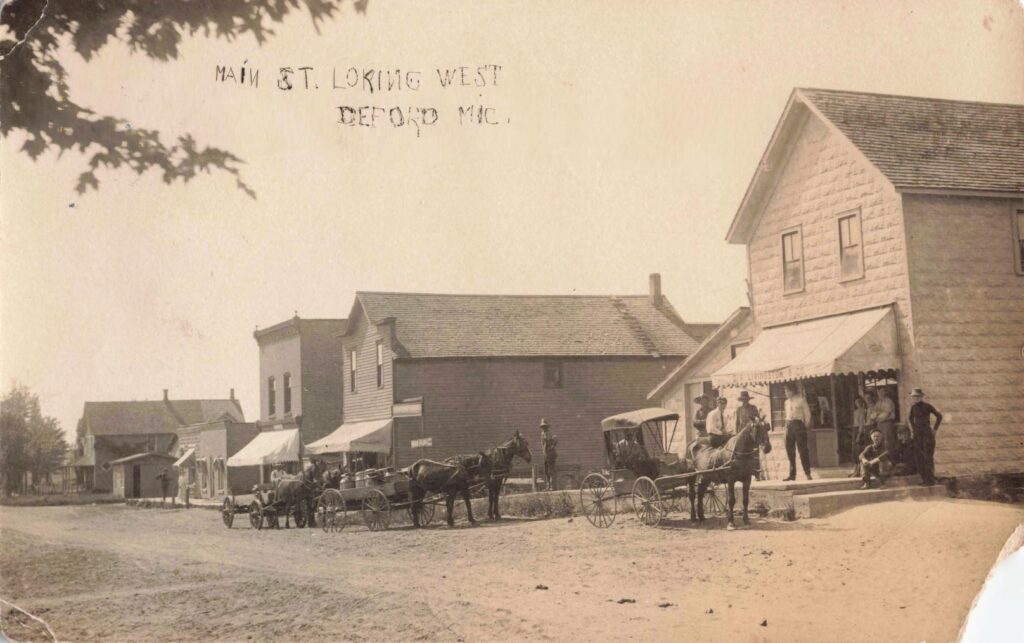
Horse-drawn wagons lined the unpaved street. General stores stocked groceries, clothing, hardware, and farming supplies. Residents gathered on wooden sidewalks to exchange news while children watched freight wagons rumble toward the railroad.
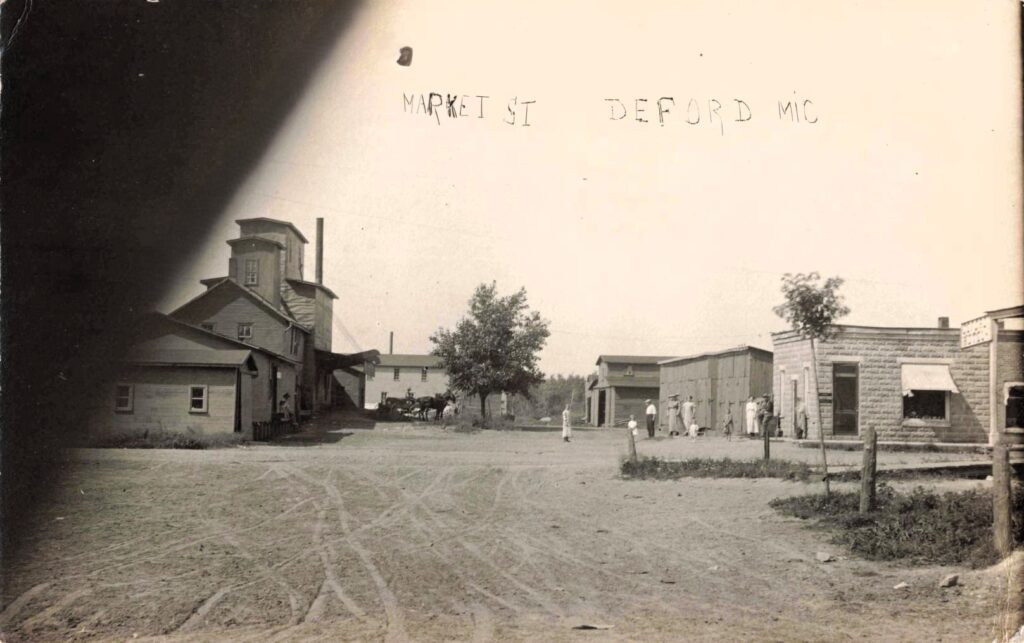
The photographs show a town that looked typical of Michigan’s Thumb communities, yet every building had a purpose.
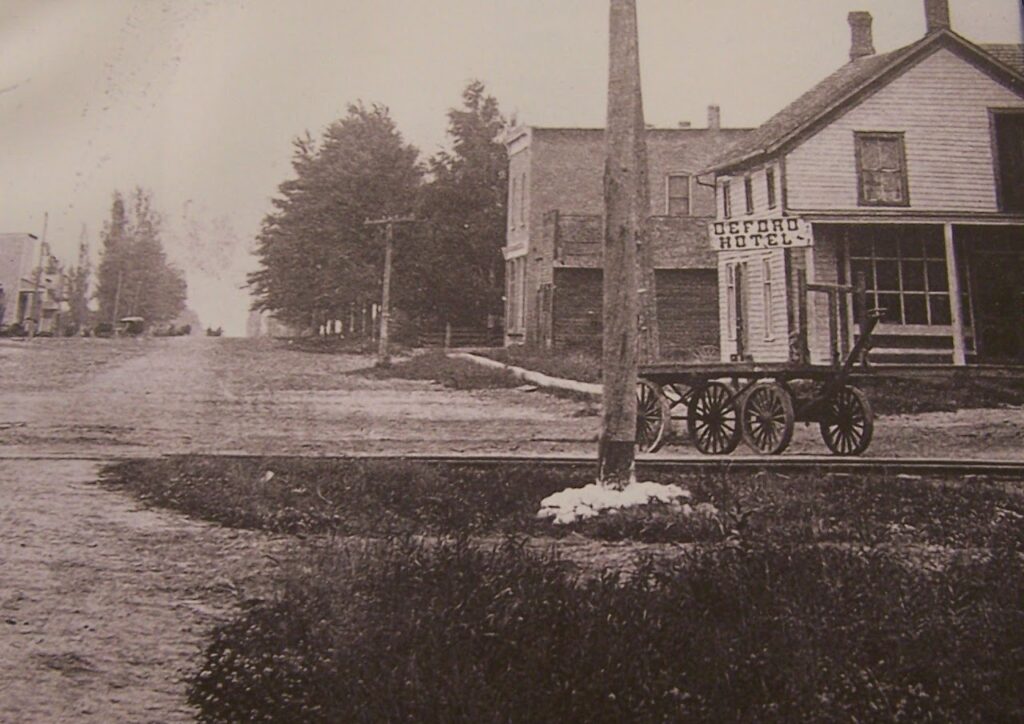
A business district also needs food, lodging, and repair work, and Deford had all three. In 1902 and 1903, the local business directory listed “Hotel McCain, The Traveler’s Home,” and named Charles McCarty for general blacksmithing. The hotel photo from 1912 fits that record well. It stands near the tracks, with a wagon in front and the road still rough underfoot. In 1914, the Deford Hotel was important enough to host bids for road work, which suggests that it served as a public meeting place as well as a place to sleep and eat.
The buildings were simple, but they represented investment and optimism.
The Grain Elevator Towered Over Everything
Few buildings better represented the History of Deford Michigan than its grain elevator.
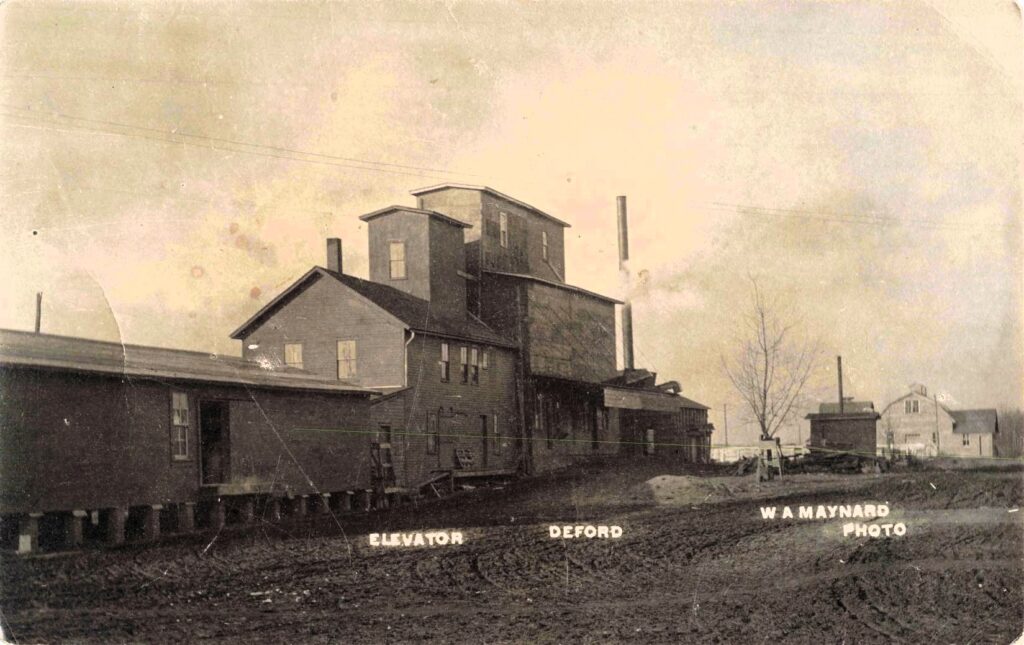
The History of Deford Michigan is also the story of grain and beans. The elevator photos and the newspaper record line up closely. In 1910, the Deford Grain and Lumber Company advertised flour, feed, bran, middlings, tile, cement, lumber, lath, and shingles. That list says a great deal. Deford was not only buying crops. It was selling the supplies farmers needed to build, plant, feed stock, and keep going through winter.
That same year, the Chronicle reported a new grain elevator with a capacity of 8,000 to 9,000 bushels. The paper also reported that one Friday in October 1910, about $5,000 was paid out for beans in Deford. Another 1914 item noted that Farm Produce Company purchases had reached 35,000 bags of beans. Those are not small figures for a village of modest size. They show how harvest season could flood cash into town and pull wagons toward the elevator.
The elevator photos help make that economy concrete. One shows the elevator rising over a muddy road. Another Market Center image places the elevator and nearby buildings in the same commercial frame. Farmers came there because rail service, storage, banking, and stores stood close together. This was the point of shipment and settlement. It was where crops turned into cash, credit, and supplies.
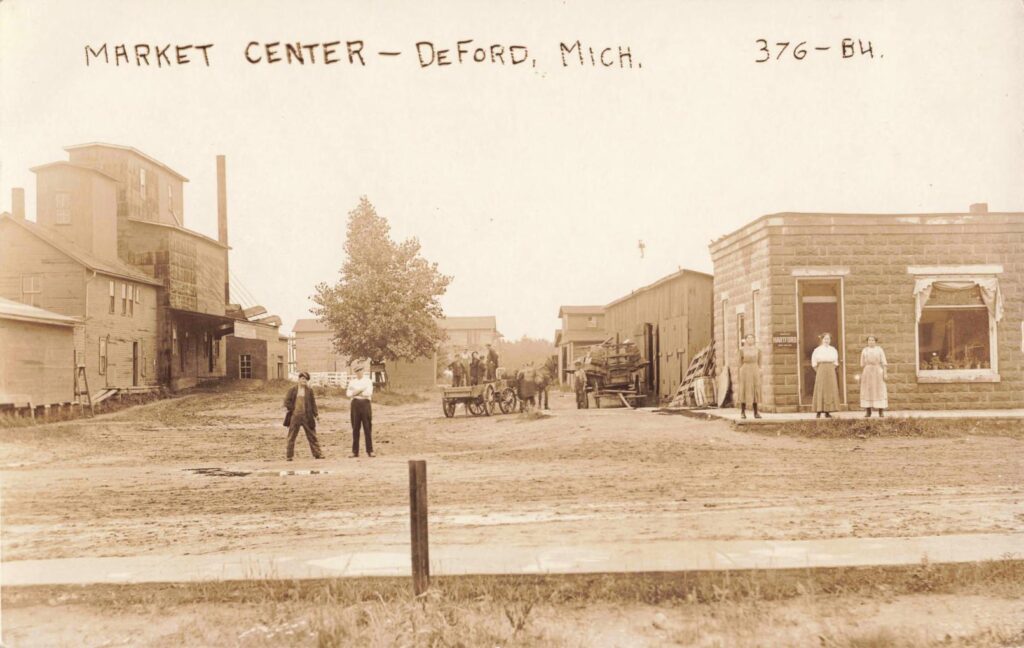
That trade also carried risk. In 1916, fire destroyed the bean and grain elevators, warehouse, and garage of the Deford Grain and Lumber Company, with losses estimated at nearly $15,000. A town built around farm marketing could move fast and grow fast, but one fire could also erase years of investment.
Local businessman Amuel Frutchey played an important role in Deford’s commercial growth. Besides operating a general store, he helped establish the grain elevator and local banking services during the 1890s, giving area farmers a dependable market.
The elevator symbolized prosperity because nearly every family in the surrounding countryside depended on agriculture.
The Milk Plant Promised Industry
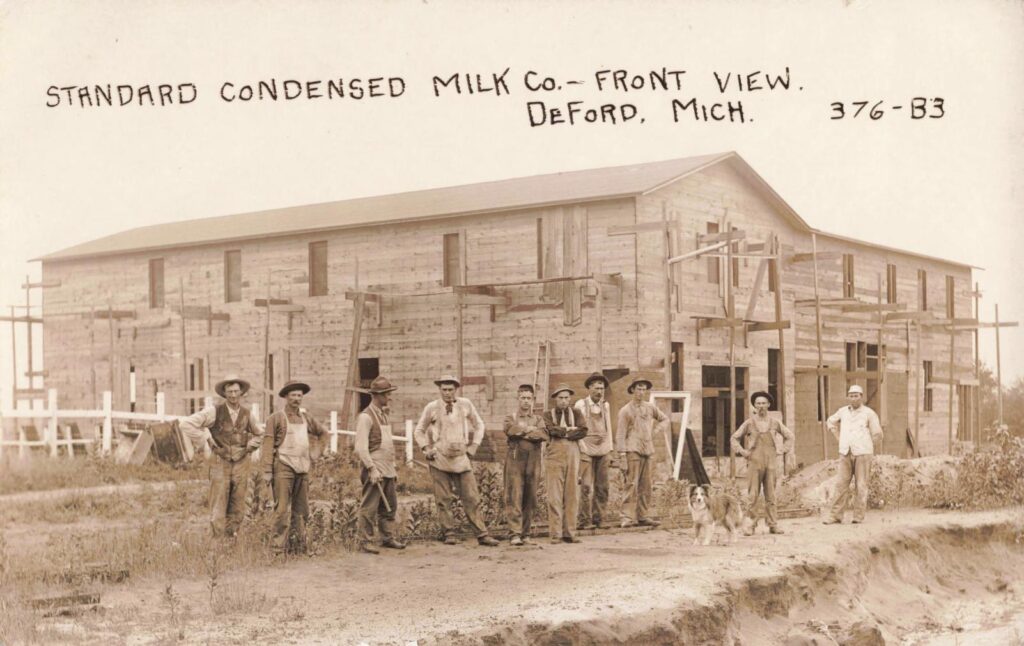
Deford’s most ambitious industrial project of the period was the Standard Condensed Milk Company. A January 1913 Chronicle notice said the “wheels” of the Deford plant would start turning in February. That line fits the construction photos: work crews pose outside the unfinished building, and a second image shows the plant from the railroad side, where shipping cars would have been close at hand.
The plant represented a shift in the local economy. Grain and beans still ruled the yearly cycle, but condensed milk offered another outlet for area farms and tied Deford to the dairy trade then growing in Thumb counties. The rail-side view of the plant shows why the company chose this site. It needed track access as much as it needed milk.
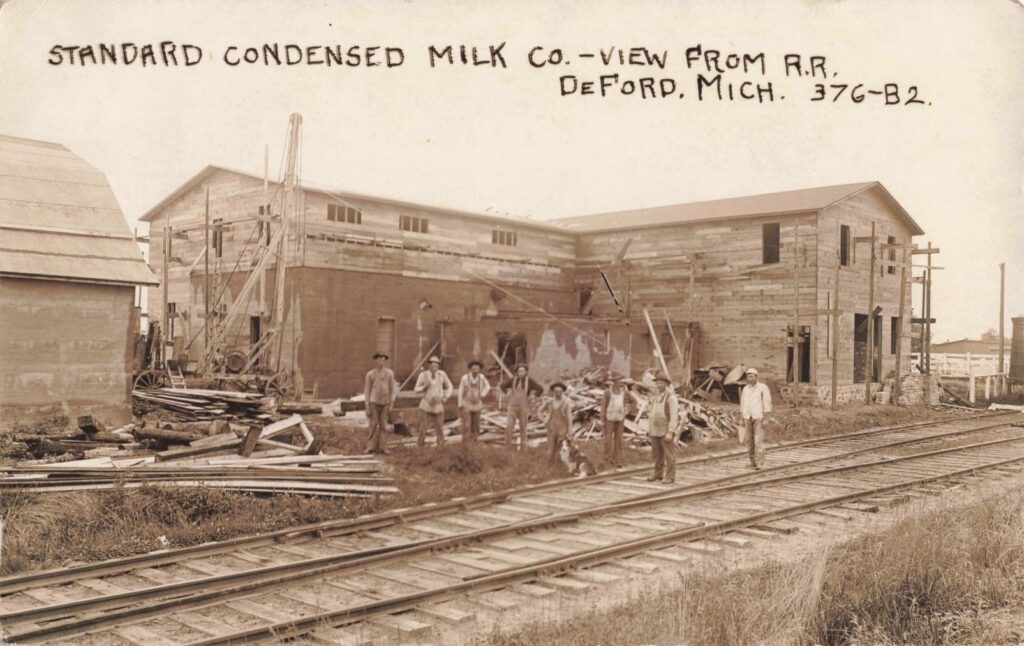
Yet the milk venture also shows how fragile early village industry could be. By spring 1913, the paper was already carrying warnings over stock notes linked to the company, and by December creditors had petitioned to have the Standard Condensed Milk Company of Deford declared bankrupt. The building in the photo stood for local ambition. The newspaper record shows that ambition ran into hard limits very quickly.
School Church and Daily Life
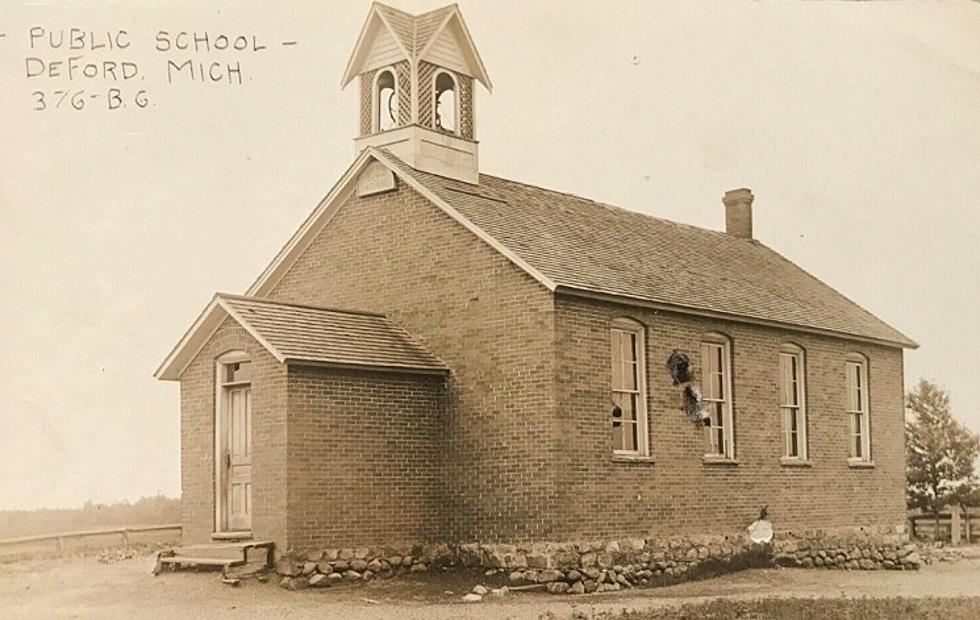
The photos of the schoolhouse and church round out the public life of the village. A current district history that tracks the old country schools of Novesta Township lists both the Deford and Quick schools, showing that education in this area was built through small local districts before later consolidation. The schoolhouse photo, marked “Public School — Deford, Mich.,” fits that pattern. It is a brick rural school, practical in plan and solidly built.
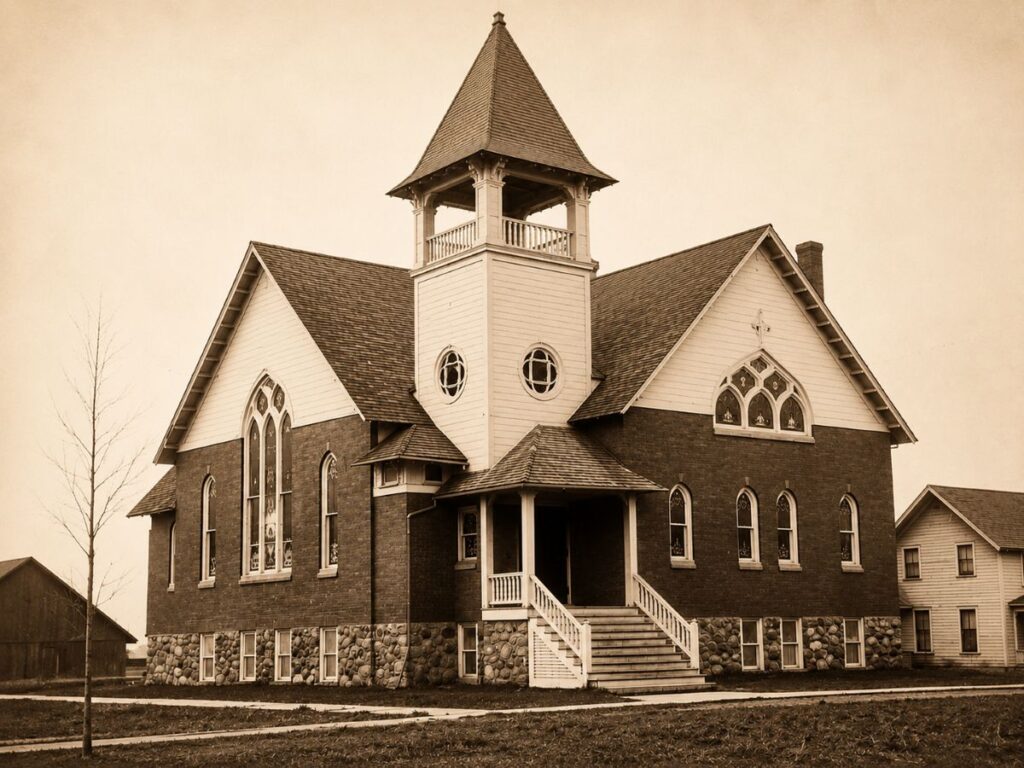
The church photo points to another center of daily life. The Chronicle shows the Deford Methodist Episcopal church hosting school graduation exercises in 1910, as well as Ladies Aid events and funerals. That record gives the church a civic role as well as a religious one. It was the place where the town marked endings, meetings, and public occasions. In a place the size of Deford, those uses often overlapped.
The Photos Hold the Story
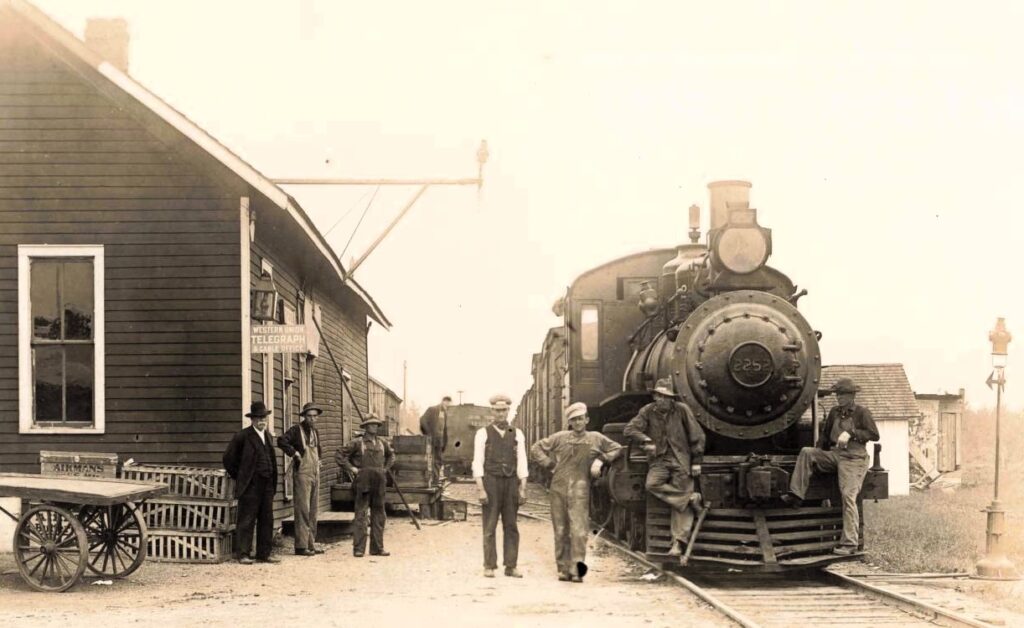
Taken together, the images make the History of Deford Michigan easy to follow. The depot explains how the town began. The Bruce Block and hotel show how it served travelers and local shoppers. The elevator fixes the farm economy in place. The milk plant shows a bid for industrial growth. The schoolhouse and church remind us that the town was also a place of routine, duty, and community. That is why these photos still carry weight: they do not show a legend. They show a working Michigan town as it actually was.
Sources Used for the History of Deford Michigan