
 by
by 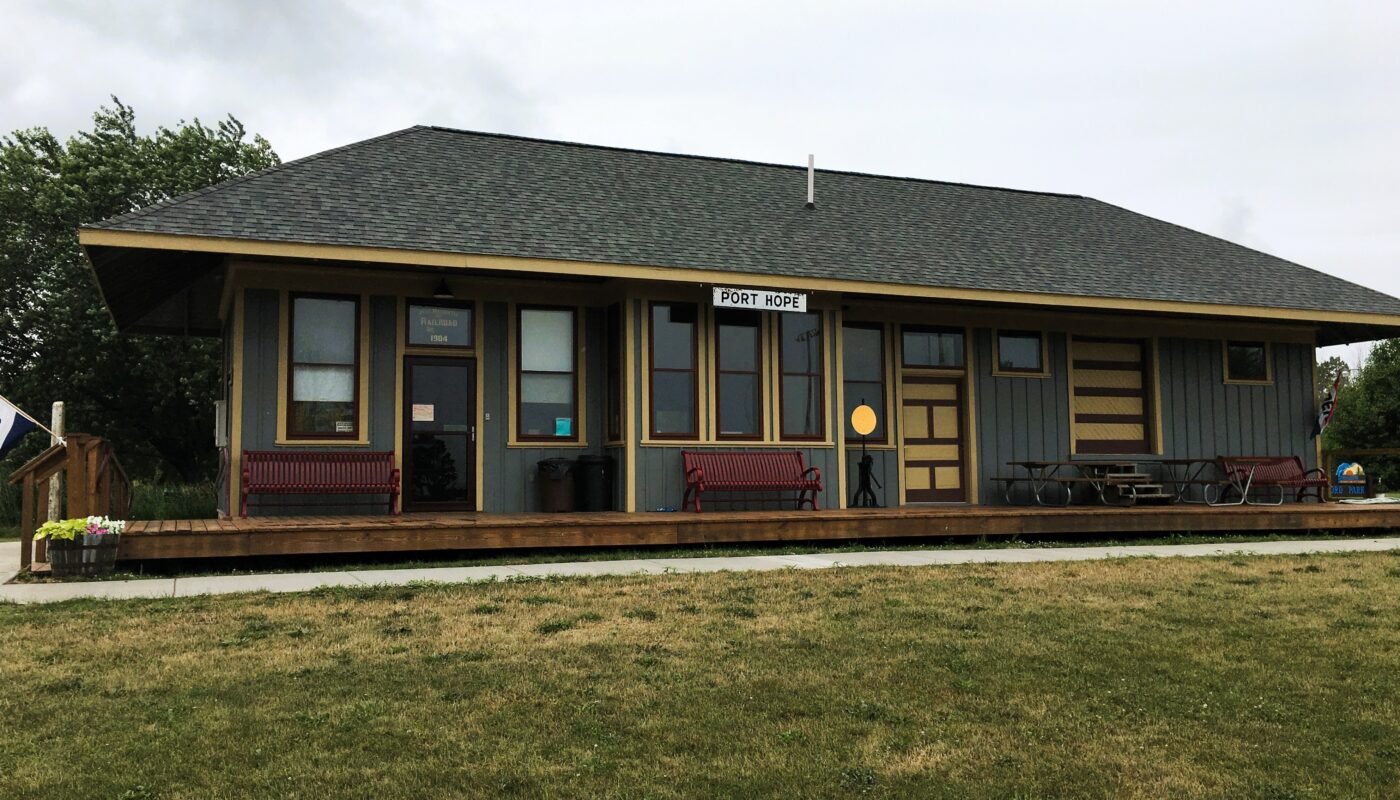
It wasn’t until 1903 that the Flint and Pere Marquette Railway extended tracks from Harbor Beach north to Port Hope in the Upper Thumb. Financed by local businessmen, a standard-gauge rail line was laid for the final seven miles. The following year, the Port Hope depot was built to host passengers and cargo. Now passengers could come in from anywhere in the country, and the Port Hope depot could ship out commodities to other markets.
Table of Contents
Why the Railroad Reached Port Hope in 1903
Port Hope’s railroad story begins with a change in how the village earned its living. Lumbering helped establish the Lake Huron community, but fires in 1871 and 1881 stripped away much of its timber economy. Farming became increasingly important, and William R. Stafford added a flour mill, grain elevator and new dock as the village adjusted.
Sugar beets gave the proposed railroad extension a practical purpose. According to the depot’s historical marker, the crop was the main reason tracks were extended to Port Hope. Farmers hauled their harvest to the railroad in horse-drawn wagons, then loaded the beets into freight cars by hand. The connection gave an agricultural community another way to move its crops to market.
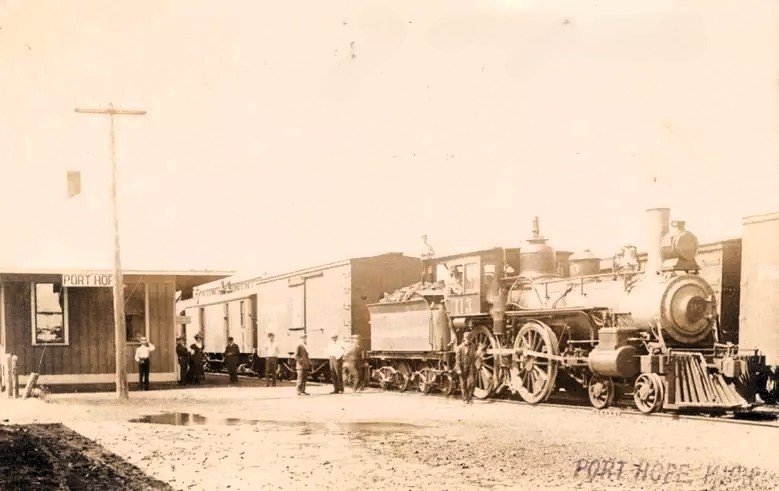
The Friends of the Port Hope Depot date the first train’s arrival to Oct. 20, 1903. Their history credits the local business association, the Croswell Sugar Company and individual residents with helping secure the extension from Harbor Beach. Residents gathered beside the new tracks to welcome the train. Passenger and freight service began that month, bringing the village into a wider transportation network.
Port Hope Depot and the Pere Marquette Railroad
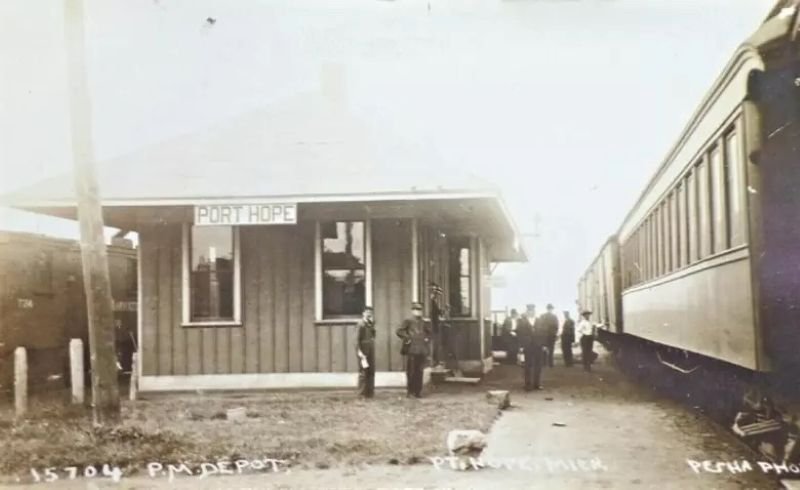
The Pere Marquette Railroad built the depot in spring 1904, following the arrival of rail service the previous fall. The distinction matters because the tracks and station opened in different years. Port Hope’s depot provided a place where passengers and freight entered a system that reached well beyond Huron County.
The railroad itself was relatively new. Formed in 1900, the Pere Marquette combined several companies, including the Flint and Pere Marquette. Its routes extended across Michigan and into neighboring states and Ontario, while its car ferries carried rail traffic across the Great Lakes. The Pere Marquette later merged into the Chesapeake and Ohio in 1947.
Port Hope became the end of the line along this stretch of Lake Huron. The railroad added an engine house, a place to turn engines, and a water tower to support operations. These facilities made the village more than a passenger stop. Locomotives also needed servicing before returning south.
Travel required patience. A reproduced 1925 timetable shows a departure from Port Huron’s Tunnel Station at 9:20 a.m. and arrival in Port Hope at 1:30 p.m. The return departure was at 2 p.m. That dated example offers a clearer picture of the journey than treating one travel time as standard throughout the railroad’s history.
The Port Hope Railroad Depot was the End-Of-The-Line
The railway owners deemed Port Hope to be the end of the line running up the eastern shore of Lake Huron. So an engine house, water tower, and a “Y” turnaround were built to maintain the depot. Up until sometime in the 1930s, there was a daily train that ran from Port Huron to Port Hope in the morning with a return trip in the late afternoon. The run took three hours. Trains continued to run to Port Hope for another fifty years. The last freight runs ceased operation in 1982.
How Volunteers Saved Port Hope Depot
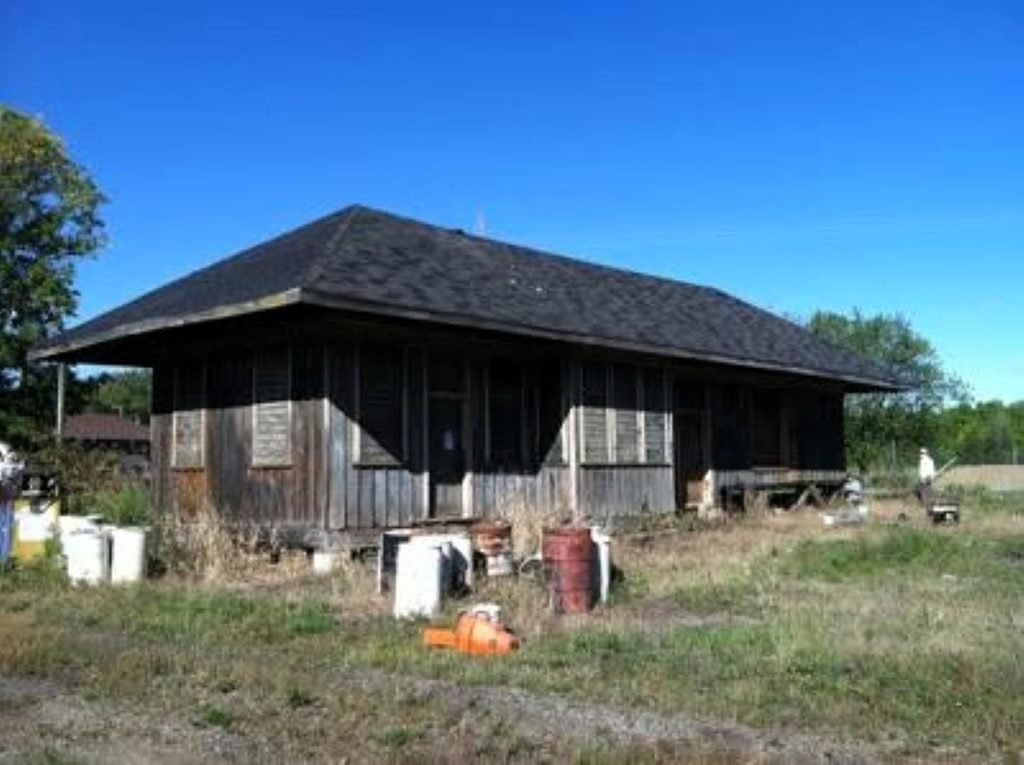
The station’s survival involved several changes in ownership and purpose. After its railroad use, the building served at different times as a silk-screening business, a museum, and storage space. A buyer in the 1970s hoped to restore it as a heritage and community center. The idea of preserving the depot preceded the volunteer organization that eventually took on the work.
Friends of the Port Hope Depot formed in 2012. By July 2013, the group had moved the building to its new location at Stafford Park. The Huron Daily Tribune reported that nearly 150 supporters had contributed time, labor or money, and fundraising had exceeded $20,000 before that year’s Fourth of July sale.
The Friends dedicated the restored station in September 2015 and celebrated their organization’s 10th anniversary in 2022. Their project photographs document excavation, new footings and the building move. Those records show the physical work behind the finished museum, from preparing its new foundation to restoring the old structure for public use. Restoration milestones and project photographs
What Visitors Can See Inside the Depot
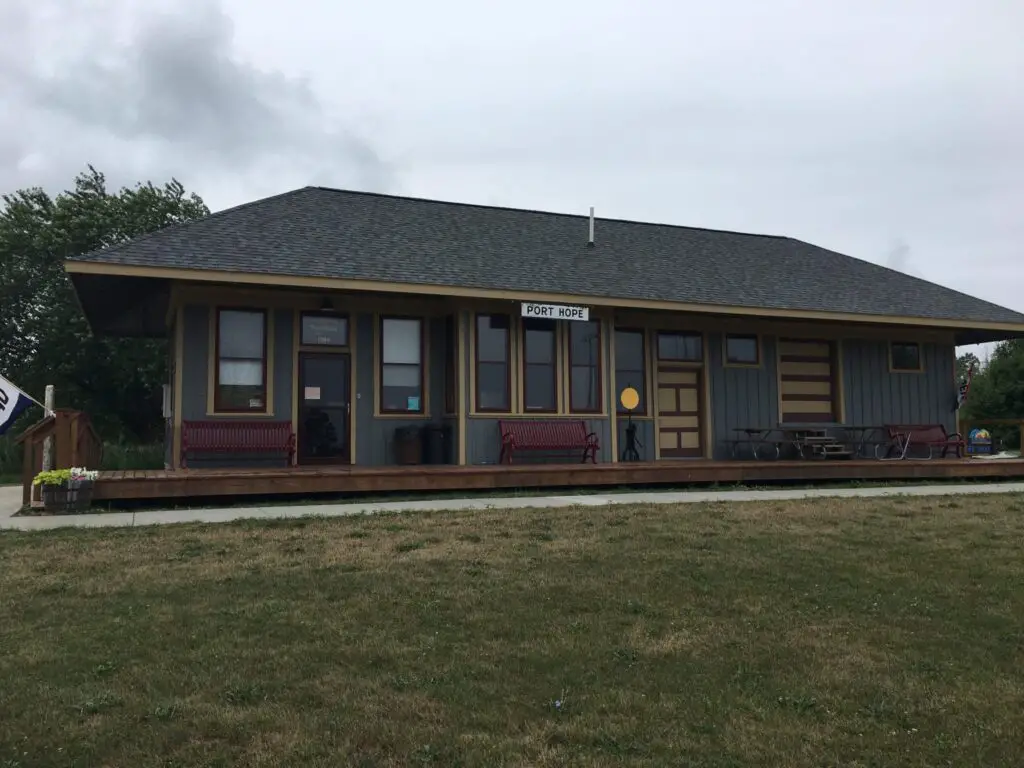
Port Hope Depot was a practical working building. Its wood frame and board-and-batten siding followed an economical station design. The original interior contained a passenger waiting room, stationmaster’s office, baggage or service room, and slightly raised freight room. That arrangement brought travelers, railroad business, and goods into one compact structure.
The restoration also made room for modern needs. The Friends describe the former baggage room as a restroom and kitchenette, so visitors should not expect every space to retain its original function. The waiting room and stationmaster’s office remain useful starting points for understanding the building. Looking at the rooms together helps explain how a small station handled several jobs under one roof.
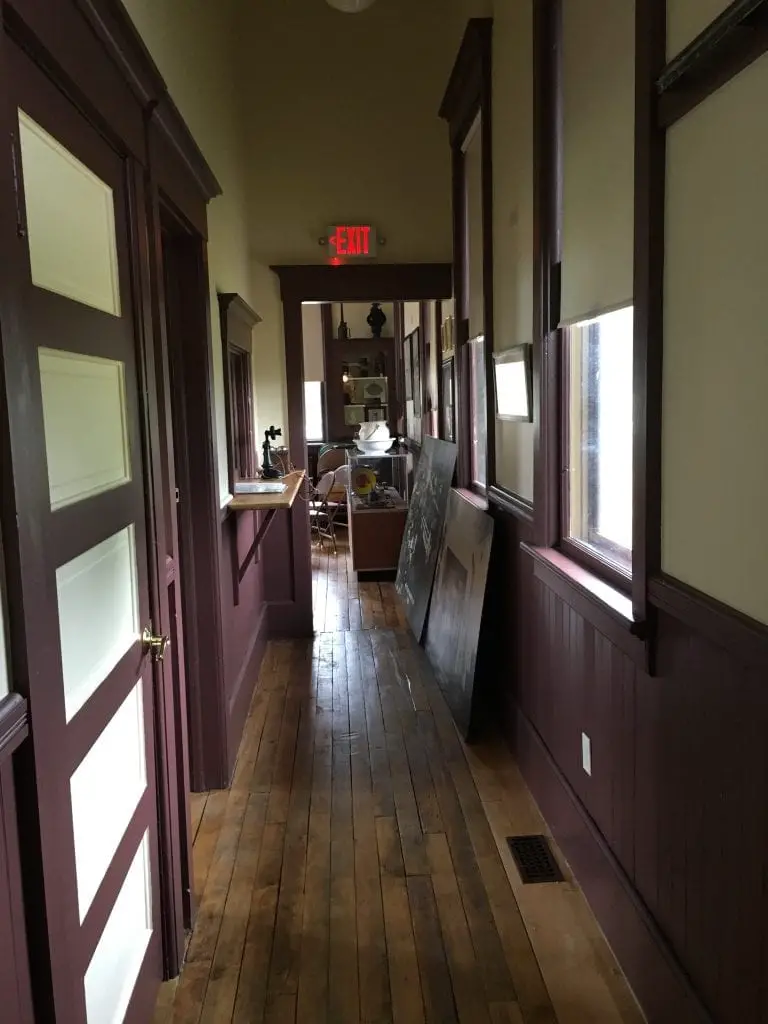
Today the Depot has been exquisitely restored. You can see exhibits in the passenger waiting room, the station master’s office, the luggage room, and the freight room. Each room has been painted to match the original color. The station looks brand new. One of the most interesting items on display was a pair of glasses found trapped for over 100 years behind the window trim in the station master’s office. The wireframe glasses are extremely fragile yet look brand new.
The Restored Caboose and Model Railroad
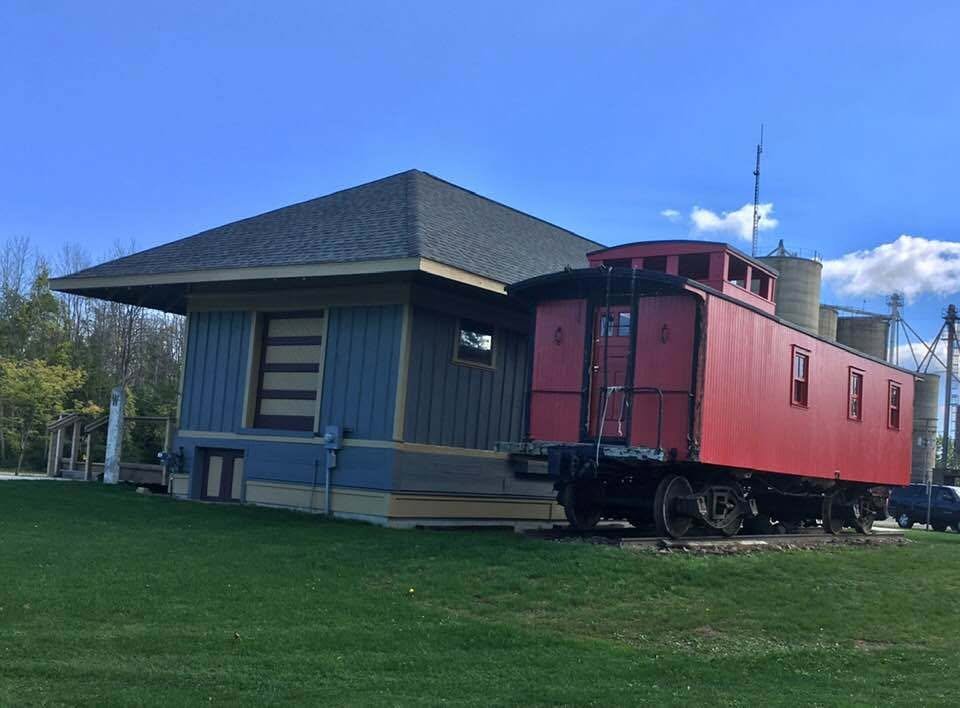
The depot’s preservation work expanded with the arrival of a 1904 New York Central caboose on July 18, 2018. The Friends reported that the refurbished car was a featured attraction at their 2022 anniversary celebration. Its New York Central identity is worth noting when viewed alongside a Pere Marquette station. The museum’s account documents its arrival as a preservation project, rather than establishing that this particular car served Port Hope during the depot’s operating years.
The model railroad provides another way to picture the former rail connection. Thumbwind’s 2018 report described volunteers building miniature versions of Port Hope and Harbor Beach railroad facilities. Seen together, the stations and freight yards help place the surviving depot within a larger working railroad. Visitors interested in the model should confirm its current availability before making a special trip. Earlier model railroad coverage
Visiting Port Hope Depot in Michigan
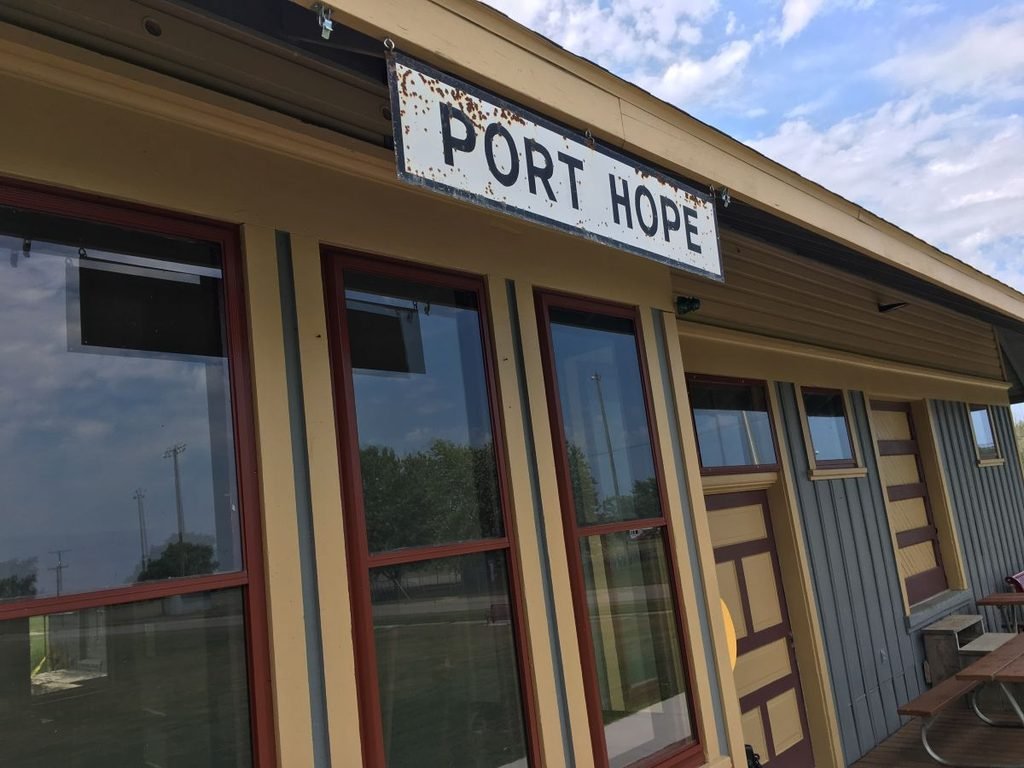
Port Hope Depot is at 8046 Portland Ave. in Port Hope, near Stafford County Park on Lake Huron. From M-25, the Friends direct visitors east on State Street toward the station. The location makes the depot a possible stop during a drive along the eastern Thumb shoreline. Depot location and directions
Check opening times before traveling, especially if you want to see the interior. The Friends’ website lists seasonal weekend hours, but its pages contain different schedules without a consistent current-year label. Use the organization’s website or call 989-670-6200 to confirm the date of your visit. Ask about caboose and model railroad access at the same time.
Visitors who need step-free access should confirm which exhibit areas they can reach. Ask about admission arrangements and convenient parking, particularly for a group visit. Checking these details with the volunteers before departure will help you plan the stop around your needs.
Port Hope Chimney
A landmark you can’t miss is the 80-foot sawmill chimney, built in 1858 by John Geltz. The chimney still stands in perfect condition. It is noted as one of Port Hope’s historical landmarks.
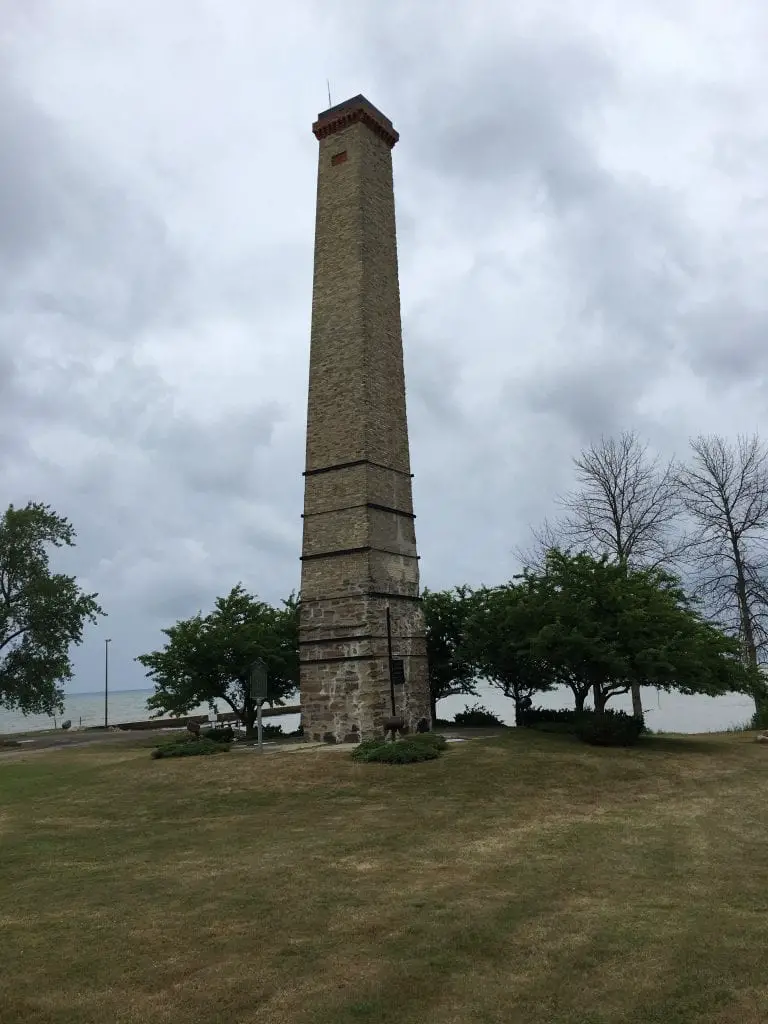
The nearby mill chimney connects the railroad story with the village’s earlier economy. Port Hope grew around lumbering before agriculture became its main focus after the 1881 fire. Viewing the chimney and depot on the same outing helps illustrate that change. One recalls the mills and waterfront trade, while the other marks the arrival of a new transportation link. Port Hope’s economic history
Model Railroad Shows History of Port Hope and Harbor Beach
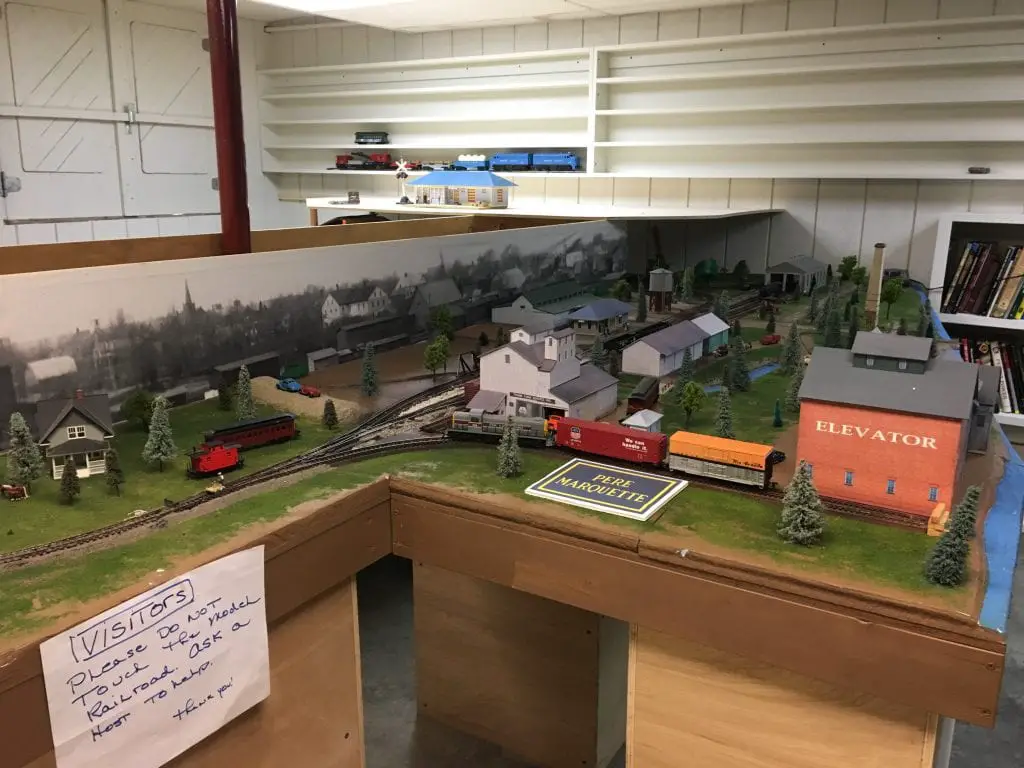
In the lower level of the depot, an extensive model railroad is being built by volunteer craftsmen. The model depicts how the depot and Harbor Beach depots and freight yards looked when the railway was active in the early 1900s. Volunteers are still at work creating how this area looked. It’s a fascinating exhibit in miniature. The model railroad can be seen when the depot is open or by appointment at 989-550-5298.
Nearby Port Hope History Stops
The Lumberyard Museum of the Thumb adds context to a depot visit. About a half-block away, it covers community life through displays that include household interiors, agricultural equipment, restored vehicles, and the Thumb fires. A downtown diorama offers another view of how Port Hope changed over time. The Port Hope Area Historical Society operates the museum and collaborates with the depot’s Friends organization.
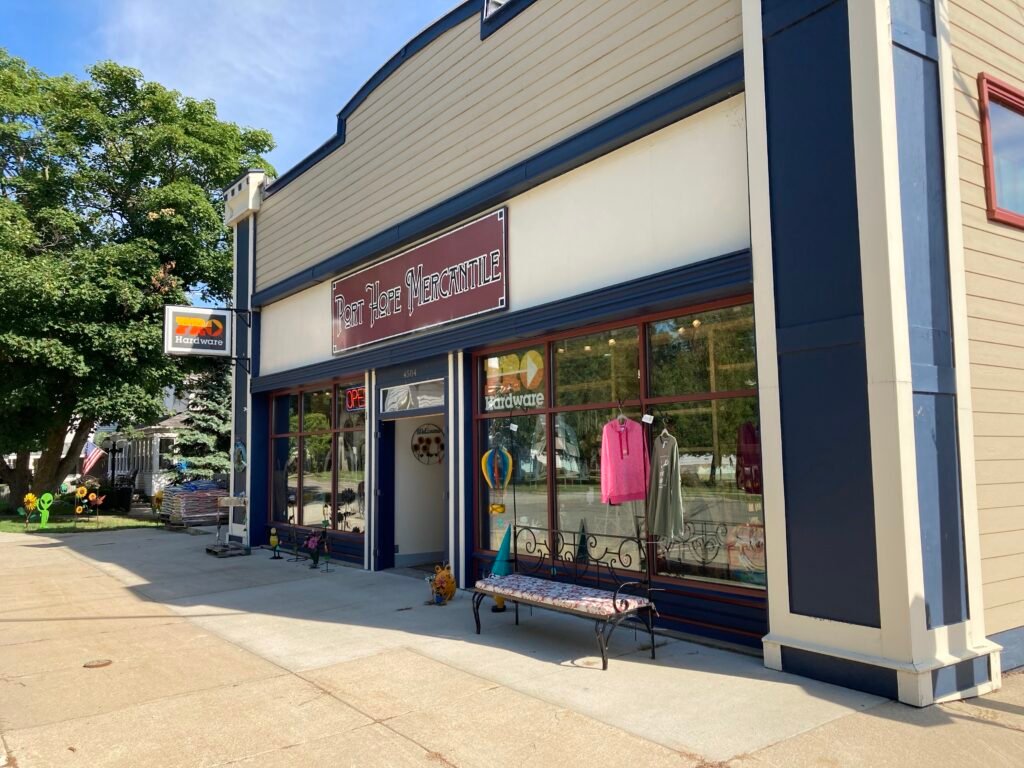
For a longer walk, the village recommends a walking tour brochure available at Port Hope Mercantile. It directs attention to historic buildings beyond the museum area. Pairing that walk with the depot gives visitors a broader view of Port Hope, including the streets where residents lived and worked between arriving trains. Check the museums’ opening schedules separately when planning to visit both. Village walking-tour information
Related Articles on ThumbWind

The Story of the Polly Ann Railway in the Thumb – Local folklore states that the Pontiac, Oxford & Northern Railroad (P.O. & N) ran from September 1889 until the last service run of the line’s full length on February 9, 1984.
A Railway was Lost in Saginaw Bay – The Great Thumb Fire of 1881 opened an opportunity for agricultural development. On October 20th, 1881, construction of the Thumb Railroad Pontiac, Oxford & Port Austin began at Caseville, Michigan, to bring rail service to the Upper Thumb area. On one shipment from Cleveland, the ship ran aground on the rocky shoals near Oak Point. During the salvage operation, 23 rails slipped into Saginaw Bay and were lost.
Marlette’s Beautifully Restored Depot – The Marlette Train Depot is a beautiful and well-restored example of a late 1800s railway station. Other examples of this Michigan’s Thumb include the railway depots in Pigeon, Capac Museum and Depot, and the restored 1903 Port Hope rail station. The depots in Sebewaing and Elkton are still standing but remain unrestored
The Birth of the Michigan Coney Dog at Jackson’s Amtrak Train Station – We took a day trip to visit friends in Kalamazoo. On our way, we took a quick stop to visit the historic Jackson train station. It was an interesting site, and it was like going back in time.