 by
by 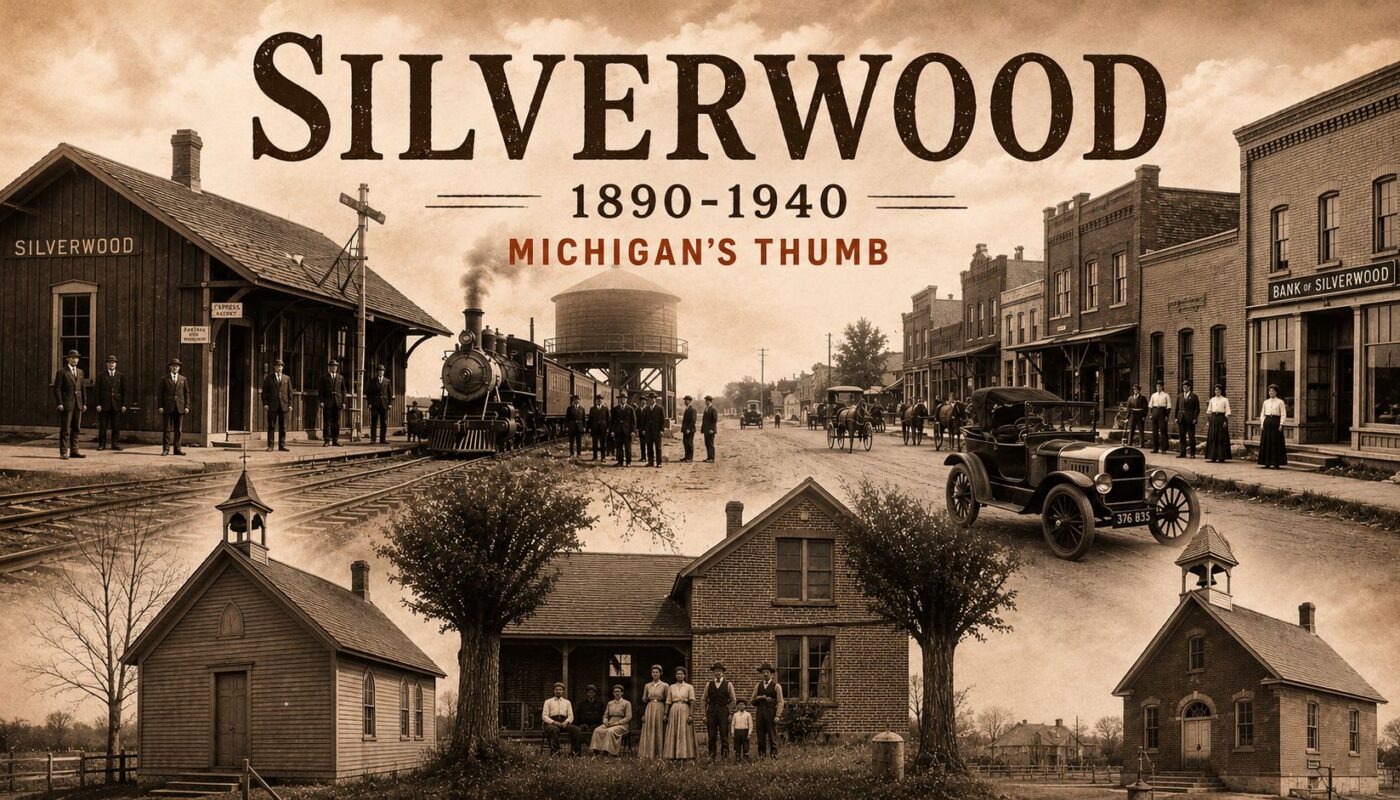
The history of Silverwood, Michigan, was built around a railroad, divided by a county line, and known by three names before the town was 10 years old.
Today, Silverwood is an unincorporated community between Dayton Township in Tuscola County and Rich Township in Lapeer County. In the late 1800s and early 1900s, it was a busy rural trade center with a depot, post office, bank, school, church and compact Main Street.
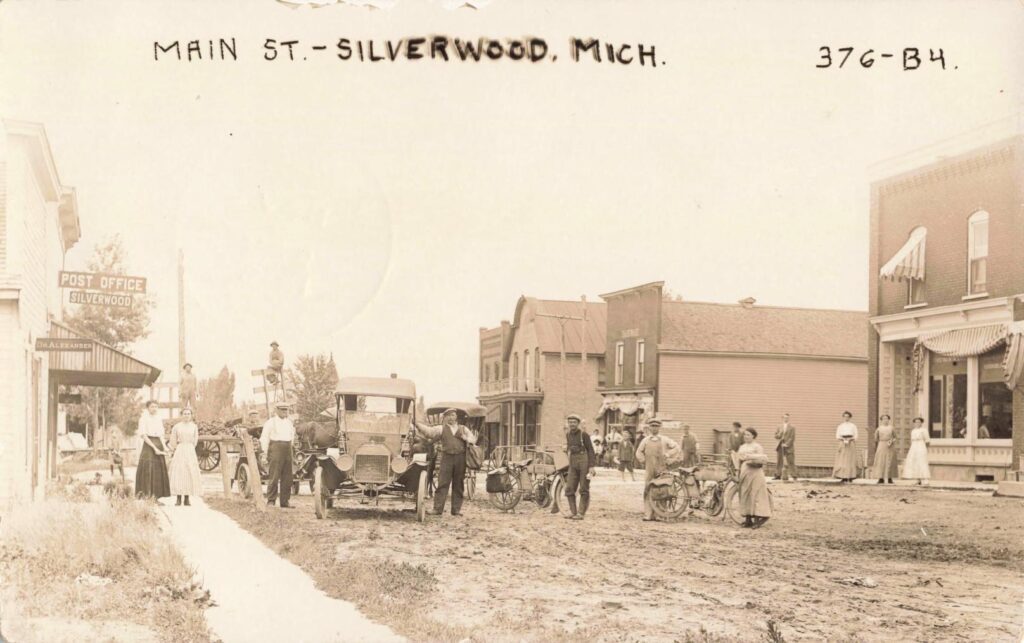
The History of Silverwood Michigan is not the story of a town that became a city. It is the story of a place that built nearly everything associated with a village but never created a municipal government of its own.
The railroad created a town center
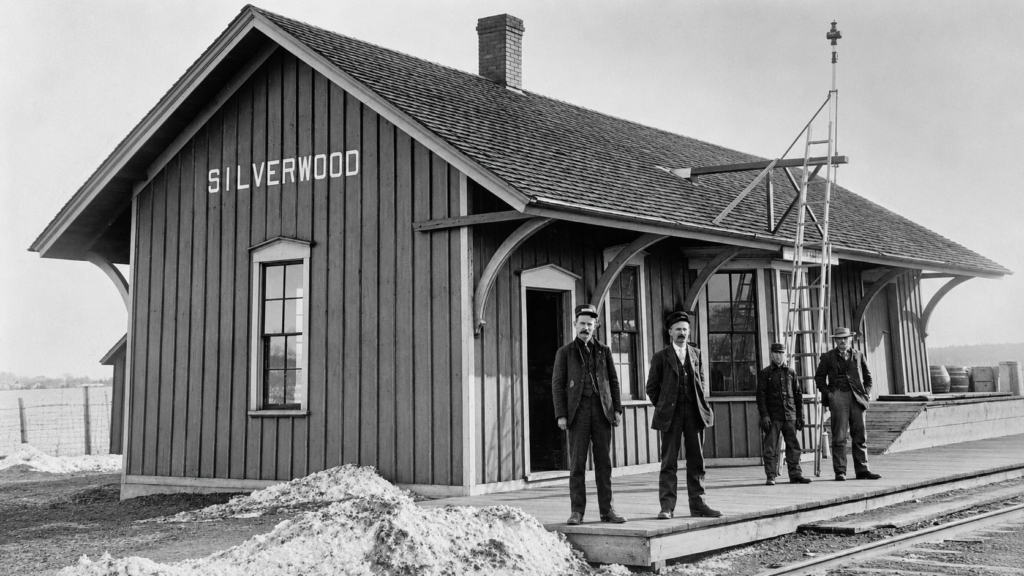
The Port Huron and Northwestern Railway opened its narrow-gauge main line between Port Huron, Vassar and East Saginaw in February 1882. The cheaper narrow-gauge system helped railroad builders reach lightly populated farming districts where future traffic was uncertain.
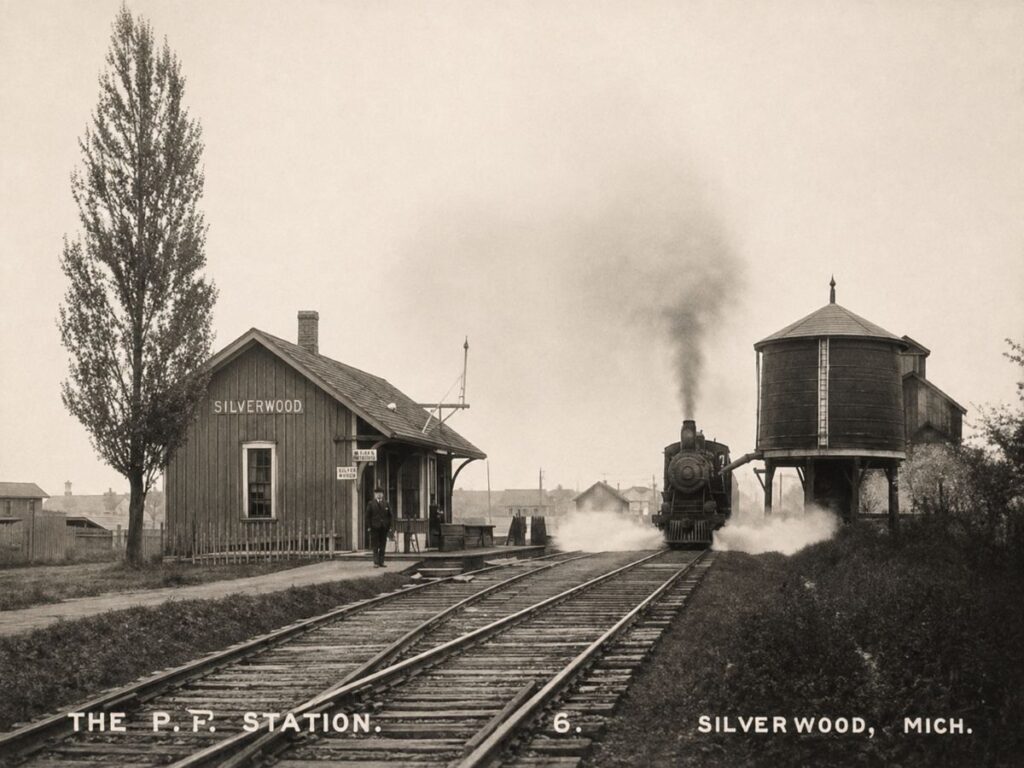
For farmers near the future Silverwood station, rail service cut travel time and opened access to regional markets. Grain, lumber, livestock and other farm products could move farther and faster. Mail, machinery, manufactured goods and passengers came back in the opposite direction.
The Flint and Pere Marquette Railway acquired the Port Huron and Northwestern on April 1, 1889. It converted the route to standard gauge, allowing conventional freight cars to move through the wider railroad system. The line later became part of the Pere Marquette Railroad, with Silverwood placed between Mayville and Clifford on the Saginaw-Port Huron route.
From Easy to Rollo to Silverwood
Rail service created the need for a local post office. The office opened April 13, 1882, under the name Easy, with James R. Chapin listed as first postmaster.
The name may have been chosen because it was simple to remember. It was memorable, but it was not permanent.
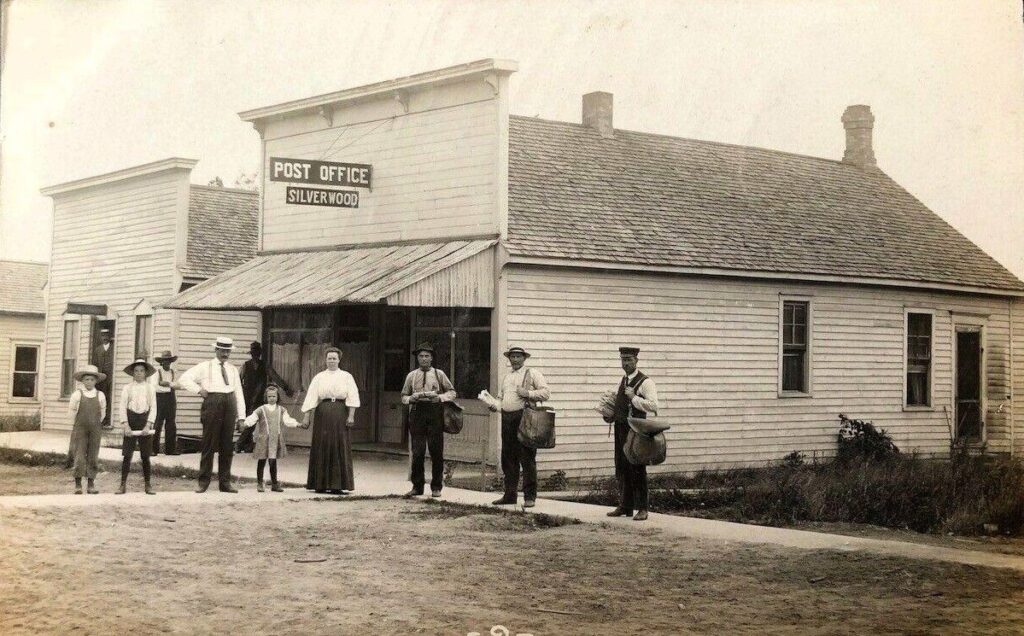
Easy became Rollo on March 27, 1890. No firm explanation for that choice was found in the available records. On May 2, 1892, Rollo became Silverwood, a name later linked to white pine in the area.
Three postal names in one decade give the History of Silverwood Michigan a rare opening chapter. The community’s identity was still being negotiated while its businesses and homes were taking shape.
A village on paper
On July 19, 1899, a subdivision plat was filed for the Village of Silverwood. A plat divided property into legal blocks, streets and lots, making organized sales and construction easier.
Yet Silverwood was never incorporated.
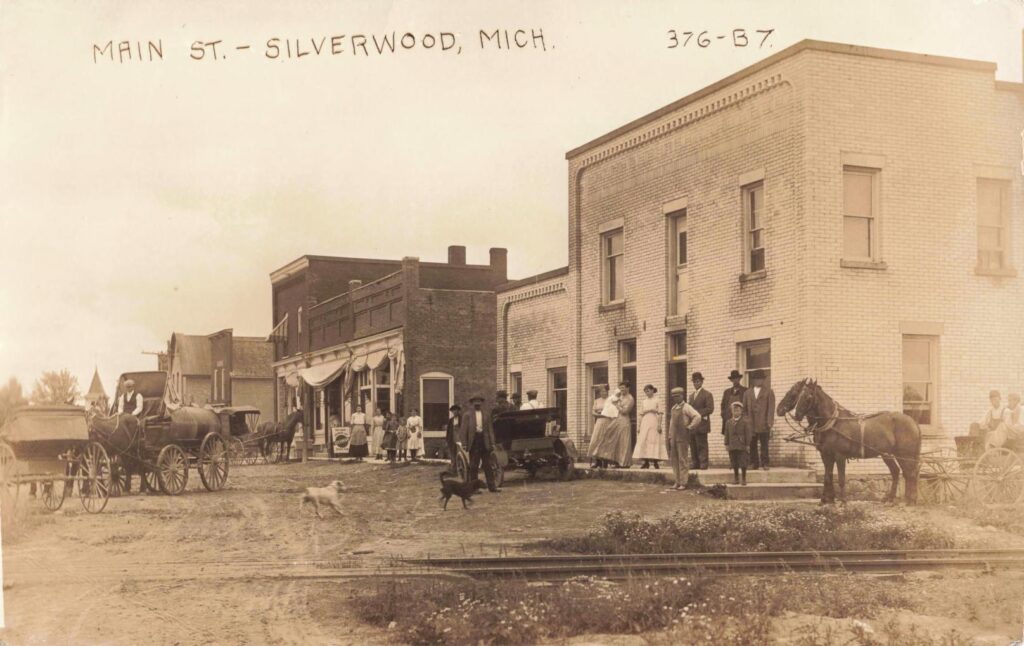
That distinction is important. A platted settlement could look like a village without becoming a municipality under state law. Silverwood had no village council or municipal officers. Residents remained governed by Dayton or Rich township, depending on which side of the county line they occupied.
The county line also scattered Silverwood’s records. The Tuscola County atlas covered much of the business district. The Lapeer County atlas covered farms and homes just across the boundary.
Farms supported the Main Street businesses
A 1902 Tuscola County atlas directory recorded Silverwood-area farming, stock raising, lumber work and custom operators using threshing machines, saws, corn shredders and huskers. These services linked the town’s businesses to farms for miles around.
W.L. Rowell was one of those nearby landowners. A 1906 Lapeer County atlas places Rowell on an 80-acre parcel in Rich Township near Silverwood.
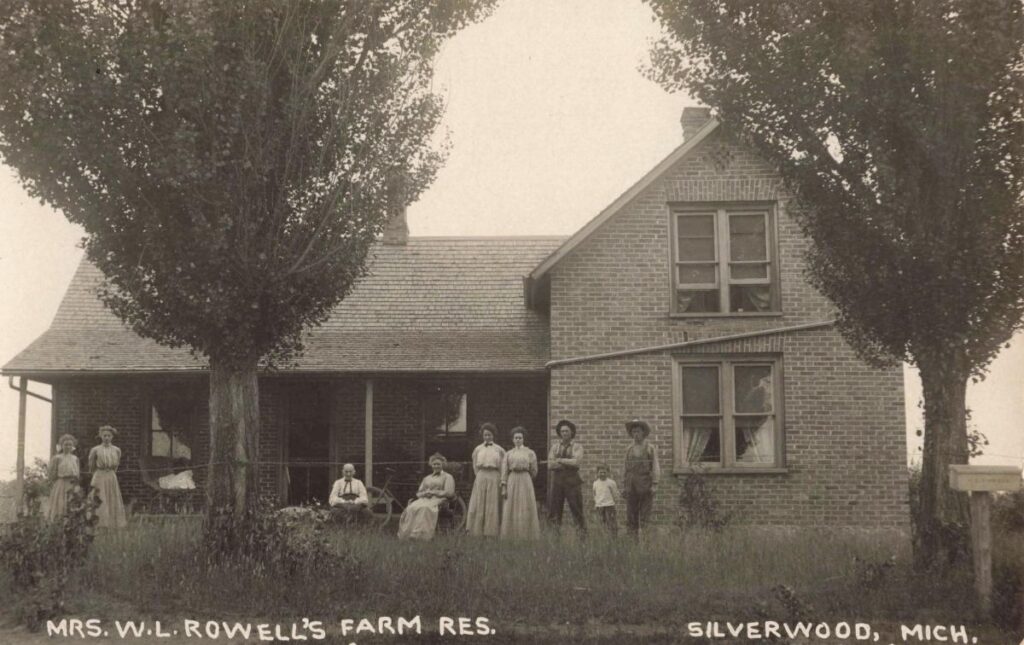
The Rowell home is a reminder that Silverwood’s prosperity did not stop at the storefronts. Money earned from crops, livestock and farm services paid for brick homes, equipment, education and local trade.
The Bank of Silverwood
A two-story brick bank stood among Silverwood’s most substantial commercial buildings. Its windows advertised loans and other financial services.
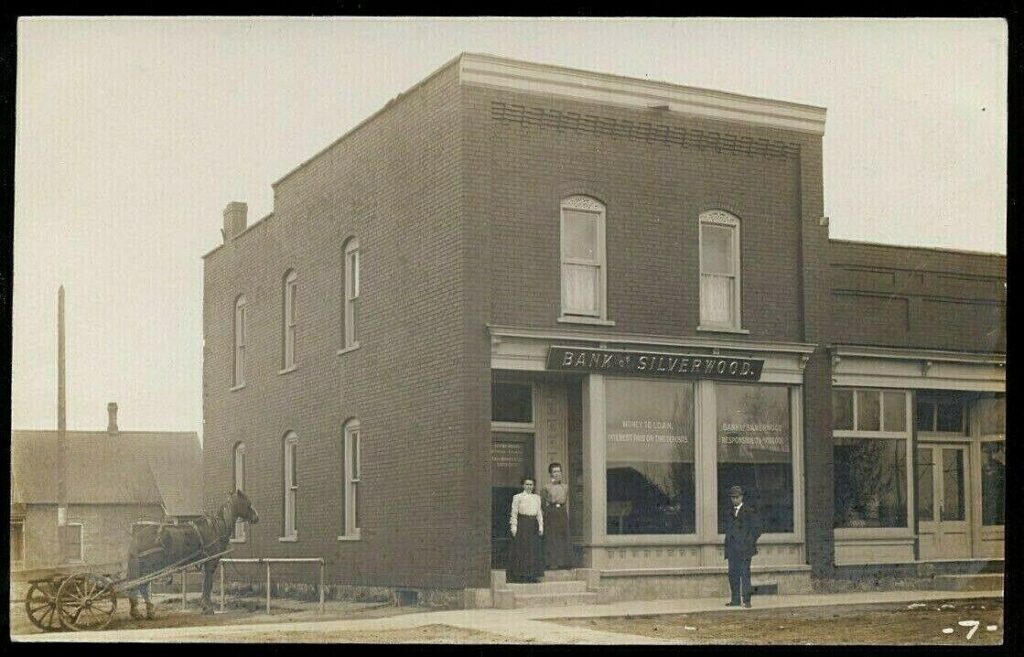
By 1917, the bank was identified as the Bank of Silverwood of Ealy, Kinney & Co. It appeared in a national banking publication in 1920. Amos L. Kinney was the local banker associated with the firm.
Kinney also appears in the 1921 Congressional Record as a Silverwood resident who protested a proposed sugar tax. The issue was important in a region tied to sugar-beet farming and processing.
The bank closed in 1926 during the failure of several private institutions connected to Ealy firms. A 1927 newspaper called the Silverwood and Clifford banks defunct and reported Kinney’s bankruptcy filings.
This part of the History of Silverwood Michigan offers a warning against reading stability into brick walls. Before federal deposit insurance, a bank failure could place household savings at risk with little public protection.
A school built for the future
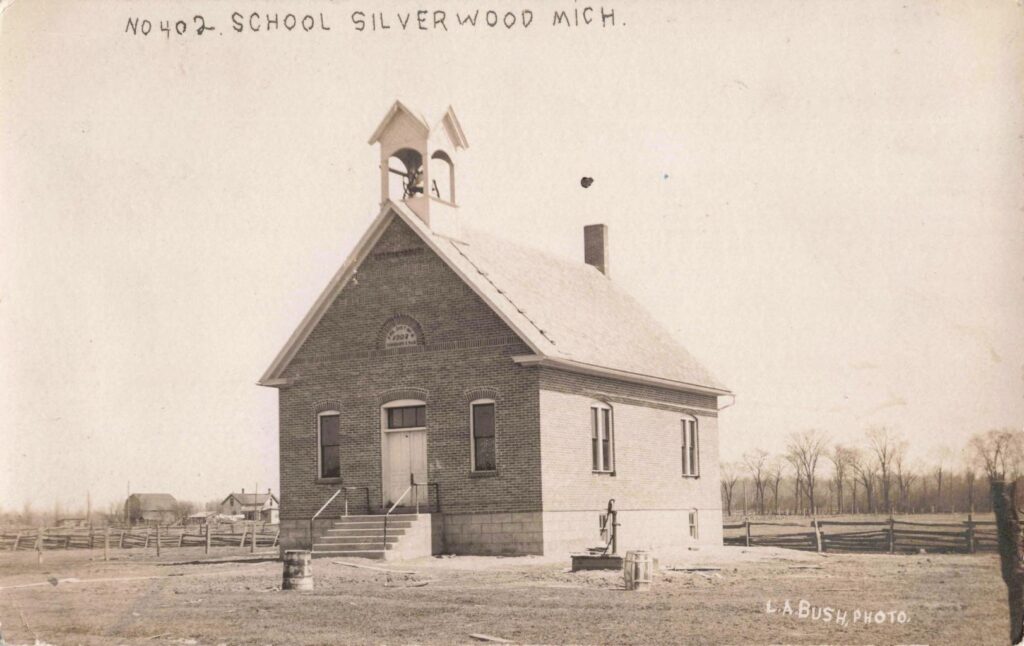
Silverwood’s brick school carries a 1907 date stone over its entrance.
The building was more permanent and more ambitious than the small frame schools common in rural districts. It signaled an expectation of continued enrollment and community growth.
A 1935-36 directory listed Silverwood among Dayton Township’s rural schools. State library guides also identify surviving Tuscola County school records covering 1900 to 1940, though much of that material requires on-site archival work.
Church life and the farm calendar
The Methodist Episcopal church was another public center. The building’s tower, pointed windows and prominent location gave it a strong presence near the commercial district.
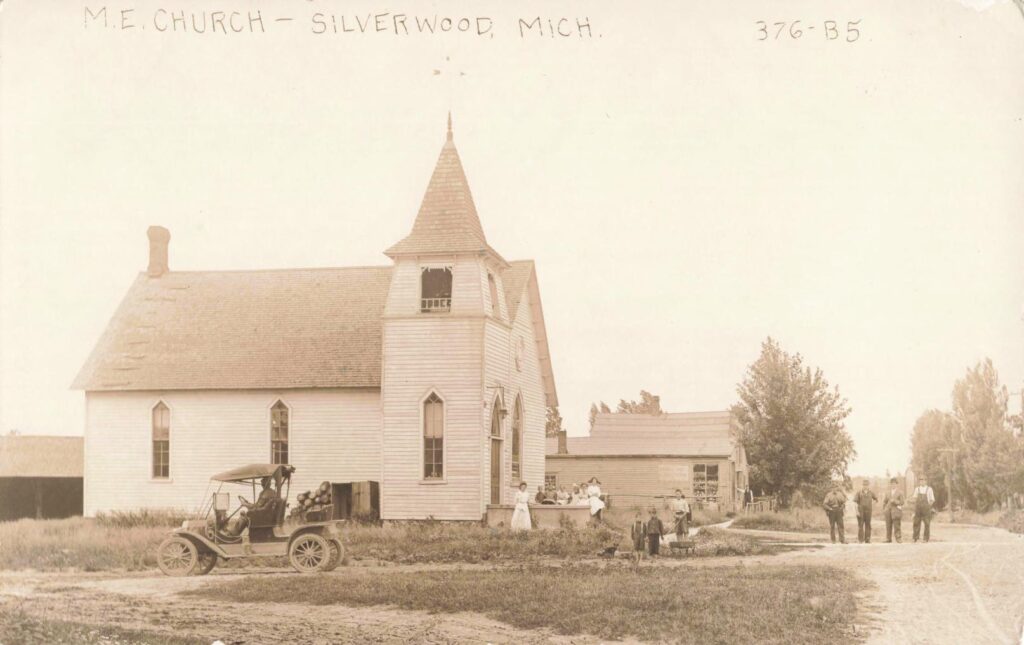
Church activity continued into the 1930s. A 1930 newspaper announced an annual harvest festival at the Silverwood M.E. church, followed by a Ladies Aid supper. Funerals were also held there later in the decade.
The Ladies Aid was not a minor club. Such groups raised funds, organized meals, supported church upkeep and maintained ties among families separated by miles of rural roads.
The overlooked importance of the 1911 bridge
Railroads depended on drainage as much as locomotives. A concrete structure under the Pere Marquette track is marked 1911.
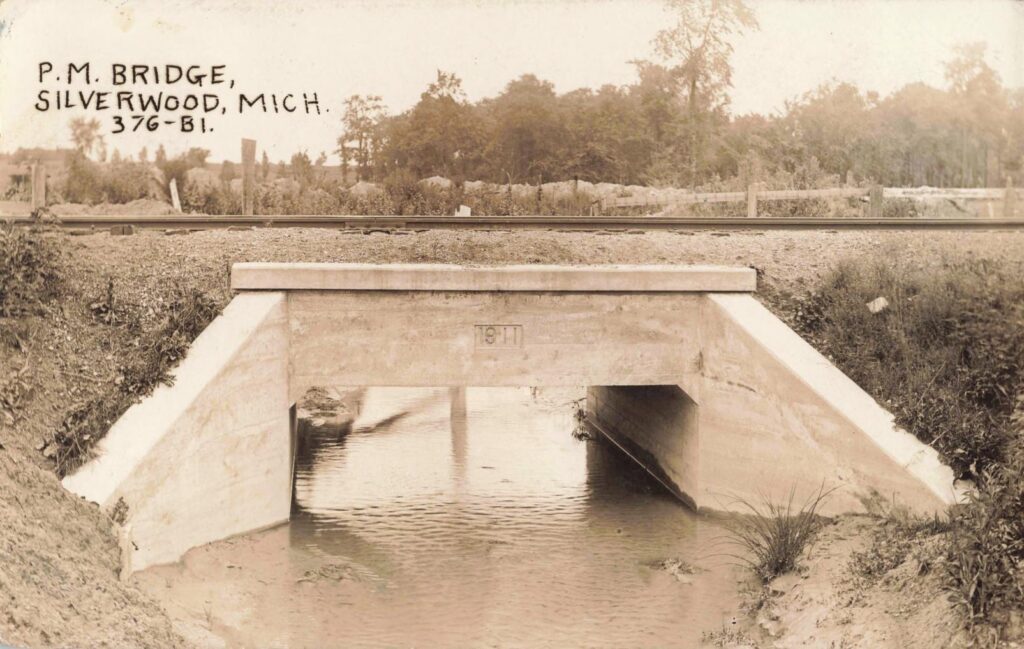
Tuscola County’s clay-heavy ground could hold water and weaken roads or rail beds. The culvert carried water beneath the track, protected the embankment and reduced washout risk.
It is a unique surviving record of Silverwood’s second phase. The first narrow-gauge line had been built cheaply to reach new territory. By 1911, the route was receiving durable concrete infrastructure intended for continued service.
Joseph Heister and an unanswered story
One of the most personal Silverwood cards identifies an elderly man as Joseph Heister.
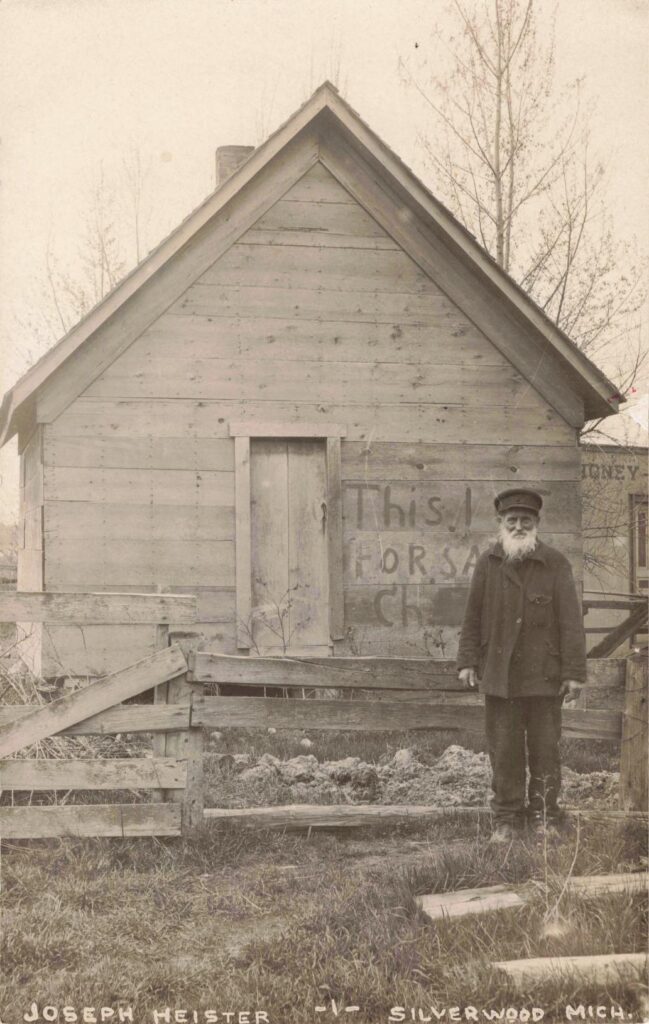
An 1895 Lapeer County newspaper mentioned a Joseph Heister of Silverwood during a visit by a post-office inspector. According to the brief and partly unclear item, Heister said he had sent the government a new “still water wheel” and expected a royalty.
The report does not establish whether the device was practical, patented or ever built. It does provide something rare: a hint of one resident’s hopes.
Why Silverwood is still worth remembering
The History of Silverwood Michigan challenges the usual assumption that every successful town sought incorporation and steady population growth.
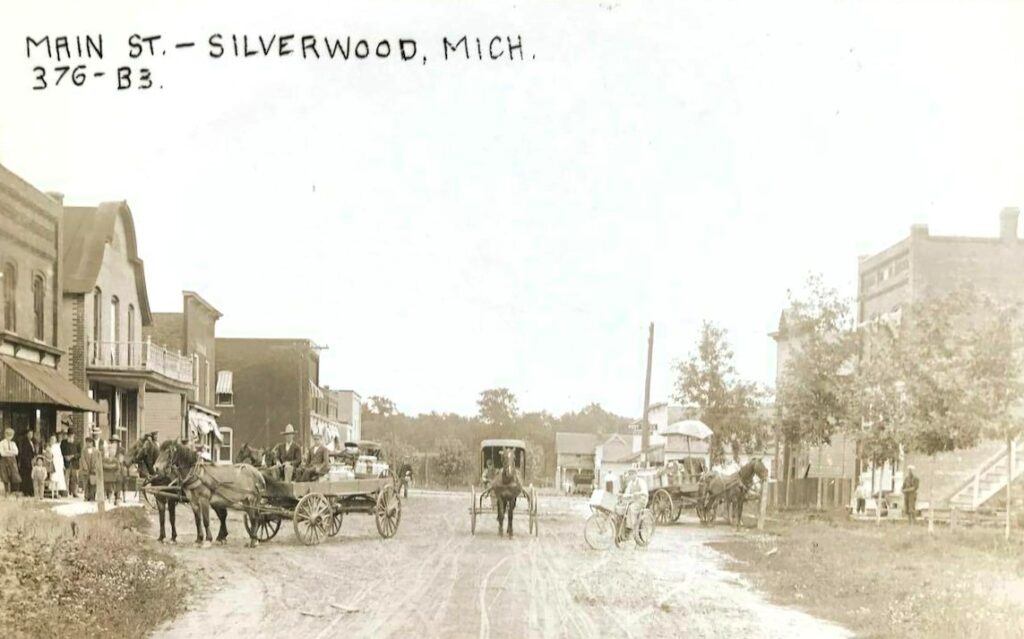
Silverwood had three names, a formal plat, railroad service, substantial businesses and strong public institutions. It served farms in two counties. It handled mail, freight, banking, schooling and worship.
Yet it remained unincorporated.
Its importance was not based on political status. It rested on usefulness. Silverwood gave farm families a place to ship, buy, borrow, learn, worship and meet.
The railroad made the town possible. The farms kept it working. The people gave it a name that finally stayed.
Works Cited, research limits, and quality review