 by
by Glen Arbor’s history begins before resort cottages, M-22 road trips and Sleeping Bear Dunes vacations. The Leelanau County village grew from Native homelands, fur trade routes, logging camps, steamship docks and Glen Lake resorts into one of northern Michigan’s best-known shoreline towns.
Today, Glen Arbor is closely tied to Sleeping Bear Dunes National Lakeshore, Glen Lake and M-22. But its older story is rooted in water routes, timber work, Great Lakes shipping, farming, fruit canning and the rise of northern Michigan tourism.
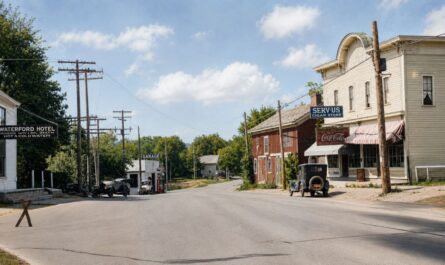
The Glen Arbor, Michigan, history isn’t written in textbooks—it’s etched into the shoreline, streets, and sunsets of this quiet Lake Michigan town. Our latest Michigan Moments video skips the tourist brochure and shows the town in wide-angle motion, just as it lives today. From early logging routes to downtown bike racks, every shot reflects how the past still shapes the present. If you’ve ever felt Glen Arbor’s calm stick with you long after you’ve left, this short video explains why.
Watch – History of Glen Arbor, Michigan: 5 Rare Views from the Early 1900s You’ll Stop Scrolling to View
Table of Contents – Glen Arbor Michigan History
Fast Facts About Glen Arbor History
| Fact | Detail |
|---|---|
| County | Leelanau County |
| Early settlement | Mid-1800s |
| Key waterway | Crystal River |
| Nearby historic site | Glen Haven |
| Major figure | D.H. Day |
| Tourism anchor | Sleeping Bear Dunes National Lakeshore |
| Best historic drive | M-22 |
Native Homelands and Early Trade
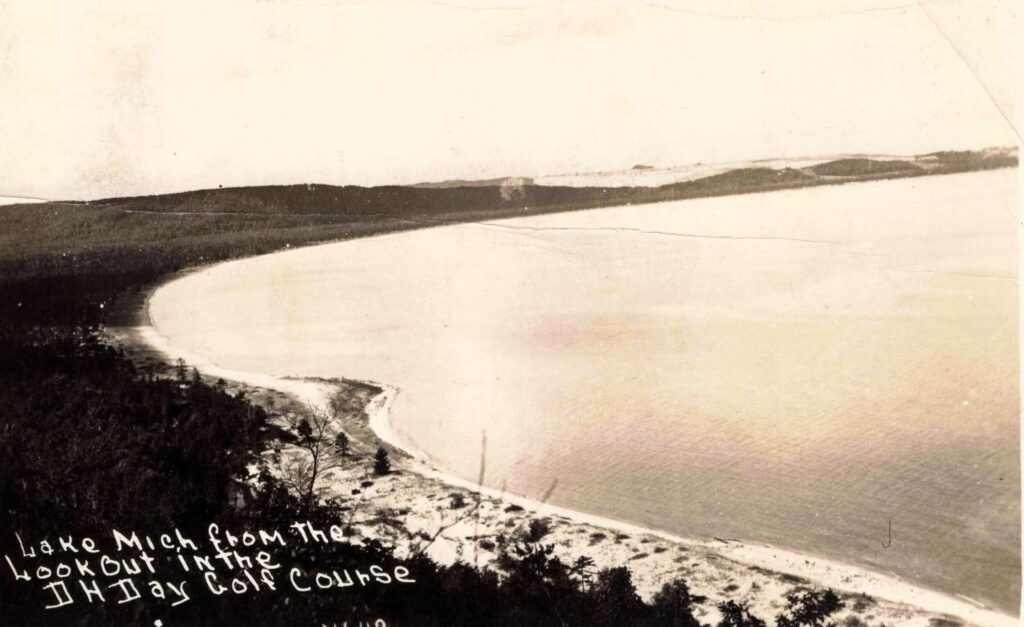
Long before Glen Arbor became a Lake Michigan resort town, the area was part of the homeland of Anishinaabe people, including Odawa, Ojibwe, and Potawatomi communities. The lakes, rivers, and wooded ridges of Leelanau County supported fishing, hunting, gathering, planting, and seasonal travel. The Crystal River, Glen Lake, and Lake Michigan were not scenic backdrops. They were working routes that connected families, camps and trade points across the region.
European trade changed the area in stages. French traders moved through the Great Lakes in the fur trade era, building business ties with Native communities who knew the water, weather, trails, and resources better than any newcomer. Trade depended on those relationships. Native people supplied furs, food, local knowledge, and access to inland routes. Traders brought metal tools, cloth, guns, kettles and other goods that altered daily life.
By the mid-1800s, the Glen Arbor area began to draw permanent non-Native settlement. Local history points to an early trading post near the mouth of the Crystal River around 1847 or 1848. John LaRue, who came from South Manitou Island, is often associated with that early post. He traded with Native people camped in the area, placing the future village at the edge of older Native travel networks and newer settler commerce.
That early trade period matters because it shows Glen Arbor did not begin as an isolated lumber town or summer retreat. Its first non-Native businesses grew near water routes already used for movement and exchange. The same geography that supported Native life later attracted traders, loggers, ship traffic, farmers, and resort visitors.
A fuller history of Glen Arbor should begin there. The village’s story includes sawmills, steamships, orchards and tourism, but those later chapters came after generations of Native presence in the Grand Traverse region.
The Quiet History of Glen Arbor Michigan
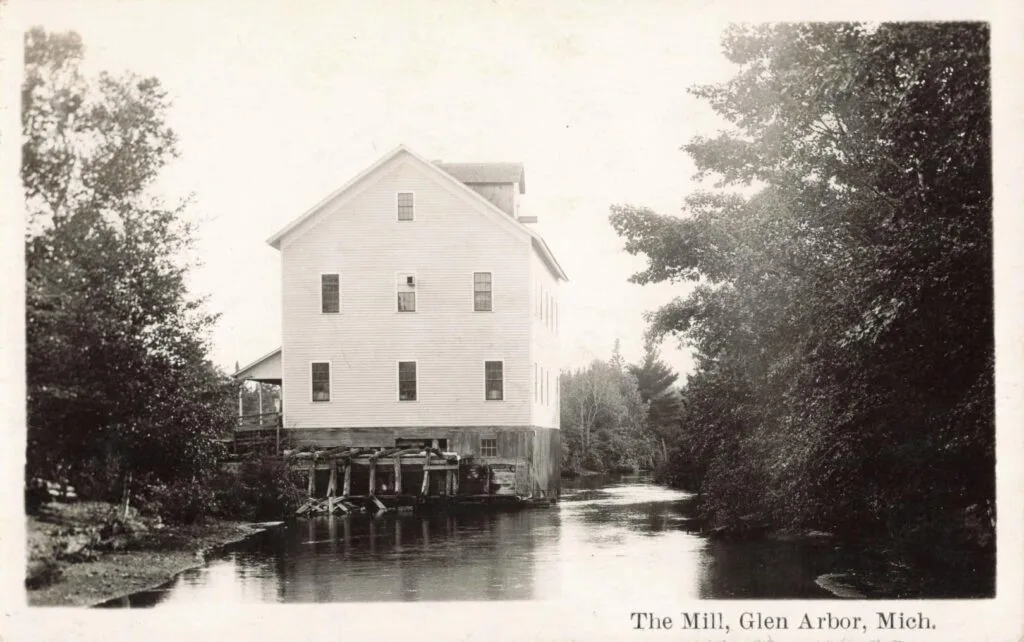
Glen Arbor, Michigan, history isn’t just about dates or landmarks. It’s about the feeling you get when driving down M-22 with the windows down. It’s about the way Glen Lake reflects the sky just after sunrise. Our latest wide-format video captures those moments—views that tell the town’s story without a single word.
From its origins as a northern lumber town to its current role as a peaceful destination in Leelanau County, Glen Arbor has always drawn people looking for stillness. This short video showcases that atmosphere through five wide-angle scenes that reflect what the town has been—and what it still is.
1. The M-22 Legacy: How a Road Helped Build Cottage Country
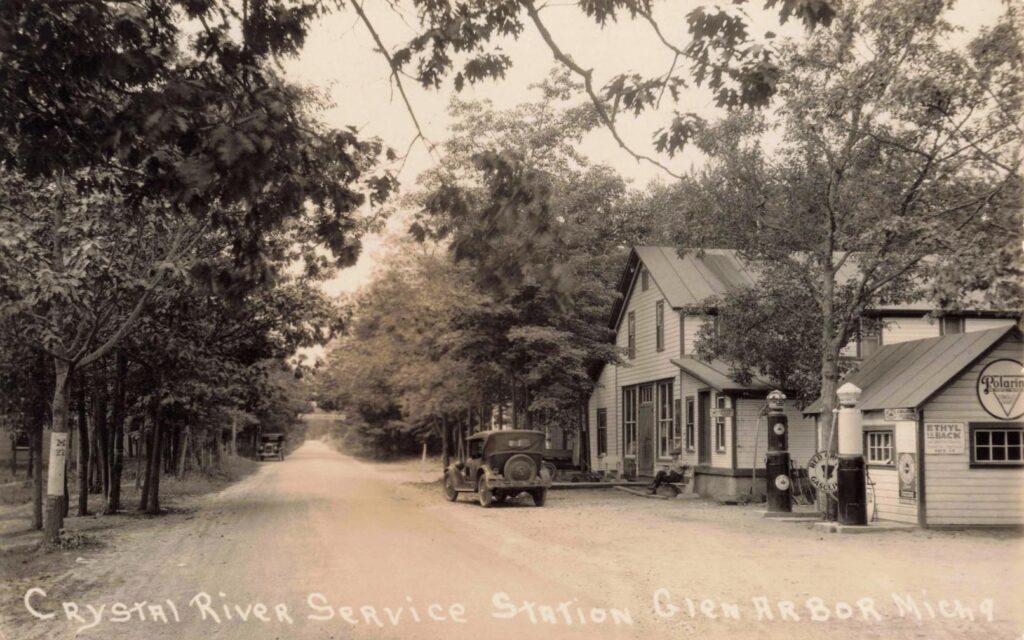
M-22 did not create Glen Arbor by itself. The village was already shaped by Native travel routes, lumber work, steamships, Glen Lake resorts and Sleeping Bear Bay. But the highway gave the region something lasting: a public route that tied those older places into one recognizable northern Michigan vacation corridor.
The road follows the Lake Michigan side of the Leelanau Peninsula and connects small towns, beaches, harbors, farms, wooded hills and inland lakes. For Glen Arbor, that mattered. M-22 made the village easier to reach by car at a time when tourism was shifting away from steamships and rail connections. Families who once arrived for long resort stays could now drive north for summer weekends, cottage vacations and fall color trips.
The highway helped turn Glen Arbor and nearby communities into cottage country. It gave visitors a simple way to move between Empire, Glen Arbor, Leland, Northport, Suttons Bay and Traverse City. It also linked Lake Michigan, Glen Lake, the Crystal River and Sleeping Bear Dunes into a single travel route. That made the area more appealing to families looking for a summer place, a rental cottage or a repeat vacation stop.
M-22 also shaped the region’s business life. Restaurants, galleries, marinas, outfitters, inns, campgrounds and roadside shops gained from steady auto traffic. The road gave small towns a shared identity without erasing their local character. Glen Arbor remained tied to Glen Lake and Sleeping Bear Dunes, while Leland kept its fishing village history and Suttons Bay built on its harbor and farm-country setting.
The rise of M-22 branding later turned the highway into a symbol of northern Michigan leisure. The road sign itself became shorthand for beach days, cottage weeks, dunes, orchards, bike rides and slow drives through Leelanau County. That image helped market the region, but it also brought pressure. Seasonal traffic, rising property values and short-term rentals changed the rhythm of towns that once depended on smaller resort crowds.
For Glen Arbor, the M-22 legacy is practical and cultural. The road made the village more accessible, helped expand tourism and supported the growth of a cottage-based economy. It also linked Glen Arbor’s modern identity to a wider shoreline route that many Michigan travelers now see as one of the state’s signature drives.
2. Glen Lake’s Calm
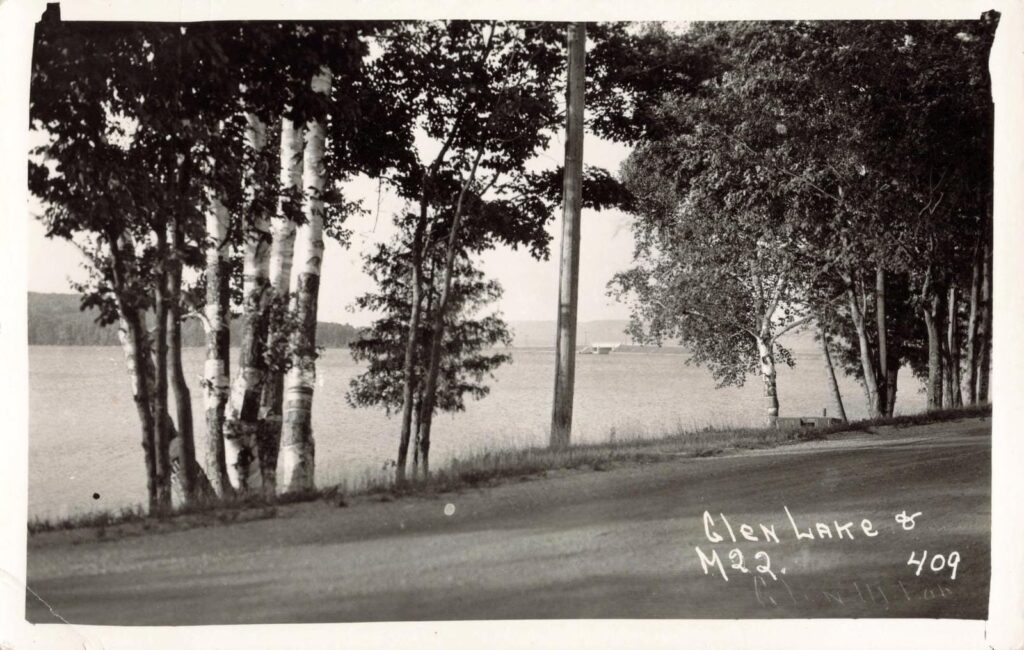
At the edge of town, Glen Lake has long served as both a resource and a refuge. Early settlers fished and farmed along its banks. Today, wide-angle shots of the lake at dawn show how little its beauty has changed. The video captures this moment in full frame—still, reflective, and serene.
3. Logging, Steamships and Glen Haven
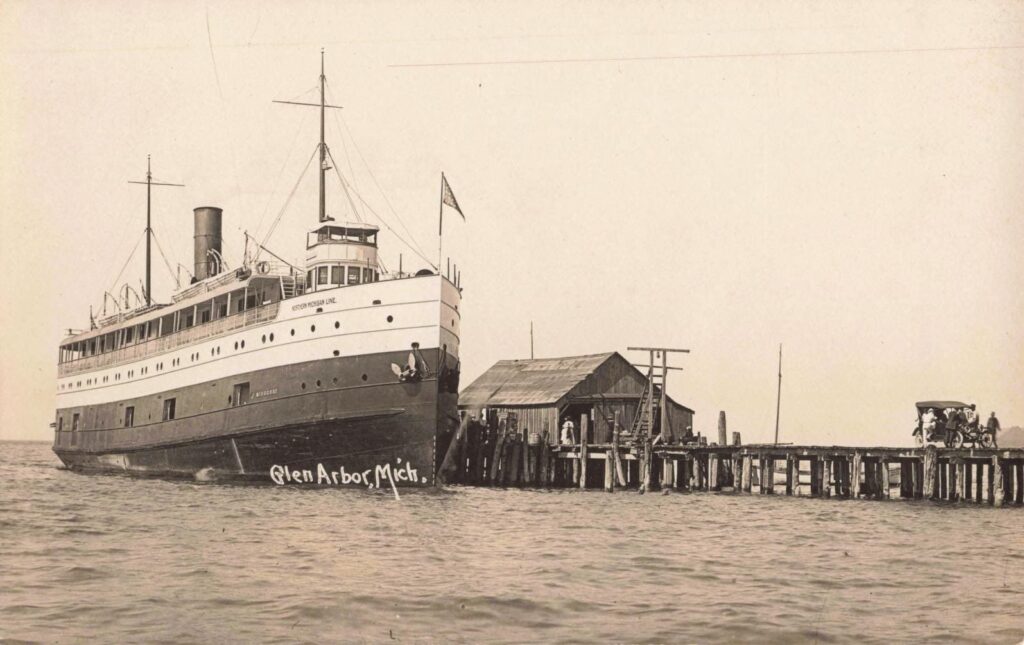
While the town’s early days focused on industry, the history of Glen Arbor Michigan shifted in the early 20th century.
Glen Arbor’s early growth was tied closely to Glen Haven, the small Lake Michigan settlement west of the village. In the mid-1800s, the area’s economy depended on timber, water access and the steady movement of people and goods along the Great Lakes.
In 1857, C.C. McCarty built a sawmill and inn on the beach west of Glen Arbor. He called the settlement Sleeping Bearville. The location gave workers access to timber and gave boats a protected stop near Sleeping Bear Bay. A dock was added in 1865, turning the settlement into a working link between the forests, the inland lakes and Lake Michigan shipping.
Logs were moved from the woods to mills and docks by water, wagon or sled, depending on the season. McCarty also built a sawmill on Little Glen Lake, where tugboats could move logs across the water. Once the lumber was cut, it could be hauled to the Glen Haven dock for shipment or use by passing vessels.
Steamships made Glen Haven more than a local lumber camp. Great Lakes boats needed fuel before coal fully replaced cordwood. Glen Haven became a cordwood station, where crews loaded cut wood onto steamers traveling between Lake Michigan ports. That business connected the Glen Arbor area to Chicago, Milwaukee, and other Great Lakes markets.
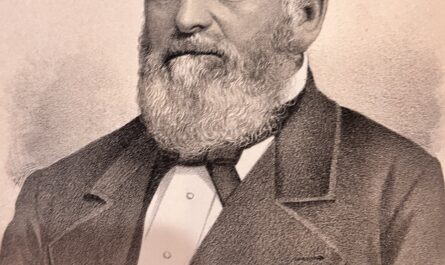
The Civil War slowed development when many settlers left to serve. After the war, Glen Haven again drew business interest. The Northern Transit Company used the settlement as a refueling stop for its steamship fleet. In 1878, company president Philo Chamberlain acquired Glen Haven and sent D.H. Day to manage the operation.
Day later became one of the most important figures in the region’s history. He acquired much of the company’s property, including Glen Haven, and helped shift the area from raw timber and steamship work toward farming, fruit growing, canning and tourism.
That shift did not happen overnight. Glen Haven’s docks, mills, inns and cordwood piles show how Glen Arbor first fit into the Great Lakes economy. Before the village became known for summer homes, M-22 drives and Sleeping Bear Dunes vacations, it was part of a working shoreline built around wood, boats and hard labor.
Images on this page may contain affiliate links in which we may receive a commission. See our affiliate disclosure for details.
4. Sleeping Bear Dunes and Glen Arbor’s Modern Identity
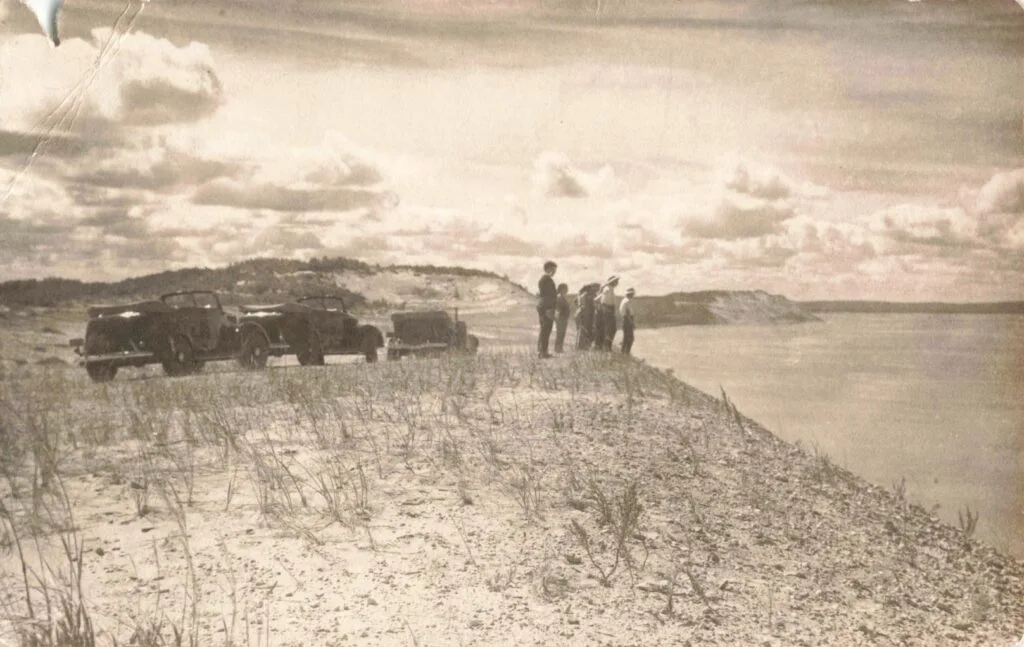
The creation of Sleeping Bear Dunes National Lakeshore changed Glen Arbor’s future. Congress authorized the park on Oct. 21, 1970, placing dunes, forests, inland lakes, historic farms and Lake Michigan shoreline under federal protection. The decision also gave Glen Arbor a new role. It became one of the main gateway communities for visitors heading into the national lakeshore.
The change was not simple. Federal park creation brought debate over land, private property and local control. Families who had lived, farmed or vacationed in the area for generations saw parts of the region shift into public ownership. Supporters saw the park as a way to protect one of Michigan’s most striking shoreline regions from heavy development.
Over time, the park reshaped Glen Arbor’s economy and public image. The village was no longer known only for Glen Lake cottages, small resorts, summer shops, and M-22 drives. It became tied to national travel, outdoor recreation, historic preservation and the broader Sleeping Bear story.
That identity now reaches beyond the dunes. Glen Haven, the D.H. Day farm, Port Oneida, the Crystal River, the Pierce Stocking Scenic Drive and the Sleeping Bear Heritage Trail all help connect Glen Arbor’s past with its present. Visitors can bike from Glen Arbor toward the Dune Climb, tour preserved farm districts, visit the old Glen Haven general store or stand on bluffs above Lake Michigan.
For Glen Arbor, Sleeping Bear Dunes did more than bring traffic. It gave the village a lasting public role as a small town beside a nationally known park. The same water, dunes and forests that shaped Native travel, lumber work, steamship stops and resort life now support one of Michigan’s best-known visitor destinations.
5. The Everyday Glen Arbor
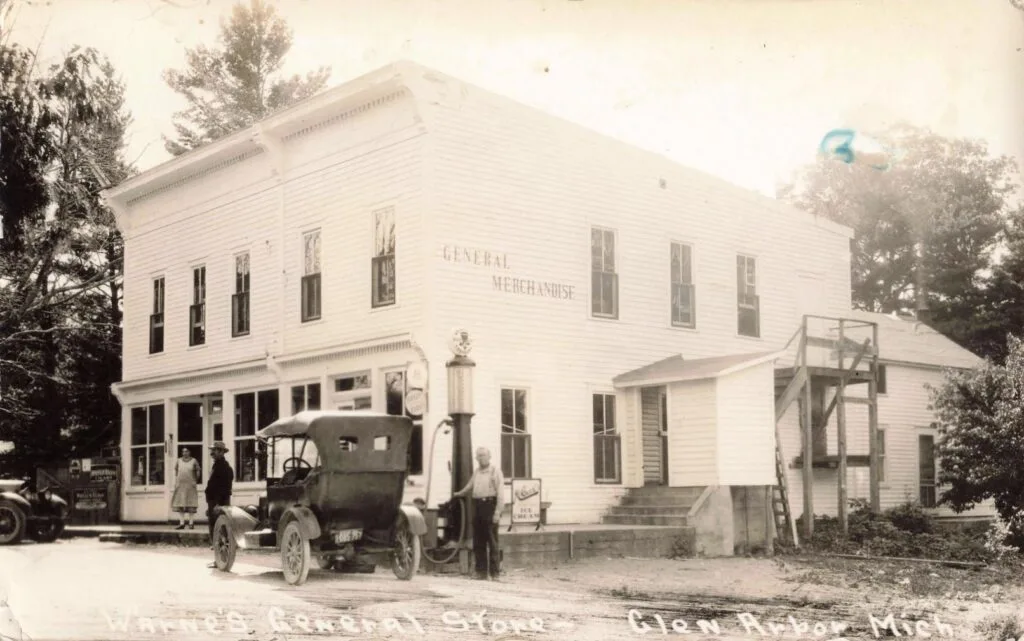
It’s easy to focus on scenic shots, but Glen Arbor’s charm lives in the daily rhythm. The video captures a downtown moment: a shopkeeper opens her store, a dog trots beside a bike, and flags flutter in the breeze. It’s a living snapshot—proof that the history of Glen Arbor Michigan is still being written.
Historic Stops Near Glen Arbor Along M-22
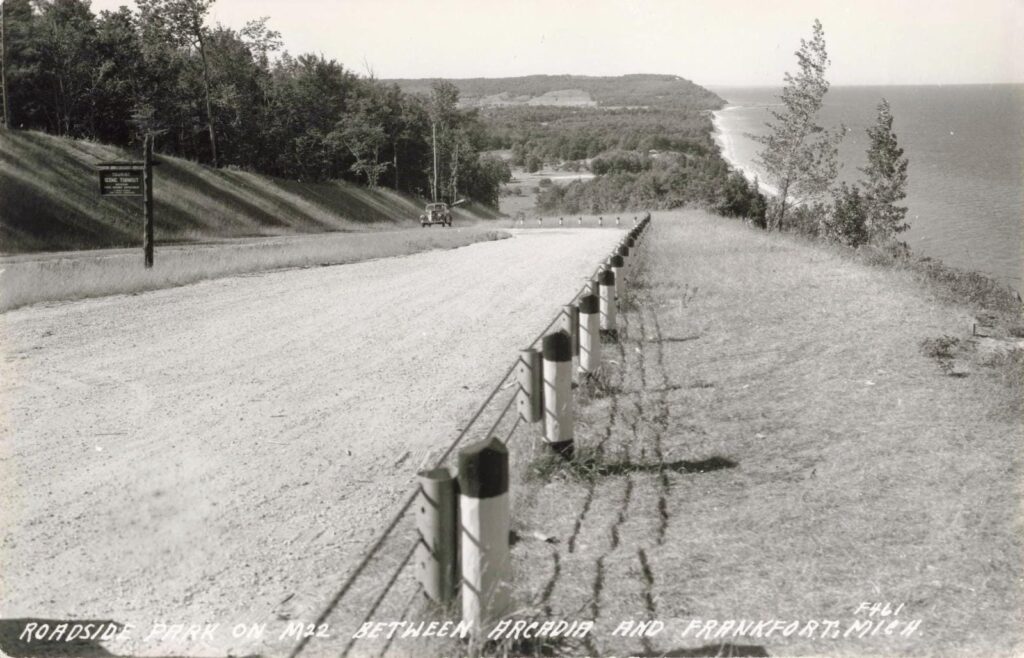
The scenic highway M-22 is more than just a road—it’s one of Michigan’s most iconic drives and a central piece of the history of Glen Arbor Michigan. First designated in the early 1920s as part of Michigan’s state trunkline system, M-22 originally served as a key coastal route connecting small towns along the Lake Michigan shoreline in Leelanau and Benzie counties. Over time, it became a beloved path for travelers seeking quiet roads, sweeping views, and authentic small-town stops.
In Glen Arbor, M-22 curves gently past Glen Lake and through the heart of town, connecting it to Sleeping Bear Dunes National Lakeshore, Empire, and Leland. This stretch is part of what makes the region a destination—not just for its destinations, but for the journey itself. Unlike the famed “Tunnel of Trees” on M-119 farther north, M-22’s beauty comes from open lake vistas, thick northern hardwoods, and stretches of road where sand dunes rise just beyond the shoulder.
Notable stops along this route include:
Sleeping Bear Dunes Overlook
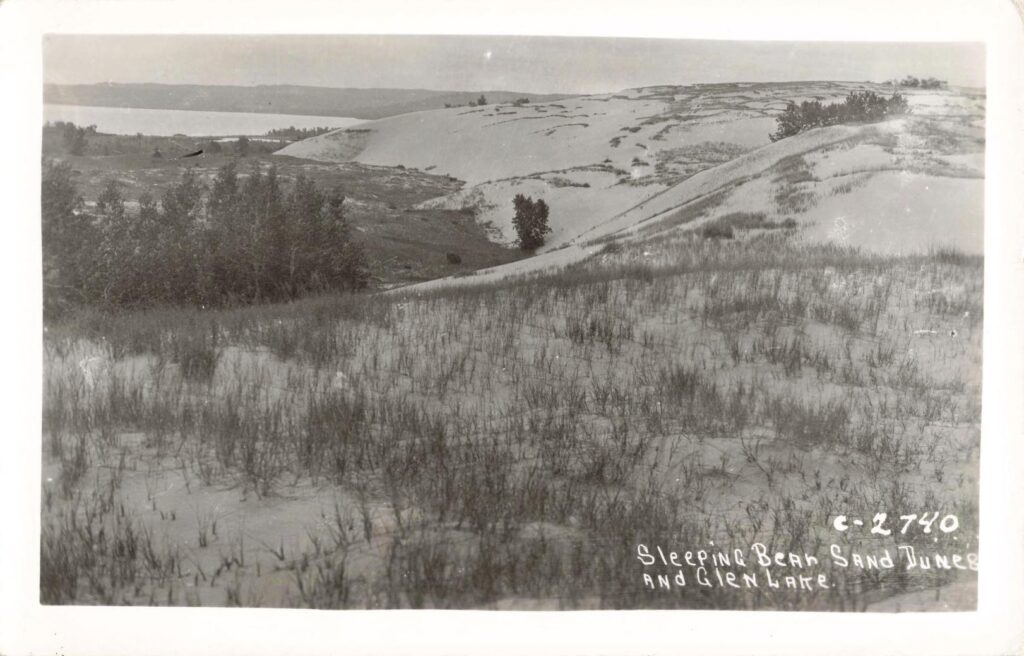
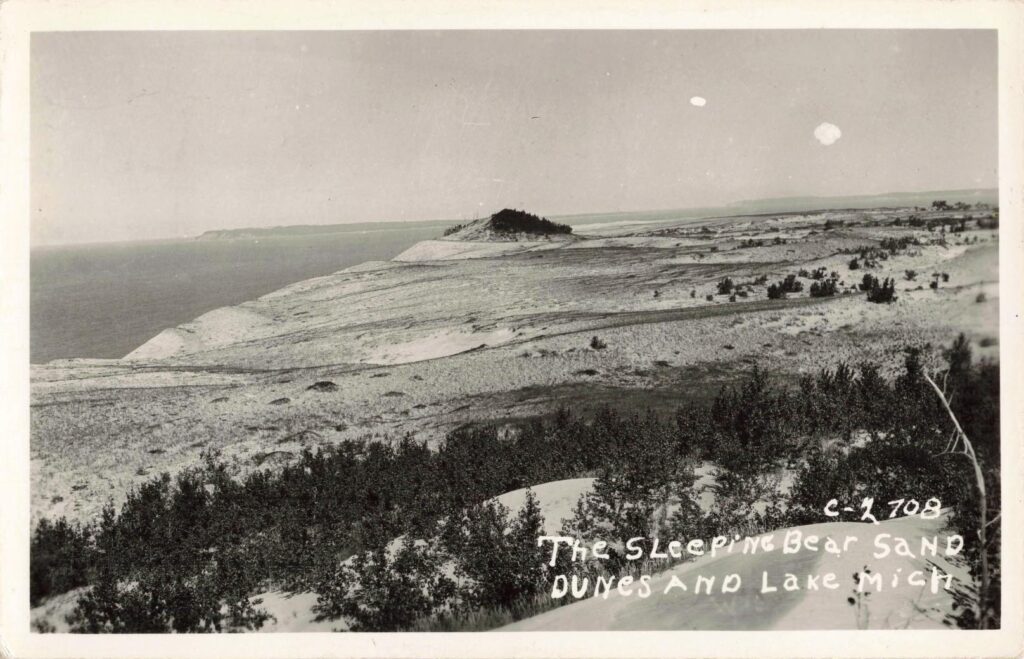
South of Glen Arbor, the Lake Michigan Overlook on Pierce Stocking Scenic Drive gives visitors one of the clearest views of Sleeping Bear Dunes’ scale. The stop sits high above Lake Michigan, where the dune face drops toward the water and the Manitou Islands sit offshore. It is one of the park’s best-known viewpoints and a strong reminder that Glen Arbor’s modern identity is tied as much to the national lakeshore as to the village itself. The overlook also helps explain why the area became a major tourist draw after the automobile age made short scenic drives part of northern Michigan travel.
Glen Haven Historic Village
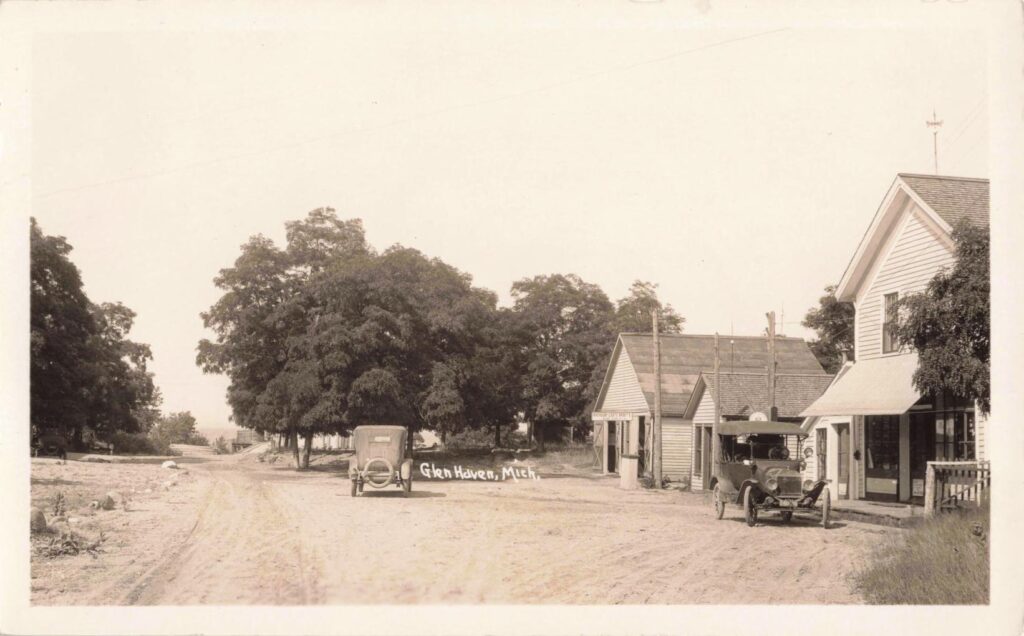
Glen Haven Historic Village gives visitors a direct look at the working shoreline that helped shape Glen Arbor’s early economy. The National Park Service describes Glen Haven as one of the best-preserved cordwood stations on the eastern shore of Lake Michigan. The village began as a 19th-century port settlement tied to timber, docks, steamships and fuel for passing vessels. Over time, it shifted into farming, fruit canning and tourism. Today, preserved buildings such as the general store, blacksmith shop, cannery and maritime museum help show how a once-busy company town became part of Sleeping Bear Dunes National Lakeshore.
Pierce Stocking Scenic Drive
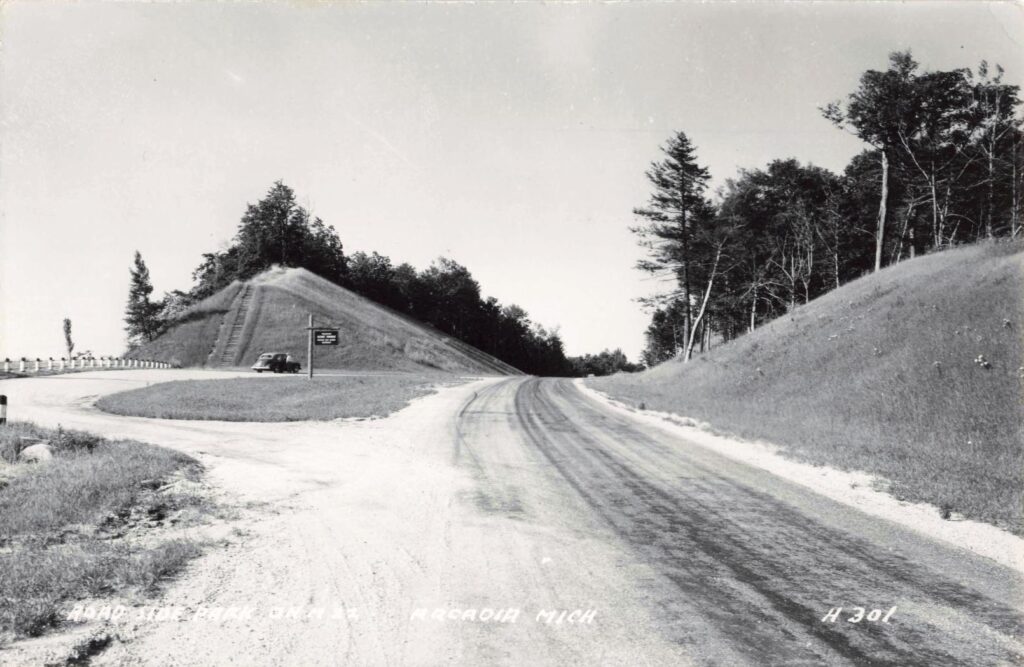
Pierce Stocking Scenic Drive is one of the strongest short trips off M-22 near Glen Arbor. The 7.4-mile, one-way loop includes 12 stops through forest, dune country and high overlooks above Glen Lake and Lake Michigan. The road began as a private scenic route built by Pierce Stocking, a former lumberman who wanted visitors to see the dunes, lake and islands from the bluffs. It opened to the public in 1967 and became part of Sleeping Bear Dunes National Lakeshore in 1977. For Glen Arbor visitors, the drive connects natural history, logging history and modern park tourism in one compact route.
Big Glen Lake and Little Glen Lake
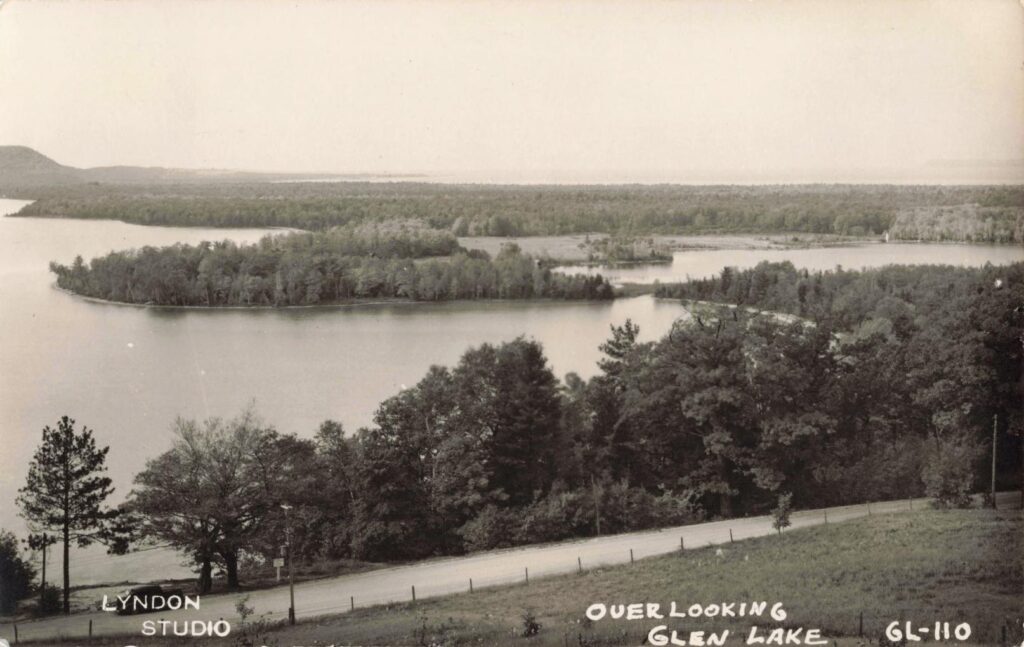
Big Glen Lake and Little Glen Lake are central to Glen Arbor’s resort and cottage-country identity. The two bodies of water are connected by a narrow channel crossed by M-22, with Big Glen Lake to the east and Little Glen Lake to the west. Their blue-green color is not just a postcard effect. The National Park Service says Glen Lake is fed by clear groundwater rather than dark runoff, allowing sunlight to reflect off the white sandy bottom. Big Glen is much deeper, while Little Glen is shallower, creating different shades of blue across the lake. The result helped make Glen Lake one of the defining images of the Glen Arbor area.
Port Oneida Rural Historic District
A short drive north of Glen Arbor brings visitors to Port Oneida Rural Historic District, one of the strongest nearby history stops. The district sits inside Sleeping Bear Dunes National Lakeshore and preserves farmsteads, fields, barns, orchards and rural roads tied to Leelanau County’s agricultural past. The National Park Service says the district covers 3,400 acres and includes 121 buildings, five sites and 20 structures tied to its historic importance from 1870 to 1945. For Glen Arbor visitors, Port Oneida adds context: the region’s story is not only about dunes and beaches. It is also about farm families, rural work and land-use change.
For those drawn to Glen Arbor, Michigan, history, M-22 provides a literal path through time. Old fishing cabins, retired cherry orchards, and hand-painted signs dot the route. It’s not just a means of travel—it’s part of the story.
Webcam – Glen Arbor Artisans
Glen Arbor: Glen Arbor ArtisansHistoric Timeline for Glen Arbor
| Year | Event |
|---|---|
| Before 1800s | Odawa, Ojibwe and Potawatomi communities live, fish, farm and travel in the region. |
| 1847 | Trading post established near the Crystal River. |
| 1854 | John E. Fisher arrives from Wisconsin. |
| 1856 | Glen Arbor is formally organized. |
| 1857 | C.C. McCarty builds a sawmill and inn west of Glen Arbor. |
| 1865 | Glen Haven dock is added. |
| 1878 | D.H. Day arrives as agent for Northern Transit Company. |
| Early 1900s | Glen Lake resorts and tourism grow. |
| 1935 | Sleeping Bear Dunesmobile Rides begin in Glen Haven. |
| 1970 | Sleeping Bear Dunes National Lakeshore is created. |
5 Frequently Asked Questions About Glen Arbor, Michigan History
What is Glen Arbor, Michigan, known for?
Glen Arbor is known for Glen Lake, the Crystal River, M-22, nearby Glen Haven and its role as a gateway to Sleeping Bear Dunes National Lakeshore.
Who founded Glen Arbor, Michigan?
John E. Fisher, who came from Wisconsin in 1854, is credited by the National Park Service with founding Glen Arbor. The village was formally organized in 1856.
How did Glen Arbor get its name?
Local history says the name came from trees covered with grape vines, which gave early settlers the image of a wooded arbor.
What industry shaped early Glen Arbor?
Logging, cordwood, shipping and milling shaped the area before farming, canning and tourism became more important.
How is Glen Haven connected to Glen Arbor?
Glen Haven developed west of Glen Arbor as a sawmill, dock, cordwood and steamship settlement. It later became tied to D.H. Day, fruit growing, canning and tourism.
Why Glen Arbor’s Story Sticks
Glen Arbor’s history still shapes how the town works today. The same routes that once moved traders, logs, steamship passengers and farm goods now bring drivers, cyclists, paddlers and park visitors. That continuity gives the village more than scenery. It gives Glen Arbor a layered identity built from Native homelands, Great Lakes commerce, rural settlement and public preservation.
Northwest Michigan History Videos
Short Michigan Moments videos on towns, railroads, fires, lakes and early tourism in Northwest Lower Michigan.
History of Acme Michigan: From Mill Creek to Resort Playground
Watch on YouTubeLake Ann, Michigan: The Lumber Town That Fire Forced to Change
Watch on YouTubeGrawn, Michigan — How a Railroad Stop Built a Northern Michigan Town
Watch on YouTubeHistory of Interlochen Michigan — Between Two Lakes, Between Two Eras
Watch on YouTubeHistory of Empire Michigan: The Mill Town Fire That Changed Everything
Watch on YouTubeHistory of Glen Arbor, Michigan: 5 Rare Views from the Early 1900s
Watch on YouTubeSources Cited for Glen Arbor Michigan History
- Glen Lake Chamber of Commerce. “History.” Glen Lake Chamber of Commerce. Accessed 7 July 2026.
- Leelanau.com. “Glen Arbor Area History.” Leelanau.com. Accessed 7 July 2026.
- Sleeping Bear Dunes Visitors Bureau. “Area History.” Sleeping Bear Dunes Visitors Bureau. Accessed 7 July 2026.
- University of Michigan Library. “Indigenous Peoples of Michigan.” University of Michigan Library Research Guides. Accessed 7 July 2026.
- National Park Service. “History.” Sleeping Bear Dunes National Lakeshore, U.S. Department of the Interior. Accessed 7 July 2026.
- National Park Service. “People.” Sleeping Bear Dunes National Lakeshore, U.S. Department of the Interior. Accessed 7 July 2026.
- National Park Service. “Glen Haven.” Sleeping Bear Dunes National Lakeshore, U.S. Department of the Interior. Accessed 7 July 2026.
- National Park Service. “Glen Haven Historic Village.” Sleeping Bear Dunes National Lakeshore, U.S. Department of the Interior. Accessed 7 July 2026.
- National Park Service. “D. H. Day.” Sleeping Bear Dunes National Lakeshore, U.S. Department of the Interior. Accessed 7 July 2026.
- National Park Service. “Park Statistics.” Sleeping Bear Dunes National Lakeshore, U.S. Department of the Interior. Accessed 7 July 2026.
- National Park Service. “Sleeping Bear Heritage Trail.” Sleeping Bear Dunes National Lakeshore, U.S. Department of the Interior. Accessed 7 July 2026.
- National Park Service. “Port Oneida Rural Historic District.” National Park Service, U.S. Department of the Interior. Accessed 7 July 2026.
- National Park Service. “Pierce Stocking Virtual Tour.” Sleeping Bear Dunes National Lakeshore, U.S. Department of the Interior. Accessed 7 July 2026.
- National Park Service. “Frequently Asked Questions.” Sleeping Bear Dunes National Lakeshore, U.S. Department of the Interior. Accessed 7 July 2026.
- Glen Lake Chamber of Commerce. “FAQ.” Glen Lake Chamber of Commerce. Accessed 7 July 2026.
- M-22 Pure Michigan Byway. “Home.” M-22 Pure Michigan Byway. Accessed 7 July 2026.
- West Michigan Guides. “M-22 Scenic Drive.” West Michigan Guides. Accessed 7 July 2026.
- Pure Michigan. “Traverse City and Leelanau Peninsula Road Trip.” Michigan.org, Michigan Economic Development Corporation. Accessed 7 July 2026.