
 by
by 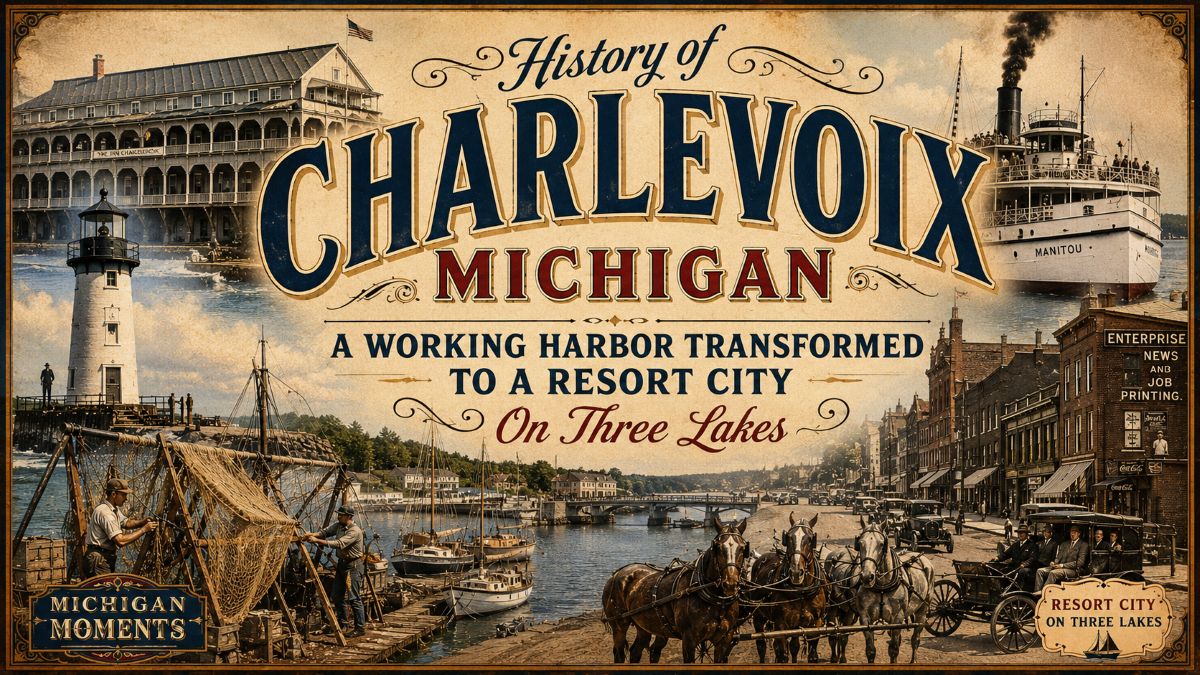
The History of Charlevoix Michigan begins with water. The town sits on a narrow strip of land where Lake Michigan, Round Lake, and Lake Charlevoix meet through the Pine River channel. That geography made Charlevoix different from many northern Michigan towns. It was not only a lakefront community. It was a working passage between the big lake and a protected inland harbor.
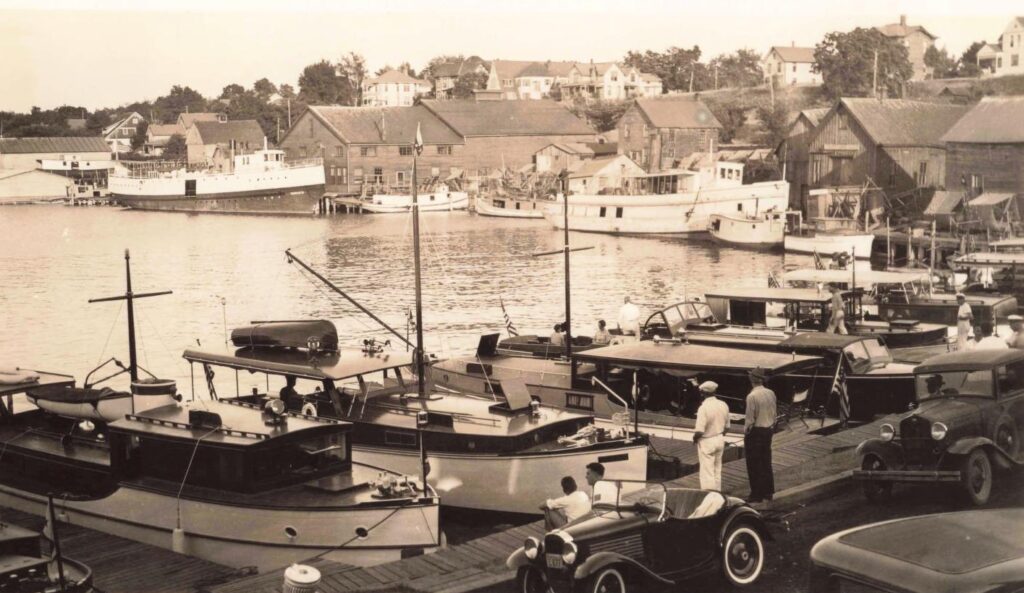
Before the town became Charlevoix, it was known as Pine River. The Charlevoix Historical Society says the early settlement took its name from the waterway and that the town officially adopted the Charlevoix name in 1879. The name honors Father Pierre François Xavier de Charlevoix, a French Jesuit scholar and traveler associated with the Great Lakes in the early 1700s.
The Pine River Channel: The Cut That Made Charlevoix
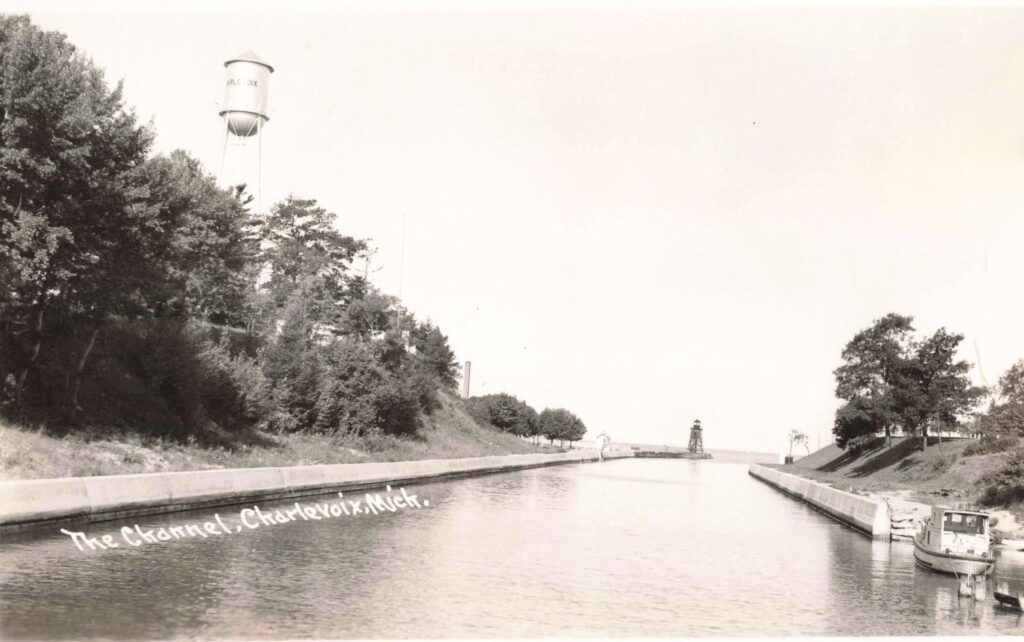
The Pine River Channel is the reason Charlevoix became more than a pretty town between lakes. Before 1869, the waterway was narrow, shallow and difficult to use. The old route was clogged with logs and sand. Boats trying to move between Lake Michigan and the protected waters of Round Lake and Pine Lake, now Lake Charlevoix, faced a hard problem. The water was close, but it was not yet a dependable highway.
Local residents solved it with muscle, small machinery, and a bold civic gamble. In 1869, the Charlevoix Harbor and Improvement Company cut through the sand and opened the connection between Lake Michigan and Round Lake, and later helped complete the link to Pine Lake. The work reportedly cost less than $1,500. That small project changed the town’s future. It lowered lake levels, opened navigation and turned Charlevoix into a working harbor with direct access to the Great Lakes.
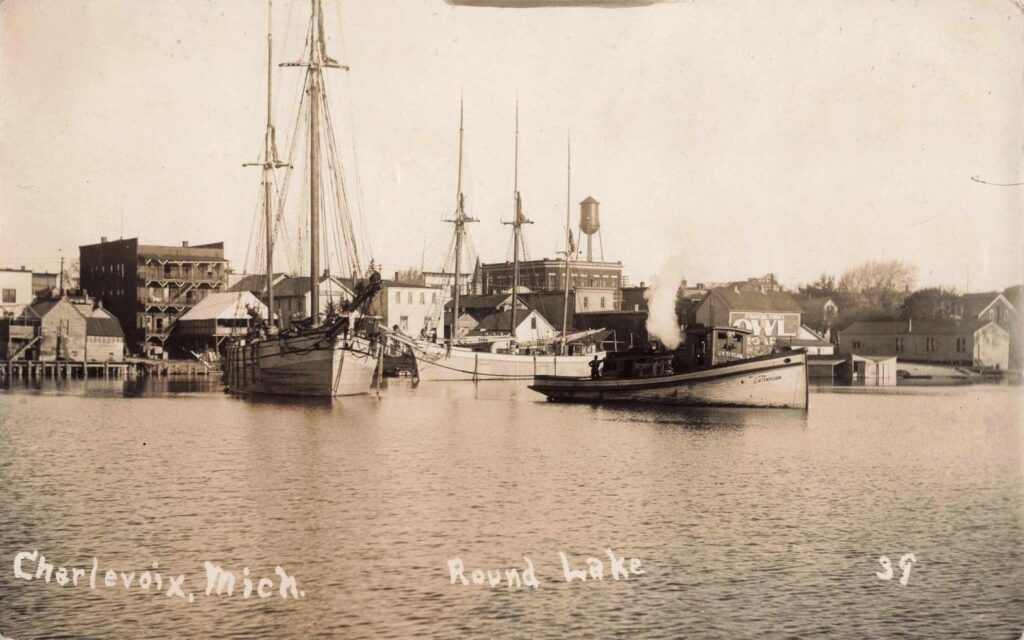
One vessel deserves special mention. The small tug Minnie Warren is remembered for helping open the route in 1869 by pulling away the final gravel and sand deposits. It is the kind of detail that gives the channel story its human scale. Charlevoix’s future did not begin with a grand federal plan. It began with local residents, a stubborn sand barrier, and a tugboat working hard in shallow water.
The change was immediate and lasting. Before the cut, vessels had to contend with the old Pine River, shallow rapids, and a sand dune barrier. After dredging, Charlevoix had what every Lake Michigan port wanted: a safer entrance, a protected inner harbor and access to the inland lake system. Lumber schooners, passenger steamers, fishing boats, and freight craft could now pass into Round Lake instead of remaining exposed on Lake Michigan.
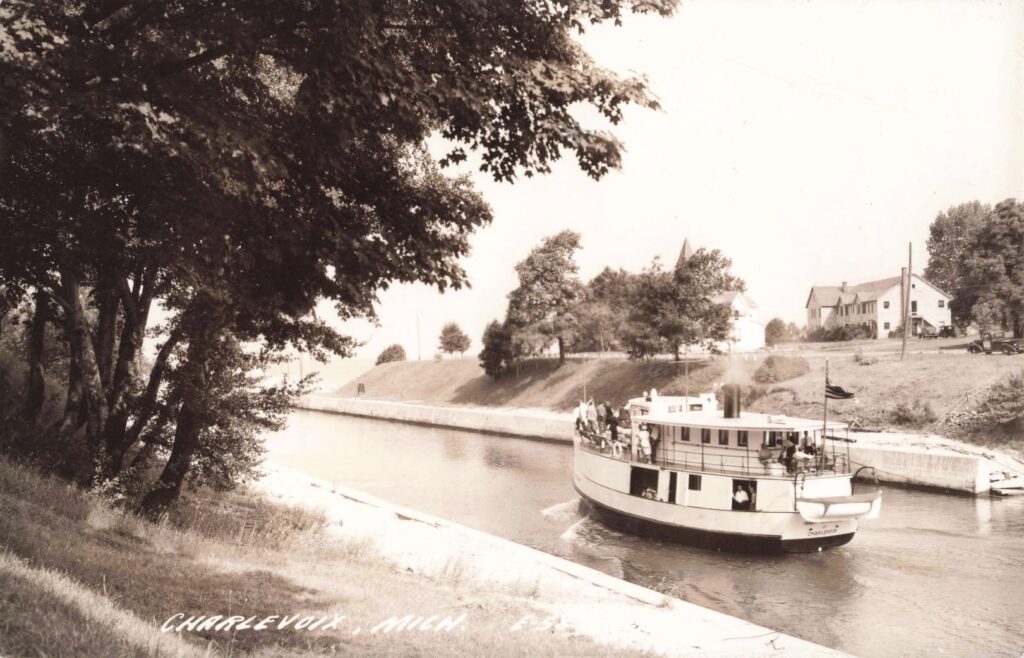
Federal involvement soon followed. In 1876, Charlevoix was declared a port of entry, bringing federal oversight and funding for channel improvement, widening, and pier construction. Between 1868 and 1884, federal work widened the Pine River Channel from about 75 feet to more than 100 feet and deepened it from less than 6 feet to 12 feet. That work allowed larger vessels to move through safely and helped make Charlevoix one of the busiest Great Lakes ports of its era.
The channel also reshaped Bridge Street. The town’s main business district grew along the crossing, and the street took its name from the bridge over the shipping channel. A swing bridge was installed in 1878, and a new bridge followed in 1901 as vessel and street traffic increased. The current US-31 bascule bridge was completed in 1949. It carries Bridge Street across the Pine River Channel and remains one of Charlevoix’s most recognizable working features.
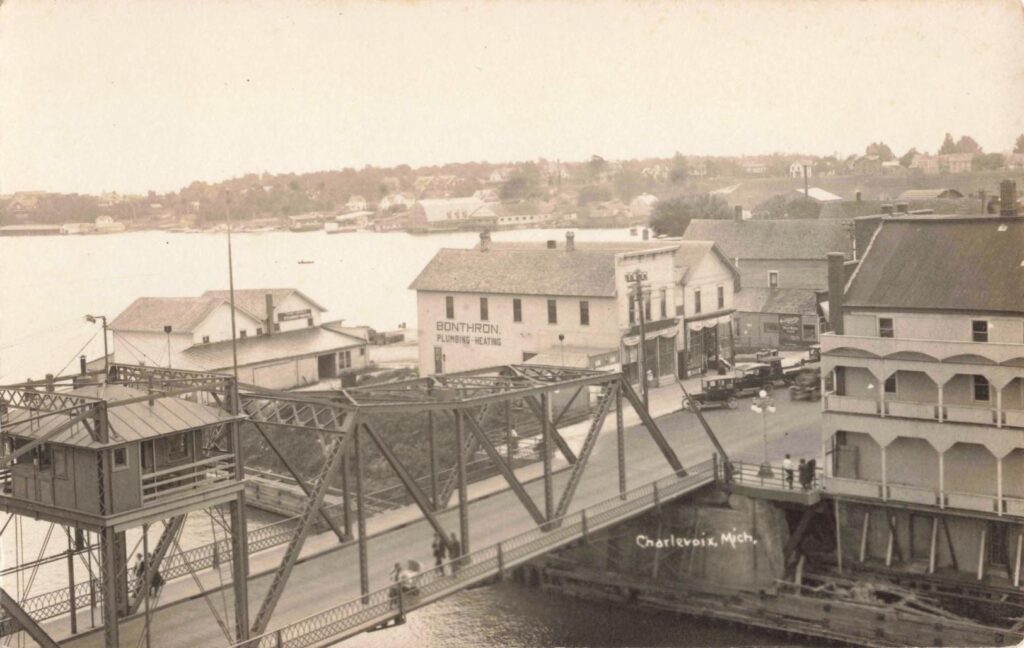
The channel is Charlevoix’s most important piece of infrastructure. It made the lumber trade practical. It strengthened commercial fishing. It gave steamships a reliable harbor. It helped build the hotel era. It also explains why Charlevoix became known as a resort city on three lakes. The beauty may have drawn the visitor’s eye, but the channel made the town work.
Fishing Came Before The Fancy Hotels
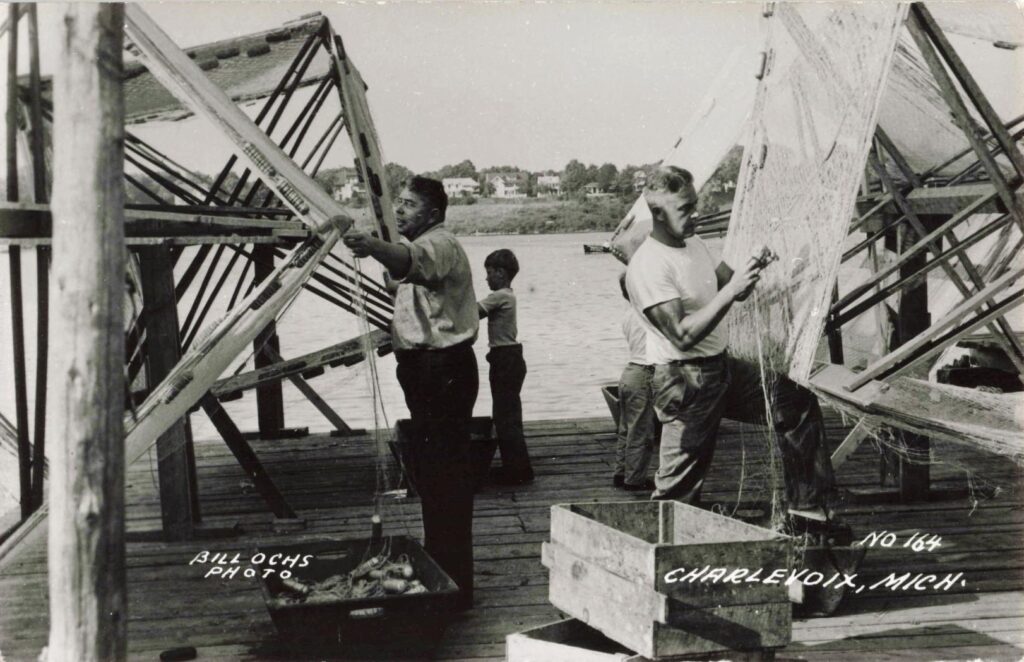
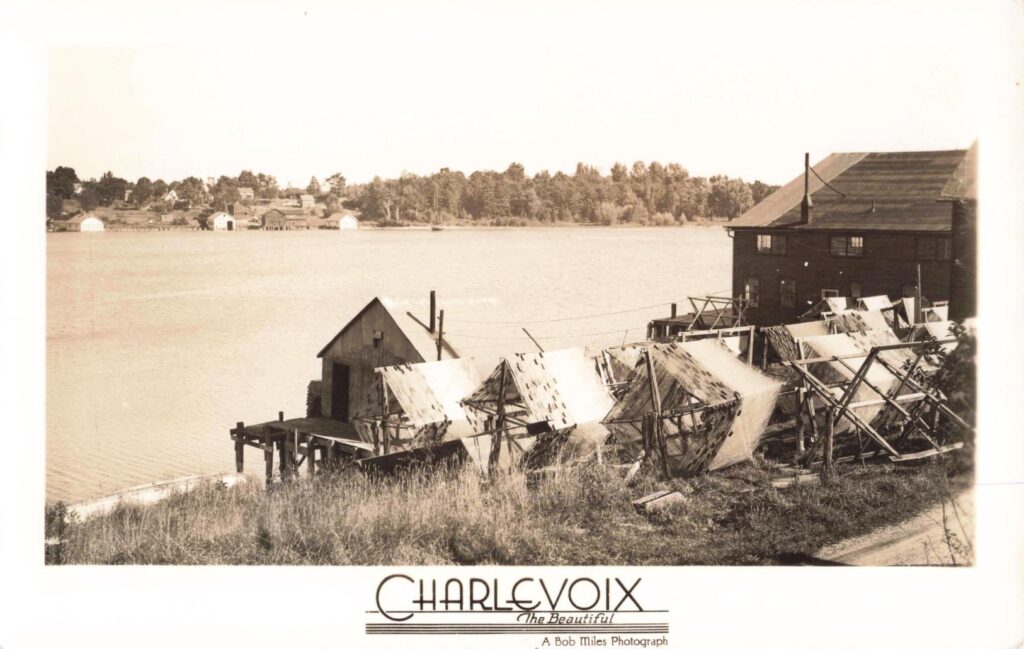
Charlevoix’s resort fame can make people forget its working roots. Fishing came early and stayed important. The Charlevoix Historical Society says Booth Fisheries moved its Petoskey branch to Charlevoix in December 1903 and brought freezing lockers with room for 1 million pounds of fish. The local newspaper editor argued that the move made Charlevoix the largest fishing point on the Great Lakes.
That is the counterintuitive heart of the town’s story. Visitors came for clean air, hotels and water views. But the town’s daily life also included fish houses, net reels, tugs, ice, freight and winter net repair.
Lumber, Docks, And The First Big Push
Lumber helped put Pine River on the map. The Historical Society reports that a mill opened near Round Lake in 1868 and later supplied lumber for rebuilding Chicago after the 1871 fire. In 1876, John Nicholls gave the business its lasting name, the Charlevoix Lumber Company.
This industrial phase shaped the harbor before summer travelers made it famous. The same water that later carried passenger steamers first moved wood, tools, and freight.
Steamers Turned Charlevoix Into A Summer Arrival Point
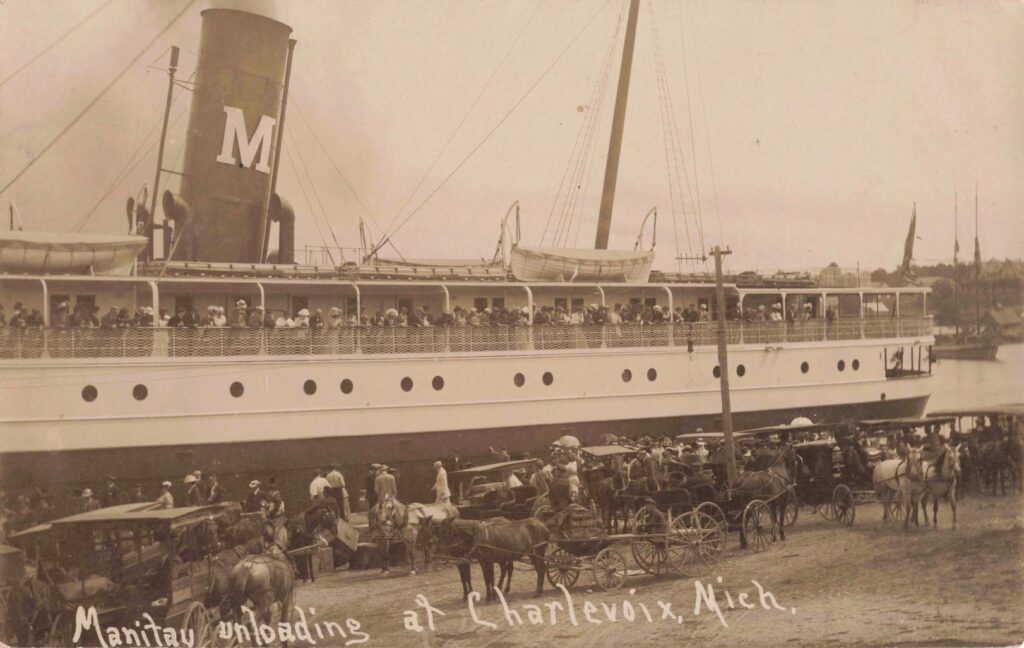
By the early 1900s, Charlevoix was a summer arrival point. Passenger steamers brought visitors from larger cities on the Great Lakes and linked the town to other resort stops. The Manitou, Alabama, and other lake liners were part of the resort travel system that made Charlevoix known far outside northern Michigan.
The steamer scene says a great deal. Charlevoix did not wait passively for tourists. It built the means to receive them. Docks, hotels, streets, drivers, and shopkeepers all worked together to turn arrival into an experience.
Rail Service Made The Resort Boom Practical
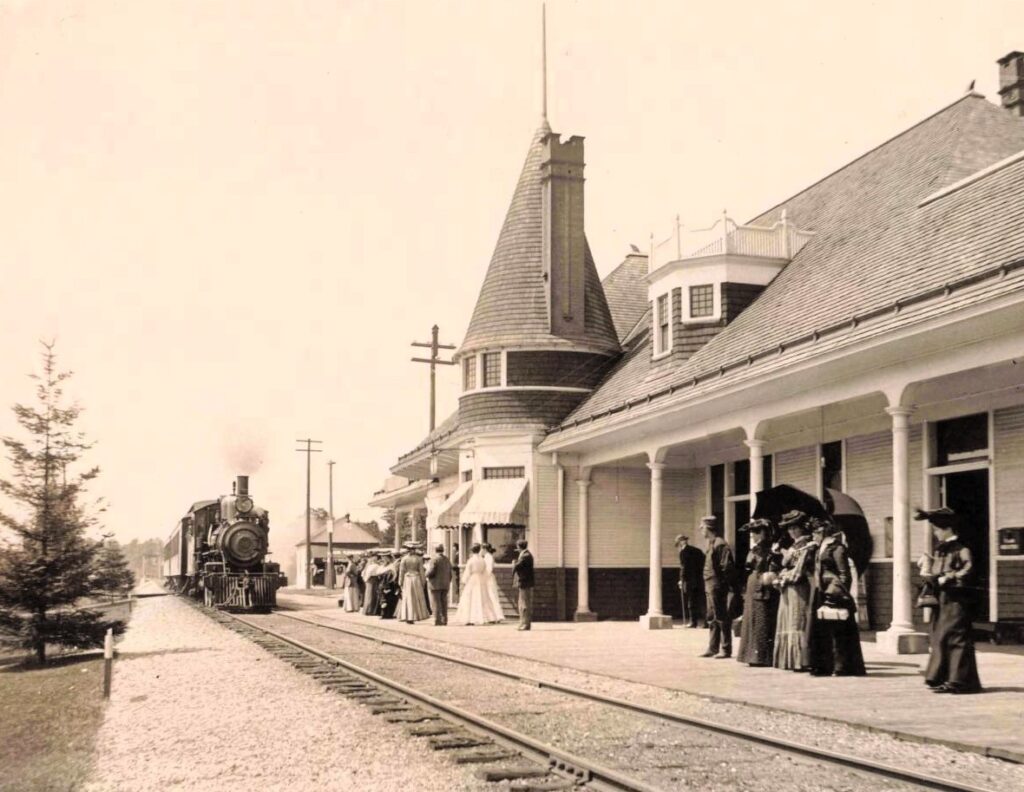
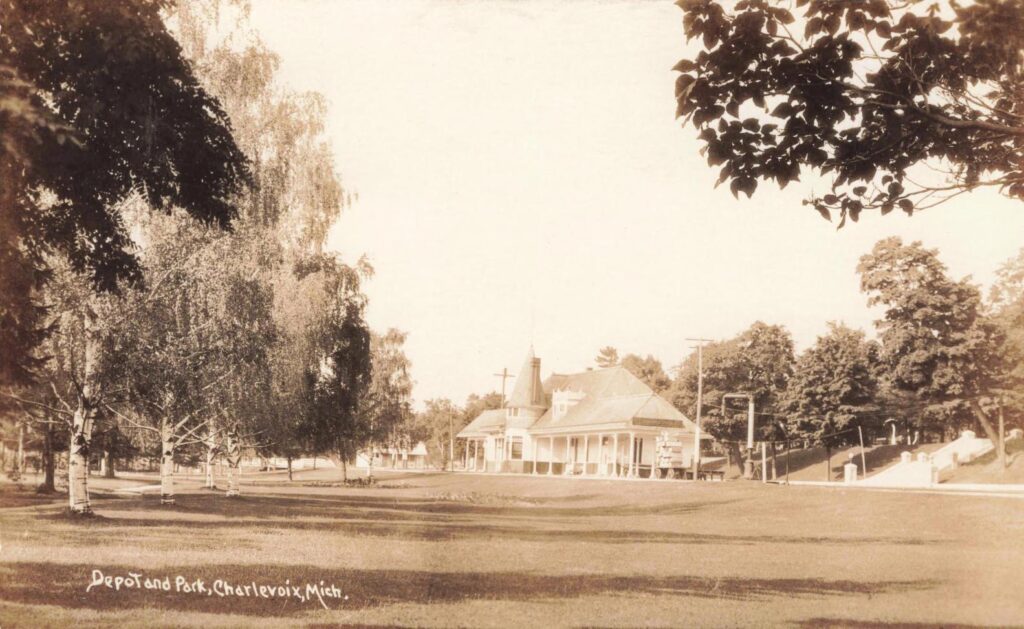
Steamers were only part of the travel story. Rail service also mattered. The Chicago and West Michigan Railroad built the Charlevoix station in 1892, and the first trains ran into town that June. In 1900, the line became part of the Pere Marquette system, which promoted northern Michigan as a summer destination.
Rail made Charlevoix more dependable. Travelers could plan a season, not just hope for lake conditions. Trunks, supplies, and families could move inland with fewer delays.
The Hotels Sold Comfort, Shade, and Status
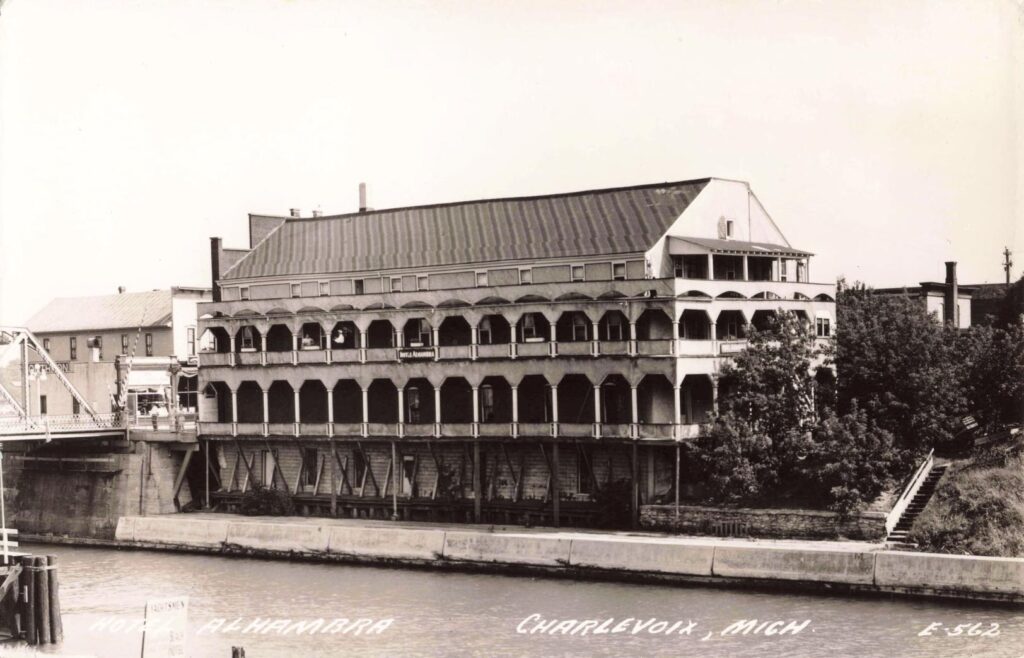
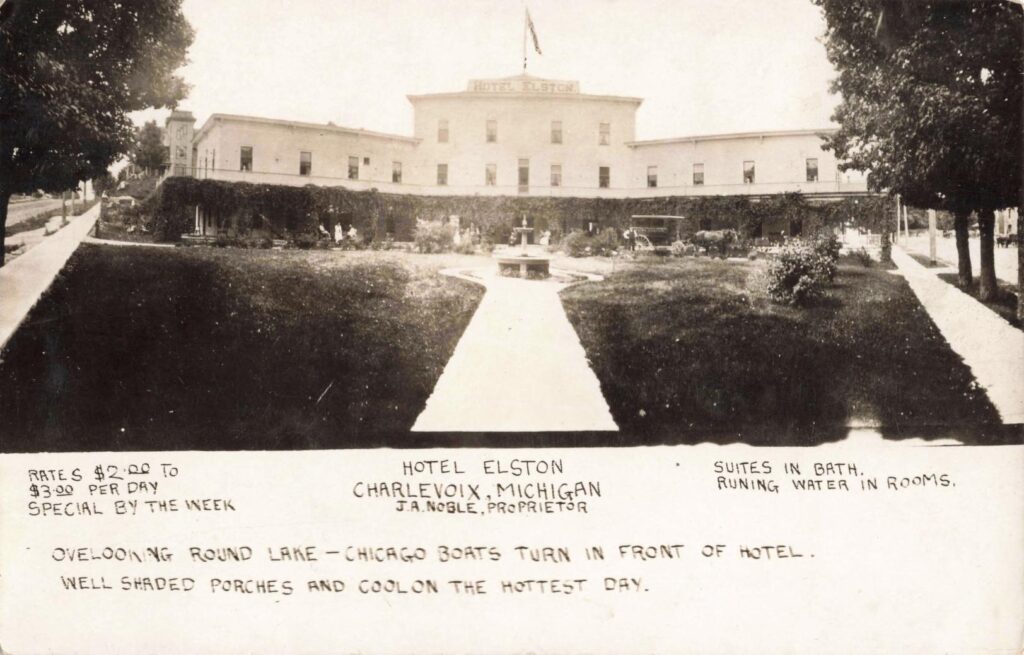
The resort hotels gave Charlevoix its public face. Hotel Alhambra, Hotel Elston, the Beach Hotel, the Tower Hotel and The Inn all reflected the town’s push to serve summer visitors.
The Inn: Charlevoix’s Grand Resort Crown
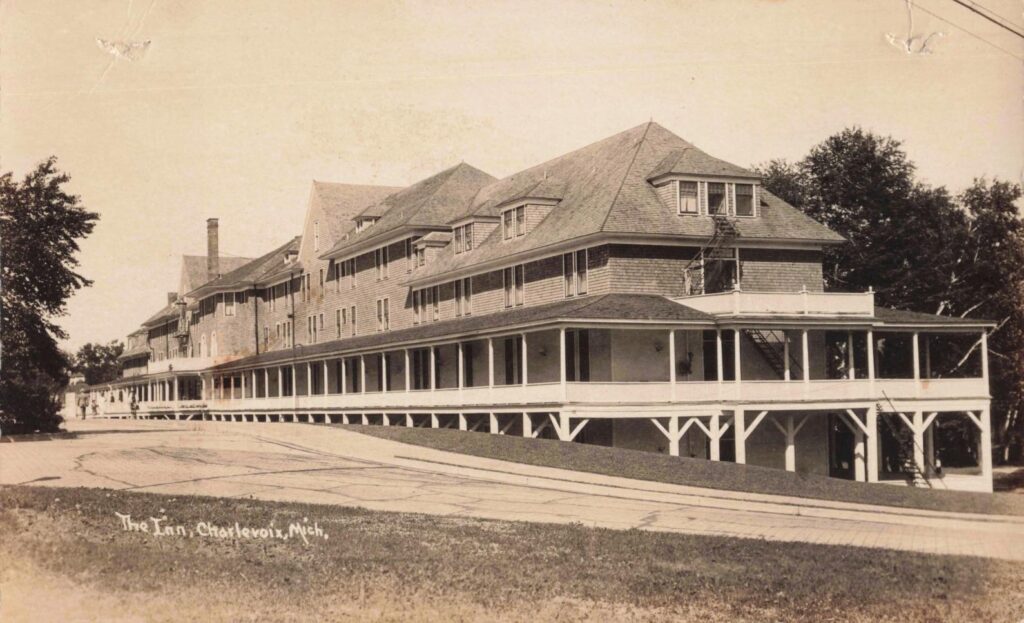
Built in 1898, The Inn stood as the crowning jewel of Charlevoix’s resort era. The massive 250-room hotel was second in size only to Mackinac Island’s Grand Hotel. For a northern Michigan town still growing into its national reputation, The Inn was a bold statement. Charlevoix was no longer just a summer stop. It had become a premier resort destination.
The hotel was built by the Chicago & West Michigan Railway to serve its passengers. That fact says a great deal about Charlevoix at the turn of the 20th century. The Inn was not placed there by chance. It was part of a larger travel system that brought vacationers north by passenger train and luxury Great Lakes steamship. Trains stopped in Charlevoix multiple times a day. Steamships brought travelers by water. Together, they fed a resort economy built around comfort, scenery, and status.
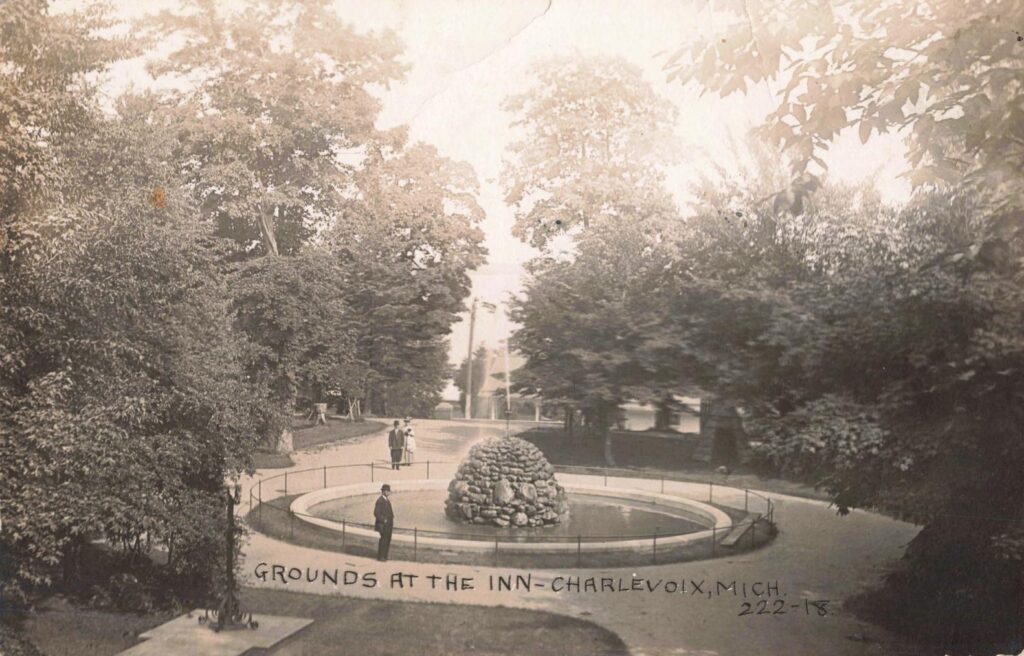
Guests arriving by rail stepped into a carefully staged experience. After leaving the train, they climbed a grand staircase behind the station. They passed a rustic stone fountain. Then they entered the four-story hotel, where Charlevoix’s summer season unfolded on a grand scale.
Inside, The Inn offered the kind of luxury wealthy Midwestern vacationers expected. The lobby featured stained-glass windows, oriental carpets, and custom-made chairs. No two chairs were exactly alike. The detail was intentional. The Inn was built to impress guests the moment they walked through the door.
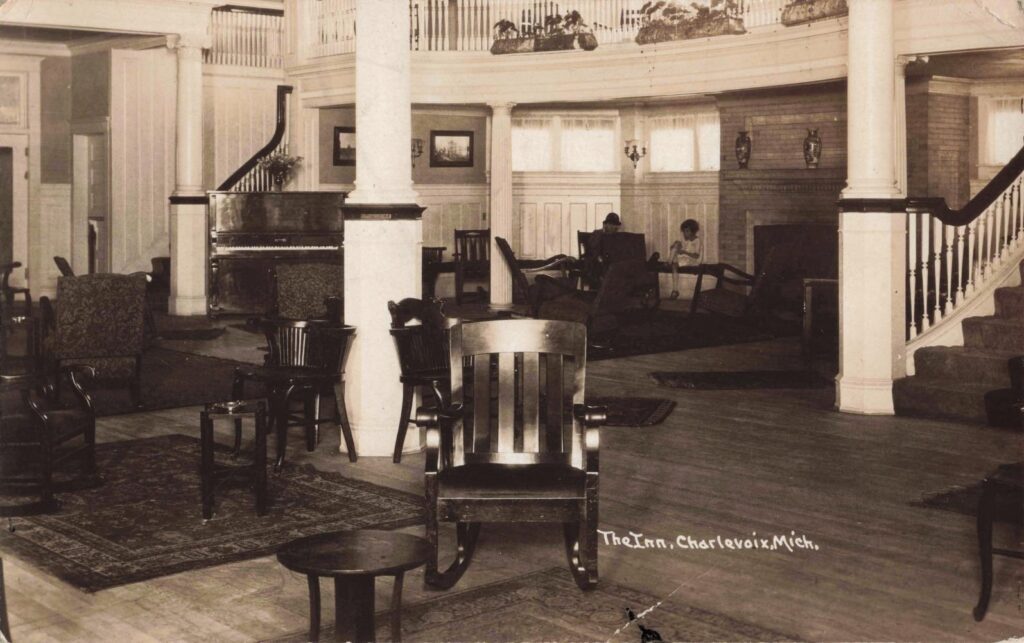
Its scale was equally striking. The hotel had nearly a quarter-mile of porches, giving guests long shaded places to sit, visit, and watch the season pass. It offered a heated indoor pool, a rare and notable amenity for its time. Its dining room could seat 500 guests. At full capacity, The Inn could accommodate as many as 800 people.
The hotel helped fix Charlevoix’s place in the public imagination. The Pere Marquette Railroad promoted the town as “The Queen of the Northern Resort Country.” The phrase fit the era’s ambition. Charlevoix had steamships, trains, hotels, clubs, water views, and a social season that drew visitors from Chicago and across the Midwest.
The Inn made that promise visible. It was more than a place to sleep. It was Charlevoix’s front parlor, summer stage and status symbol. For a generation of travelers, arriving at The Inn meant they had reached one of northern Michigan’s great resort towns.
Bridge Street Became The Town’s Business Spine
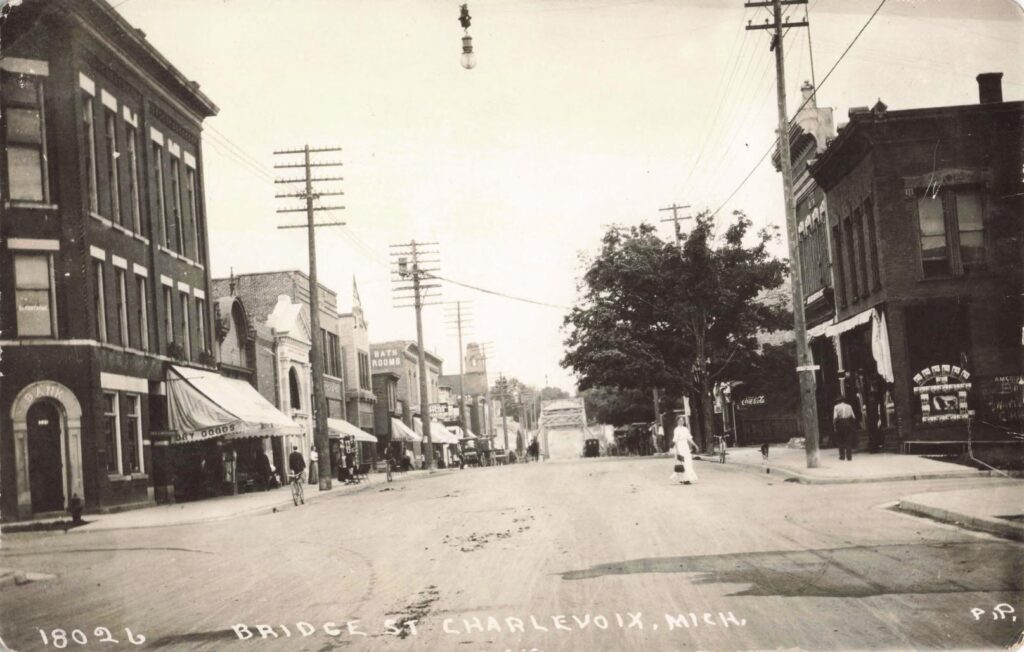
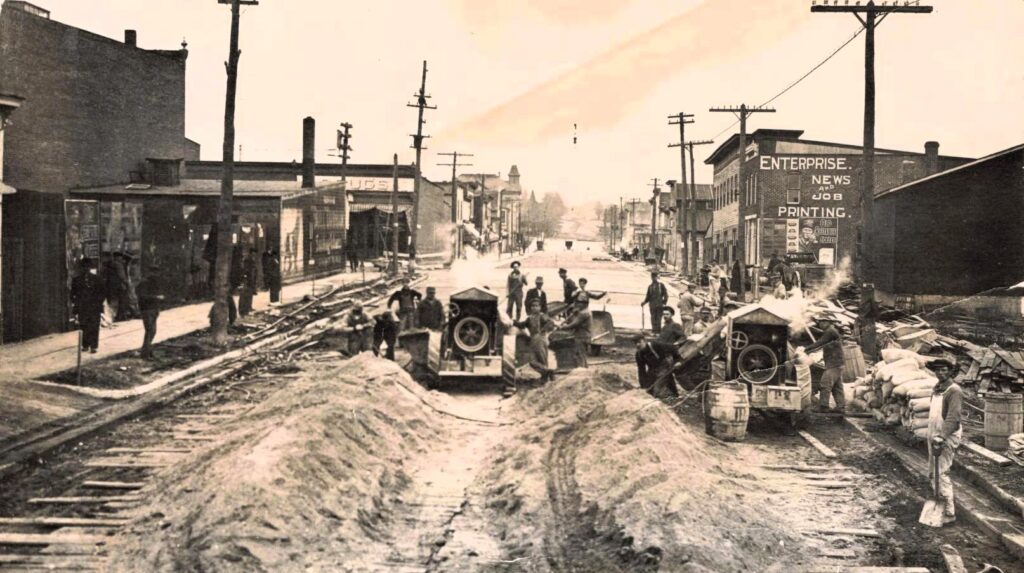
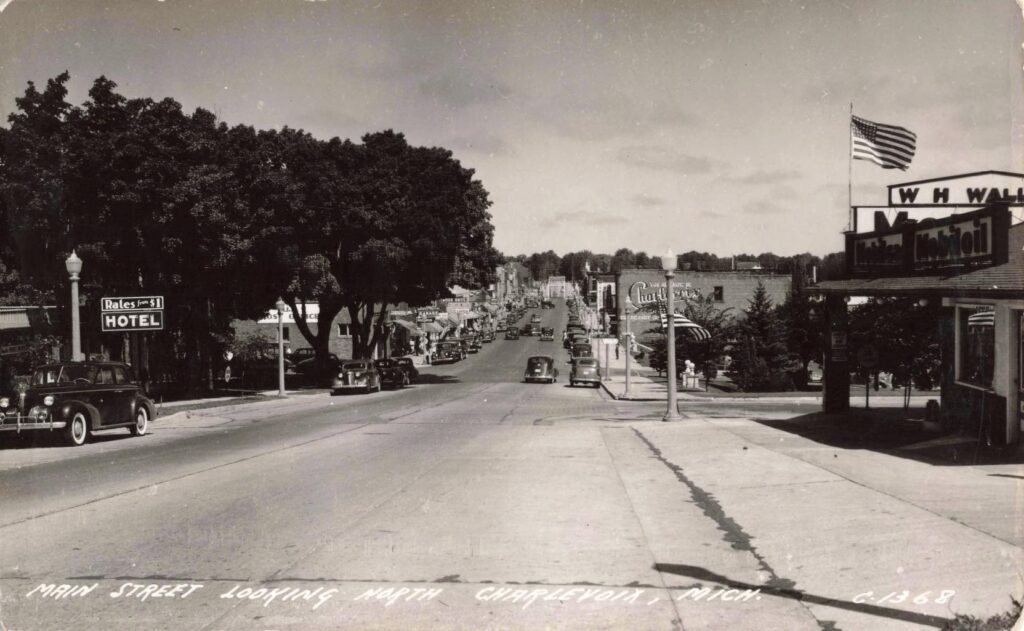
Bridge Street was more than a road. It was the line between the harbor and the town’s public life. Shops, banks, hotels, bathrooms, and restaurants served locals and visitors. The Charlevoix Central Historic District grew along Bridge and State streets, with tourism and business tied closely to the channel and Round Lake waterfront.
The Lighthouse Marked A Serious Harbor
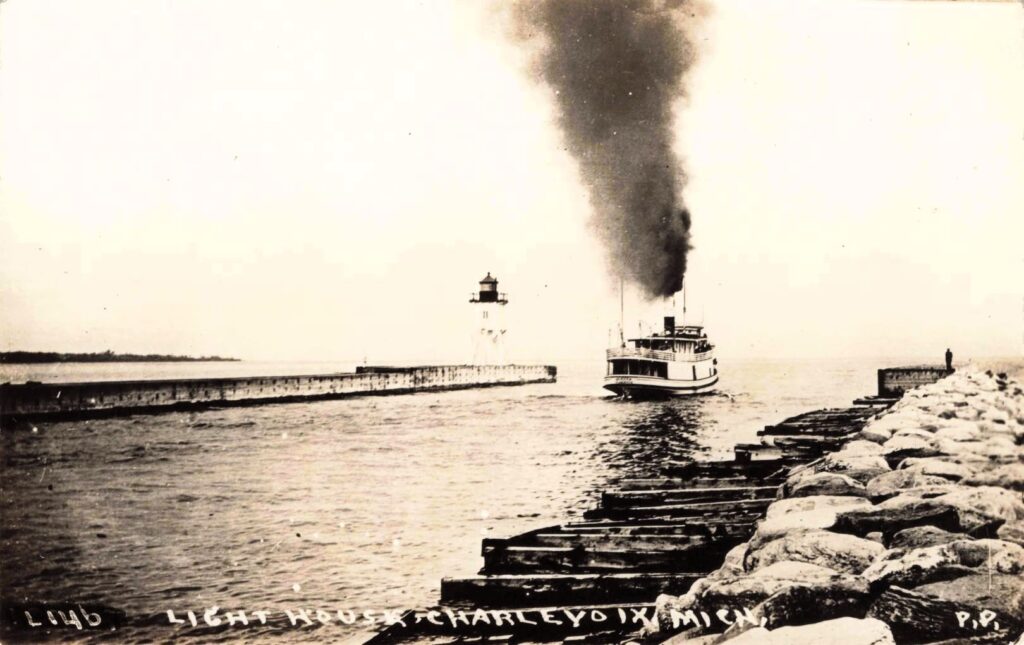
The Charlevoix light was first erected on the north pier in 1884 to guide ships into the improved Pine River channel. A lifesaving station was built nearby in 1898. That safety network was central to Great Lakes travel, especially for a town that depended on boats.
The lighthouse scene is easy to romanticize. But its first job was practical. It guided captains, protected passengers, and helped make Charlevoix a reliable port.
Clubs, Golf And The Summer Set
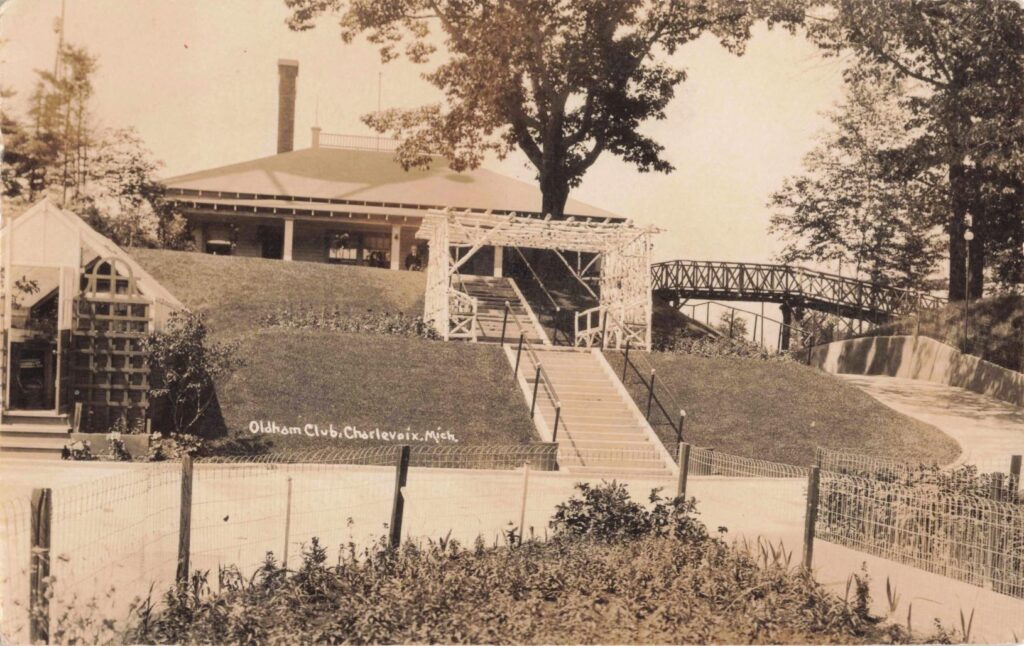
Summer associations gave Charlevoix a seasonal social order. The Belvedere Club grew from the Charlevoix Resort Association, founded in 1878. The Chicago Summer Resort, later the Chicago Club, followed in 1880. Rail access, steamship routes and private clubs helped make Charlevoix one of northern Michigan’s leading resort towns.
Golf added another layer. Belvedere Golf Club says its course history began in 1925, when Belvedere Club members sought a course of their own and hired William Watson. The club hosted the Michigan Amateur beginning in 1930.
Loeb Farms: Sears Money In Stone
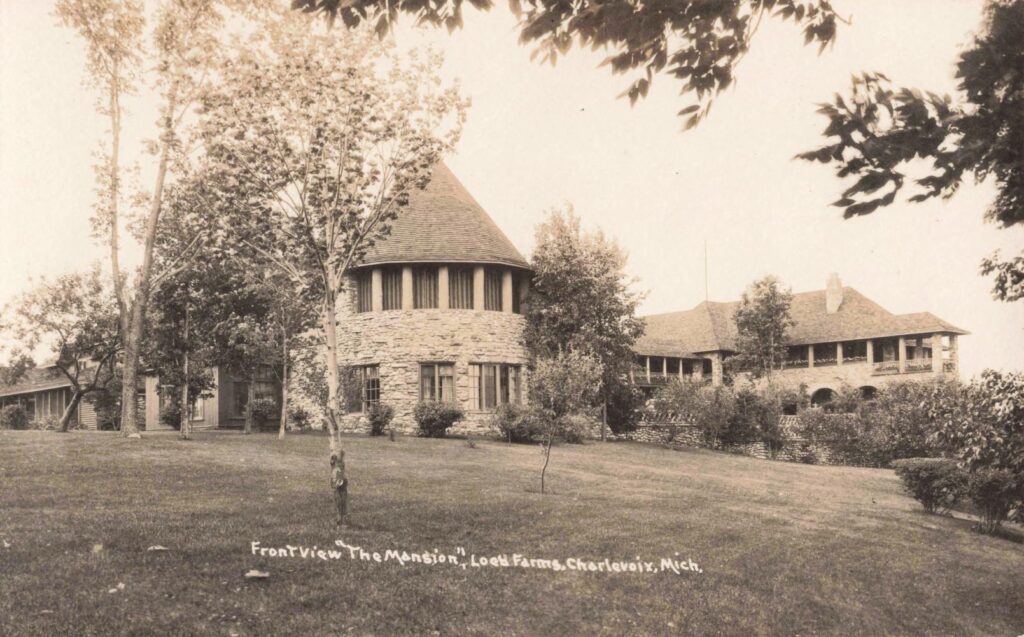
The History of Charlevoix, Michigan, also includes one of the region’s most unusual estate projects. In 1918, Albert Loeb of Sears built Loeb Farms, now Castle Farms, as a model dairy farm. Castle Farms says the property was modeled after Normandy stone barns and castles. At its peak, it employed more than 90 people, kept more than 200 Holstein-Friesian cattle, and housed Belgian draft horses.
Loeb Farms was not just a retreat. It was a business experiment, a status symbol and a bold architectural statement.
Greensky Hill And The Older Story
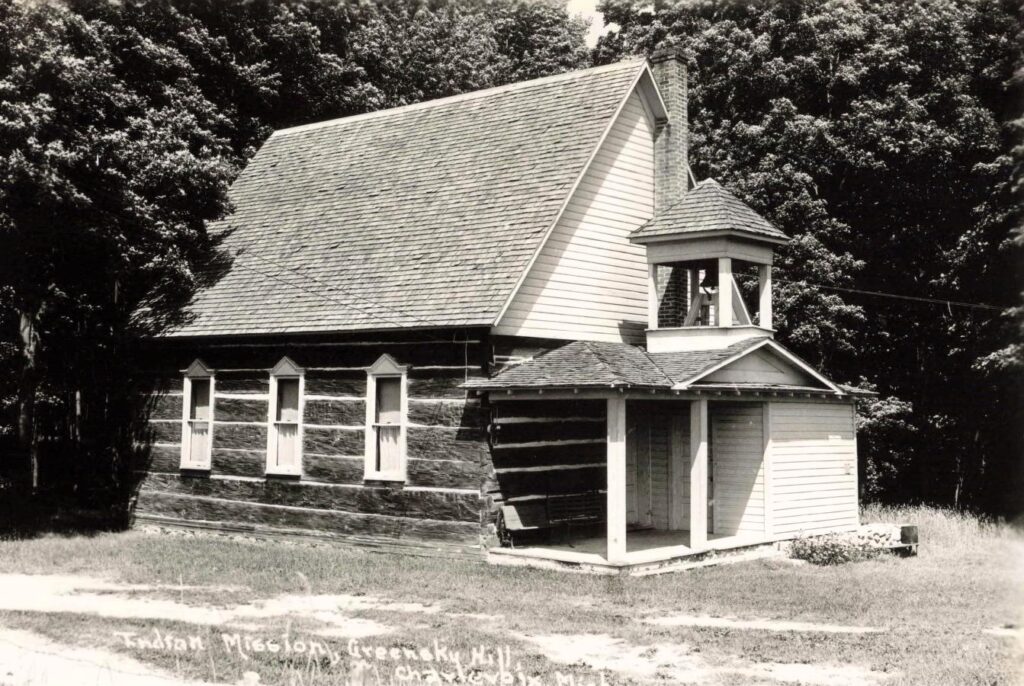
Charlevoix’s resort history sits atop an older regional story. Greensky Hill Mission, east of town, was founded by Peter Greensky, also known as Shagasokicki, a Chippewa leader and Methodist preacher. The mission dates to 1844 and remains one of the key sites in Native and religious history near Charlevoix.
That context is essential. Native communities, fishing families, and early settlers shaped the region before the resort era took over the public image.
Earl Young And The Stone Identity
Earl Young helped give Charlevoix a later visual signature. The Charlevoix Historical Society says Young was born in 1889, moved to Charlevoix at age 11, and began building in 1919. He completed 26 residential and four commercial properties, using boulders and regional stone.
Visit Charlevoix notes that his works are often called Mushroom Houses, Gnome Homes, or Hobbit Houses, with wide eaves, cedar-shake roofs, and stone gathered from northern Michigan.
Young’s houses are not the whole History of Charlevoix, Michigan, but they are part of the afterimage. They took the town’s old materials — stone, shore, weather and craft — and gave them a style people still associate with Charlevoix.
Why Charlevoix Still Holds Attention
The History of Charlevoix Michigan is not a simple resort tale. It is a working harbor story, a fishing story, a railroad story, a hotel story and a summer society story. The town’s unique feature is the way these pieces fit into a small space between three linked waters.
Charlevoix sold beauty, but it built access. It marketed leisure, but it relied on labor. It welcomed wealthy guests, but it kept its docks, fish nets and commercial streets close to the center of town.
That is why the old scenes still feel alive. A steamer unloads. A train arrives. Men mend nets. A hotel porch waits. A street is paved. A lighthouse stands at the channel. In Charlevoix, the resort and the working harbor were never far apart.
Related Posts

Works Cited For the History of Charlevoix Michigan
Belvedere Golf Club. “History.” Belvedere Golf Club, accessed 5 July 2026.
Castle Farms. “Castle History.” Castle Farms, accessed 5 July 2026.
Charlevoix Historical Society. “Early History.” Charlevoix Historical Society, accessed 5 July 2026.
Charlevoix Historical Society. “Mushroom Houses.” Charlevoix Historical Society, accessed 5 July 2026.
“Charlevoix South Pier Light Station.” Wikipedia, Wikimedia Foundation, accessed 5 July 2026.
“Chicago and West Michigan Railroad Charlevoix Station.” Wikipedia, Wikimedia Foundation, accessed 5 July 2026.
“Greensky Hill Church.” Wikipedia, Wikimedia Foundation, accessed 5 July 2026.
Visit Charlevoix. “Earl Young Mushroom Houses Charlevoix MI.” Visit Charlevoix, accessed 5 July 2026.