
 by
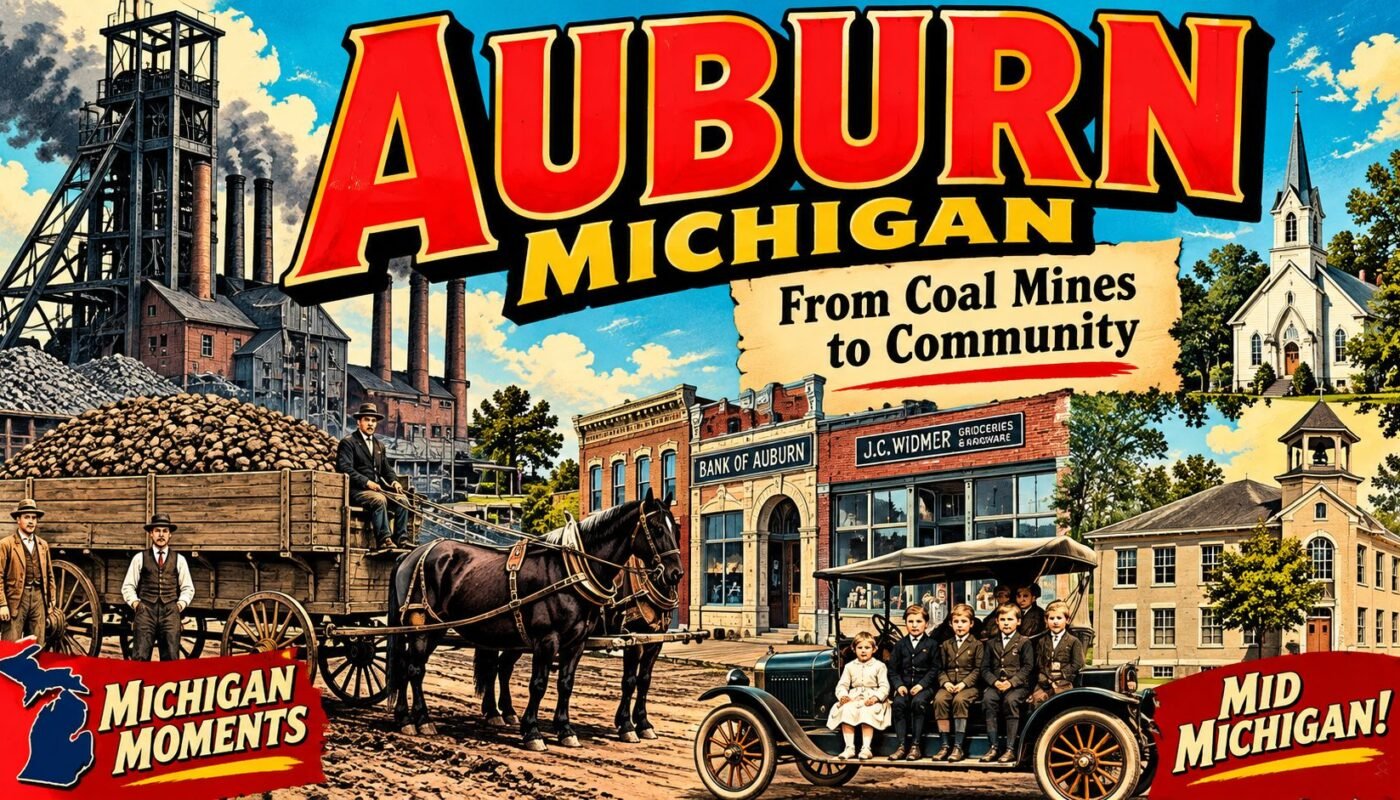
Auburn, Michigan, looks like many small communities between Bay City and Midland. There are schools, local businesses, churches, and neighborhoods surrounded by farmland. But a century ago, something unexpected was happening beneath the fields.
Auburn Michigan History Began With a Town Called Skinner
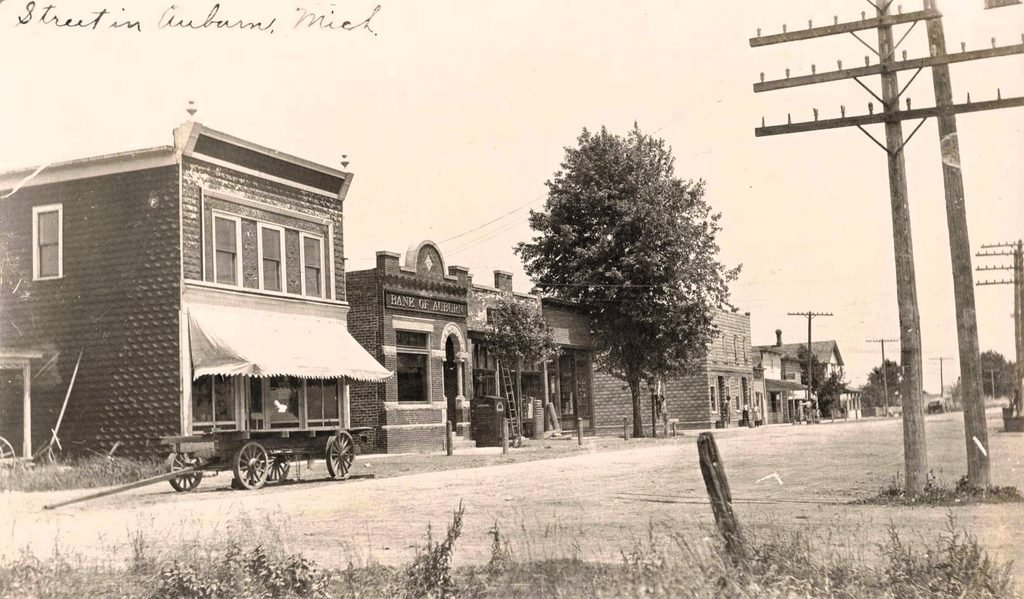
The quiet city of Auburn in Bay County, Michigan might seem unremarkable today. With just over a thousand residents in the early 1900s, it was a small farming community eleven miles west of Bay City. But dig a little into history and Auburn’s story comes alive. In the early 1900s, Auburn had two unlikely industries: sugar beets and coal. This era turned a sleepy rural town into a boomtown – at least for a time. In this article, we’ll explore the History of Auburn, Michigan, showing how farms and mines shaped the place.
Watch: From Farms to Mines: Auburn, Michigan’s Forgotten History
The Michigan Central Railroad Connected Auburn to the Region
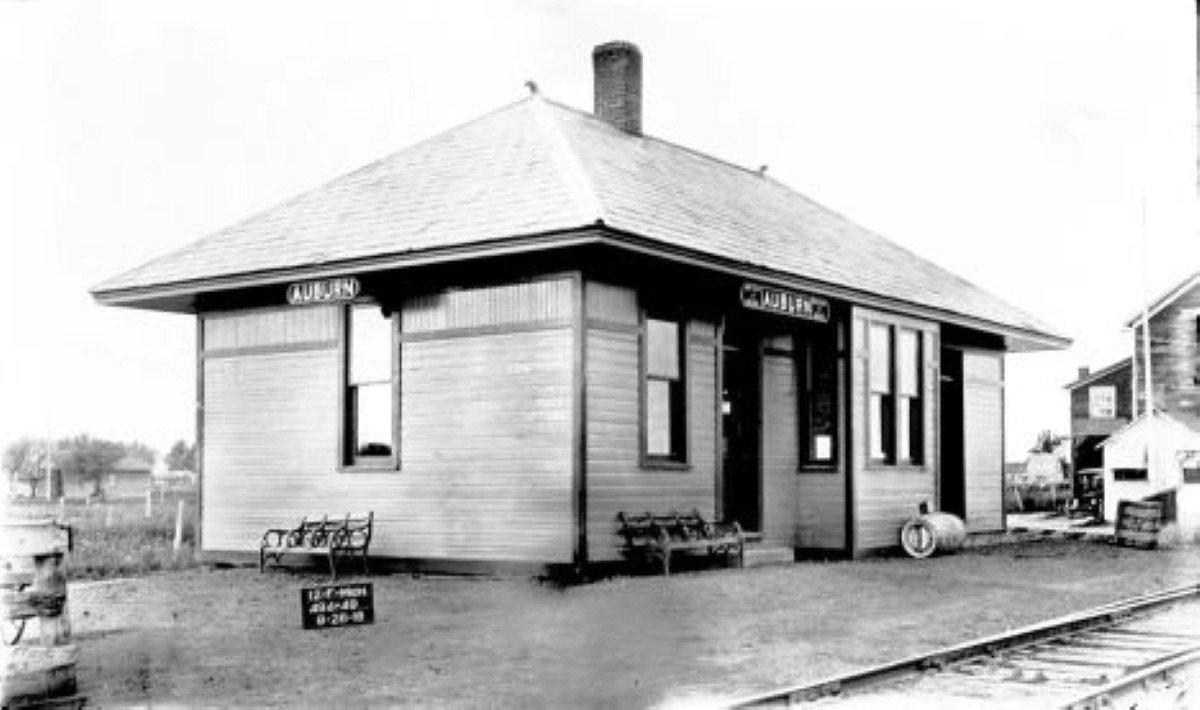
Pioneers first settled Auburn in 1854 as they passed through Bay County. For decades, it stayed small. In 1869, a post office opened as “Skinner,” and in 1877 it was renamed Auburn. By 1910, modest shops, a school, and a few churches lined the main street. The Michigan Central Railroad built a station in Auburn, making it a stop on the Bay City–Midland branch. Farmers could ship crops, and goods could come in by train. Despite this, Auburn never grew into a big city; it remained a rural village and incorporated as a city only in 1947.
Auburn Farmers Helped Build Michigan’s Sugar Beet Industry
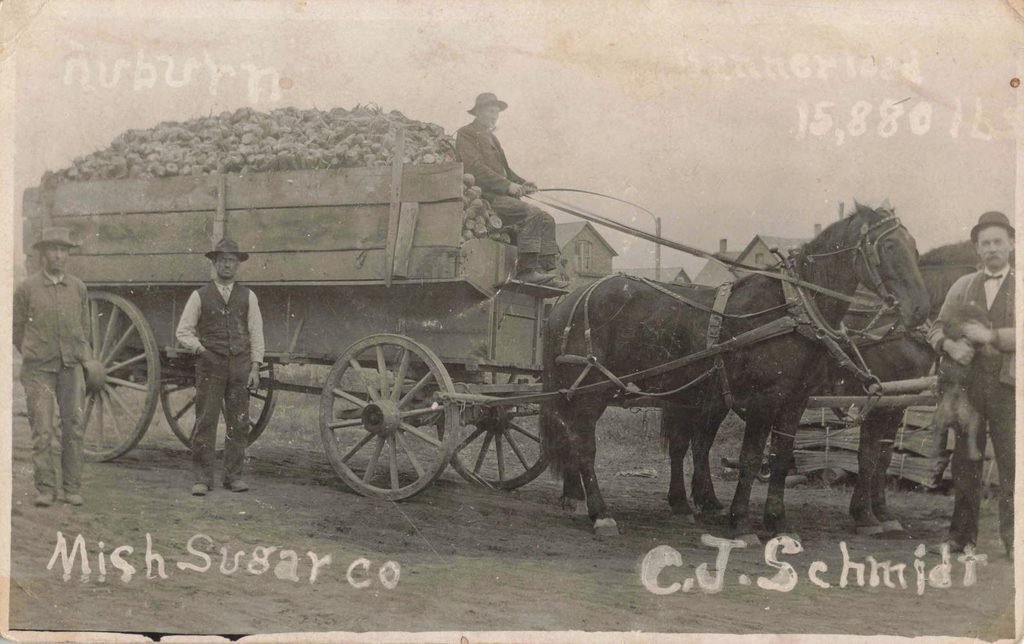
The late 1800s brought a new cash crop to Michigan: sugar beets. The Bay City area became a center for processing sugar beets. The first Michigan sugar beet factory opened in Essexville (near Bay City) in 1898, sparking a statewide boom. Auburn’s fertile fields soon followed. A surviving 1909 postcard shows a team of horses and a wagon piled high with harvested sugar beets.
Painted on the side of the wagon is “Mich Sugar Co – Bannerland,” indicating those beets were bound for the Michigan Sugar Company’s refinery. The handwritten note on the postcard mentions the farmer Fred busy hunting (for animals) and the church installing a new furnace. It’s a glimpse of Auburn life: farmers in overalls, the local church’s women fundraising (the “Aid” group paid for the furnace), and neighbors sharing news over the mail.
Sugar beet farming meant extra income. In 1909, this Auburn wagon carried 15,880 pounds of beets, nearly eight tons, to market. At $4–$5 a ton (the price of beets then), that wagonload represented a substantial harvest. Farmers were boosting the town’s economy, and you can imagine entire families working the fields together, from planting in spring to hauling wagons in fall. Auburn’s story here reflects a larger Michigan trend: by 1900 nearly 30 beet factories had sprung up in the state, making sugar beets a “mortgage-payer” crop for Midwestern farmers. Though Auburn’s own population never exploded, those wagons of beets show the town was connected to this wave of agri-industry.
Auburn Coal Mines Turned Farmers Into Industrial Workers
As farmers harvested beets, another industry rose in Auburn, one that went underground. In the late 1890s, farmers discovered coal seams under their land. People had found coal around Saginaw Bay since the mid-1800s, and by 1900 local men decided to mine it. They formed what newspapers called the “Wolverine” coal mine just east of town, on the Midland branch of the Michigan Central Railroad. The goal was clear: use the rail line to ship coal to Bay City and beyond.
A July 1900 article reported that opening the mine would be a festive occasion, with music, dancing, and refreshments, and that everyone hoped it would be a big opportunity. Farmers and townsfolk were betting that this hidden coal would bring jobs and money. Soon the mine was booming. Auburn’s workforce included dozens of miners and support staff. Men worked underground, cutting a few feet of coal at a time with picks and blasting equipment. Caged men and mules brought the coal up narrow shafts, and the trains carried it off.
Just a year later, in 1901, the miners sold the venture. The Handy Brothers Company – a Bay City coal firm – bought the Wolverine mine, gaining not just its shaft but leases on nearby coal lands. Handy Brothers turned it into a fully commercial operation. By 1903, the mine had expanded with multiple shafts and double tracks for coal cars, reported news sources. For a small town like Auburn, this was big – the area’s coal helped heat homes and run factories in Michigan’s Thumb region.
Life Around the Mine and Fields
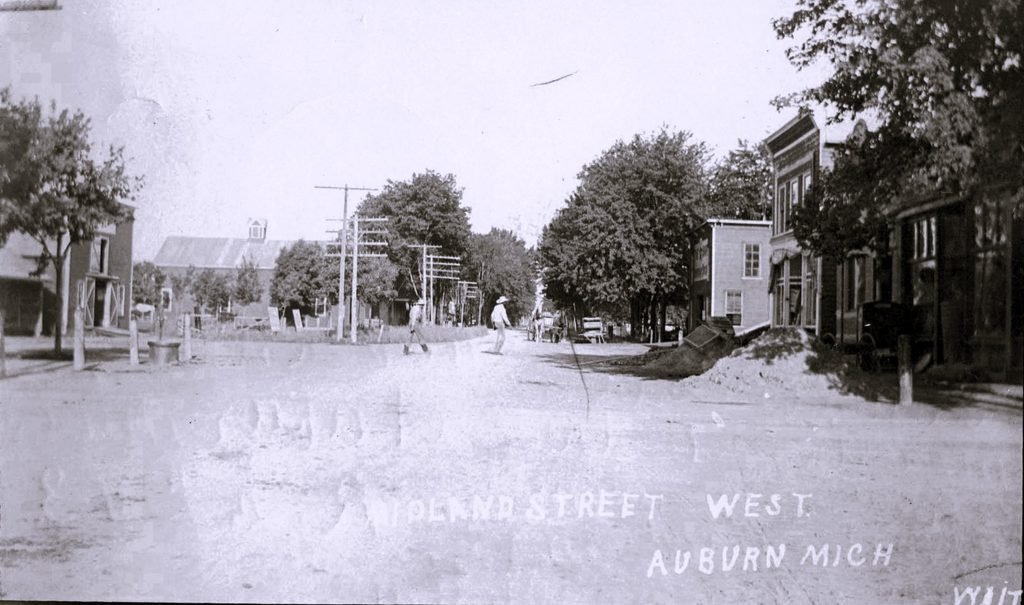
These industries shaped everyday life in Auburn. Most townspeople were white, and many families had likely lived there for generations by 1900. They built their lives around the jobs at hand. On Main Street, wood-frame shops and general stores did steady business selling feed, nails, and fabric to farm families and miners’ households alike. The train station was a hub; farmers shipped out grain and sugarbeets, and shopkeepers stocked goods shipped in by rail. Children attended a one-room schoolhouse; mothers ran churches and home kitchens (the postcard letter mentions the local church adding a furnace with the help of the women’s aid society).
Watch: Auburn Coal Mine: What a 1911 Postcard Reveals
Not everything was easy. Coal mining was dangerous and unpredictable. In November 1904, a mine fire caused $4,000–$5,000 in damage and forced operations to shut for four months, putting 150–160 men out of work. Auburn families would have suffered as wages dried up and hopes dimmed. On the flip side, when coal and beet prices were good, the mines and farms could do well. By 1903, Bay County’s mines produced over 325,000 tons of coal, showing how active the region was. Meanwhile, railroad cookouts and community dances were common, as people gathered to celebrate mine openings or help with church projects.
Green’s Hotel, the Gold Star Saloon and Everyday Life in Auburn
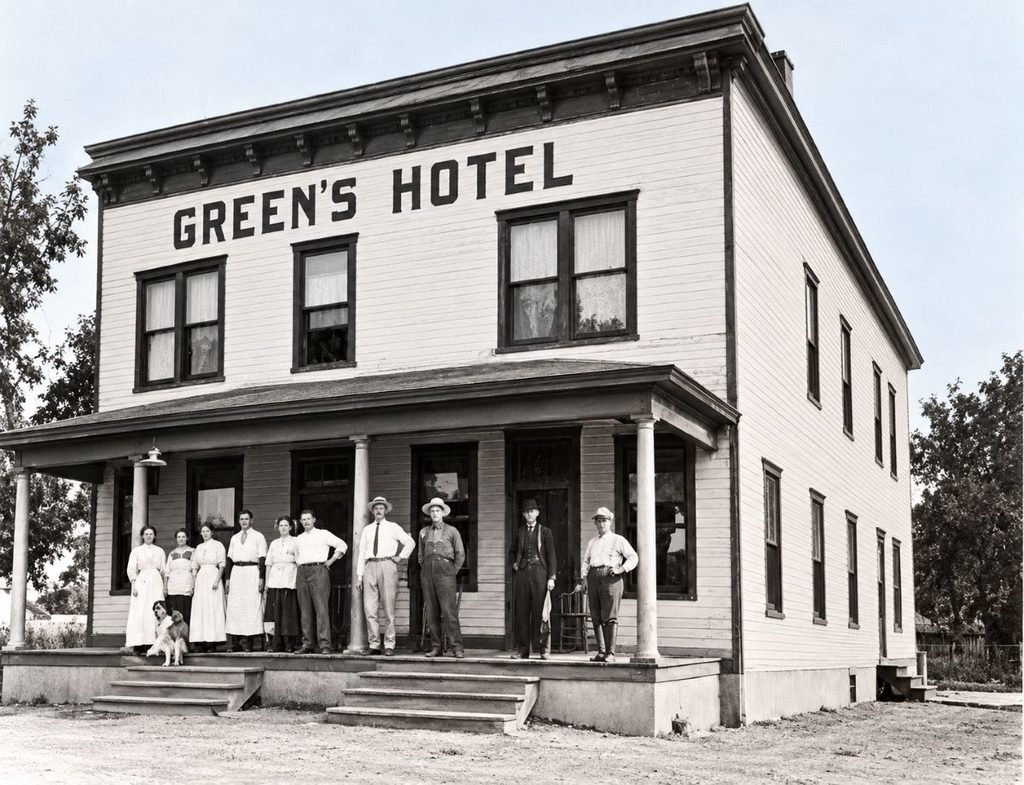
Auburn, Michigan, history was not limited to work in the fields and mines. The village also had a commercial and social life centered on hotels, businesses, churches, and schools. One surviving photograph shows Green’s Hotel.
Several men and women stand outside the two-story building, dressed in clothing typical of the early 20th century. Hotels served travelers, railroad passengers, commercial representatives, and other visitors.
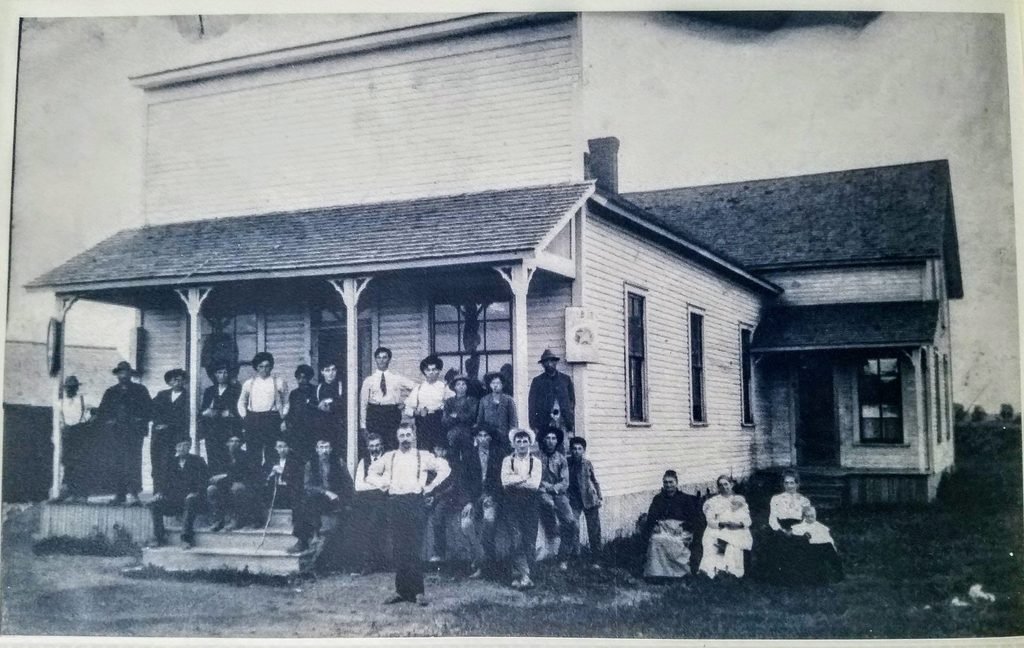
Another remarkable image shows the Gold Star Saloon near the Wolverine coal-mining operations. The photograph’s accompanying identification places the saloon near Eight Mile and Ott roads, across from Wolverine Coal Mine No. 3. Members of the Wittbrodt family are identified in the picture. They include August, Frank, John, and Stella Wittbrodt.
These details give the photograph particular value for families researching their connections to the Auburn area.
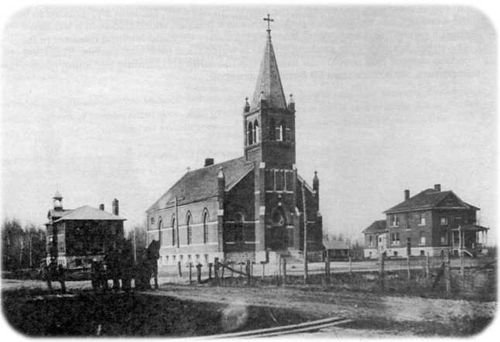
Nearby Fisherville also developed important community institutions. The community dedicated St. Anthony of Padua Catholic Church on Sept. 7, 1902, to serve a growing Polish Catholic population. The church reflected the role immigrant families played in western Bay County’s farming and industrial communities.
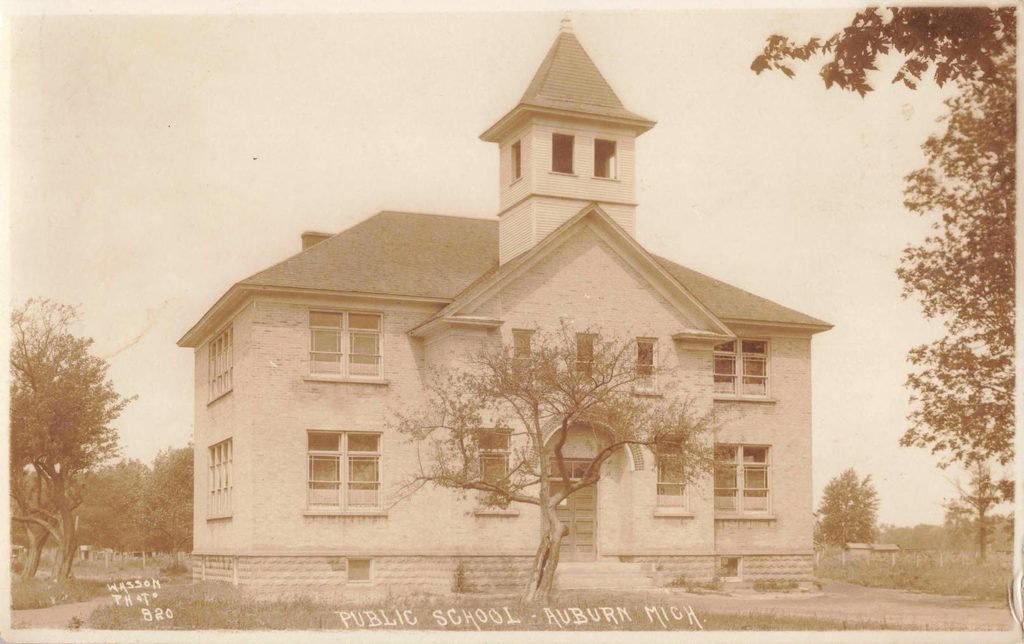
Auburn’s public school was another important institution. An early postcard shows an impressive brick school building with a prominent central tower.
Together, these photographs reveal the daily lives of residents who worked hard but also created places to gather, worship, learn, and conduct business.
Decline and Legacy
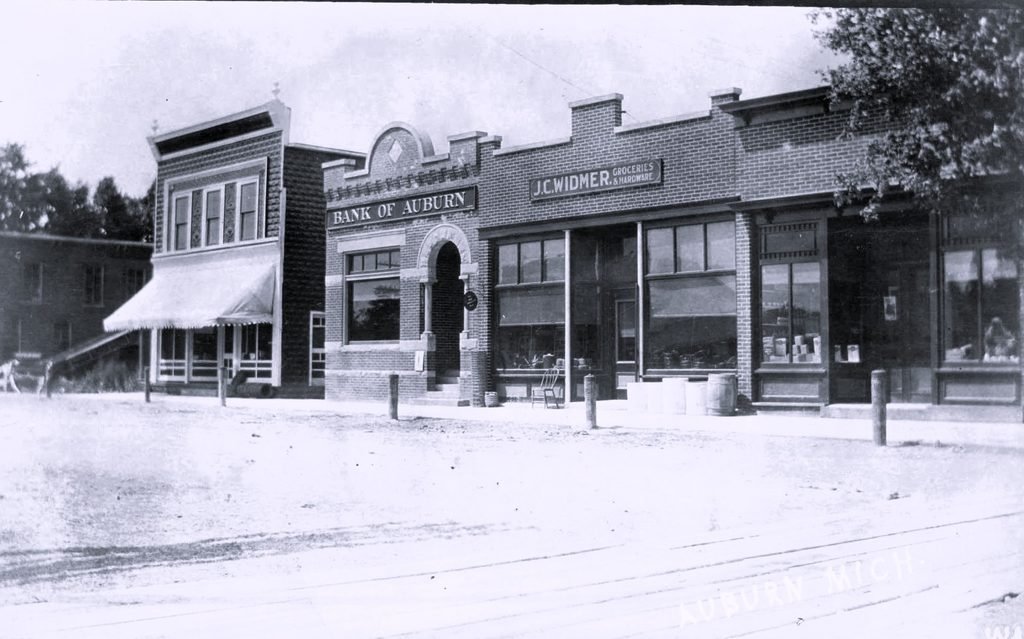
By the end of World War I, Michigan’s tiny coal industry was already fading. Auburn’s coal was high quality but costly to extract and harder to sell than coal from larger fields elsewhere. The Wolverine mine would eventually close (most Michigan coal mines had shuttered by the 1930s, and Auburn’s followed suit). Beet farming also changed; Michigan sugar factories declined after the 1900s. Auburn’s plant workers would migrate to other crops or jobs in Bay City and beyond.
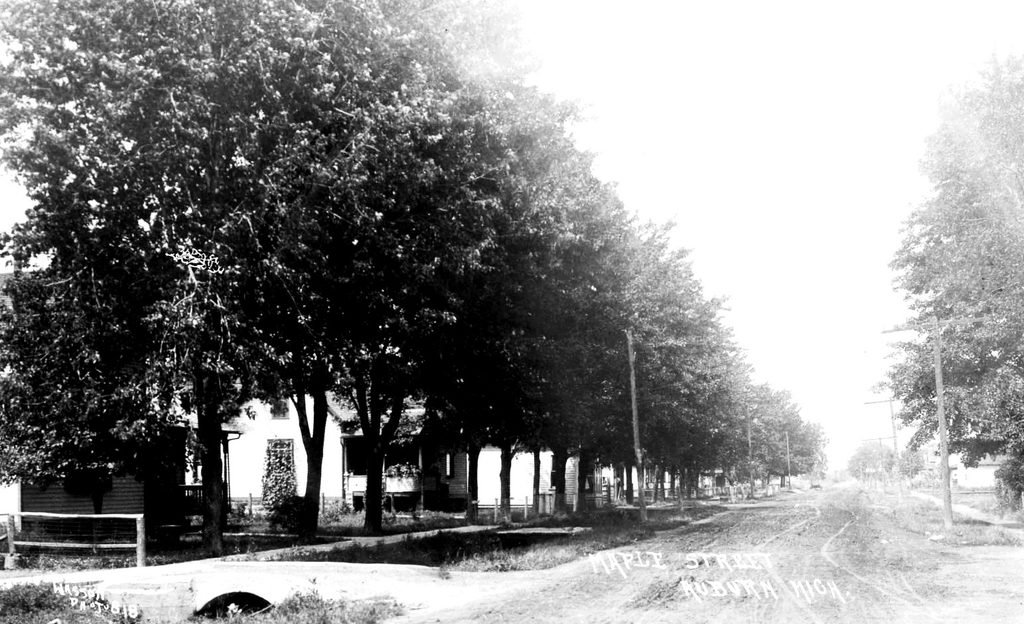
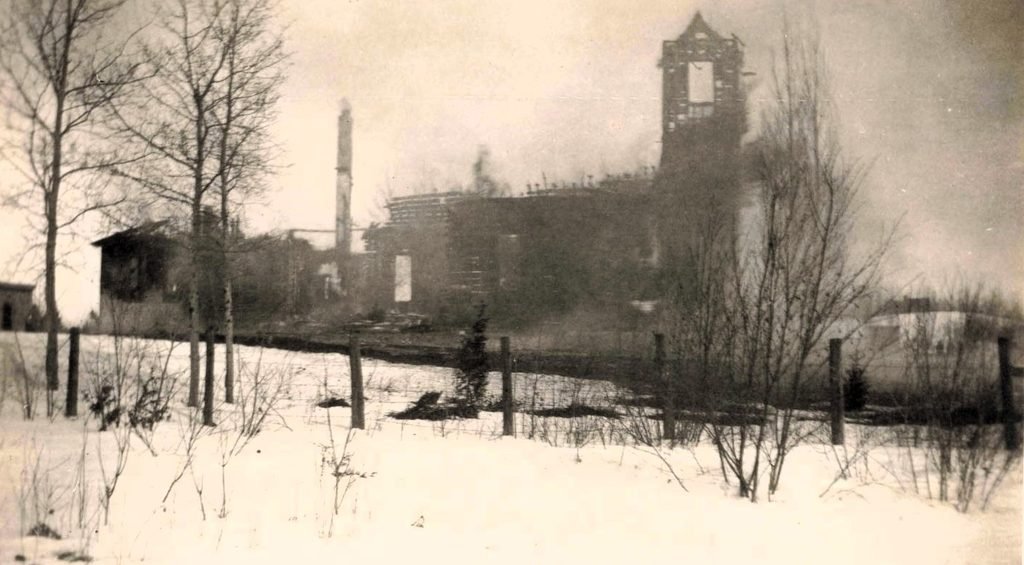
Over the years, Auburn’s population stayed small. The town finally incorporated in 1947. Farms and woods reclaimed the old mine and beet fields. Only a few reminders remain: an old bricked-up mine entrance here, a buried wagon track there, maybe a row of buildings dating to 1910. One attached photo shows the headframe ruins of an Auburn mine; another shows what Main Street looked like a century ago.
Today, Auburn might be known as a quaint community near Bay City. But its story is Michigan’s. In its golden days, this small town saw industry come and go: horse teams laden with beet harvest and miners with lunch pails. Auburn’s history reminds us that even a quiet corner of Michigan’s “Thumb” once played its part in the bigger economic currents.
Auburn, Michigan
A town above the coal
From a settlement once called Skinner to a mining center, sugar-beet community and incorporated city. Select an era, then open each chapter to see the historical photo and source.
 Founding
1854Settlement begins
Settlers established a community in what became Williams Township, west of Bay City. Farms and local mills shaped its early years.Photo note & context
The township-area settlement later became the community known as Skinner, then Auburn. The tree-lined street photo was taken decades after 1854.
Photo: West Street, early 1900s; illustrative, not a photograph from 1854.
Historical source ?
 Founding
1858Williams Township joins Bay County
A dispute over county lines reached Michigan’s Supreme Court. A ruling placed Williams Township in Bay County.Photo note & context
Midland and Saginaw counties contested the township’s political alignment before the court settled the issue.
Photo: Historic Auburn street scene; photographed long after 1858.
Historical source ?
 Founding
1869A post office named Skinner
The community received a post office Feb. 26. Its first postmaster was Frederick C. Wolf.Photo note & context
The post office helped local residents connect with nearby towns and markets before modern highways and telephones.
Photo: Green’s Hotel, date unconfirmed; used to illustrate early local businesses.
Historical source ?
 Founding
1877Skinner becomes Auburn
On Nov. 19, the post office was renamed Auburn after a local merchant pushed for a change.Photo note & context
Shopkeeper Ira Swart reportedly disliked the name Skinner. Auburn, New York, may have inspired the replacement name.
Photo: Commercial street in Auburn, early 1900s; illustrative.
Historical source ?
 Community life
1897St. Anthony’s parish takes shape
Polish Catholic settlers organized St. Anthony of Padua near Fisherville, in Williams Township.Photo note & context
Many families had worked in Bay City industry and nearby mines while saving to purchase farmland. The church became a gathering place.
Photo: St. Anthony of Padua Church in Fisherville; photograph date unconfirmed.
Historical source ?
 Mining & farming
1898The beet-sugar era opens
Michigan’s first successful beet-sugar processing season began in Essexville, bringing a new market to area farmers.Photo note & context
The nearby sugar industry changed crop choices throughout the Saginaw Valley. The wagon pictured here dates from 1909, not 1898.
Photo: C.J. Schmidt’s sugar-beet wagon, 1909; represents the growing industry.
Historical source ?
 Mining & farming
1900Farmers open a coal mine
Local farmers operated the Wolverine Coal Mine near Auburn. Opening-day plans reportedly included music and dancing.Photo note & context
The Michigan Central Railroad made it practical to ship underground coal to larger markets. The 1911 mine postcard may depict Wolverine, but the identity is not confirmed.
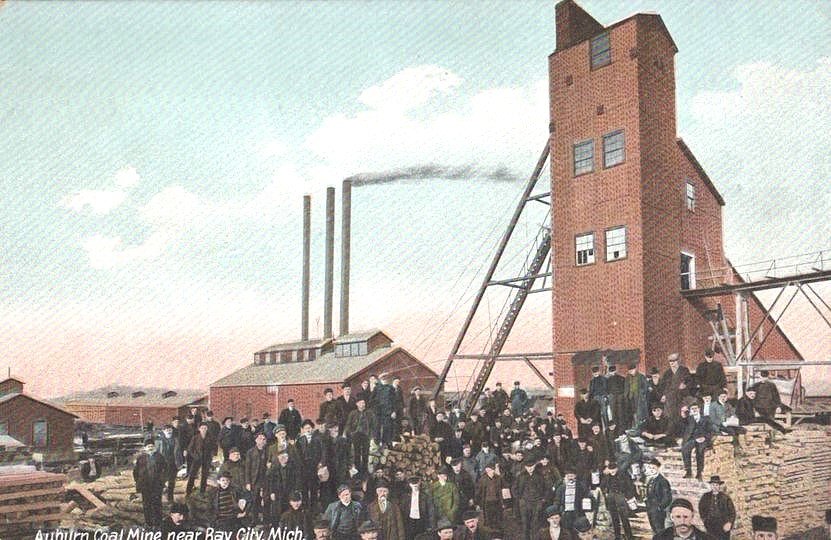
Photo: Auburn coal mine postcard dated 1911; exact mine identification unconfirmed.
Historical source ?
 Community life
1900Auburn gains banking services
Bankers organized an early People’s Bank, giving miners, merchants and farmers a local financial institution.Photo note & context
The first bank operated from a modest building on East Midland Street. The later storefront in this postcard should not be mistaken for the original 1900 location.
Photo: Bank of Auburn on a later Main Street postcard; not the original 1900 bank.
Historical source ?
 Mining & farming
1901Handy Brothers buys Wolverine
The Bay City coal company acquired the farmers’ mine and added leases for nearby coal land.Photo note & context
The purchase signaled commercial expansion of the underground operation, with railroad access remaining central.
Photo: Historic Auburn coal mine photograph; exact date and shaft unverified.
Historical source ?
Community life
1902Rural mail delivery begins
On March 9, Auburn began rural mail routes, giving outlying farming families regular postal service.Photo note & context
Early carriers included Steve Wejrowski, Thomas Baldwin, Simon Johnson, Fred Horne and George Skelton.
Photo: Auburn West Street postcard; representative of the period, not the first mail route.
Historical source ?
Mining & farming
1903Third Wolverine shaft nears completion
New mine entries were wide enough for two tracks carrying coal cars—a sign of growing output.Photo note & context
Contemporary reports described new track capacity and further plans for handling the coal that was mined.
Photo: Coal mine scene dated 1911, used to illustrate the earlier expansion.
Historical source ?
 Mining & farming
1904Mine fire puts workers out of jobs
A fire at Wolverine No. 2 forced a shutdown expected to last four months and affected roughly 150 to 160 workers.Photo note & context
Newspaper reports estimated $4,000 to $5,000 in damage. The mine had been producing about 500 tons of coal per day. The ruins photo has not been linked to this specific fire.
Photo: Ruins of an Auburn-area coal mine; cause and date of the ruins unverified.
Historical source ?
Mining & farming
1906Michigan Sugar Company is formed
Six beet-sugar businesses combined Aug. 20, strengthening a major market for farms around Bay County.Photo note & context
The Auburn wagon photo is from 1909, three years after the merger.
Photo: Sugar beet harvest photo dated 1909; later than the 1906 merger.
Historical source ?
Mining & farming
1909A wagon carries 15,880 pounds of beets
A striking photo documents C.J. Schmidt’s nearly eight-ton wagonload of sugar beets for Michigan Sugar Company.Photo note & context
The handwritten photo label gives the extraordinary weight: 15,880 pounds. This is one of the best documented surviving pictures of Auburn’s farm economy.
Photo: C.J. Schmidt’s wagon, 1909, David V. Tinder Collection, University of Michigan.
Historical source ?
Mining & farming
1911Auburn coal miners pose for the camera
A 1911 mine image shows the workforce and industrial buildings of the Bay County coal era.Photo note & context
The postcard is labeled Auburn coal mine. Historians have suggested it may show Wolverine, but that identification remains uncertain.
Photo: 1911 Auburn coal mine postcard; exact mine identity uncertain.
Historical source ?
 Community life
Early 1900sThe Gold Star Saloon serves the mining district
At Eight Mile and Ott roads, the Gold Star Saloon stood across from Wolverine Coal Mine No. 3.Photo note & context
A surviving family caption identifies several members of the Wittbrodt family in the photo, including Gus, Frank, John and Stella. The exact photograph date is not established.
Photo: Gold Star Saloon and the Wittbrodt family; photograph date unconfirmed.
Photo caption supplied with the historical image.
 Community life
1947Auburn becomes a city
Residents voted to incorporate Auburn as a city, giving the community its own municipal government.Photo note & context
By this time the town had outlasted the first generation of coal-mining booms and grown into a lasting local center.
Photo: Historic Auburn public school photograph; earlier than the 1947 vote.
Historical source ?
 Community life
1948Maxine Clarey becomes first mayor
Voters elected Maxine W. Clarey in March. She was reported to be Michigan’s only woman mayor at that time.Photo note & context
Clarey had helped organize the drive for city status. Auburn had roughly 800 residents in 1948.
Photo: Historical Auburn-area gathering; not a photograph of Mayor Clarey.
Historical source ?Works Cited
Michigan Sugar Company. Our History, Michigan Sugar Company, www.michigansugar.com/about-us/history/ (accessed Feb. 24, 2026).
MichiganRailroads.com. Station: Auburn, MI. MichiganRailroads.com – Stations & Locations, michiganrailroads.com/stations-locations/73-bay-county-09/464-auburn-mi (accessed Feb. 24, 2026).
MichiganRailroads.com. Wolverine Mine, Auburn, MI. MichiganRailroads.com – Mines & Mining, michiganrailroads.com/stations-locations/73-bay-county-09/653-bay-county-mining/5187-wolverine-mine-auburn-mi (accessed Feb. 24, 2026).
“History of Bay County Chapter 9.” History of Bay County, Michigan, compiled by Dayton & Tremble, 1905, genealogytrails.com/mich/bay/books/History_of_Bay_ch9.html (accessed Feb. 24, 2026).
“Tinder-RPPC-008397: Auburn Banner load 15,880 lbs.” David V. Tinder Collection, William L. Clements Library, University of Michigan, quod.lib.umich.edu/t/tinder/x-4199/tinder-rppc-008397 (accessed Feb. 24, 2026).
“Citations for Auburn, Michigan.” Wikipedia: Auburn, Michigan, en.wikipedia.org/wiki/Auburn,_Michigan (accessed Feb. 24, 2026).