 by

General stores in Michigan played an integral role in developing small towns across the state in the late 1800s. These stores served as the community‘s primary source of goods and supplies and helped shape these towns’ political, cultural, and social life.
What We Will Cover
Watch: Michigan General Stores: 10 Amazing Photos of Small-Town Life Before Supermarkets
Small Towns Spang Up Around General Stores In Michigan

In the late 1800s, most small Michigan towns lacked the infrastructure to support large-scale commercial activity. As a result, the general store was often the only place where locals could purchase goods like food, clothing, and household supplies. In many cases, families who had lived in the community for generations ran these stores, and they were deeply ingrained in the town’s social fabric.
The Role of General Stores in Politics

One key role of general stores was shaping the political life of these small towns. Store owners often played an active role in local politics, and their stores served as gathering places for political discussions and debates. General store owners were also often influential community members, and their endorsements could carry significant weight in local elections.

Beyond politics, general stores also shaped the cultural life of small towns in Michigan. These stores were often the only place people could buy books, newspapers, and other media. In many cases, the general store would serve as a lending library, allowing patrons to borrow books and other materials for a nominal fee. This helped to promote literacy and education in these small communities.
Postal Services in General Stores

In addition to providing goods and serving as a social hub, general stores also played an important role in handling mail through the postal service. In the late 1800s, many small towns lacked a dedicated post office, so the postal service used general stores to distribute mail.
Store owners served as postmasters, sorting and delivering mail to local residents. This let residents receive mail without traveling long distances and gave store owners an additional source of income. Although this system was eventually replaced by establishing more post offices in rural areas, the general store’s role in handling mail remains an important part of the history of the United States postal service.
The Waterford Country Store

The Waterford Country Store is a historic general store that now stands as a testament to Michigan’s rural past. Built in 1850 in Waterford, Michigan, the store served as a hub for the surrounding community, providing groceries, hardware, and other necessities. The Hungerford family owned and operated it for over a century before the Ford Motor Company purchased it in the 1920s.
In the 1930s, the Waterford Country Store was moved to Greenfield Village, a living history museum located in Dearborn, Michigan. Henry Ford established the museum to preserve and showcase American history and culture through a collection of historic buildings and artifacts.
The store became one of the museum’s most popular attractions, drawing visitors from all over the country to experience a glimpse life in a small town in 19th-century Michigan. Today, the Waterford Country Store remains an important part of the museum’s collection, offering visitors a unique window into the state’s rural past and the vital role played by general stores in shaping the communities that call Michigan home.
Famous General Stores in Michigan
Many well-known general stores in 1800s Michigan played an important role in the development of their communities. Here are a few examples:
Champagne’s General Store Pinnebog

Champagne’s General Store in Pinnebog displays its name above a storefront advertising groceries and meats. Broad front windows, a covered entrance and steps stretching across the front give this Michigan Thumb business a face worth remembering.
Did your family shop at Champagne’s? Share what you remember buying there.
The Waterford Country Store
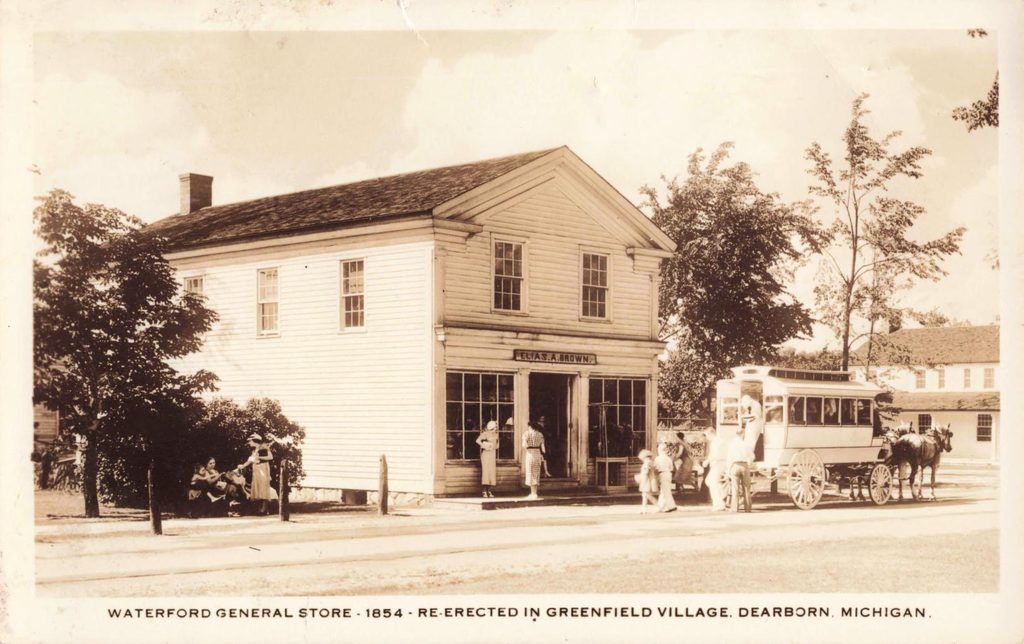
A horse-drawn coach waits outside the Waterford General Store at Greenfield Village in Dearborn, while visitors gather near its entrance. This postcard carries a historical wrinkle: It prints “1854,” but The Henry Ford dates the building to about 1857. The store was re-erected at Greenfield Village in 1927-28.
Look above the doorway for the Elias A. Brown sign. Today, the building is known as the J.R. Jones General Store, reflecting the merchant who operated it in Waterford from 1882 to 1888.
Horton’s Bay General Store
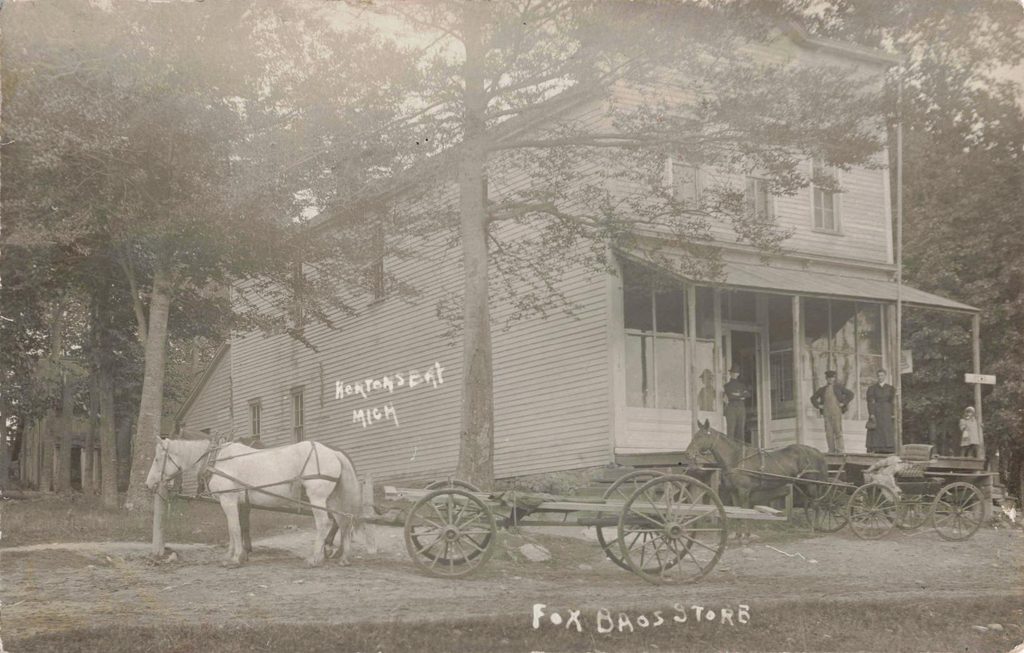
Located in the small town of Boyne City, it is a popular gathering place for the local community. Horse-drawn rigs stand outside Fox Bros. Store in Horton Bay, while people gather along its shaded porch.
Known as the Horton Bay General Store, this northern Michigan business had a customer whose name would become famous worldwide: Ernest Hemingway. The Michigan Hemingway Society documents his visits as a boy and young man. He also described the store in “Up in Michigan.”
Lake Ann General Store

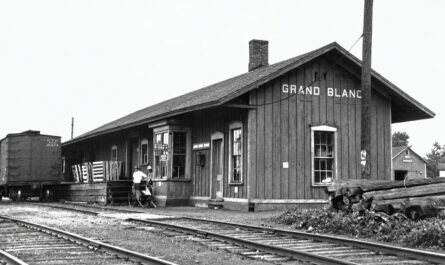
During the 1890s, Lake Ann was a bustling hub of industry and opportunity. William Habbler, an ambitious Ohio resident, recognized the village’s potential and built multiple structures, including a large sawmill, other buildings, and a General Store that would stand the test of time. With a population of around 1,000, Lake Ann boasted many businesses, from eateries and pharmacies to butchers and stables. The community thrived on the Manistee & Northeastern railroad, which had a depot, as well as Habbler’s sawmill, which provided jobs for 125 locals.
Kleinschmidt General Store

In 2005, friends and neighbors donated funds to build this general store replica in recognition of Paul and Liz’s service to WTHS and the community.
Old Mission General Store

Video: General Stores In Michigan – Old Mission General Store
A general store has served the Old Mission area since 1839 (when Martin Van Buren lived in the White House). During the Civil War, the store moved to its current location in Old Mission.
Davis General Store
This store near Houghton Lake was featured in the TV show American Pickers. However, we are unsure if it is still in operation.
Dublin General Store
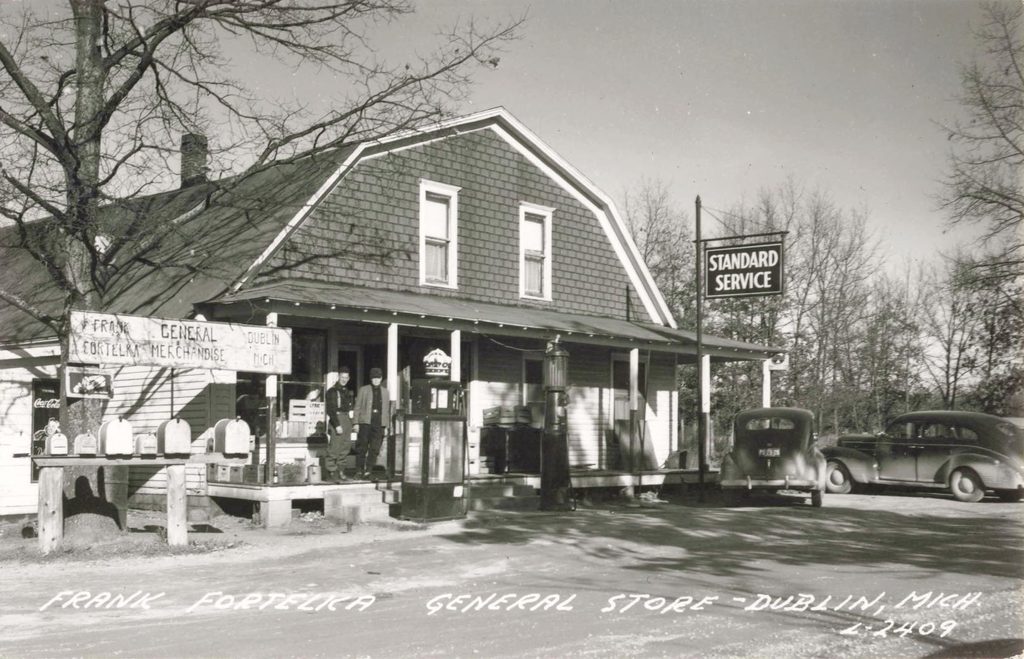
This is a well-known hardware store in Manistee County, Michigan. Besides getting a box of nails, you can also get smoked meat, fish, and cheese. The store is still there today.
Kilmanagh General Store

People line the porch of Kilmanagh General Store while horses and wagons wait along the dirt road. Above them, the sign reads “Rummel & Woldt.”
John Rummel and Albert Woldt took over the store’s operation in the 1890s. The business later continued under Woldt’s son, Clemens, and closed in 1963.
Look at the building’s details: decorative porch brackets, tall storefront windows and an elaborate wooden facade rising above the roof. This was a substantial business in a small Huron County community.
John Rummel & Co. General Store, Sebewaing Michigan
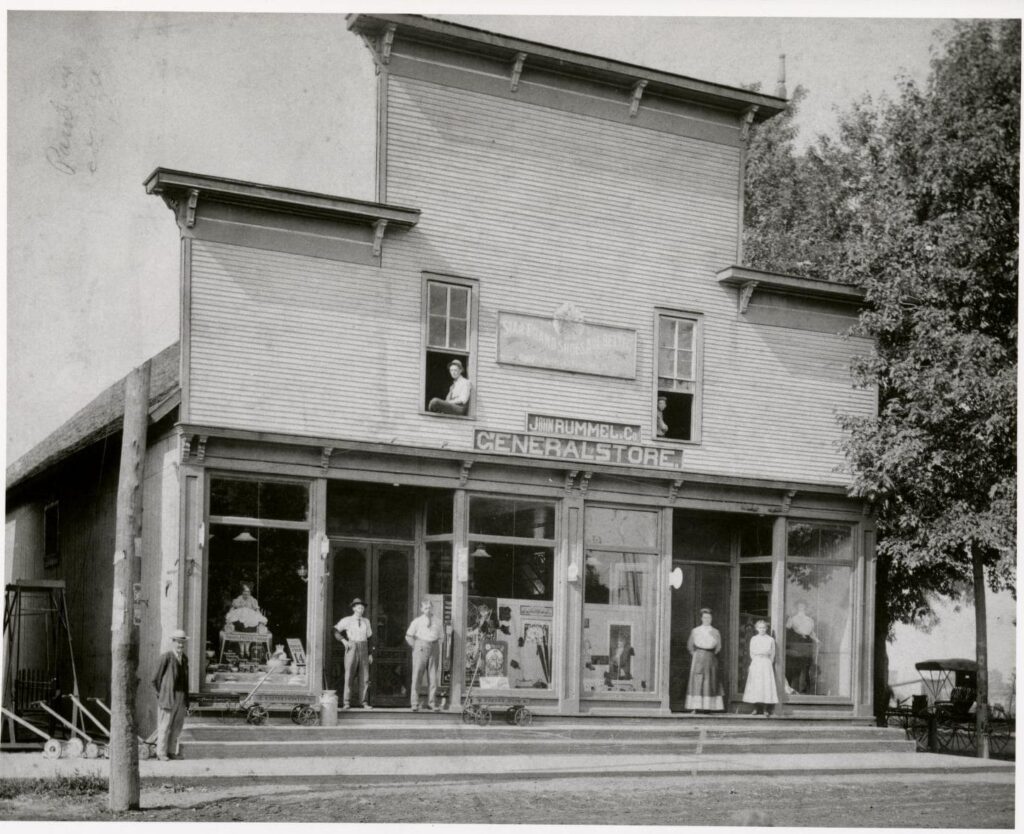
People stand in the doorways and lean from upstairs windows at John Rummel & Co. General Store in Sebewaing around 1900. The broad storefront offered plenty of room to display merchandise. Look closely at the small wheeled carts outside and the buggy parked beside the building.
Surviving business records at Michigan State University reveal another part of the story: The store operated mainly on credit, documenting purchases and payments through prosperous years and hard times.
Final Thoughts About General Stores in Michigan
Finally, general stores played an important role in small-town society. These stores often served as social gathering places where locals could catch up on the latest news and gossip and spend time with neighbors. In many cases, the store would also serve as a meeting place for community groups and organizations, such as the local church or civic group.
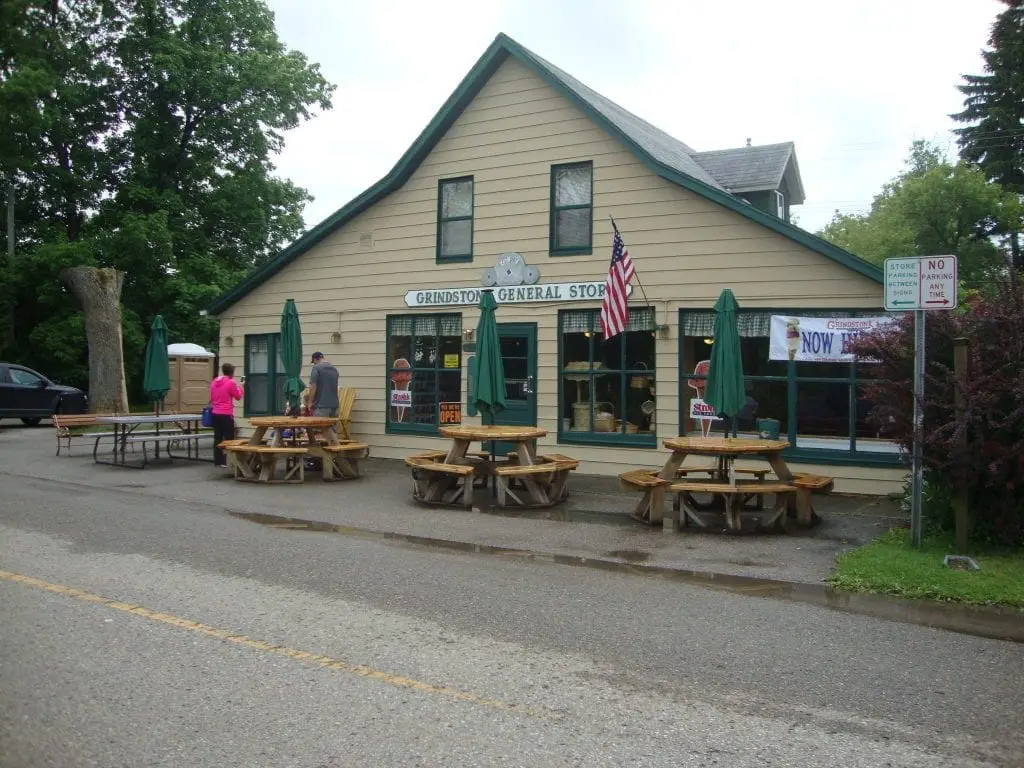
Overall, the general store played a crucial role in developing small towns across Michigan in the late 1800s. These stores served as the primary source of goods and supplies and helped shape these communities’ political, cultural, and social lives. While the general store’s role may have changed over time, these community institutions remain important parts of Michigan’s history and heritage today.