 by
by 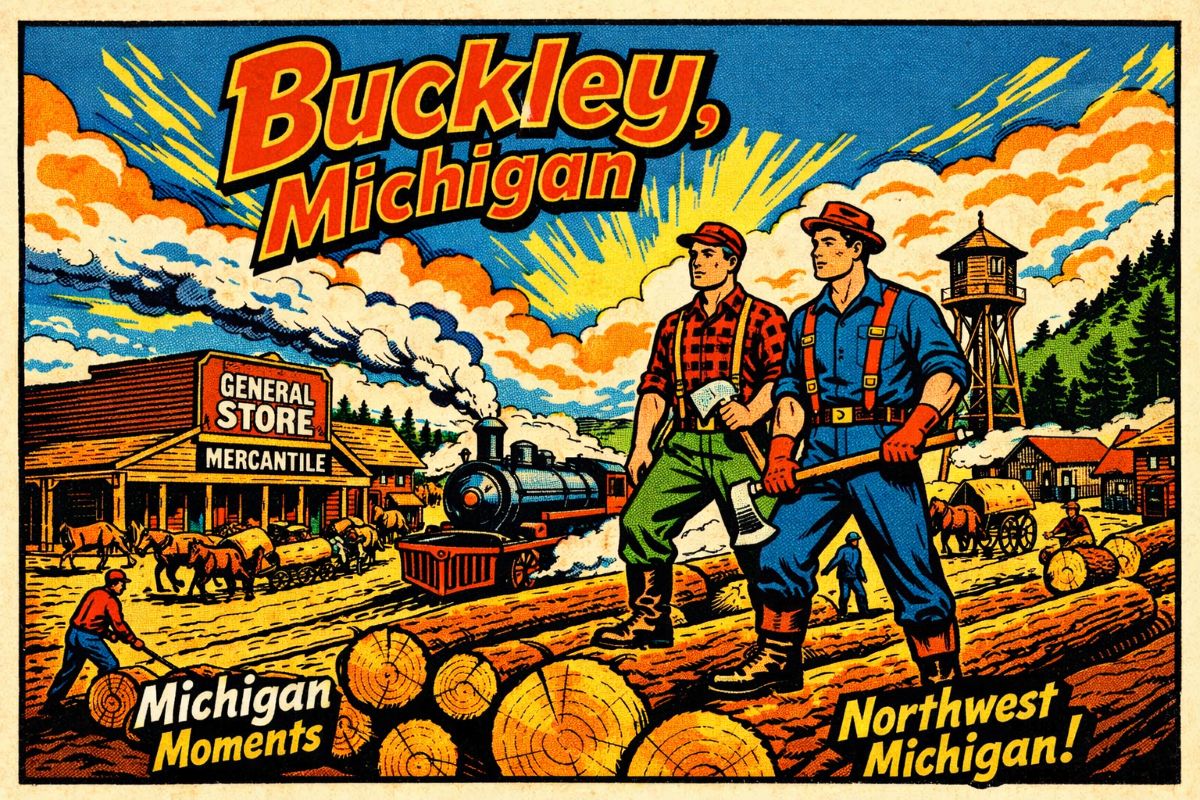
The History of Buckley, Michigan, begins in the late 1800s when railroads pushed into the forests of northern Michigan. Buckley was founded in 1885 along the Toledo, Ann Arbor, and Northern Michigan Railway. Like many towns in Wexford County, Buckley was founded by the timber industry. The railroad enabled cutting trees, shipping lumber, and building a town in what had previously been dense forest.
History of Buckley Michigan Begins With the Railroad
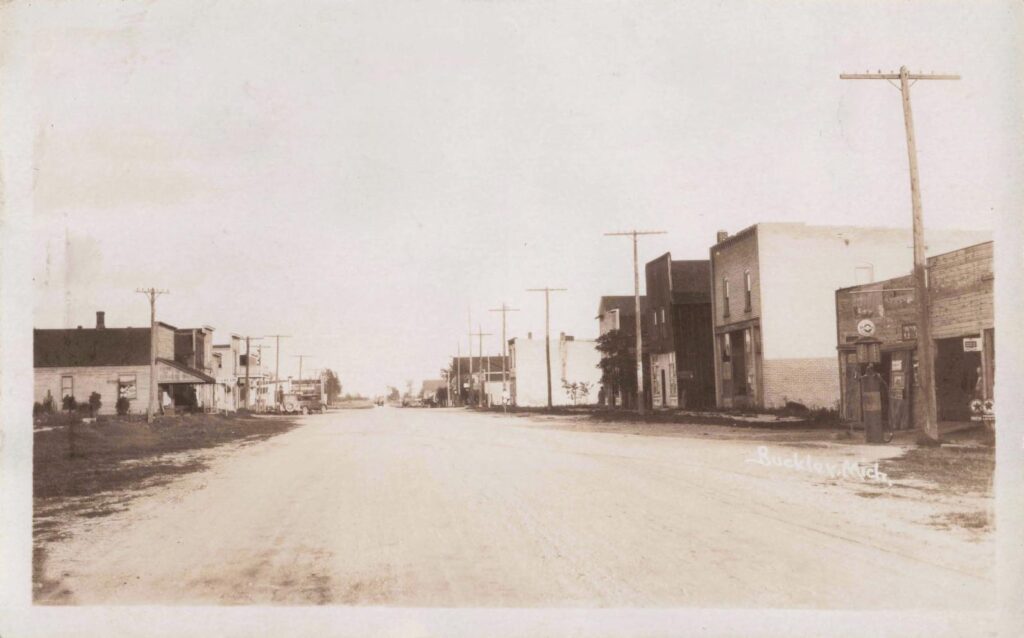
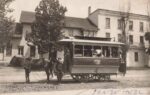
Early Buckley grew quickly. Within a few years, the town had a hotel, general stores, a post office, and a bank. Dirt roads ran between wooden storefronts. Horses and wagons were the primary means of transportation. The railroad depot became the center of activity. Mail arrived there. Supplies arrived there. New residents stepped off the train and saw Buckley for the first time from that platform.
The town was rough around the edges, but it was busy and growing.
Logging Built the Early History of Buckley Michigan
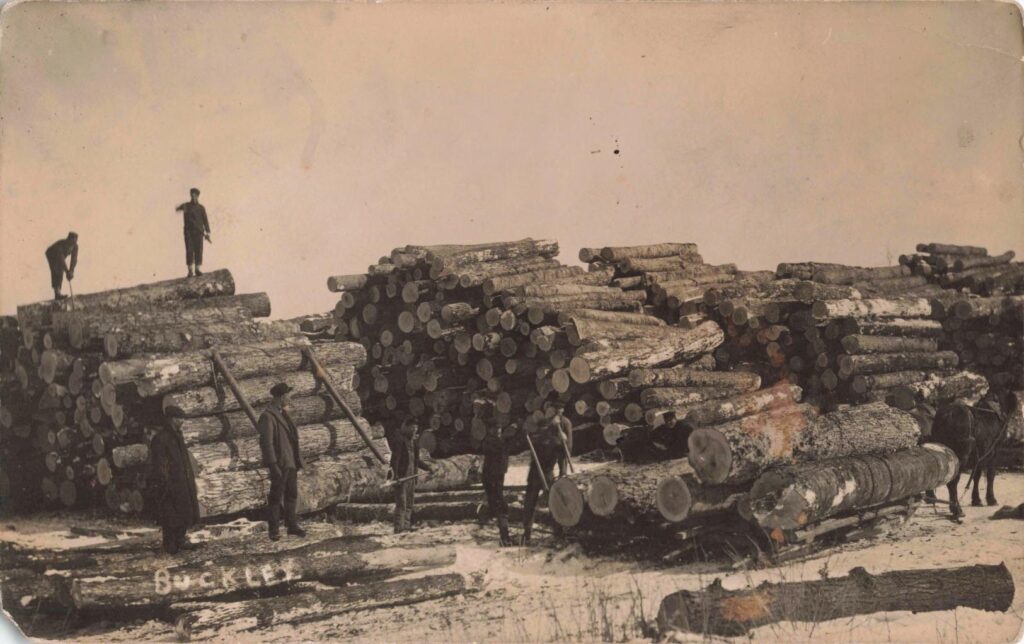
The lumber industry built Buckley. The surrounding forests were filled with white pine, and logging camps operated throughout the region. Workers cut timber in winter and moved logs to rail lines where they were shipped to sawmills and cities in the Midwest.
One historic image from 1909 shows men standing on massive cut logs stacked higher than their heads. These were not small operations. Logging was large-scale and dangerous work. Timber was Buckley’s first major industry, and nearly everyone in town depended on it in some way.
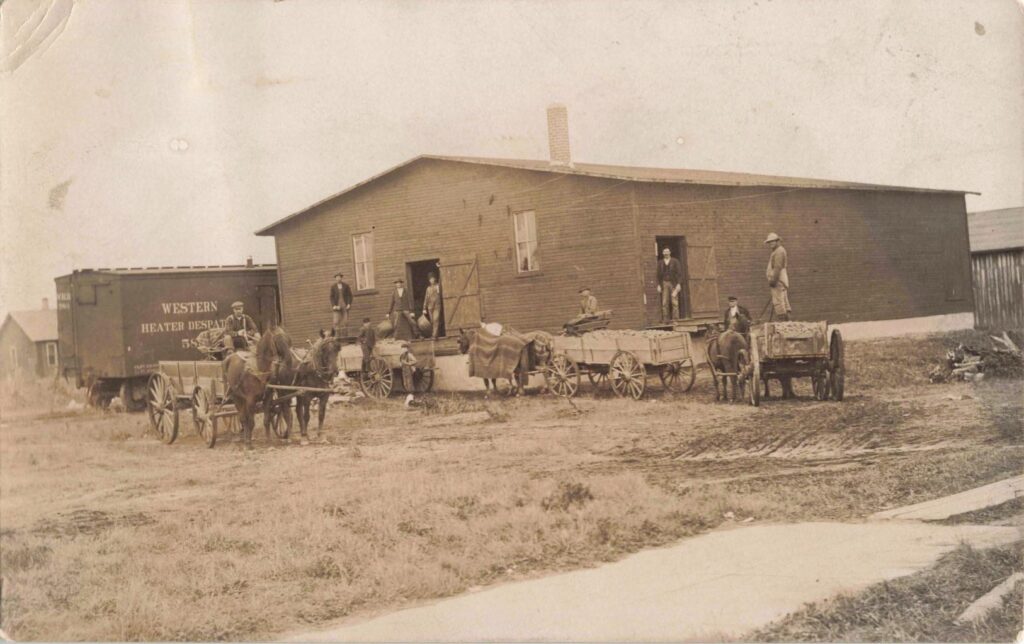
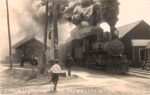
Railcars like the Western Heater Despatch cars seen in the historic images were used to transport goods across the region. The railroad allowed Buckley to ship lumber out and bring supplies in. Without the railroad, Buckley would not have existed.
But the timber industry had a built-in problem. Once the trees were cut, the industry would move on.
The Railroad Depot Shaped the History of Buckley Michigan
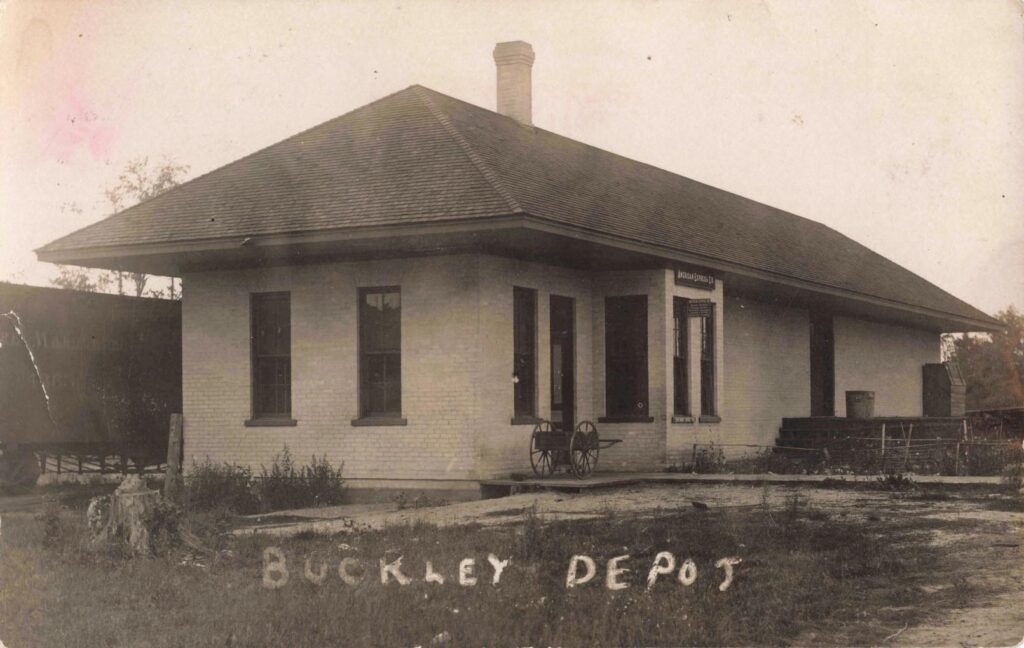
The railroad depot was the most important building in Buckley in the early years. It connected the town to the rest of Michigan and the rest of the country. Farmers shipped crops from the depot. Lumber was loaded onto railcars there. Passengers arrived and departed from that platform.
The depot also brought news, mail, and products ordered from catalogs. In small towns like Buckley, the railroad depot was the connection to the outside world.
Railroad towns often rose and fell based on rail traffic. Buckley was fortunate because it remained an important shipping point even after the logging era slowed.
The Buckley Mercantile and Downtown Businesses
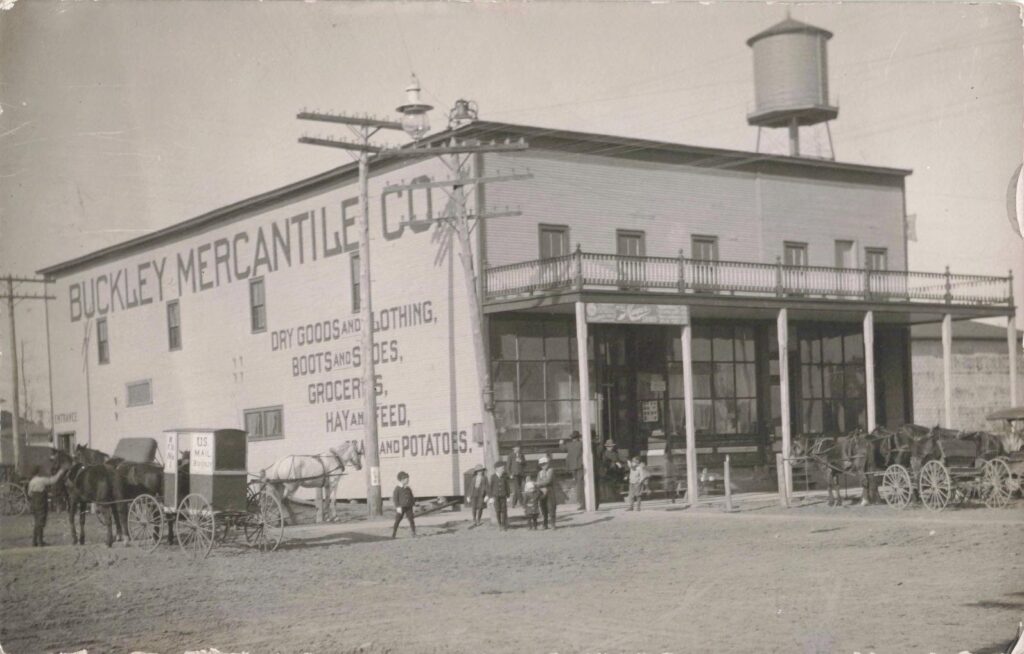
The Buckley Mercantile Company was one of the most important businesses in town. Mercantile stores were the department stores of their day. They sold clothing, boots, groceries, tools, seed, and hardware. Farmers and logging workers both depended on stores like this.
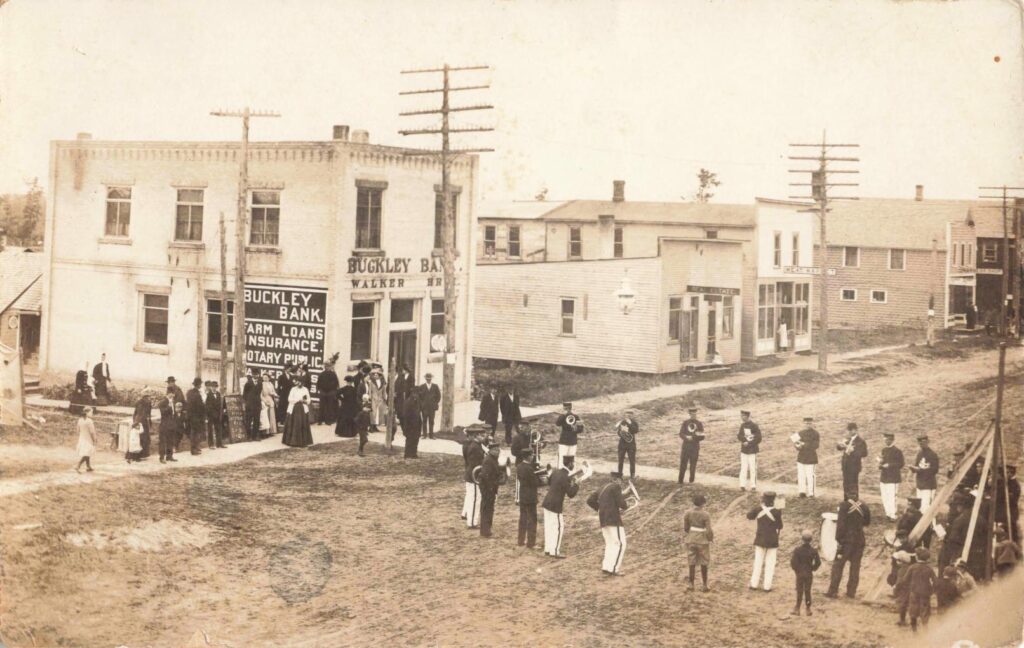
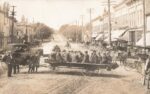
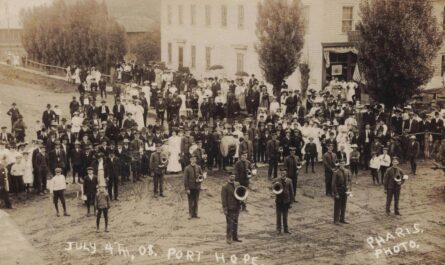
Buckley also had a bank, a hotel, and several small businesses. Historic images show large crowds gathered in downtown Buckley for events and celebrations. These gatherings show that Buckley was not just a work town. It was a community.
Downtown Buckley was the center of social life. People came to town to shop, attend events, and meet neighbors.
Why Buckley Did Not Become a Ghost Town
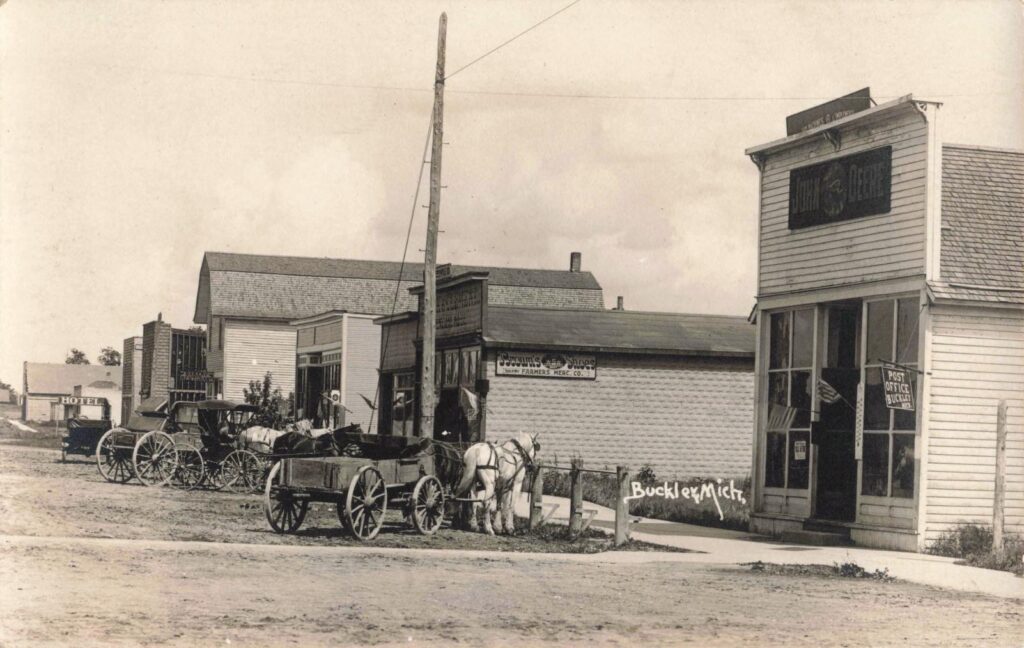
Here is the most important part of the History of Buckley, Michigan. Many northern Michigan towns were built on the logging industry. When the forests were gone, those towns disappeared. Today, many former lumber towns are ghost towns or faded settlements.
Buckley survived because it changed.
After the logging era ended, the cleared land was used for farming. Potatoes became a major crop in the region. The railroad that once shipped lumber began shipping agricultural products instead. Businesses shifted from serving loggers to serving farmers.
This transition likely saved Buckley. Instead of collapsing when the timber industry ended, the town found a new economic base in agriculture.
That pattern occurred in several northern Michigan towns, but many others were unable to make the transition in time.
Buckley in the Early 20th Century
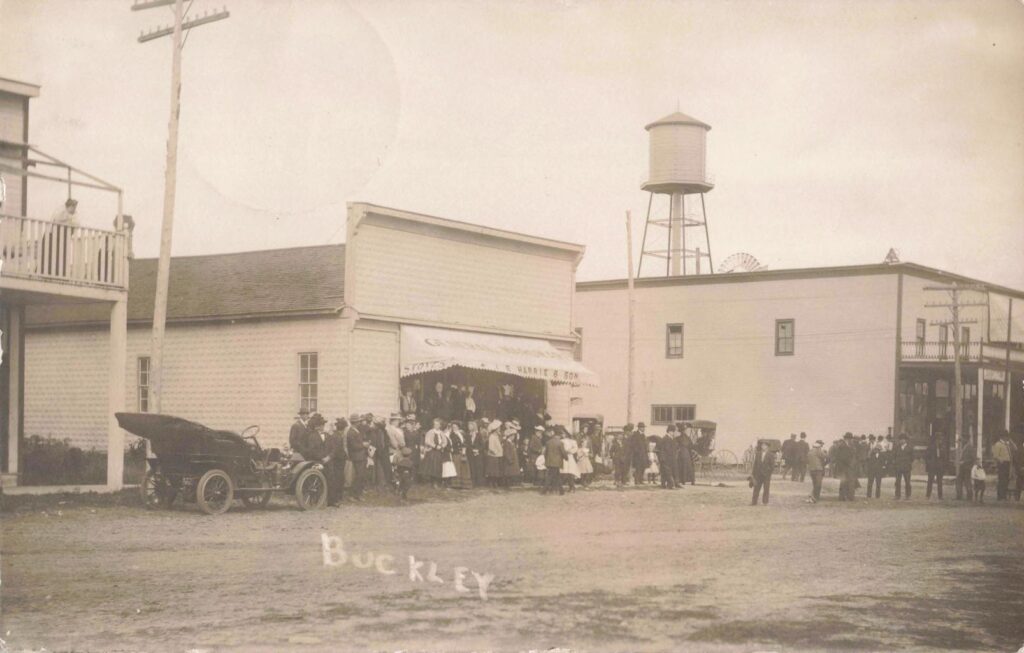
By the 1920s and 1930s, Buckley had become a stable farming community. Automobiles began to replace horses. Roads slowly improved. Schools and churches became the center of community life.
Buckley remained small but active. The town continued to serve as a local business center for surrounding farms. The railroad continued to ship goods. The mercantile store continued to supply the community.
The History of Buckley Michigan is not a story of a boomtown that became a city. It is a story of a town that survived by adapting.
That may be more interesting.
Many places grow fast and disappear. Buckley changed slowly and stayed.
Buckley Today
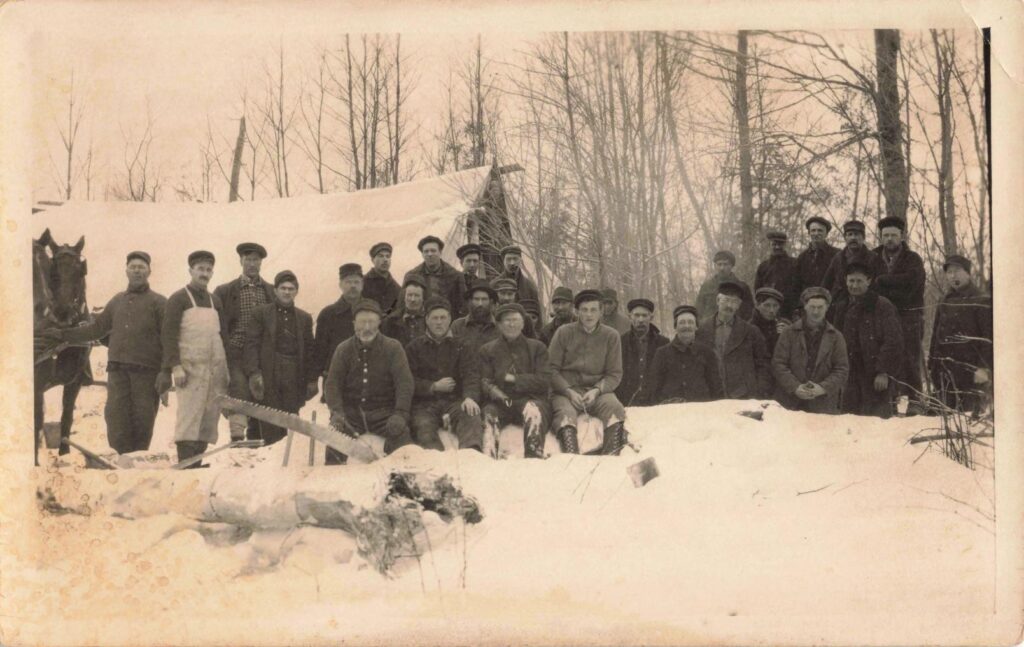
Today Buckley is a small village in Wexford County, but its layout still reflects its railroad and lumber origins. The main street, the railroad alignment, and the early commercial district all tell the story of a town built in the lumber era and reshaped by agriculture.
When you look at these early images, you are seeing the years when Buckley was new, when the streets were dirt, when horses filled the roads, and when the railroad determined the town’s future.
The History of Buckley Michigan is the story of many northern Michigan towns — logging, railroad growth, economic change, and survival through agriculture.
Buckley did not become a ghost town.
Buckley adapted.
And that made all the difference.
Before you go: Try this quick 30-second history check.
Quick Buckley History Check
1. What industry shaped early Buckley?
2. What role did railroads play?
3. What type of town did Buckley become?