 by
by 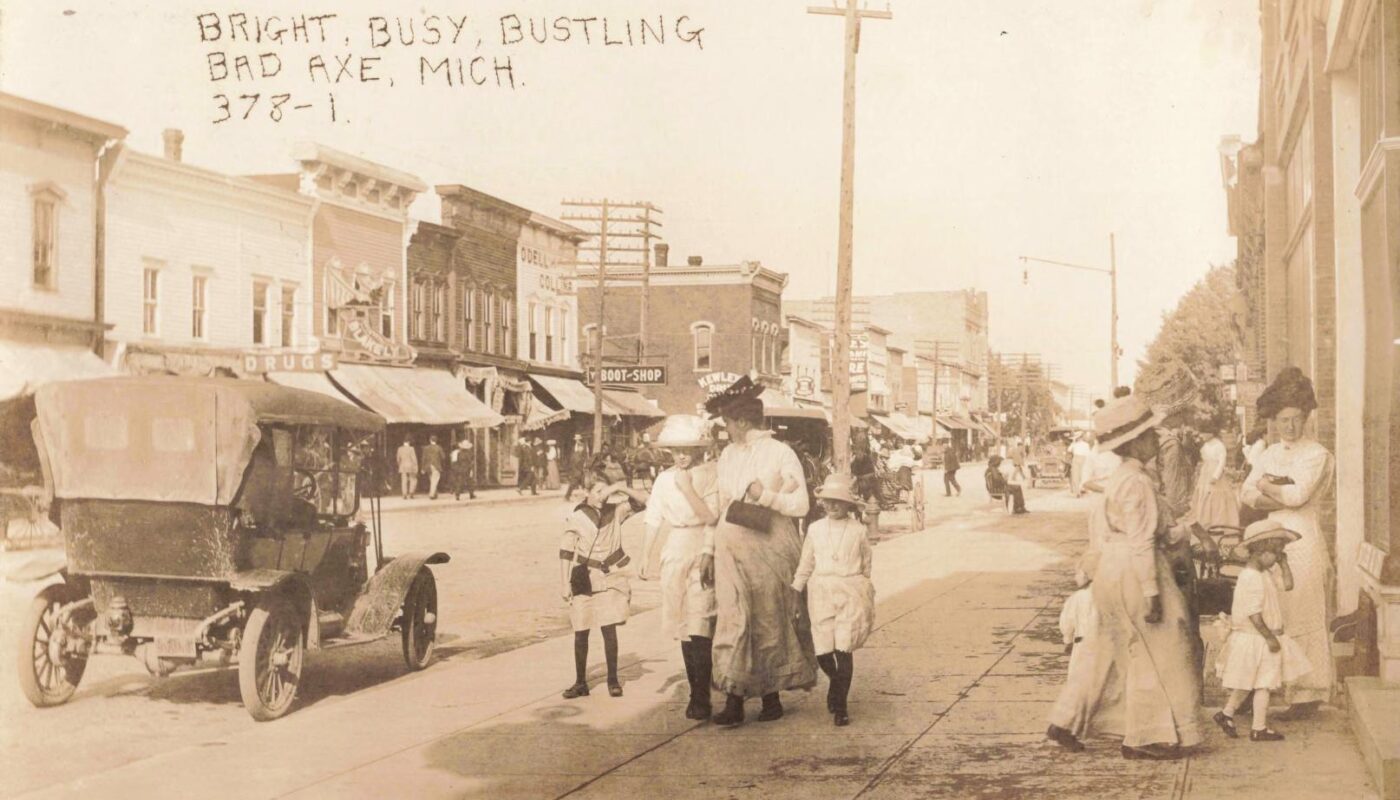
The History of Bad Axe Michigan allways seem to begin with stories of a broken axe, but it this location was the central garden spot for the Anosabee indigious peoples long before European explorers and immagrent homesteaders showed up. What turned this place into something larger was not luck and not shoreline trade. It was the slow pull of government, farm commerce, rail traffic and public gathering. In the Thumb, county records had to be kept somewhere. Lawyers, merchants, jurors and farmers had to meet somewhere. Over time, that somewhere became Bad Axe. It is one of the best examples in Michigan of how official business can build a town just as surely as lumber, ore or water traffic can.
Bad Axe – A Curious Name For a Town
In 1861, surveyors Rudolph Papst and George Willis Pack reached a camp site near a mineral spring north of the future village while working on a state road. An old damaged axe at that camp gave them the name. The phrase stuck. A post office opened in 1870, which is the moment the place stopped being only a marked camp and became a recognized stop in the wider system of mail, maps and movement. A lot of towns in Michigan have colorful naming stories. Bad Axe stands apart because the name held while the town itself changed completely around it.
When the county seat moved into the woods
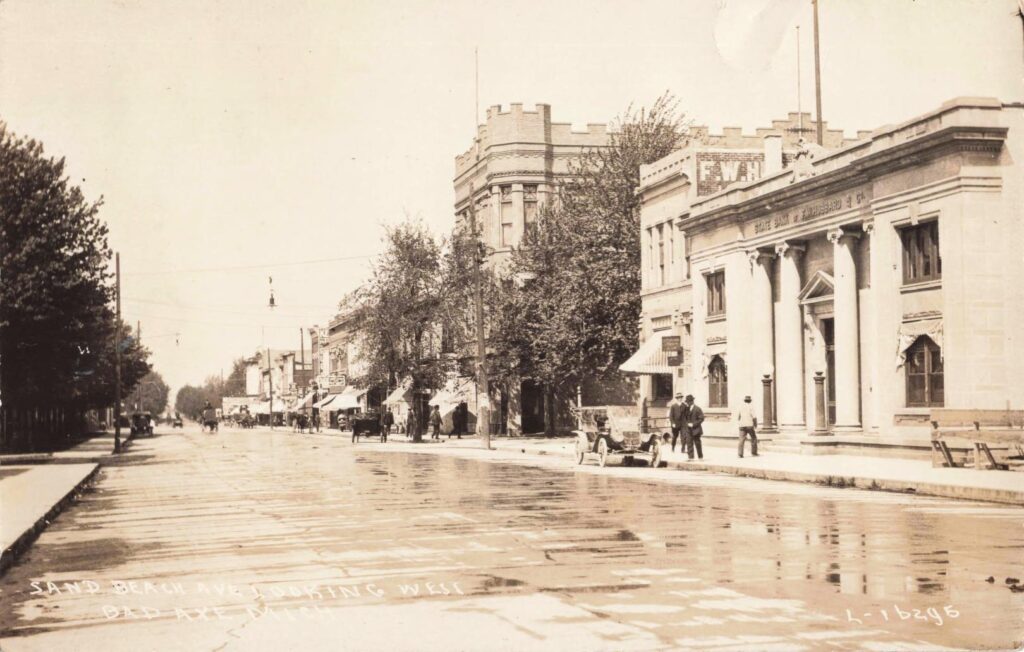
The real start of the town came through a political fight. After the courthouse burned in 1864, the Huron County seat sat for a time in Port Austin. The dispute over a permanent location kept going until the Board of Supervisors chose Bad Axe in 1872. County records were moved there in October 1873. Septimus Irwin, the town’s first settler and later its village president, cleared the site, put up a temporary public building, and began a hotel. That sequence sounds dry on paper, but it changed everything. Once the county seat moved, Bad Axe had a built-in reason for people to travel there, spend money there and return there.
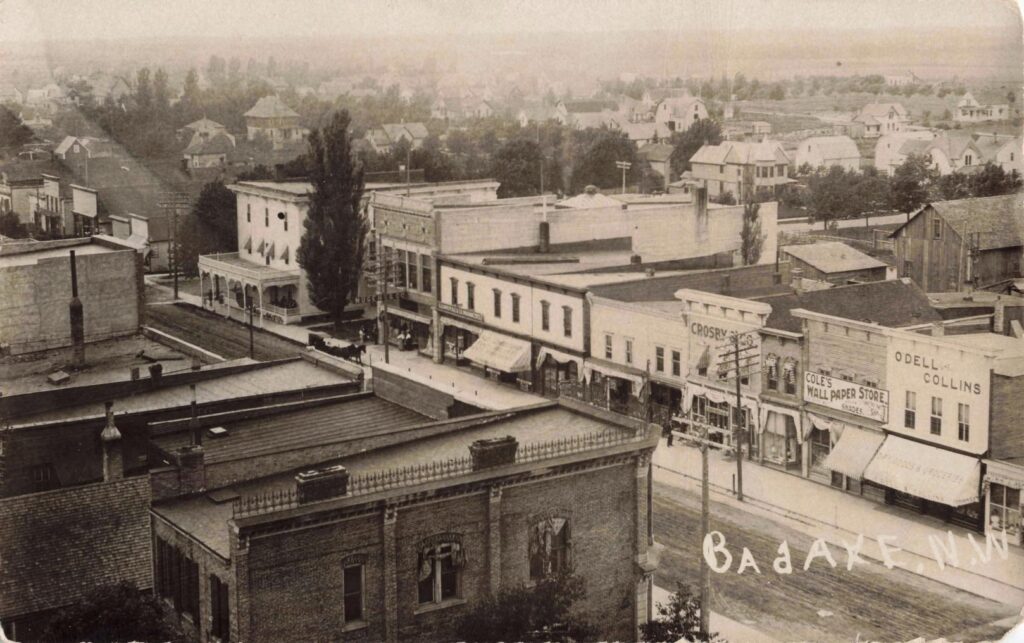
The old county history is especially sharp on this point. When officials arrived in 1873, the place around the new county seat was still heavily wooded. Board members even bought their own bedding and slept on the courtroom floor. That detail strips away the neat legends and gets closer to the truth. Bad Axe was not born polished. It was assembled through public routine in rough conditions, with local people building just enough structure to make county government function in the middle of a clearing.
Why the History of Bad Axe Michigan turned on Rail and Fire
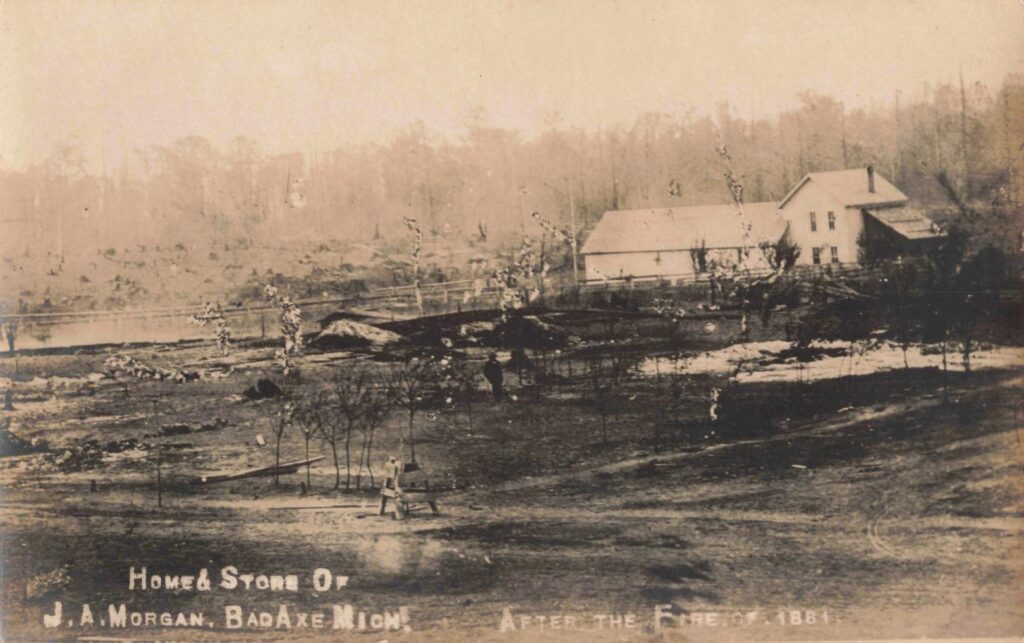
The most dramatic turn in the History of Bad Axe Michigan came in 1881. Fire destroyed nearly all of the village except for the courthouse and a few small houses. On September 5, 1881, destroying almost the entire village except for the newly built brick courthouse and one hotel. The fire killed 282 people in the region, burned over 1 million acres, and left roughly 15,000 residents homeless, shifting the region’s focus from lumbering to agriculture.
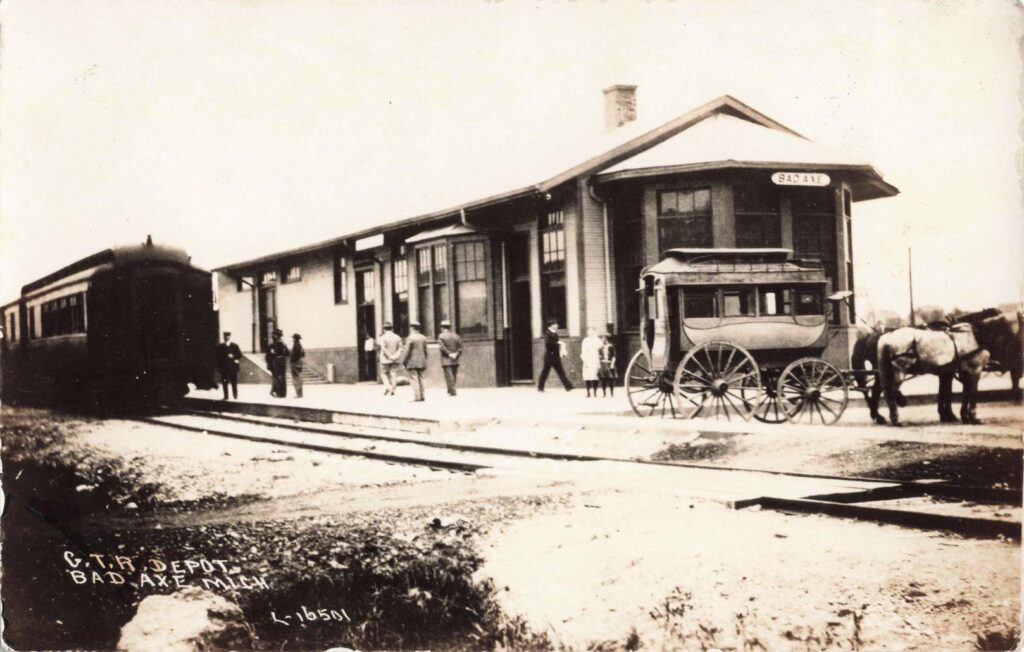
In many towns, that would have been the end of the story. In Bad Axe, it became the start of a faster chapter. In 1882, the railroad came through on the line to Port Austin, and the county history says that gave the village a new push. A year of ruin was followed almost at once by a new transport link. That is why the postcard set feels so useful. It lets you show the rebuilt town as the product of both loss and quick recovery.
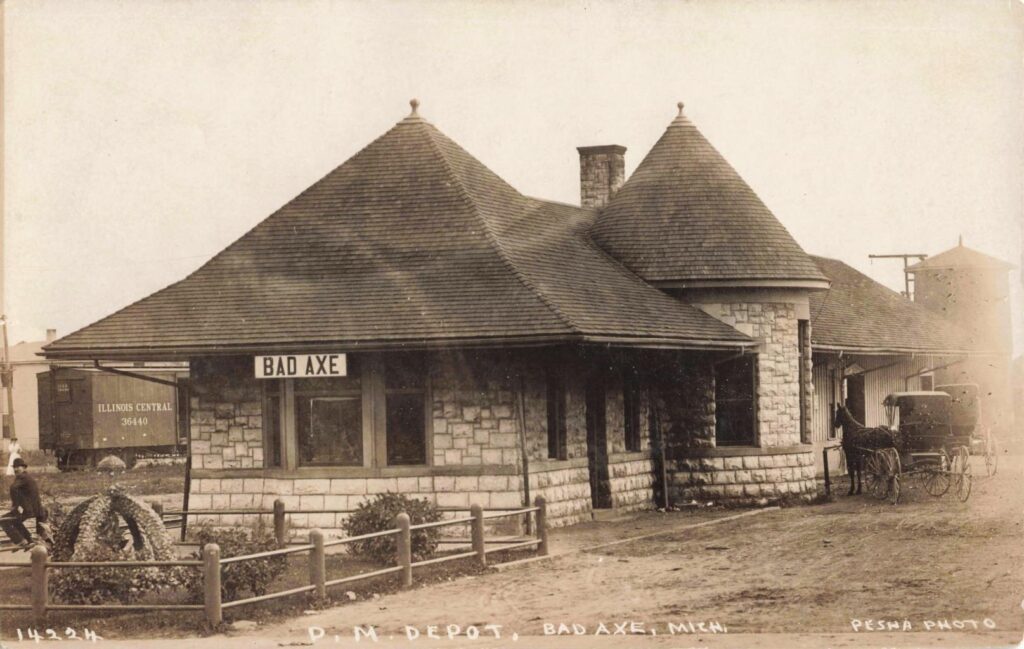
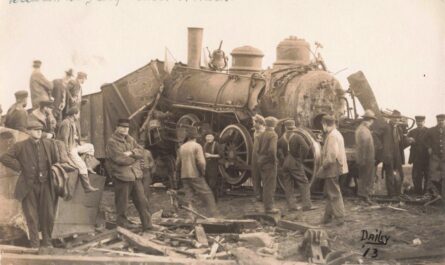
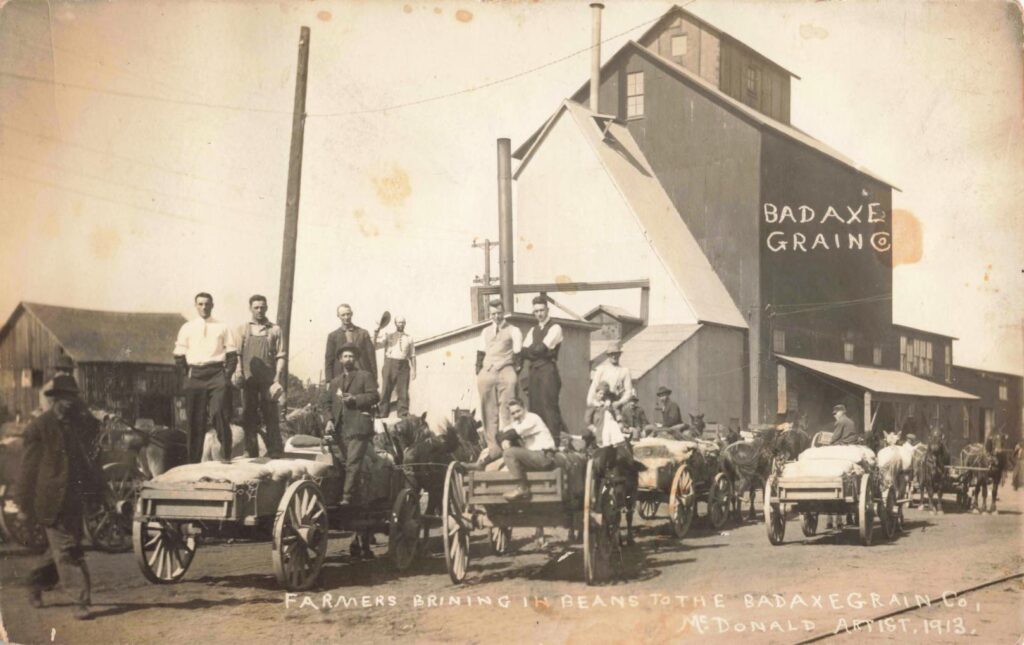
Once rail service arrived, Bad Axe had a stronger reason to grow into its county-seat role. Goods could move in and out more easily. Merchants could stock shelves more reliably. Farmers had a clearer path to market. Court days and trade days started feeding each other. By 1913, a Grand Trunk branch from Cass City reached town, which widened that rail story even more. The depot cards in your set are not fillers. They are proof that Bad Axe rose because it was tied into movement, not because it sat still.
A Main Street built for Court days and Trade days
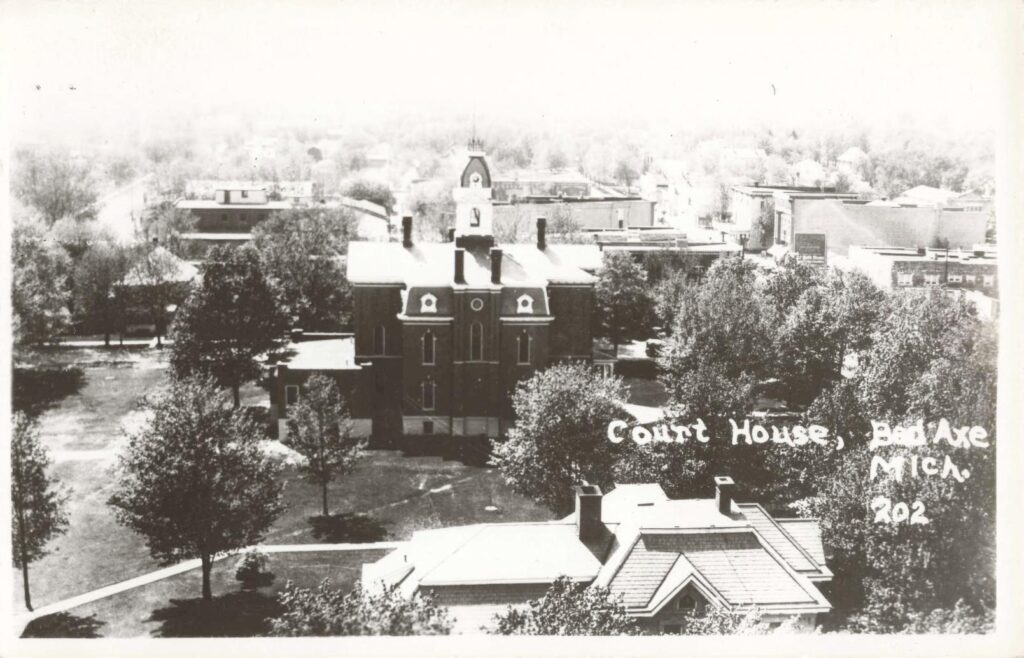
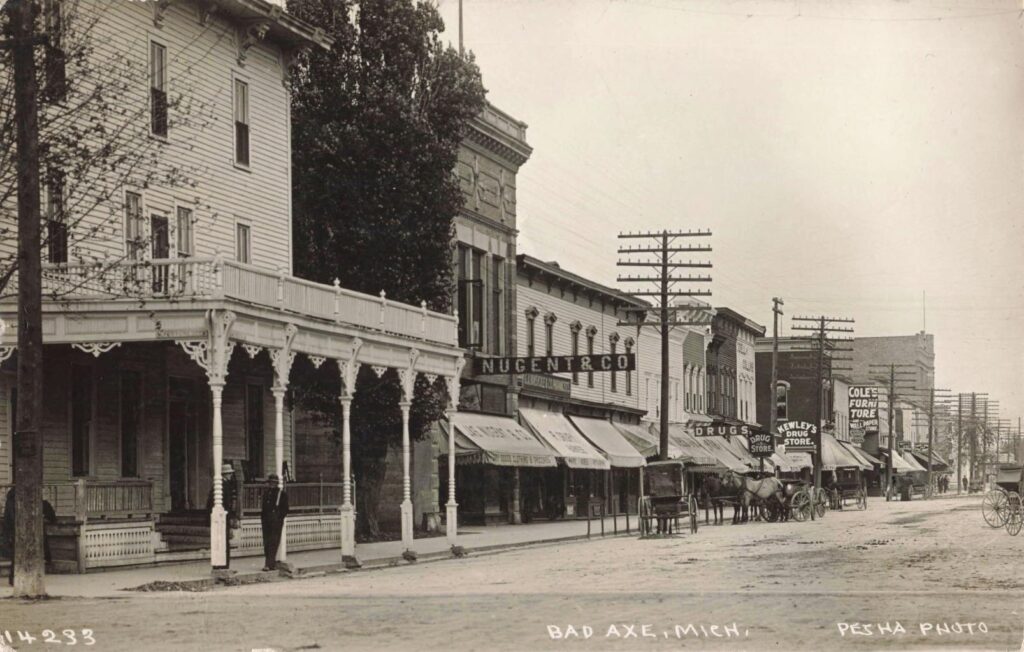
Early Bad Axe built a downtown that made sense for a county seat. The old county history lists general stores, hardware merchants, furniture sellers, legal offices, banks, hotels and a restaurant trade. That is exactly what a courthouse town needed. It had to handle official business during the week and farm traffic on the days when surrounding townships came in to buy, sell or settle accounts. By 1905, Bad Axe had become Huron County’s first city. The formal change only confirmed what the business block already showed.
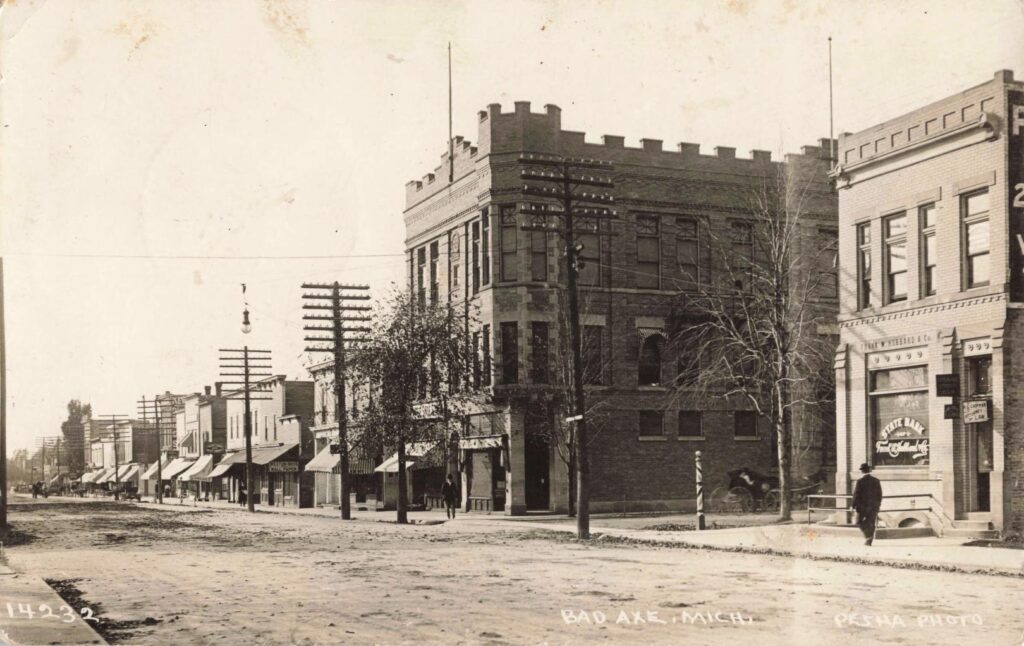
The name fight of 1909 says even more. State action tried to rename the city “Huron,” but the change never took hold. By then, Bad Axe was too well known, and the older name carried too much local identity to be replaced by something cleaner. That episode is useful because it reveals civic pride in a hard form. Residents were not clinging to a joke. They were defending a public name that had come to stand for county power, local memory and steady trade.
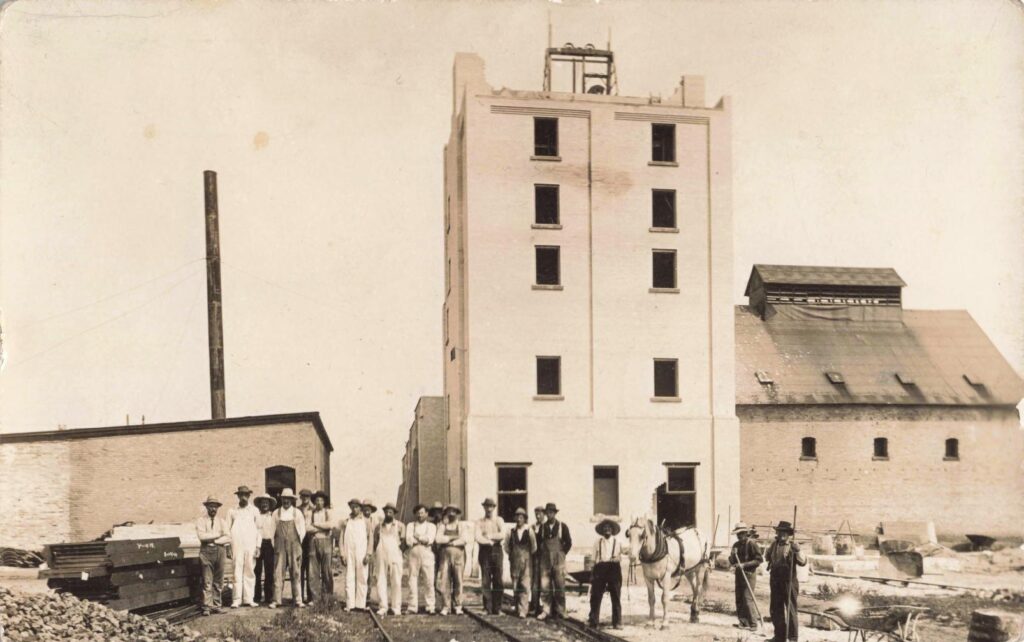
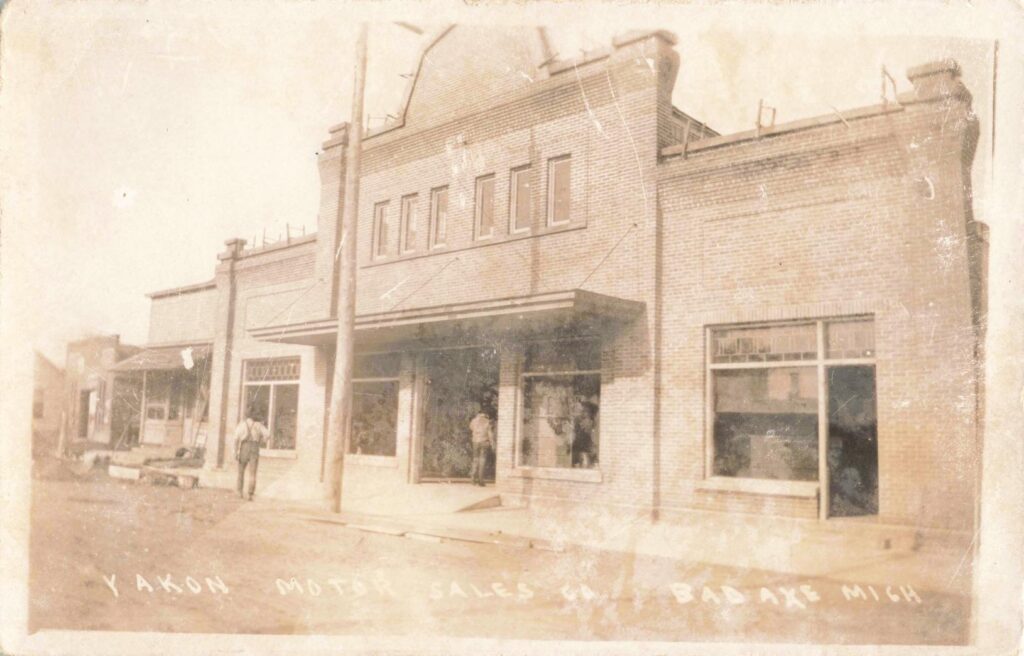
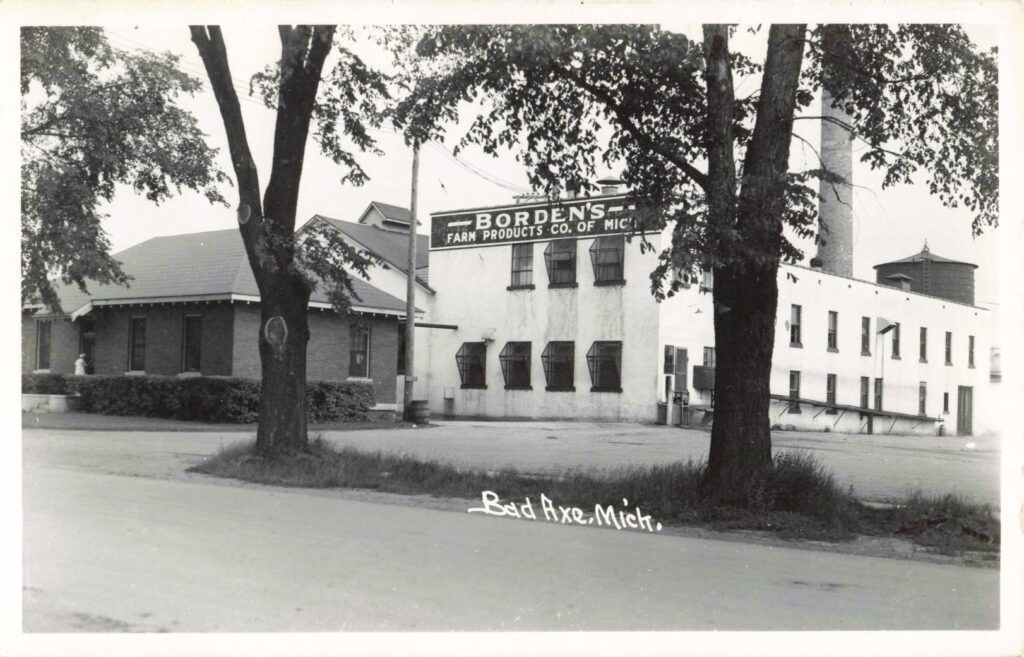
Industry filled in the rest of the picture. A chicory plant stood near the rail wye and appears on the 1909 Sanborn map. By the early 1930s, a Bad Axe cream plant was tied to the Detroit market. One card in your set even marks an early motor dealership, which tells the next part of the story without a single extra sentence. The horse was still present, but the machine had arrived. Bad Axe was staying rooted in farm country while adapting to a new pace. The History of Bad Axe Michigan is really a record of that mix: courthouse routine, farm money and modern transport all in one place.
Fair Week told the truth about Huron County
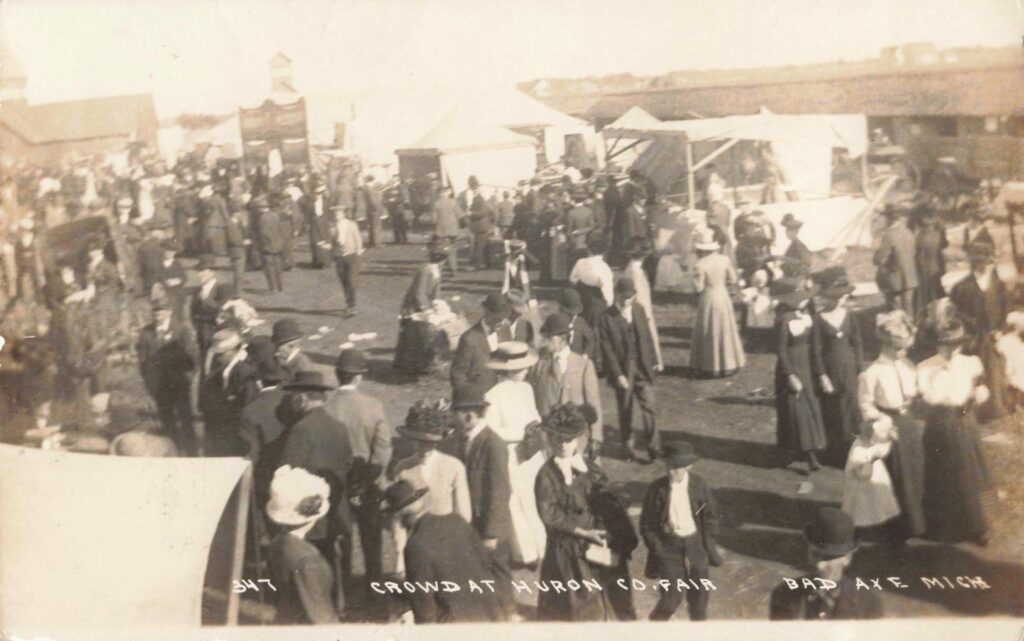
If Main Street showed Bad Axe at work, the fairgrounds showed Bad Axe at full volume. Your cards from fair time mark big crowd scenes, racing and midway energy. That was not a side show to the town’s history. It was the county coming together in public. The fair offered competition, amusement, commerce, gossip and display all at once. Local coverage still describes the Huron Community Fair as Michigan’s longest continuously running fair, and the event was headed into its 158th year in 2026. That kind of continuity is part of the town’s identity, not just its calendar.
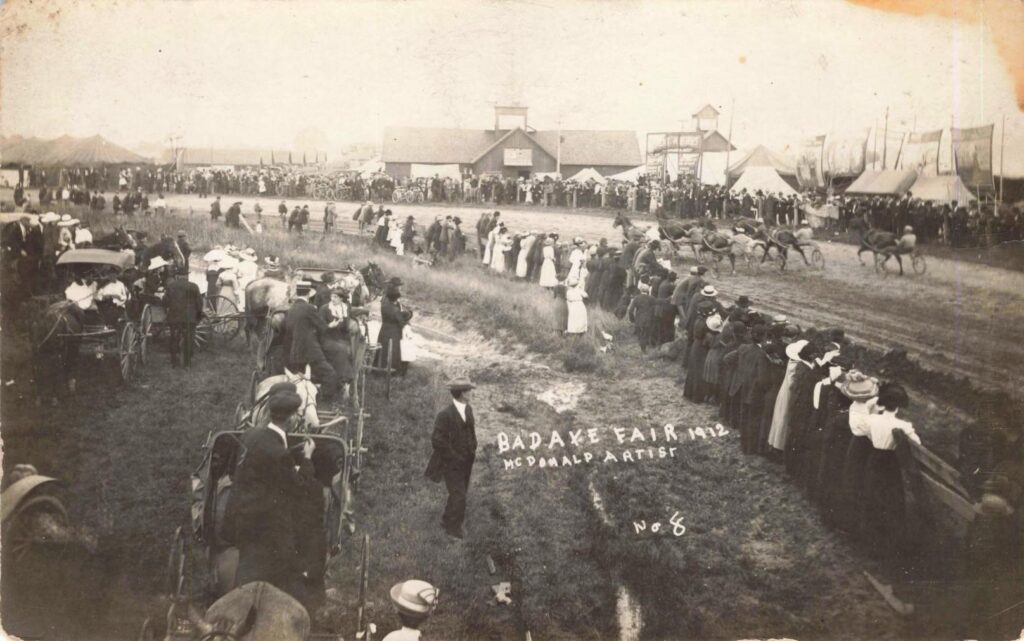
The fair also helps explain why Bad Axe lasted when some nearby places faded. County-seat towns survive on habit. People return to them because the courthouse is there, the shops are there, the records are there, and the public rituals are there. Fair week sharpened all of that. It reminded the county where to gather. In a region of farms and smaller settlements, Bad Axe kept winning the argument over where public life would happen.
The Sleeper Legacy – A Michigan Governor Ahead of His Time
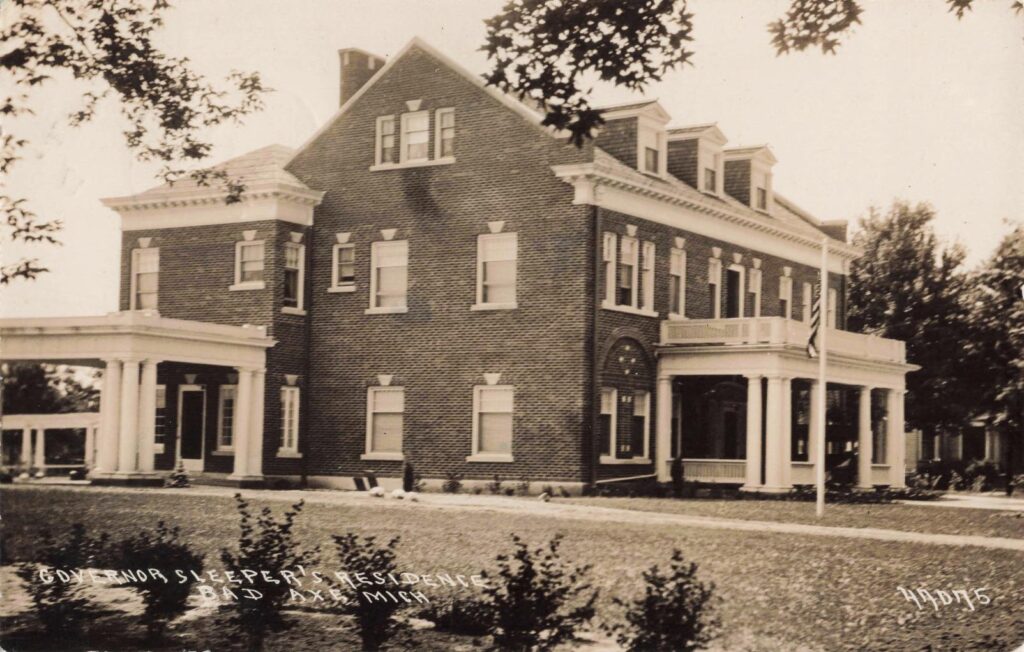
Bad Axe also sent familiar names into larger arenas. Albert E. Sleeper kept a major residence in town and served as governor of Michigan in the late 1910s; his house in Bad Axe is listed on the National Register of Historic Places, and a state park in Huron County bears his name. George M. Clark, who later served on the Michigan Supreme Court, also grew up and studied in Bad Axe. Those careers make a simple point. This was not an isolated place. It was a town where state-level politics and law could rise out of county-level routine.
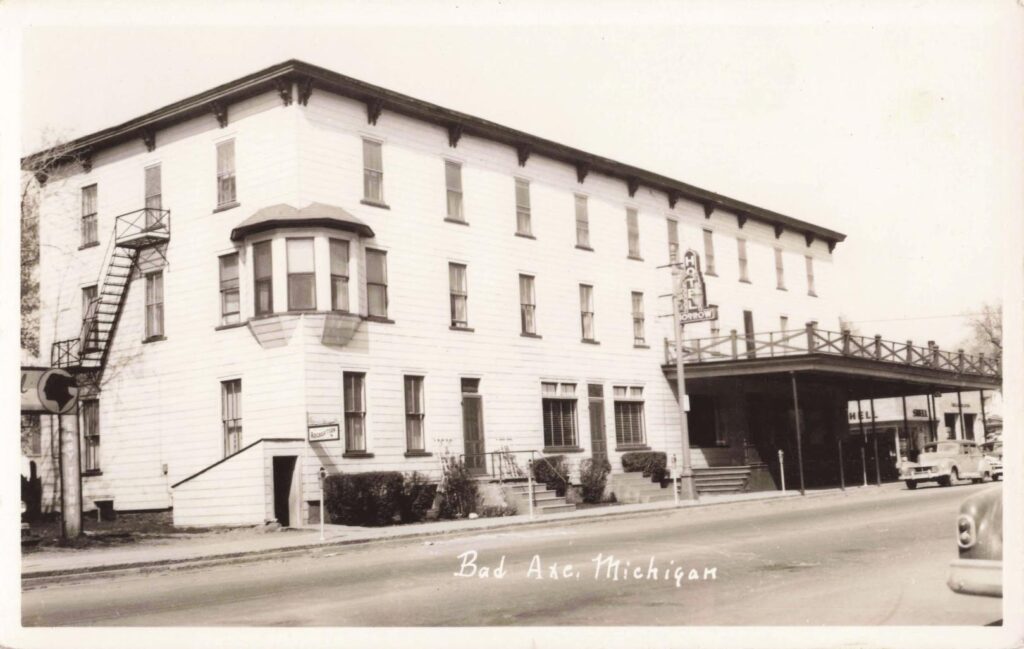
There is another layer that many people do not expect. Michigan’s statewide preservation plan says the first recorded Jewish farming settlement in the state, the Palestine Colony, stood about four miles from Bad Axe in 1891. The colony did not last long, but it shows that the area around Bad Axe was tied to wider stories of migration, settlement and trial. That single fact changes the feel of the town’s past. Bad Axe was not only a county center for nearby farmers. It also sat close to one of Michigan’s most unusual immigrant settlement efforts.
Why the History of Bad Axe Michigan still pulls people in
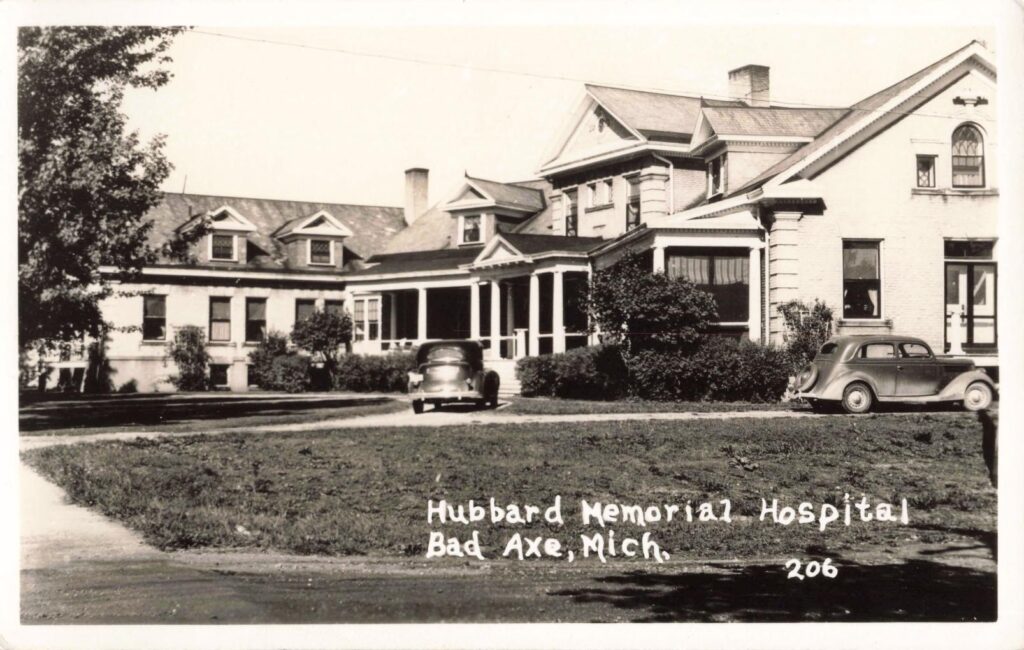
That is why the History of Bad Axe Michigan still feels larger than the city’s size. The story holds a sharp name, a county-seat fight, a destructive fire, two rail eras, a durable fair, civic institutions and a governor’s house. It also holds something else that good local history often carries: proof that ordinary public routine can shape a place as surely as spectacular wealth can. Bad Axe became a county capital in practice long before anyone had reason to say the phrase out loud. It earned that standing through records, roads, depots, trade and repetition.
So if you want the short answer, here it is. Bad Axe kept its name because it had already built a strong civic identity under that name. The courthouse gave it gravity. The railroad gave it speed. The fair gave it memory. And the people around it kept coming back until the place became permanent. That is what still comes through in the postcard set: not novelty, but staying power.
Works Cited in the History of Bad Axe Michigan
Bad Axe Area District Library. “History of Bad Axe’s Name.” Bad Axe Area District Library, n.d. Accessed 8 May 2026.
Genealogy Trails History Group. “History of Bad Axe.” Genealogy Trails, n.d. Accessed 8 May 2026.
Genealogy Trails History Group. “History of the Bad Axe, MI Post Office.” Genealogy Trails, n.d. Accessed 8 May 2026.
Huron Community Fair. “Huron Community Fair | Huron County | Bad Axe.” Huron Community Fair, n.d. Accessed 8 May 2026.
Michigan Department of Natural Resources. “Albert E. Sleeper State Park.” Michigan.gov, State of Michigan, n.d. Accessed 8 May 2026.
Michigan Railroads. “Bad Axe, MI.” Michigan Railroads, n.d. Accessed 8 May 2026.
Michigan Railroads. “Bad Axe, MI – Chicory Plant.” Michigan Railroads, n.d. Accessed 8 May 2026.
Michigan Railroads. “The Last GTW Train to Bad Axe.” Michigan Railroads, n.d. Accessed 8 May 2026.
Michigan State Historic Preservation Office. “Michigan’s Statewide Historic Preservation Plan, 2020–2025.” MiPlace, 2020. Accessed 8 May 2026.
Michigan Supreme Court Historical Society. “George Clark.” Michigan Supreme Court Historical Society, n.d. Accessed 8 May 2026.
National Governors Association. “Gov. Albert Edson Sleeper.” National Governors Association, n.d. Accessed 8 May 2026.
National Park Service. “Sleeper, Albert E., House.” NPGallery Digital Asset Management System, n.d. Accessed 8 May 2026.
Robinson, Shawn. “The Captivating Story of Bad Axe’s Hubbard Memorial Hospital.” Huron Daily Tribune, Huron Publishing Company, LLC, 2 Oct. 2023. Accessed 8 May 2026.
Snodgrass, Katy. “Celebrate 157 Years of Tradition at the Huron Community Fair.” Huron Daily Tribune, Huron Publishing Company, LLC, 23 July 2025. Accessed 8 May 2026.
State of Michigan. “List of All Former Governors.” Former Governors of Michigan, n.d. Accessed 8 May 2026.
Verification Map
| Original in-package citation label | Final MLA HTML entry |
|---|---|
| Bad Axe Area District Library | Bad Axe Area District Library. “History of Bad Axe’s Name.” Bad Axe Area District Library, n.d. Accessed 8 May 2026. |
| Genealogy Trails — “History of Bad Axe” | Genealogy Trails History Group. “History of Bad Axe.” Genealogy Trails, n.d. Accessed 8 May 2026. |
| Genealogy Trails — “History of the Bad Axe, MI Post Office” | Genealogy Trails History Group. “History of the Bad Axe, MI Post Office.” Genealogy Trails, n.d. Accessed 8 May 2026. |
| Huron Community Fair site | Huron Community Fair. “Huron Community Fair | Huron County | Bad Axe.” Huron Community Fair, n.d. Accessed 8 May 2026. |
| Huron Daily Tribune — “Bad Axe’s Hubbard Memorial Hospital” | Robinson, Shawn. “The Captivating Story of Bad Axe’s Hubbard Memorial Hospital.” Huron Daily Tribune, Huron Publishing Company, LLC, 2 Oct. 2023. Accessed 8 May 2026. |
| Huron Daily Tribune — “Celebrate 157 Years of Tradition at the Huron Community Fair” | Snodgrass, Katy. “Celebrate 157 Years of Tradition at the Huron Community Fair.” Huron Daily Tribune, Huron Publishing Company, LLC, 23 July 2025. Accessed 8 May 2026. |
| Michigan DNR — “Albert E. Sleeper State Park” | Michigan Department of Natural Resources. “Albert E. Sleeper State Park.” Michigan.gov, State of Michigan, n.d. Accessed 8 May 2026. |
| Michigan Dept. of State — “List of All Former Governors” | State of Michigan. “List of All Former Governors.” Former Governors of Michigan, n.d. Accessed 8 May 2026. |
| Michigan Railroads — “Bad Axe, MI” | Michigan Railroads. “Bad Axe, MI.” Michigan Railroads, n.d. Accessed 8 May 2026. |
| Michigan Railroads — “Bad Axe, MI – Chicory Plant” | Michigan Railroads. “Bad Axe, MI – Chicory Plant.” Michigan Railroads, n.d. Accessed 8 May 2026. |
| Michigan Railroads — “The Last GTW Train to Bad Axe” | Michigan Railroads. “The Last GTW Train to Bad Axe.” Michigan Railroads, n.d. Accessed 8 May 2026. |
| Michigan Supreme Court Historical Society — “George Clark” | Michigan Supreme Court Historical Society. “George Clark.” Michigan Supreme Court Historical Society, n.d. Accessed 8 May 2026. |
| MI Place SHPO plan | Michigan State Historic Preservation Office. “Michigan’s Statewide Historic Preservation Plan, 2020–2025.” MiPlace, 2020. Accessed 8 May 2026. |
| National Governors Association — “Gov. Albert Edson Sleeper” | National Governors Association. “Gov. Albert Edson Sleeper.” National Governors Association, n.d. Accessed 8 May 2026. |
| National Park Service — “Sleeper, Albert E., House” | National Park Service. “Sleeper, Albert E., House.” NPGallery Digital Asset Management System, n.d. Accessed 8 May 2026. |