 by
by 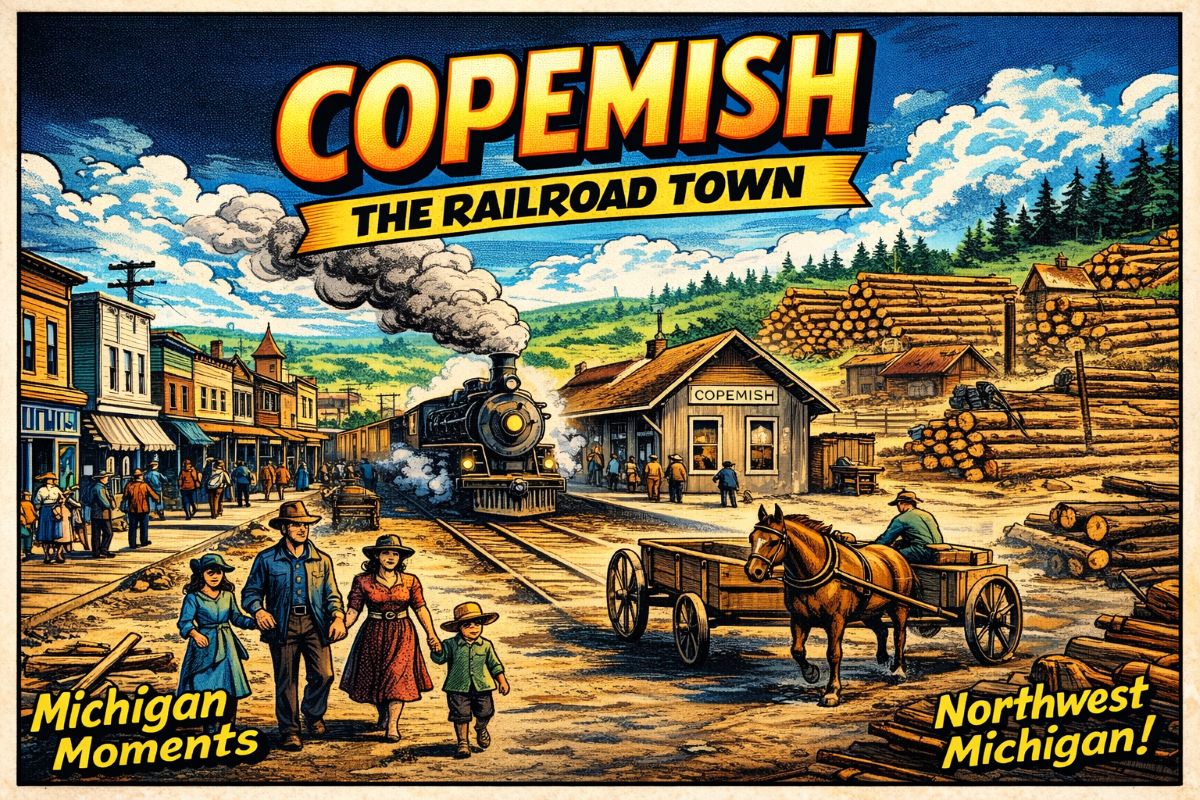
The History of Copemish Michigan starts with a practical problem: distance. Local reporting about early incorporation says residents in the area once walked 30 to 50 miles for supplies, medical help, mills, and even churches. When two railroads drove lines through this part of Manistee County in 1889, that old travel math changed fast. A junction created a place where goods and services could finally meet people closer to home.
Established in 1891, the village expanded swiftly from a handful of settlers in 1889 to a community of 400 within five years, boasting a hotel, a bank, several shops, and a large grist mill.
Copemish Was Built by Rails and Timber
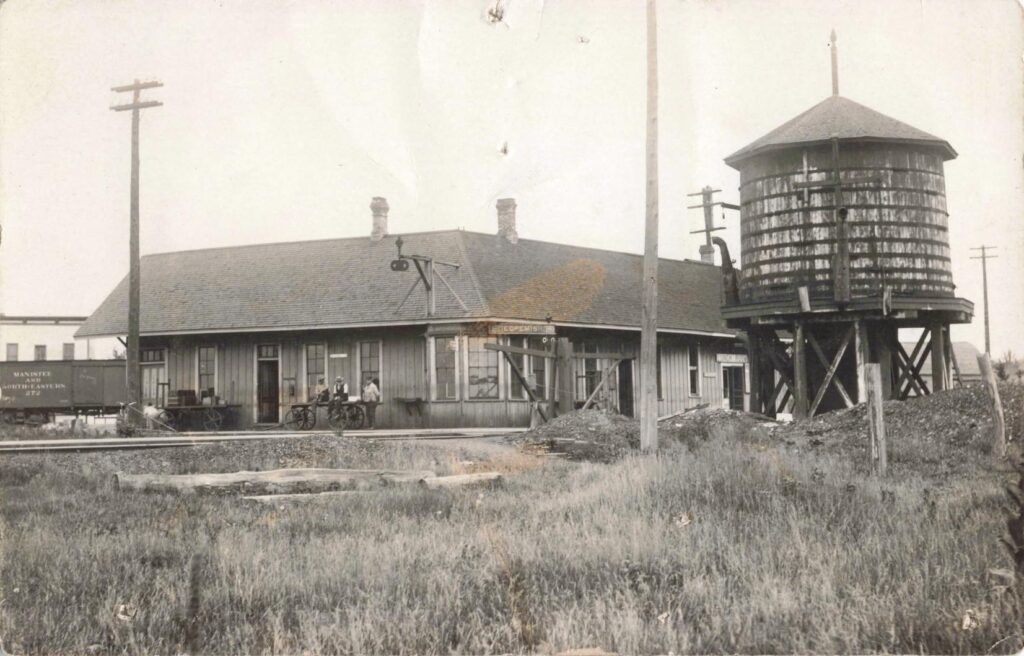
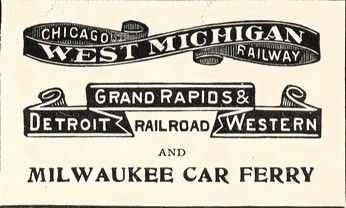
Like many northern Michigan towns, Copemish existed because trains needed a place to stop, load timber, and take on water. The Chicago & West Michigan Railway pushed through this part of Manistee County in the late 1800s, and a small settlement formed around the depot.
The name “Copemish” comes from an Ojibwe word often translated as “beechwood” or “place of the beech tree.” Long before the railroad arrived, Native American trails crossed this region. But the modern town grew because of timber and rail lines.
Logging Camps and Winter Work
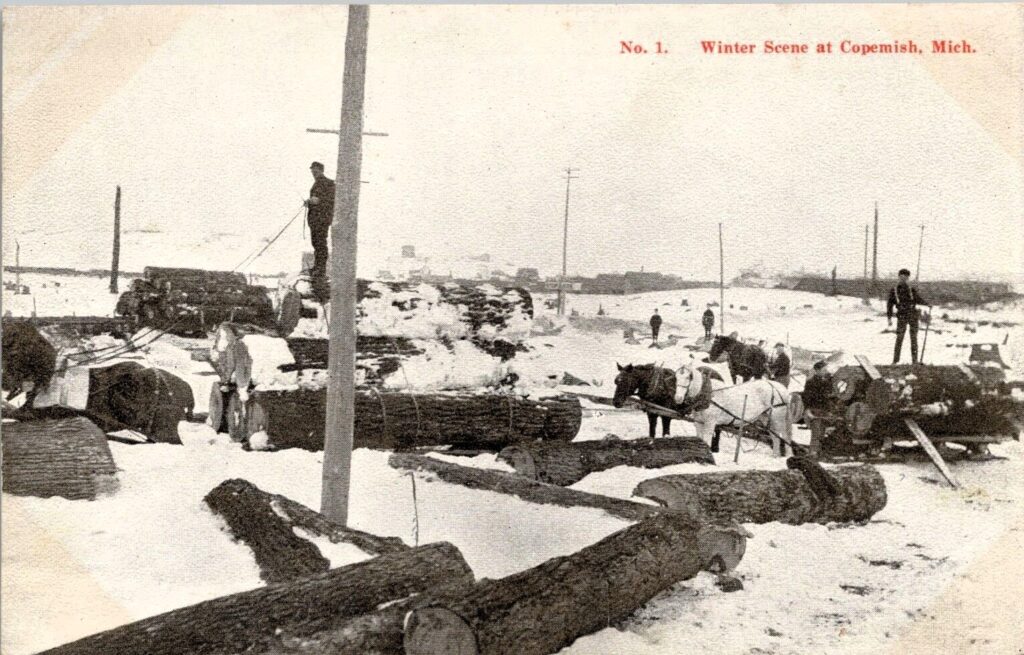
Logging built Copemish. The surrounding forests were cut during the late 1800s and early 1900s. In winter, logging crews hauled massive logs by horse-drawn sled over frozen ground. Winter was the busiest season in the timber industry. The logging photo from Copemish shows a horse team pulling a sled loaded with logs. This was dangerous work. It was cold, heavy, and slow. But it paid.
When the timber industry slowed, many logging towns died. Copemish did not. Farmers moved into the cleared land. The town shifted from timber to agriculture.
That transition saved the town.
Main Street: The Center of Daily Life in Copemish
A local-history column reproduces an 1889 newspaper introduction that called Copemish a “brand new town” at the junction of the Manistee & Northeastern and the Toledo, Ann Arbor & Northern Michigan lines. The same reporting says the community was developed by owners tied directly to the railroads, not by a distant promoter guessing where tracks might cross.
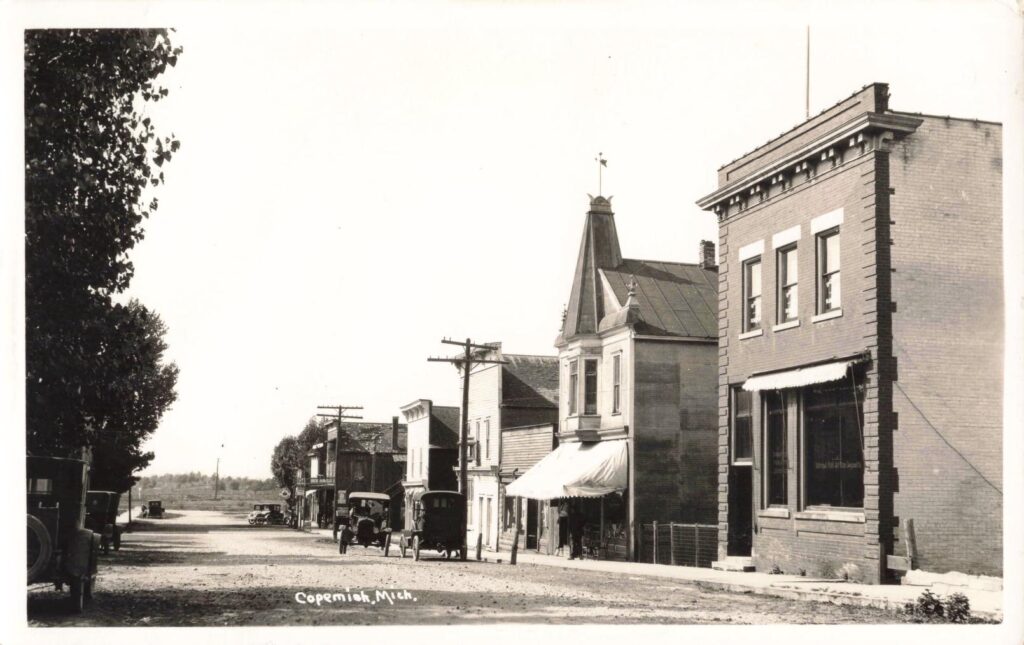
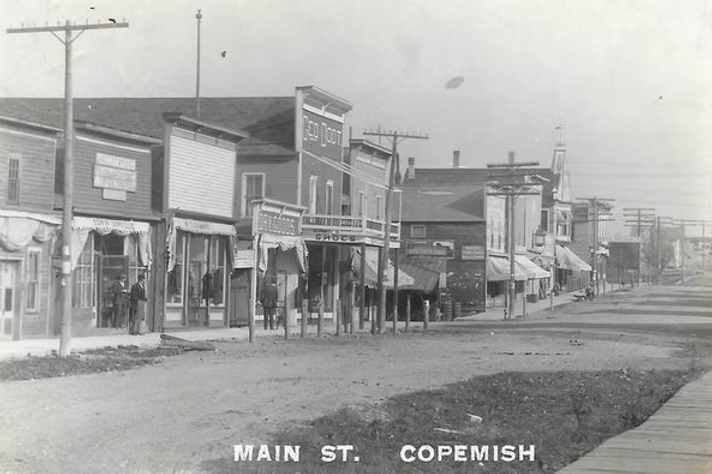
Main Street in Copemish looked like hundreds of other small Michigan towns in 1910. Wooden storefronts lined dirt roads. Horses stood tied along the street. Wooden sidewalks kept people out of the mud.
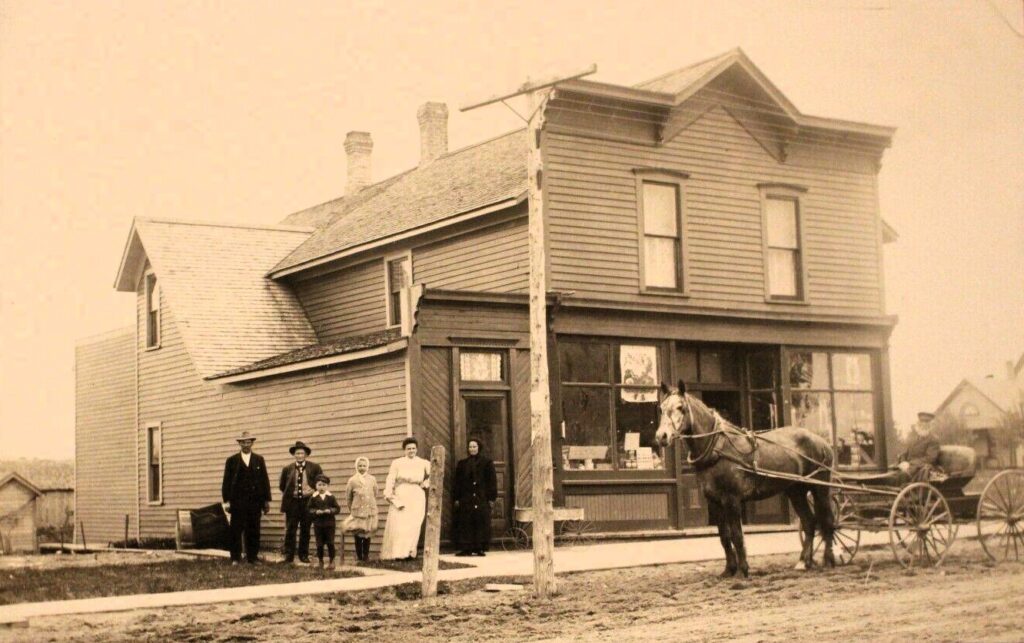
But these streets were busy. The photographs show wagons, shoppers, workers, and families. This was not an abandoned lumber camp. This was a functioning town with stores, services, and steady traffic from farms and logging camps.
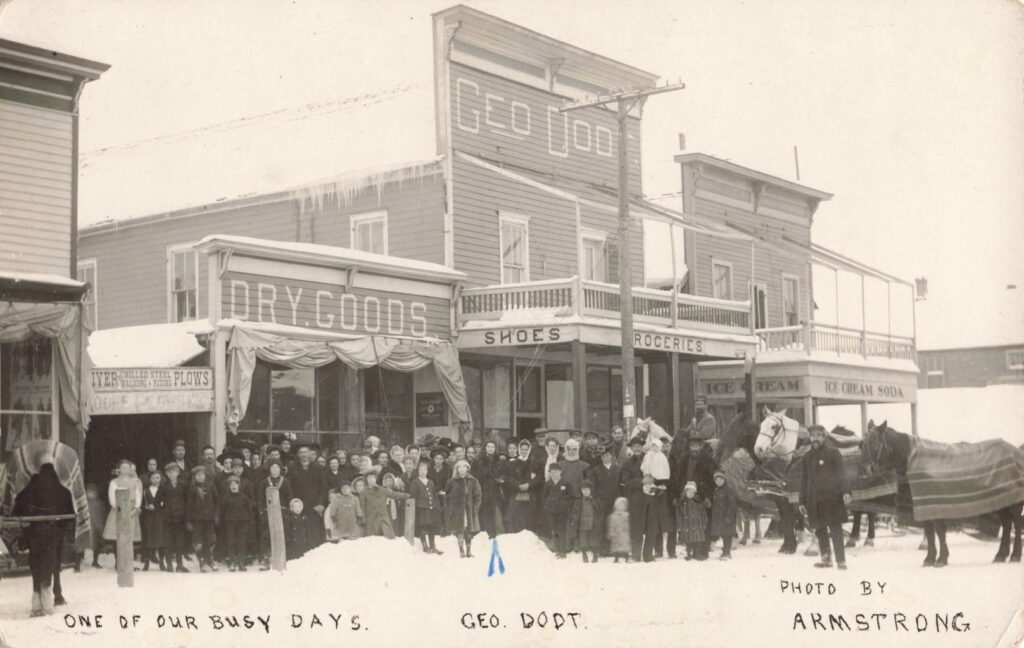
“One of Our Busy Days” postcard showing downtown activity in Copemish.
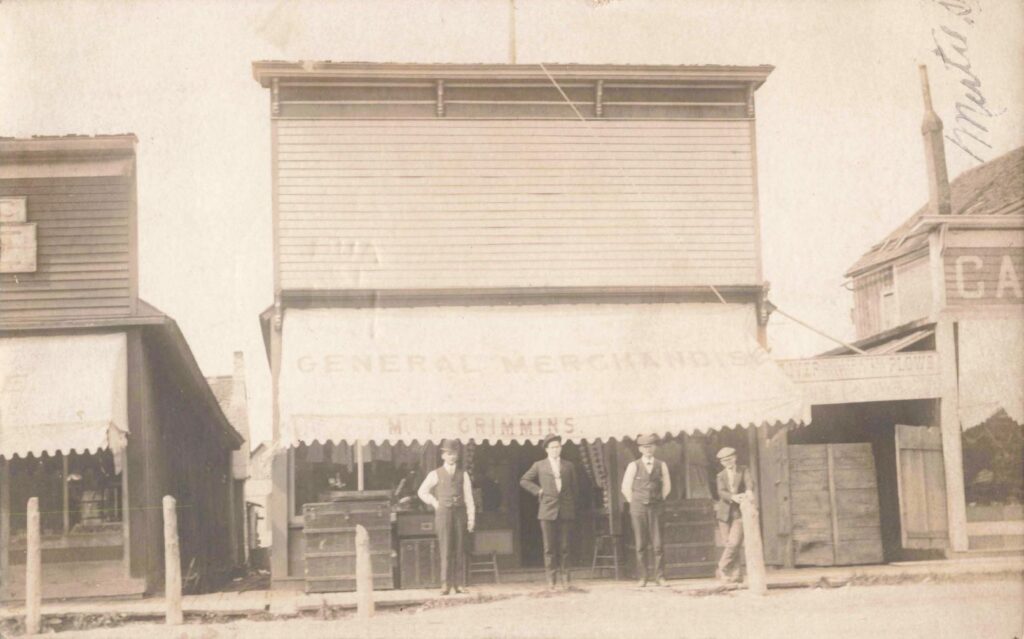
General stores, hardware stores, blacksmith shops, and feed stores formed the backbone of the town’s economy. Farmers came into town for supplies. Loggers came in for equipment and pay. This pattern repeated across Michigan, but Copemish held onto its businesses longer than many towns.
Chapman–Sargent Woodenware at Copemish
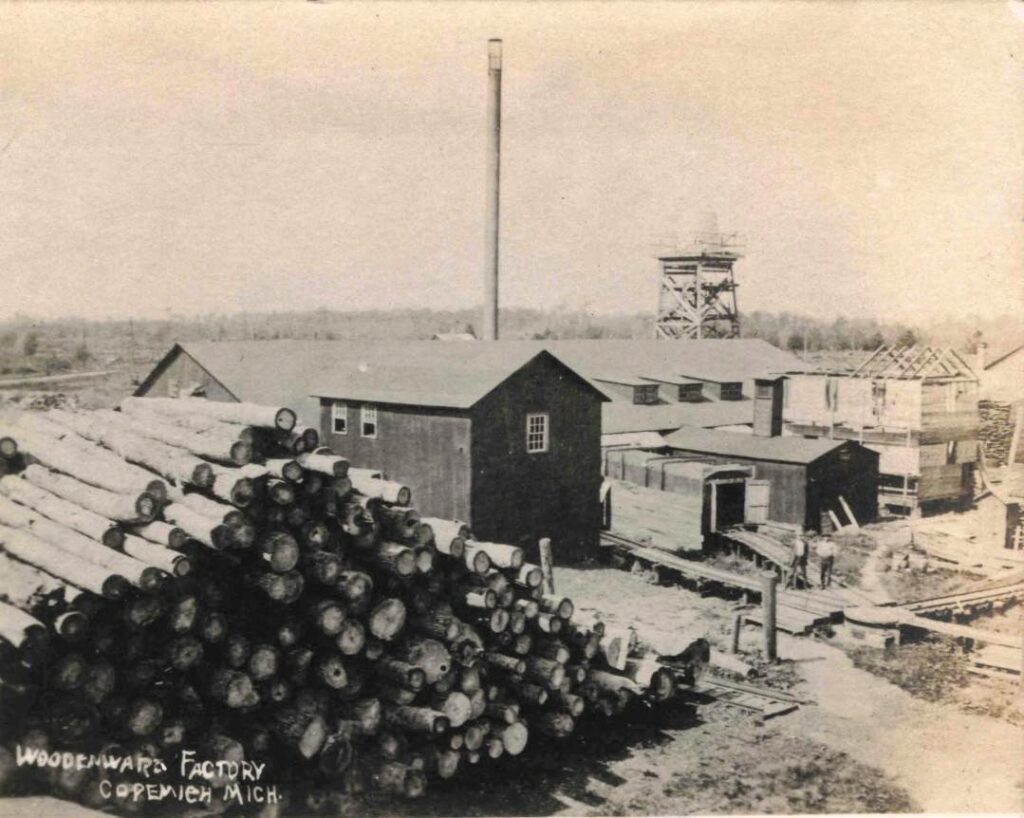
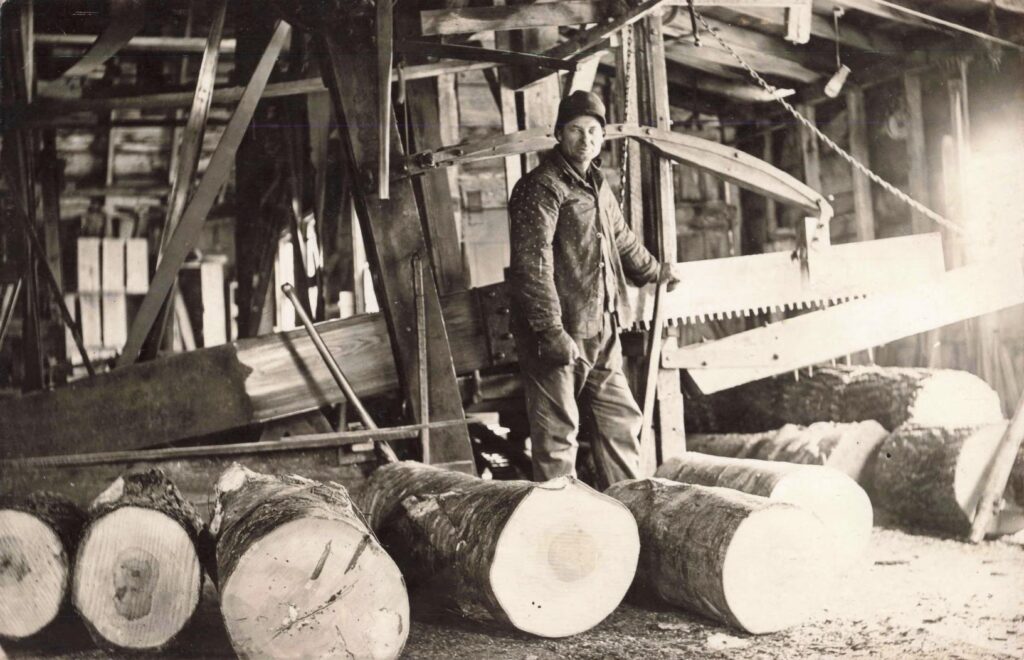
That hardwood identity shows up in the strongest industrial theme in the postcards: wood turned into products. Local reporting says the largest early employer was a Chapman–Sargent woodenware factory. The archived postcard record backs up the basic fact that woodenware production existed here: multiple cards label a “Woodenware Factory” in Copemish and mark it as worth mailing to someone else.
Henry Sargent was born in 1854 in Monroeville, Ohio. In 1893, he moved to Perrysburg after acquiring a partnership in the Williams-Chapman woodenware company, which was subsequently renamed Chapman-Sargent. This company became one of the leading manufacturers of wooden bowls, plates, and similar products in the nation, operating several factories across Ohio, Michigan, Tennessee, and Canada. The main office was in Perrysburg, where Chapman oversaw operations, while Sargent handled sales and travel, a role he had held even before the acquisition.
Copemish Stores and Commerce
Stores and trades fill in the rest of the story. One 1907 mailed postcard calls Copemish the “large town called Copemish.” That claim sounds bold until you compare it to what rural life looked like nearby. A “large town” could simply mean “a place with multiple stores and services close together,” especially for farm families used to long trips for basics.
The Union Depot Was the Center of Copemish
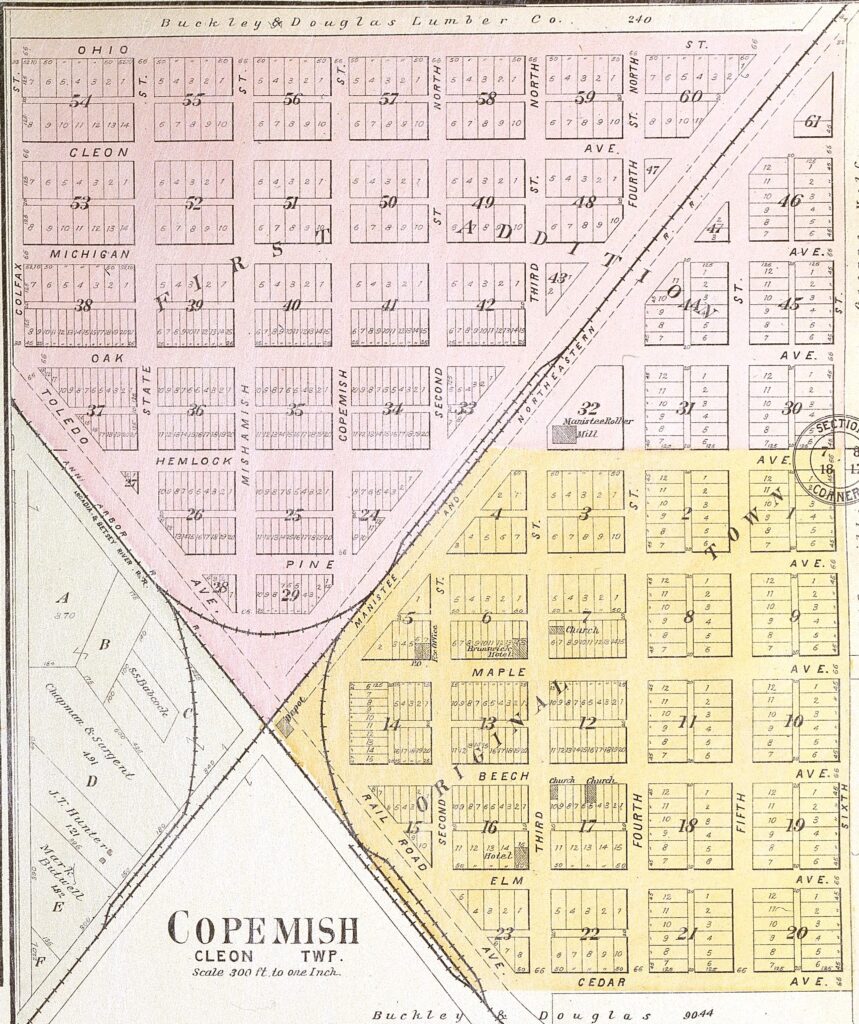
Copemish was platted at the rail intersection and incorporated as a village in 1891, according to both official planning material and village history summaries. In plain terms, the rail did not arrive in a settled town. The town was laid out because the rail arrived.
The Copemish Union Station was not just a stop. It was a workplace and a business. A rail-history compilation notes a depot lunch room, and another period profile snippet from 1907 names a lunch counter operator at the union depot. That detail fits the simple reality of early passenger rail: trains stopped, people ate, and someone ran the counter.
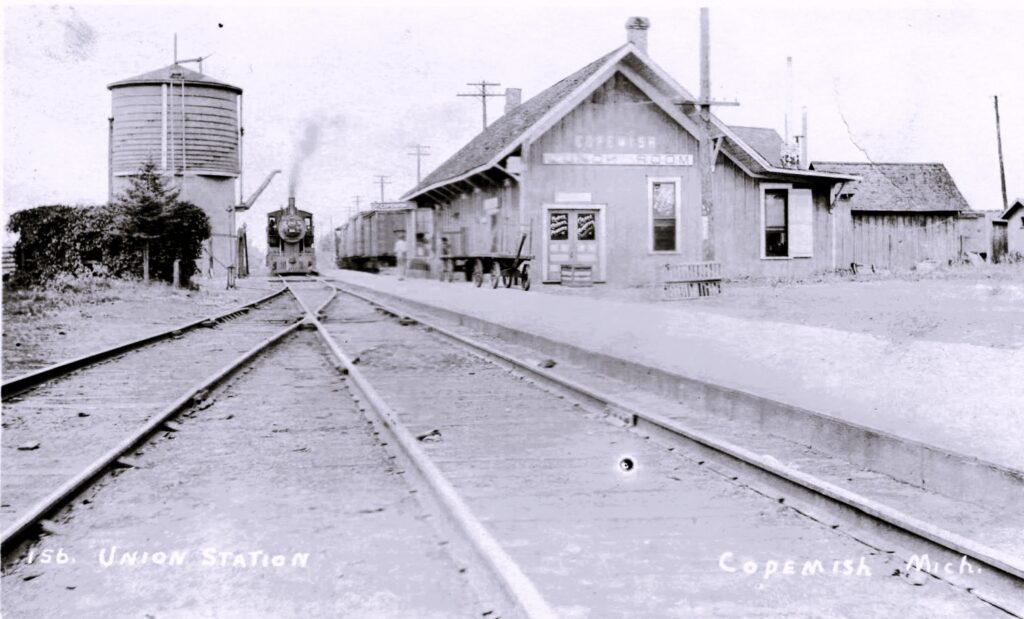
Winter made the railroad work harder. A 1910 postcard message references “Arcadia + Betsy River RR” and talks about the snow that season. That’s the kind of detail you can’t fake. It is an everyday operational note, preserved because a person scribbled it on a card.
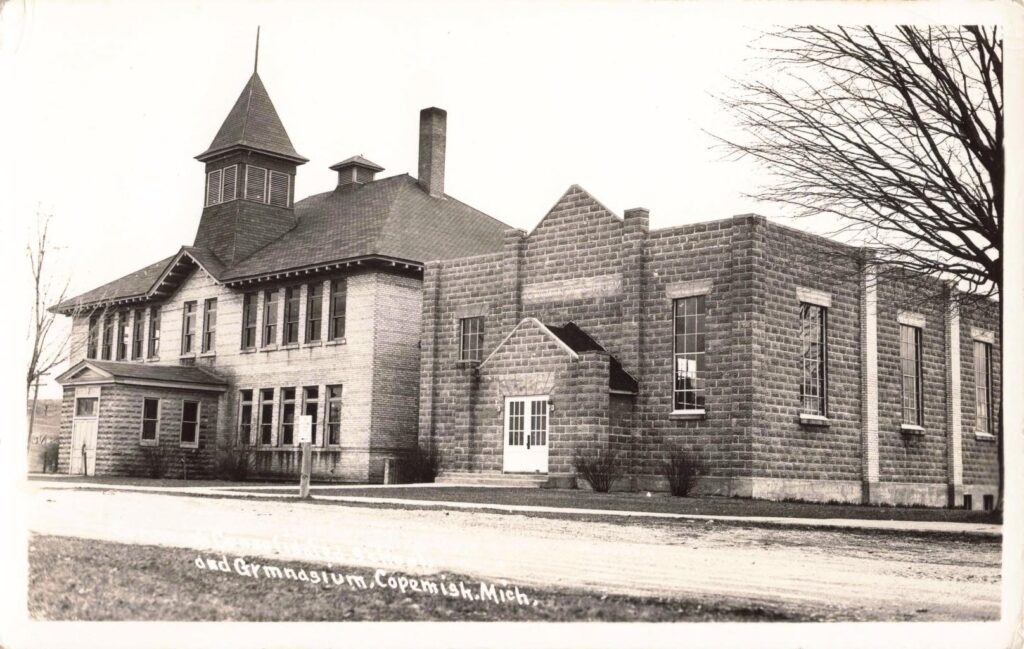
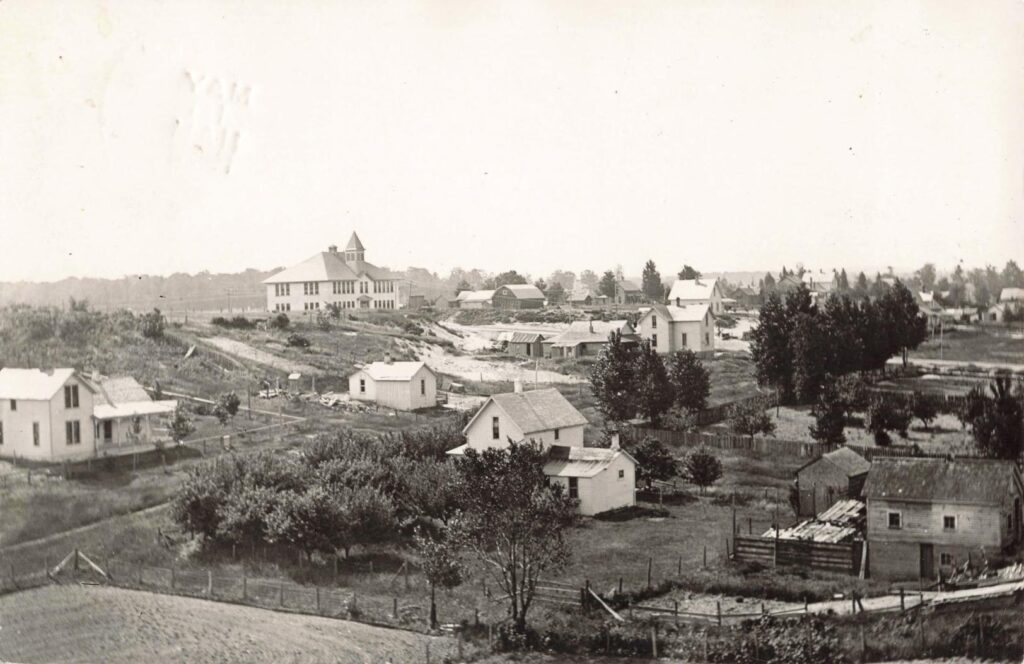
Copemish also invested in civic life in ways that look oversized for a small place. Township history calls out an early, large masonry school building that took years to fill. A separate school history states that the two-story school was built in 1910 after a fire, and local history reports a gymnasium by the 1920s.
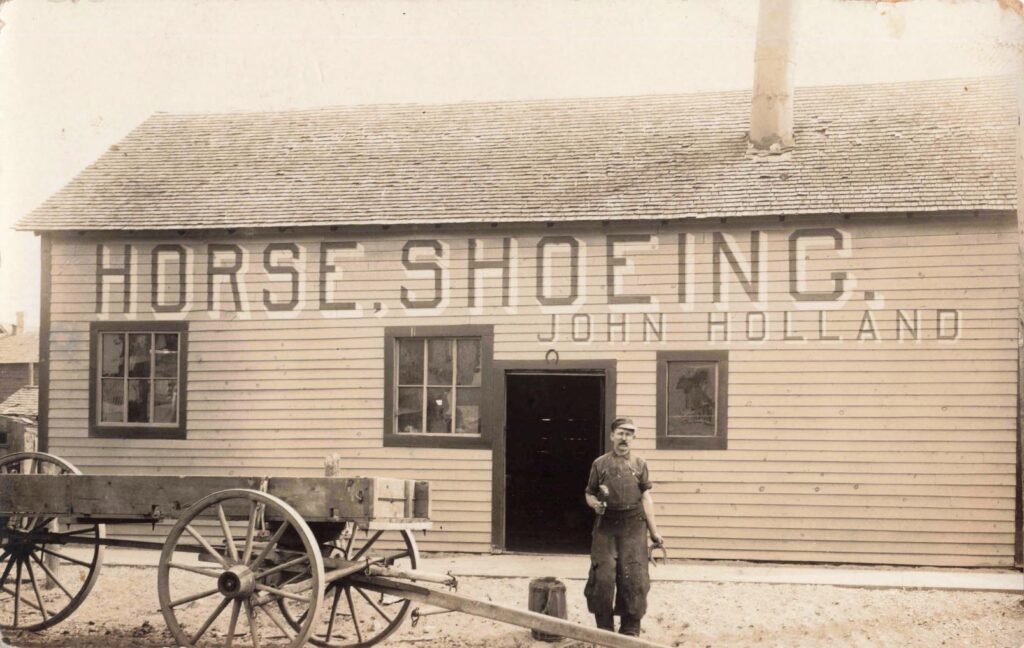
Daily transportation still depended on animals and skilled trades. A period profile snippet names village blacksmiths, and your horse-shoeing storefront card documents the kind of work that kept local travel functional in a horse-and-wagon economy.
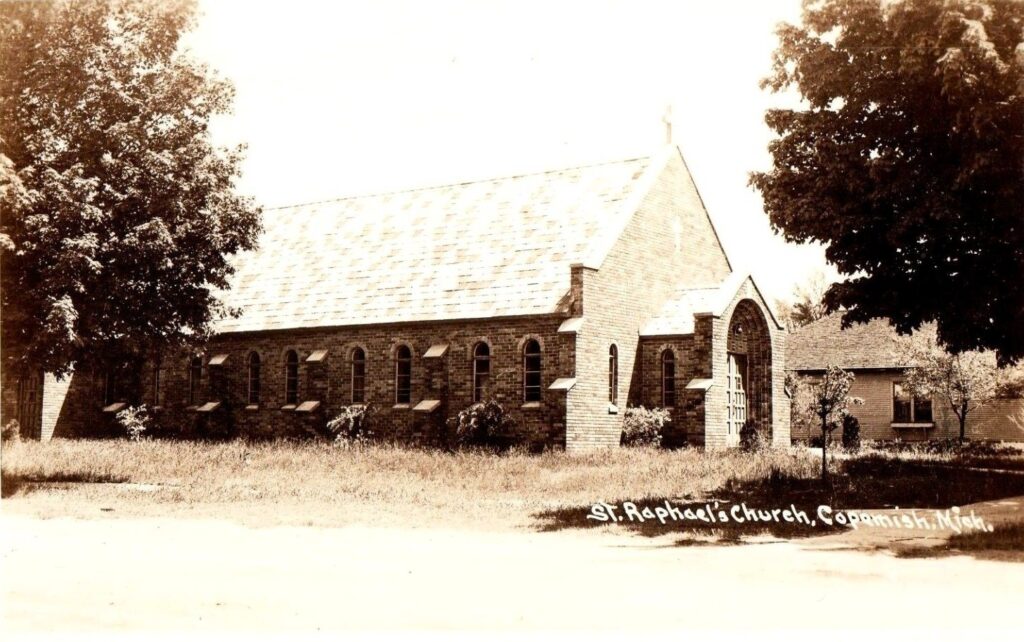
The History of Copemish, Michigan, is not just rail and timber. It is also faith and community structure. Township history points to multiple churches in the early 1900s and notes St. Raphael Catholic Church just outside Copemish.
So what changed?
The latter summary, still on the township’s history page, is direct: railroads are gone, and M-115 was built to bypass the village, thereby weakening downtown commercial activity. That is a familiar pattern in Michigan rail towns. When travel stops being forced—when people can drive through instead of stopping—Main Street loses the built-in customer stream.
But the postcards preserve what the town was built to do: serve a junction, serve a workforce, and sell goods to people who once had to travel extreme distances for basics.
The history of Copemish, Michigan, is, at its core, a record of how transportation can create a town quickly—and how transportation can also move on.
Before you go: Try this quick 30-second history check.
Quick Copemish History Check
1. What industry drove early Copemish?
2. What helped the town grow?
3. What happened after logging declined?