Historic Great Lakes Low Water Levels In 2012
We look back at the scary Great Lakes water levels in 2012 and how they impacted Caseville Harbor. Could we see this again by 2030? Some think so.
News History & Fun in Michigan
We look back at the scary Great Lakes water levels in 2012 and how they impacted Caseville Harbor. Could we see this again by 2030? Some think so.
These early postcards capture Cheboygan when the riverfront did the heavy lifting. Steamships tied up at the dock, a canning plant and paper mill hummed nearby, and Main Street stayed crowded day after day. It’s a snapshot of a town built to move goods, not commuters.
Learn how St. Helen, Michigan transformed from a bustling lumber town into a peaceful lake community and even the boyhood home of Charlton Heston.
A vintage view of People’s Ice Co. on Huntoon Lake shows how big the “ice business” once got in Waterford — harvesting and storing winter ice to keep Michigan cool long before refrigerators took over.
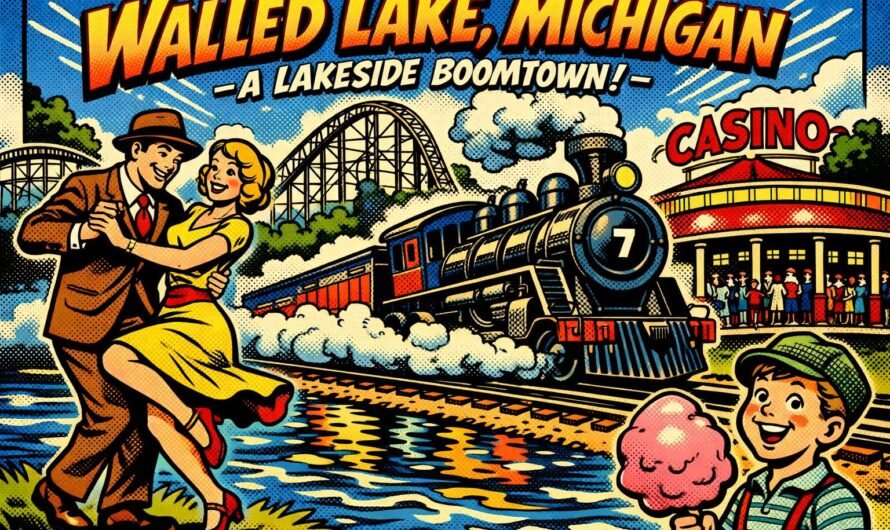
Once a quiet farming village, Walled Lake became one of Michigan’s busiest summer destinations. Dance halls, amusement rides, and lakeside crowds reshaped the town between 1890 and 1940.
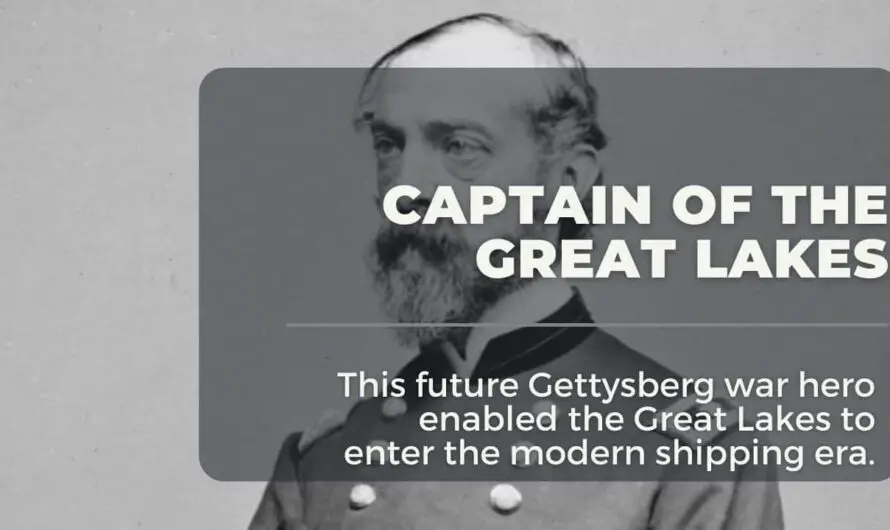
In the mid 1800’s much of Michigan was wilderness. In 1857, Captain George Meade took over the Lakes Survey mission of the Great Lakes.
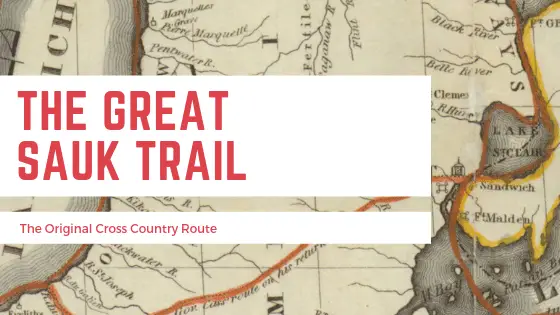
The Great Sauk Trail is a major Native American route that ran between Detroit, Chicago and terminated at Rock Island on the Mississippi river. Originally created by migrating bison, the trail was only about a foot wide but also a foot deep as eons of travelers walked along it single file. It was used over a thousand years.
Before marinas and beach towns, Michigan’s Great Lakes ports were working fishing hubs. From Bay Port to Leland, these towns fed the Midwest and shaped life along the water from 1890 to 1940.