 by
by 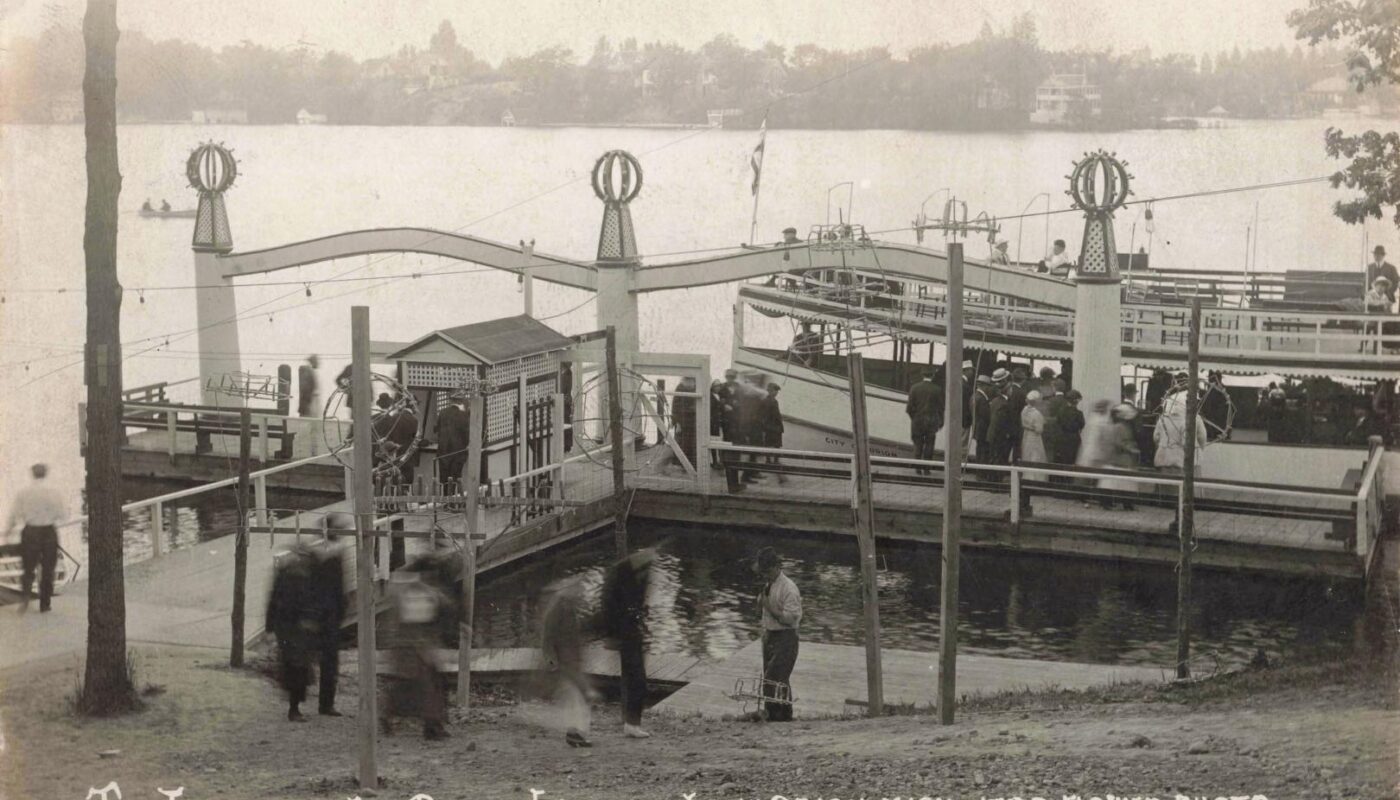
There was a time when thousands of people came to Lake Orion every summer, not by car, but by boat.
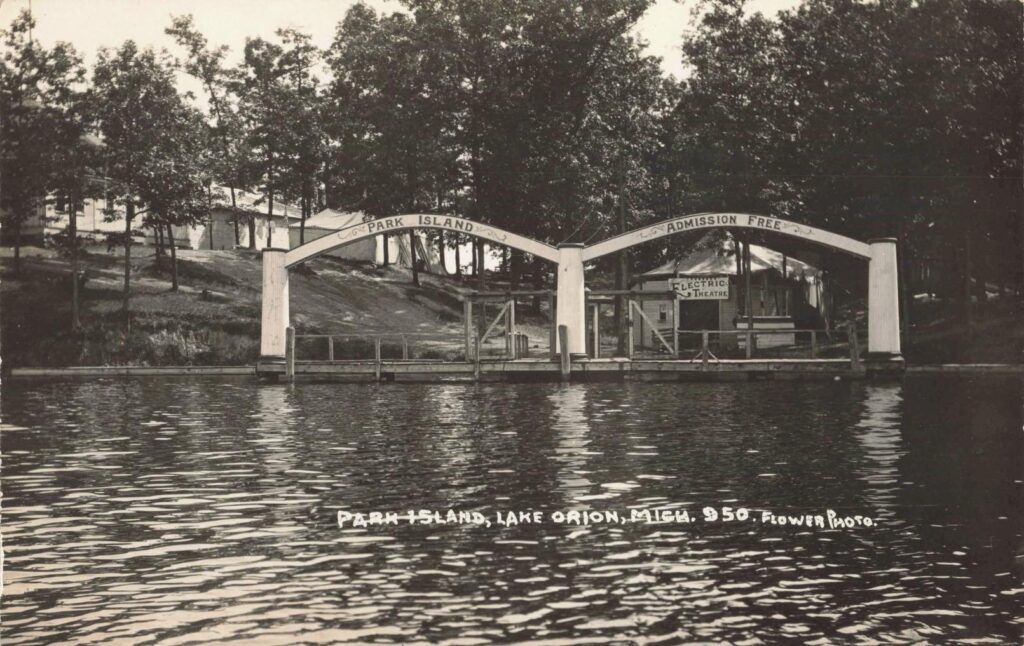
They came for a place called Park Island.
Today, many people who live in or visit Lake Orion have never heard of it. But from the late 1800s through the 1920s, Park Island was one of Michigan’s most popular summer destinations.
It had a roller coaster, a large dance hall, a carousel, diving towers, and a lakeside hotel. For a few decades, this quiet lake town was a major entertainment and amusement park.
This is the story of the history of Park Island. Park Island looks suburban and calm today. It is home to docks, trees, and year-round residents. But old postcards tell a different story. In the early 1900s, Park Island in Lake Orion was promoted as a full-day destination—built around boats, music, swimming, and thrill rides.
How Lake Orion Became a Day-trip Resort
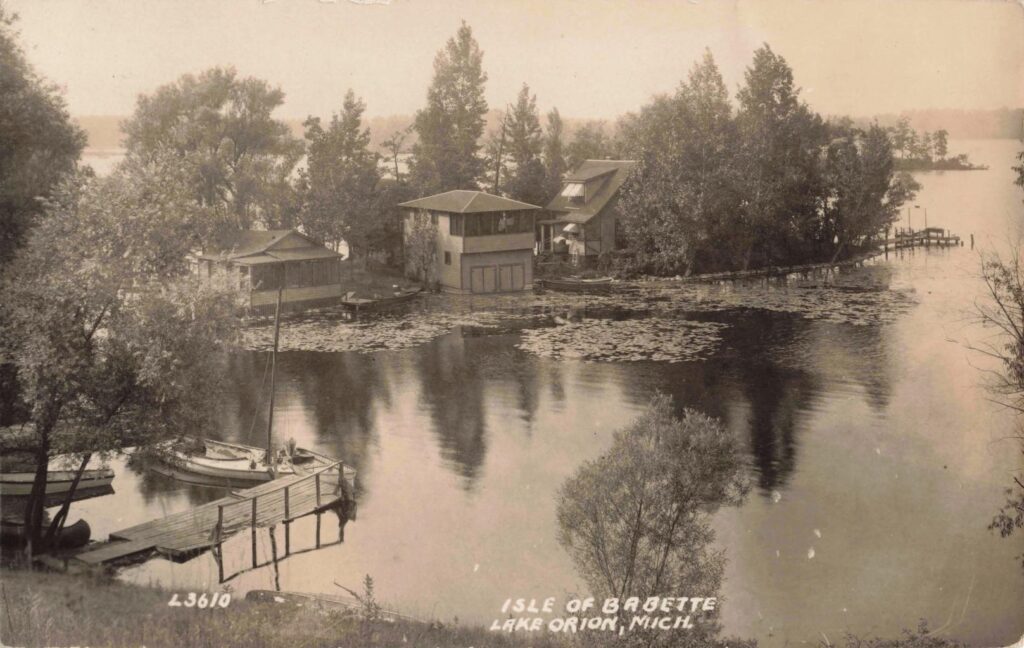
Local histories trace Lake Orion’s resort identity to two big changes: how the lake was formed and how people could reach it. By the 1800s, infrastructure changes helped create the larger lake, and in the 1870s, rail access connected the area to bigger cities. With easier travel, Lake Orion could be marketed as a summer escape. Park Island was never just “a ride.” It was part of a planned resort system. Visitors had to arrive in volume, and they needed reasons to spend an entire afternoon—and then come back again.
Lake Orion was connected with the rest of southeast Michigan with the Detroit United Railway, which served Detroit, Rochester, Romeo, and Lake Orion. This made it possible for those in the big city to escape, even only for the day.
Steamboats and Summer Crowds
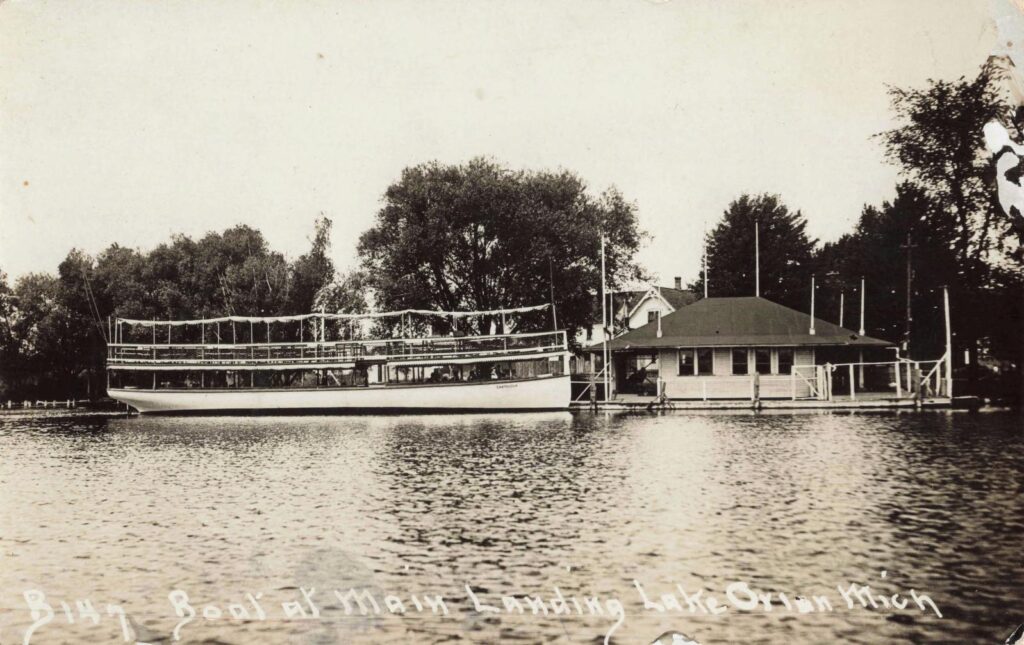
One of the most important parts of the history of Park Island, Michigan, was transportation. People didn’t just stumble upon this place. They planned trips here.
Visitors arrived by steamboat at the main landing. One of the best-known boats was the City of Orion, a double-deck steamer that carried passengers across the lake. Bands played music on the upper deck as the boat crossed the water.
The trip itself was part of the experience. By the time visitors reached the island, they were already in the mood for a day of fun.
Park Island’s earliest draws were social, not mechanical
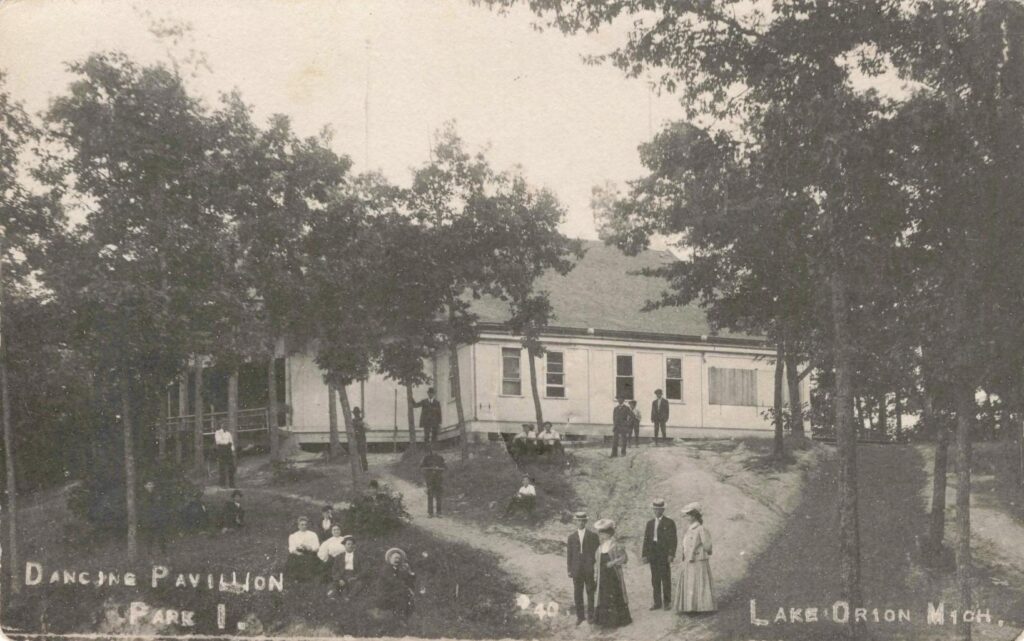
One local history account says Park Island development dates back to 1874, when C.K. Carpenter purchased the island and built a large reception and dance hall and an observation tower. Access was by bridge or steamer.
That’s the first key takeaway: Park Island’s roots were in gathering. Dancing and group outings were dependable revenue. They also produced postcard-worthy scenes—people dressed up, arriving together, and staying for hours.
The Roseland Ballroom
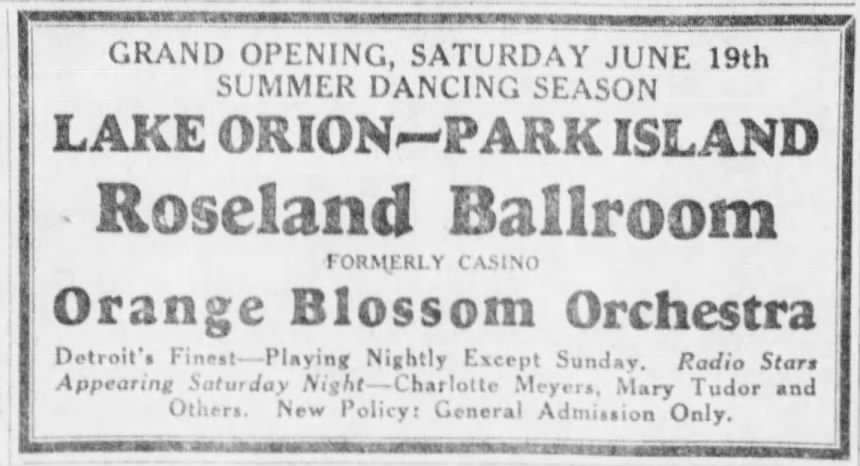
Dancing was one of the biggest attractions on Park Island.
The Roseland Ballroom brought in orchestras and touring performers. Advertisements promised “Real Enjoyment and Good Dancing.” There were afternoon dances and evening dances, and people came dressed in their best clothes.
For many visitors, the dance hall was the main reason to visit.
The landing was the business engine
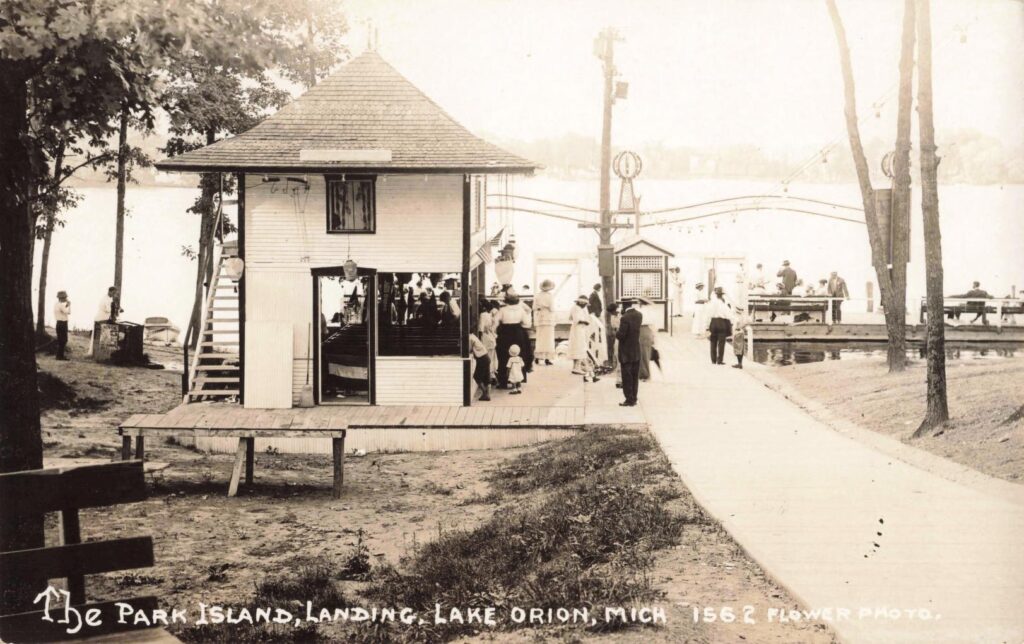
Several of our images focus on arrival points: the landing and the boats. That is not accidental. A park on an island needs crowd control. The dock is where tickets can be checked, directions given, and visitors funneled toward concessions.
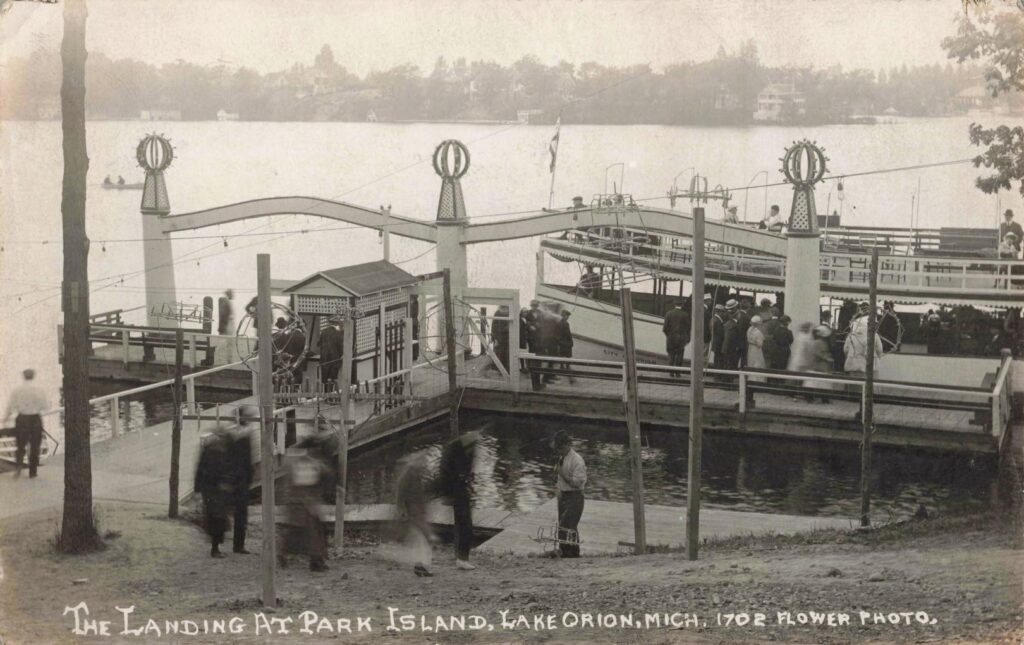
Old postcards often treated the landing as a place to “start the story.” The message was simple: your day begins here, and everything you want is on the island.
What Park Island sold in the early 1900s
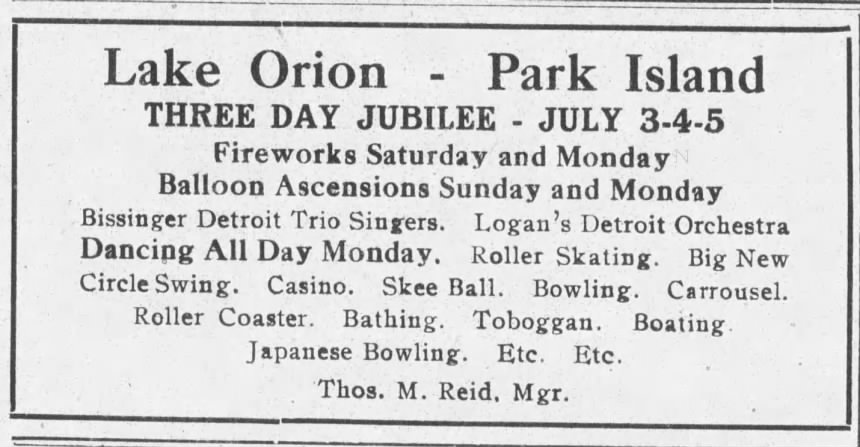
Local history summaries list a broad lineup: picnic areas, roller skating, dancing, a penny arcade, a carousel, a roller coaster, swimming, and boat tours. The experience was designed to catch different types of customers—families, teens, and large groups.
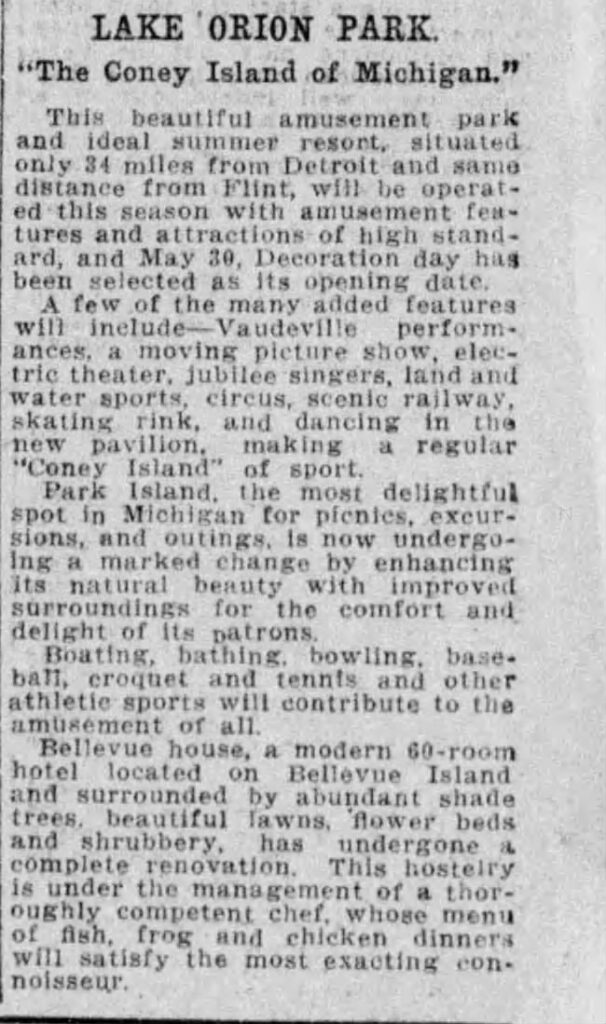
Park Island earned the nickname “The Coney Island of Michigan.” Newspaper ads from the early 1900s listed the attractions:
- Roller coaster
- Carousel
- Dance pavilion
- Vaudeville shows
- Roller skating
- Bowling
- Bathing beach
- Boating
- Fireworks
- Circus acts
A steady stream of small ads and news stories keeps Park Island on people’s minds as a potential day away in what was considered a fairly remote area north of Detroit.
The Thriller roller coaster and the “talk value” factor
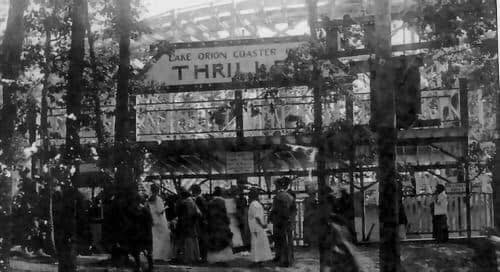
The coaster mattered because it created a simple, marketable hook. Local histories call it “The Thriller.” A widely repeated detail says the track extended out over the water—often framed as a rumor. Even when treated cautiously, the photos show the real point: the structure was large, visible, and meant to look dramatic from the shoreline and from nearby boats.
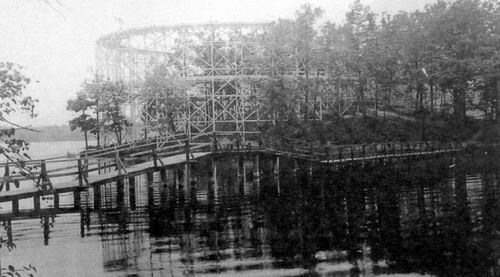
The roller coaster was one of the main draws. Built of wood and set near the water, it could be seen from
That variety is the second key takeaway in the History of Park Island Michigan. Even if a visitor never rode a coaster, there were still ways to spend money: food, games, photos, and music.
Swimming was a headline attraction, not a side feature
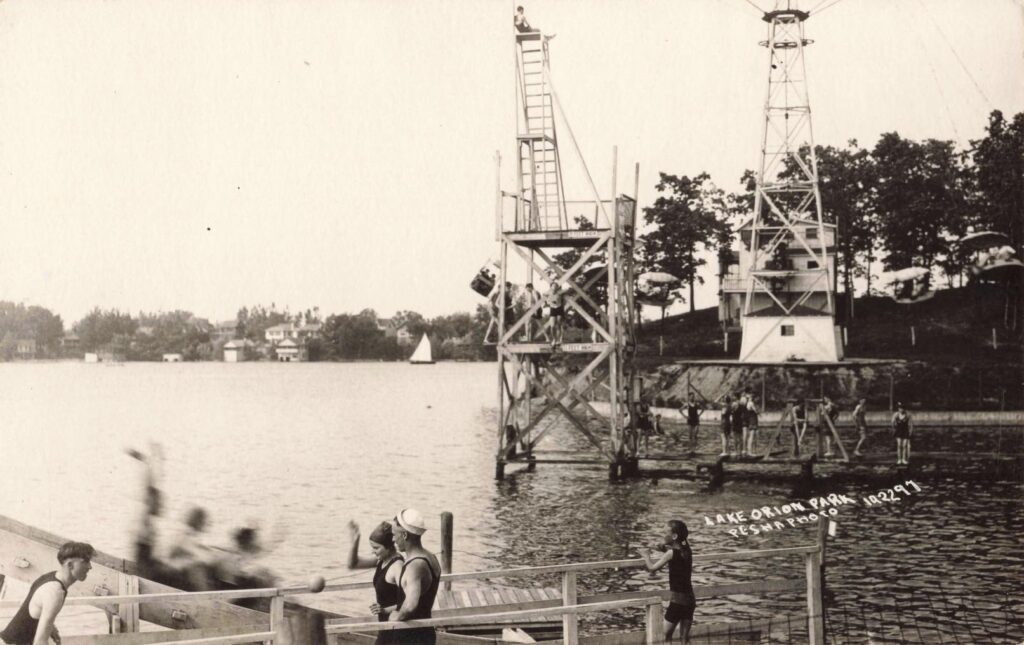
Your 1929 diving-stands postcard is strong evidence that Park Island treated swimming as a main product. A local history write-up says the beach included separate bathhouses for men and women, a water slide, and multiple diving boards reaching as high as 42 feet.
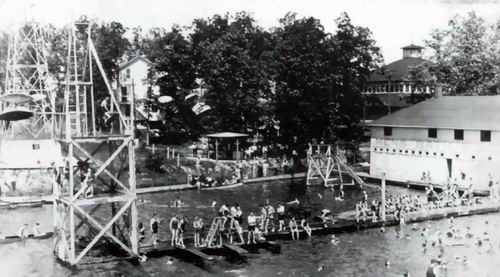
This detail is easy to miss in modern retellings, but it completes the picture: Park Island offered summer “cool off” fun that did not require buying a ride ticket each time. The beach could hold crowds all day.
Evenings, electricity, and the sales pitch
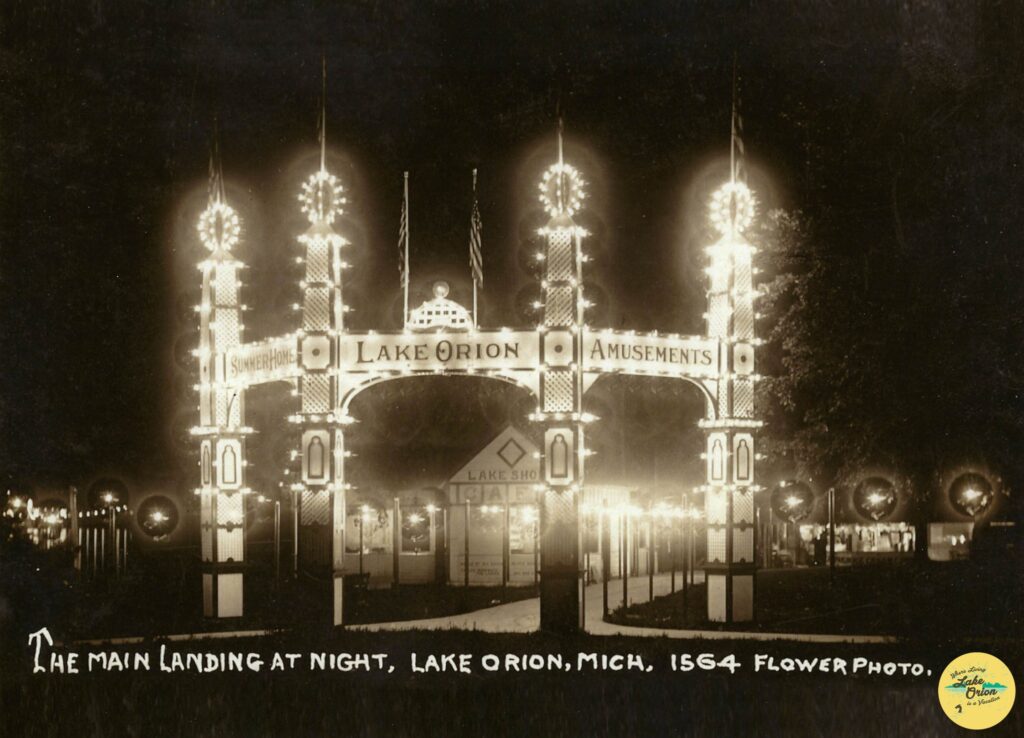
Period descriptions say Park Island was lit at night by thousands of lights strung along. That kind of lighting did two things: it extended business hours and made the park look modern. Some accounts also report booster slogans used to sell Lake Orion to outsiders—labels like “Venice of the Middle West” and “Paris of Detroit.”
In the History of Park Island, Michigan, this is the third key takeaway: the park was part entertainment and part advertising campaign. It sold a place name, not just a ticket.
The Carousel and the Italian Connection
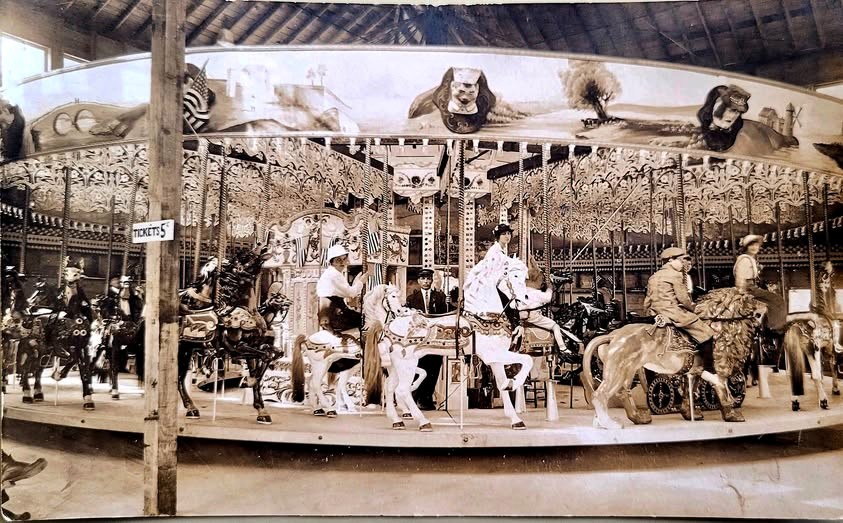
One of the most interesting stories in the history of Park Island Michigan involves the carousel installed around 1915. It reportedly cost $12,000, a large investment at the time.
The carousel was operated by Vincent Borelli, an Italian immigrant. Instead of typical carnival music, the carousel played Italian opera music while riders circled under the pavilion roof.
That small detail gives us a glimpse into the atmosphere of the park. Park Island was not just loud rides and games. It was meant to feel like a full resort experience.
Hotels and the wider resort economy
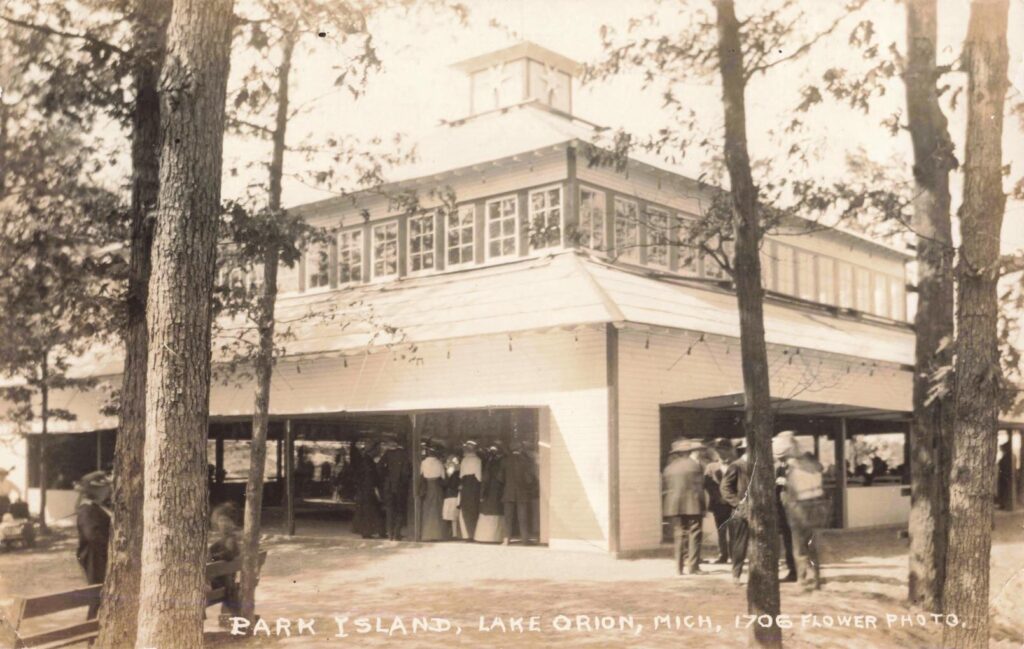
Your “Lakeview Hotel” postcard shows that Park Island was linked to lodging and longer stays. Even for visitors who came only for a day, the resort economy mattered: it increased the number of people around the lake, increased demand for boat service, and helped create the “busy season” atmosphere that made the park feel important.
Decline and what came after
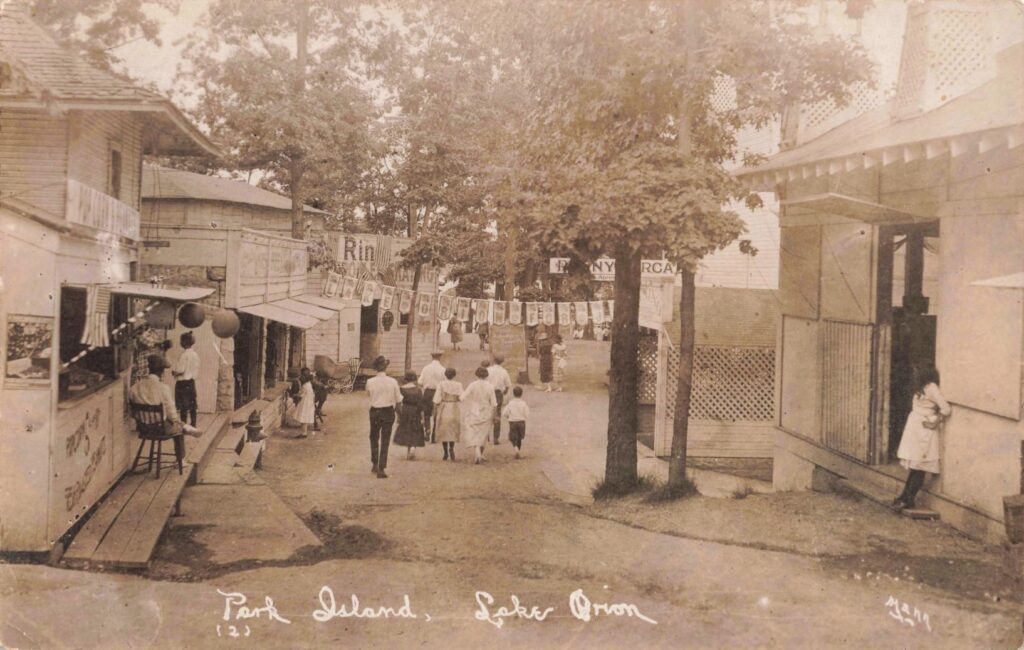
Most summaries agree Park Island’s amusement era did not last forever. The Great Depression reduced discretionary spending. Some sources also mention repeated fires as a factor. Compiled references place closure later in the 20th century. After the amusement years ended, the island shifted toward private homes and a quieter identity.
- The electric railway stopped running
- Roads improved
- More people owned cars
- Families began traveling to many different places instead of one large park
- The Great Depression reduced travel and entertainment spending
What remains are the postcards—simple sales pieces that now function like evidence. They show what Park Island wanted to be: a place where the landing stayed busy, the dance floor stayed full, and summer visitors kept coming back.
History of Park Island Michigan is not just about a coaster or a beach. It is about how a small lake community tried to build a regional destination—with transportation, entertainment, and an island that could be turned into a brand.
Before you go: Try this quick 30-second history check.
Quick Park Island History Check
1. What made Park Island unique?
2. Where is Park Island located?
3. What attracted visitors?