
 by
by 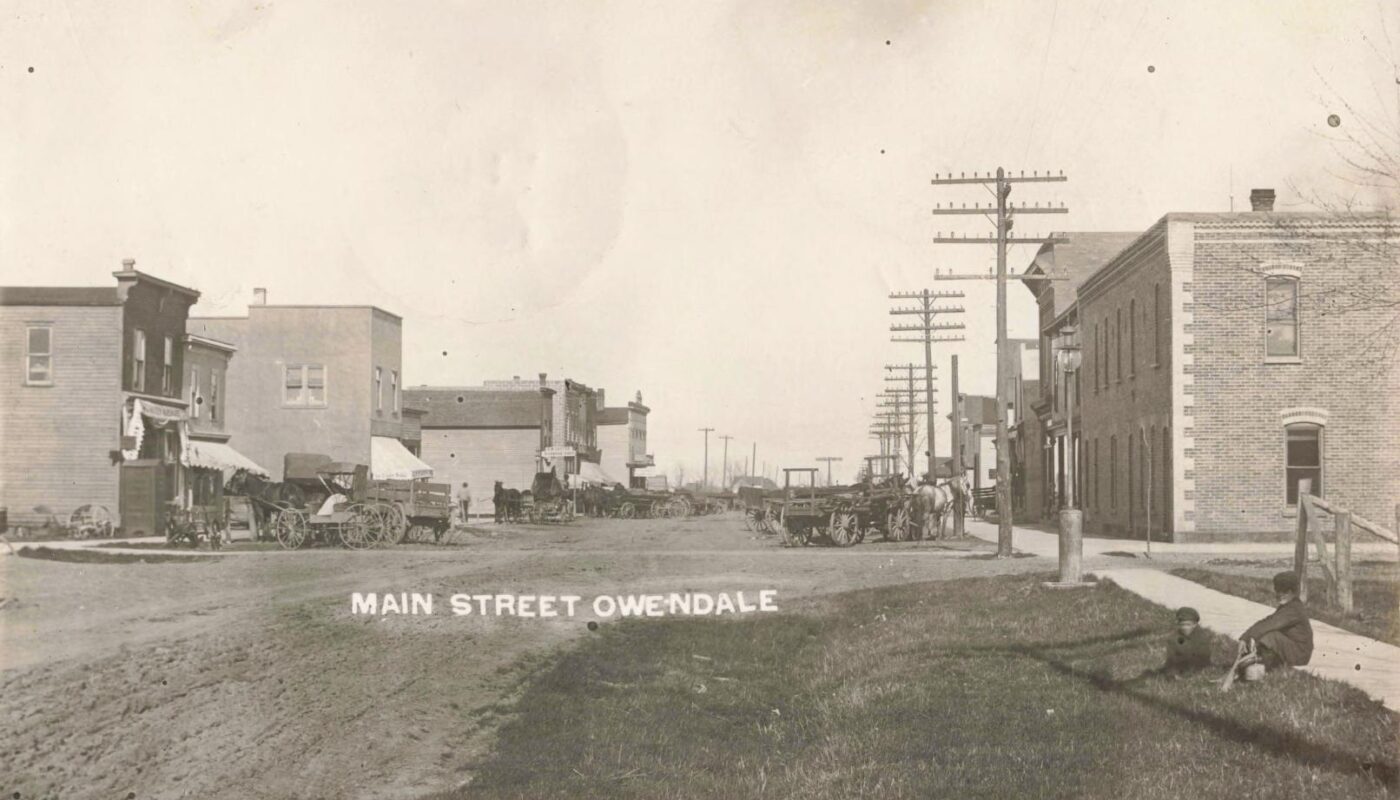
Owendale Michigan history begins like many towns in Michigan’s Thumb — with timber, railroads, and farmland. Owendale was founded in the late 1800s during the region’s lumber boom, when rail lines pushed into Huron County to haul timber and crops to larger markets. Once the forests were cleared, the land proved ideal for farming, especially wheat, beans, and sugar beets.
By the early 1900s, Owendale had become a busy agricultural shipping point. The grain elevator dominated the skyline, and the railroad depot connected farmers to Detroit, Bay City, and beyond. In small towns like Owendale, the railroad meant everything. It brought mail, supplies, new residents, and opportunity.
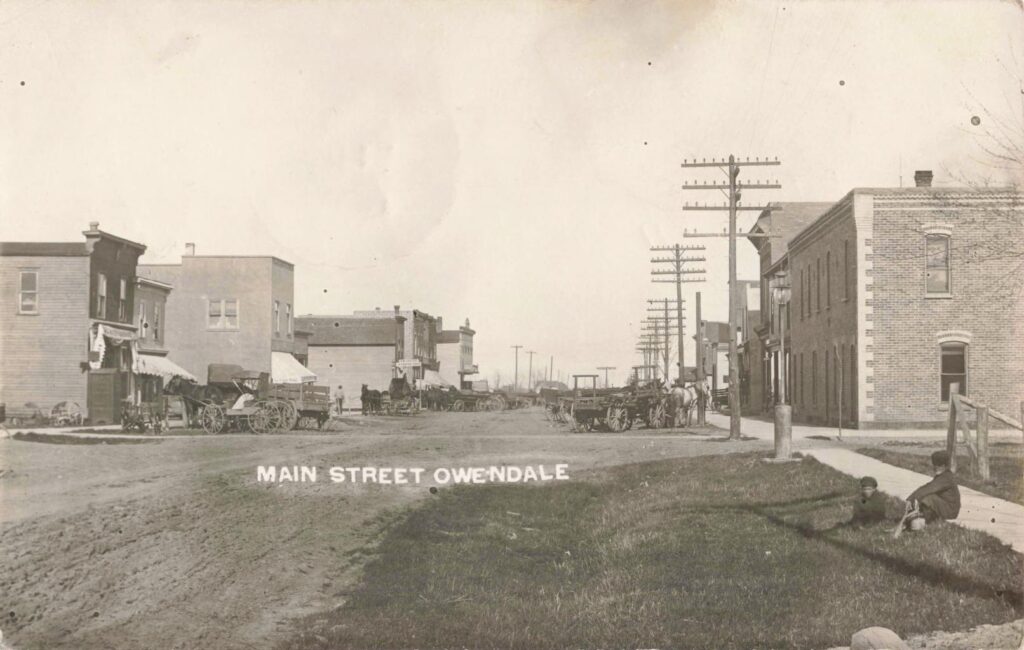
At the start of the 20th century, Owendale, Michigan, was a small but thriving community in Michigan’s Thumb. Main Street was the heart of town, lined with businesses like L.C. Durby Hardware, general stores, and bustling grain and lumber yards. Wagons crowded the streets, and the clatter of hooves was a daily soundtrack in Owendale Michigan.
Faith and Fellowship in Owendale Michigan

If Main Street was the economic center, the church and school were the social center. The Presbyterian Church in Owendale stood out on the prairie, visible for miles. Churches were more than religious buildings — they were meeting halls, social centers, and places where the community gathered during both good times and hard times.
Schools as Pillars of Progress
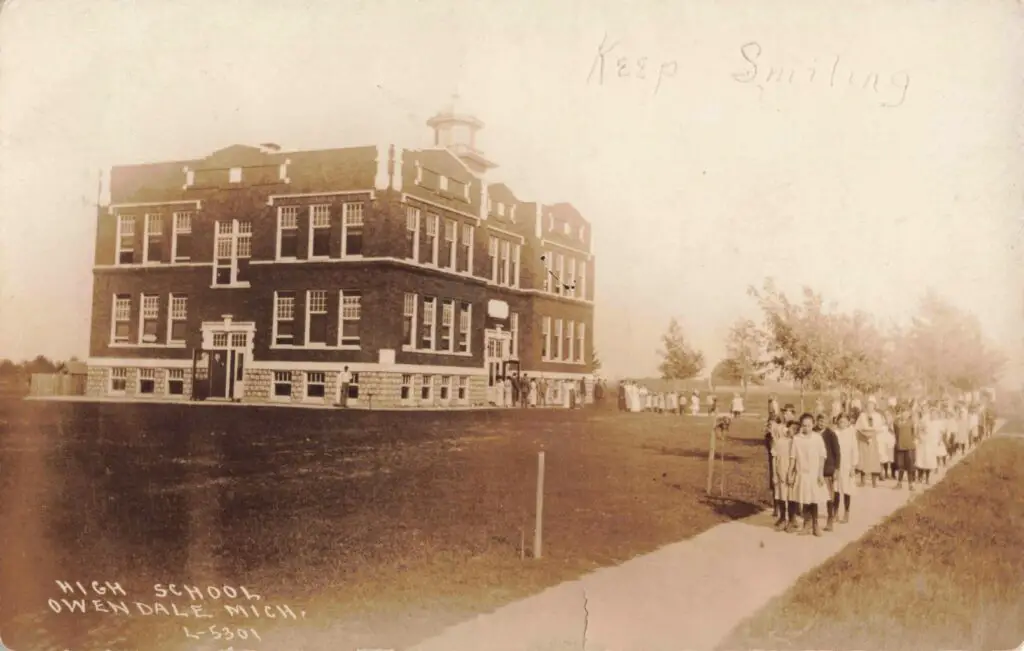
Many students would go on to farm, run businesses, or work in nearby towns, but their education started here. That is an important part of Owendale Michigan history — the belief that the next generation should have more opportunity than the last.
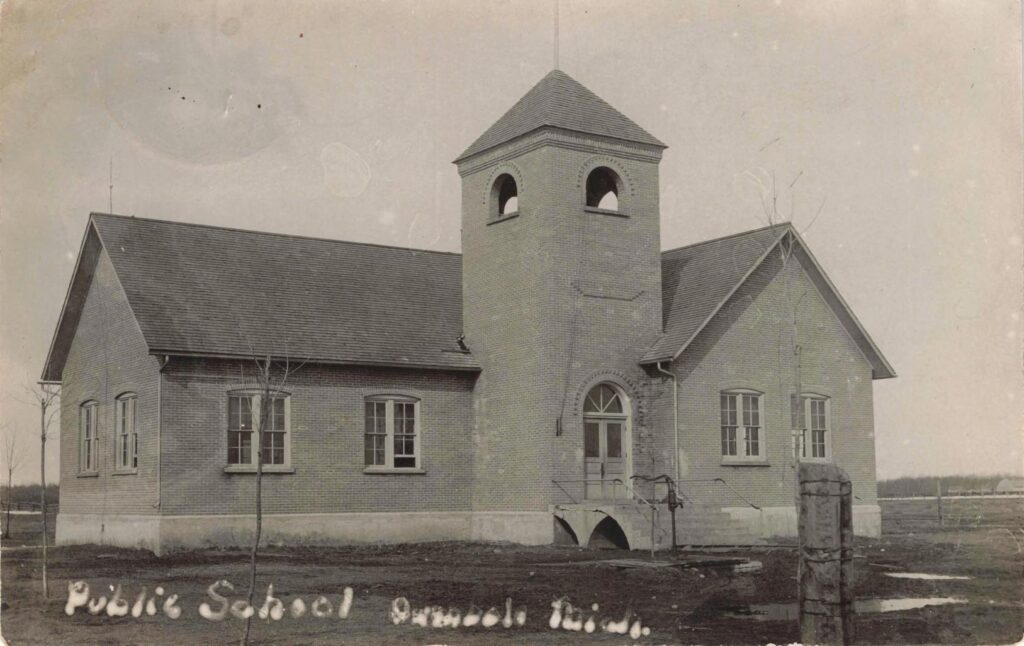
Education was clearly important to the town. The early public school and later the large brick high school show that Owendale invested in its future. Photographs of students lined up outside the school capture a moment in time when education meant opportunity, even in a rural farming town.
Main Street: The Heart of Owendale
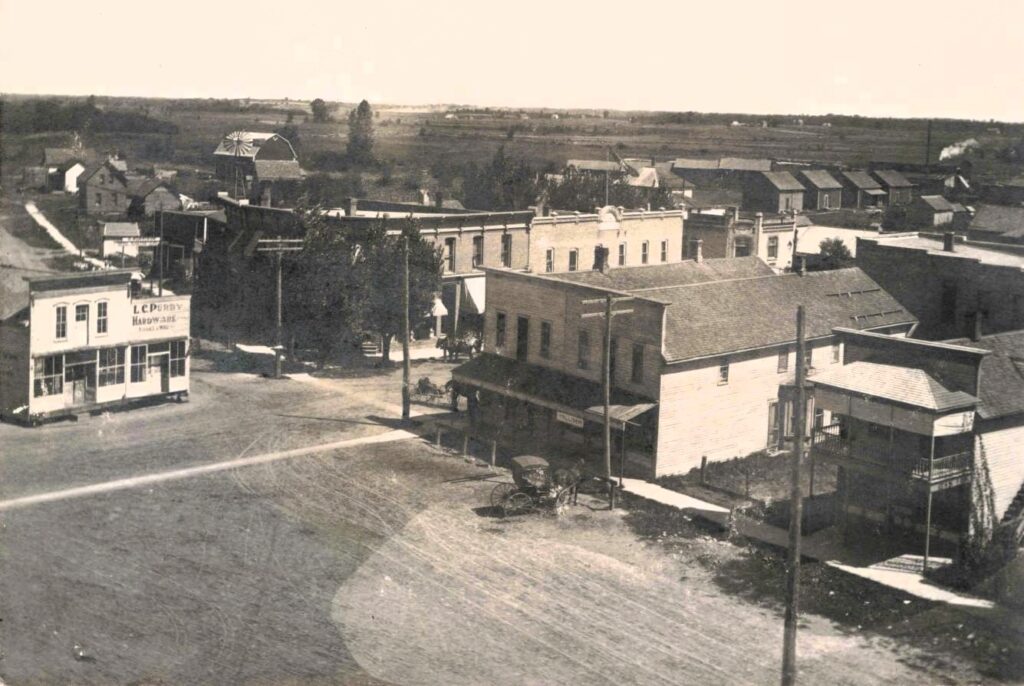
These photographs of Main Street show a typical Thumb town in the early 1900s. Dirt roads turned to mud in spring and fall, and wooden sidewalks kept people out of the muck. Horses were tied along the street while their owners conducted business inside.
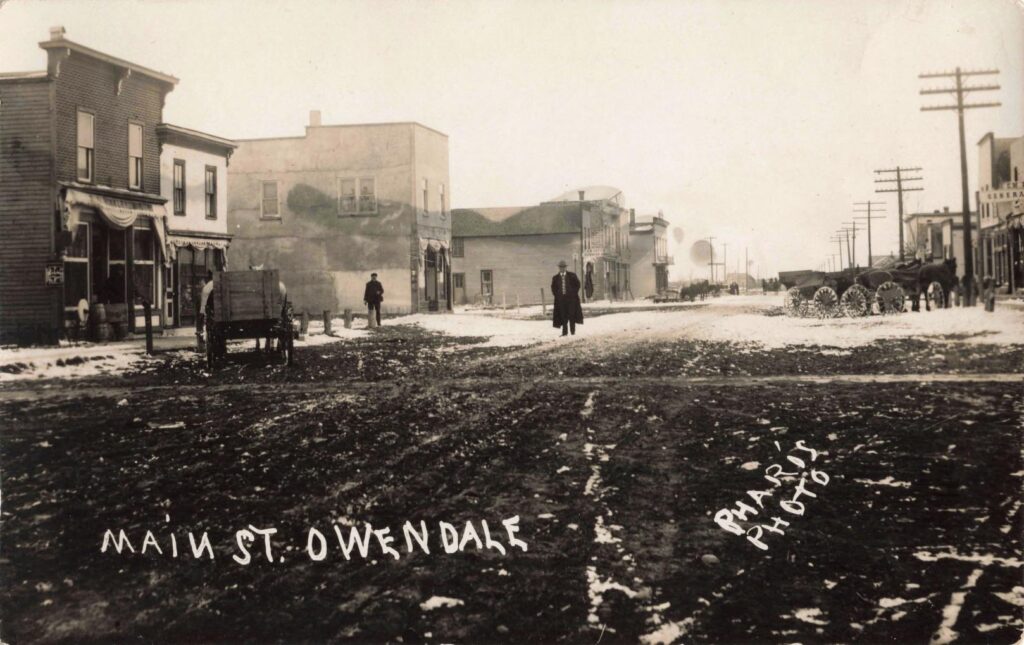
You can see how compact the business district was. Nearly everything a resident needed could be found within a few blocks — bank, hotel, general store, lumber yard, blacksmith, and grain office.
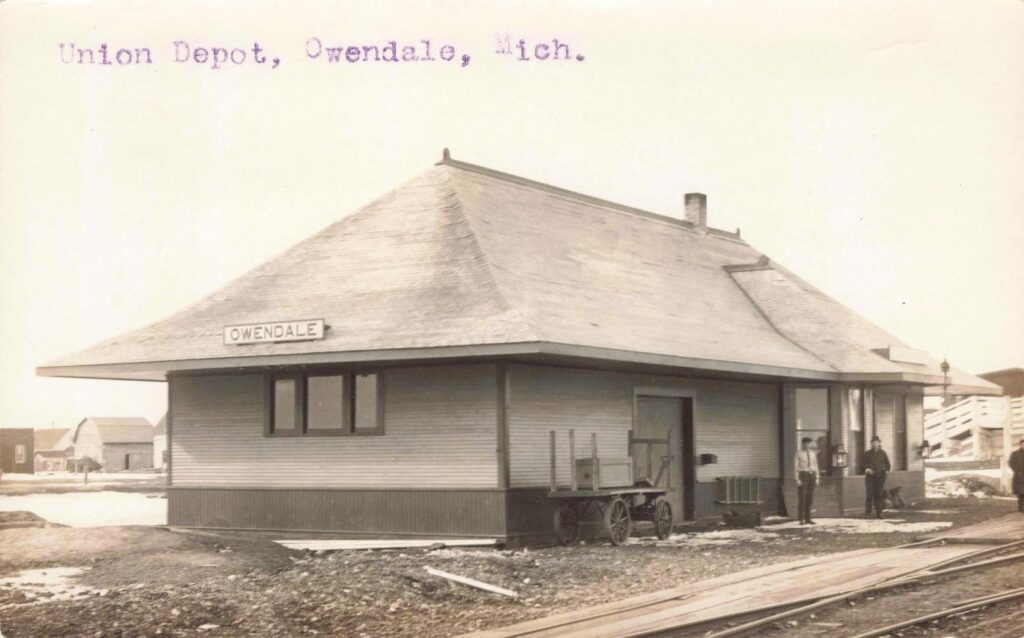
The railroad depot photo shows how important the rail line was to the town’s survival. Without the railroad, towns like Owendale would have struggled to grow. With it, they became part of Michigan’s agricultural economy.
This connection to the outside world allowed small towns to survive and grow during the early 20th century.
This was not a fast life. It was a steady life. People knew each other, traded with one another, and relied on one another. That was the reality of Owendale Michigan history — a town where relationships mattered as much as crops and cash.
Business, Grain, and the Railroad in Owendale
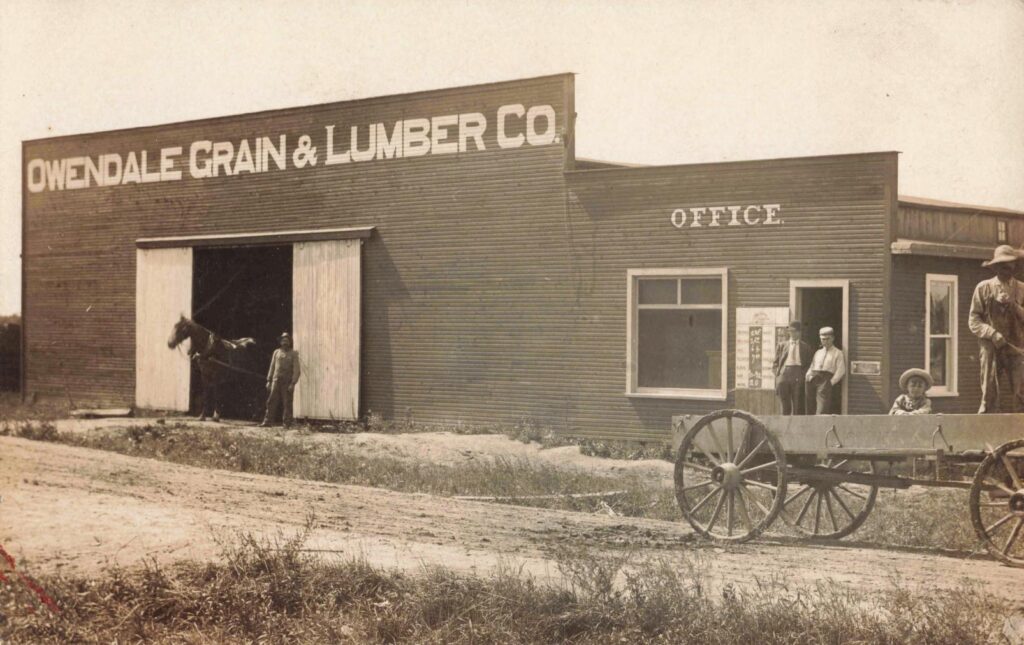
The Owendale Grain & Lumber Company and the local depot were economic hubs. Farmers brought their harvests, merchants filled orders, and trains carried goods to larger markets. The arrival of the Michigan Central Railway in 1901 facilitated the transport of agricultural products, including sugarbeets, to the Caro factory. The depot was more than just a shipping point — it was a lifeline connecting Owendale to the wider region.
Family Life on the Porch
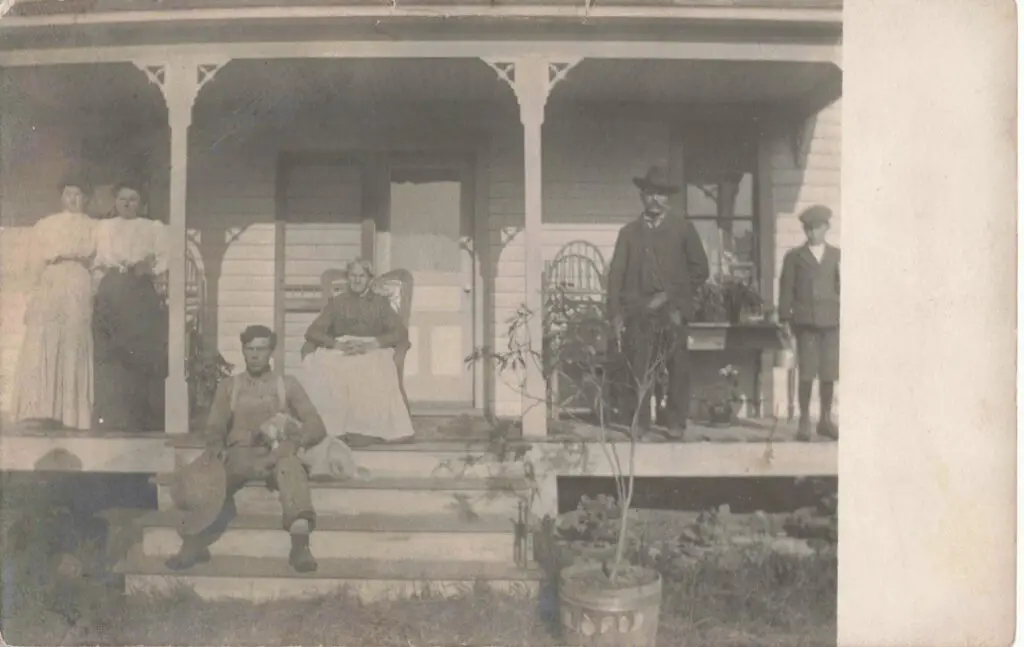
One particularly touching image shows a family gathered on their porch. Three generations sit together, with children, parents, and grandparents sharing a quiet moment. It’s a reminder that life in Owendale was built not just on commerce and industry, but on the strength of family ties.
The porch was the living room in summer. After long workdays, families sat outside, talked, watched the road, and visited with neighbors. These small moments rarely made history books, but they are the moments that defined everyday life.
A Legacy Remembered
Today, these photos offer more than nostalgia. They are a record of a town’s spirit and endurance. Owendale’s story is one shared by many small towns across Michigan — places where the rhythm of everyday life built communities that stood the test of time.
Historical Sources and Photo Archives
Authoritative Historical Sources
- Central Michigan University. Clarke Historical Library – Michigan County Histories and Atlases.
https://www.cmich.edu/library/clarke-historical-library - University of Michigan. Bentley Historical Library – Michigan Communities and Rural Life Records.
https://bentley.umich.edu - University of Michigan. David V. Tinder Collection of Michigan Photography.
https://quod.lib.umich.edu/t/tinder - Huron County Historical Society. Huron County History and Settlements.
https://huroncountyhistoricalsociety.org - Michigan Technological University. Keweenaw Digital Archives – Michigan Railroads and Logging Era.
https://www.mtu.edu/library/archive/keweenaw-digital-archives/ - Library of Congress. Historic American Buildings Survey / Historic American Engineering Record.
https://www.loc.gov/pictures/collection/hh/ - Michigan Department of Transportation. Michigan Railroads and Railroad History.
https://www.michigan.gov/mdot - U.S. Department of Agriculture. Historical Census of Agriculture – Michigan Farming History.
https://www.nass.usda.gov/AgCensus/ - Michigan History Center. Michigan Communities and Agricultural Development History.
https://www.michigan.gov/mhc - Sanborn Map Company. Fire Insurance Maps of Michigan Towns (Library of Congress Collection).
https://www.loc.gov/collections/sanborn-maps/
Historic images of Owendale come from the University of Michigan’s David V. Tinder Collection, one of the largest archives of Michigan photography in the country.