


When Streetcars Met the Surf – An Enlighting History of Lake Michigan Park in Muskegon (1890-1930)
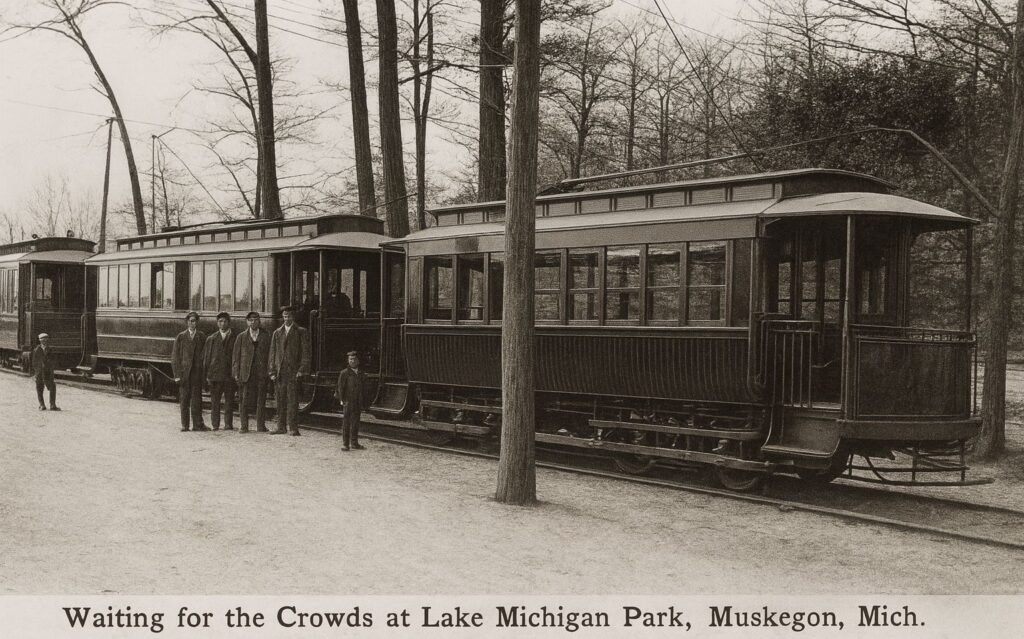
The history of Lake Michigan Park wasn’t an accident of shoreline geography. It was a destination engineered by the transit age. Long before beach traffic meant SUVs and coolers, Muskegon’s west end sold summer by the fare. Lake Michigan Park began as an interurban “trolley park,” created by the Muskegon Traction and Lighting Co. as a lakefront terminus and a reason to ride to the end of the line. The company began buying shoreline property in 1890 to provide public access to the beach and to serve as a built-in destination for its electric cars.

Video – Lake Michigan Park: When “Beach Day” Needed a Streetcar

What Visitors Found at the Water’s Edge

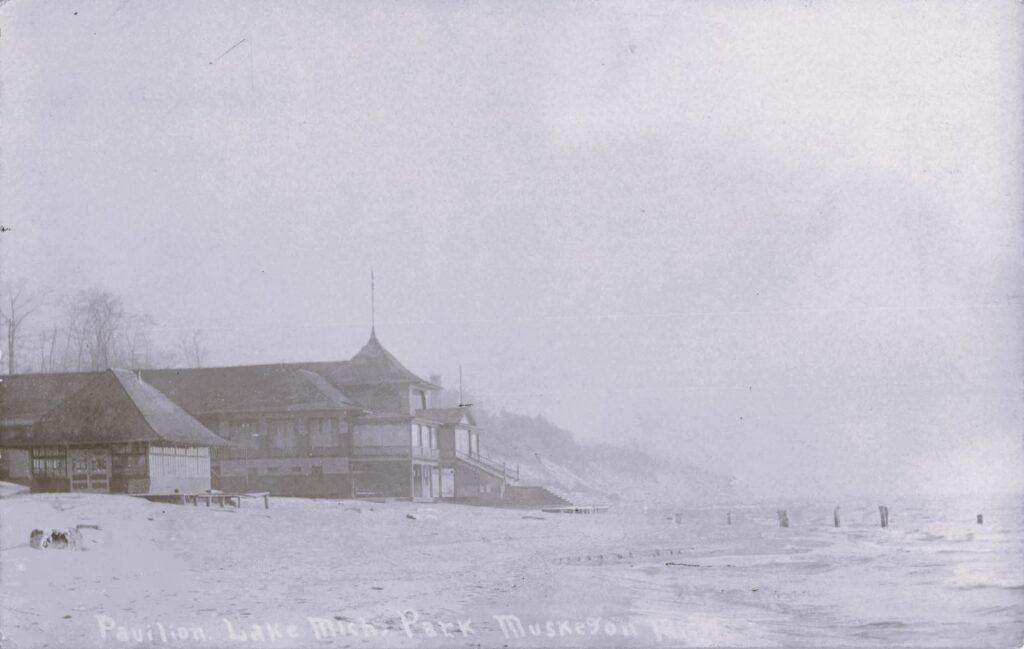
At first, the draw was simple: a bathing pavilion and Lake Michigan itself. But the business model depended on repeat crowds, and the park grew into a full-day outing. Over the next decade, the site added concessions, a dance pavilion, and a roller coaster. The photos and postcards fit that era: wide roofs meant shade, railings meant crowd control, and the long porch-like frontage reads as a place designed to keep people spending time — and money — between swims.

Vaudeville on the Beach

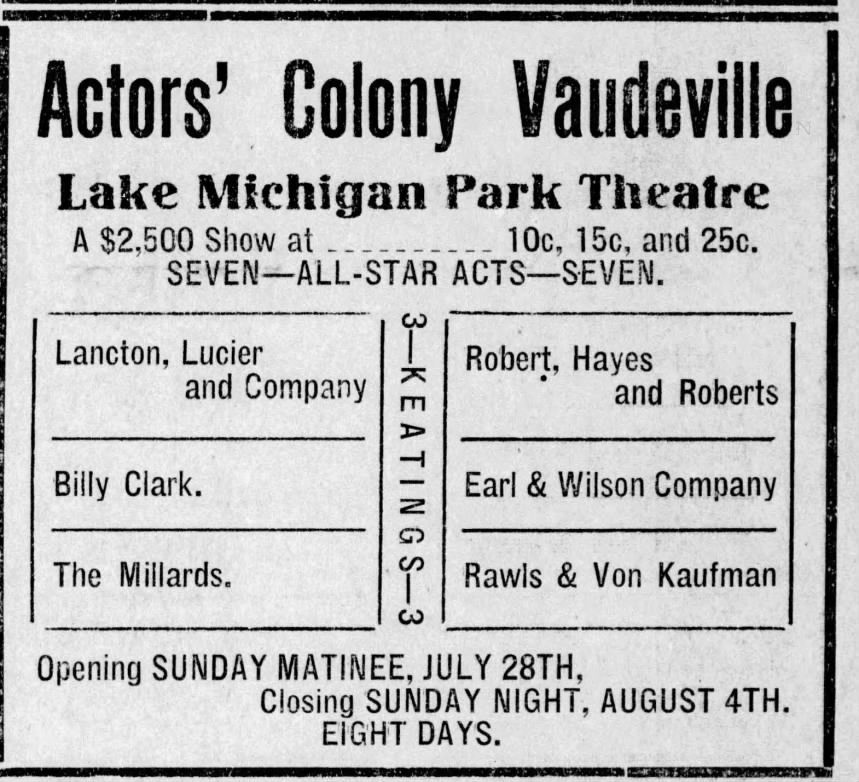
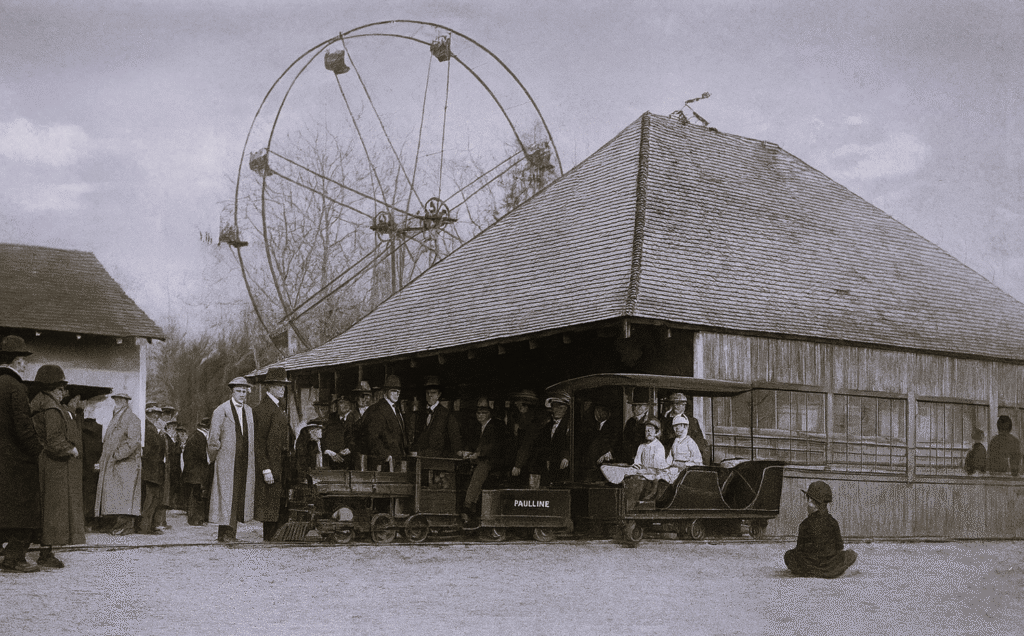
Entertainment was not an accessory. It was the plan. A 600-seat theater opened in 1898, aimed at drawing the vaudeville circuit to Muskegon. In a state historic context report, Lake Michigan Park is tied directly to the regional theater story that later fed the Actors’ Colony in nearby Bluffton. The report notes that “The Three Keatons” performed at the park in 1902, and that the colony became formally organized in 1908, with performers summering in the neighborhoods between the lakes.
Trade papers from the period show that Lake Michigan Park operated within the same national entertainment ecosystem as larger-name resort venues. A 1901 issue of The Billboard lists “Muskegon, Mich. — Lake Michigan Park” among the country’s bookable summer parks. And an 1898 issue of the New York Clipper carried a call for “vaudeville people” at Lake Michigan Park — the kind of notice that helped fill summer stages.
Images on this page may contain affiliate links in which we may receive a commission. See our affiliate disclosure for details.
Historic Photos of Detroit in the 50s, 60s, and 70s
Historic Photos of Detroit in the 50s, 60s, and 70s documents what a Metro Detroiter would have experienced through those decades, from the commonplace to a visit from John F. Kennedy.

The “Figure Eight” and the Rise of Thrill Culture

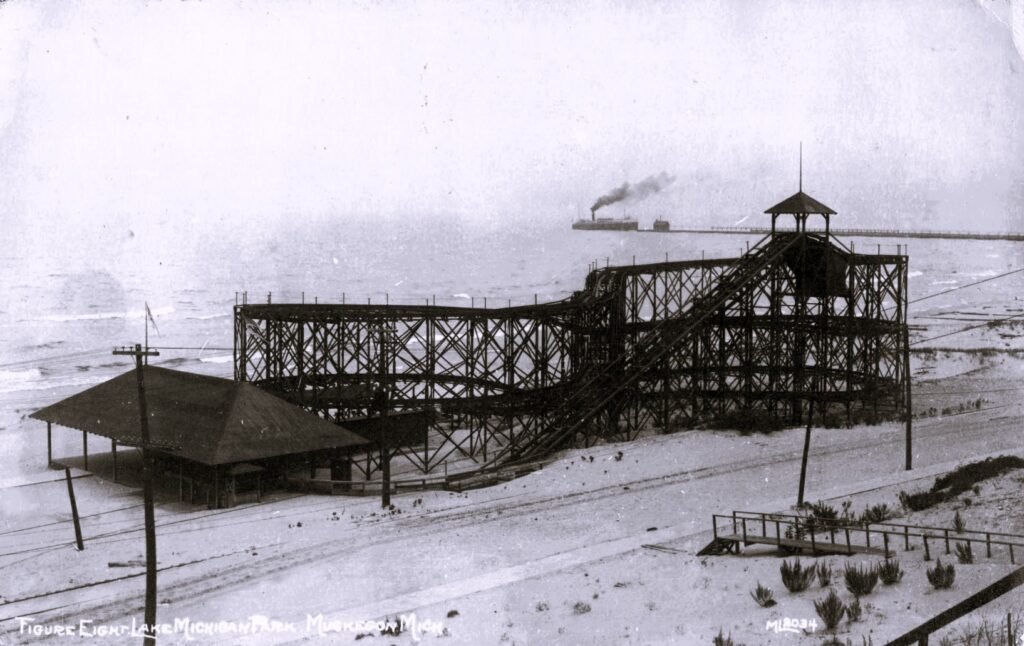
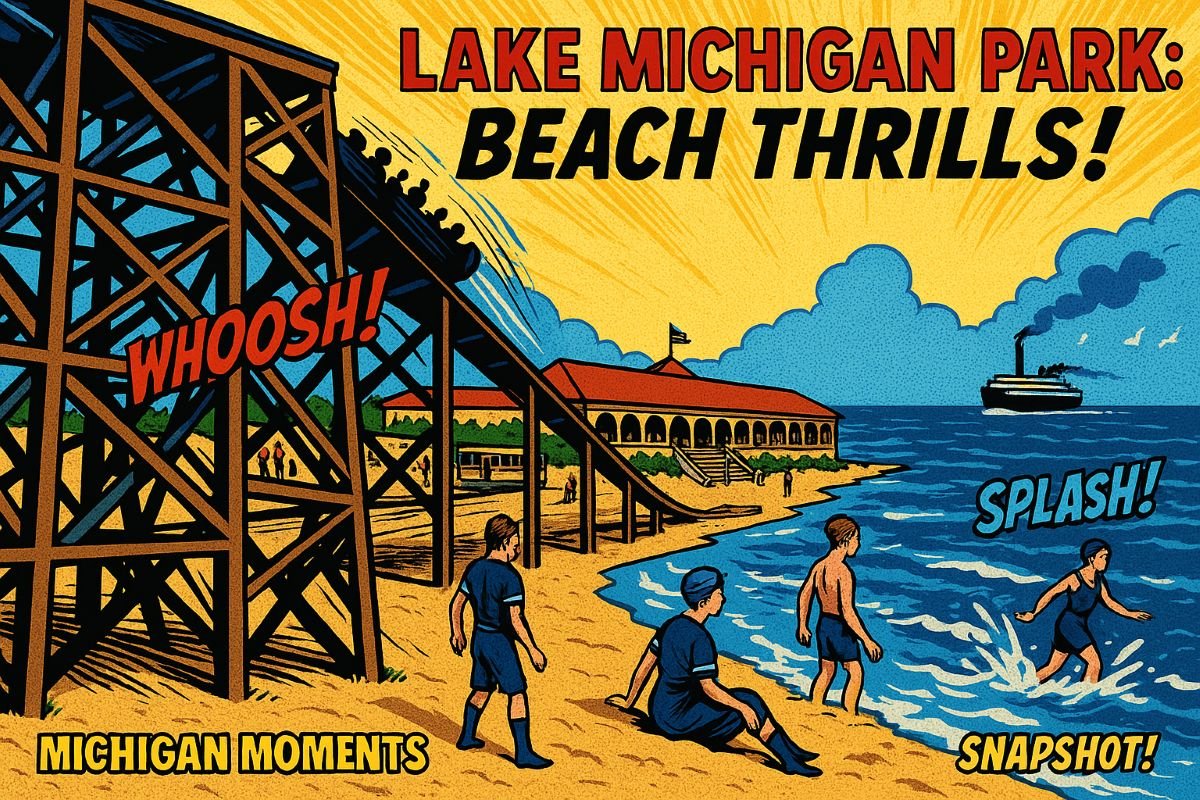
The park also kept pace with the era’s appetite for “new” amusements. By 1911, a roller rink, a bowling alley, and a shooting gallery had been introduced. The big ride, a beach roller coaster called “Figure Eight,” sits above the beach like an announcement. The report doesn’t use that nickname, but it does document a roller coaster on the grounds, and postcards make clear how the park marketed height and speed against a vast, open horizon.
The 1912 Sales Pitch: A Full Page of Promises

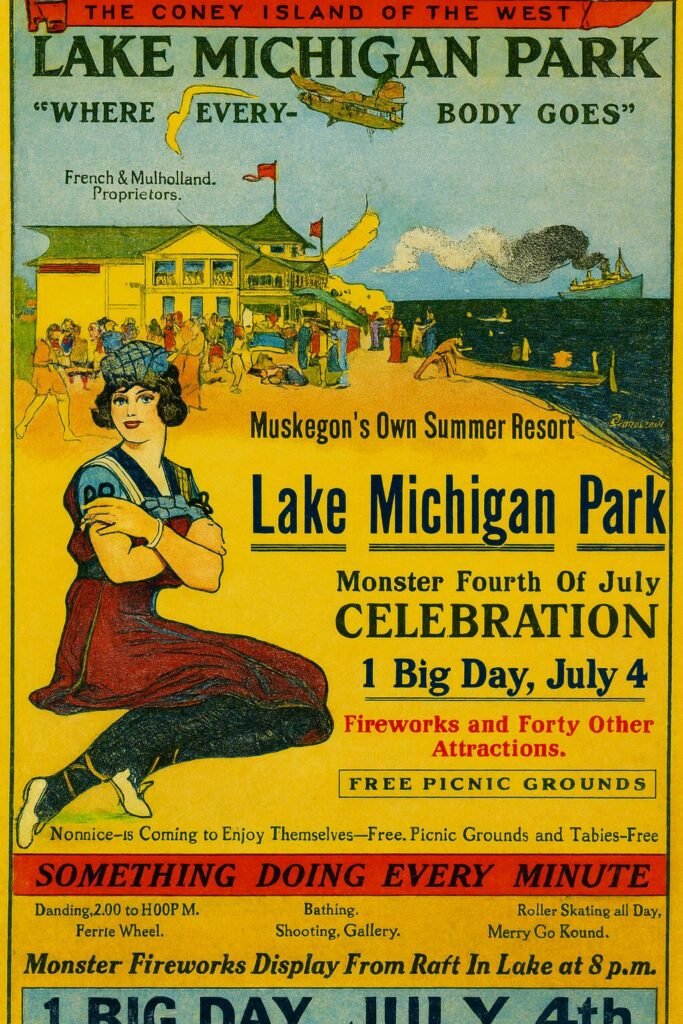
A page in The Muskegon Chronicle dated July 29, 1912, reads like a one-day walk through the park—part feature story, part advertising spread. The headline is blunt: “LAKE MICHIGAN PARK.” It was less news and more like an ad, leaning into booster language, including the phrase “Coney Island of the West,” a comparison meant to signal modern amusements and big crowds.
The ads are even more revealing than the slogans. One box promotes the roller coaster as a signature thrill. Another sells roller skating at a “Roll-Away Rink.” There’s a pitch for a box-ball alley, the kind of simple, repeatable game that kept nickels flowing between swims.
Food and comfort get their own billing. A prominent ad promises “classy refreshments” at the Pavilion Fountain, and the park theater markets itself as “cool and comfortable,” offering moving pictures with “three big reels” and any seat for 5 cents—a price point aimed at families and day-trippers.
One detail lands especially hard today: a stand promoted as “Japanese Rolling Balls,” inviting visitors to “take your souvenir home — direct from Japan.” It’s a small reminder that early 1900s amusement culture often packaged novelty and stereotypes as entertainment.
The Lake Sets the Rules

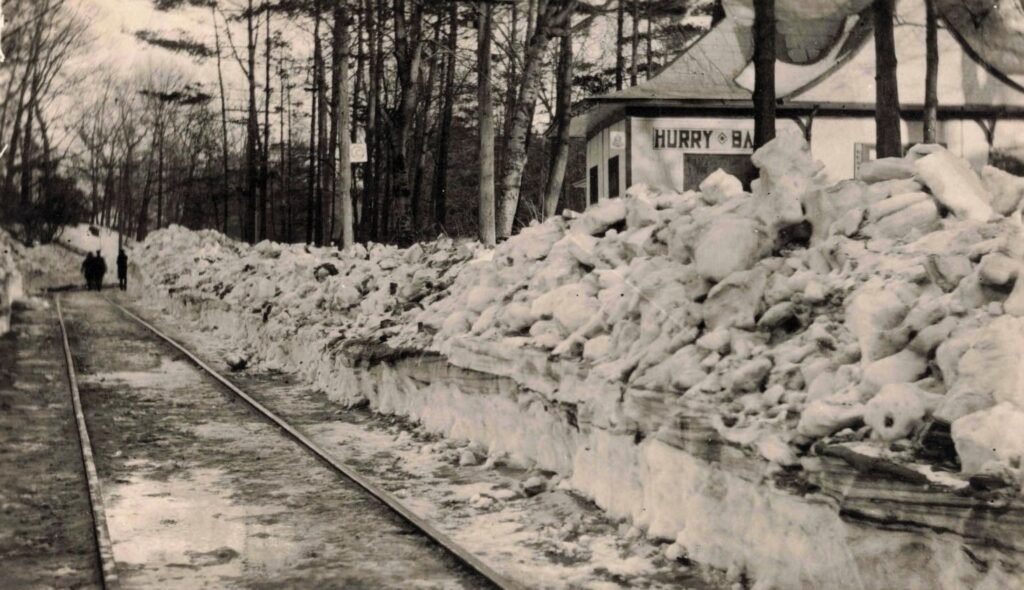
The winter images in your set matter. They show ice pushed into ridges along the shore, with buildings sitting quietly behind it. That is the other constant in Muskegon’s beach history: the park could build rides and roofs, but Lake Michigan still dictated conditions.
Seasonality shaped everything from staffing to revenue. Summer crowds paid the bills. Winter shut the doors.
Expansion, Then a Slow Fade

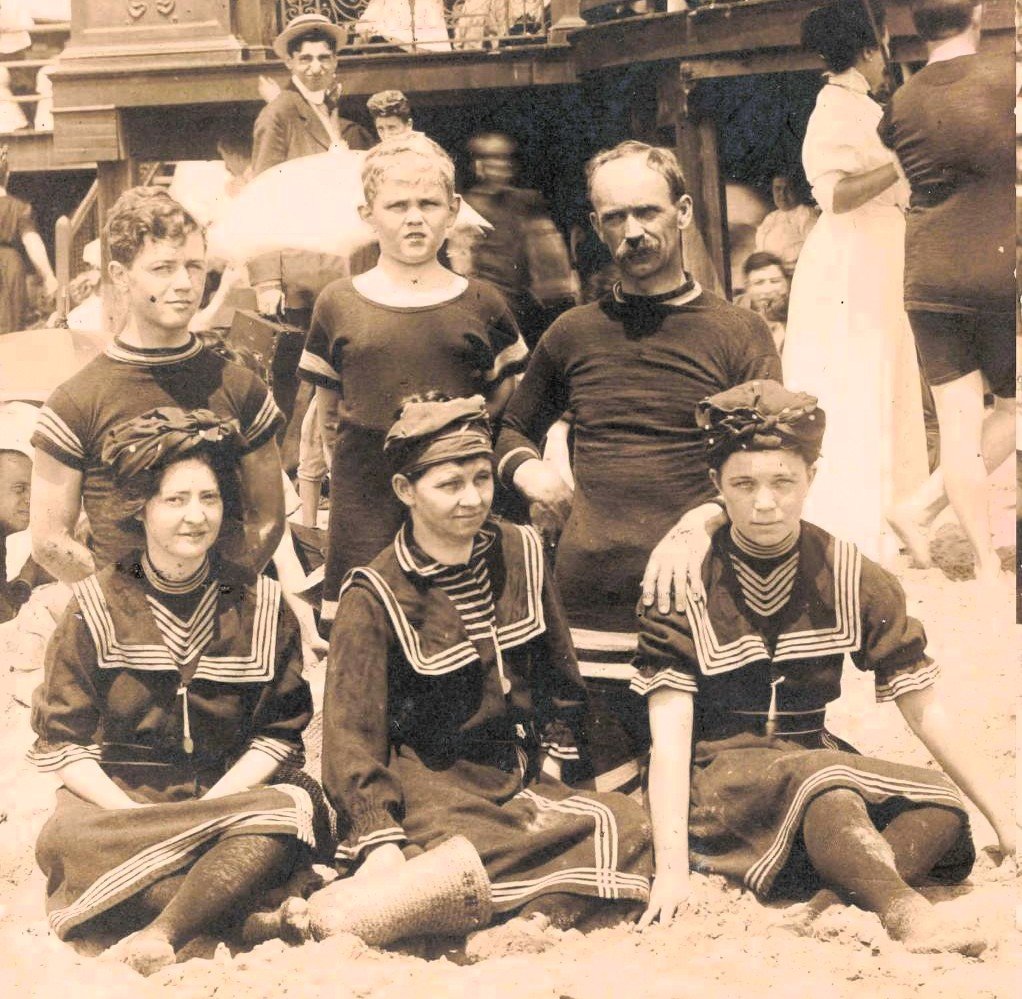
Then the equation changed. As Michigan’s auto-era roads expanded and leisure patterns shifted, interurban parks across the state faced thinner crowds. In Muskegon, the decline shows up plainly in the record: by 1930, Lake Michigan Park had deteriorated; that year, the buildings were razed, and the land was donated to the city. Just north of the old park, the Pere Marquette Railroad agreed to deed acreage to Muskegon, and in 1927, the city completed its first concrete oval parking lot/drive at Pere Marquette Park — an early sign that cars, not streetcars, would shape the lakefront.
Today, the public beach continues under a different name and a different set of expectations. The City of Muskegon describes Pere Marquette Charter Park as part of its city-owned Lake Michigan frontage, a modern public shoreline where the old amusement buildings once stood.
Sources for the History of Lake Michigan Park
Arnold, Amy L. The West Michigan Pike: Volume I: Historic Context Narrative. Michigan State Historic Preservation Office, Sept. 2010. PDF. Accessed 13 Dec. 2025.
Childs, C. R. (Charles R.). Figure Eight, Lake Michigan Park, Muskegon, Mich.. 1916. David V. Tinder Collection of Michigan Photography, William L. Clements Library, University of Michigan Library Digital Collections. Accessed 13 Dec. 2025.
“Lake Michigan Park.” The Muskegon Chronicle, 29 July 1912, p. 13.

