


Brief History of Ortonville Michigan – The depot, the mill, and the day the rails failed (1890-1940)
The History of Ortonville, Michigan is often told as a simple mill-town story: a dam on Kearsley Creek, a gristmill, and a village that grew up around daily farm needs. That is true, but it is not the whole truth.

The photos in this episode show something broader. Ortonville was a service town and commercial center for Brandon Township and parts of Groveland Township, and it lists the sorts of businesses that followed farm traffic: blacksmithing, carriage work, general stores, a hotel, and other basics. But it also sat on the Detroit United Railway line. It built a hotel for travelers. And in 1929, it became the scene of a train crash serious enough to draw a federal investigation.
Video – Short History of Ortonville, Michigan – A tiny depot town with big electric swagger

Ortonville – A mill town that kept updating

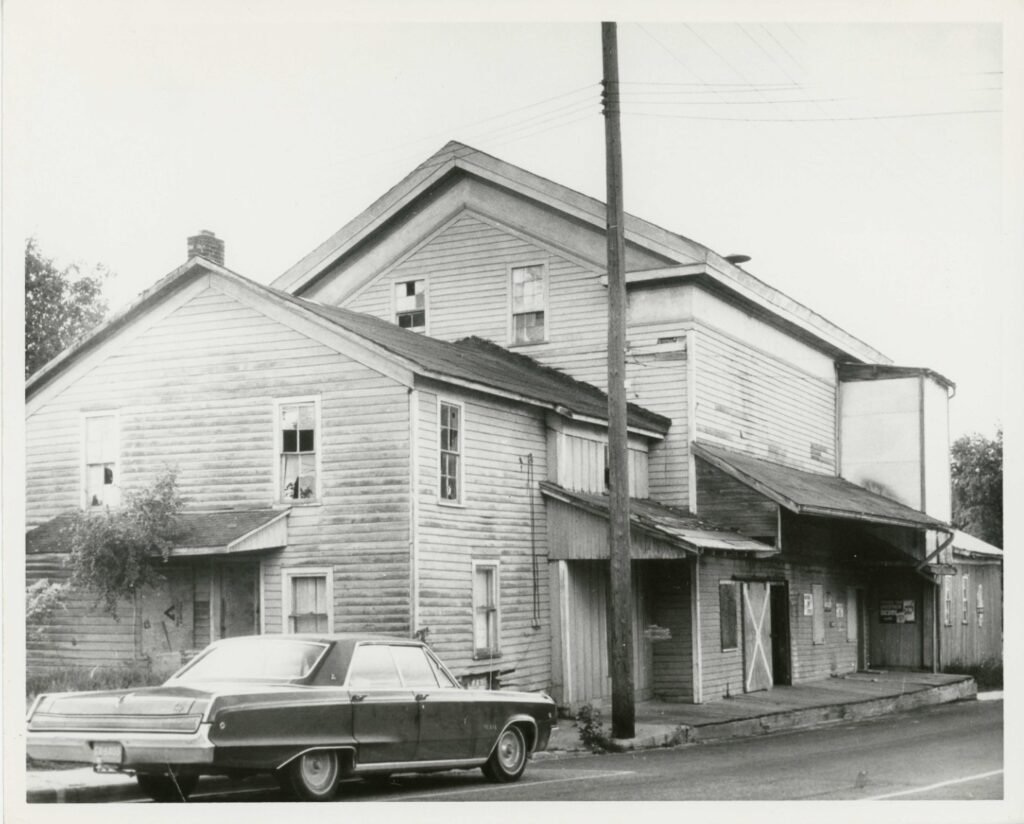
The Ortonville story starts with waterpower. Local histories say Amos Orton built a dam on Kearsley Creek to power his gristmill and that other businesses followed those customers: blacksmithing, stores, a hotel, and more. The present mill building dates to 1856, and the National Register reference text notes it was later enlarged and converted to roller milling in 1889, an important shift because rollers were a more modern method than stone grinding.
Later National Register-based documentation tied to the mill reports another surprising detail: during the 1920s, the mill’s owner generated electric power for the community, at least for a time. That means the history of Ortonville Michigan includes an early brush with electrification that came through a familiar place—the mill—rather than a big-city power station.
The streets show an in-between time

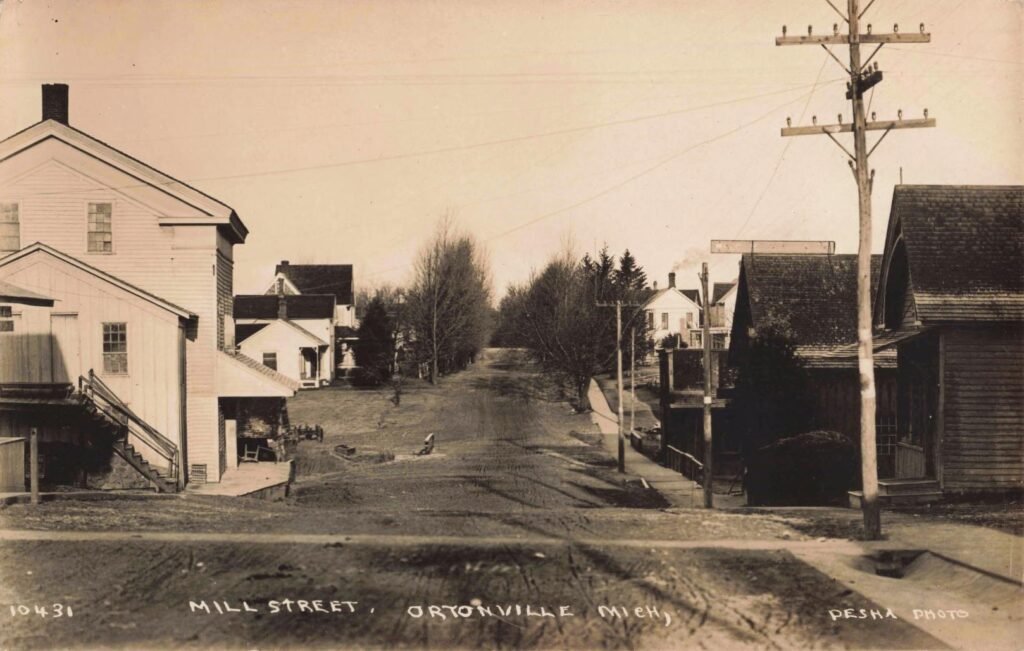
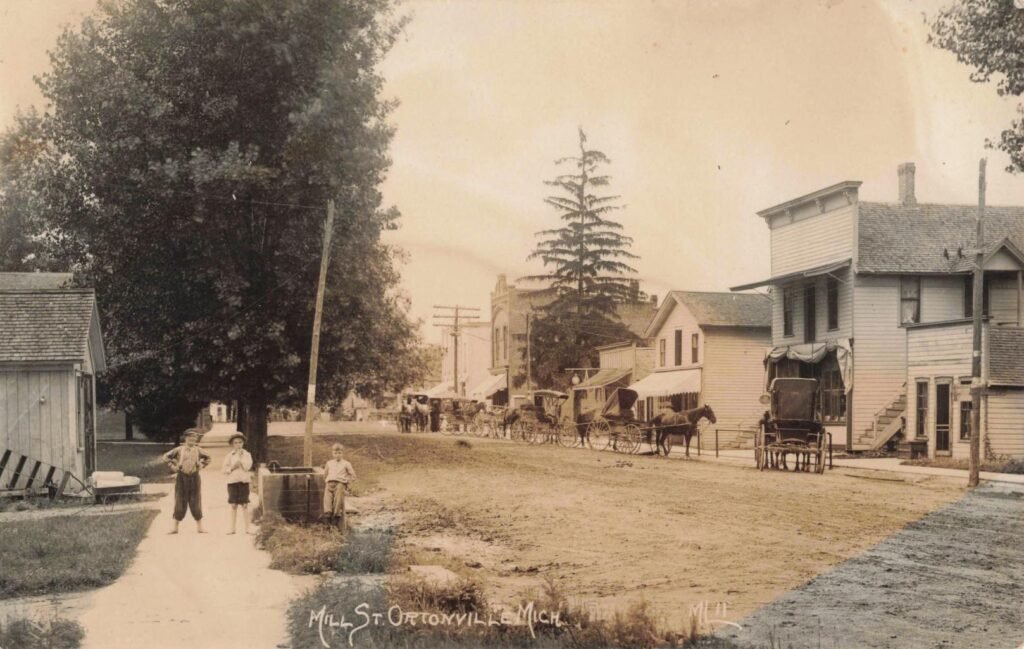
The postcard views of Main and Mill Streets are valuable because they capture Ortonville in transition. One view shows the compact business strip and a street built for slow traffic—wagons, foot traffic, and stop-and-go commerce.

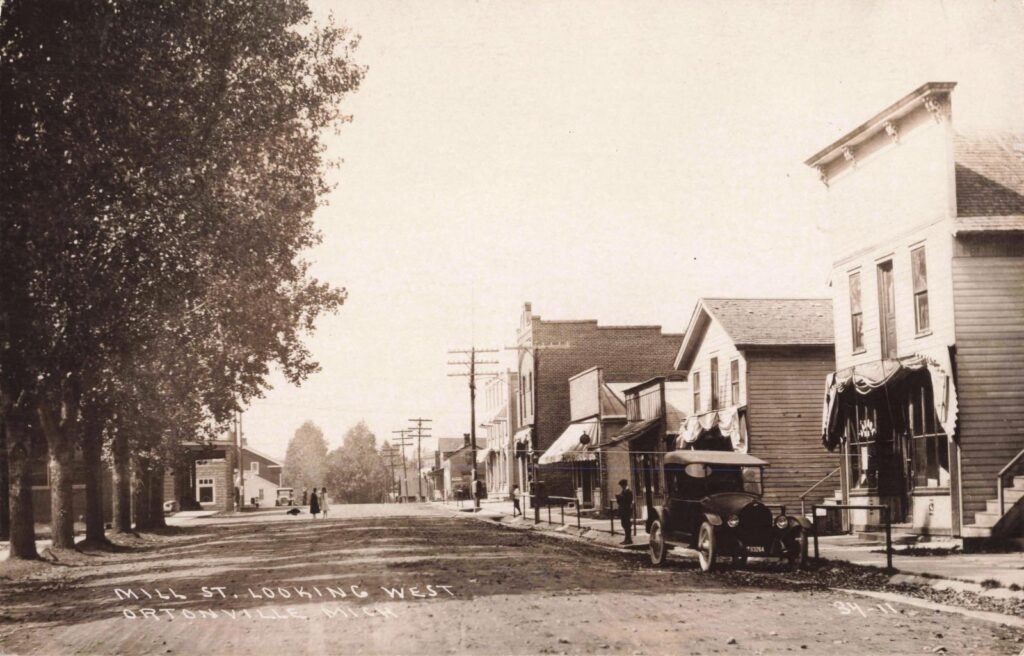
Another view, “Mill St. Looking West Ortonville, Mich.,” is tagged for automobiles. Even the hint of early cars changes the meaning of a street: faster travel, more outside contact, and a new kind of customer.
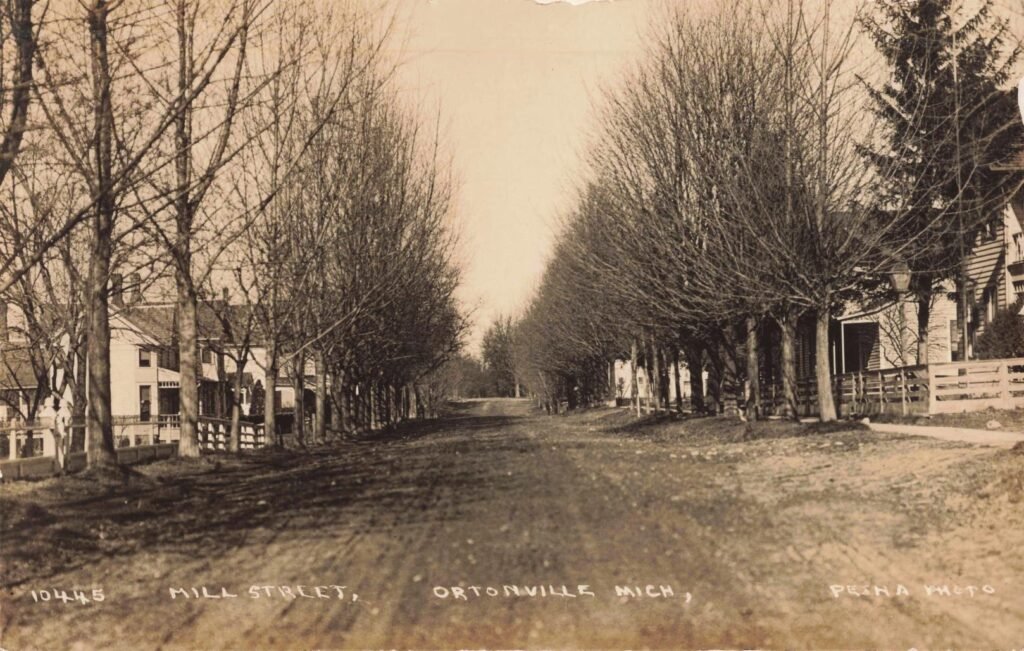
That overlap is a core theme of the History of Ortonville, Michigan, from 1890 to 1940. Old systems did not vanish overnight. They competed with the new ones, sometimes for decades.
A hotel is a clue about who was coming through

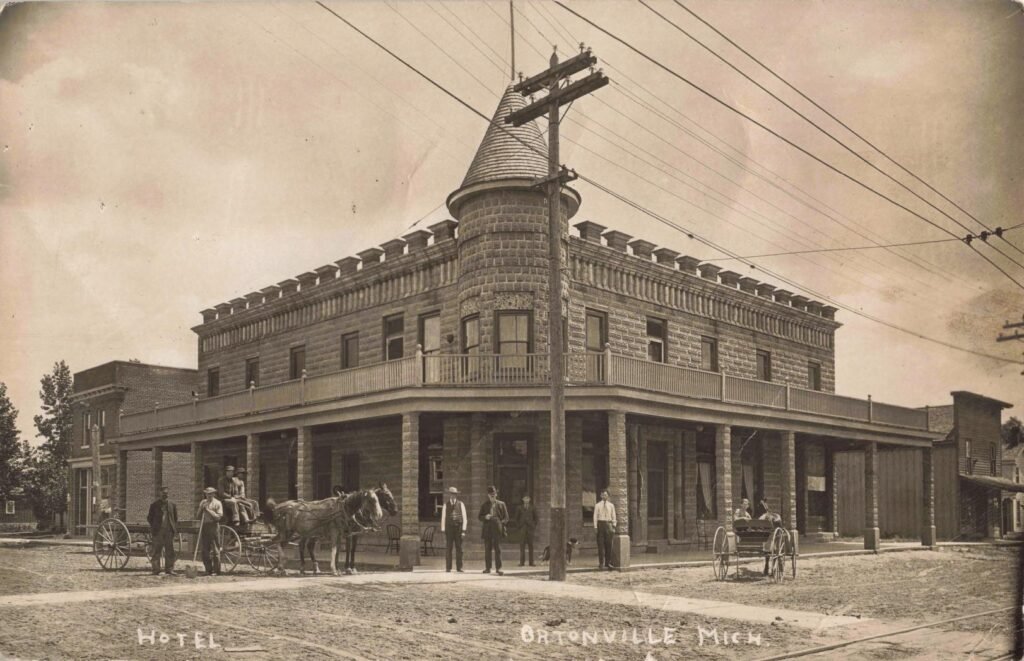
One of the clearest clues that Ortonville was more than a farm service stop is the 1907 “Yolande House” postcard. It shows a hotel meant to host outsiders—people passing through, doing business, and needing a bed for the night.
Hotels in small towns often rose with transportation. When rail travel or major roads brought steady traffic, a hotel could pay for itself. In Ortonville, the timing fits the rail story that shows up a few photos later.
Ortonville on electric rail

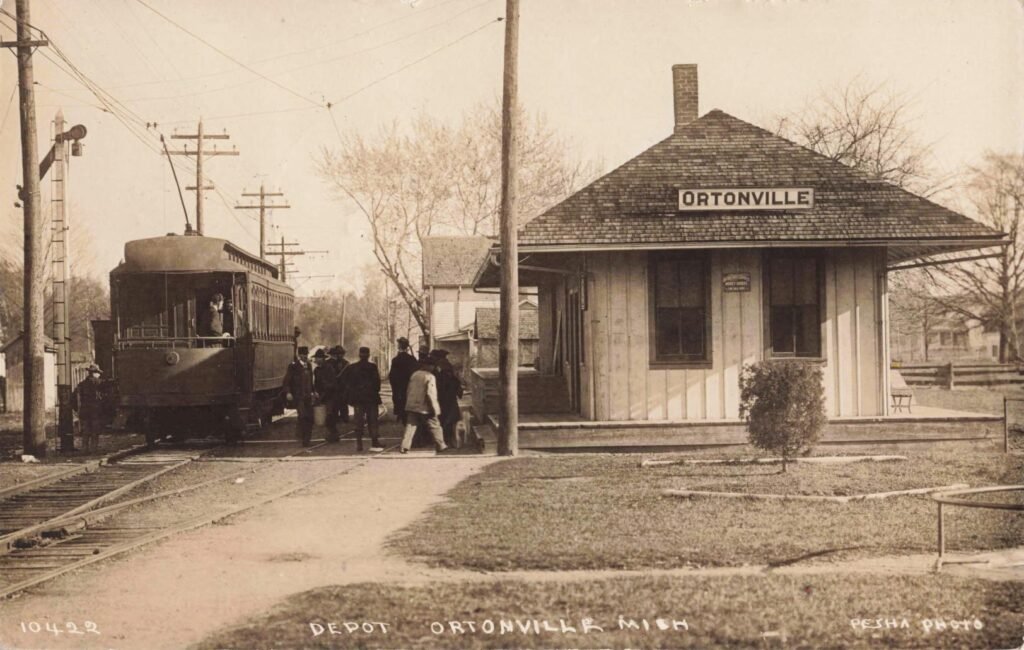
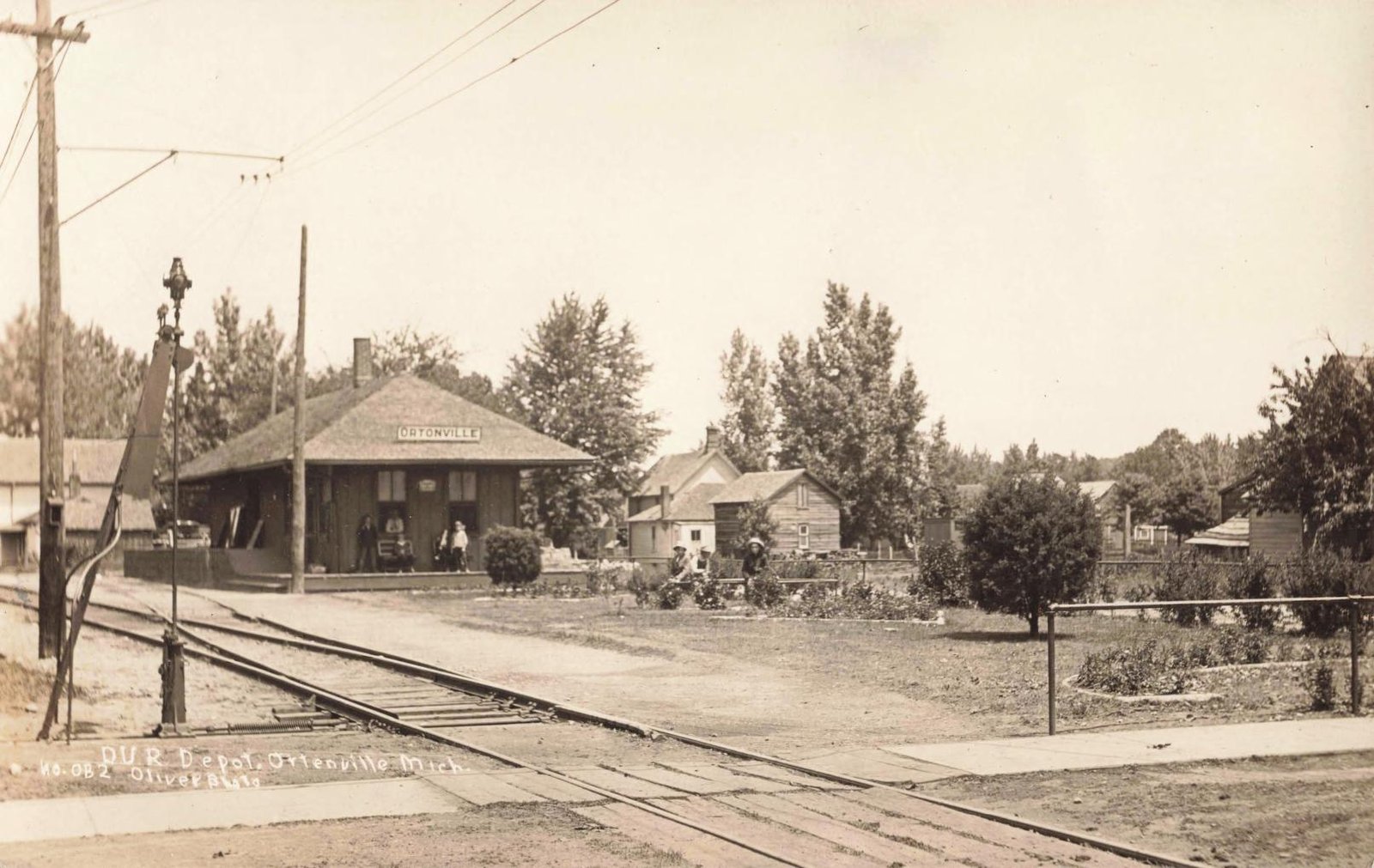
Here is the part that can surprise people today: Ortonville had an interurban connection. A postcard names the local station the “D.U.R. Depot.”

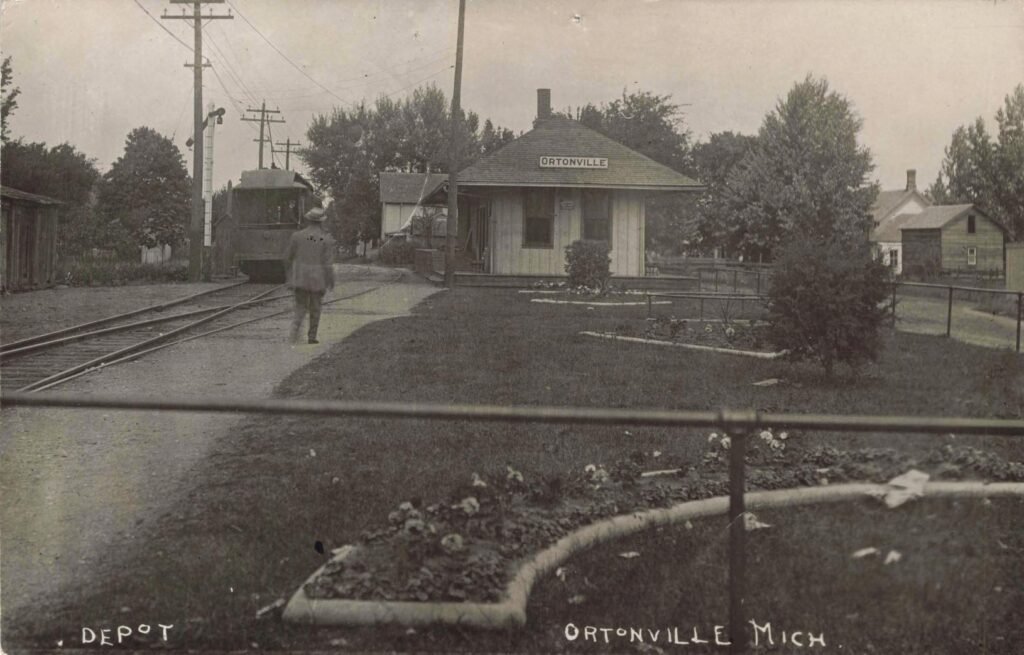
A Detroit Historical Society record supports what that name implies. A Detroit United Railway streetcar photo, dated around 1910, shows Ortonville listed among the stops on a Detroit–Flint Limited line.
This is where the History of Ortonville, Michigan, pushes against an easy cliché. Many people assume “modern travel” meant the car first. In Ortonville’s case, electric rail was already tying the village to the region before Michigan’s road system became what it is today.
The crash that put Ortonville in a federal report

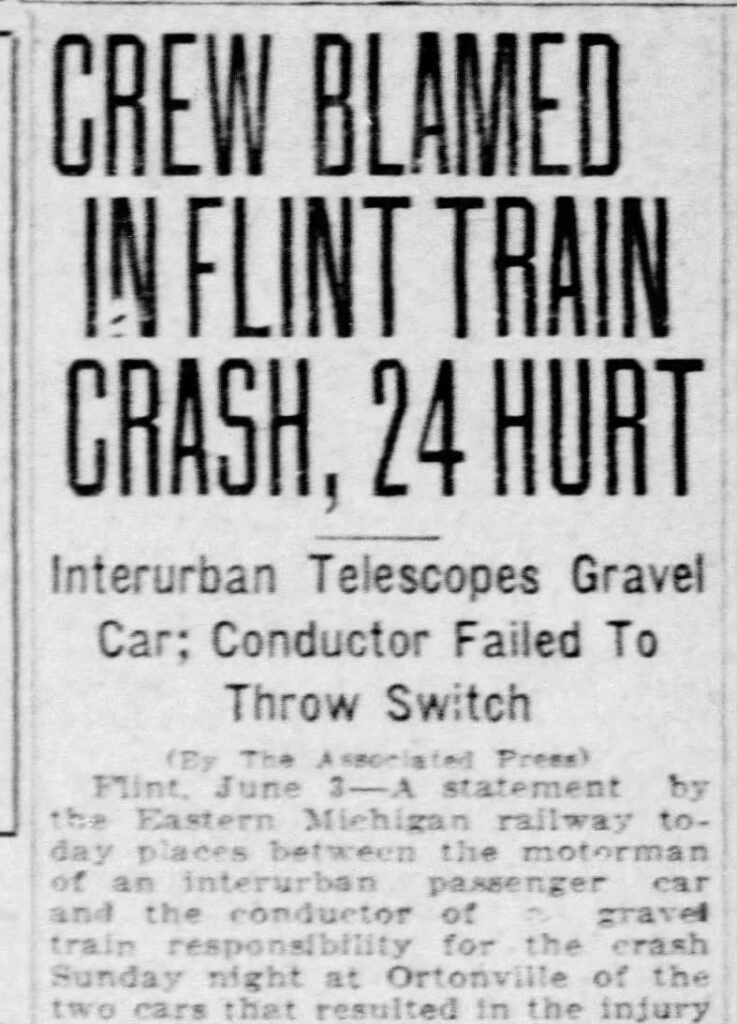
Electric rail could be fast and convenient. It could also be unforgiving.
On June 2, 1929, the Interstate Commerce Commission investigated a collision at Ortonville on the Eastern Michigan Railway. The report states that a crash between a passenger train and a freight train resulted in injuries to 50 passengers and one employee.
The same report offers a detail that connects the crash to the local economy: the freight train consisted of cars loaded with gravel. Gravel is not glamorous, but it is the kind of commodity that builds roads, foundations, and growth. It is the stuff beneath the story of a state still expanding.
The report’s conclusion blames a failure to control speed approaching a passing point. You do not need to be a rail expert to grasp what that means. On a single-track line, routine timing errors could turn serious.
Bald Eagle Lake and the quieter side of town life
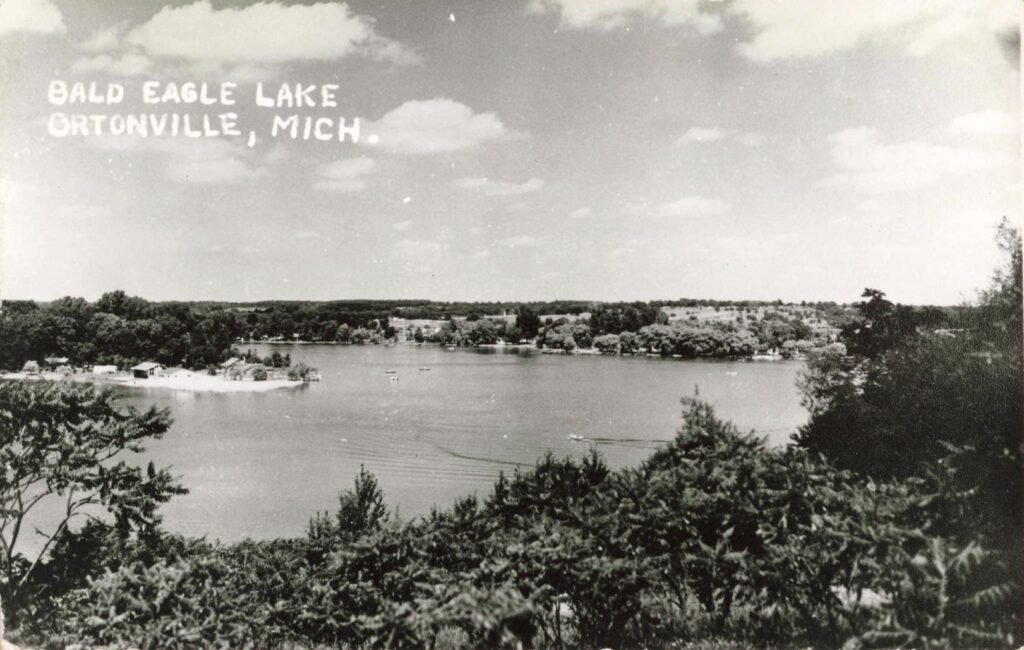
Ortonville’s history is also a water story. The postcard labeled “Bald Eagle Lake, Ortonville, Mich.” shows a leisurely view that would have appealed to families who wanted space, fishing, and a break from city heat.
A boating history essay published through the Bald Eagle Lake Property Owners Association says wooden rowboats appeared on the lake in the 1920s and notes that rowboats remained common during wartime years because gasoline was in short supply. That is a plain reminder of how world events could reach quiet places: not through headlines, but through what people could afford to run.
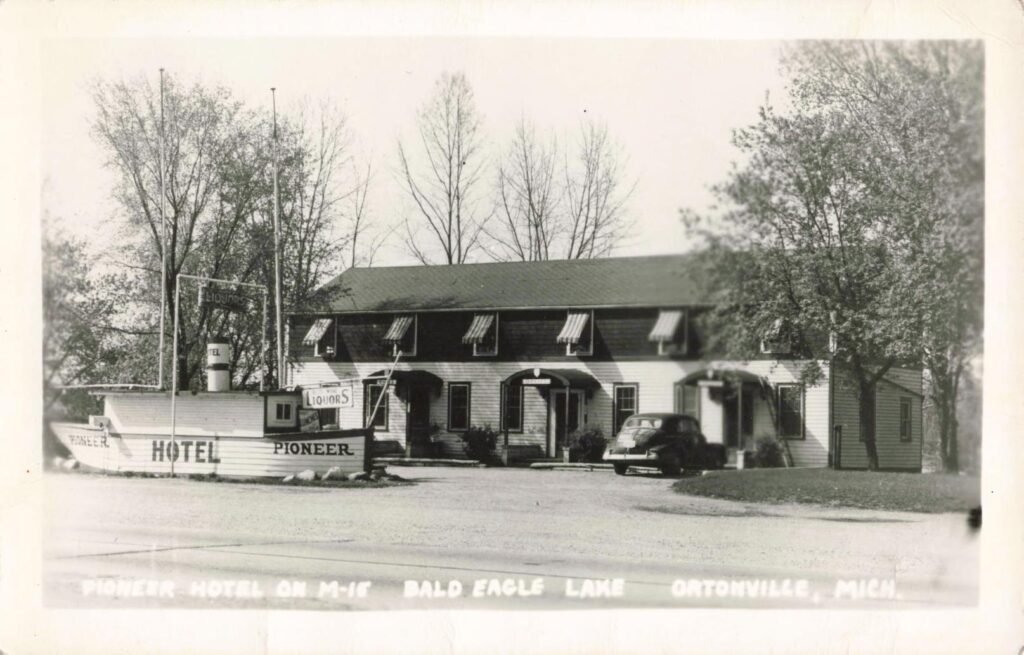
The Pioneer Hotel on M-15 by Bald Eagle Lake in Ortonville advertised “HOTEL PIONEER” with a boat-shaped sign and a “LIQUORS” banner by the entrance. This postcard-style photo captures a time when lakeside businesses catered to passing drivers as much as summer visitors.
A note found with this clip adds another possible link: it says the Ortonville Hotel Yolande was owned by William Sprague, who also ran the Pioneer Hotel, and that the site was later called the Boat Bar.
History of Ortonville Michigan, in one line
The History of Ortonville, Michigan is the story of a village that grew from waterpower, lived as a service town, briefly rode the electric rail age, and carried both work and leisure on its roads, rails, and lakes—often at the same time.
Images on this page may contain affiliate links in which we may receive a commission. See our affiliate disclosure for details.
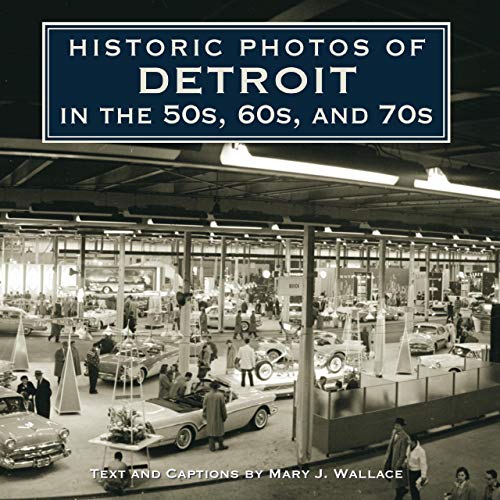
Historic Photos of Detroit in the 50s, 60s, and 70s
Historic Photos of Detroit in the 50s, 60s, and 70s documents what a Metro Detroiter would have experienced through those decades, from the commonplace to a visit from John F. Kennedy.

The History of Ortonville Michigan – Works Cited
Bald Eagle Lake Property Owners Association. Over 100 Years of Boating on Bald Eagle Lake. Accessed 11 Feb. 2026.
Detroit Historical Society. Print, Photographic (Detroit United Railway interurban car #7302), c. 1910. Accessed 11 Feb. 2026.
Detroit Photography Architecture Guide. Ortonville Mill Photos | Detroit Architecture.Accessed 11 Feb. 2026.
Interstate Commerce Commission. Report of the Director of the Bureau of Safety in Re Investigation of an Accident Which Occurred on the Eastern Michigan Railway at Ortonville, Mich., on June 2, 1929 (Sept. 30, 1929). . Accessed 11 Feb. 2026.
National Register of Historic Places. National Register of Historic Places (text directory entry for “Ortonville Mill,” 366 Mill Street; notes roller-process conversion in 1889). Accessed 11 Feb. 2026.
University of Michigan Library Digital Collections. D.U.R. Depot, Ortonville, Mich. David V. Tinder Collection of Michigan Photography. . Accessed 11 Feb. 2026.
University of Michigan Library Digital Collections. Main Street, Ortonville, Mich. David V. Tinder Collection of Michigan Photography.. Accessed 11 Feb. 2026.
University of Michigan Library Digital Collections. Mill Street, Ortonville Mich. David V. Tinder Collection of Michigan Photography. . Accessed 11 Feb. 2026.
University of Michigan Library Digital Collections. Mill St. Looking West Ortonville Mich. David V. Tinder Collection of Michigan Photography. . Accessed 11 Feb. 2026.
University of Michigan Library Digital Collections. Yolande House Ortonville Mich. David V. Tinder Collection of Michigan Photography. . Accessed 11 Feb. 2026.
Village of Ortonville. Historic Village of Ortonville. . Accessed 11 Feb. 2026.
Downtown Ortonville. Ortonville History. . Accessed 11 Feb. 2026.

