


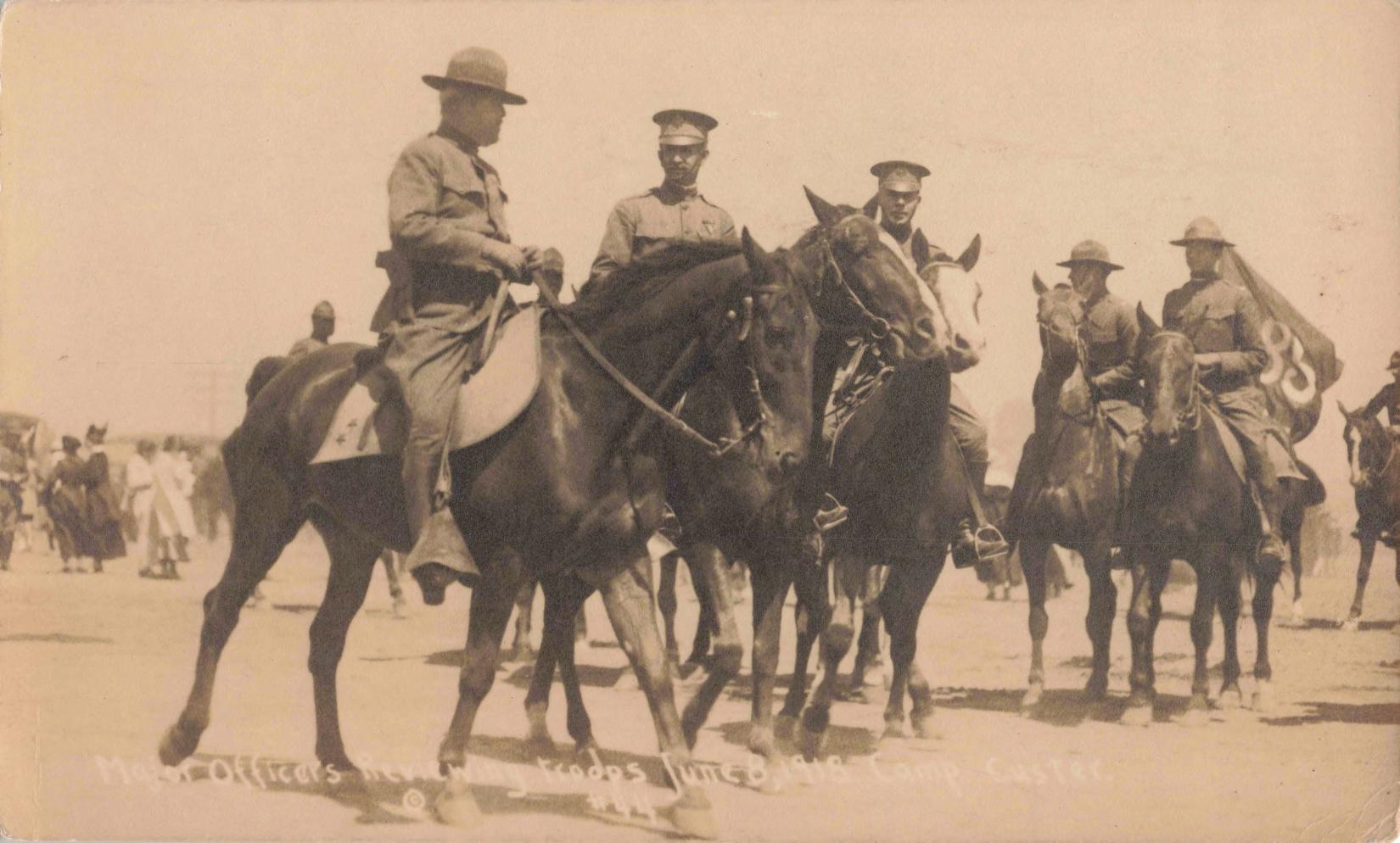
Short History of Camp Custer Michigan – Eye-opening Views of a Boot Camp, Hospital, and Military Legacy (1917 – 1968)
Five miles west of Battle Creek, Michigan, a new force took shape in 1917. It was not a factory or a farm. It was Camp Custer, erected with urgency, purpose, and hope. In its first year, prefabricated barracks, hospitals, mess halls, and YMCA tents rose on former farmland. Michigan’s citizen soldiers poured in. The history of Camp Custer, Michigan, began in motion.

Building a Camp in Months

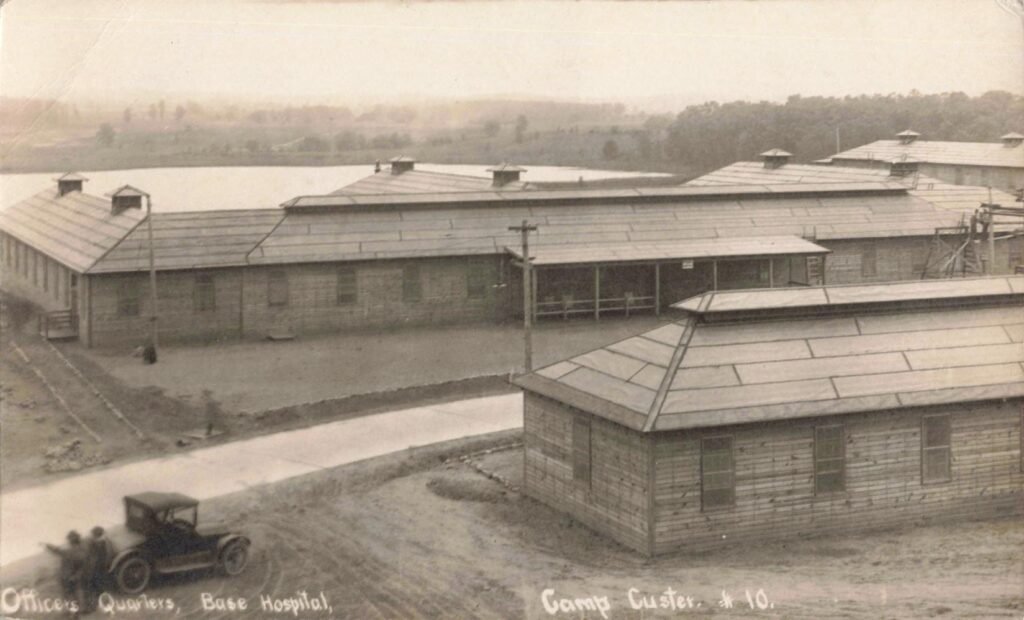
Engineers led by Samuel Arnold Greeley were tasked with designing and constructing the camp in short order. The plan anticipated housing some 35,000 men. But as war demands grew, the facility expanded rapidly. In less than half a year, wooden structures spread across the fields: training grounds, rifle ranges, a hospital complex, administrative blocks, and recreational halls.

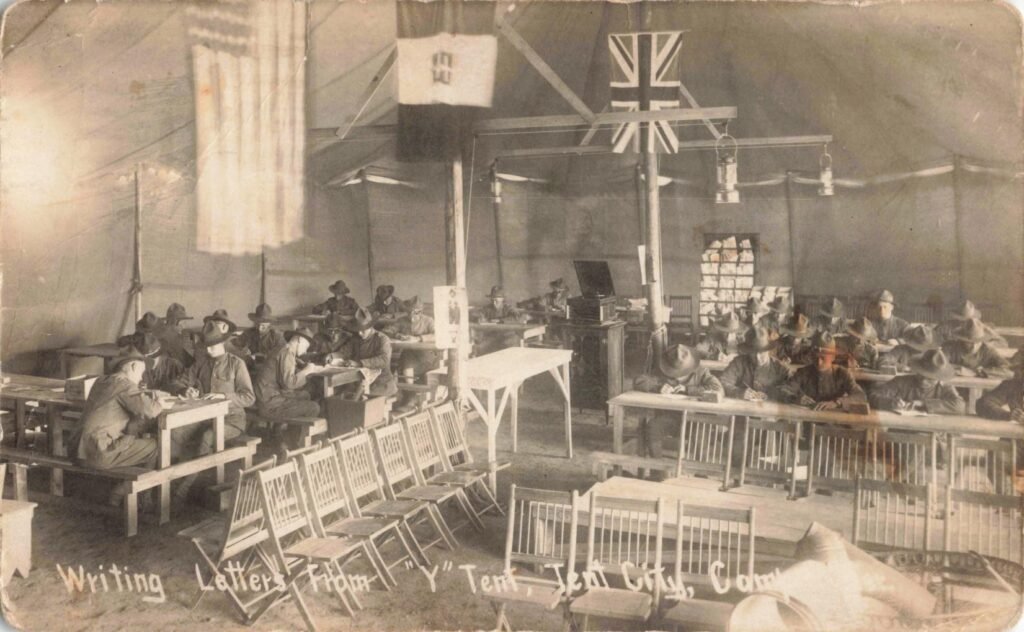
Within the camp, the YMCA played a quiet but vital role. They offered stationery, postage, and a space for men to write home letters, serving as an emotional tether to family and community. Red Cross and Catholic organizations offered solace, music, and companionship.
Training for War, Learning to Live

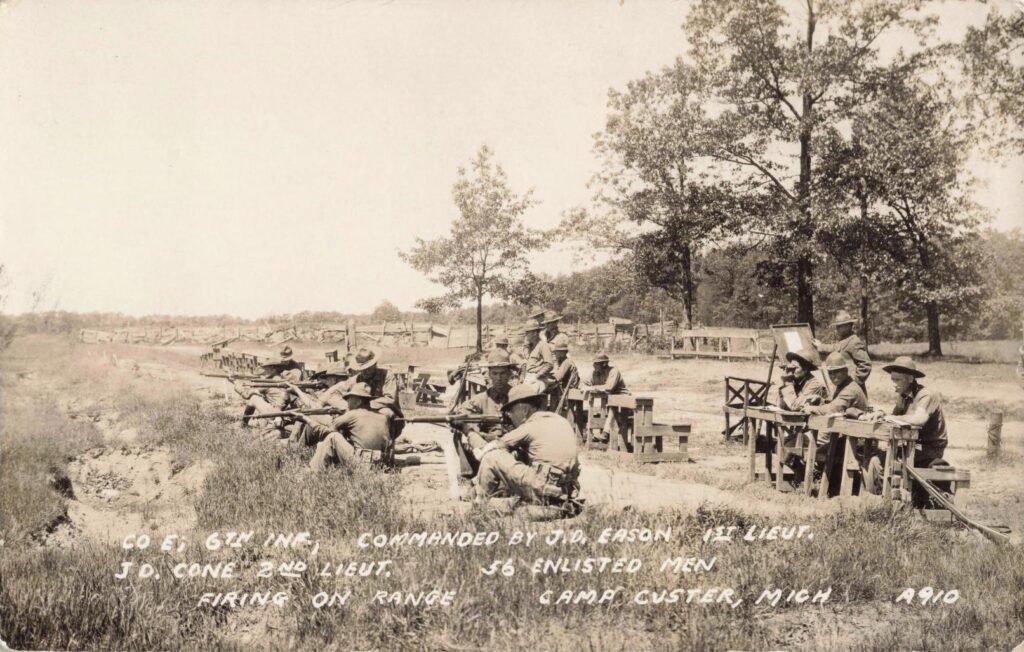
Soldiers came mostly from Michigan and nearby states. They joined the 85th Infantry Division and later other units. Training was intense: drills, trench warfare simulations, gas-mask practice, bayonet training, and marches. At the same time, the University of Michigan and other institutions offered classes in French, history, international relations, and science — part of a push to prepare troops intellectually as well as physically.

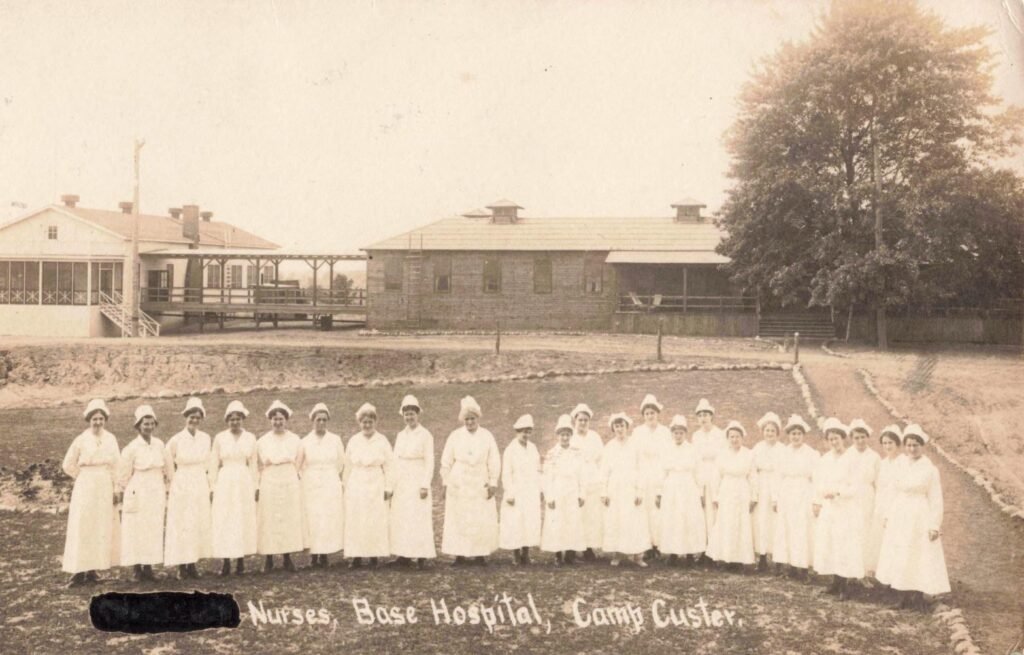
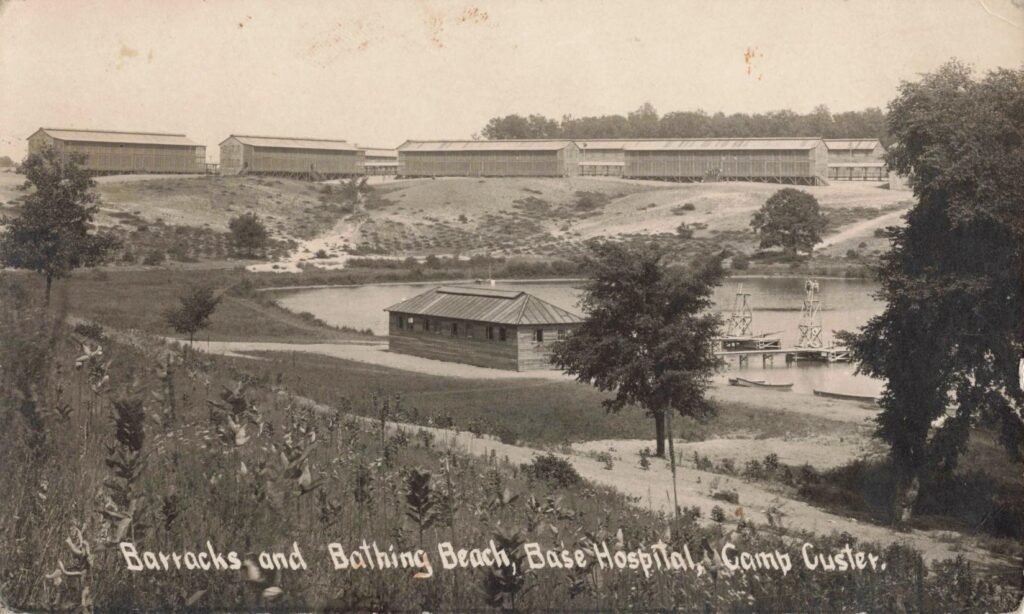
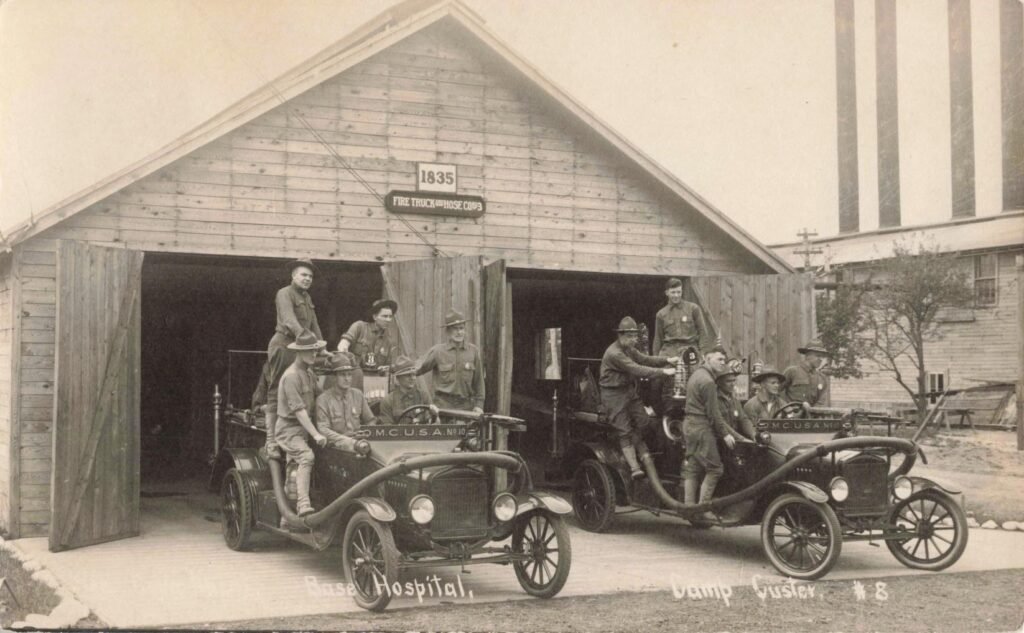
Nearby stood the base hospital. Rows of nurses dressed in white, officers in quarters, fire stations on standby — the hospital complex carried a heavy load. Training injuries, disease, and later wartime casualties passed through its halls.

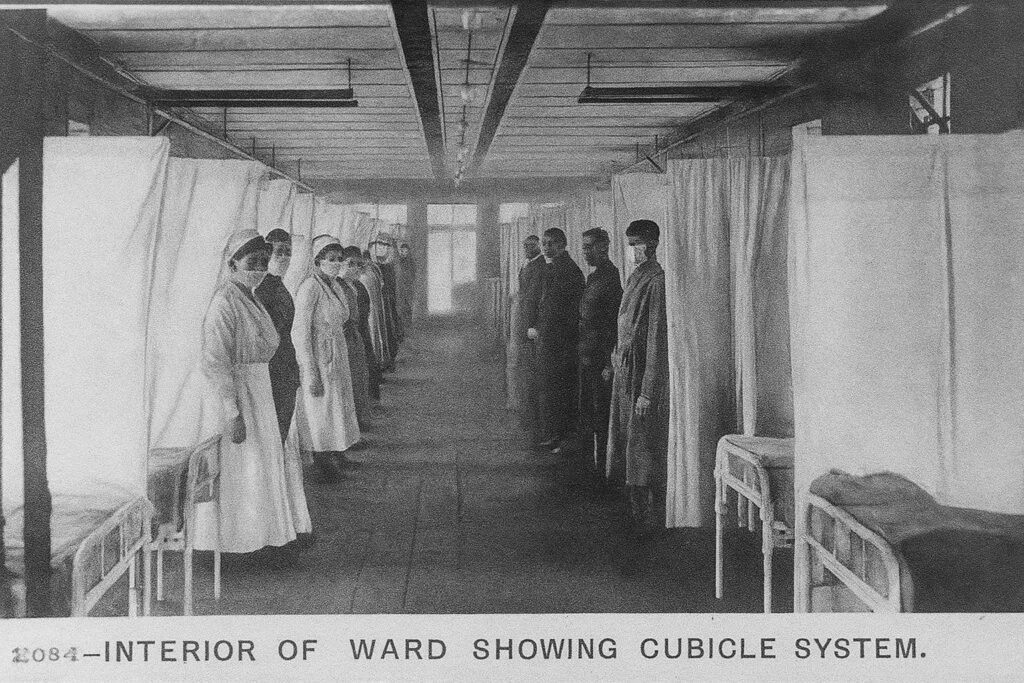
One of the darkest chapters came in 1918. The influenza pandemic struck. Brig. Gen. Howard Laubach imposed quarantine. The camp’s routines halted: theaters closed, mess halls sealed. Hundreds fell ill. Hundreds died.
Demobilization and Interwar Years

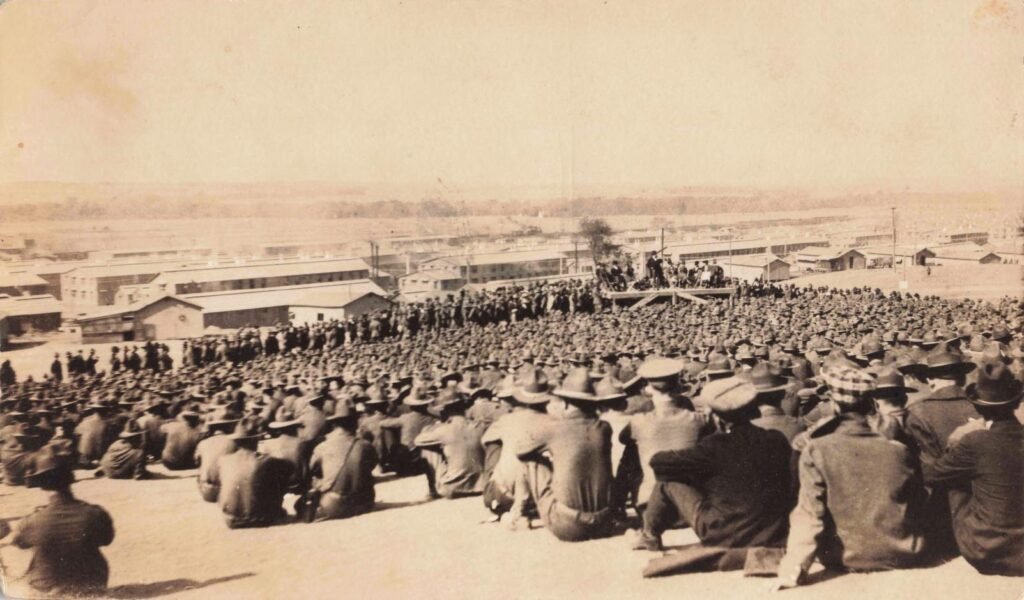
After the war ended in November 1918, Camp Custer served as a demobilization center. Over 100,000 soldiers passed through, awaiting discharge. In the years that followed, the camp did not vanish. It housed Civilian Conservation Corps workers in the 1930s. It hosted officer training. It stuttered into dormancy when world events slowed.
A Permanent Base: Fort Custer

On August 17, 1940, the government redesignated the site as Fort Custer and declared it permanent. The U.S. prepared for global conflict. The fort expanded dramatically. The 5th Infantry “Red Diamond” trained there. The base provided the base for induction, staging, support, and infrastructure for an entire war effort. Over 300,000 men passed through its gates.
A prisoner-of-war camp operated on site. German soldiers worked on nearby farms and in nearby industries. When a transport truck carrying POWs collided with a train near Blissfield, 16 German prisoners died. They now rest in the Fort Custer National Cemetery.

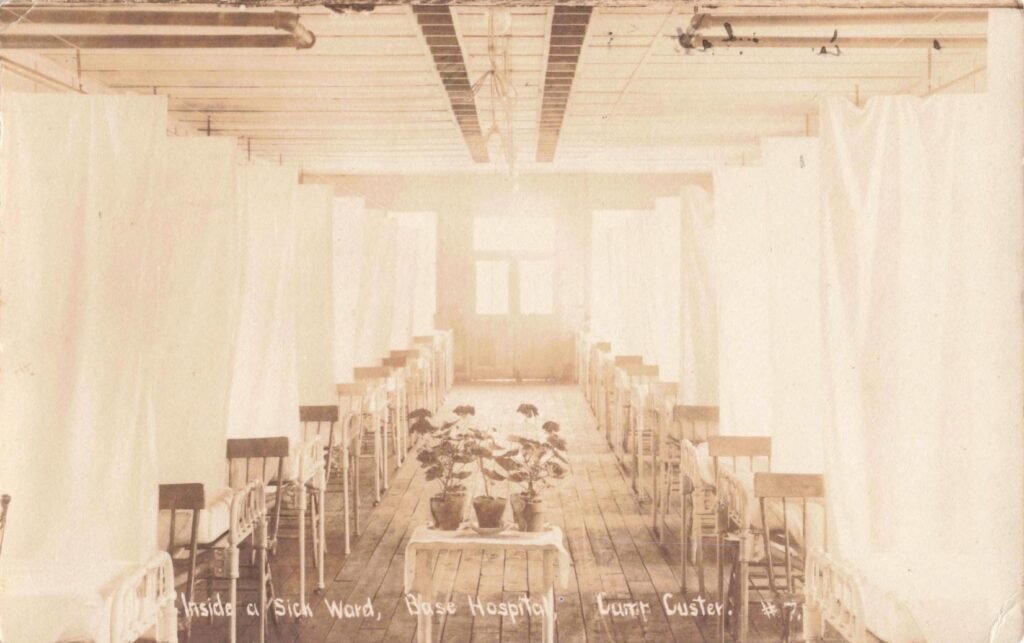
The medical complex again played a critical role. Nurses, doctors, and staff supported training casualties and returning wounded. Some veterans later recalled nightmares of hospital corridors, slings passing from room to room, and long hours of waiting.
Post-War, State Use, and Memory

In the postwar period, Fort Custer trained troops for Korea. It hosted Marine and Navy reserves. In the 1950s and 1960s, it became part of air defense.
In 1968, Michigan assumed operation of the facility (though the federal government still owns it). Some acreage was deeded to the state. In 1971, the Fort Custer State Recreation Area opened to the public.
The Fort Custer National Cemetery, established in 1943, continues to grow. It houses over 30,000 interments. Among them are the 26 German POWs.
The Fort Custer Museum, operated by the Fort Custer Historical Society, is housed in restored WWII barracks and a chapel. Under the leadership of Colonel (Ret.) James Spackman, the museum preserves uniforms, narratives, photographs, and artifacts.
Memory Through Images

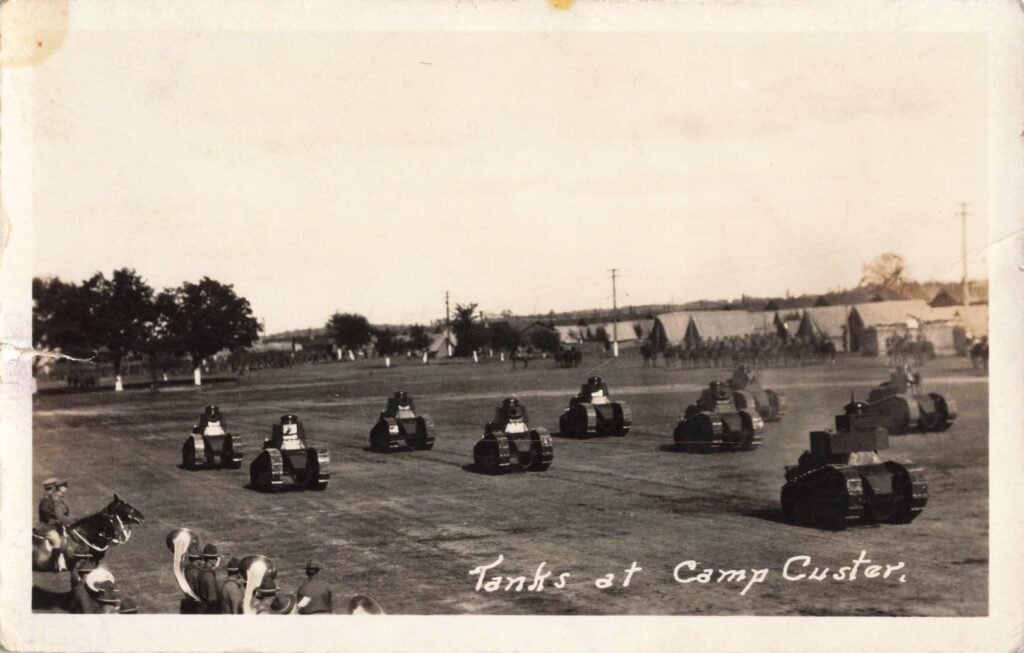
The history of Camp Custer, Michigan, photographs —soldiers writing letters in YMCA tents, nurses in uniform, tanks lined up for inspection, rows of barracks beside water—allows us to step into Camp Custer’s daily rhythm. They anchor memory to details: the pens, the mail, the uniforms, the quiet buildings by sunlit water.
Camp Custer’s story is the story of Michigan’s citizen soldiers, caught between home and battlefield, supported by institutions, tested by tragedy, and shaped by duty. Fort Custer remains alive today as both a military training ground and a place of memory.
Works Cited in the History of Camp Custer Michigan
99 WFMK Vintage Photos. “A Look Back at Fort Custer, 1917–1952: Battle Creek, Michigan.” Accessed 13 Feb. 2026.
Fort Custer Historical Society. “About Us.” Fort Custer Museum, Accessed 13 Feb. 2026.
Michigan National Guard. “Fort Custer Training Center.” Accessed 13 Feb. 2026.
Michigan in the World. “Regional Training Camps: The Case of Camp Custer.” Accessed 13 Feb. 2026.
SS MTU Humanities. “Camp Custer and World War I.” Accessed 13 Feb. 2026.
SS MTU Humanities. “Fort Custer and Prisoners of War.” Accessed 13 Feb. 2026.
Wikipedia. “Fort Custer National Cemetery.” Accessed 13 Feb. 2026.
Wikipedia. “Fort Custer Recreation Area.” Accessed 13 Feb. 2026.
Wikipedia. “Fort Custer Training Center.” Accessed 13 Feb. 2026.

