


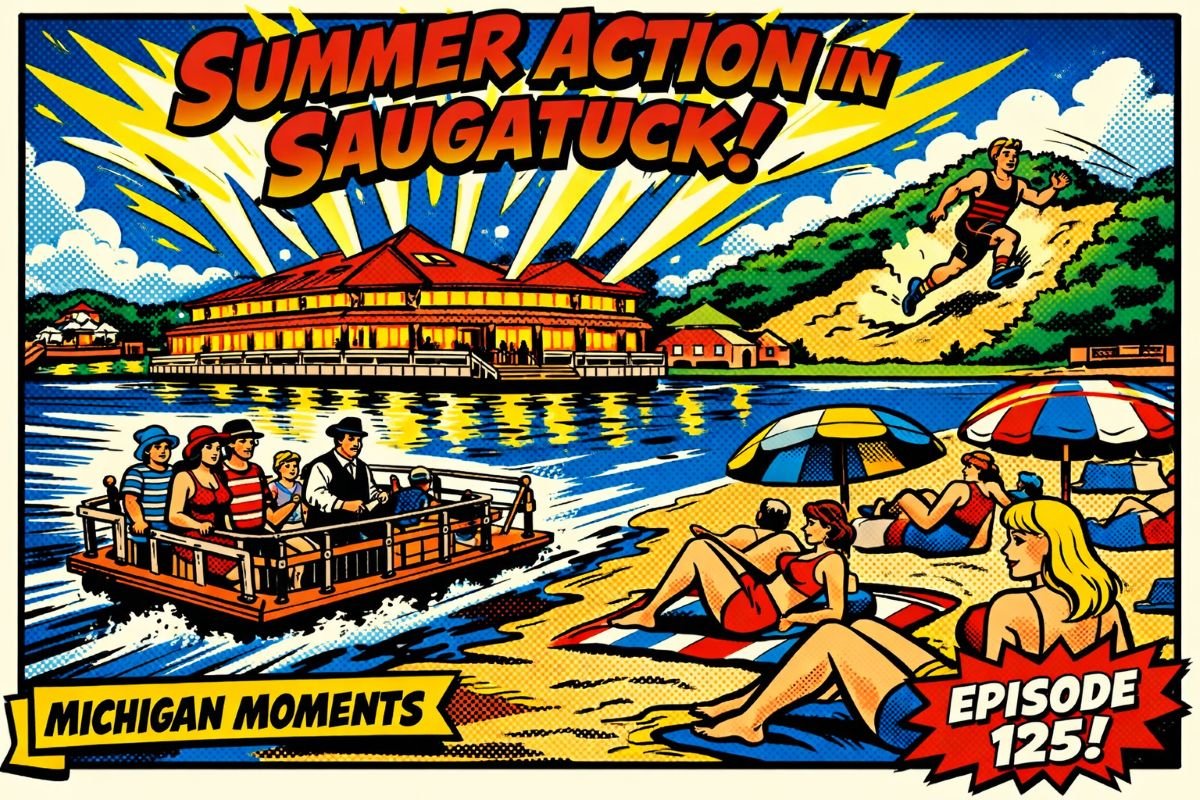
Summer History of Saugatuck Michigan – 5 Defining Years That Turned a Lumber Town Into a Summer Powerhouse
In the early 1900s, the history of Saugatuck, Michigan, took a new direction. The lumber era was over. The sawmills were quiet. But a new industry was taking hold — summer tourism. Visitors, many from Chicago, were finding their way to this small harbor town on the Kalamazoo River. Saugatuck was one of the many summer resort areas that helped establish Michigan as a tourism destination.
Table of Contents
Video – Saugatuck in the Early 1900s: Chicago’s Lakeshore Vacationland

Reaching the Lakeshore

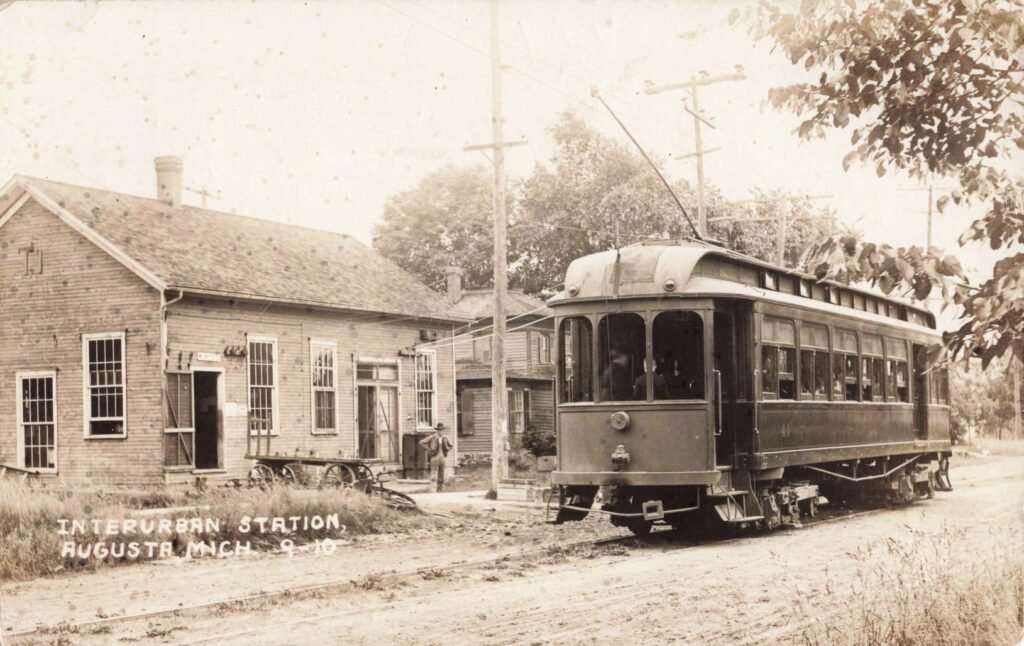
Travel itself was part of the appeal. Steamships left Chicago and crossed Lake Michigan to nearby Holland. From there, the electric interurban railway carried passengers to Saugatuck. Some took the train, then a carriage or ferry to reach the village. Arriving by water gave the first view of the sand dunes and Mt. Baldhead rising over the harbor.
The Big Pavilion

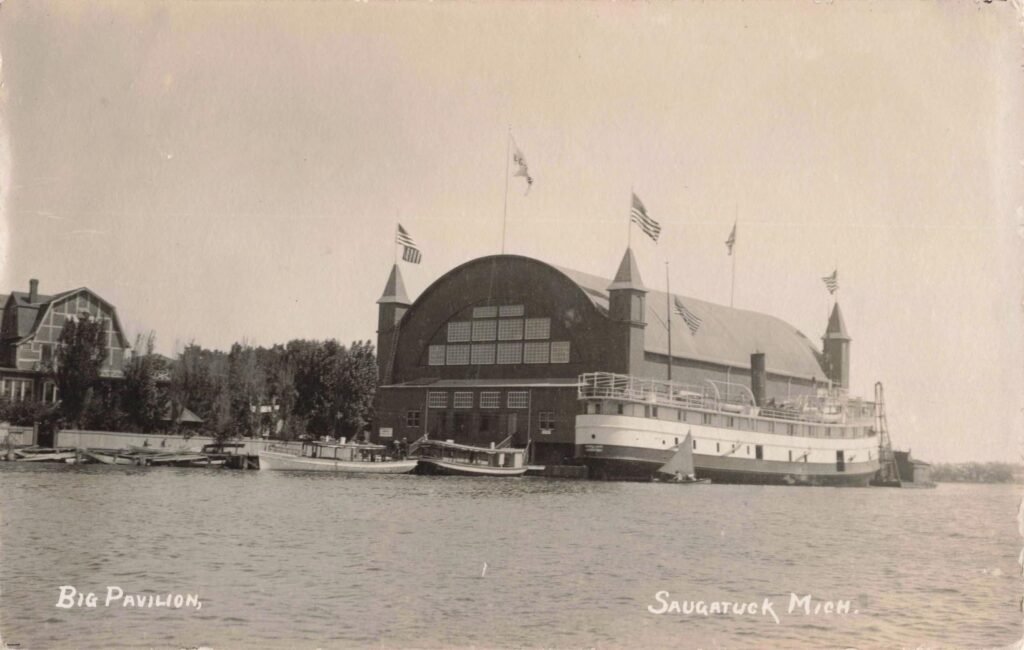
The Big Pavilion was the centerpiece of Saugatuck’s nightlife. Built in 1909, it stood tall on the riverfront, its arched roof and corner towers outlined in thousands of electric bulbs. Chicago orchestras played here all summer. Couples danced across its maple floor, while others watched from the balcony or enjoyed refreshments at The Dock below. The glow of the Pavilion lights reflected in the harbor was an unforgettable sight.
Beaches and Dunes

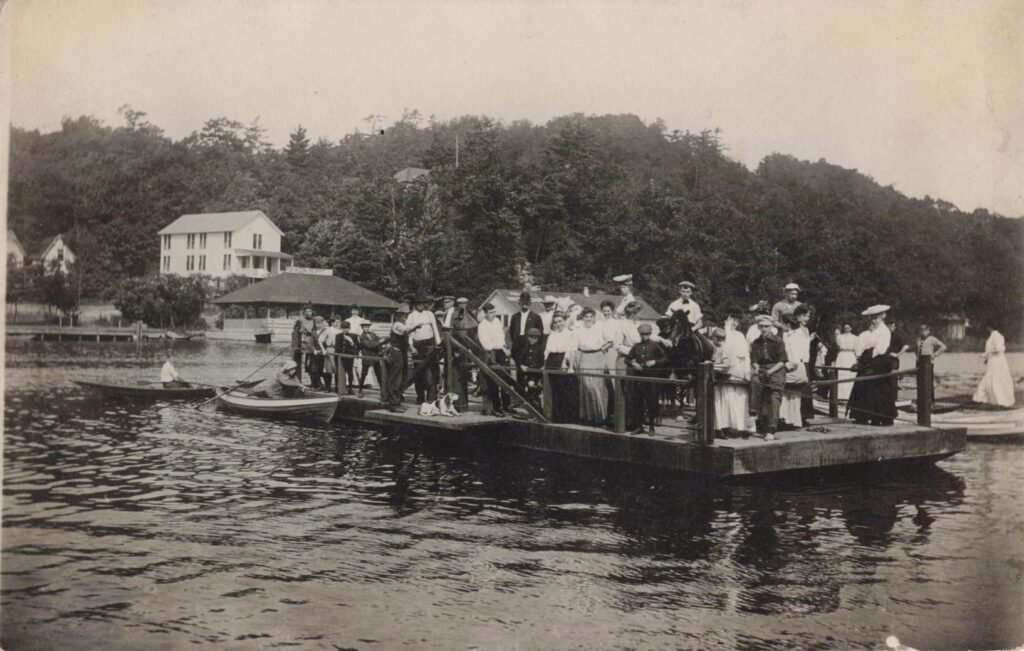
Daytime was for the lake. Visitors crossed the river by the small chain ferry, climbed Mt. Baldhead, and ran down its sandy slope to Oval Beach. The fine sand and cool lake water drew families to spend entire days at the shore. Before a road connected the town to the beach, this ferry ride was the main route to the lake.

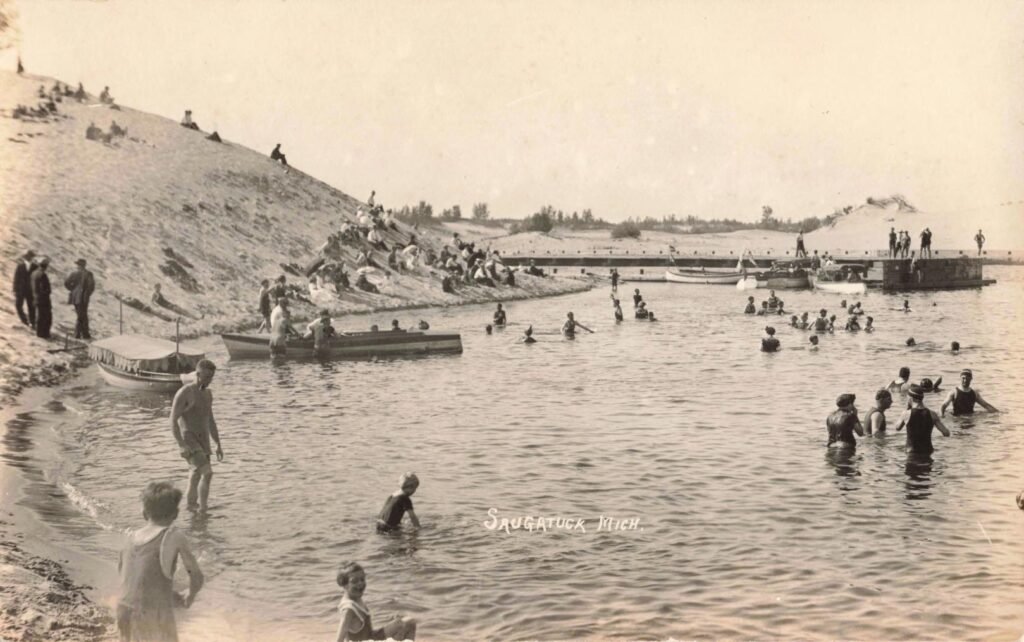
As the sun set, the beach transformed into a magical realm where bonfires flickered and laughter echoed in the air. Local vendors set up stalls selling ice cream and homemade treats, adding to the festive atmosphere. Families gathered to watch the fireworks display, illuminating the night sky with vibrant colors. The sound of waves crashing against the shore provided a calming backdrop to the lively scene. Each summer evening felt like a cherished memory in the making, drawing visitors back year after year.
Hotels and Boarding Houses

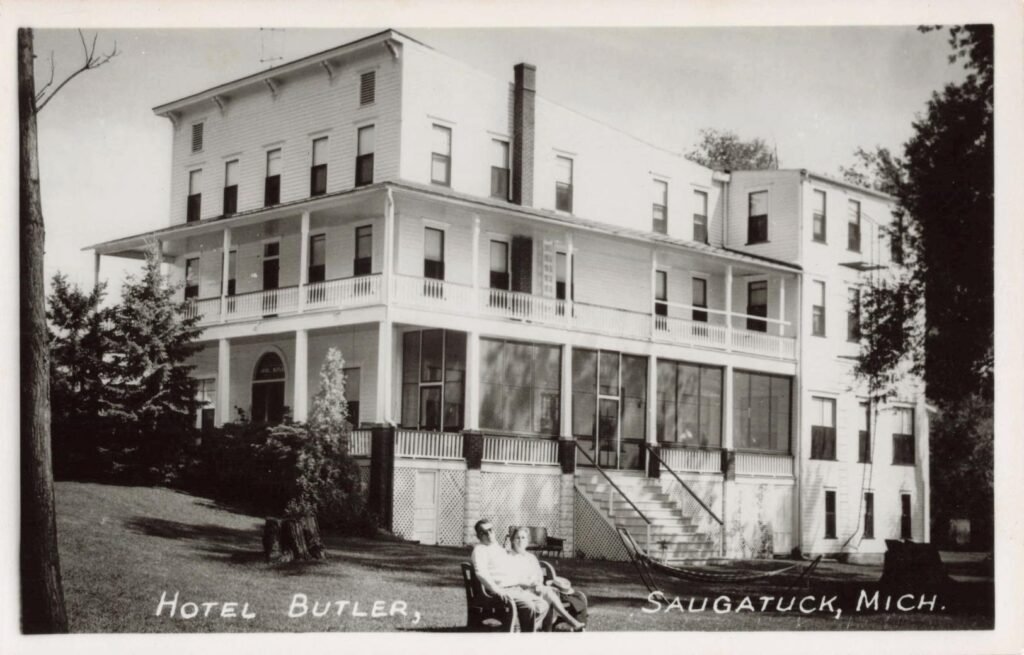
The Hotel Butler, once a grist mill, was converted into a grand inn. The Mt. Baldhead Hotel offered quiet rooms near the dunes. Boarding houses and cottages sprang up to serve the growing number of summer guests. Meals featured fresh-caught fish and local produce.
Art on the River

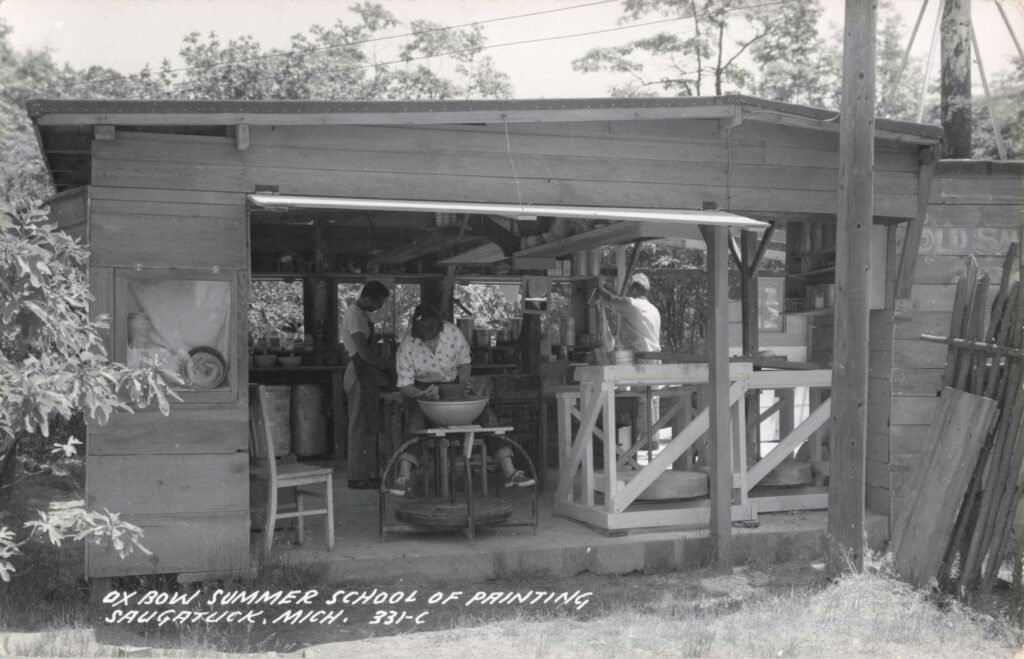
In 1910, the Ox-Bow Summer School of Painting brought a different crowd to Saugatuck. Founded by Chicago artists, the school set up along a quiet bend of the river. Students painted in the open air, capturing the dunes, the harbor, and the lake. Exhibits and social events added an artistic spirit to the town.
A Growing Summer Tradition

In the end, the relationship was symbiotic: Chicagoans infused Saugatuck with energy, investment, and new ideas, while Saugatuck offered Chicagoans an idyllic respite and a sense of community away from home. The early 1900s established this bond. “The ultimate leisure destination for generations of visitors,” reads one local history, “Saugatuck has been celebrating unconventional people and ideas for more than a century.”
Indeed, from the joyous strains of big-band music drifting over the water to the laughter of families on the Oval Beach dunes, one can trace much of Saugatuck’s unique character to those decades when the Windy City discovered a second home on the shores of Lake Michigan. The town’s infrastructure – its ferries, boardwalks, hotels, and dance halls – may have set the stage, but it was the people, locals and Chicago visitors together, who made the magic each summer. And that legacy of hospitality and charm continues to define Saugatuck to this day.
Works Cited for the History of Saugatuck Michigan
BeachWay Resort & Hotel. “History.” BeachWay Resort & Hotel, accessed 19 Dec. 2025.
City of Saugatuck. “History of Saugatuck City Hall.” City of Saugatuck, accessed 19 Dec. 2025.
City of Saugatuck. “Mt. Baldhead Park.” City of Saugatuck, accessed 19 Dec. 2025.
Durfee, E. “Saugatuck.” Working Waterfronts Case Study, Michigan Sea Grant, 2013, accessed 19 Dec. 2025.
Grand Valley State University. “Big Pavilion.” Digital Collections, Grand Valley State University Libraries, accessed 19 Dec. 2025.
Ox-Bow School of Art. “Then & Now.” Ox-Bow School of Art, accessed 19 Dec. 2025.
Saugatuck-Douglas History Center. “The Big Pavilion.” Saugatuck-Douglas History Center, accessed 19 Dec. 2025.
Saugatuck-Douglas History Center. “Dancing at Water’s Edge.” Saugatuck-Douglas History Center, accessed 19 Dec. 2025.
Saugatuck.com. “History & Legacy.” Saugatuck.com, Saugatuck-Douglas Area Convention & Visitors Bureau, accessed 19 Dec. 2025.
Saugatuck.com. “Mount Baldhead Park.” Saugatuck.com, Saugatuck-Douglas Area Convention & Visitors Bureau, accessed 19 Dec. 2025.
U.S. Geological Survey. “Great Lakes Science Center.” U.S. Geological Survey, accessed 19 Dec. 2025.

