


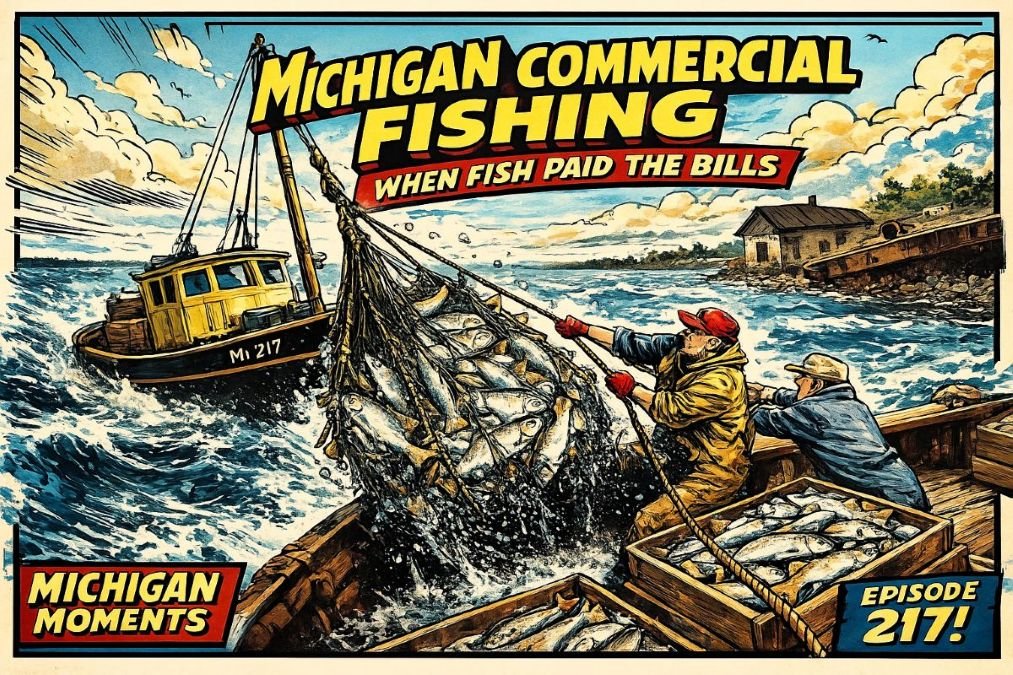
Michigan Commercial Fishing – 10 Powerful Towns That Built a Freshwater Empire, 1890–1940
For much of Michigan’s early shoreline history, fishing wasn’t a hobby. It was a hard, wet, dangerous way to make a living—and in some towns, it paid the bills for nearly everyone.

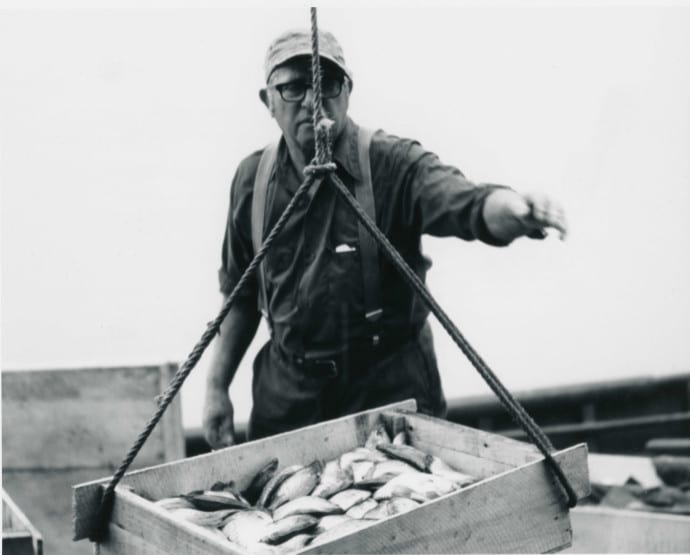
From the late 1800s through the first decades of the 20th century, Michigan commercial fishing shaped the Great Lakes coast as undoubtedly as lumber and mining. Small harbors turned into industrial ports. Rail sidings ran right to the docks. Icehouses, smoke shacks, net sheds, and fish tugs crowded the waterfront. Before tourism posters and marinas arrived, these towns smelled of fish, wet rope, and coal smoke.
Two places stand above the rest: Bay Port on Saginaw Bay and Leland’s Fishtown on Lake Michigan. One was an industrial powerhouse tied to national markets. The other was a tight-knit working harbor where fishing families lived and worked shoulder to shoulder. Together, they frame the story of Michigan’s Great Lakes fisheries at their peak.
Video History of Michigan Commercial Fishing

Bay Port – The Freshwater Fishing Capital of the Great Lakes

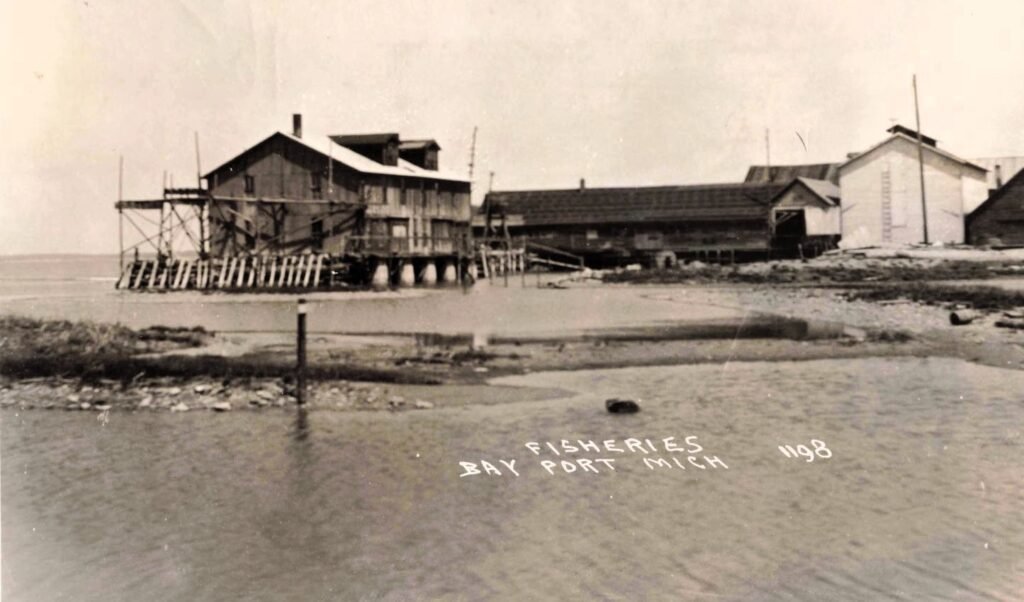
By the 1920s and 1930s, Bay Port had a reputation few Michigan towns could match. Contemporary accounts often described it as the largest freshwater commercial fishing port in the world. More than 30 boats worked out of its harbor during peak seasons, spreading across Saginaw Bay in long lines of trap nets and pound nets.
Fishing here wasn’t small-scale or sentimental. It was industrial.
The Gillingham Fish Company, founded in 1886, and the Bay Port Fish Company, founded in 1895, dominated the docks. Their crews landed yellow perch by the ton, along with walleye, whitefish, and lake herring. Carp—often overlooked today—were shipped in bulk to ethnic markets that prized them.

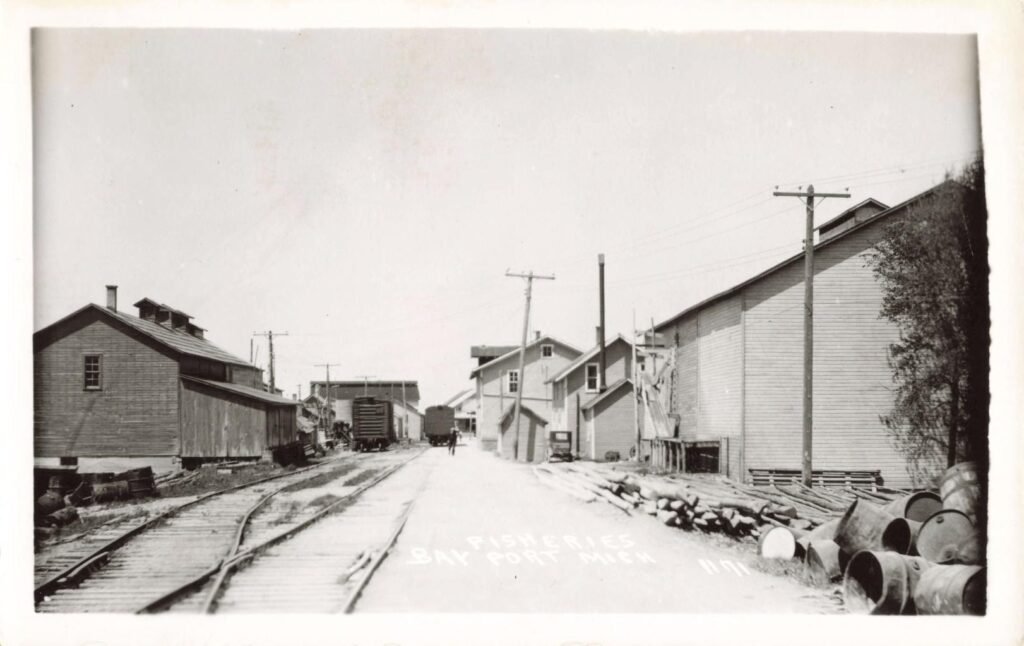
Rail access made Bay Port a national supplier. Fish packed in ice moved quickly to Detroit, Chicago, New York, and other eastern cities. Timing mattered. Boats unloaded at dawn. Fish were sorted, iced, and on rail cars before noon. Miss the train, and a day’s work could be spoiled.
Life on the boats was relentless. Crews worked overnight, hauling heavy nets by hand in all weather. Storms could rise fast on Saginaw Bay. Pay was steady but hard-earned. Still, for decades, fishing anchored Bay Port’s economy and identity.
Leland’s Fishtown: A Working Village on the Water


By the late 1800s, fishing families—many of them Swedish and Norwegian immigrants—had settled along the narrow channel at the mouth of the Carp River. They built wooden shanties directly on the water. Boats are tied up outside the door. Nets hung from beams overhead.
The best-known operation was Carlson’s Fishery, a family enterprise that became multigenerational. From this small harbor, crews ran wooden tugs onto Lake Michigan to set gill nets for lake trout and lake whitefish, later adding chubs and perch.

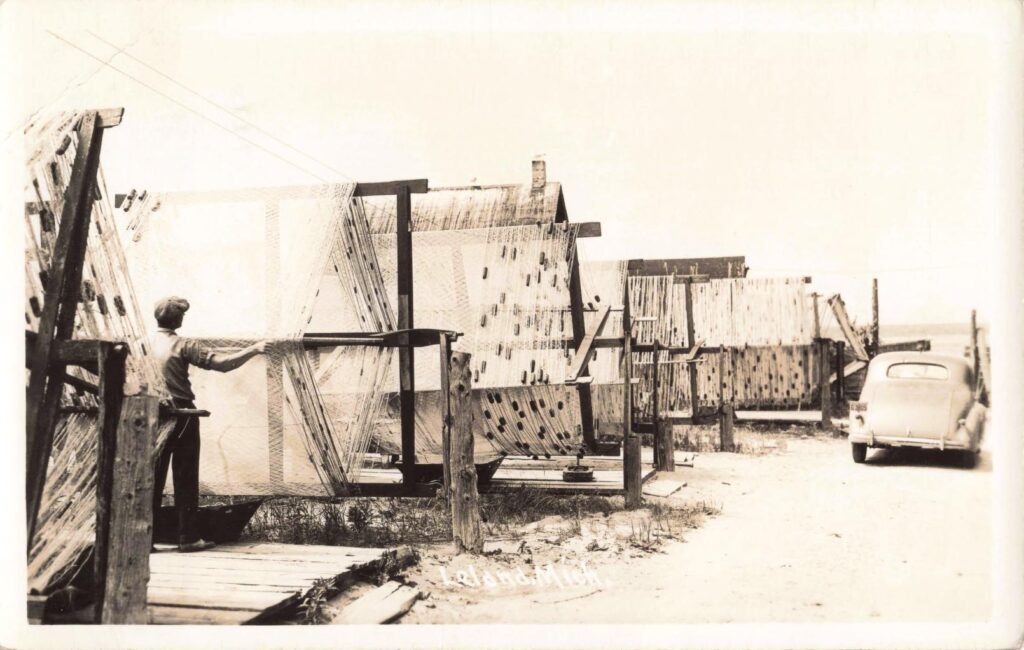
Fishing here was personal. Crews were small. Everyone pitched in. Men ran the boats. Women and children mended nets, packed fish, and tended smokehouses. Fish were sold right off the dock or hauled to nearby towns and resorts.
Unlike many ports, Fishtown never fully disappeared. Its survival gives modern visitors a rare look at how a Great Lakes fishing village actually worked—not as a museum display, but as a living place shaped by daily labor.
Alpena – Thunder Bay’s Whitefish Town


Alpena’s first major industry wasn’t cement or shipping—it was fish.
On Thunder Bay, families like the Cross family built fisheries that lasted generations. Their boats targeted lake whitefish and lake trout, leaving harbor around midnight and returning late morning after 10- or 12-hour shifts.
Crews worked cotton gill nets that had to be dried and repaired constantly. Nylon nets wouldn’t arrive until later. Fish were dressed on board, iced at the dock, and shipped south by rail to Michigan and Midwest markets.
Fishing wages were modest, but steady. For many families, it beat factory work and kept them tied to the lake.
Manistee – Barrels, Boats, and Early Industry

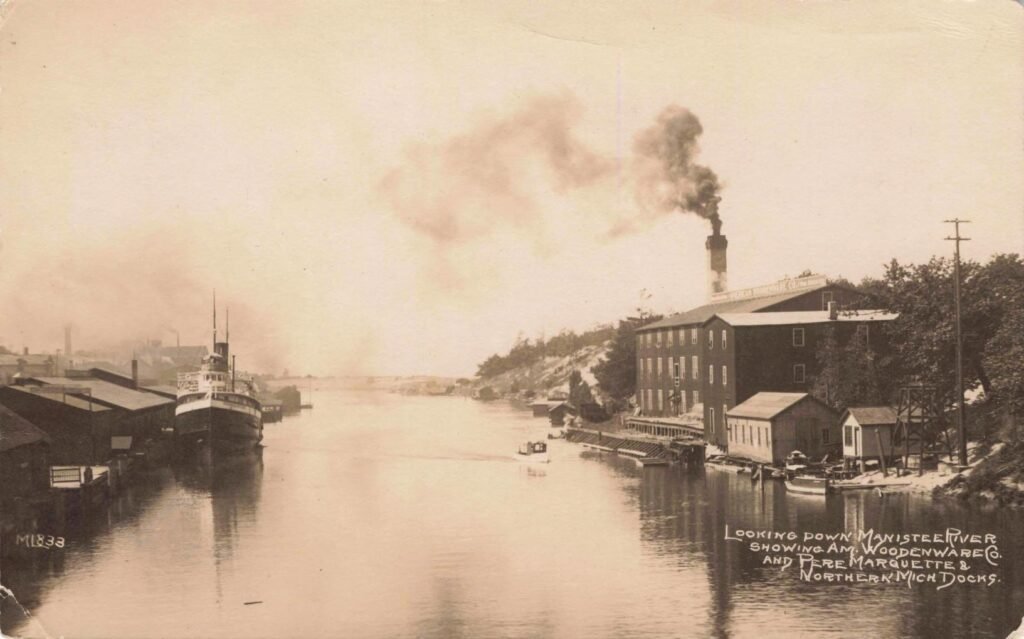
Manistee’s fishing roots reach back to the 1830s. By the mid-1800s, schooners loaded with salted lake trout and whitefish were leaving its river mouth in wooden barrels.
Fishing and lumber went hand in hand. Boatbuilders, coopers, and net makers all found work. By the 1920s, multiple family firms operated tugs out of Manistee, supplying markets in Milwaukee, Chicago, and beyond.
Fishing was seasonal, and many men logged or worked mills in winter. Still, for decades, fish money helped build the town.
South Haven: Rail Lines and Risk


South Haven’s fleet peaked between 1920 and 1940. Several steam and motorized tugs worked Lake Michigan for whitefish, perch, and chubs, with Jensen’s Fishery emerging as the dominant local firm.
Rail lines allowed South Haven fish to reach Chicago and eastern cities quickly. But the lake demanded payment. Storms claimed boats and lives, including a deadly November blow in 1940 that underscored the risks fishermen accepted every trip.
Grand Haven: Family Fleets

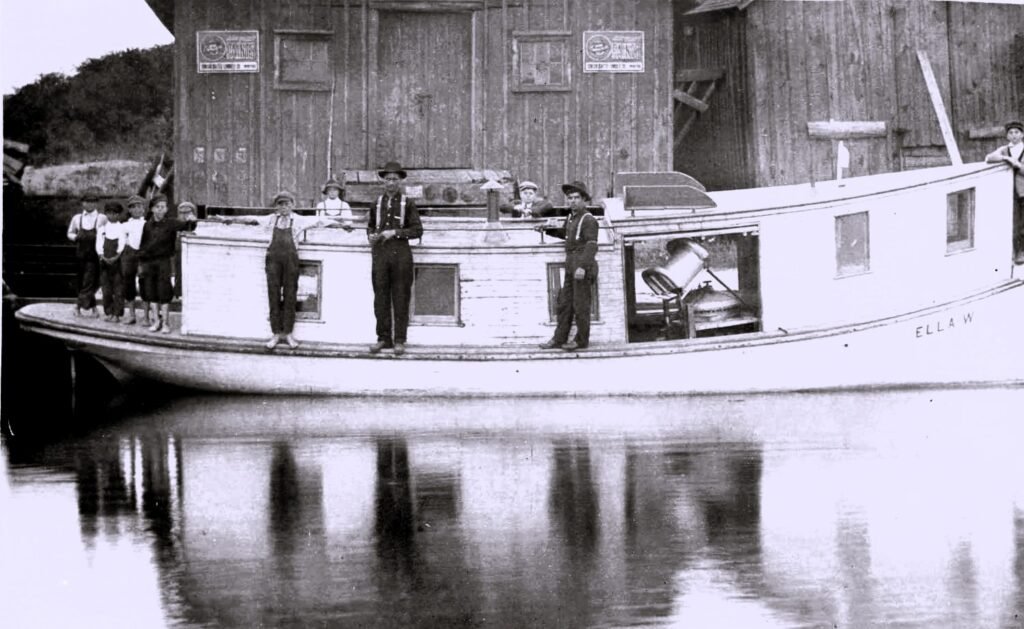
In Grand Haven, fishing often stayed within families. Dutch-American crews operated multiple boats under shared ownership, landing whitefish, freshwater cod (“lawyer”), perch, and trout.
Fish moved through West Michigan wholesalers and into Chicago and Detroit markets. While not as large as Bay Port, Grand Haven supported steady fleets and waterfront fish houses well into the 20th century.
Cheboygan and the Les Cheneaux Islands

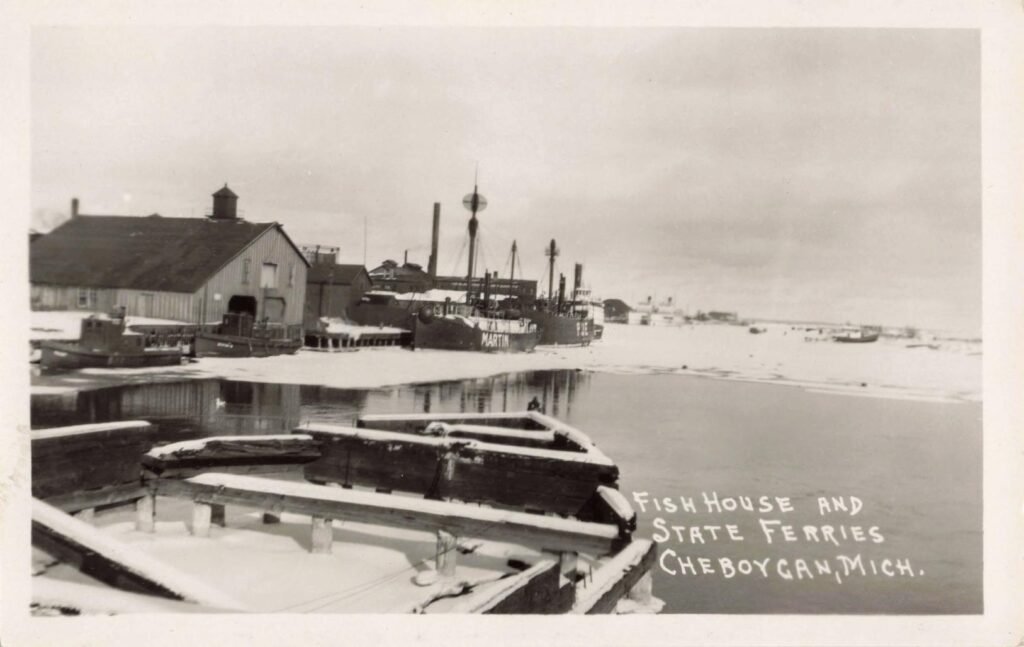
Northern Lake Huron fishing revolved around island camps and transport boats. The Hamel family ran vessels like the Joker and Ferro, hauling catches of whitefish and lake trout from island nets to Cheboygan docks.
Fishing here blended isolation and cooperation. Crews lived part of the year on the islands, then relied on transport tugs to connect them to markets and rail.
Port Sanilac: A Saginaw Bay Outpost

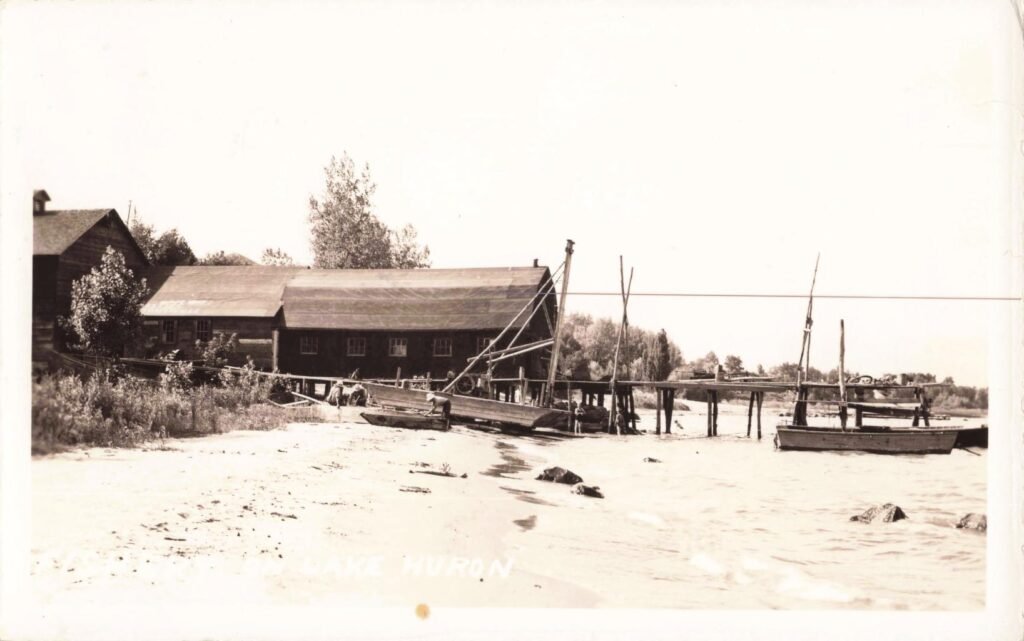
South of Bay Port, Port Sanilac supported a busy trap-net fishery focused on whitefish and perch. Smaller operations dominated, but the volume was enough to supply statewide processors.
Fishing here rose and fell with Saginaw Bay stocks, tying the town’s fortunes directly to the water.
Detroit and the River Fishery

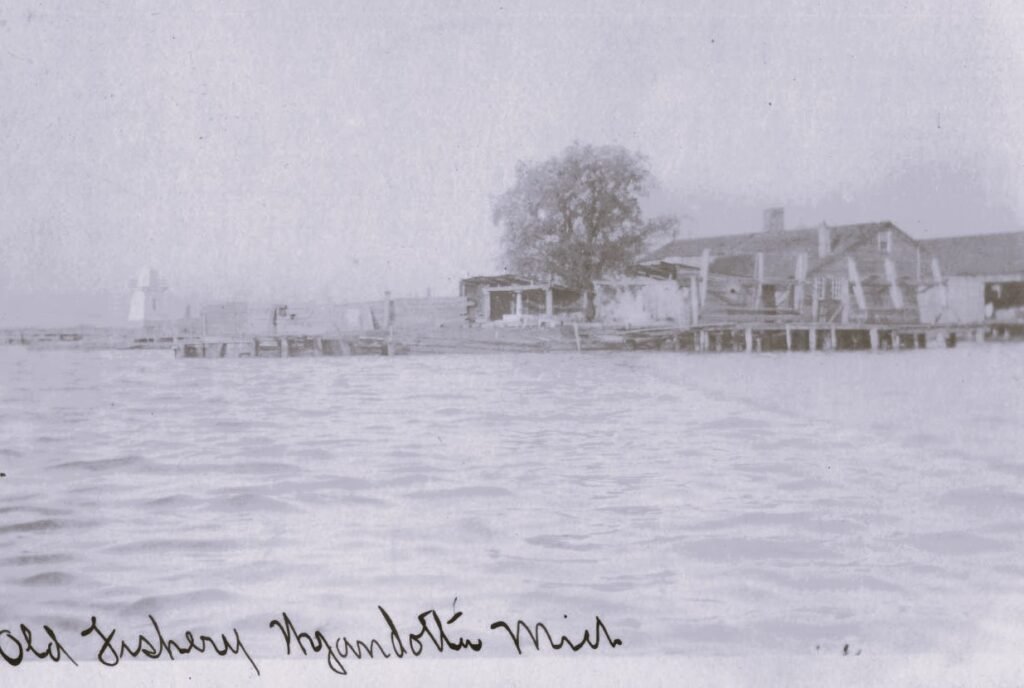
Before pollution and regulation curtailed it, the Detroit River supported heavy fishing. Whitefish, trout, perch, and smelt were taken in large numbers and sold locally or processed for broader markets.
By the early 1900s, overharvest and industrial growth had already begun to shrink the fishery. Detroit’s story is a reminder of how fast abundance could vanish.
Grand Traverse Bay Ports

Around Frankfort and Traverse City, Finnish and local families formed cooperatives to fish Grand Traverse Bay. Whitefish and trout dominated the catch, feeding regional markets and resort demand.


Cooperation helped stabilize prices and spread risk—an early answer to the lake’s unpredictability.
What They Caught—and Who Bought It


Across Michigan, the commercial catch looked similar:
- Core species: Lake whitefish, lake trout (before sea lamprey), yellow perch, lake herring, chubs
- Handling: Fish were dressed immediately, iced or salted, and shipped fast
- Markets: Primarily Midwest cities—Detroit, Chicago, Milwaukee—with eastern shipments from ports like Bay Port and South Haven
Fishing paid modest wages, demanded long hours, and carried real danger. Crews worked nights, faced sudden storms, and relied on gear that failed often. Yet for decades, these towns held together because the lake provided.
The End of an Era
By the late 1930s and 1940s, the system for Michigan Commercial Fishing began to crack. Sea lamprey, tighter regulations, pollution, and shifting consumer tastes reduced catches. Many ports turned to tourism or recreation. Boats were sold. Shanties disappeared.
Bay Port endured by scale and adaptation, and Leland endured by continuity and place. Together, they tell the story of a time when Michigan’s lakes fed cities, paid mortgages, and shaped towns that still line the shore—quiet reminders of when fish ruled the waterfront.
Works Cited for Michigan Commercial Fishing
Alpena County George N. Fletcher Public Library. Commercial Fishing on Thunder Bay. Alpena County Library, accessed 2025.
Bay Port Fish Company. Company History. Bay Port Fish Co., accessed 2025.
Great Lakes Fishery Commission. History of Great Lakes Commercial Fisheries. GLFC, accessed 2025.
Leelanau Historical Society. Fishtown: Leland’s Commercial Fishing Village. Leelanau County, accessed 2025.
Michigan Department of Natural Resources. A History of Michigan Fisheries. State of Michigan, accessed 2025.
Michigan Maritime Museum. Great Lakes Commercial Fishing Traditions. South Haven, Michigan, accessed 2025.
University of Michigan Bentley Historical Library. Great Lakes Maritime History. University of Michigan, accessed 2025.

