


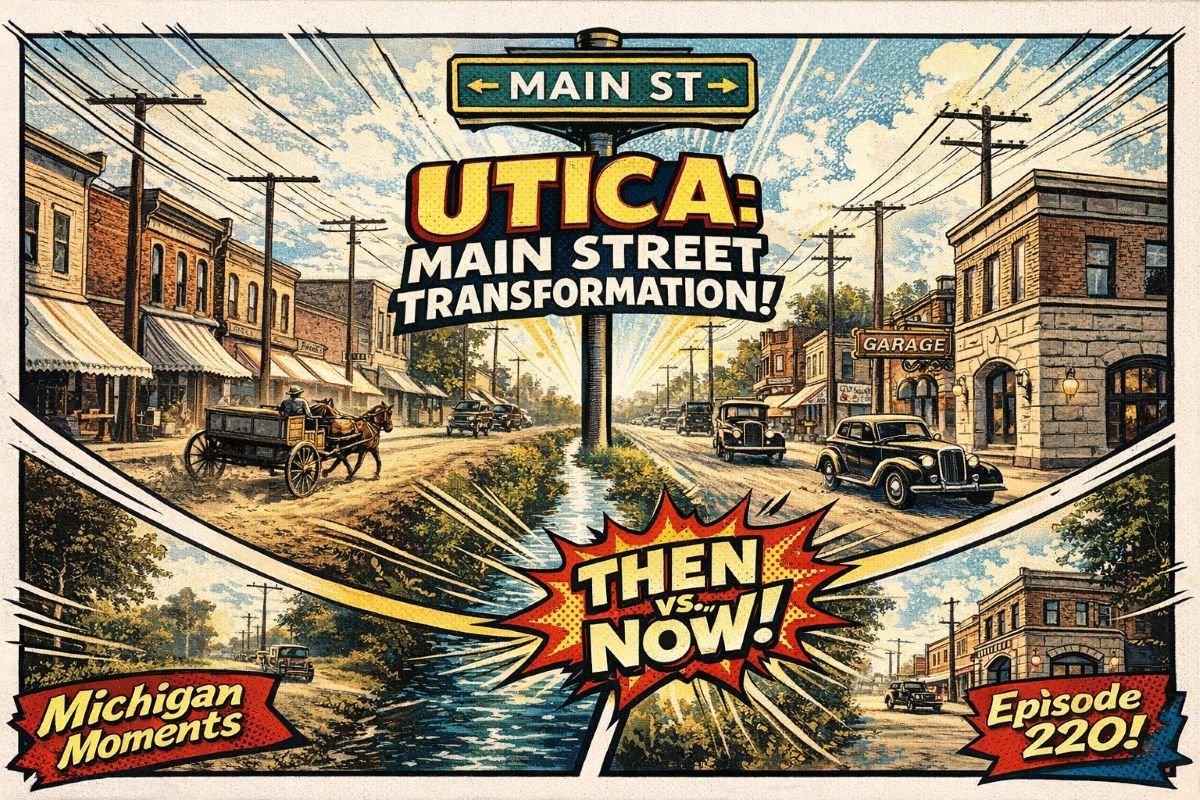
The Amazing History of Utica, Michigan – Main Street Years (1890–1940)
Utica did not become “modern” overnight. The History of Utica, Michigan between 1890 and 1940 is a slow handoff—from water routes and wagons to rails, wires, and cars. It happened in public, on Main Street, where business, gossip, and survival shared the same sidewalk.
Video – History of Utica, Michigan Photos That Capture a Town’s Change

A town shaped by a plan that didn’t work

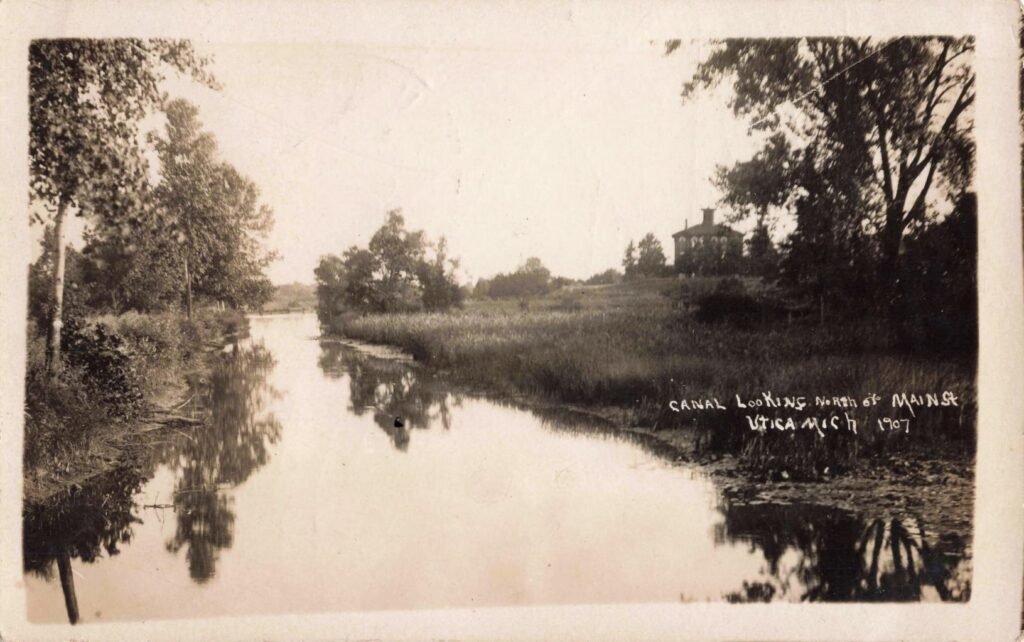
The Clinton–Kalamazoo Canal was supposed to link Michigan across the state. Construction began in the late 1830s and followed the Clinton River route toward Utica before the project collapsed in the 1840s.
Utica still gained from that failure. Even though the canal never became the shipping route its planners promised, the corridor helped lock Utica into a “connector” role—one that later transportation and utility networks could build around. In the History of Utica, Michigan, this is one of the best examples of how a town can benefit from an idea that fell short.
Main Street in 1907: wagons below, wires above

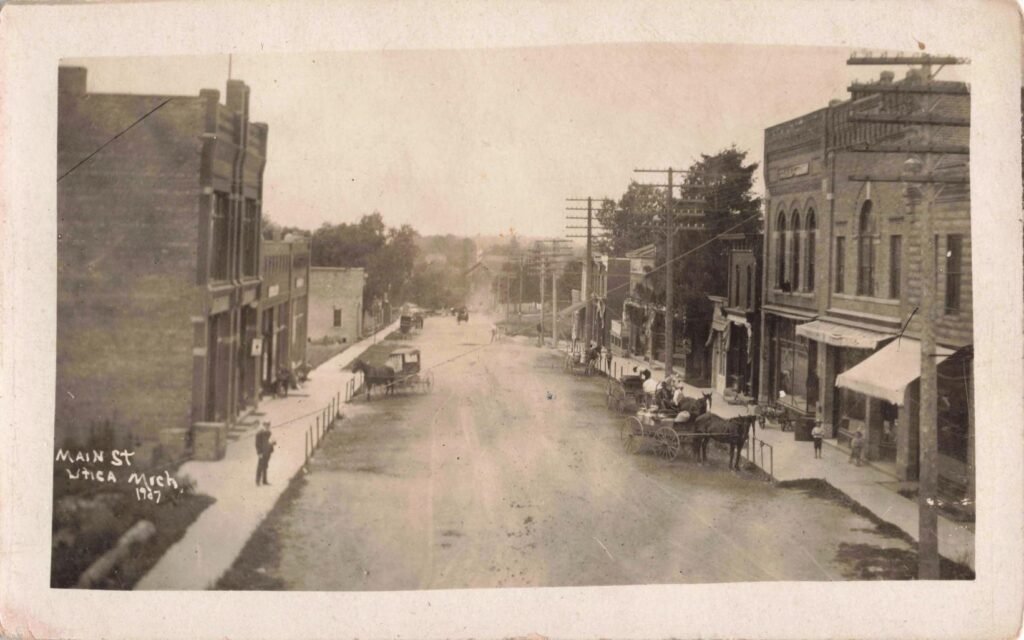
In 1907, Utica’s business district looks compact and practical. The street is unpaved. The curb is for wagons and deliveries. People stand close to storefronts because the town runs on foot traffic and quick errands.
But look up. The poles and lines are everywhere. That web hints at a town that is rapidly adopting electric power and telephone service in the early 1900s—new systems layered right onto an older street plan.
Fire, rebuilding, and the brick look of “starting over”

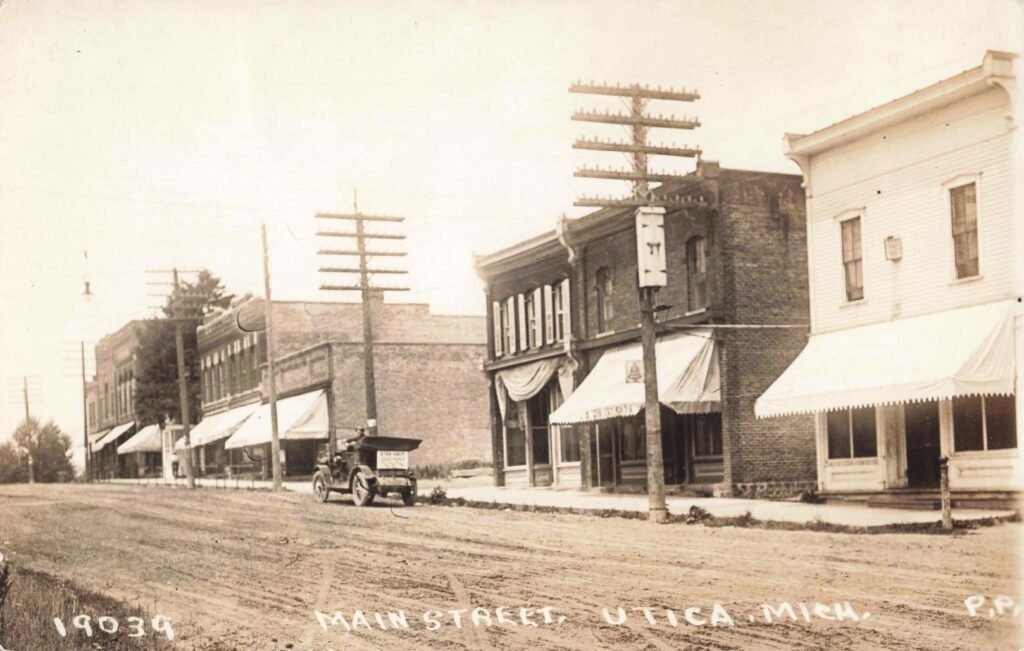
Utica’s early 1900s downtown story includes major fires that damaged the business district and forced rebuilding. In many Michigan towns, this became a turning point: wood blocks gave way to brick, and storefronts took on a more “modern” look—stronger materials, bigger windows, and a cleaner street face.
That matters because rebuilding often changed more than architecture. It changed insurance practices, business ownership patterns, and where money flowed next. The History of Utica, Michigan isn’t only about growth. It’s also about recovery and reinvention after sudden loss.
The depot and the work you don’t see on postcards

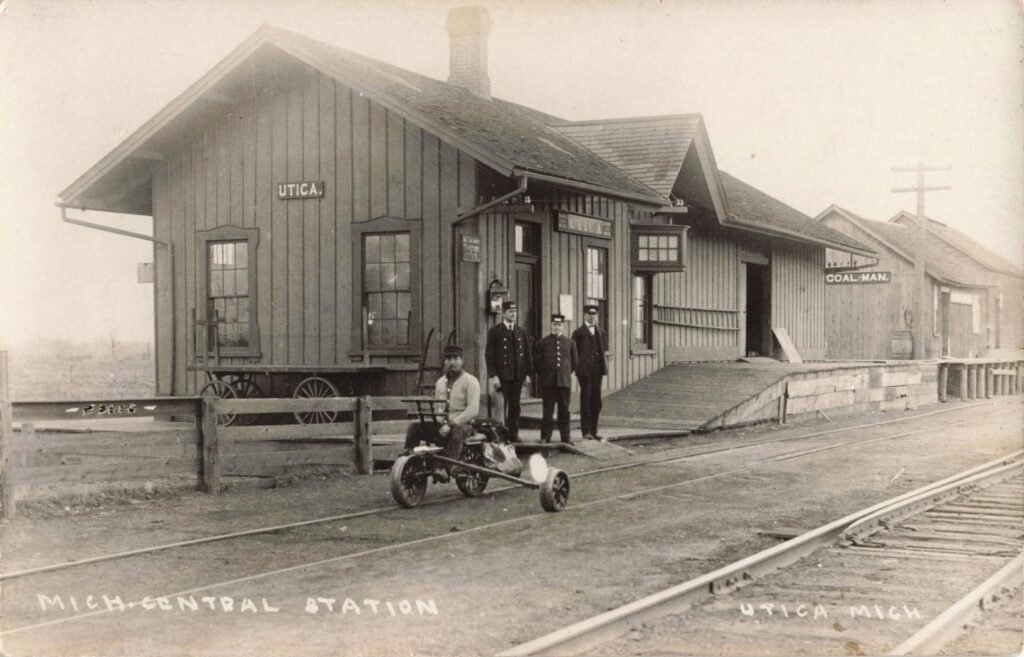
The Michigan Central depot is not just a travel scene. It’s a supply scene. Coal service signals fuel for home heating, small industry, and the engines that moved goods.
This is the quiet foundation of small-town life in the 1900s and 1910s: shipments of necessities, regular schedules, and the constant churn of freight.
Dairy business: organized, scheduled, and cooperative

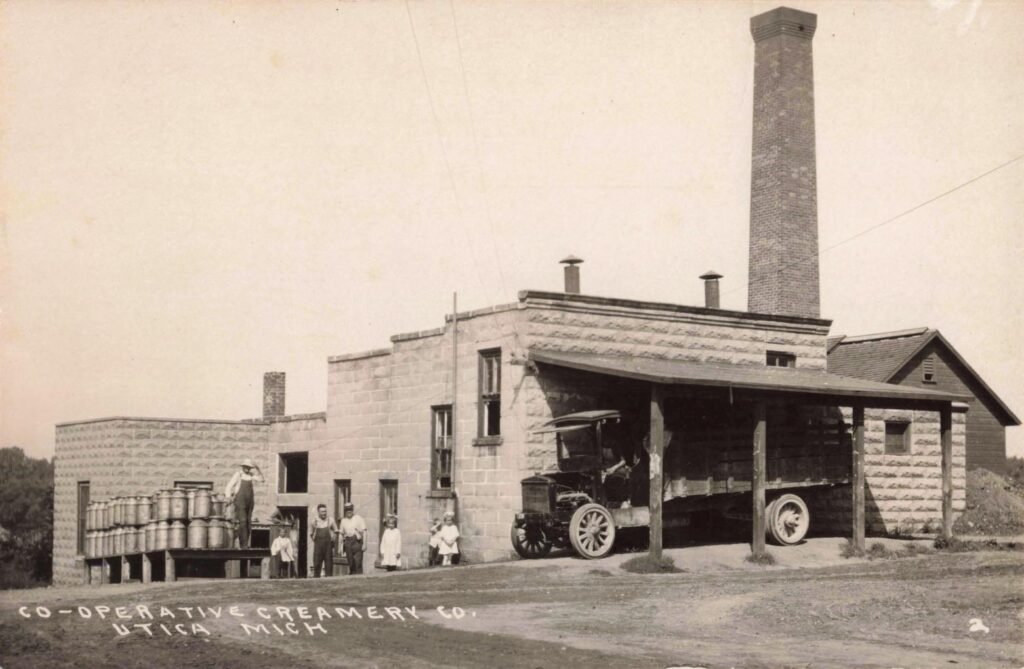
If you want a single image that shows Utica as a working town, it’s the creamery. Milk cans in uniform rows are not decoration. They are a system. They suggest farmers delivering on time, product being handled at scale, and a cooperative structure meant to protect members from market swings.
This is also a reminder that “small town” does not mean “small ambition.” In the History of Utica, Michigan, the creamery represents a community trying to compete with larger markets through organization.
Money, trust, and Main Street institutions

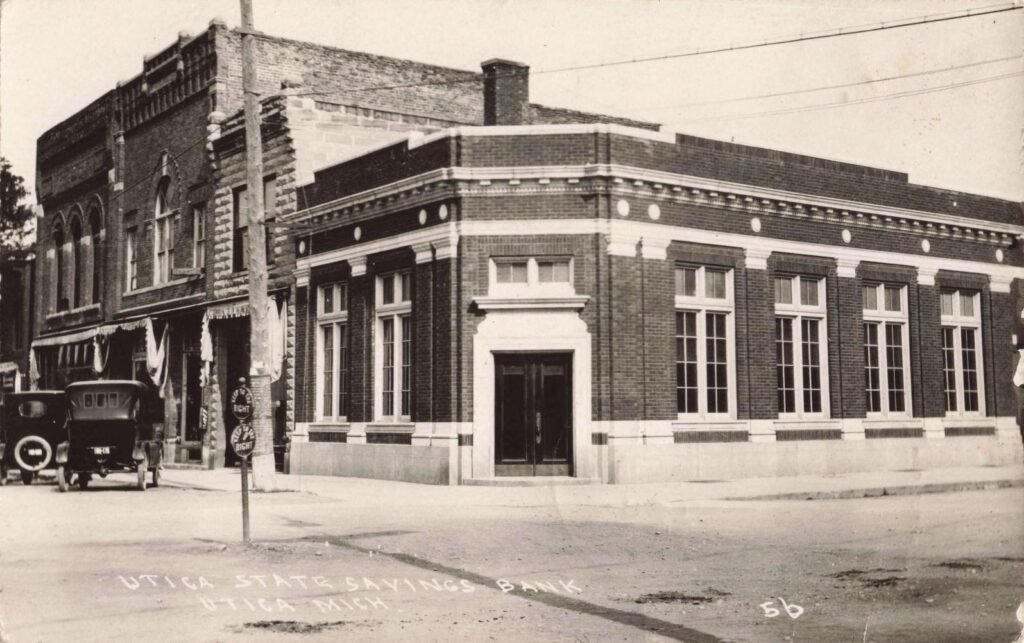
A bank on Main Street is both practical and symbolic. It handles payroll, loans, and savings—but it also sells confidence. The building’s design does part of the work: it looks solid because it must feel solid to depositors.
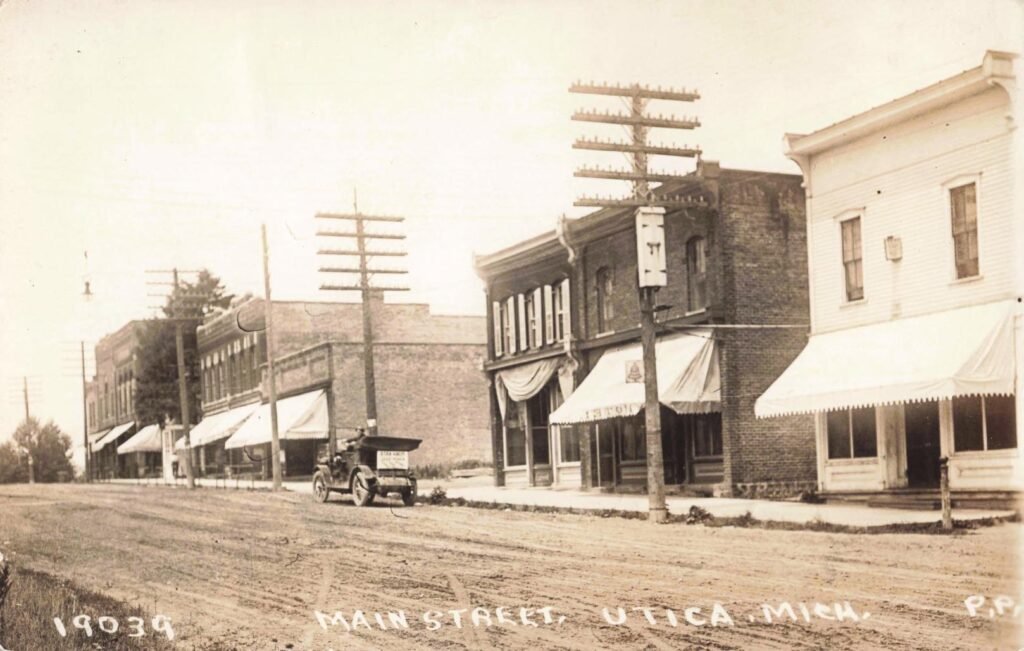
Together, these images show a town where commerce is personal. People likely knew the banker. They likely knew the storekeeper. And they probably knew who was behind on payments long before any ledger said so.
Civic life in halls, churches, and schools
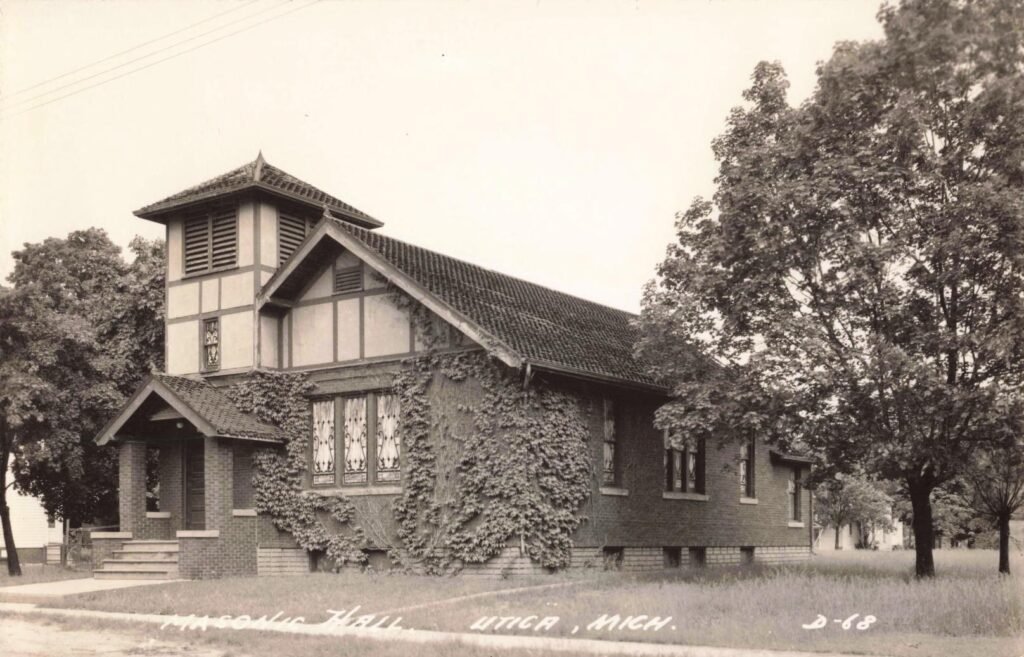
Fraternal groups were a major part of early 20th-century civic life. Halls hosted meetings, charity work, and community events. They also shaped informal power—who knew whom, and who could get something done.
Faith institutions were part of that civic structure, too. A local parish history notes a school opening in 1904 and a church fire in 1914 followed by rebuilding—another example of institutions persisting through disruption.

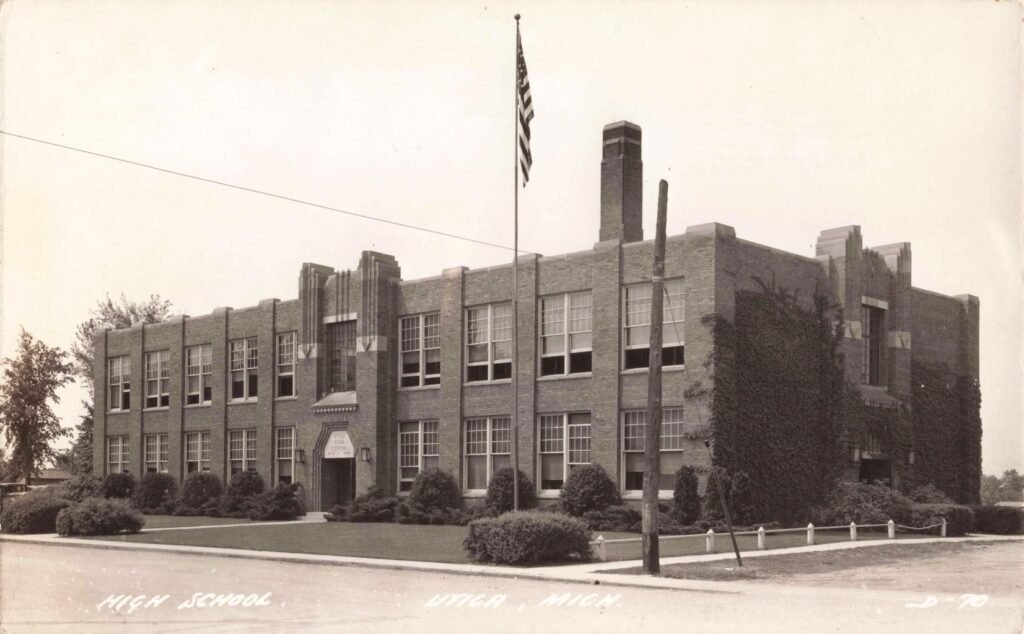
By the 1930s, a substantial public high school signals something important: Utica was investing in permanence and public services. City planning documents also describe expansion of municipal infrastructure in the 1920s and 1930s—waterworks, gas service, sewers, and improved streets—steps that mark a town scaling up.
That’s a core theme in the History of Utica, Michigan: the shift from a small trading place to a community that expects modern services and plans accordingly.
The car age on the curb
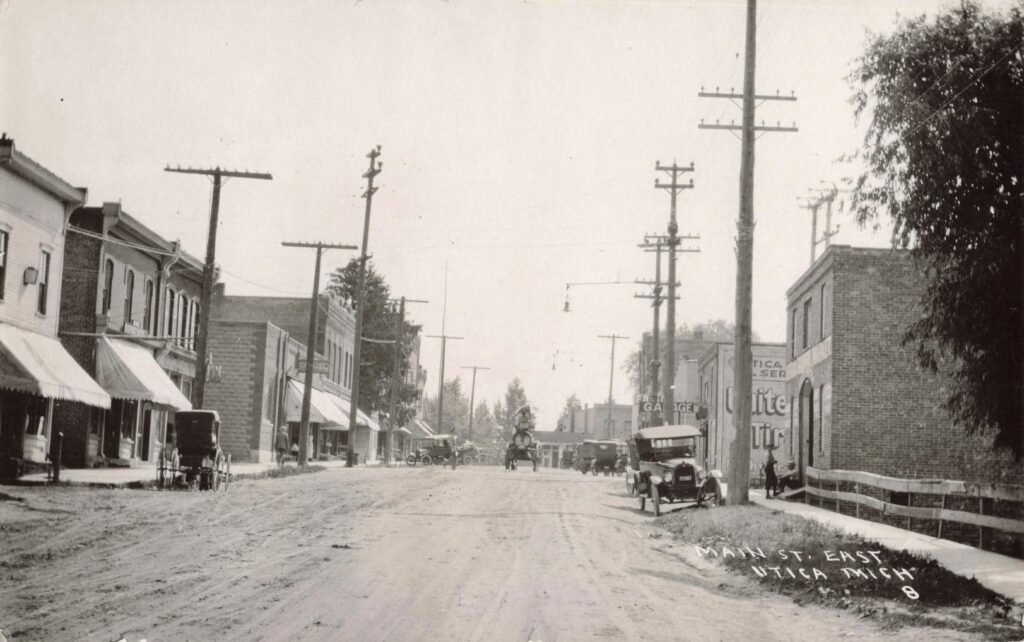
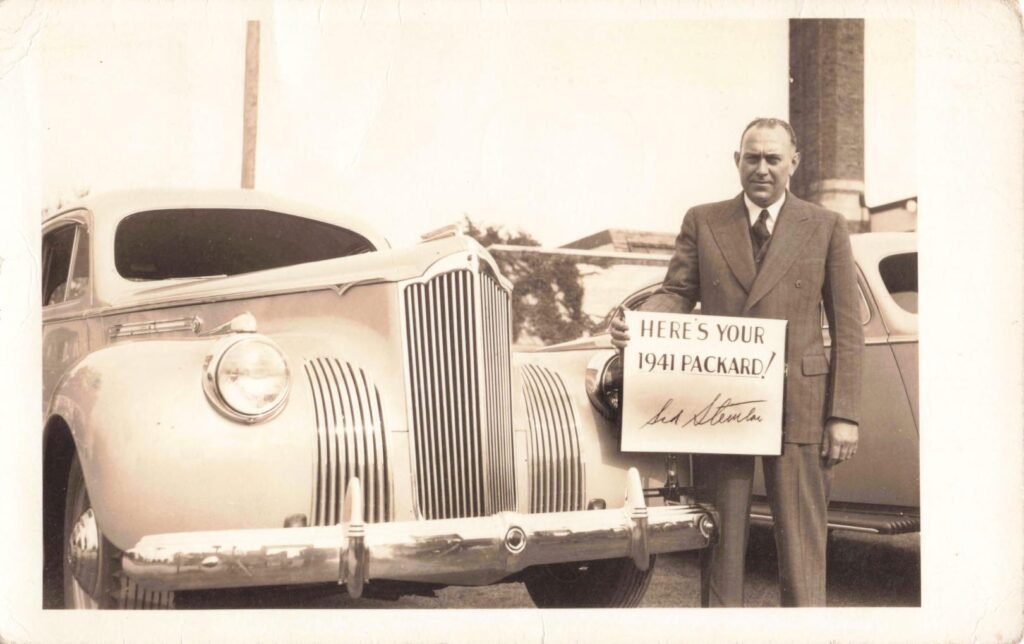
By the 1920s and into the 1930s, Main Street is no longer built around horses. Cars change everything—traffic, noise, business types, and the speed of daily life. Garages and service shops become central.

Final Thought about the History of Utica, Michigan
Utica’s story from 1890 to 1940 is not a single “before-and-after” moment. It’s a sequence of small choices: rebuild after fire, invest in institutions, organize farm production, modernize streets, and adapt to new machines. In the end, the town did what many Michigan towns had to do—keep its identity while changing its tools.
Works Cited For The History of Utica, Michigan
City of Utica, Michigan. History. Accessed 18 Dec. 2025.
City of Utica, Michigan. City of Utica Master Plan Update (2024). Accessed 18 Dec. 2025.
City of Utica, Michigan. City of Utica Master Plan (2017). Accessed 18 Dec. 2025.
Mount Clemens Public Library. The Clinton-Kalamazoo Canal. “Local History Sketches,” 2008. Accessed 18 Dec. 2025.
Michigan Railroads. Utica, MI (Station Information). Accessed 18 Dec. 2025.
Sterling Heights Historical Commission. Upton House Museum. Accessed 18 Dec. 2025.
Shelby Township Historical Committee. Historical Photos. Accessed 18 Dec. 2025.
Clio. Historic Utica (Marker Entry). Accessed 18 Dec. 2025.
Newspapers.com. “Utica’s Bad Fires” (Detroit Free Press archive). Accessed 18 Dec. 2025.
Saint Lawrence Catholic Church (Utica, Michigan). Our History. Accessed 18 Dec. 2025.

