


The History of New Buffalo, Michigan: From Rail Hub to Lakeshore Retreat – Video
The history of New Buffalo, Michigan, is rooted in both accident and ambition. In 1834, a schooner ran aground during a violent storm on Lake Michigan. Its captain, Wessel Whittaker, saw potential in the natural harbor near the mouth of the Galien River. Within a year, Whittaker returned to stake a claim. He named the town after his native Buffalo, New York.
Video – New Buffalo History: 5 Rare Photos That Bring a Forgotten Era to Life

Foundational History (19th Century)

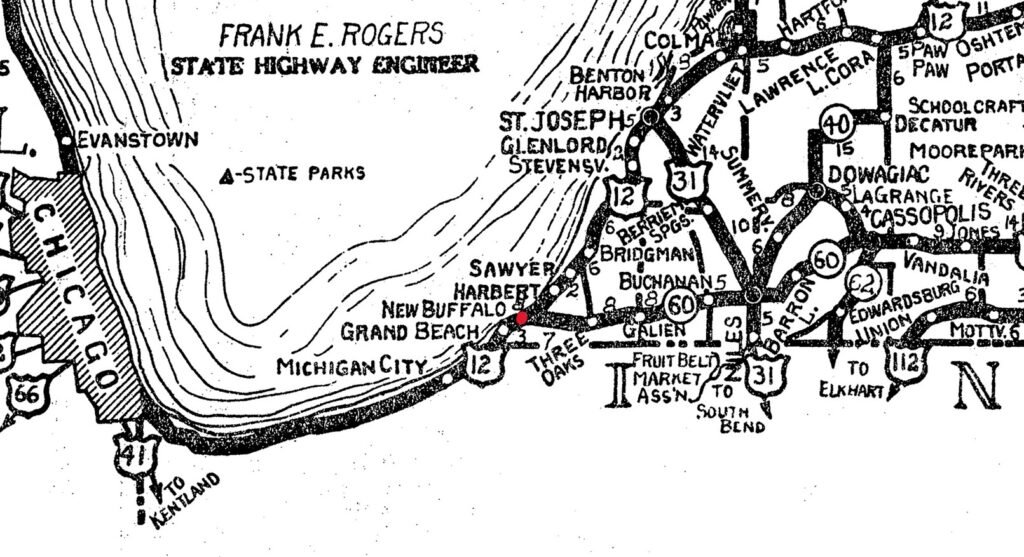
Before its founding as a town, the New Buffalo area was home to Indigenous peoples and early explorers. Native tribes like the Miami, Iroquois, and Potawatomi once contested this region for its rich fisheries and game, attracting French traders and missionaries in the 17th and 18th centuries. By the 1830s, Michigan Territory was opening to American settlement, setting the stage for New Buffalo’s birth.
In October 1834, a violent storm on Lake Michigan set New Buffalo’s founding in motion. Captain Wessel Whittaker, a ship captain from Buffalo, New York, ran his schooner Post Boy aground during the gale. Though Whittaker and his crew survived the wreck near the Galien River’s mouth, the incident proved fateful. Struck by the area’s natural harbor – formed where Lake Michigan met the Galien River and a body known as Potawatomi Lake – Whittaker quickly filed a land claim and laid out plans for a new settlement, which he named “New Buffalo” after his hometown. By spring 1835, Whittaker returned with friends and family to begin building the town, erecting sawmills and rough-hewn log structures to establish a permanent community. The first makeshift cabin (about 15 by 14 feet) housed Whittaker and three other settlers, who slept on pine boughs spread across the floor – a humble start for the budding village.
New Buffalo Predates the State

New Buffalo was formalized just two years later. On March 28, 1836 – shortly before Michigan became a state – the Village of New Buffalo was officially formed, with Alonzo Bennett elected as its first village president. The late 1830s brought an initial land boom as speculators and settlers flowed in, but the prosperity was short-lived. A severe winter in 1841 and the economic Panic of 1837 hit the young town hard, and that same period saw the death of Captain Whittaker. Many early settlers left during the downturn, though a faithful few remained to keep the village alive until better days arrived.
New Buffalo Was A Transportation Hub

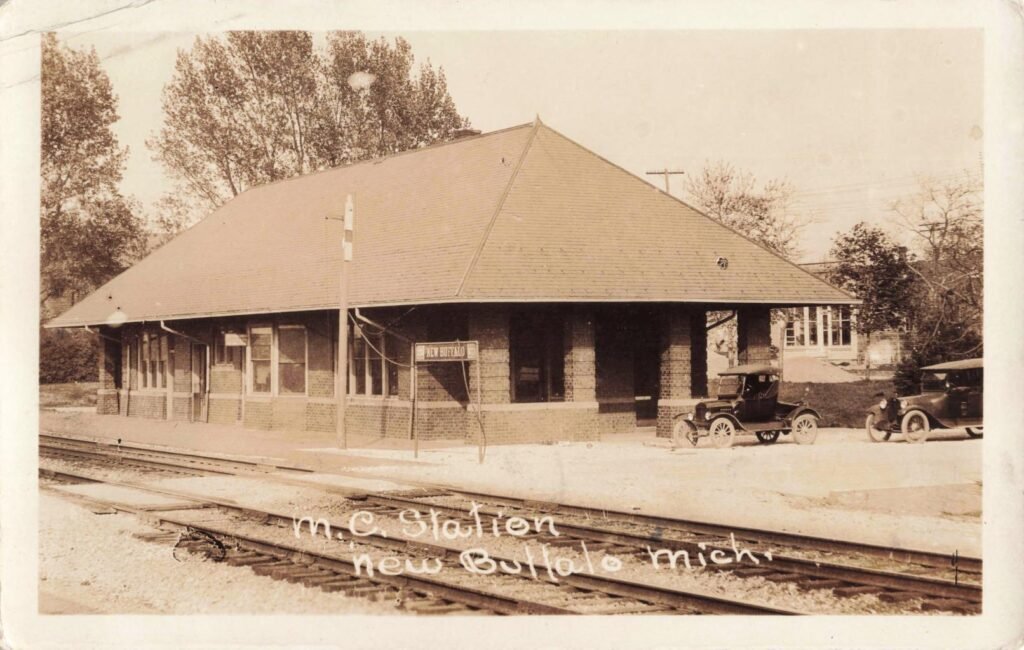
One of the most pivotal 19th-century events for New Buffalo was the coming of the railroad. In 1849, the Michigan Central Railroad reached New Buffalo, briefly making the town the terminus of the line from Detroit. For a few years, any traveler heading west toward Chicago had to stop in New Buffalo and either board a Great Lakes steamer or travel by coach around the lake’s southern tip.
This position as a transportation hub sparked an economic boom: hotels, restaurants, and stores sprang up to cater to waves of rail passengers paused in town. At its peak in 1849, over 100,000 passengers traveled the line, and many would spend hours or even days in New Buffalo waiting for connecting steamships. The harbor was improved with new piers, and steamship lines began regular service from New Buffalo to ports such as Chicago and Milwaukee.

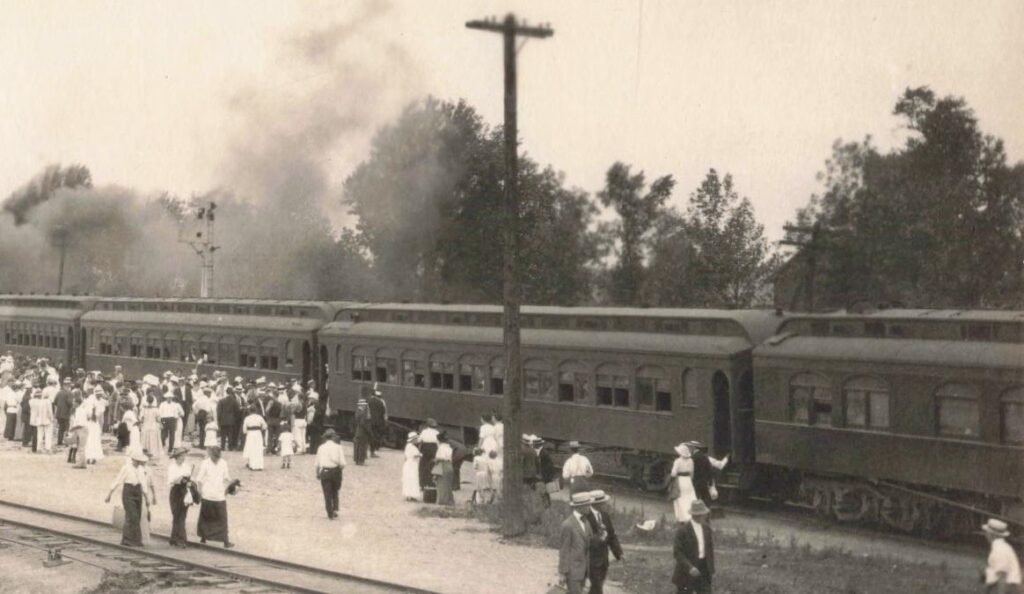
The boom, however, was short-lived. By 1852–53, the railroad had extended its tracks to Chicago, eliminating the stopover in New Buffalo. Almost overnight, the influx of transient travelers dried up. New Buffalo’s brief heyday as a terminus ended, and the town lost roughly half its population as businesses closed or literally picked up and moved. (Several buildings were loaded onto flatcars and relocated to nearby communities like Three Oaks.)
Village on the Verge of Ruin, Transforms

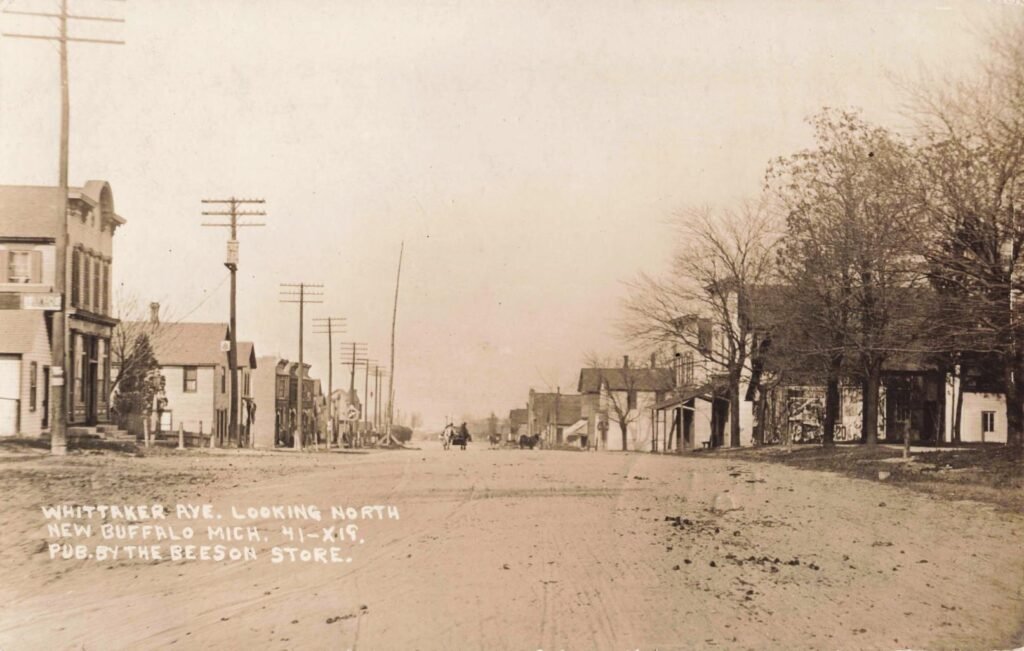
For the next few decades, the village’s growth stagnated. Even so, the community persisted: new settlers (including many German immigrant families) arrived later in the 19th century, and local institutions took root. By the 1850s–1860s, New Buffalo had its first newspaper (the Vindicator, founded in 1856) and several churches – Catholic, Methodist, German Evangelical, and Baptist congregations all established a presence by the early 1860s. These institutions helped stabilize the town during the quieter years after the railroad boom.
As the late 19th century progressed, New Buffalo gradually found a new identity as a lakeshore resort and waystation. Chicago, just 50 miles across Lake Michigan, was growing into a colossal city, and New Buffalo’s tranquil beaches and dunes provided a welcome escape from the industrial bustle of places like Chicago and Gary, Indiana. The extension of other regional rail lines made it easy for Chicagoans to reach New Buffalo for summer getaways.

By the 1890s the area’s tourist appeal was on the rise. In 1893 – the year of Chicago’s World’s Columbian Exposition – local farmer Isaac O. Smith built a ten-room resort hotel (with a ballroom and ten lakeside cottages) on his land to accommodate travelers heading to the great fair. This venture capitalized on increased traffic through New Buffalo during the exposition and marked the start of a tourism boom. Towards the end of the 19th century, New Buffalo had firmly transitioned from a fading railroad town into a modest vacation destination, leveraging its natural scenery and strategic location as the “gateway” into Michigan.
A New Era on the Lake
By the early 1900s, daily life in New Buffalo revolved around a small, close-knit community that swelled with seasonal visitors in summertime. The town itself remained small (only a few hundred permanent residents at the turn of the century), and its economy was a mix of agriculture, light industry, and hospitality. Local farms in the surrounding township grew produce – southwest Michigan’s climate was favorable for fruit and crops – while a pickle factory and even a glass factory provided year-round employment in town.

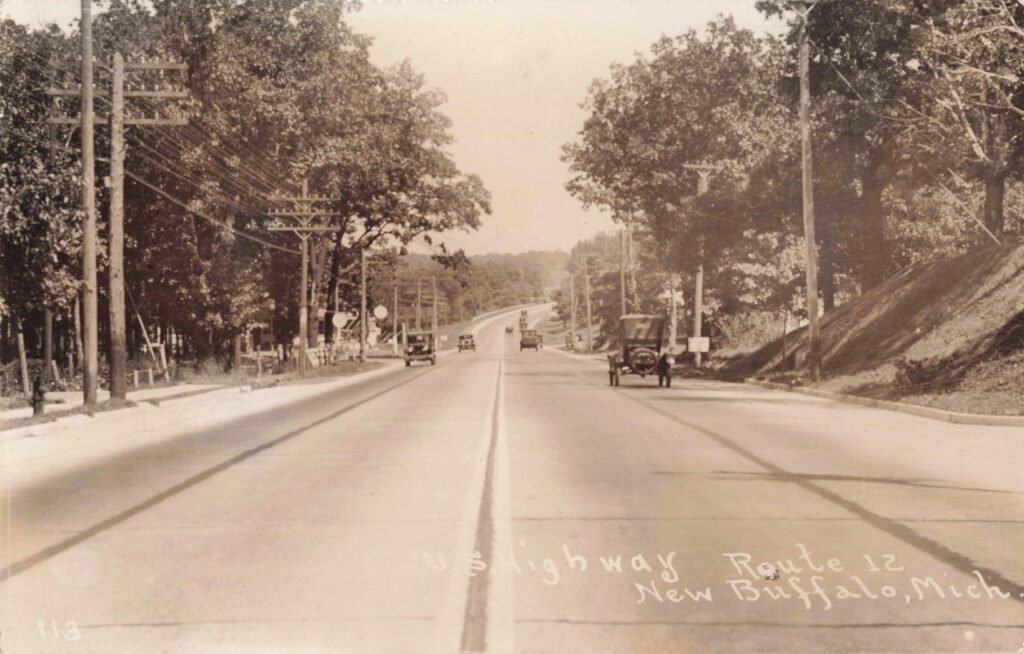
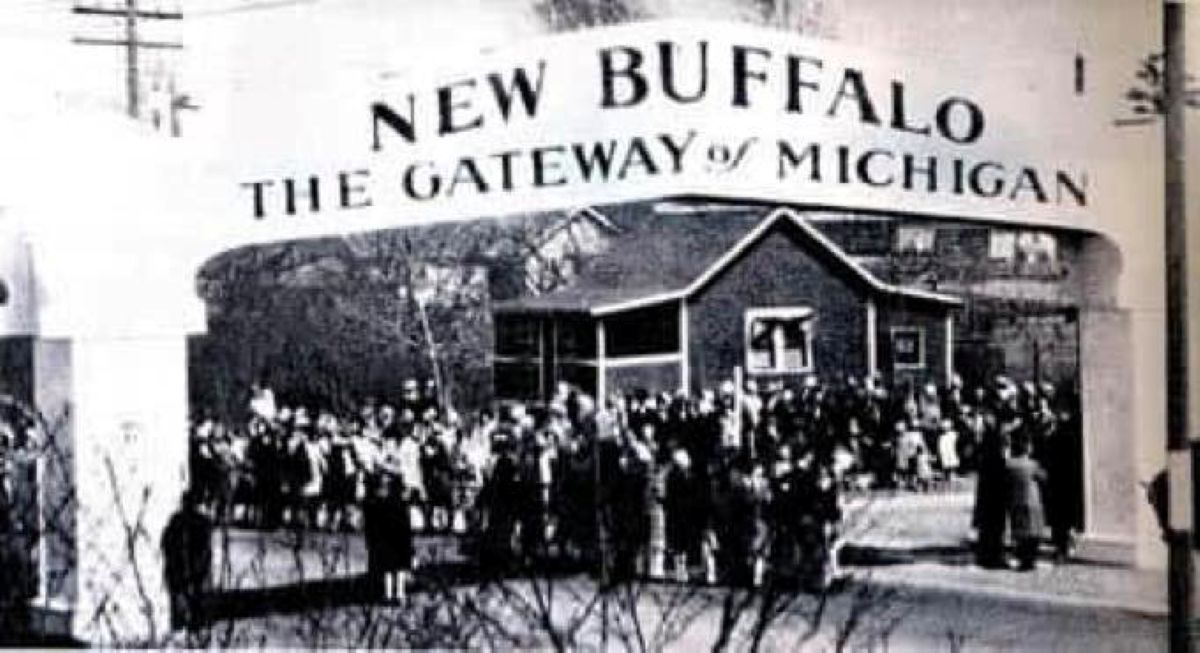
In the early 1900s, the town shifted gears. With the opening of U.S. Highway 12 and the rise of the automobile, a new kind of visitor arrived. Chicagoans looking to escape the city’s heat came for the weekend. A large gateway arch across the highway welcomed them with the slogan: “New Buffalo — The Gateway of Michigan.”

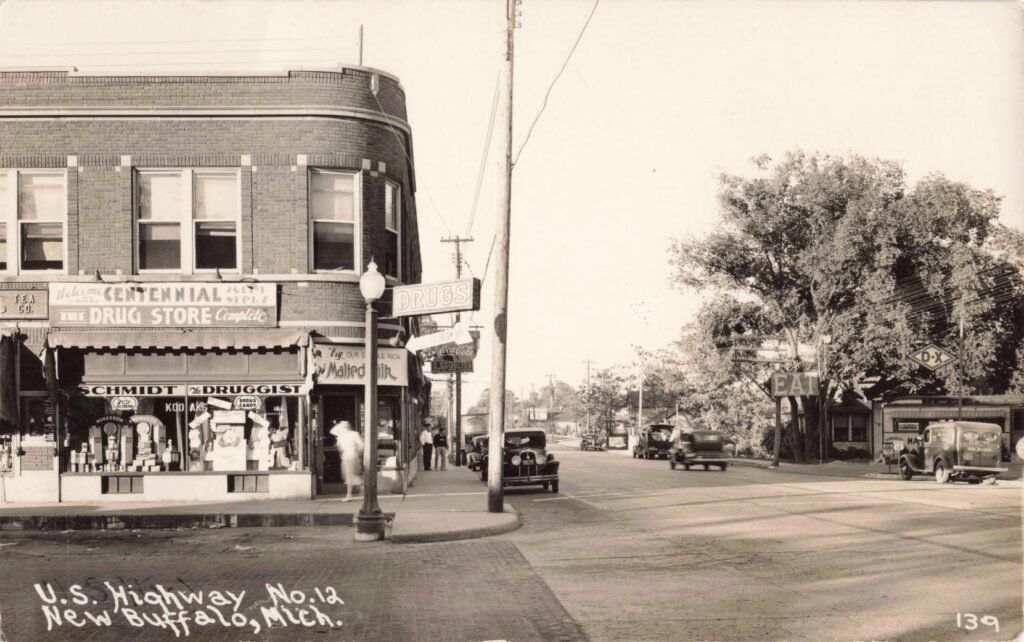
Downtown Whitaker Avenue served locals and tourists alike. Schmidt’s Drug Store was a local fixture. So was the Buffalo Café. The post office, fire hall, and depot anchored community life. Photos from the time show neatly swept wooden boardwalks, storefront signs, and a slow but steady hum of daily life.
Summer on the Shore

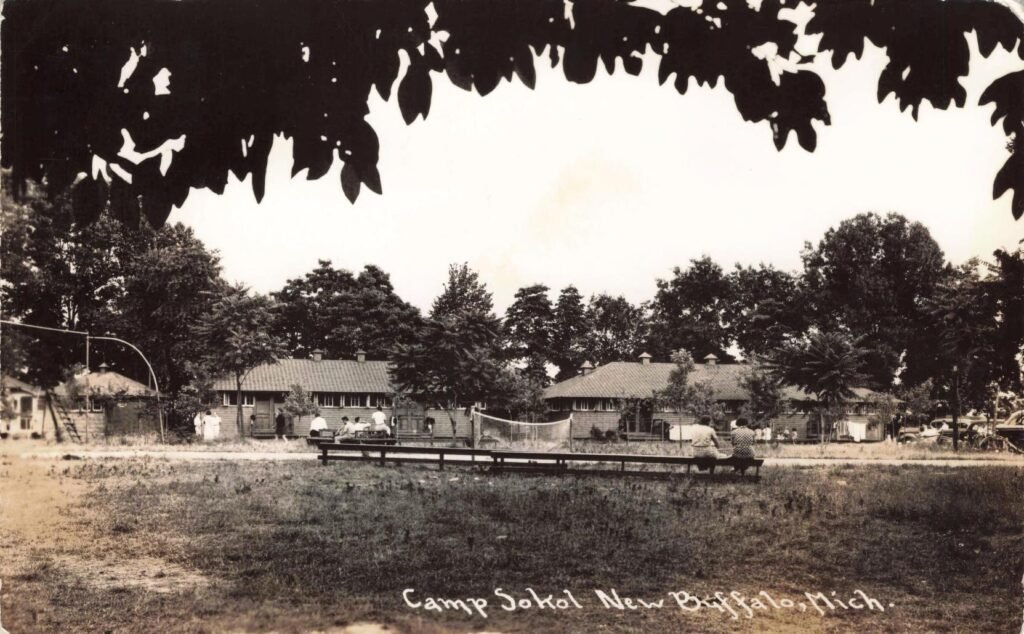
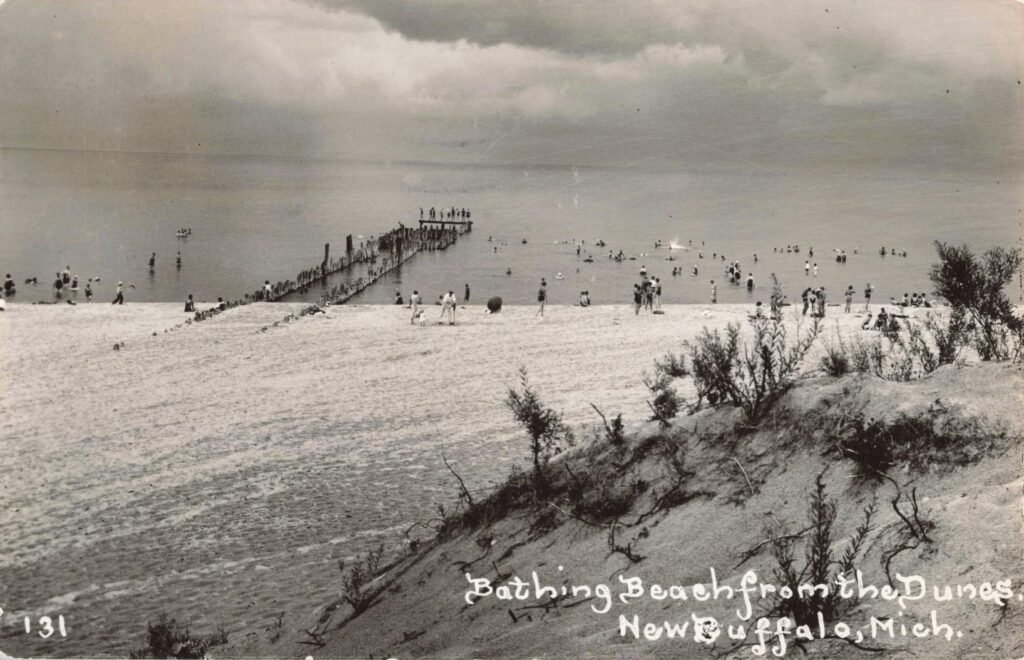
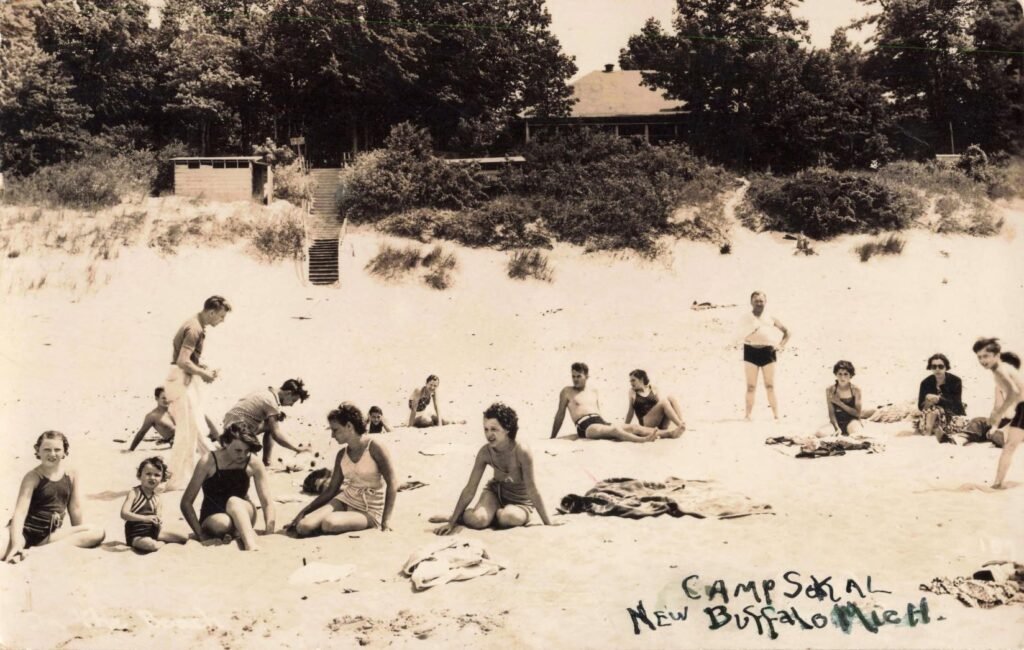
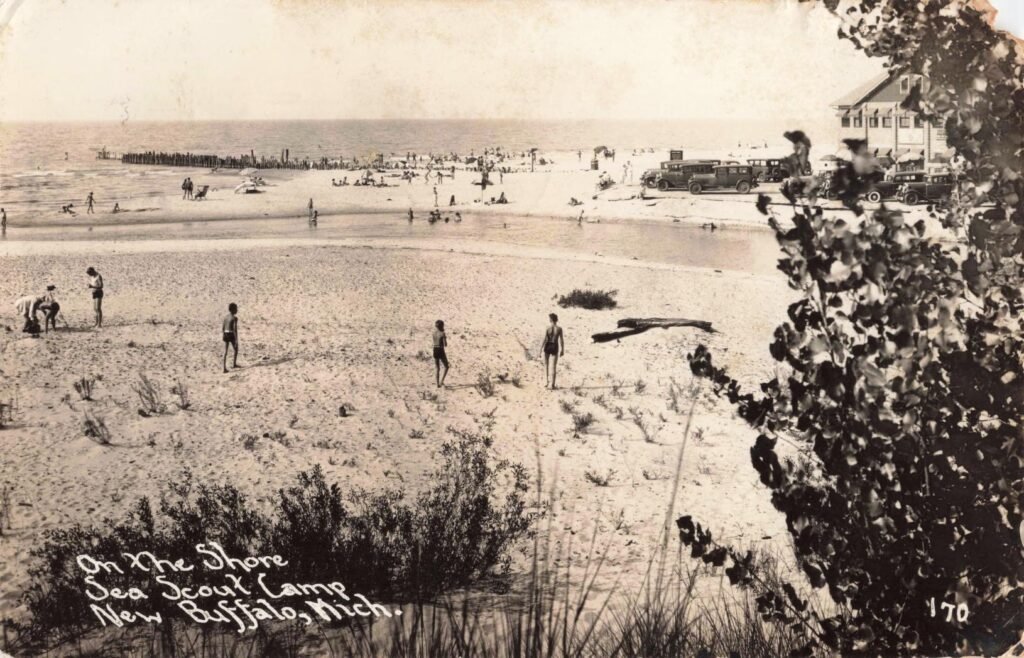
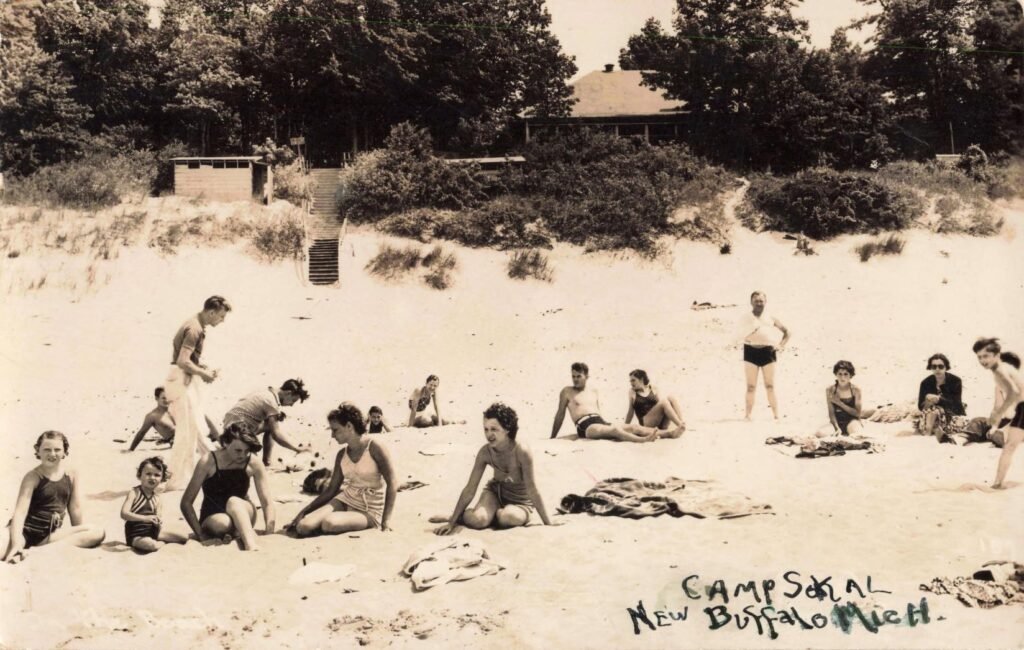
Summertime brought a different energy. Bathers filled the beaches, which had become a destination in themselves. Breakwalls protected the shoreline, while kids splashed and dug in the sand. The Sea Scout camp, Camp Sokol, and Potawatomi Park hosted children from cities across the Midwest. These places fostered friendships, sunburns, and memories that would draw people back for years.
Notable Residents and Figures in the History of New Buffalo
Captain Wessel Whittaker (Founder)
A Buffalo-born schooner captain whose shipwreck in 1834 led him to establish New Buffalo. Whittaker recognized the site’s harbor potential and returned in 1835 to found the settlement, giving the town its name and early direction. His vision of creating a port to rival Chicago’s laid the groundwork for New Buffalo’s existence and future harbor ambitions.
Alonzo Bennett
New Buffalo’s first village president was elected in 1836 when the village was formally incorporated. Bennett was among the early settlers who guided the young community through its formative years, helping to organize local governance and civic life in the decades following Whittaker’s founding era.
Simon Pokagon

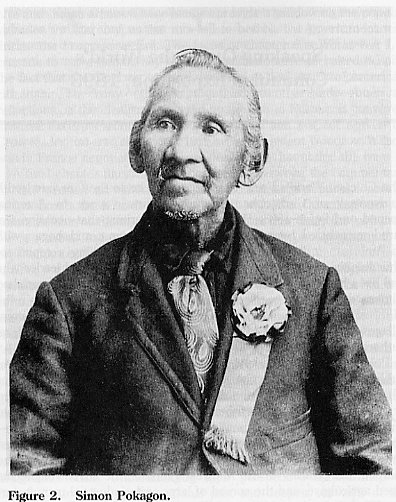
A Potawatomi leader and author with ties to the New Buffalo region. Educated at Oberlin College, Pokagon became an eloquent voice for Native American rights and culture. He was an honored guest at the 1893 World’s Columbian Exposition in Chicago and was “internationally known as [a] writer, poet and lecturer”. His presence in local history highlights the continued influence of the Potawatomi people in the area’s heritage.
Isaac O. Smith
A 19th-century local entrepreneur who helped usher in New Buffalo’s tourism era. In 1893, Smith capitalized on World’s Fair travel by building a resort hotel on his farmland between New Buffalo and Union Pier. The hotel featured ten rooms, a ballroom, and ten cottages – an ambitious development for its time. Smith’s venture drew visitors en route to Chicago’s fair and signaled the town’s rebirth as a summer destination, contributing to the late-1800s tourism boom in “Harbor Country.”
Each of these individuals left an imprint on New Buffalo’s story – from its founding on the shores of Lake Michigan to its emergence as a welcoming lakeside community. Through their efforts and the enduring spirit of its residents, New Buffalo grew from a storm-tossed idea into a beloved corner of Michigan where history and nostalgia still linger today.
The History of New Buffalo Endures Today

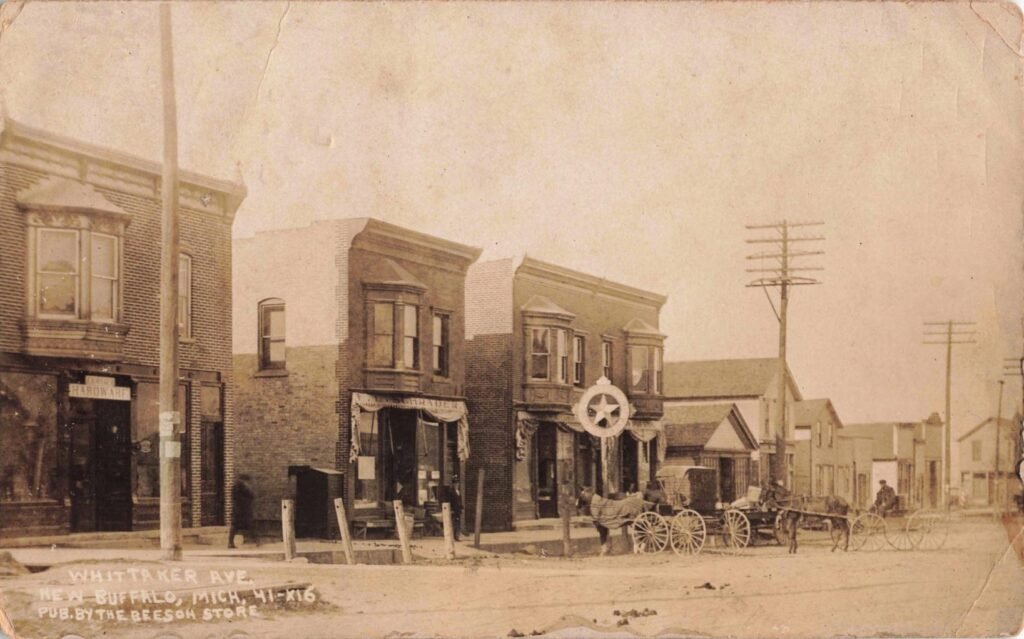
New Buffalo’s charm was never in grandeur—it was in its scale, its pace, and its people. Its story is one of adaptation. From shipwreck to rail stop to lakeside haven, the town shaped itself around those who stayed and those who came seeking a place to breathe.
Today, echoes of that early life remain. The storefronts have been updated, but Whitaker Avenue still curves. The lake still sparkles under the summer sun. And if you close your eyes near the old depot or the beach, you might still hear the soft hum of a town that grew quietly but never forgot who it was.

