


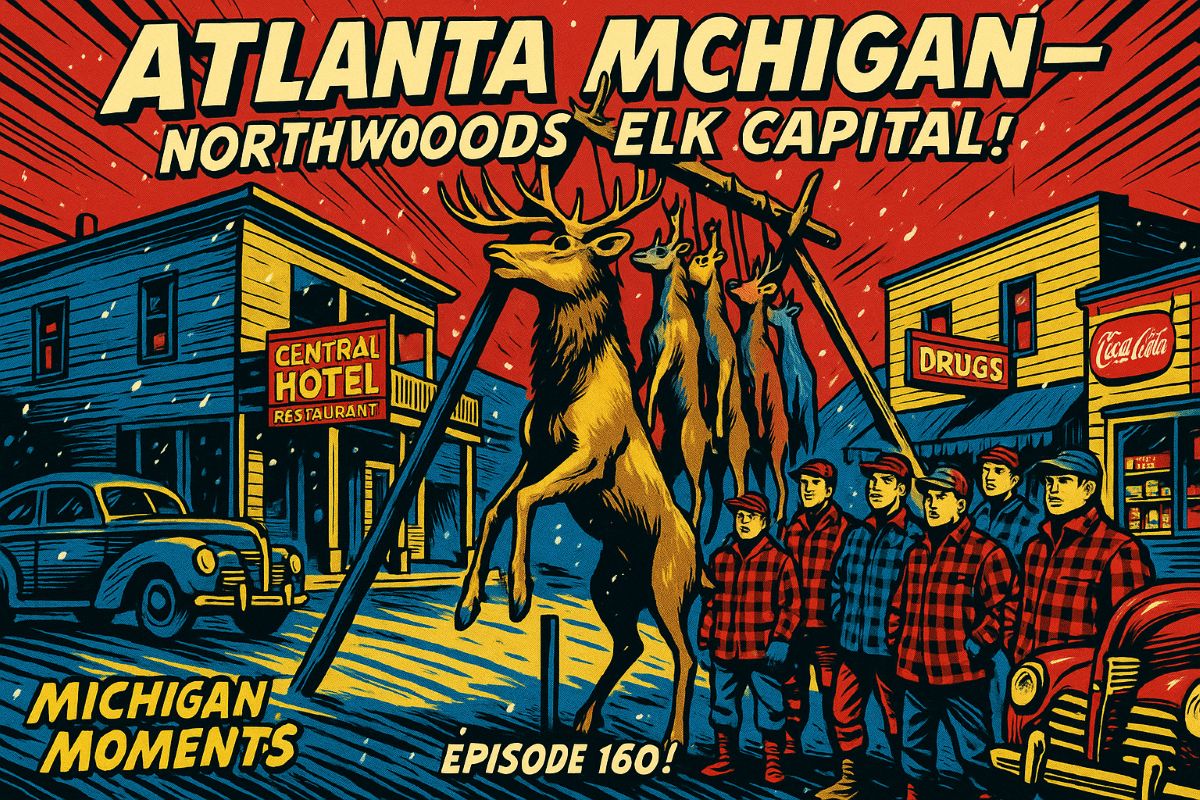
History of Atlanta Michigan – 5 Eras That Built the “Elk Capital of Michigan” (1900–1950) – Video
The history of Atlanta Michigan is a tale of a small Northwoods town that weathered dramatic booms and busts between 1900 and 1950. Tucked in Montmorency County’s rolling hills and forests, Atlanta transformed from a fading lumber camp into a resilient community known today as the “Elk Capital of Michigan.” This article explores the History of Atlanta, Michigan, during the first half of the 20th century – its triumphs, trials, and the everyday life of the townsfolk. From the last echoes of the lumber era, through railroad adventures and devastating fires, to cherished hunting traditions, Atlanta’s story is rich with Americana and local pride.
Table of Contents – Atlanta Michigan History
Video – Atlanta, Michigan (1900–1950) – A Michigan Moments Documentary

From Lumber Boom Town to Quiet County Seat (1900–1910)


Atlanta was born in the lumber boom of the late 19th century. Founded in 1881 by Alfred West, a former Union soldier who fought at Atlanta, Georgia, the town was named after that distant battlefield memory. By 1900, however, the once-vast stands of white pine and hardwood in Montmorency County had been largely clear-cut by lumber companies, their logs sent by rail and river to downstate markets. The roar of sawmills faded, and Atlanta transitioned into its new role as the Montmorency County seat (established in 1893).
The Central Hotel

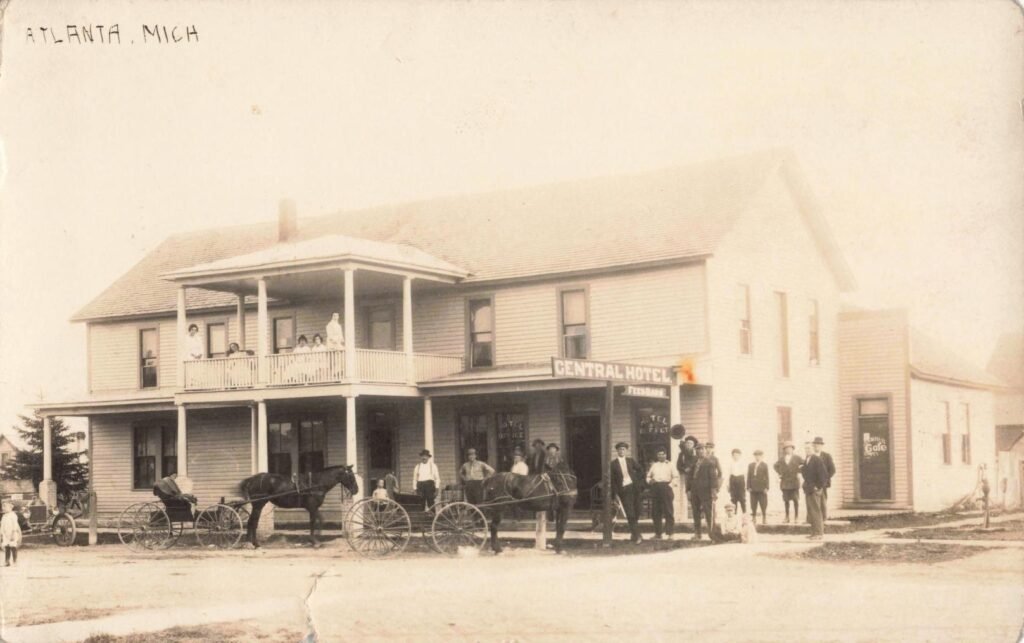
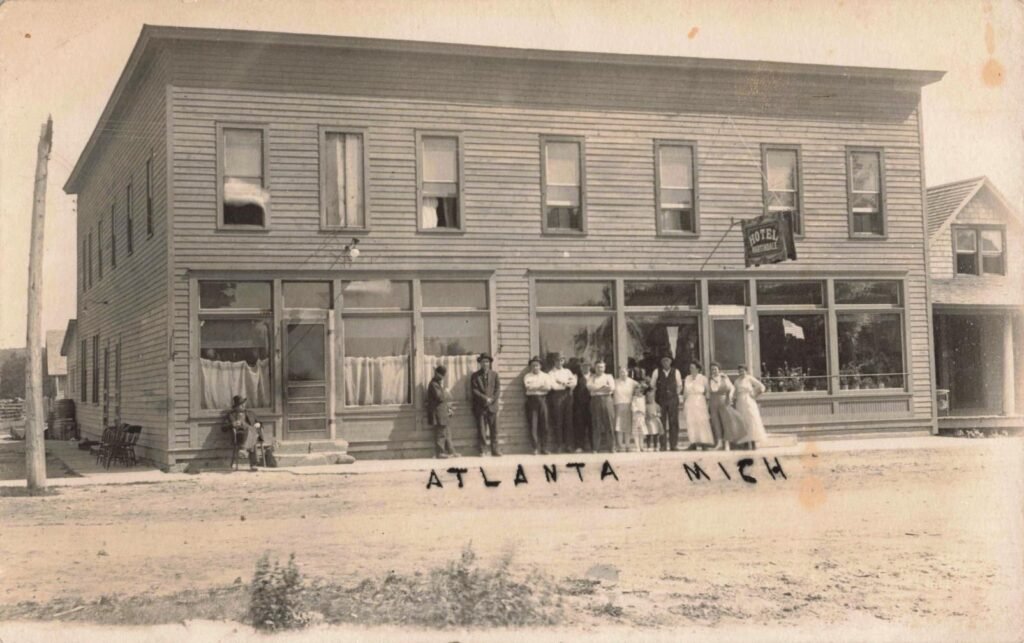
In 1900, Atlanta was a modest village of a few hundred residents, but it was the center of government and commerce for an otherwise remote region. The town’s main street (today part of M-32) was unpaved and lined with wooden boardwalks. The Central Hotel, a large white clapboard inn built in the 1890s, was a focal point downtown – offering rooms, hot meals, and a livery stable for travelers’ horses.
Mainstreet Hardware
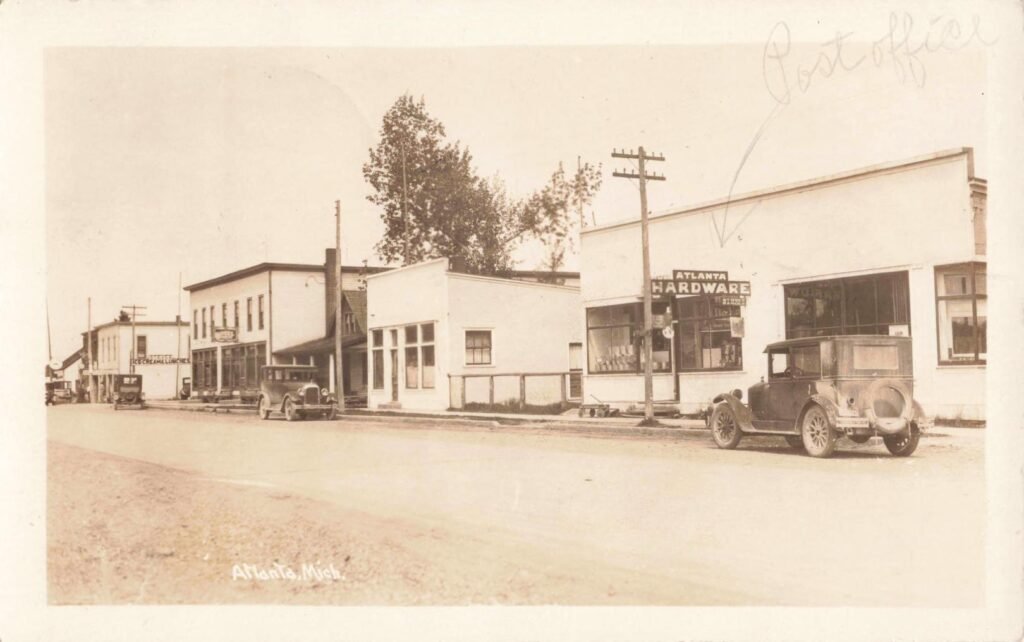
A photograph from 1914 shows the Central Hotel bustling, with a horse and buggy out front and townspeople gathered on the porch. Such images paint a picture of Atlanta’s early days: dirt roads busy with wagons, and early storefronts like the Atlanta Hardware store and general store serving as lifelines for rural families.
Atlanta Michigan Post Office

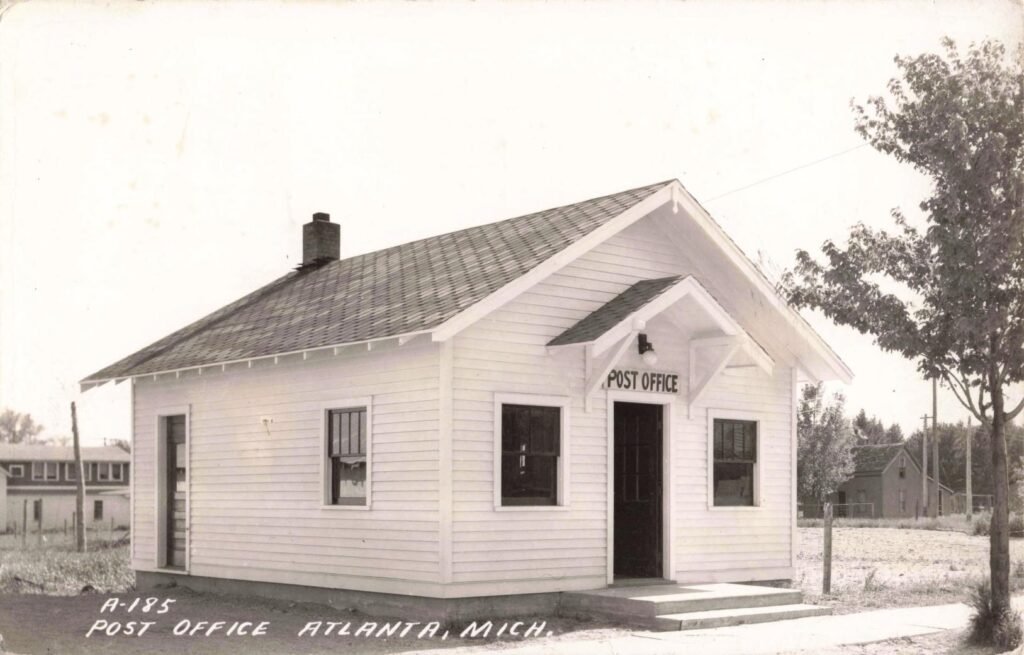
Daily life in 1900s Atlanta was simple and close-knit. The post office connected residents to the wider world with letters and news. The Montmorency County Tribune (founded in 1886) kept locals informed on national events and local happenings. Given the heavily forested landscape, many settlers turned to farming the cutover lands or working in remaining lumber camps.
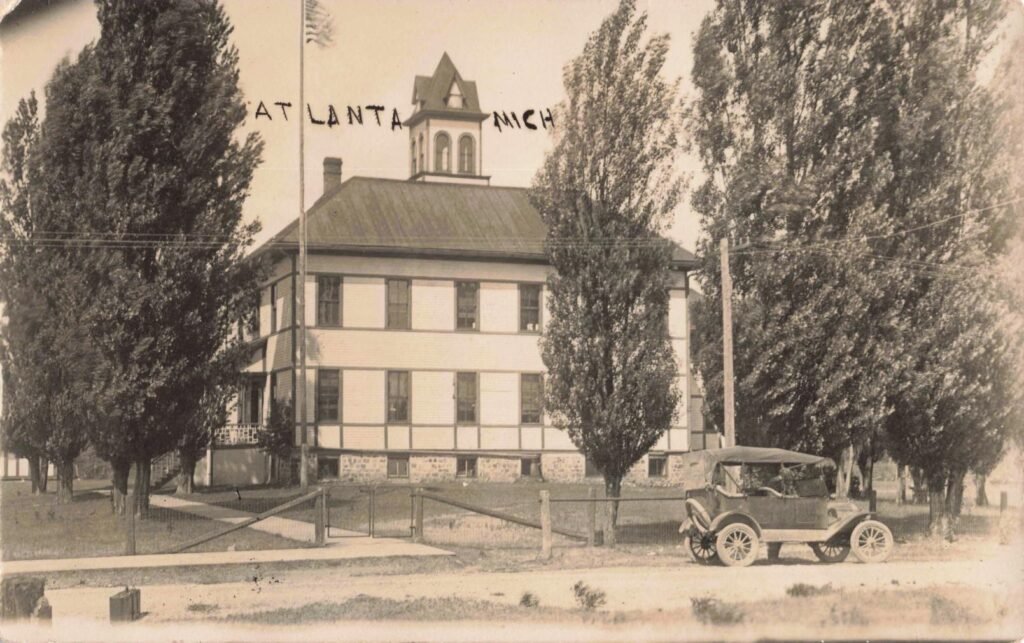
It was hardscrabble work – the sandy soils left after logging were poor for agriculture, and many farms struggled. Still, the community bonded through church socials, school events at the one-room schoolhouse, and seasonal celebrations. By 1910, Atlanta’s era as a rough logging boomtown had definitively ended, and it entered the 20th century as a quieter but enduring village community.
Images on this page may contain affiliate links in which we may receive a commission. See our affiliate disclosure for details.
Historic Photos of Detroit in the 50s, 60s, and 70s
Historic Photos of Detroit in the 50s, 60s, and 70s documents what a Metro Detroiter would have experienced through those decades, from the commonplace to a visit from John F. Kennedy.

The Brief Arrival of the Railroad (1920–1932)

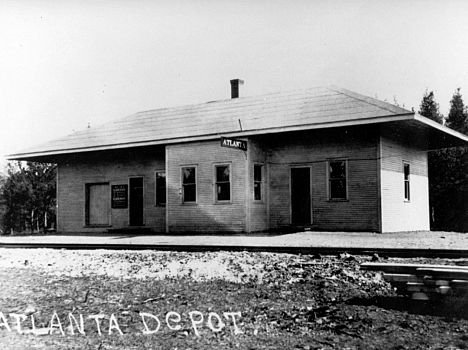
One of the most exciting chapters in the history of Atlanta Michigan came in the 1920s with the arrival of a railroad. For decades, Atlanta was difficult to reach – the nearest major rail lines (Michigan Central and D&M) passed miles away. That changed when the Boyne City, Gaylord & Alpena Railroad extended a spur into Atlanta around 1920. Suddenly, this isolated town had a direct link to the outside world.

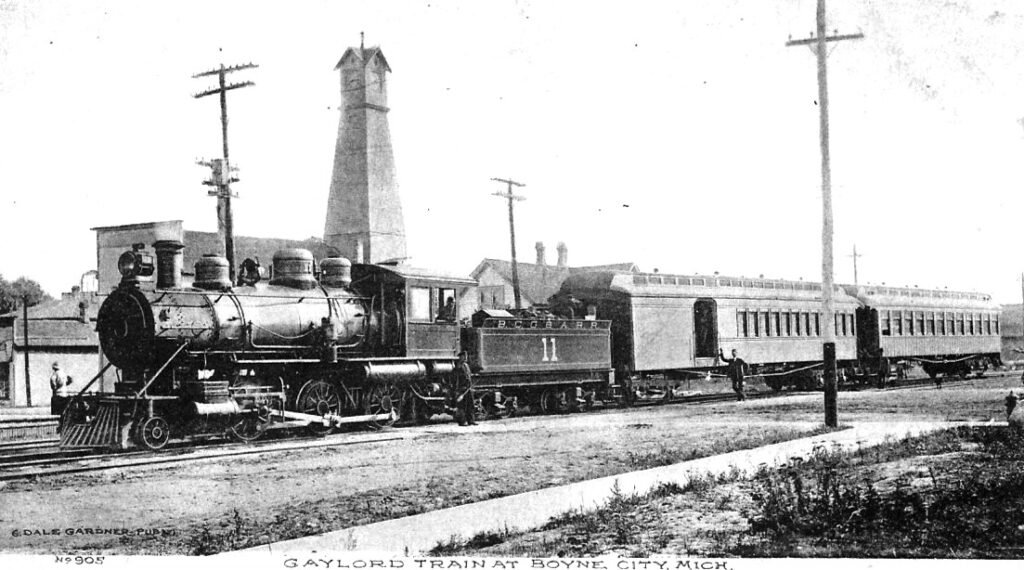
The BCG&A railroad brought both freight and a small number of passengers. Its primary purpose was to haul out the last reserves of hardwood timber from Montmorency County. “The town was served by the Boyne City, Gaylord & Alpena railroad for a short period between 1920 and 1932,” notes one historical source.
During those years, the railroad terminus in Atlanta saw regular activity. Trains would arrive with supplies – maybe a new tractor for the farm co-op or crates of goods for the general store – and depart loaded with lumber or farm produce. The presence of the train also meant residents could travel more easily. An Atlanta family could take the train to Alpena for a weekend shopping trip, or a few adventurous tourists might come up north for hunting and fishing via rail.

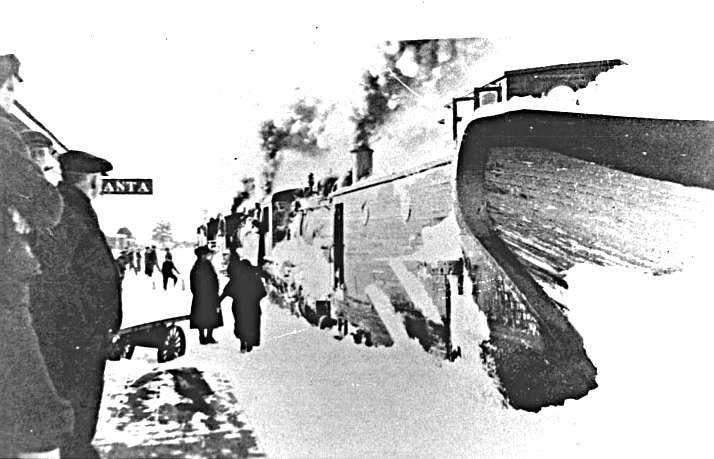
The prosperity was short-lived. By the early 1930s, the local timber was exhausted, and the Great Depression was strangling the economy. The Boyne City railroad, having fulfilled its logging purpose, ceased operations to Atlanta in late 1932. The tracks were eventually removed or fell into disuse, and Atlanta’s brief time as a railway town ended. However, those dozen years left a mark.
Older residents would later recall the thrill of hearing the train whistle echo in the woods – a sound of opportunity while it lasted. After the railroad’s departure, Atlanta relied on the developing highway system. M-32 (a state road connecting Alpena to points west) became Atlanta’s main artery, bringing automobile traffic through town. The railroad chapter is a small but fondly remembered part of the history of Atlanta Michigan, symbolizing both the hopes of the 1920s and the challenges of the 1930s.
Community Life and New Landmarks in the 1930s

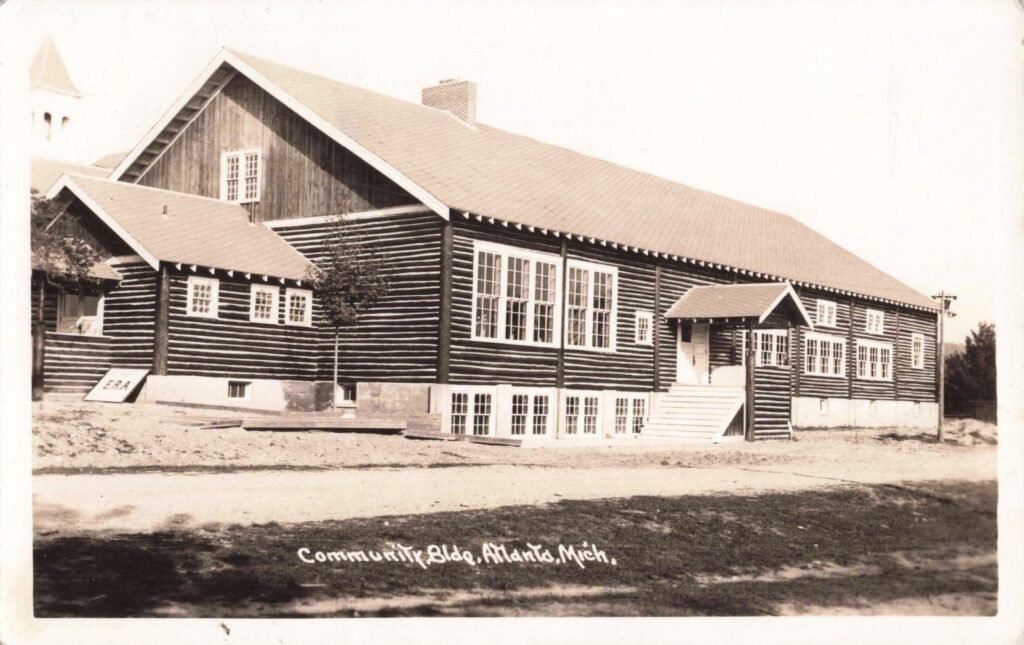
The 1930s were a challenging decade in Atlanta, as they were throughout rural America. The Great Depression saw lumbering and farming jobs vanish, and families had to be resourceful to survive. Despite hard times, the community spirit in Atlanta remained strong. One remarkable achievement of this era was the construction of the Atlanta Community Hall.
Likely built in the mid-1930s with the aid of New Deal programs (such as the WPA or PWA), the Community Hall was a large log building that served as a multi-purpose gathering place. Photographs of the hall show a rustic log exterior, blending with the Northwoods character of the region. Here, townspeople held dances, potluck dinners, and even school basketball games – it was essentially Atlanta’s cultural center.
Mowery Hotel in Atlanta

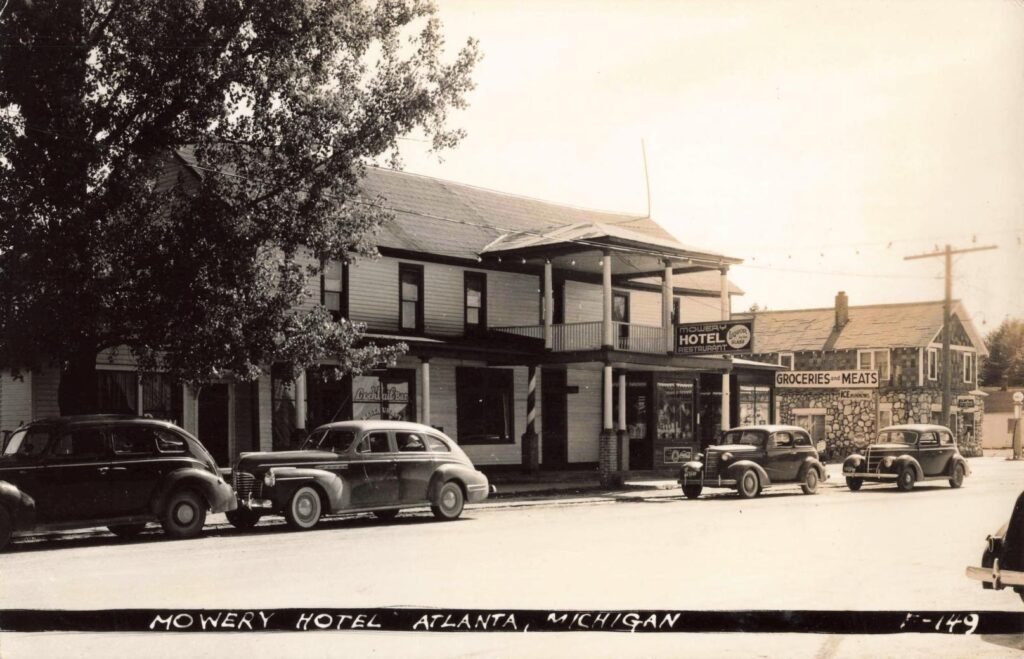
Meanwhile, everyday business carried on in familiar establishments. The Central Hotel remained a landmark, but it gained a friendly rival: the Mowery Hotel. The Mowery Hotel, visible in 1930s postcards, was another two-story inn (with an attached restaurant and tavern) that catered to automobile travelers. Its appearance signaled modernization – for instance, a 1930s image shows a prominent “Mowery Hotel – Restaurant” sign and a “Liquor” sign in the window, indicating that by the late 1930s (after Prohibition), one could enjoy a legal drink in Atlanta again. Local memories often mention the Mowery as a popular spot for hunters and traveling salesmen to stay when passing through.
Altanta Corner Drug Store

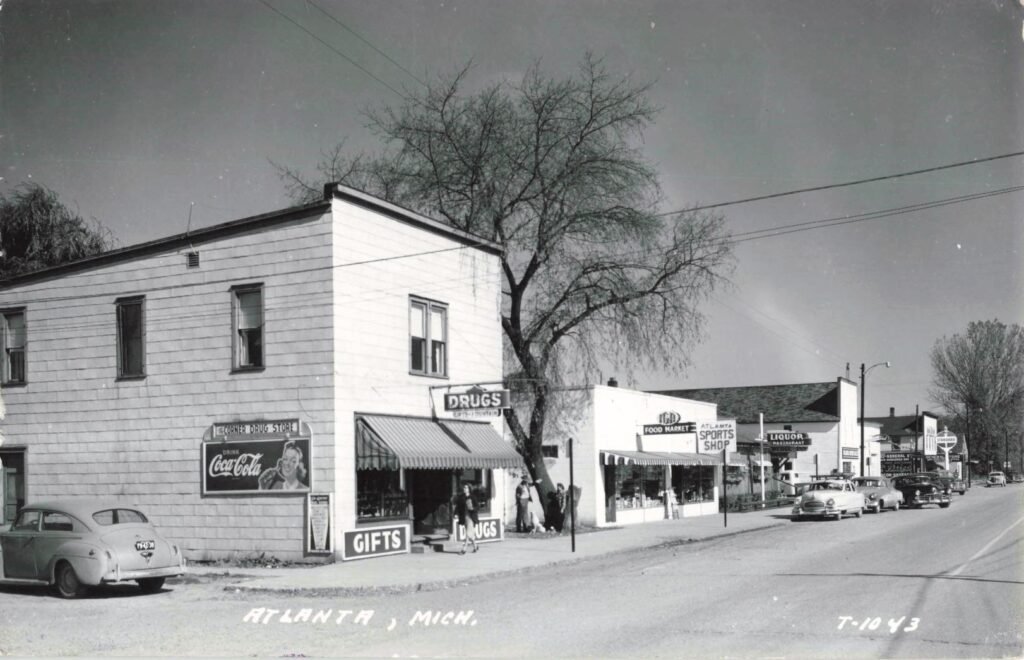
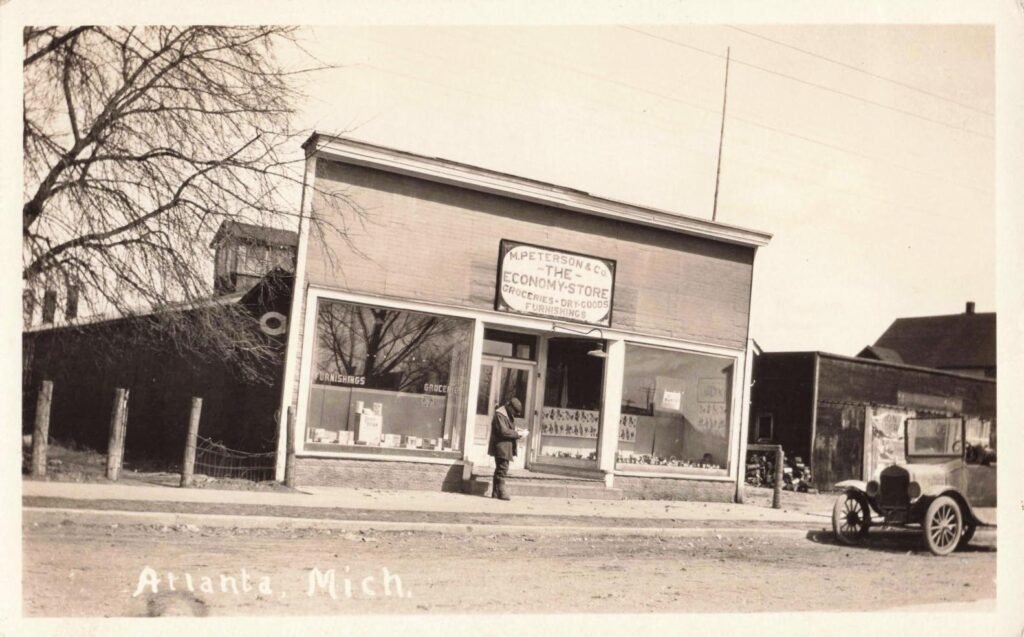
Another mainstay was the Corner Drug Store, which sat at the prime intersection of downtown. In the 1930s, it was known as Cameron’s Drug Store, run by pharmacist W.M. Cameron. This shop was more than a pharmacy – it sold soda fountain treats, magazines, and various notions.
Montmorency County Courthouse in Atlanta
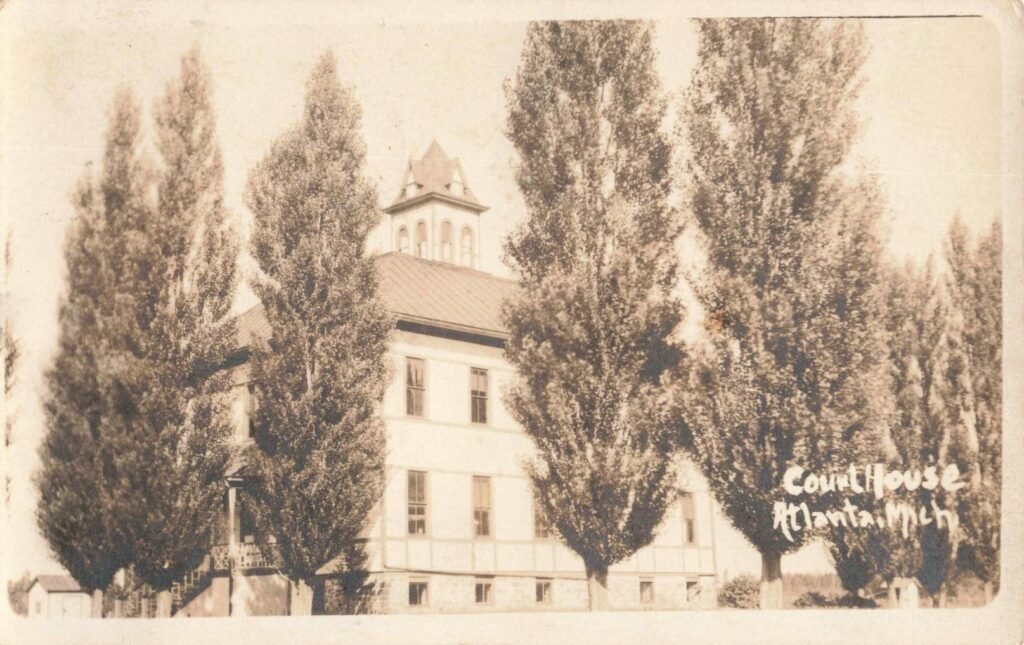
Next door, the Montmorency County courthouse and jail were located in modest frame buildings, since Atlanta was the county seat. Government business (like court sessions and county fairs) added a bit of bustle to the town on occasion. And throughout the Depression, Atlanta’s natural surroundings remained a source of sustenance and pride: families hunted deer for meat, foraged berries and mushrooms, and fished the Thunder Bay River and nearby lakes.
Twin Fires and Rebuilding (1942–1943)

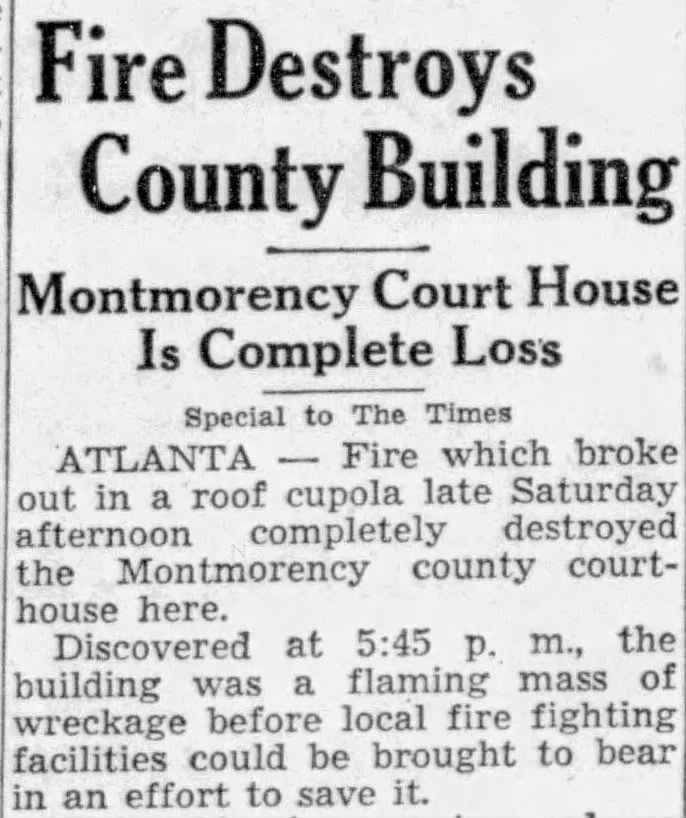
Perhaps the most dramatic event in mid-century Atlanta was the sequence of two disastrous fires that struck the town’s civic buildings during World War II. On January 10, 1942, the Montmorency County Courthouse in Atlanta was gutted by a massive fire. The blaze erupted on a frigid winter night and quickly consumed the old wooden courthouse. According to county history records, many historical and land records were destroyed in this fire. The loss was a heavy blow – deeds, court documents, and local archives went up in flames. Fortunately, no one was killed, and some vital records (like birth and marriage registers) survived, likely due to being stored in a safe.

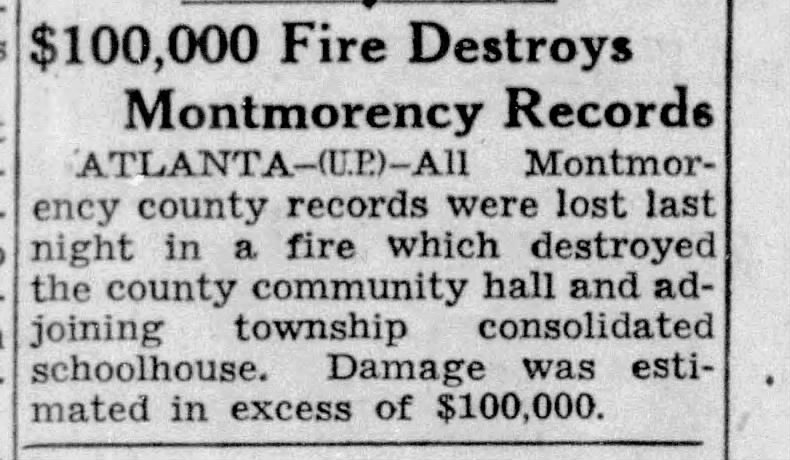
In the immediate aftermath, with their courthouse gone, county officials set up temporary offices in the Atlanta Community Hall. Tragically, fate had another cruel twist in store. Just one year later, in January 1943, a second fire broke out – this time engulfing the very Community Hall that was serving as a courthouse. In an eerie replay, that fire destroyed all remaining county documents except the vital statistics. Montmorency County’s historical records were essentially wiped out in a single year, which is why detailed early records are scarce. The community was devastated by the loss of its gathering place as well.
Yet, Atlanta’s people demonstrated remarkable resilience. Despite wartime material shortages, plans for a new courthouse moved forward almost immediately. By late 1943, a new courthouse built of brick was under construction in Atlanta. This new building was more fire-resistant and still serves as the county courthouse today.
The speed of this rebuilding – during World War II – speaks to the determination of local leaders and citizens. These events have become a key part of the history of Atlanta Michigan, often retold with a mix of sorrow and pride: sorrow for the cultural loss and pride in the community’s ability to recover.
Post-War Main Street and the Rise of Traditions (1945–1950)
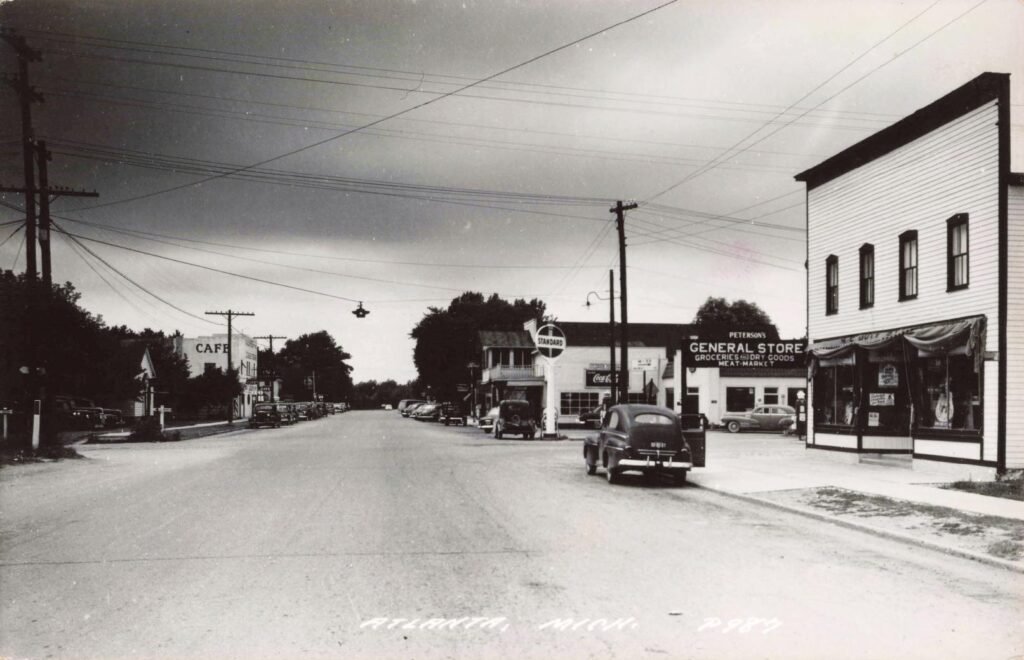
After World War II ended in 1945, Atlanta, like much of America, experienced relief and optimism. Soldiers returned home, and the town’s everyday life picked up again. The late 1940s brought minor booms: new homes were built for returning GIs and their families, and small businesses in Atlanta got back to full swing.
Photographs from about 1948–1950 show Atlanta’s Main Street paved for the first time, with neat concrete sidewalks and parallel-parked cars from the era. The Corner Drug Store had a big Coca-Cola sign out front, and a shiny “Drugs” marquee, reflecting the prosperity of post-war years. A Sports Shop and Food Market also opened on Main Street, catering to locals and tourists.

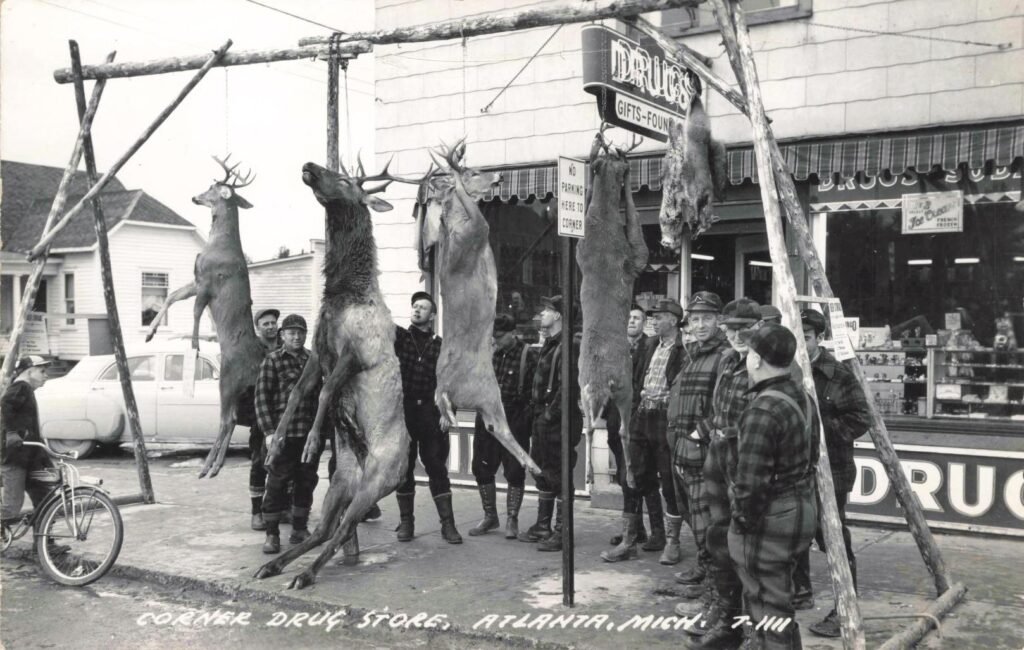
During this time, Atlanta began capitalizing on its natural assets for tourism. The forests had regrown enough to support wildlife, including white-tailed deer and a burgeoning elk population in the region. Deer hunting had long been popular, but by mid-century, it became almost a civic holiday. “White tail deer hunting is a popular local activity,” notes one account, with the firearms deer season opening day (November 15) being treated “as a holiday to some residents,” even to the point of schools closing on that day.
Indeed, throughout rural northern Michigan (and certainly in Atlanta), it was commonplace for school to be closed on November 15 so that students and staff could go hunting. The communal enthusiasm for hunting gave rise to the tradition of the buck pole. Every year, on the opening day of deer season, Atlanta residents would gather in the evening in the town square.
Hunters would display their largest bucks by hanging them from a tall wooden pole or tripod. The event was part competition, part celebration – stories of the day’s hunt were exchanged, and the whole town shared in the excitement. Even today, during opening day of elk hunting season, Atlanta continues the tradition with the biggest trophies displayed at the buck pole in the town’s center, a practice that likely evolved from the deer buck pole tradition of the 1940s.

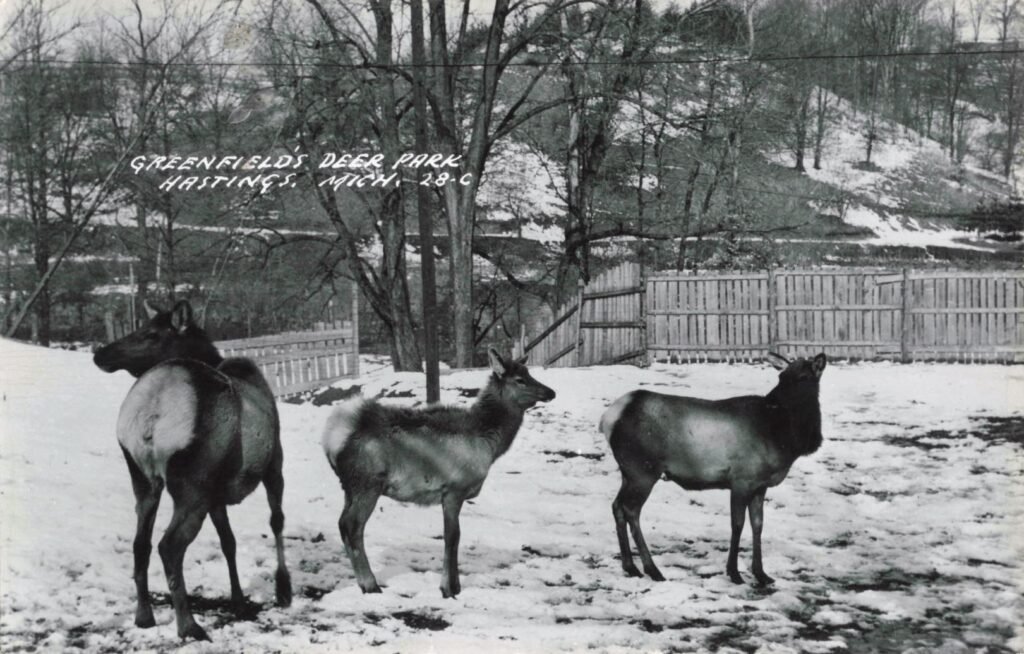
Another development in the late 1940s was the growing recognition of Atlanta’s elk herd. Elk had been reintroduced to Michigan in 1918 and by the 1940s, a significant number roamed the forests of Montmorency County. Locals and visitors enjoyed elk viewing as a pastime, foreshadowing Atlanta’s later nickname “Elk Capital of Michigan” (an official title it would receive in 1986). In 1949, Atlanta held its first informal elk festival, which over time grew into an annual event drawing visitors for parades and tours to see the elk. Thus, as the town entered the 1950s, it was building a new identity centered on outdoor recreation and wildlife, supplementing its historical roots in lumber.
Final Thoughts on the History of Atlanta Michigan
By 1950, Atlanta, Michigan exemplified the resilience and charm of small-town America. In the span of fifty years, this community saw the end of the logging era, the coming and going of a railroad, economic depression, catastrophic fires, and the transformative effects of a world war. Yet through each challenge, Atlanta adapted and endured. The history of Atlanta Michigan in those years is preserved not just in written records (many of which, sadly, perished in the fires) but in the memories, photographs, and traditions passed down by its people.

Exploring the historic landmarks of Atlanta today, one can still find echoes of 1900–1950: the courthouse on M-32 stands as a reminder of post-war rebuilding; hunters still gather each fall to share stories at the buck pole; and the rolling hills around town remain home to deer and elk, just as they were for generations. Atlanta’s story is one of a community that never lost faith in itself or its future. As historian David McCullough once said, “History is who we are and why we are the way we are.” In Atlanta’s case, its history of grit, community, and harmony with nature has truly shaped a unique and enduring identity.
Works Cited For History of Atlanta Michigan (1900–1950)
Berg, David. Montmorency County History. Montmorency County Official Website, 2021, pp. 1–3. Montmorency County. County government offices reside in the courthouse built in 1943… After the fire, surviving records were moved to the Community Hall..
“Montmorency County, Michigan.” Wikipedia, Wikimedia Foundation, 10 Aug. 2025, en.wikipedia.org/wiki/Montmorency_County,_Michigan. Montmorency County. Atlanta is the “Elk Capital of Michigan”… opening day of Elk hunting season the largest bagged are displayed at the “buck pole”… deer season opening (November 15) being noted as a holiday…
Powers, Perry F. A History of Northern Michigan and Its People. The Lewis Publishing Co., 1912. (Referenced via Michigan County Histories). Briley Township History. Atlanta was named the county seat by an election vote in 1893…
Stations: Atlanta, MI. MichiganRailroads.com, edited by Dale Berry, 2010, michiganrailroads.com/stations-locations/124-montmorency-county-60/1532-atlanta-mi. Michigan Railroads. Atlanta was settled about 1881… He named the new town Atlanta… The town was served by the Boyne City, Gaylord & Alpena railroad between 1920 and 1932.

