


History of Cheboygan Michigan – A River Town Between Timber and the Great Lakes (1840 – 1940) – Video
Cheboygan sits where a short river meets Lake Huron. The town grew from mills and docks and adjusted to new work as the forests thinned. The History of Cheboygan Michigan is written in stacks of lumber, in a steel swing bridge that once turned for ships, and in crowds gathered to watch passenger steamers glide in from the straits.
Video – River Town in Motion
Cheboygan, Michigan grew on the strength of wood, water, and work. This Michigan Moments episode uses rare photographs from 1900–1930 to show the city as it stands between the last years of big timber and a new era of travel and small industry. We follow the Cheboygan River, where a lock built in 1869—and rebuilt in 1927—turned a shallow channel into a vital route linking the Inland Waterway with Lake Huron.

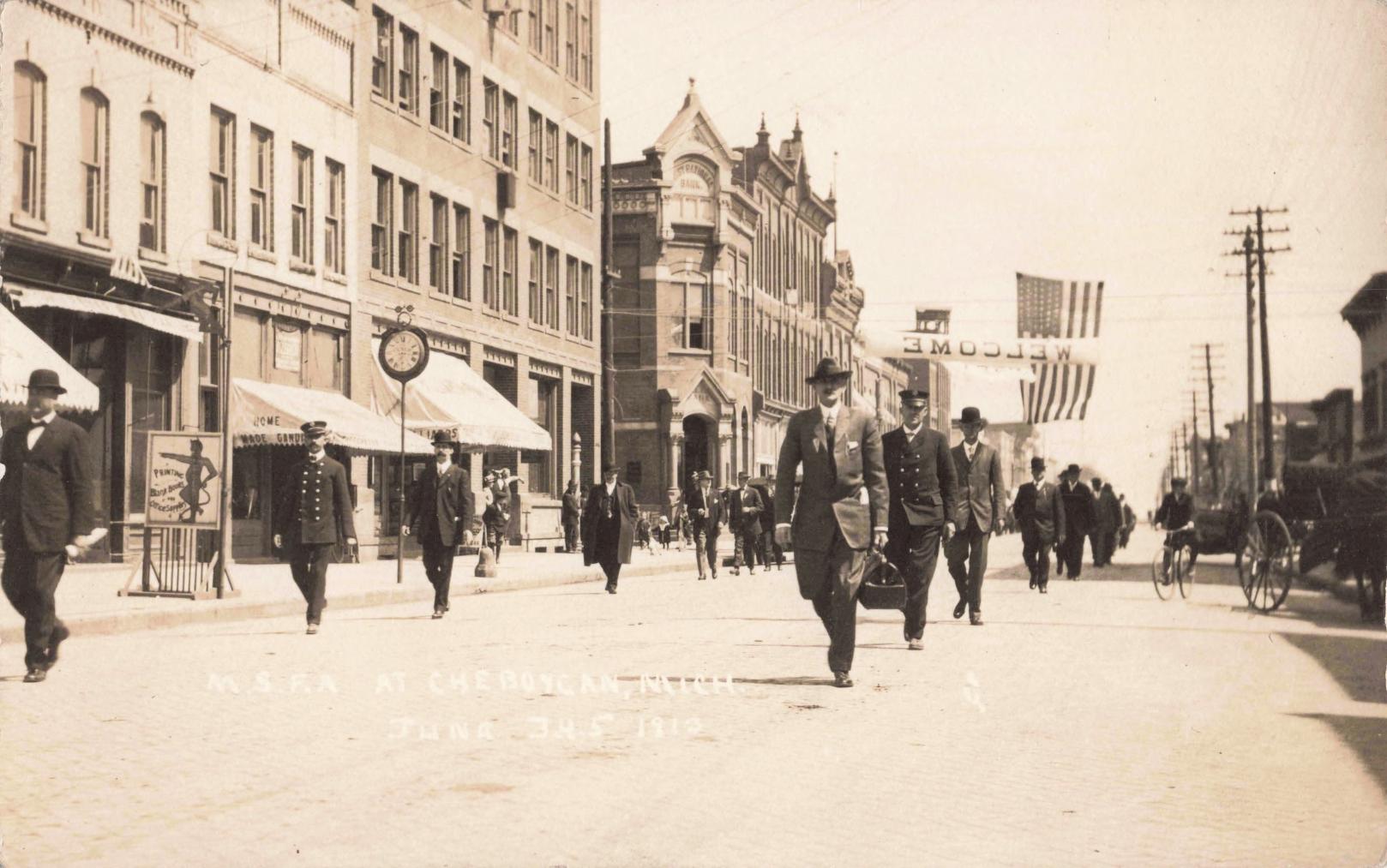
We watch the swing bridge open for tugs and close for wagons. We walk Main Street past brick storefronts and the Ottawa Hotel café. We visit the tannery that sprawled across 25 acres, the pea cannery along the railroad, and the paper mill that kept the riverfront busy after the sawmills went quiet.
Lumber roots and a working river

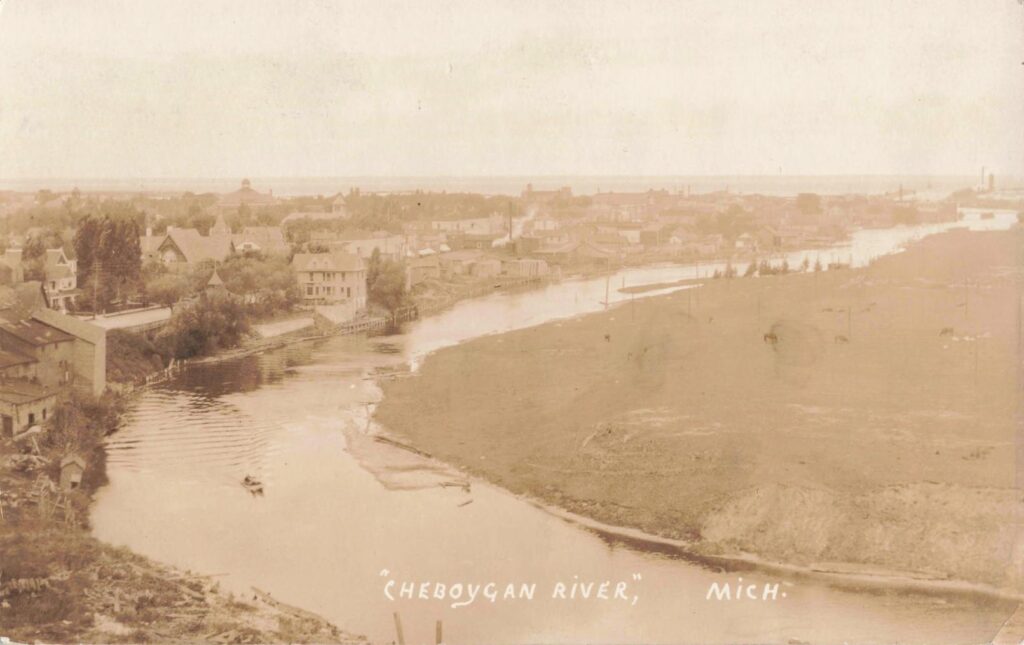
In the 1840s, settlers chose the Cheboygan River for its power and access. Duncan City rose on Duncan Bay as an early company town, serving the lumber and shipping industries. The broader settlement adopted the Cheboygan name in the 1870s and grew from a frontier outpost into a small city. The History of Cheboygan, Michigan, cannot be told without the river and the mills that lined it.

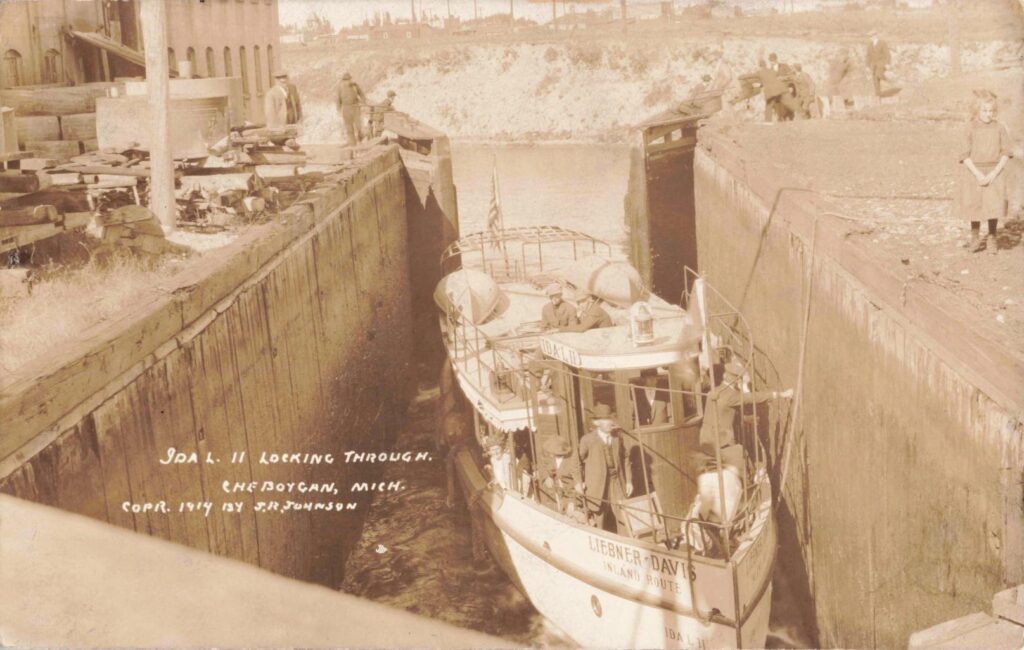
A lock opened in 1869 to lift boats past the river’s drop. Engineers rebuilt it in 1927 to accommodate larger craft. First came log rafts and steam barges; later came launches and cabin cruisers using the Inland Waterway for pleasure trips. These improvements tied the community to both the interior lakes and Lake Huron.
Main Street and the Ottawa Hotel

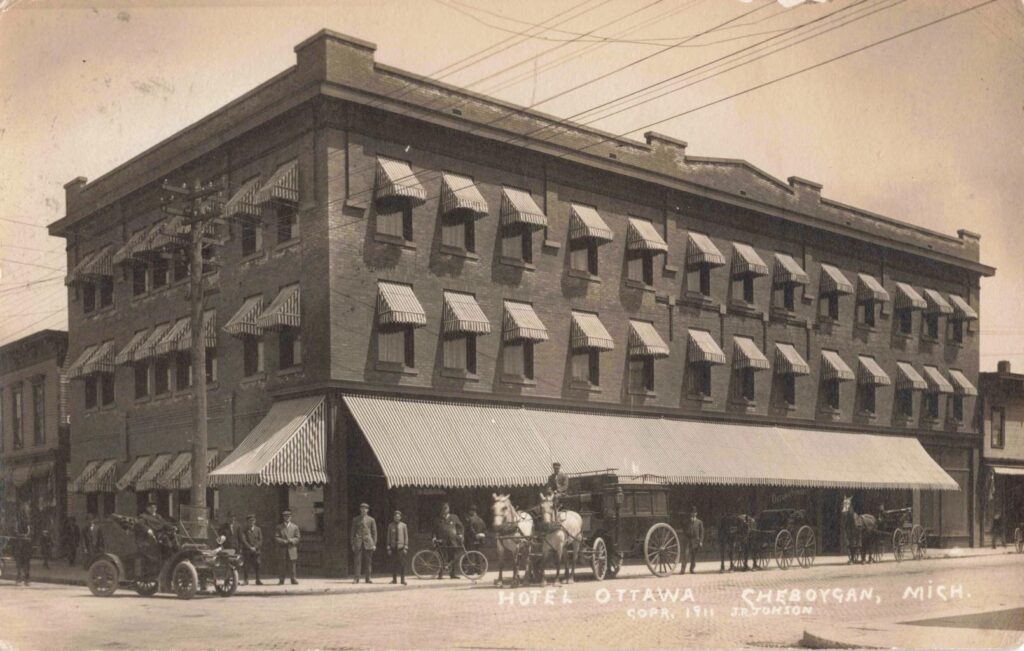
By the early 1900s, Main Street was a gallery of brick blocks. Electric lines crossed the street. Horse teams shared space with early automobiles. The Ottawa Hotel stood at a key corner with a café at street level. Surviving postcards confirm its role as a hub for travelers and salesmen. Scenes like these fix the history of Cheboygan Michigan in a very human scale—rooms rented by the week, hot coffee poured at dawn, and street life that mixed locals and visitors.
Leather, peas, and paper
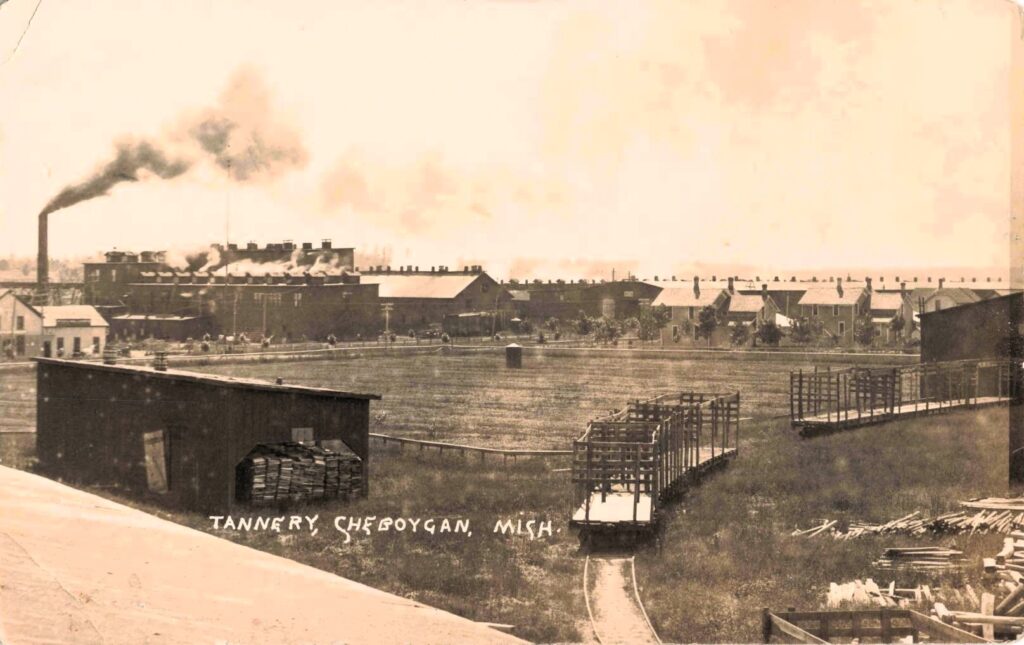
As big timber waned, Cheboygan tried other work. The Pfister & Vogel tannery, opened in 1892, grew into a 25-acre complex south of town. It meant steady pay in a demanding trade. On days off, crowds filled the Tannery Grounds to watch local baseball, a reminder that even industrial towns made time for simple pleasures.

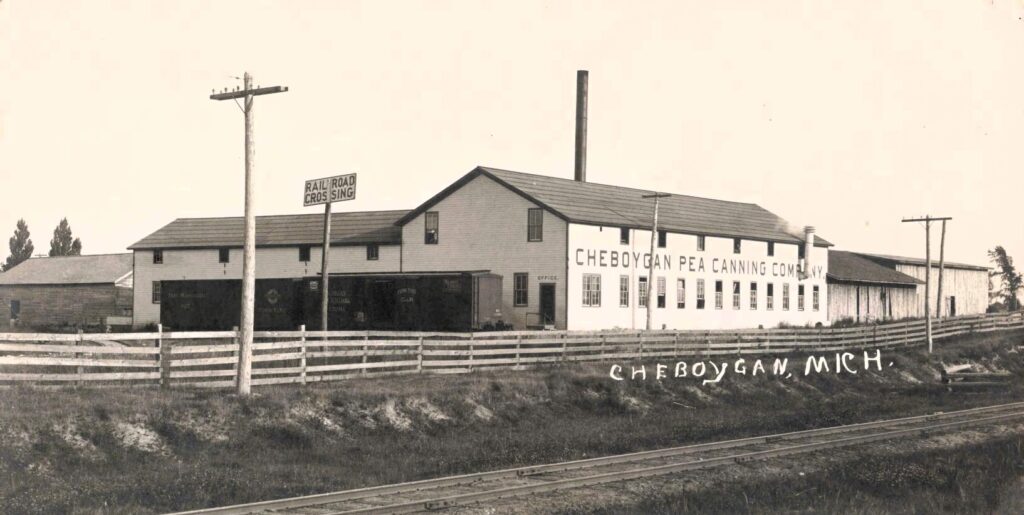
Around 1901 the Cheboygan Pea Canning Company leased fields and loaded boxcars by the tracks. For a brief season, a cyclecar firm moved into the old cannery, chasing the new auto market. It did not last, but it marked a town willing to try.

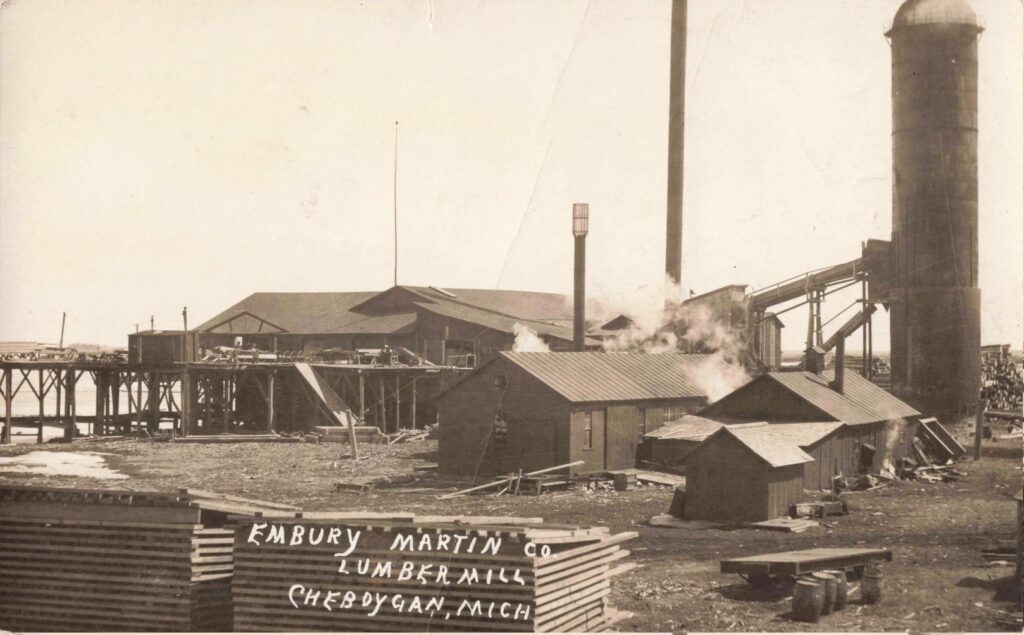
Paper kept the riverfront busy. The mill site changed hands several times: American Bag and Paper after 1902, Cheboygan Paper Company by 1915, and Union Bag and Paper by 1917. The stacks smoked through the 1920s, paused after 1929, and later restarted under new names. Paper carried Cheboygan into mid-century and remains part of how residents remember the river’s industrial side.
Steamers at the dock

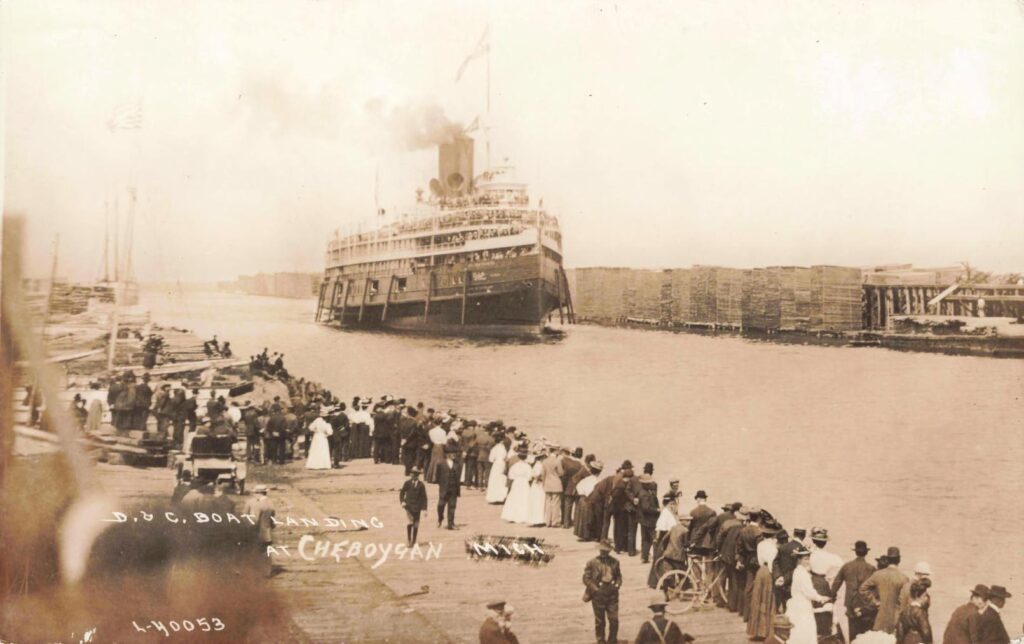
Not every boat hauled freight. When a D&C Navigation steamer rounded into the river, people lined the dock. The company’s ships linked Great Lakes towns, making Cheboygan feel connected to Detroit and the straits. Photographs from the era show packed decks, waving handkerchiefs, and a forest of hats on shore. These visits were events as much as transportation. They also helped shift Cheboygan toward summer travel and hospitality.
Bridges and continuity

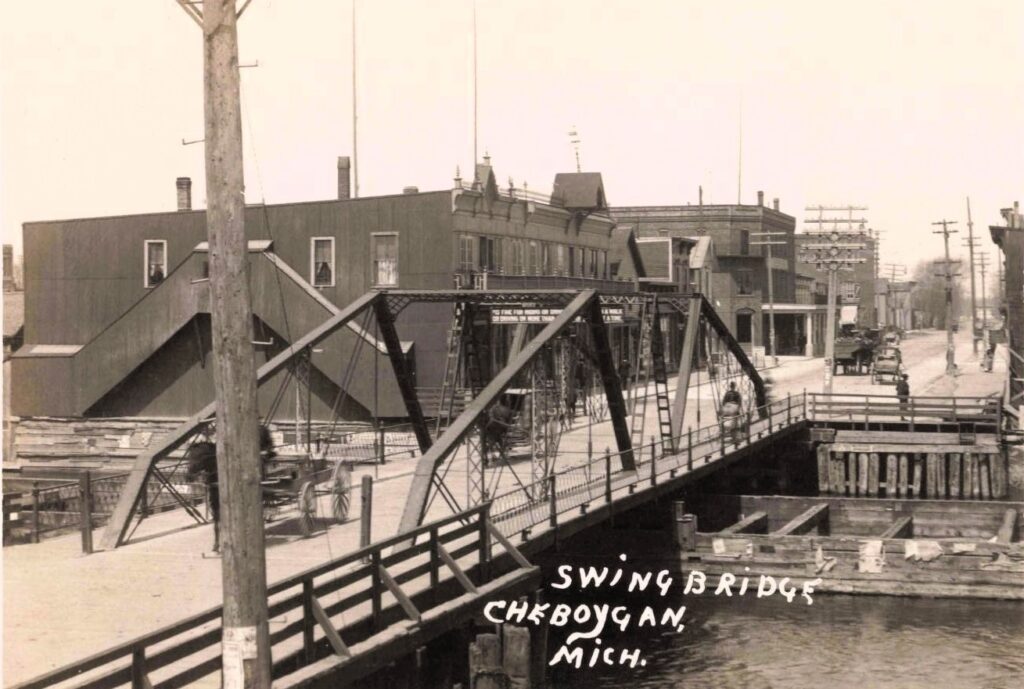
For decades, a swing bridge carried State Street across the river. It pivoted open on a central pier, then closed with a clang so wagons and cars could pass. In 1940, the city replaced it with a bascule bridge that still serves U.S. 23. The change captured the town’s habit of meeting new conditions with practical fixes. Here again, the History of Cheboygan Michigan follows the water and the need to cross it.
What has changed—and what remains
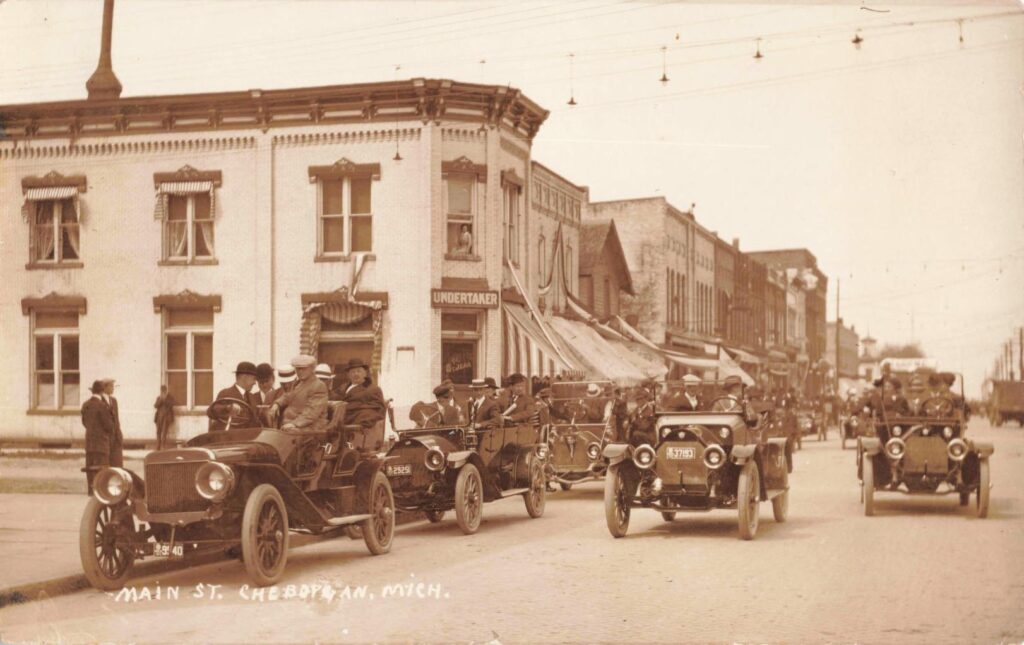
Today, the riverfront shows fewer stacks of lumber and more marinas. The lock serves mostly recreational craft. Visitors still arrive each summer, drawn by the Inland Waterway and the straits. Main Street has new uses, but its brick walls echo early-1900s scenes. The Ottawa Hotel is gone; the bridge is newer; the tannery site has changed. Yet Cheboygan still reads as a river town with a working memory. The History of Cheboygan Michigan is a plain story: adapt, keep the docks open, and make room for whoever comes up the river.
Cheboygan Dam 1900s vs 2026 Flood Risk
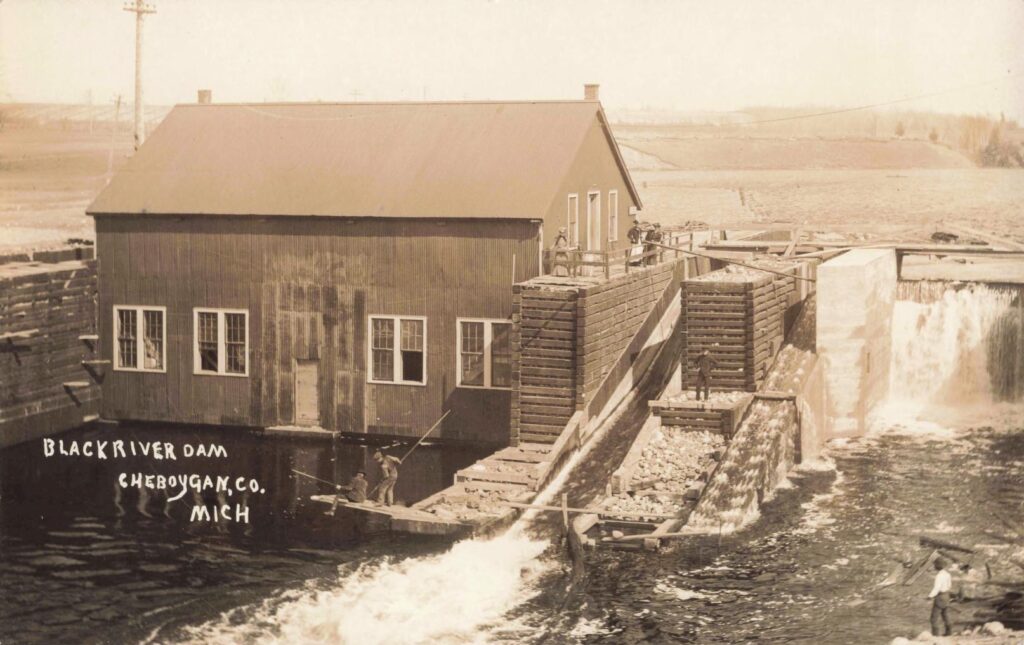
In northern Michigan, the Black River once powered more than scenery—it powered industry. In the early 1900s, the Cheboygan Dam stood as a working engine, controlling water for mills and moving timber that helped build the region. These photos show a place of constant motion—men guiding logs, water forced through narrow gates, the river put to work.

But dams like this also carry risk. Spring thaw has always tested them. Now, more than a century later, history feels close again. In April 2026, rising water pushed the river within inches of the top, forcing emergency action and reminding Cheboygan that control over nature is never guaranteed.
Images on this page may contain affiliate links in which we may receive a commission. See our affiliate disclosure for details.
Historic Photos of Detroit in the 50s, 60s, and 70s
Historic Photos of Detroit in the 50s, 60s, and 70s documents what a Metro Detroiter would have experienced through those decades, from the commonplace to a visit from John F. Kennedy.

Works Cited for the History of Cheboygan Michigan
“Cheboygan Paper Company Mill.” Michigan Railroads, n.d.
“A Brief History of Cheboygan County.” MiGenWeb–Cheboygan County, n.d.
“Cheboygan Bascule Bridge.” Wikipedia, 2025.
“Early Cheboygan: History, Settlement, and Boom.” Cheboygan Daily Tribune, 3 June 2019.
“Farming’s Roots Run Deep in the Cheboygan Area.” Cheboygan Daily Tribune, 30 Apr. 2018.
“Ottawa Hotel, Cheboygan, Michigan.” Detroit Public Library Digital Collections, 1911.
“Putting It on Paper: Paper Products Manufacturing in Cheboygan.” Cheboygan Daily Tribune, 23 July 2018.
“The History of the Inland Waterway.” Northern Michigan History, 2022.
“The Pfister & Vogel Leather Company.” Cheboygan Daily Tribune, 15 July 2018.
“Detroit and Cleveland Navigation Company.” Wikipedia, 2025.

