


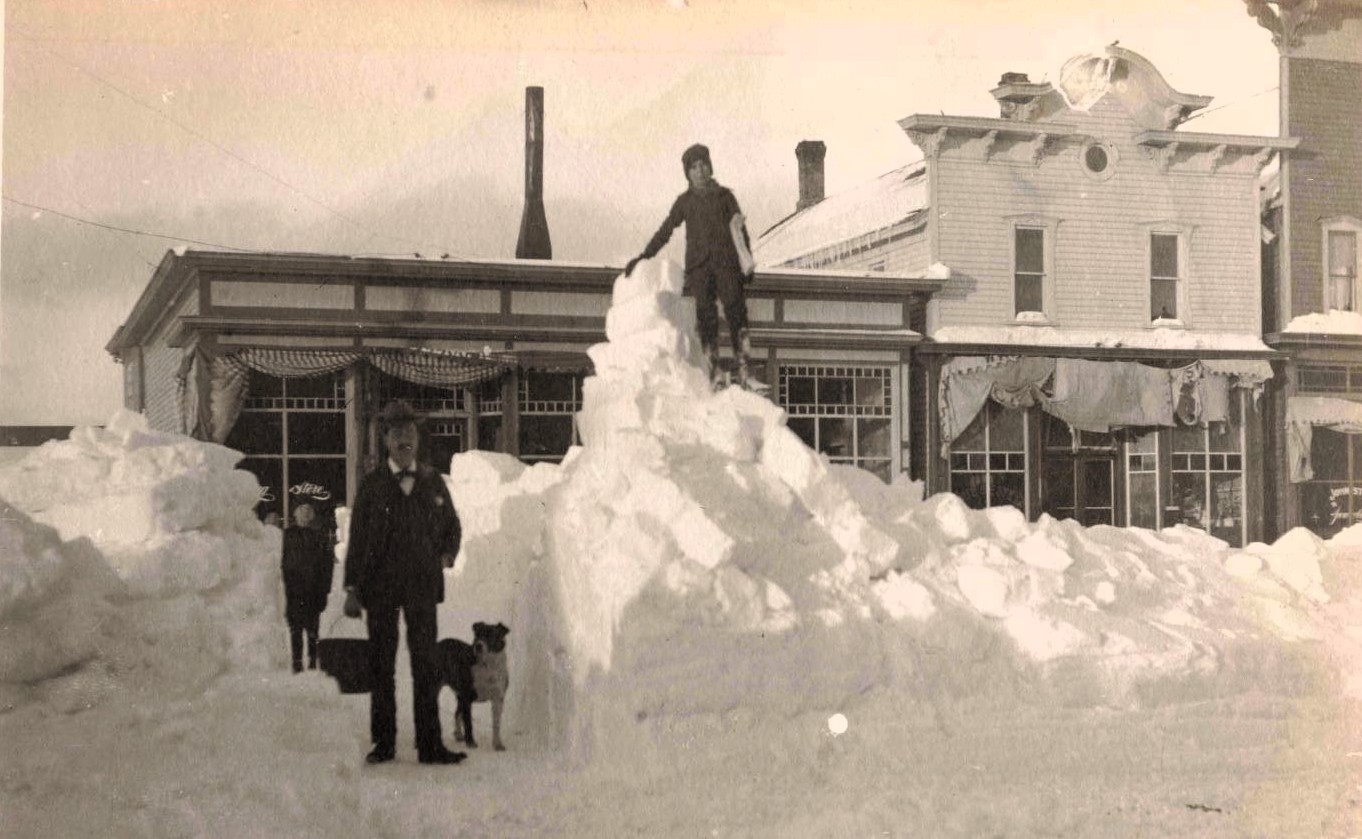
History of St. Helen Michigan – From Logging Boom to Beautiful Lakeside Village (1870-1940) – Video
The history of St. Helen, Michigan, begins in the 1870s, when a forest at the edge of the North Woods became home to lumber baron Henry Stephens. His St. Helen mills were among the largest in the state, sawing up more than a billion board feet of white pine in a few short decades. By 1881, Stephens & Sons had built 75 worker houses, two big mills, and a new railroad depot in St. Helen. The village grew up around these mills and the tracks of the Detroit, Bay City, and Alpena Railroad (later the Michigan Central) that served them.
Video – St. Helen, Michigan: From Lumber Boomtown to Lakeside Resort

A Northern Michigan town’s journey from sawmills to summer retreats.

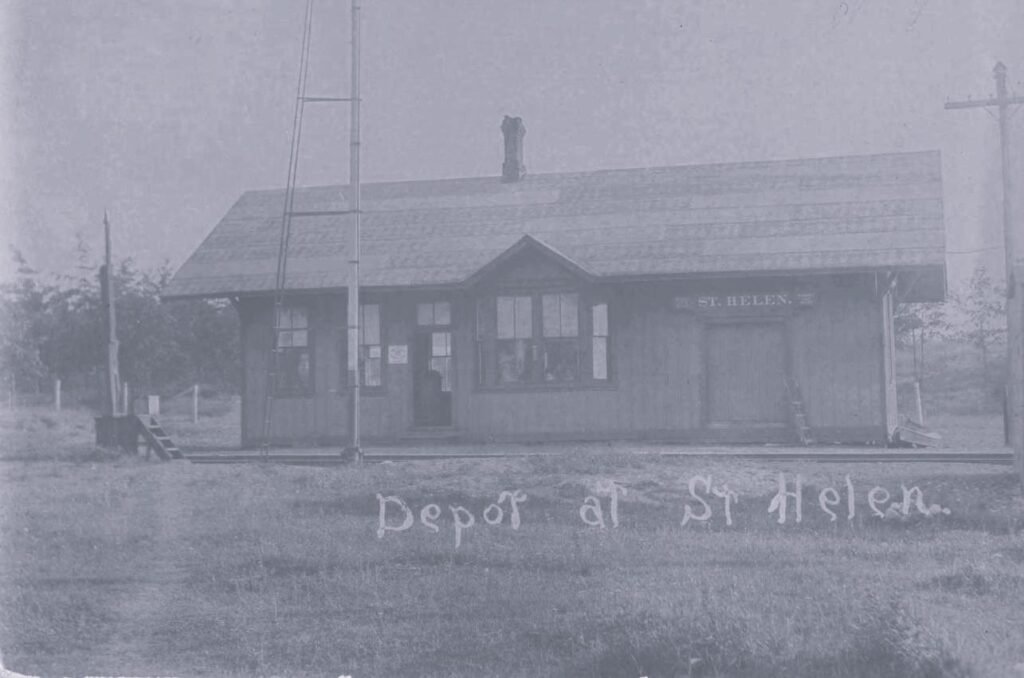
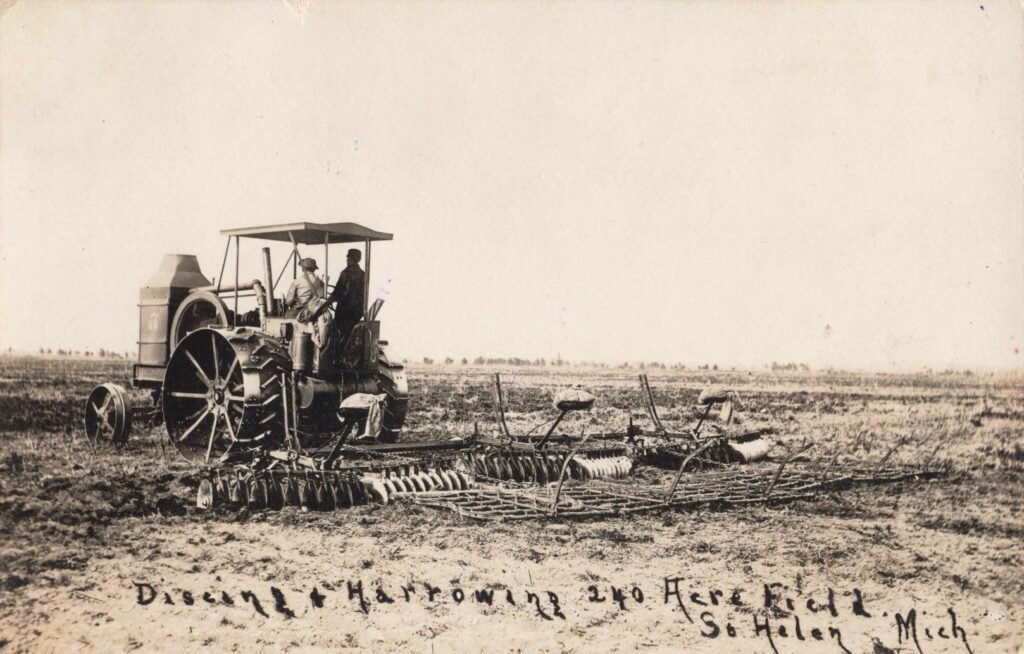
Early photos show a bustling depot and sawmill, steam locomotives chuffing into town, and log trains snaking out into the woods. But even as trees fell, town leaders began planning its future. In 1902, investor John Carter bought 144,000 acres nearby and turned it into farmland, while St. Helen’s Development Company (run by the Carter family) laid out roads, divided up land, and sold plots.

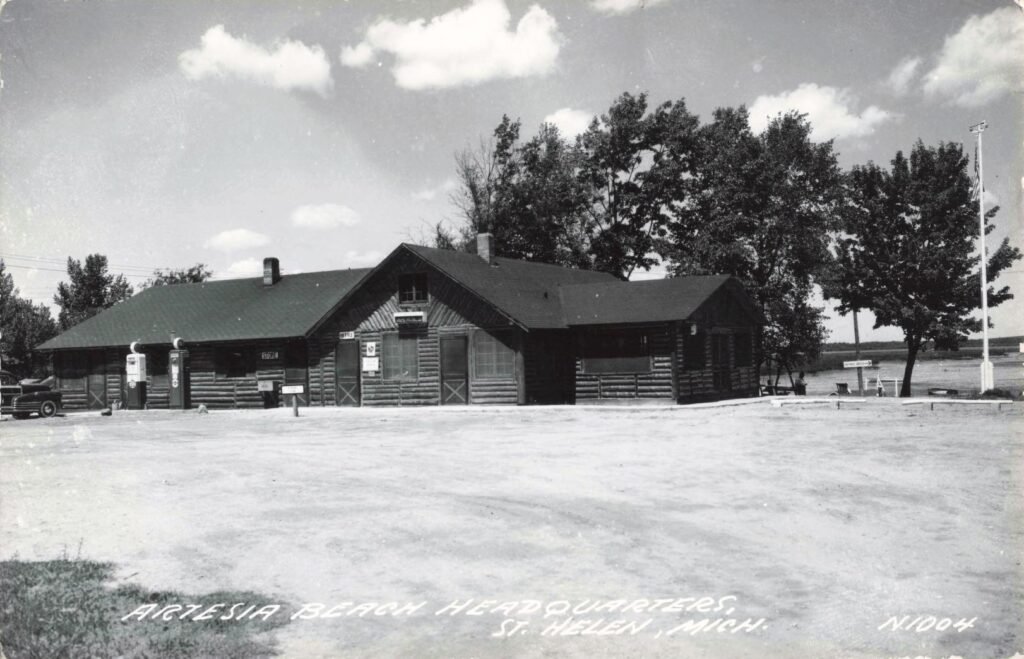
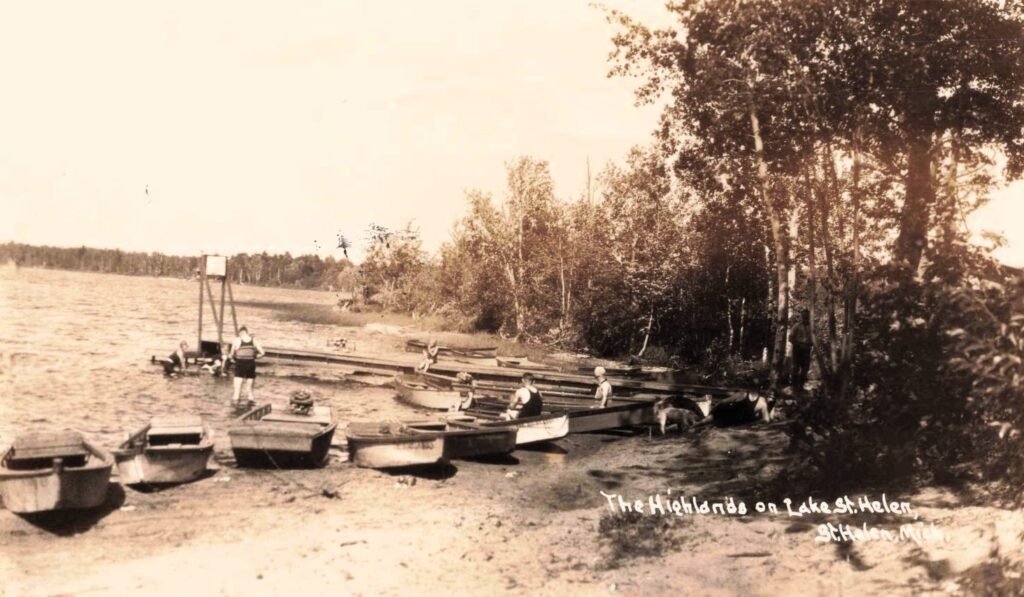
Once the lumber was cut, St. Helen slowly became a recreation hub. Lake St. Helen itself drew hunters and vacationers. In 1904, a new Lapeer County shooting club acquired long-term hunting rights on the lake (transferred by the local development company). Over time, simple fishing camps and docks turned into full-fledged resorts. Families could rent cabins or stay in summer hotels along the shore.
With Timber Gone, the Development Begins

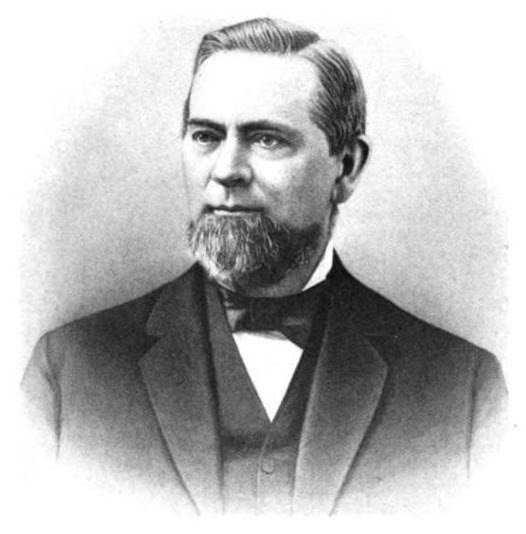
Stephen’s era left its mark. His men carved the sawdust town out of the wilderness, even as he bragged of cutting “50 million feet of lumber a year” by 1888. He employed nearly a thousand loggers and mill workers here in the late 1880s, maintaining his own logging railroads off the main line. But it was a short-lived bonanza.
Within two decades, much of the pine around St. Helen was gone. By 1893, one of Stephens’s mills was dismantled and shipped elsewhere. When the big mills shut down or were moved, St. Helen did not die out entirely. Many ex-loggers stayed on, farming the clear-cut land and serving the new resort trade.

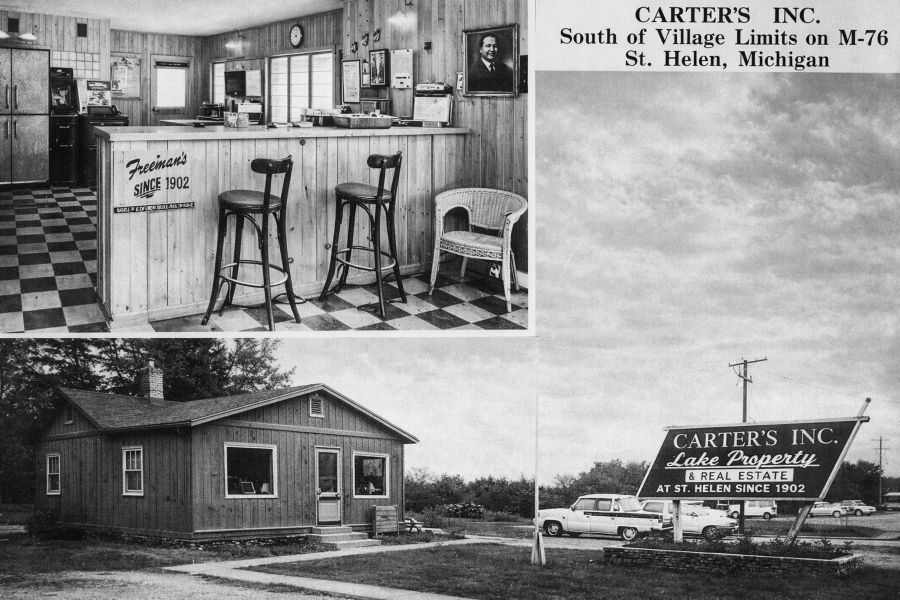
John Carter’s grandparents had made money selling land and publishing magazines back in Illinois. They applied the same hustle here. Carter opened a Chicago sales office and sold many acres of land in southern Roscommon County to newcomers from northern Michigan. The real estate office above shows the Carter name on Main Street. The family also kept close control of Lake St. Helen’s shoreline: every property sale came with reserved shooting rights for the local club.
Schools and Social Life

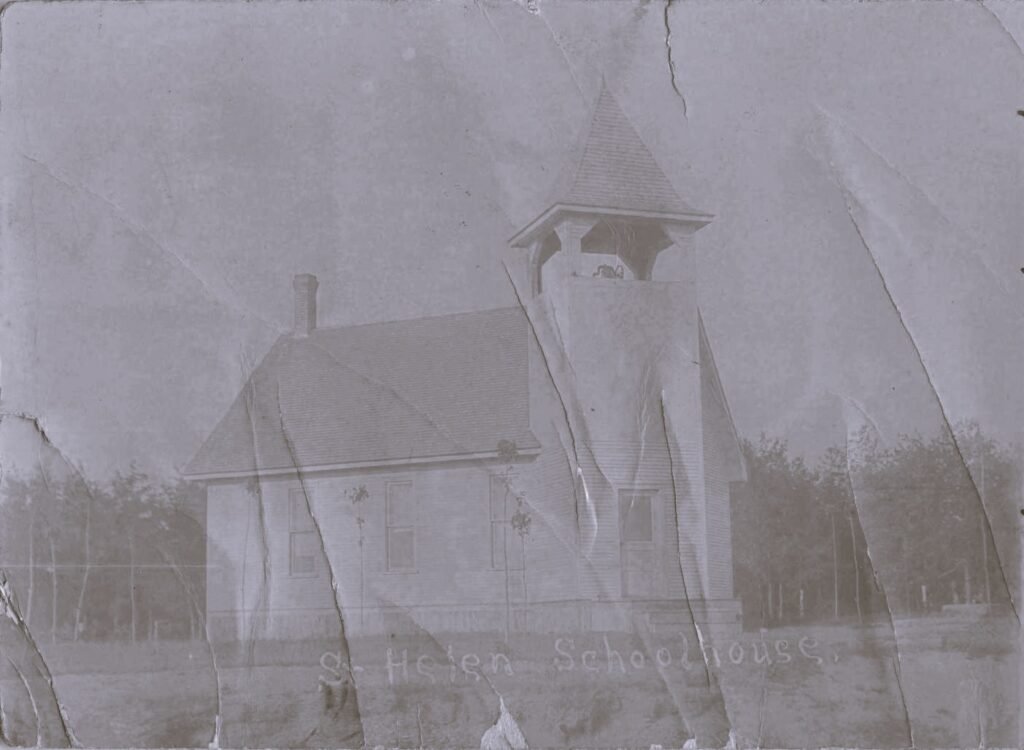
St. Helen’s community life coalesced around its schools, stores, and churches. In the early 1900s, children attended a one-room schoolhouse at the edge of town. Imagine thirteen students in eight grades together in a single classroom. That old school was later replaced by a stone “Old School” built by the WPA in 1938, which still stands near the town’s Veterans Memorial.

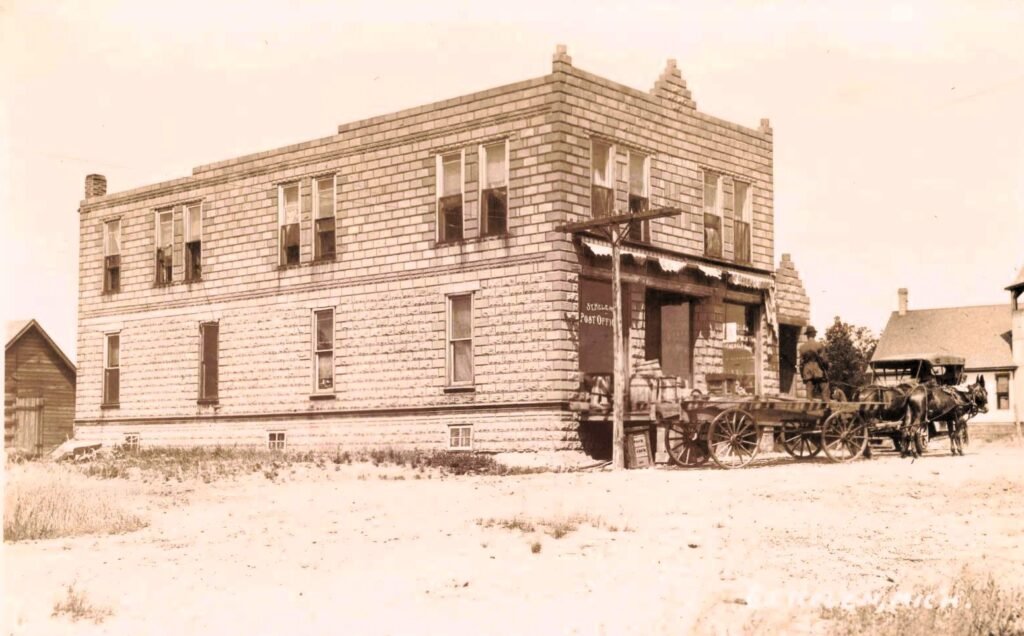
A general store and post office served as the social center for decades. A circa-1936 photograph of one such store (and attached post office) shows a simple gabled building with a porch and hitching posts – the heartbeat of rural life. After school or church, neighbors would gather at the store to pick up mail, buy sugar and tobacco, and swap local news.
Charlton Heston Grew Up in St. Helen


By mid-century, St. Helen had become small but stable. One famous family lived on the outskirts of town. When Hollywood star Charlton Heston was a baby in 1923, his parents moved here so his father could work in the local sawmill.
Young Charlton grew up on the Carter family’s big lumber estate. He later recalled hauling kindling and playing alone among these pines. Even after Heston’s family left for California, the woods of St. Helen remained part of his identity.
As he wrote decades later, “the forests of Michigan were a wonderful place for a boy to grow up”.
St. Helen’s Embraces Tourism and Cottage Life

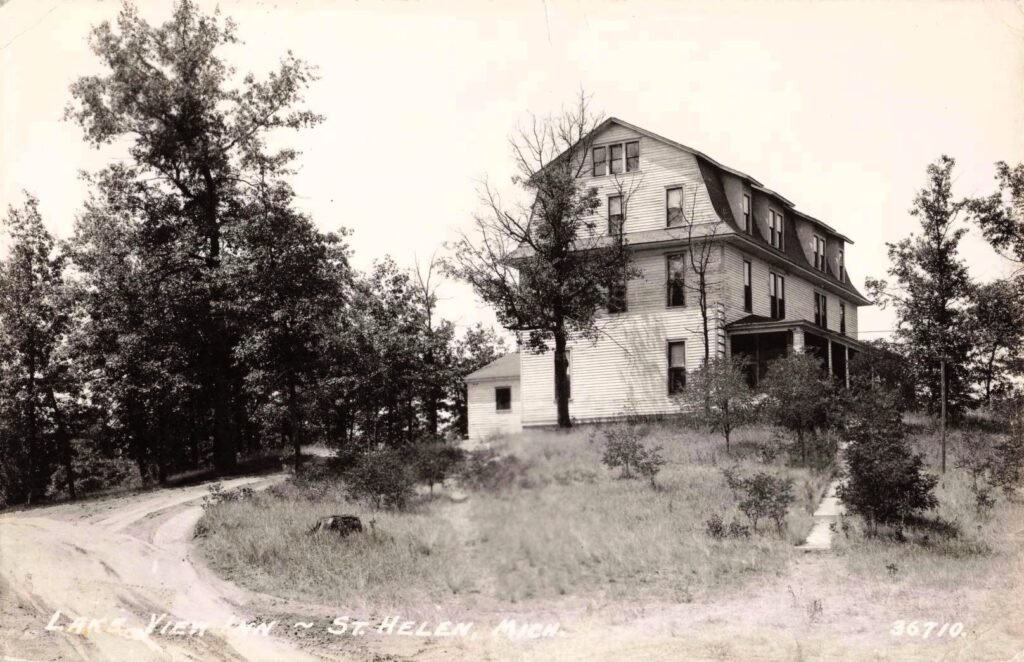
After World War II, tourism grew. The Lakeview (or Cedar) Inn and other lodgings catered to hunters, fishermen, and families.

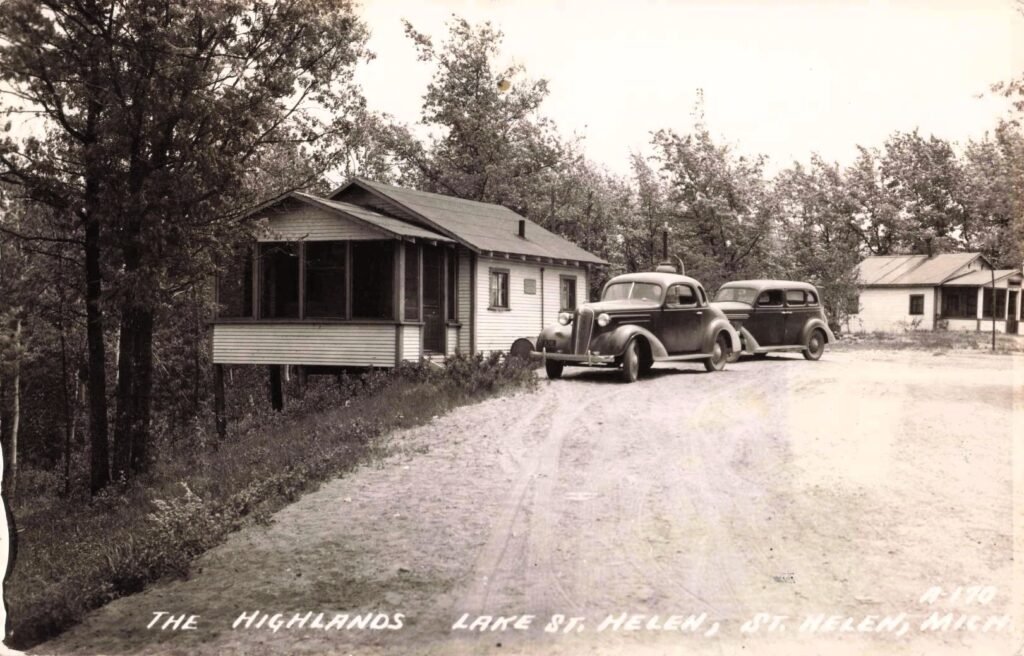
Today, visitors can still rent cabins or campgrounds that trace back to those early resorts. In fact, St. Helen’s Township Park (on Airport Road) includes picnic grounds by the water, echoing the town’s origins as a vacation spot.

By the 1930s and 1940s, life in St. Helen was calm. The veterans’ hall saw parades on Memorial Day. Local kids went to school, then helped in mom-and-pop stores.

The Civilian Conservation Corps and WPA even built local projects such as roads, parks, and the stone school, leaving a legacy of stonework and signage we still see today.

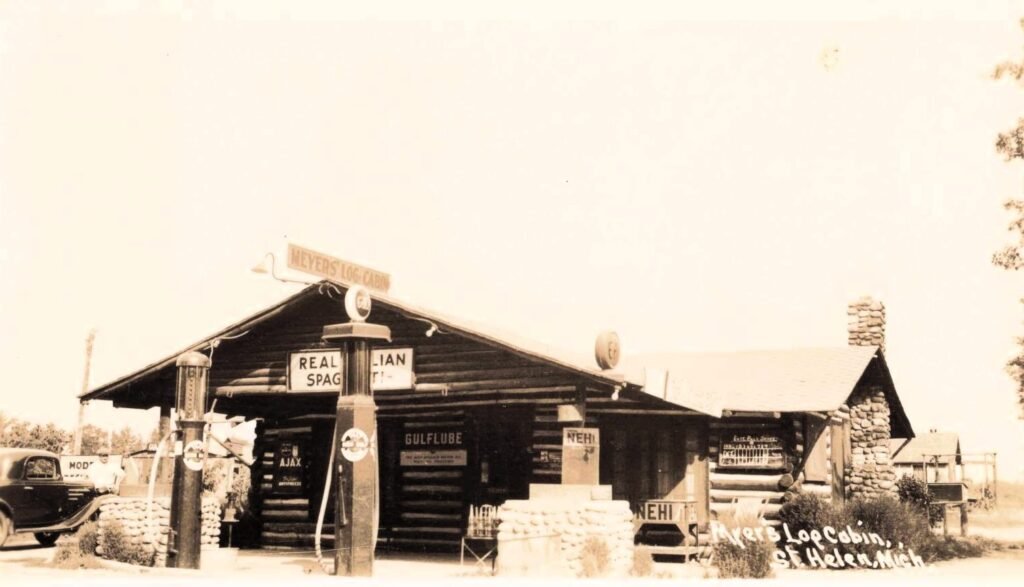
Roads like M-76 (old U.S. 27) brought travellers by car. During the Great Depression, work was scarce, but timber and tourism kept the town afloat.

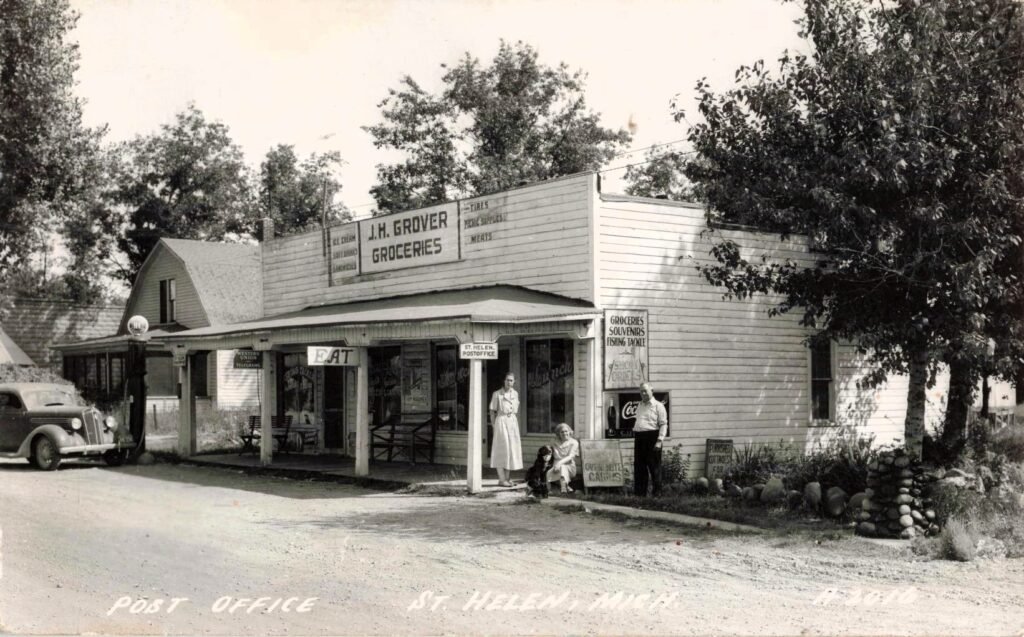
Today, St. Helen is a quiet rural community, but its past draws interest. History buffs come to search out the old depot or the log cabin homes that remain. Locals point out rusted steam engines left behind by the railroad or plaques about Henry Stephens.

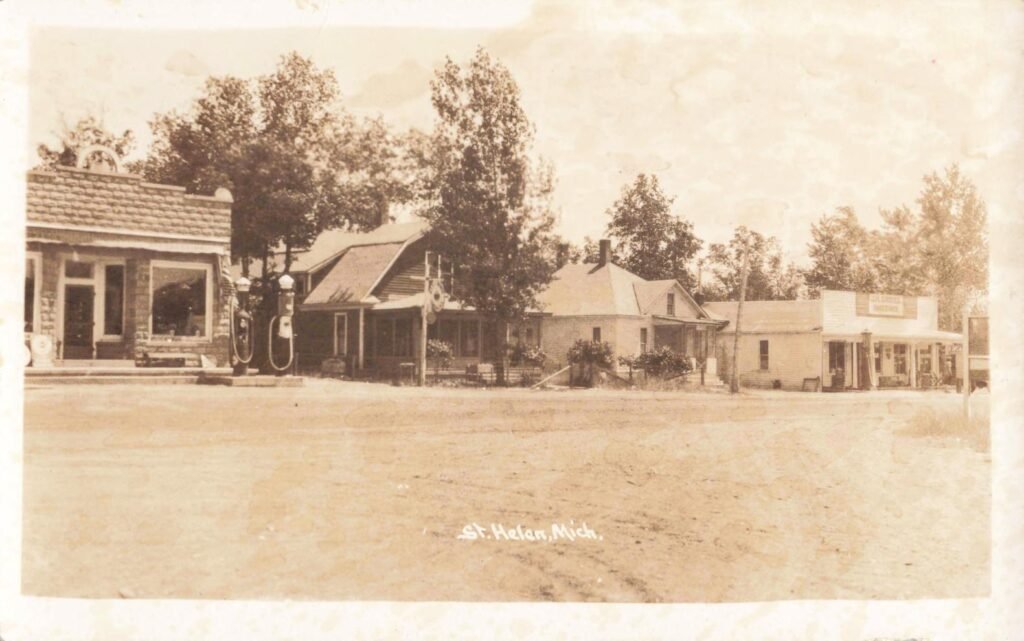
The town’s Veterans Memorial honors local soldiers in another small tableau of history. Annual events like the Bluegill Festival (now over 75 years old) keep community traditions alive. Through it all, St. Helen’s story – of lumber barons, land developers, big dreams, and one-room schools – illustrates a chapter in Michigan history few expect to find on a modern map.
Works Cited for the History of St. Helen Michigan

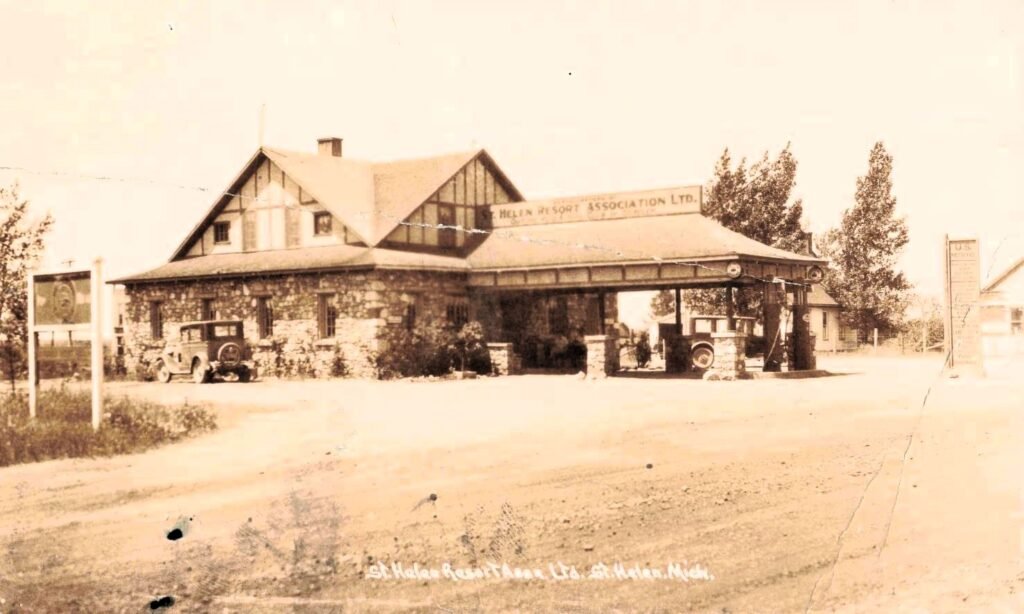
"Artesia Beach, Lake St. Helen, St. Helen, Mich.". David V. Tinder Collection of Michigan Photography, William L. Clements Library, University of Michigan, 1949.
"Cedar Inn on M76 14 miles north of West Branch at St. Helen, Mich.". David V. Tinder Collection of Michigan Photography, William L. Clements Library, University of Michigan, n.d.
"Depot at St Helen depot". David V. Tinder Collection of Michigan Photography, William L. Clements Library, University of Michigan, 1908.
"Lake View Inn, St. Helen, Mich. St. Helen Resort Assn. Ltd.". David V. Tinder Collection of Michigan Photography, William L. Clements Library, University of Michigan, n.d.
"Lapeer gun club Camp at Lake St. Helen Mich.". David V. Tinder Collection of Michigan Photography, William L. Clements Library, University of Michigan, 1913.
"Myers Log Cabin, – St. Helen, Mich.". David V. Tinder Collection of Michigan Photography, William L. Clements Library, University of Michigan, n.d.
"Post Office, St. Helen, Mich.". David V. Tinder Collection of Michigan Photography, William L. Clements Library, University of Michigan, 1946.
"St. Helen, Mich.". David V. Tinder Collection of Michigan Photography, William L. Clements Library, University of Michigan, 1931.
"St. Helen Resort Assn. Ltd.". David V. Tinder Collection of Michigan Photography, William L. Clements Library, University of Michigan, n.d.
"St. Helen Resort Assn. Ltd. St. Helen, Mich.". David V. Tinder Collection of Michigan Photography, William L. Clements Library, University of Michigan, 1921.
"St. Helen School House". David V. Tinder Collection of Michigan Photography, William L. Clements Library, University of Michigan, 1903.
Stewart et al. *“St. Helen, Michigan.”* Visit Houghton Lake (tourism site), 2021. Web. [VisitHoughtonLake/St.HelensHistory].
“Station: St. Helen, MI.” *MichiganRailroads.com*, 2025. Web. Michigan Rail History. [MI Railroads].
Christensen, Kenneth E. *Lake St. Helen Migratory Waterfowl Study,* 1954. Michigan Dept. of Conservation. Print. (Details St. Helen Shooting Club and lake rights.)
Wernar, David. *“Charlton Heston’s Northwoods Boyhood.”* MyNorth.com (N. MI mag.), 2014. Web. [Heston MyNorth].