



History of Mt. Clemens Michigan – 7 Remarkable Highs and Hard Truths from Bath City U.S.A.
The History of Mt. Clemens, Michigan, in the late nineteenth and early twentieth centuries is a story of a town that turned an apparent failure into its greatest asset. Drillers who came here in the 1870s searched for oil. Instead, they brought up hot, foul-smelling brine that stained tools and left mineral crusts on the ground. What looked useless to oil men soon attracted doctors, hotel builders, and thousands of visitors looking for a cure.

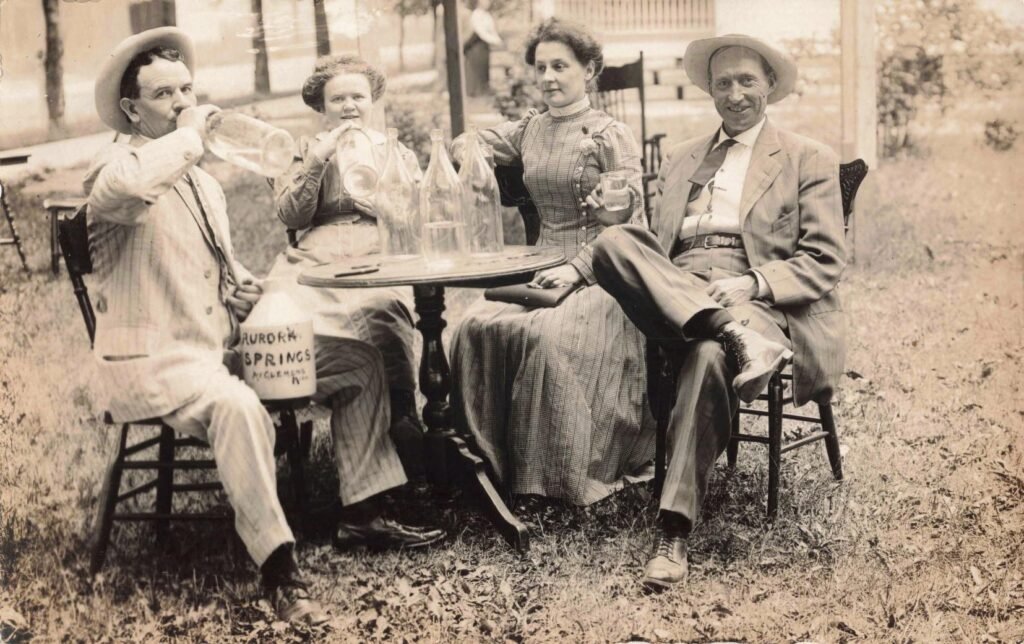
Table of Contents for Bath City USA
Video – The History of Mt. Clemens, Michigan: From Dry Holes to Bath City U.S.A.

From Oil Fever to Mt. Clemens Mineral Baths

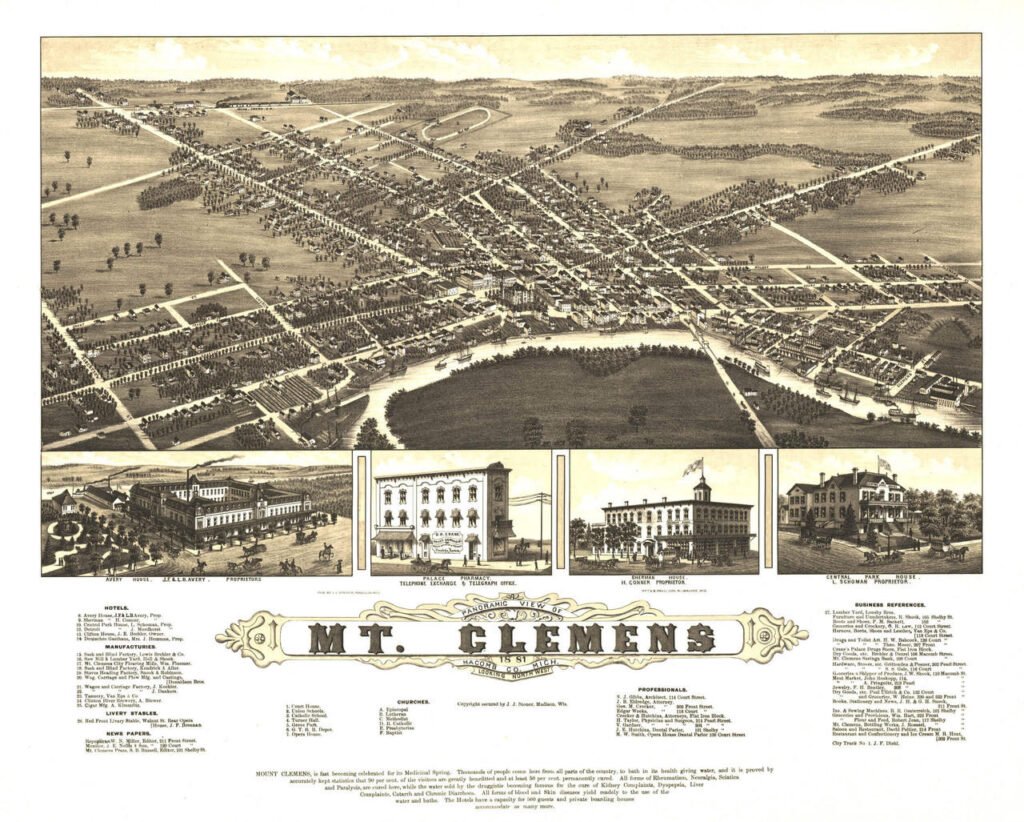
Speculators who drilled around Mt. Clemens hoped to match the oil strikes of Pennsylvania. Tests on the strange water they found showed high levels of dissolved minerals. Local physicians began to argue that controlled baths in this water might ease arthritis, rheumatism, psoriasis, and nervous conditions. By 1873, townspeople financed the first bathhouse, called The Original, near the Clinton River. It was soon tied to the Avery and Egnew hotels by covered passages, giving patients a sheltered route from room to tub.

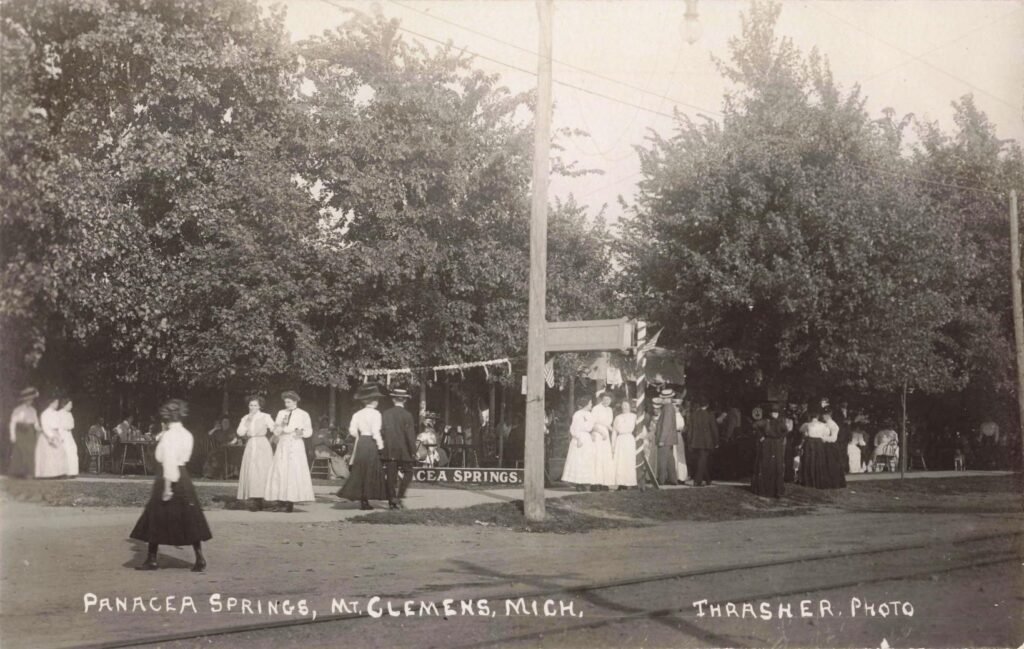
That decision marks a turning point in the History of Mt. Clemens, Michigan. Instead of chasing oil, the town embraced tourism built on mineral water. For roughly seventy years, the bath trade became its largest industry.
Gratiot Avenue: The Busy Heart of a Spa Town

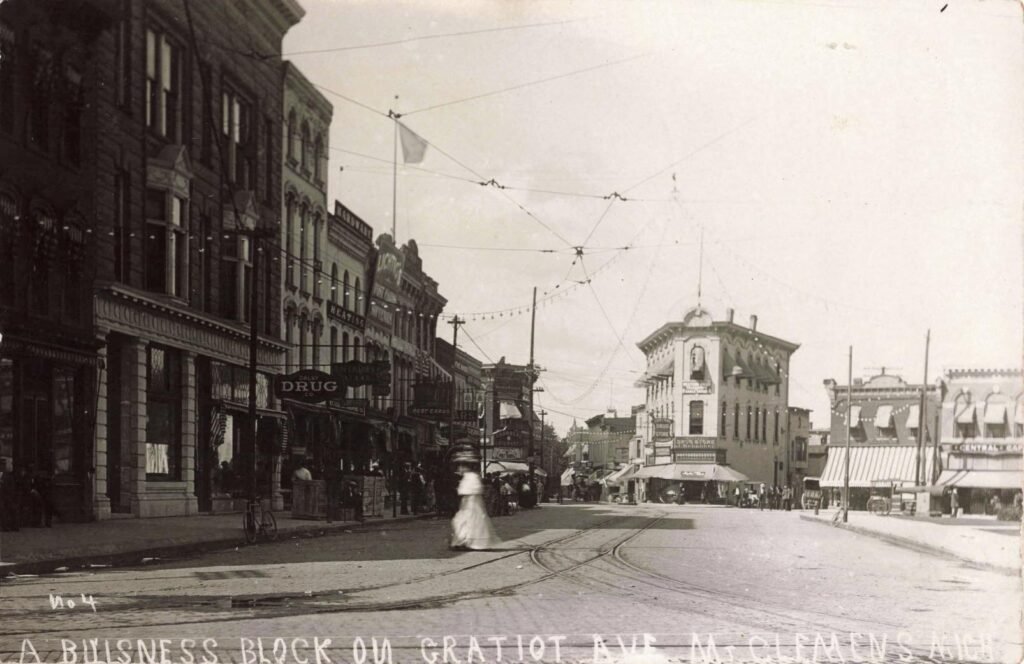
We see the “Business Block on Gratiot Ave., Mt. Clemens, Mich.” The brick buildings line a curving street. Daly Drug’s sign hangs out over the sidewalk. Overhead, streetcar wires form a web. A woman in a long white dress crosses the car tracks, slightly blurred.
This is everyday downtown life, but just under the surface lies the pipe network that carried hot mineral water from wells to hotels and bathhouses. Rail and interurban lines stopped nearby, feeding waves of visitors who spilled onto these sidewalks.
Bath Houses: Hot Water and High Hopes

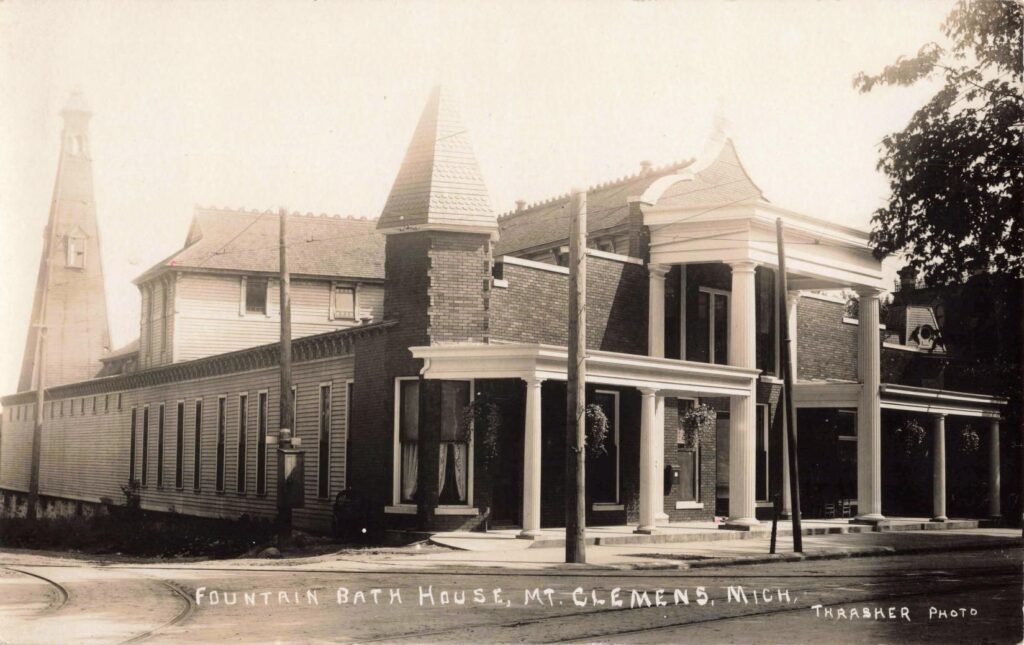
The bathhouses gave Mt. Clemens its identity. The Fountain Bath House, shown in one of your cards, was praised as cheerful and efficient, able to handle about 500 patrons a day. Queen Anne-style porches wrapped the associated Fountain Hotel, and enclosed passages tied the complex to nearby buildings so guests could move in comfort, even in winter.

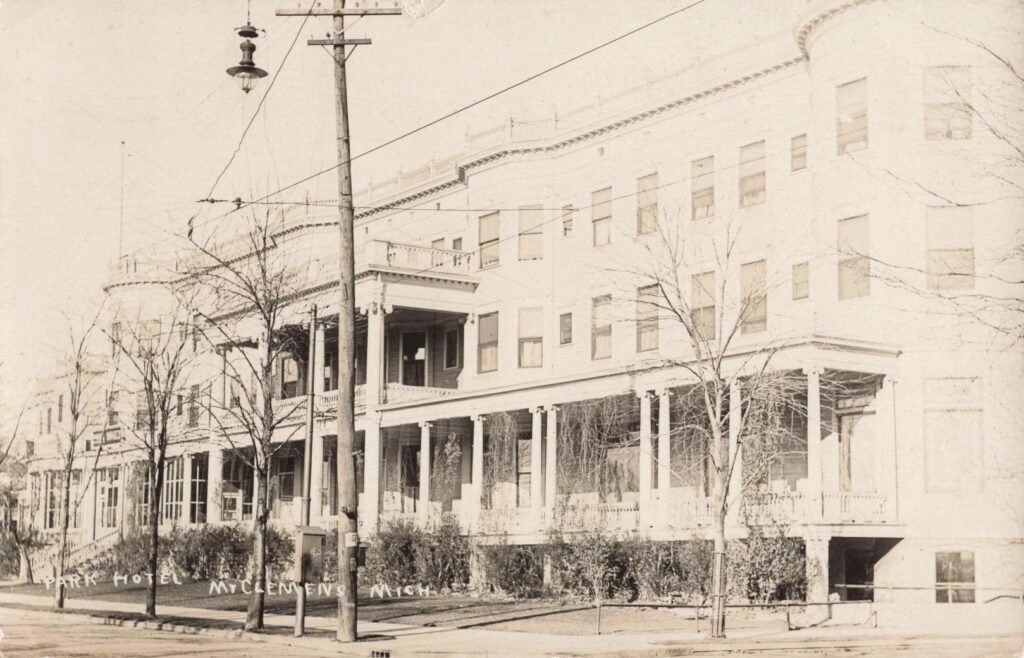
Another card shows the Park Hotel and Bath House overlooking the Clinton River. With broad porches and a long facade, the Park ranked among the finest houses in the state and drew guests from across the country.

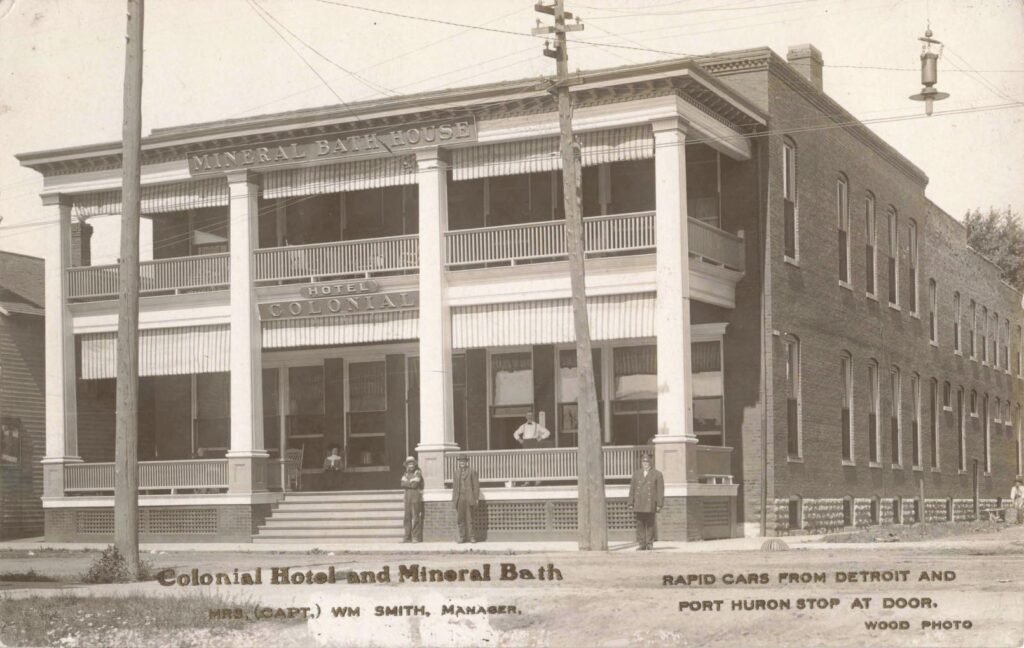
The Colonial Hotel and Mineral Bath, opened first as the Mt. Clemens Sanitarium in 1896 on Gratiot Avenue, became another landmark. It sat on one of the higher points of the city, surrounded by lawns. Promotional cards boasted that rapid electric cars from Detroit and Port Huron stopped right at the front steps.
The Clementine and the Avery: Icons of Bath City

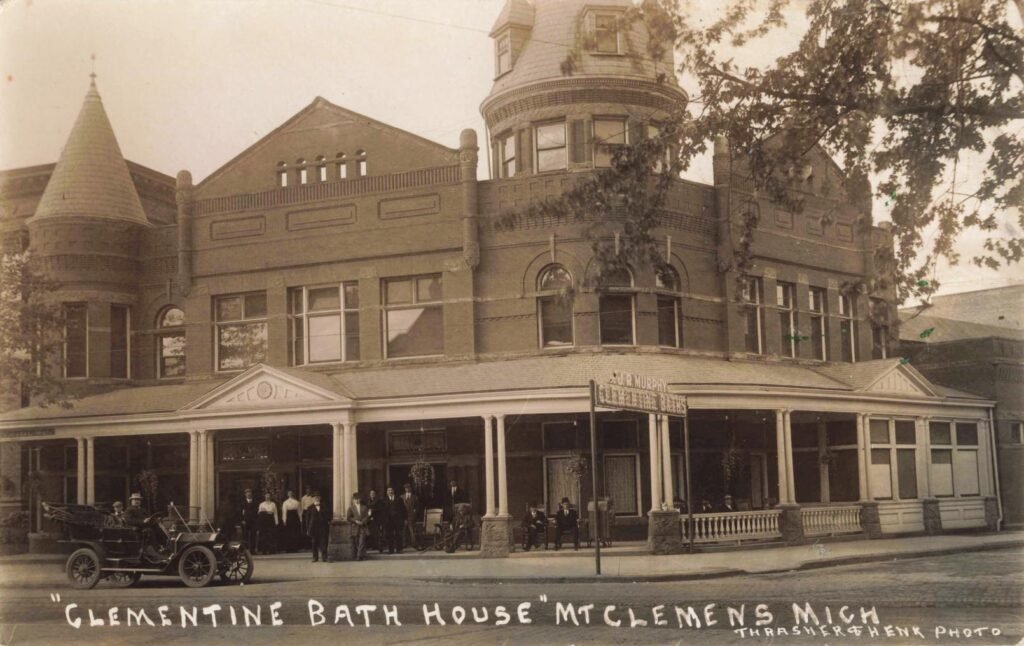
The Clementine Bath House, built in 1892–93 by Benjamin B. Coursin and later purchased by John R. Murphy, embodied the height of the bath era.
We see its brick front with turrets and a long porch edged in columns. An early automobile and a row of men in dark suits give the scene a confident, almost theatrical air.
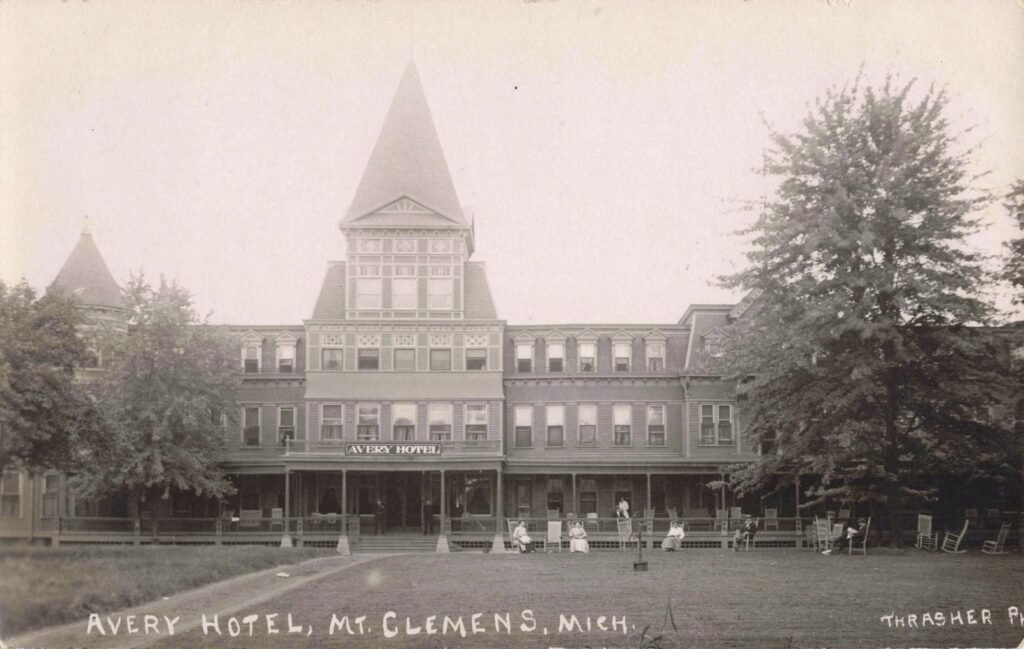
Nearby, the Avery Hotel anchored the connection to The Original bath house. A postcard from about 1910 shows a central tower rising over a long facade, with a lawn full of rocking chairs and guests in white clothing.
These images capture a key element in the History of Mt. Clemens, Michigan: the partnership between wells, medical claims, and hospitality. Patients did not just take baths; they signed up for three-week stays, complete with meals, carriage rides, and evenings spent listening to music on wide porches.
Getting There: Trains, Electric Cars, and the Power Plant

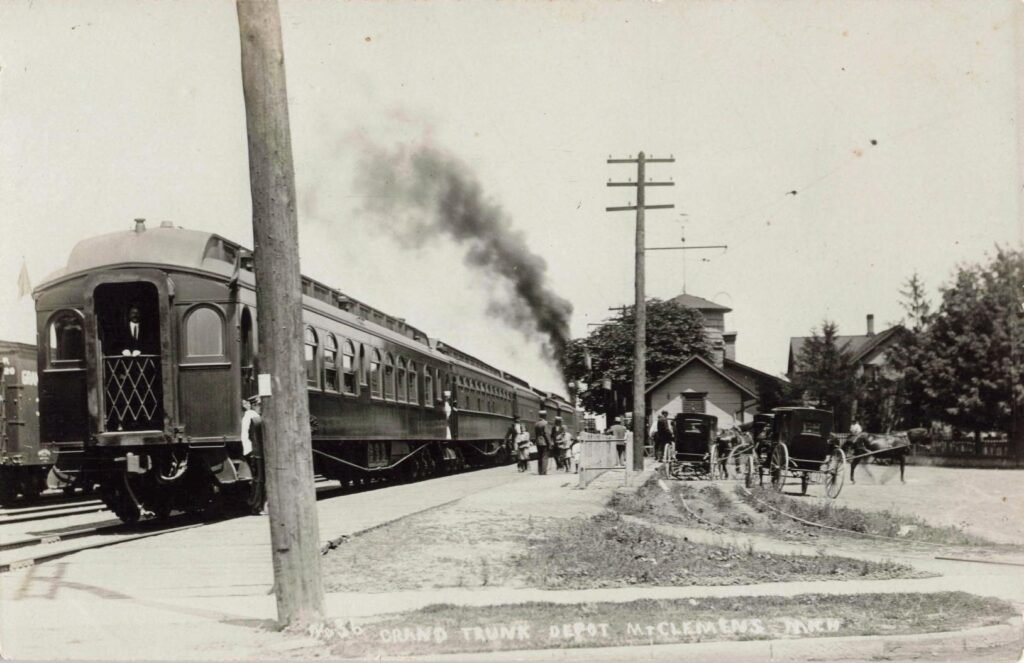
Mt. Clemens’ boom depended on good connections. Another postcard shows the Grand Trunk depot. A long passenger train idles on the track while smoke from the locomotive drifts over the platform. Horse-drawn cabs stand ready to carry visitors straight to the baths.
This depot, now operated as the Michigan Transit Museum, is also linked to one of the most famous names in American history. As a teenage newsboy on the Grand Trunk line, Thomas Edison rescued station agent J. U. Mackenzie’s young son from an oncoming car, and Mackenzie repaid him by teaching him railroad telegraphy at this station—training that helped launch Edison’s later work with electricity and communication.
Role of the Interurban Street Cars in Mount Clemens

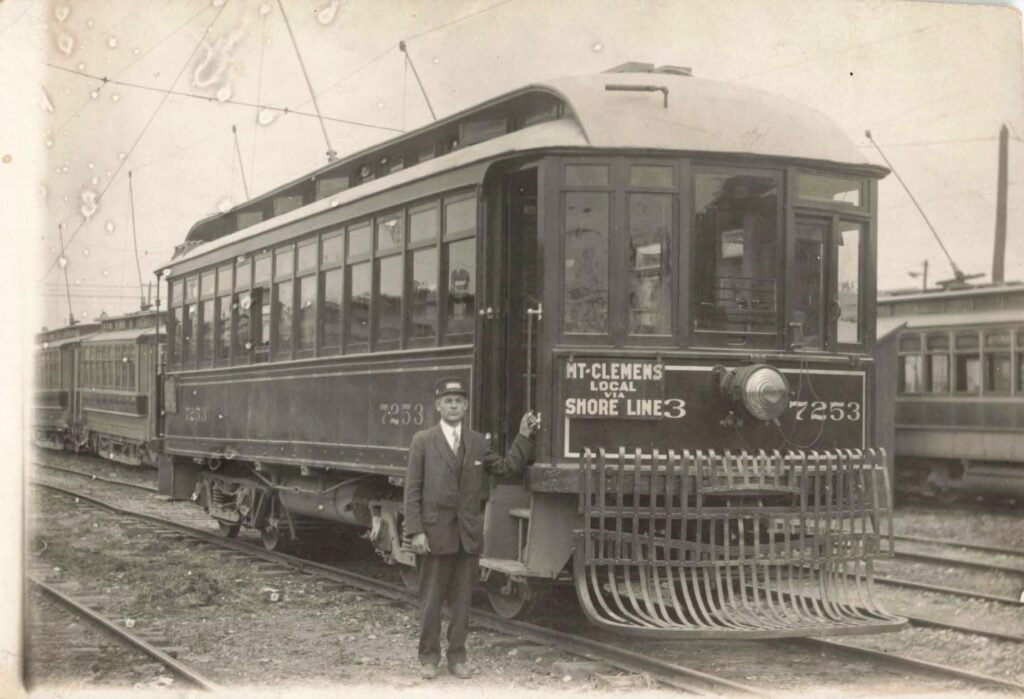
Alongside the steam trains, electric interurban street cars made Mt. Clemens feel much closer to Detroit and Port Huron. Frequent, low-fare service let factory workers, shop clerks, and middle-class families ride up for a three-week cure or even a single day of baths and shopping.
Early Electric Power
Mount Clemens stepped into the electric age in 1888, when the Fountain Bath House installed the first electric lights in the city using its own on-site generator. Within a couple of years, local leaders such as George M. Crocker and Capt. Dulac were promoting broader electric lighting in town, laying the groundwork for a municipal plant that was in full operation by the early 1900s.

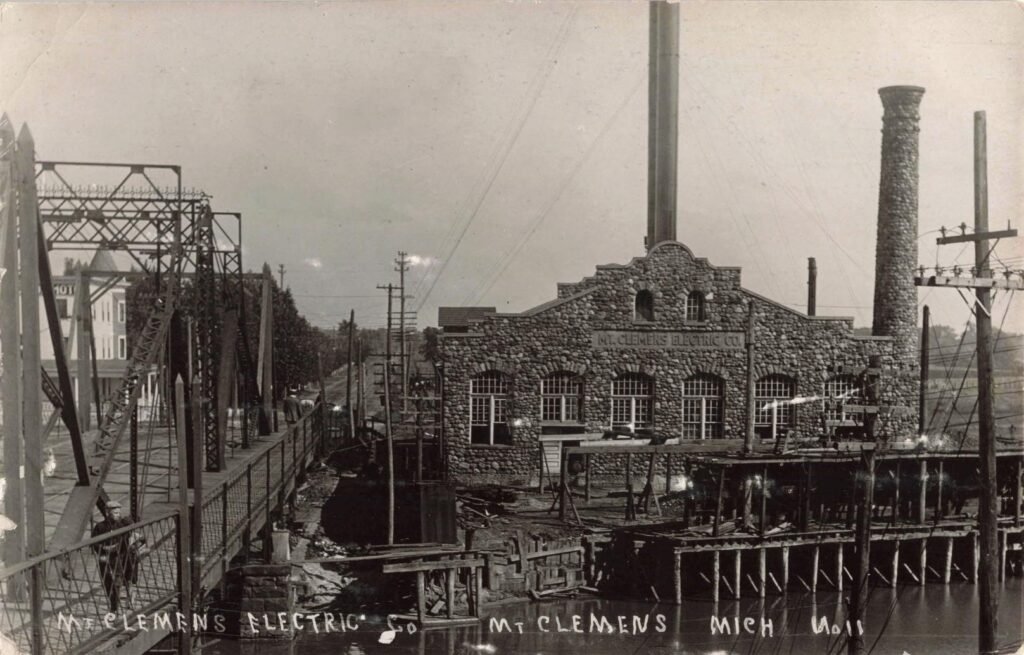
Modern utilities supported it all. Your view of the Mt. Clemens Electric Company plant shows a stone powerhouse with a tall stack rising above the riverbank. Inside, generators supplied power for hotels, pumps, and streetcars.
Electricity did not create the mineral bath industry. Still, it made “Bath City” far more attractive and efficient: hotels and bath houses could run pumps, elevators, and lights late into dark winter afternoons, while illuminated streets and porches reassured visitors that they were in a modern health resort, not a backwoods spa.
Beyond the Baths – Life in Mt. Clemens
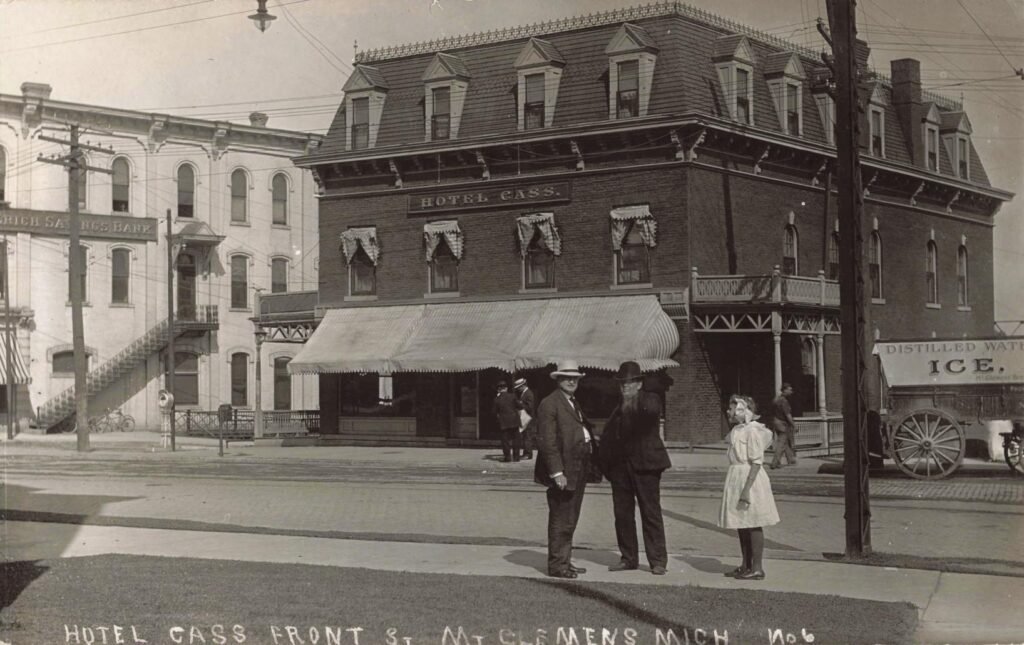
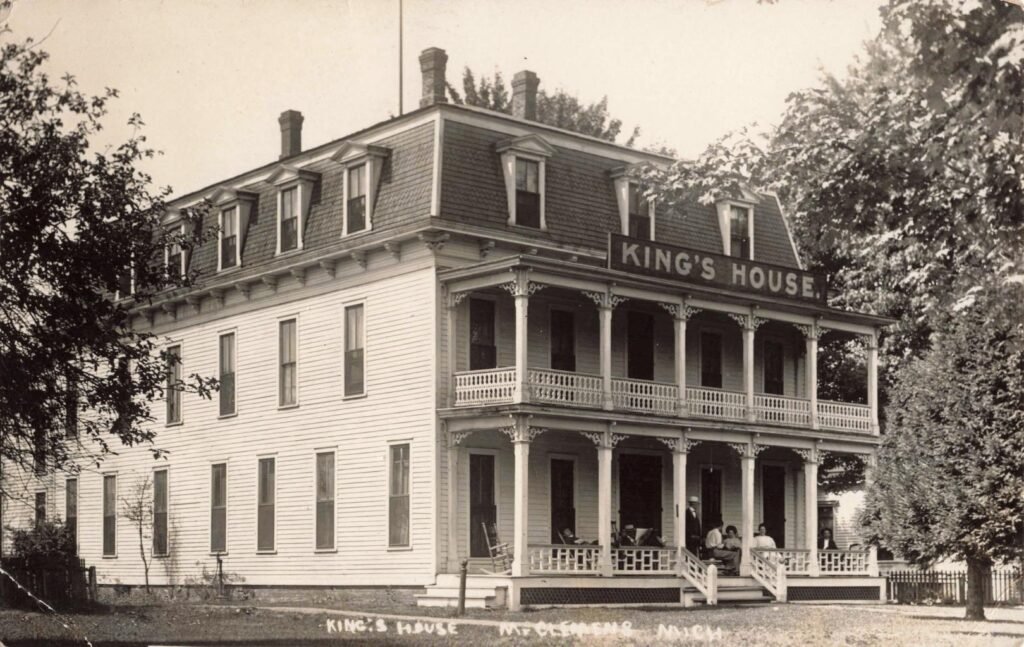
Downtown hotels like the Eastman and the smaller Hotel Cass rounded out the scene. Their brick walls, mansard roofs, and striped awnings appear in several cards, often with well-dressed guests posing out front.
Leap The Dips, The Largest in the World

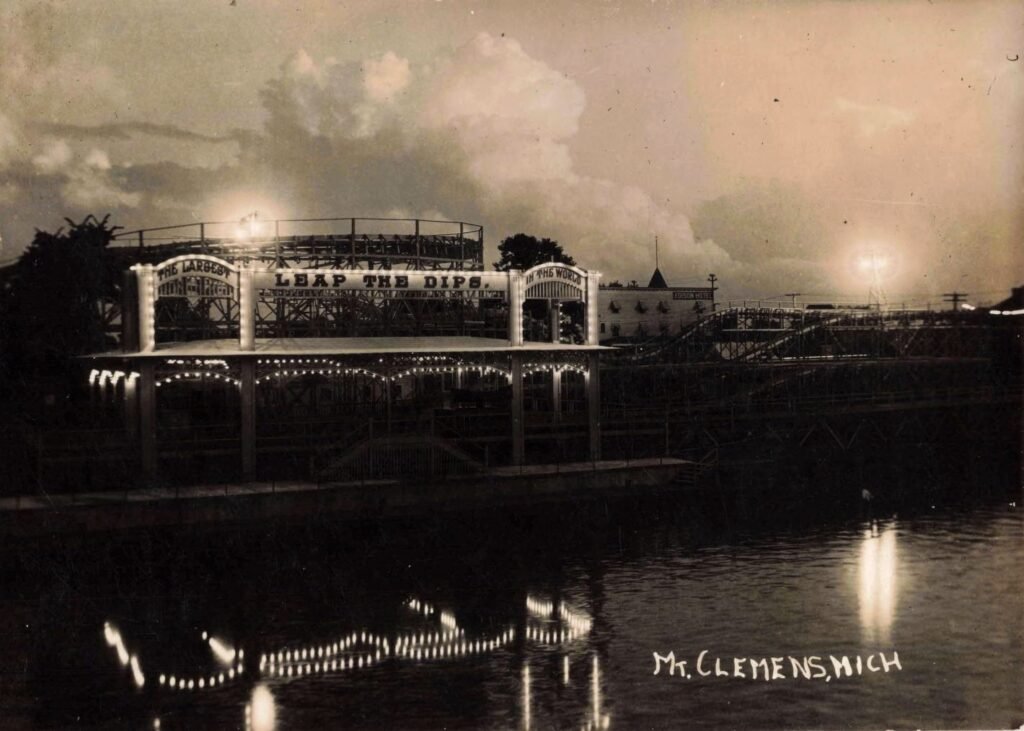
Away from the mineral tubs, Mt. Clemens tried hard to keep visitors entertained, and nothing shows that better than the wooden coaster, “The Leap The Dips, Mt. Clemens, Mich.” Built in 1909 on the east bank of the Clinton River between Crocker and Dickinson, the ride sat on a former lumber yard that promoters turned into an “electric park” with a long boardwalk and other concessions.

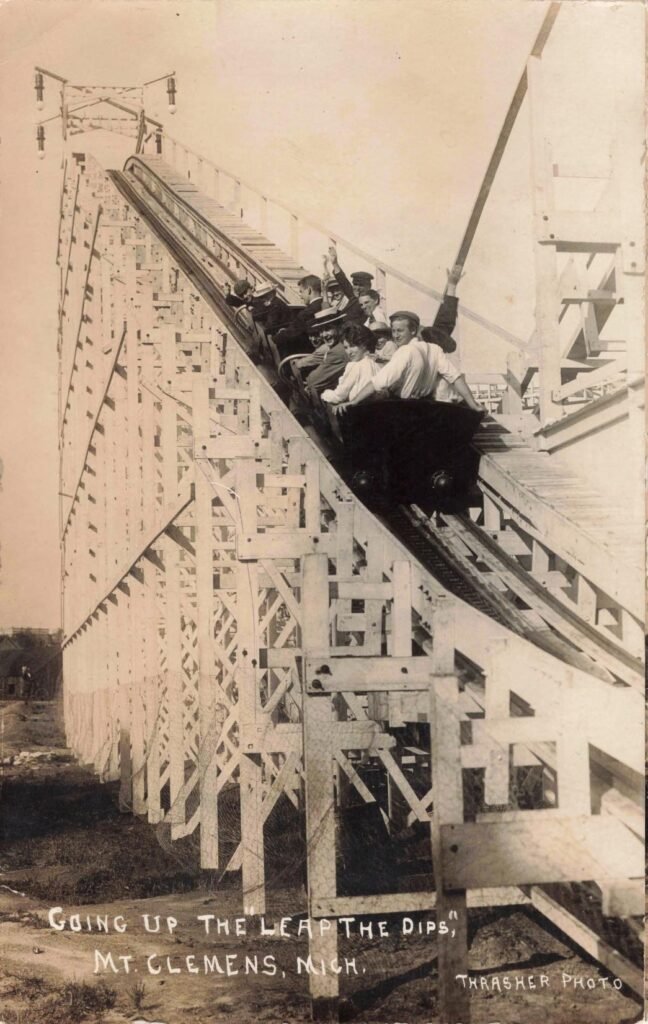
The coaster stretched about 3,200 feet, and early reports bragged that it was one of the largest rides of its kind in Michigan, drawing bath patients, day-trippers, and local families who wanted thrills after a day of soaks and doctor visits. In the photo, you can see the white-painted entry pavilion, the maze of wooden supports, and the riverside walk where people wait for their turn.

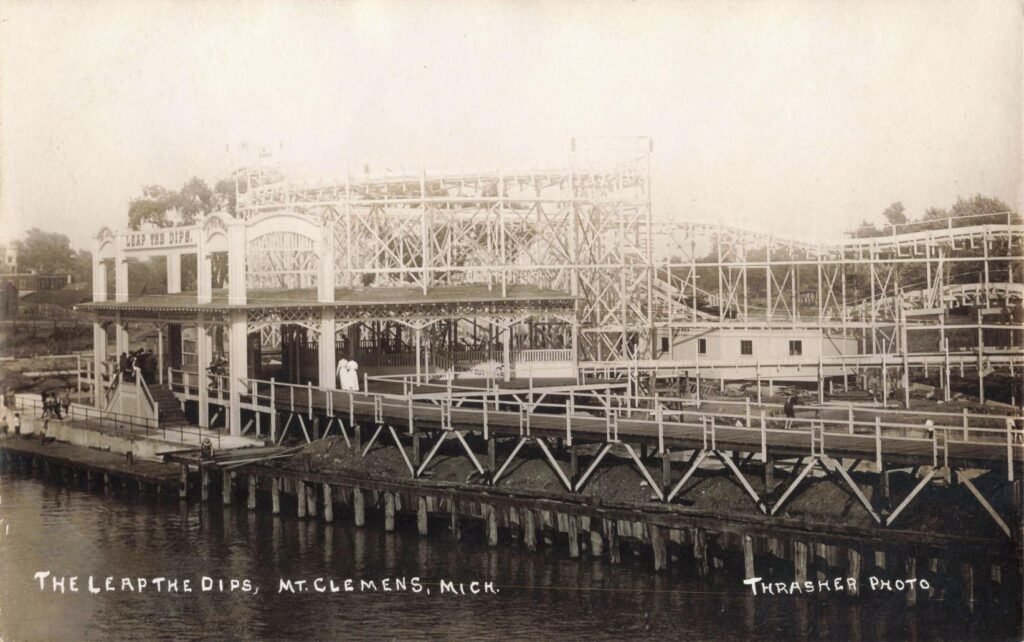
For a few summers, shouting riders and the rumble of cars added a carnival note to the city’s health-resort image, before attendance sagged, safety concerns grew, and the coaster was finally torn down in 1925, leaving only today’s city hall parking lot and a riverside gazebo where the structure once stood.
Decline of the Bath Era

By the 1920s, Mt. Clemens still marketed itself as Bath City, U.S.A., but change was coming. New drugs and physical therapy treatments cut into the demand for extended stays. The Great Depression hit hard. One by one, bath houses closed or scaled back. Fires and neglect erased several landmarks, including the Colonial Hotel, which burned in 1984.
Yet the mineral water never went away. The wells still exist below the city, and in recent years, local advocates have talked about reviving some form of public soaking, using the old Park Bath House well as a starting point.
In that sense, the History of Mt. Clemens, Michigan, is still being written. The postcards you are using for this Michigan Moments episode freeze the period when grand hotels, bath attendants, and electric streetcars defined the town. They remind us that one community’s most tremendous success came from what looked, at first, like a drilling mistake.
Works Cited for the History of Mt. Clemens
“Bath City, U.S.A. – 1920.” MacombNow Magazine, 17 Jan. 2018.
“Bathing Again – 1910.” MacombNow Magazine, 2023.
“Clementine Bath House, Mount Clemens, Michigan.” Digital Public Library of America.
Longstaff, Nelly D. “The Colonial Hotel and Bath House.” Mount Clemens Public Library, 1980.
Longstaff, Nelly D. “The Original Bath House and Avery and Egnew Hotels.” Mount Clemens Public Library, 1980.
Longstaff, Nelly D. “Origins of the Mineral Bath Era.” Mount Clemens Public Library, 1980.
“Mount Clemens Mineral Bath Industry.” Historical Marker Database, 2015.
“Mount Clemens, Bath City of America.” Macomb County, Michigan Genealogy.
“The History of ‘Bath City’ in Mt. Clemens, Michigan.” Night Owl Yper, 4 Sept. 2018.
“Local History – City of Mount Clemens.” City of Mount Clemens, 2024.