 by
by 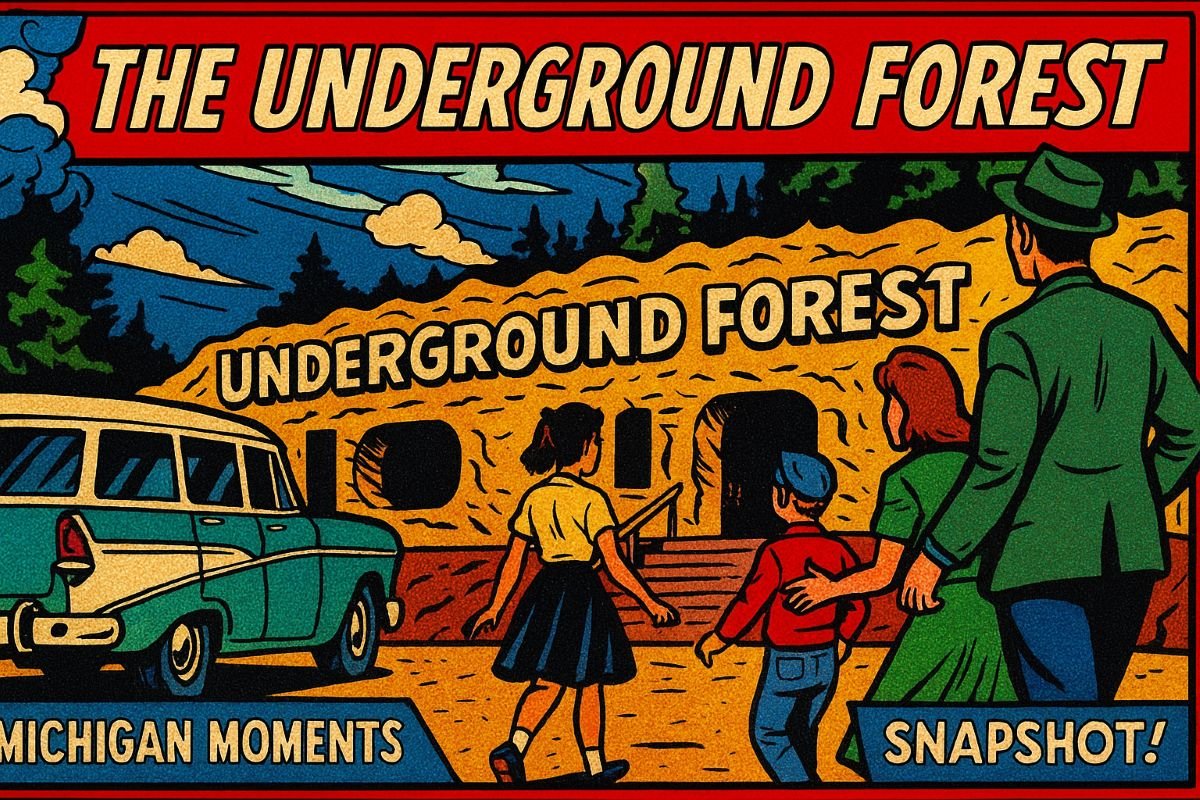
North of Grayling, near the small community of Frederic, motorists on Old US-27 once saw a low, white, rock-textured building that looked halfway between a cartoon cave and a fallout shelter. Large block letters on the front announced its name: UNDERGROUND FOREST.
A Concrete Cave off Old US-27
Built into a sandy hill along the highway, the attraction opened in about 1957, when US-27 carried vacation traffic toward Mackinac and the Upper Peninsula. The structure appears to be poured concrete, sculpted into lumpy ridges, with small windows cut into the façade and a central staircase leading visitors below ground.
In the parking lot, station wagons and sedans lined up in summer, their license plates from Michigan, Ohio, and Indiana. Families paid a modest admission fee, stepped through the cave-like doorway, and left the bright Crawford County sun for a cool, dim tunnel.
Inside the 240-Foot “Forest” Cave
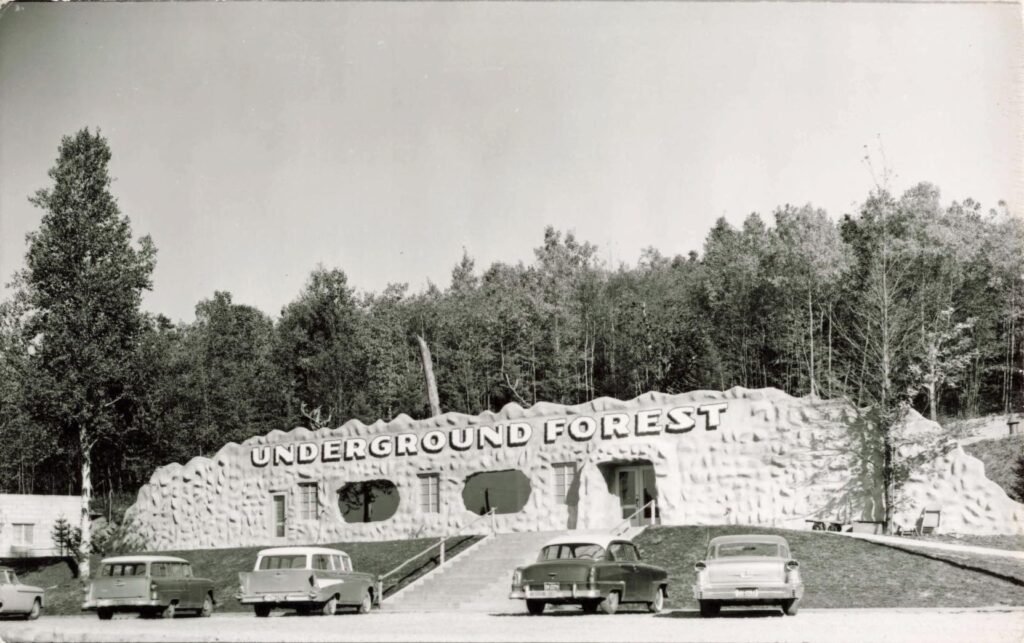
The Underground Forest was not a natural cave. It was a 240-foot man-made corridor, bending and turning under the hill. Along the walls, behind glass windows, more than thirty taxidermy scenes showed animals that live in Michigan’s woods and wetlands. Visitors describe it as dark, dank, and kinda cool.
Deer froze mid-step on artificial moss. Black bears stood over fallen logs—smaller windows framed raccoons, foxes, and owls. Simple electric lights highlighted each diorama while keeping the passageway itself relatively dark. Kids pressed against the glass as parents read short signs about each animal’s behavior and range.
It was part roadside oddity, part wildlife museum. For many visitors, this was their first close look at animals they might only glimpse from a distance while camping in the nearby Au Sable State Forest. Roadside attractions like this were common staring in the 1930s when road travel for pleasure took off.
Built for the Highway, Undone by the Freeway
The Underground Forest grew from mid-century car culture. Roadside owners knew that bold lettering and unusual architecture could turn passing traffic into paying customers. A fake cave promising a forest under the ground fit that era perfectly.
Sources differ slightly on the exact dates, but the attraction likely operated through the early to mid-1960s. Its fortunes changed when Interstate 75 opened in stages across northern Michigan. Vacationers who once cruised US-27 now sped along the new freeway, bypassing Frederic and its concrete hillside.
With traffic thinning out, the business could not survive. The taxidermy scenes were packed up and moved to Gaylord, where they formed the core of the Call of the Wild museum, still greeting visitors today.
What Remains Along Old US-27
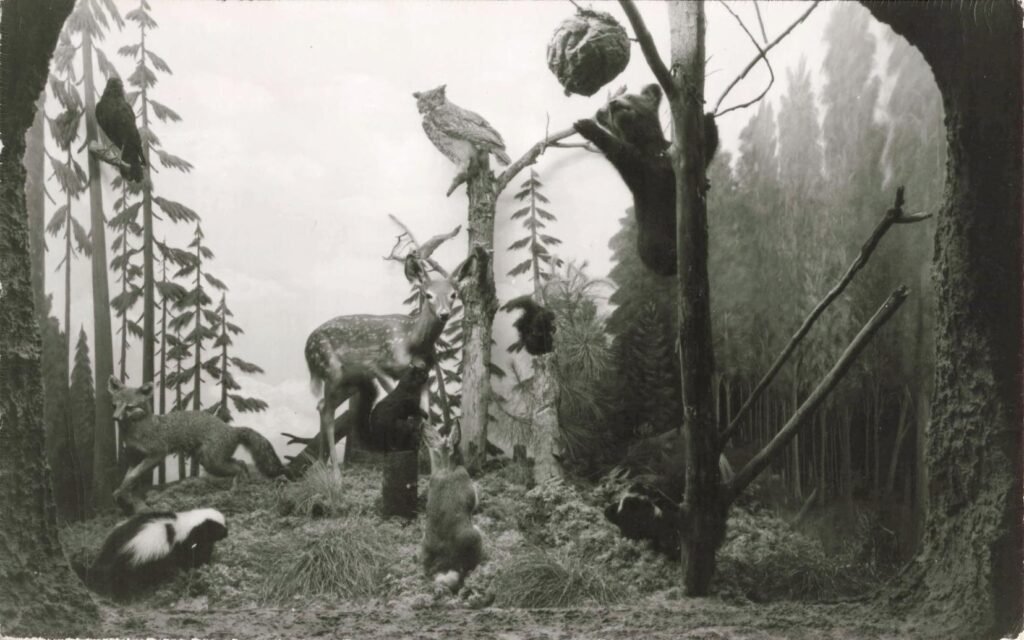
The original Underground Forest structure is still viable. Stark white concrete is still visible along Old US-27. Drivers who follow the former main route north from Grayling pass near the site without much to mark what once stood there.
Yet the setting still matters. This corridor through Crawford County sits at the southern reach of the Au Sable State Forest, one of Michigan’s largest blocks of public land. Campgrounds, canoe liveries, and trailheads keep drawing travelers who favor the slower, two-lane road over the interstate a few miles away.
Why This Odd Tunnel Still Matters
A single black-and-white photograph of cars parked outside the Underground Forest can summon an entire era. It hints at family vacations when the journey itself felt like an event, punctuated by strange, small attractions built by local owners.
Places like the Underground Forest rarely make it into official histories, yet they shaped how generations came to know northern Michigan. They turned a drive through the woods into a story kids carried home, retold long after the concrete walls were torn down and the highway out front went quiet.
Pick Your Next Oddball Michigan Roadside Stop
Michigan’s old two-lane highways were built for pull-over moments. Use this guide to find bear stories, tourist towers, mystery roads, tiny chapels, roadside food stops and lost landmarks that still make Michigan road trips worth slowing down for.
Spikehorn Meyers’ Bear Den
Harrison once had one of Michigan’s wildest roadside stops, where John “Spikehorn” Meyer turned live bears, hand-painted signs and backwoods showmanship into a US-27 legend.
Read the Spikehorn Meyers story15 Michigan Roadside Attractions In The Thumb
This Thumb-focused guide rounds up quick stops, odd signs, local landmarks and low-cost roadside breaks that fit well into an M-25 day trip.
See the Thumb roadside listThe Underground Forest
Michigan’s Underground Forest was the kind of roadside claim built for curious drivers: strange, memorable and made to pull families off the highway.
Read about the Underground ForestHedges Wigwam In Pleasant Ridge
Along Woodward Avenue, Hedges Wigwam showed how a building could become its own billboard in the motor age, long before online ratings and digital ads.
Read the Hedges Wigwam storyMichigan Tourist Towers
From Irish Hills to Devils Lake, Michigan’s early tourist towers gave motorists a reason to stop, climb and buy a postcard from the top.
See Michigan’s tourist towers20 Michigan Tourist Traps Worth Knowing
Big claims, strange stops and roadside oddities all helped build Michigan’s motor-tourism culture. This guide pulls together some of the state’s most unusual places.
See the Michigan attractions listGravity Hill In West Michigan
A road that seems to pull cars uphill is exactly the kind of simple, odd roadside claim that keeps families debating what they just saw.
Read about Gravity HillJenny, The Beer-Drinking Bear
Quanicassee’s bear story is part local lore, part roadside memory and part reminder that Michigan tourism once had a much looser idea of animal entertainment.
Read about Jenny the BearBay Shore Bar & Grill Car Fountain
A roadside bar, a memorable fountain and a hearty menu make this Fairgrove stop a modern example of the old rule: give drivers a reason to notice you.
Read about the car fountainMichigan’s Tiny Chapels
Small chapels such as Wayside Chapel and Rimwood Chapel offer a quieter kind of roadside stop, built around reflection rather than spectacle.
See Michigan’s tiny chapelsWalker Tavern At Cambridge Junction
Long before motor courts and tourist traps, Walker Tavern served travelers at a key southern Michigan crossroads. It is a useful bridge from stage roads to auto roads.
Read the Walker Tavern historyMichigan Road Trips And Pit Stops
Build a longer Michigan route around ghosts, rails, ruins, small towns and roadside surprises with this broader trip-planning guide.
Plan a Michigan road tripTravel note: Some sites are active stops, while others survive through photos, ruins, markers or local memory. Check hours, access rules and seasonal conditions before making a long drive.