


History of Reed City Michigan – Railroads, Oil Fields, and a Small Town That Grew Big
For travelers passing through central Michigan today, Reed City appears quiet and modest. Main Street moves at an unhurried pace. Trains pass through occasionally. The surrounding countryside is dominated by farms and forest.

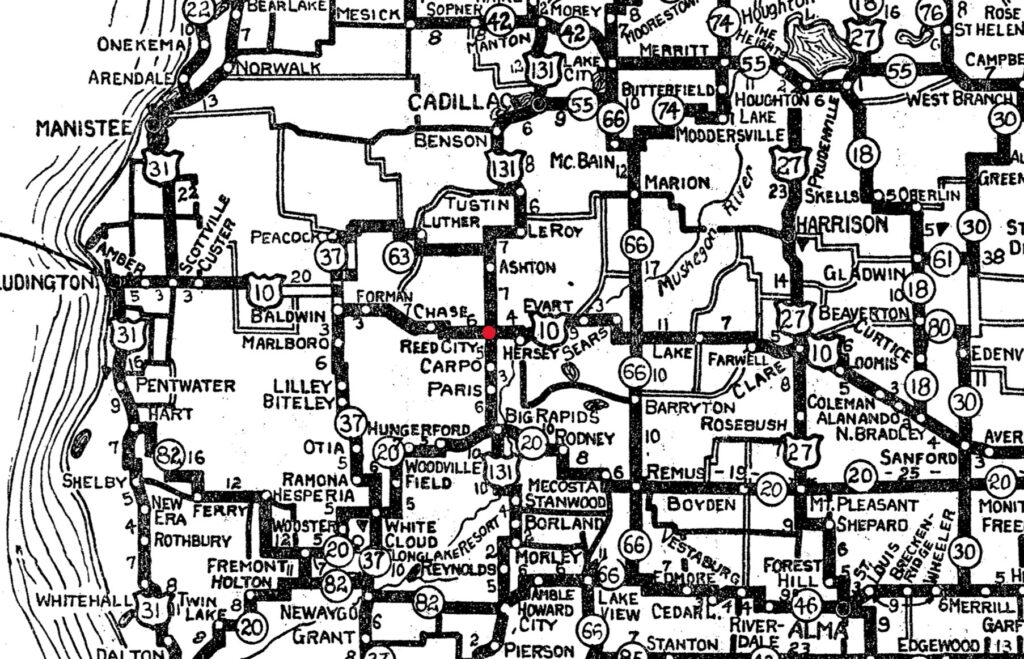
Yet more than a century ago, this same place stood at the center of activity. Railroads crossed here. Factories operated near the tracks. Hotels filled with travelers and salesmen. For a brief moment, even oil prospectors believed the ground beneath Reed City might hold fortunes.
Video –

Reed City, Michigan grew from a railroad crossing into one of the most important small towns in Osceola County during the late nineteenth and early twentieth centuries. This Michigan Moments episode examines how transportation, timber, and industry shaped the community during its early years.

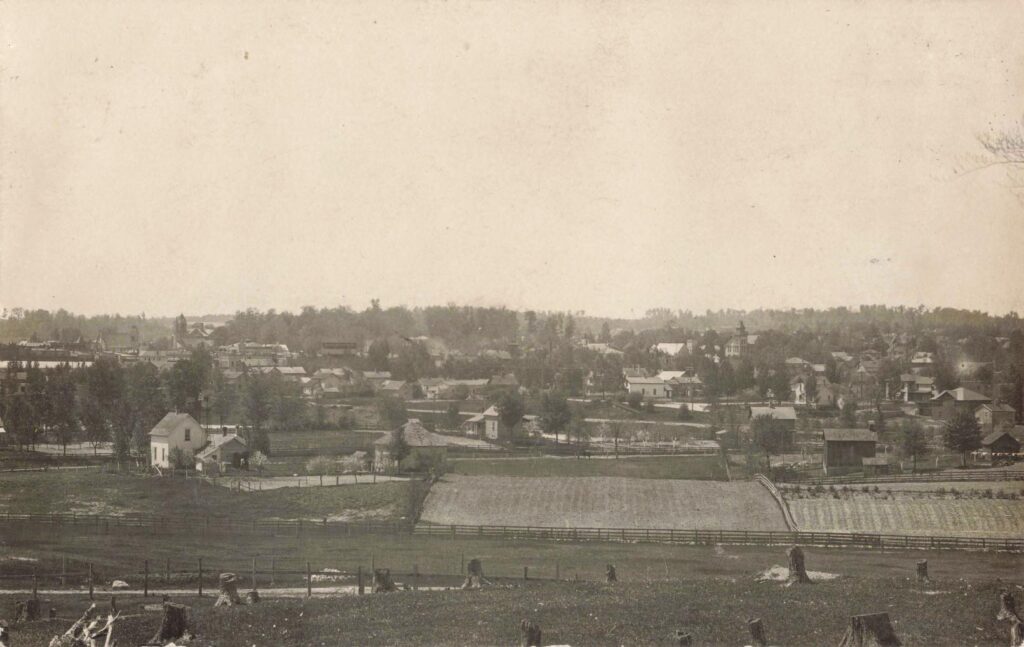
The history of Reed City Michigan is not defined by a single dramatic event. Instead, it tells the story of how railroads, timber, industry, and hopeful speculation shaped one of northern Michigan’s early transportation towns.
The Railroad Town That Started It All

The story begins in the early 1870s.
At that time the region that would become Reed City was still thick with forest. Lumber companies were moving into Osceola County, and railroads were pushing north to reach the timber.
In 1871, railroad promoter Seth Reed helped establish a settlement along the new rail corridor. The location was practical. Lines from several directions crossed here, making it an ideal junction.
Within a short time the settlement became the county seat of Osceola County, giving the town political importance as well as economic opportunity.
Railroads quickly shaped the identity of the community.
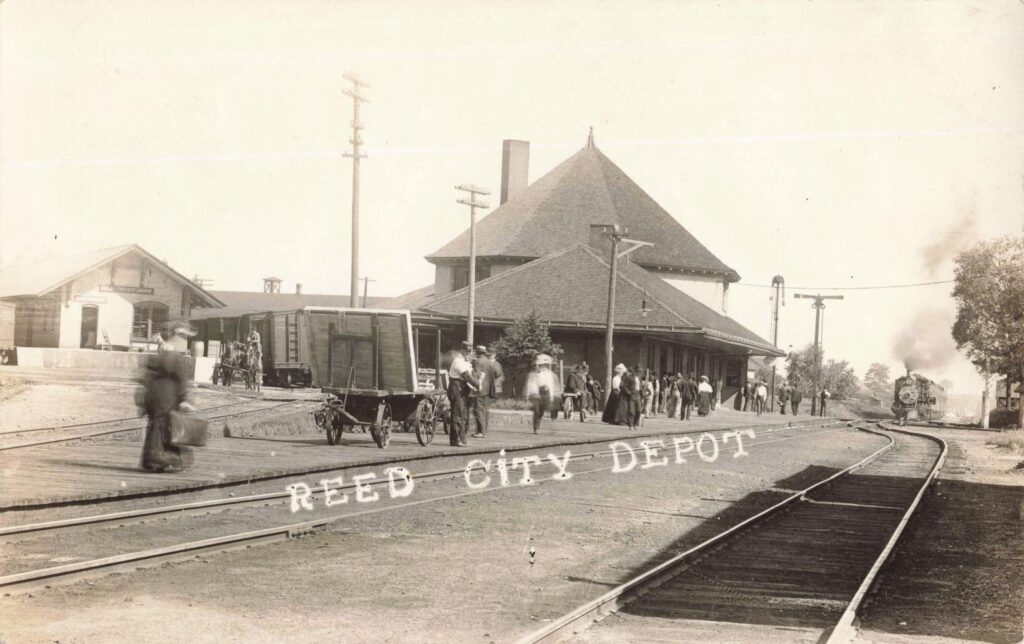
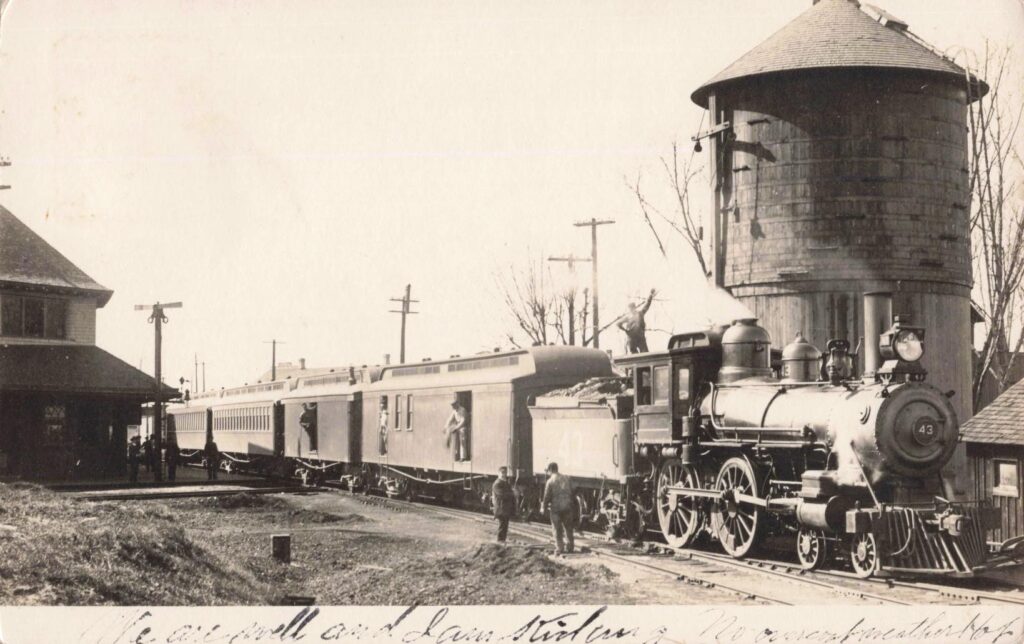
Passenger trains arrived daily. Freight trains carried lumber, farm goods, and supplies across Michigan. The tracks connected Reed City with major destinations including Grand Rapids, Ludington, and Saginaw.
Travelers stepping off the train found a growing town waiting for them.
Reed City’s Busy Downtown Years

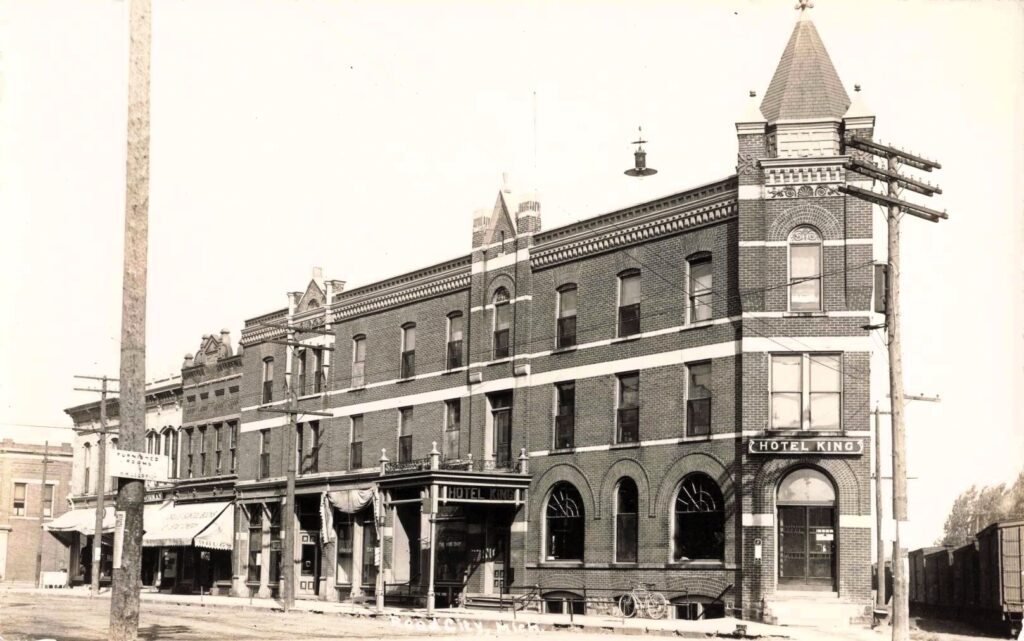
By the late nineteenth century, Reed City had developed a lively commercial district.
Hotels rose near the railroad tracks to serve passengers and traveling merchants. Two of the most prominent were the Hotel King and the National Hotel, both large brick buildings that welcomed guests arriving on evening trains.
Merchants filled the surrounding streets.
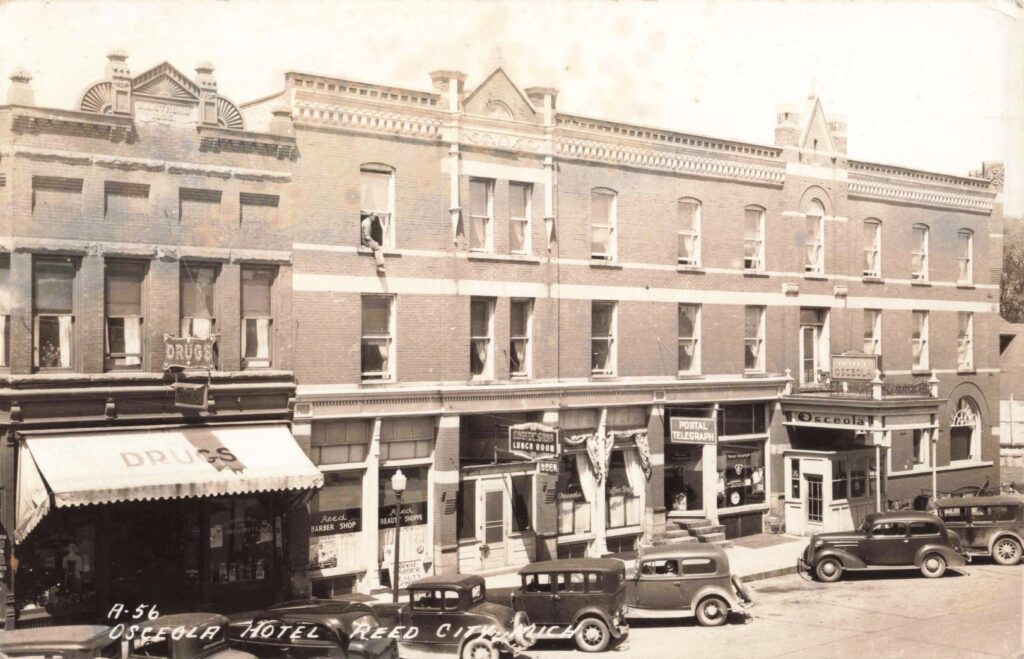
Dry goods stores sold clothing and household items. Hardware shops stocked tools and supplies for farmers. Grocers provided food for both local residents and visitors passing through town.
Reed City served as a trading center for farmers across Osceola County.

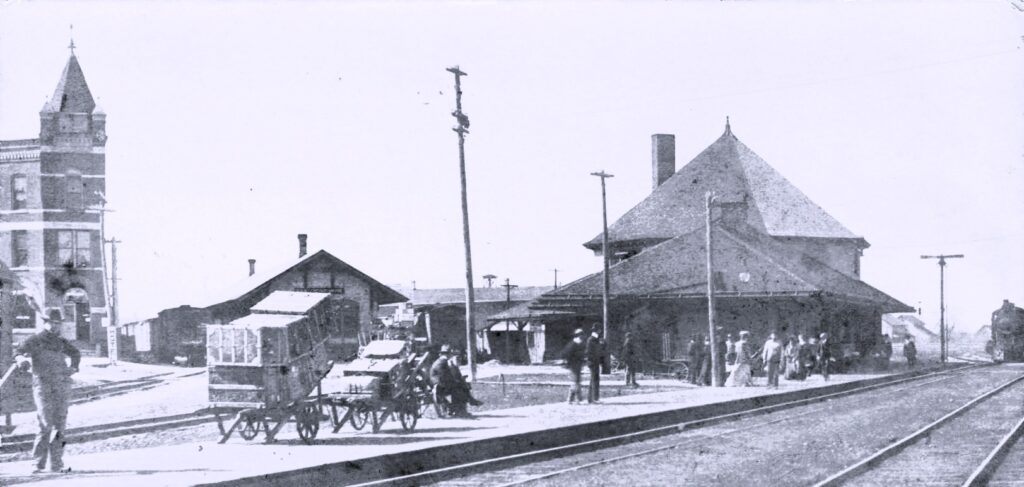
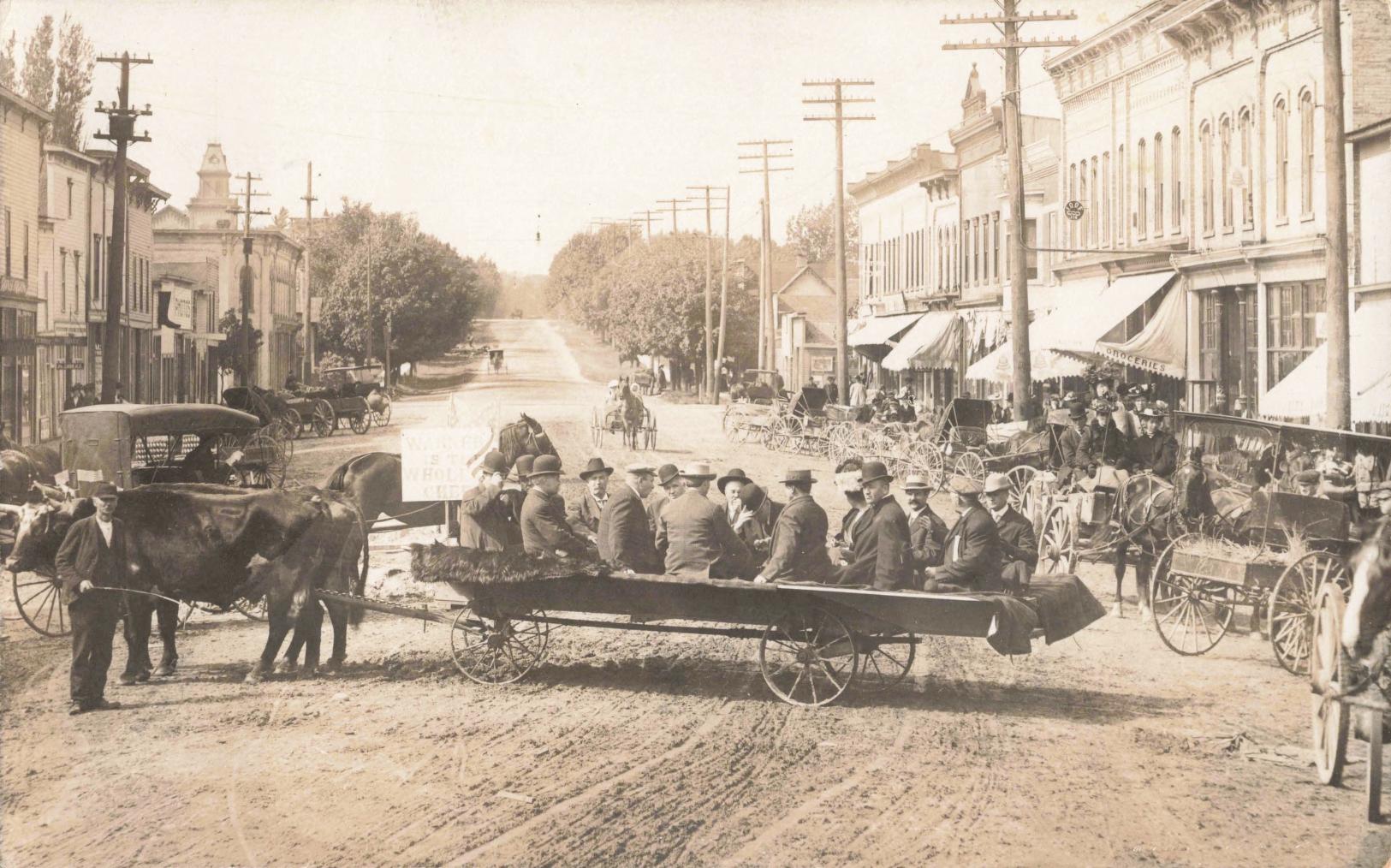
Wagons lined the streets on market days. Farmers brought produce, livestock, and grain into town. In return they purchased equipment, clothing, and supplies from the businesses along Main Street.
Commerce and transportation worked together to sustain the town.
Industry After the Lumber Era

Logging created the first wave of development in the region. Once the forests began to thin, communities like Reed City had to adapt.
Instead of shipping raw timber alone, factories began producing finished wood products.
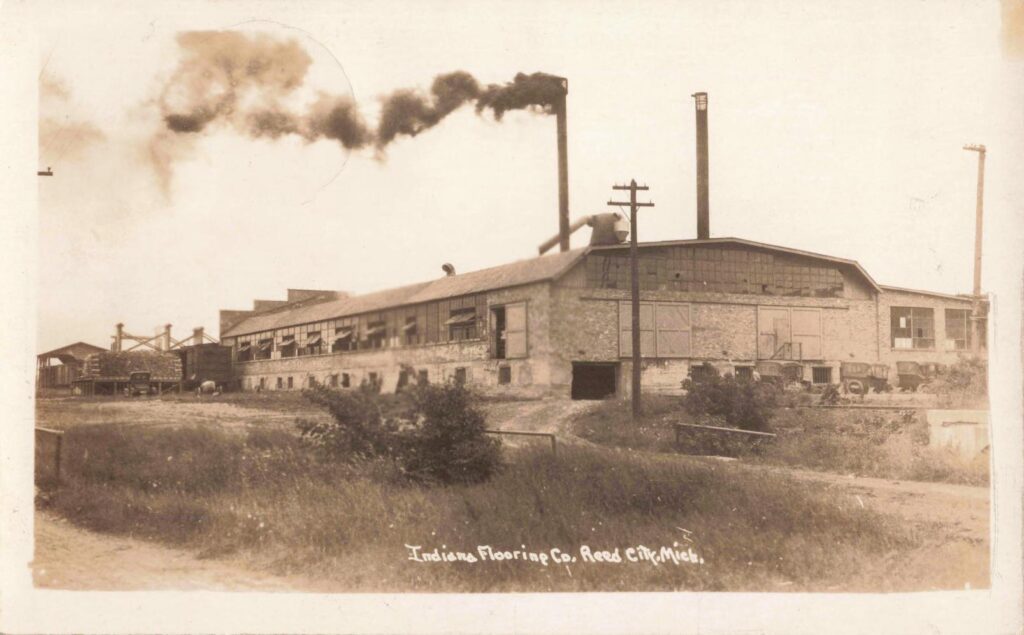
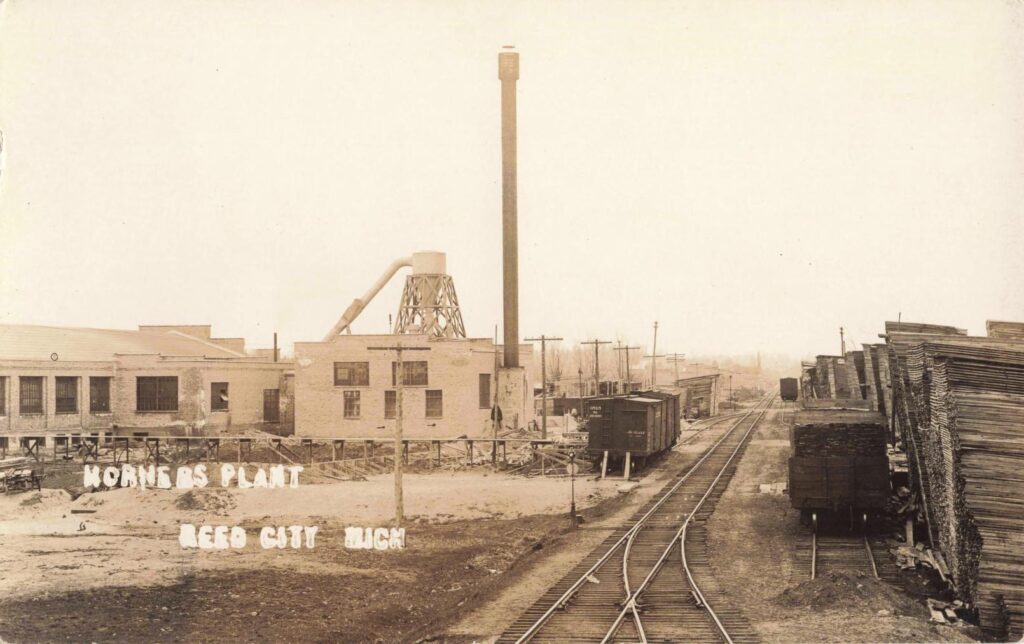
One of the largest operations was the Indiana Flooring Company, which built large manufacturing facilities near the railroad. Hardwood flooring produced here traveled by rail to construction projects throughout the Midwest.
Industrial buildings and smokestacks soon appeared near the rail yards.
The shift marked a turning point in the history of Reed City Michigan. The town had moved from a frontier lumber settlement into a stable industrial community.
Factories meant jobs. Jobs meant families. And families meant schools, churches, and civic organizations.
A Community That Celebrated Together

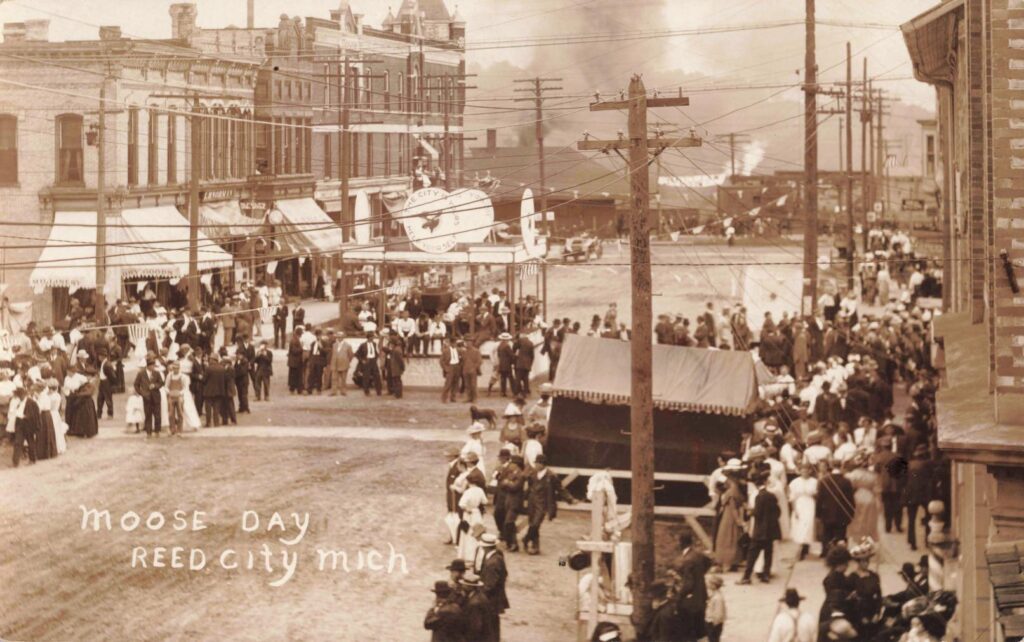
Photographs from the early twentieth century show that Reed City was not only a place of business.
It was also a place of celebration.
One event remembered in local photographs was Moose Day, organized by the Loyal Order of Moose. These community festivals brought crowds into town for parades, music, and gatherings.
Men in straw hats lined the sidewalks. Women stood nearby wearing long dresses and wide-brimmed hats. Children watched the parades pass down the streets.
Such events helped define the town’s character.
They reinforced the sense that Reed City was more than a railroad junction. It was a community where residents worked, traded, and celebrated together.
Oil Fields Near Reed City

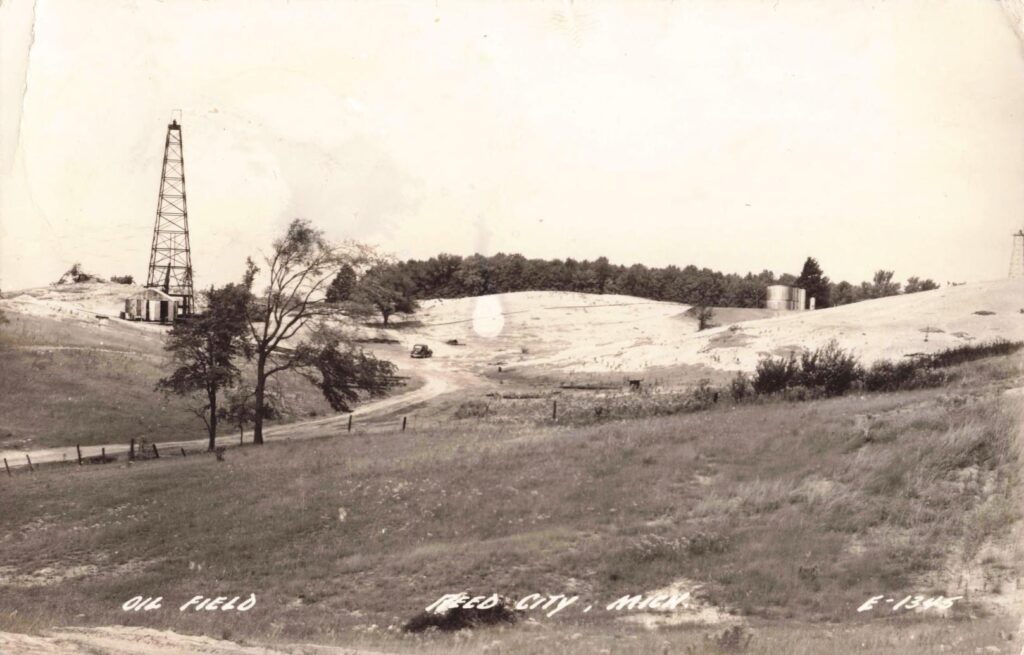
At the start of the twentieth century, another industry briefly captured local attention.
Oil exploration.
Just outside town, drilling companies established what became known as the Atha Oil Fields. Wooden derricks rose above the rolling farmland as crews searched for petroleum beneath the sandy soil of Osceola County.
One well quickly drew national notice.

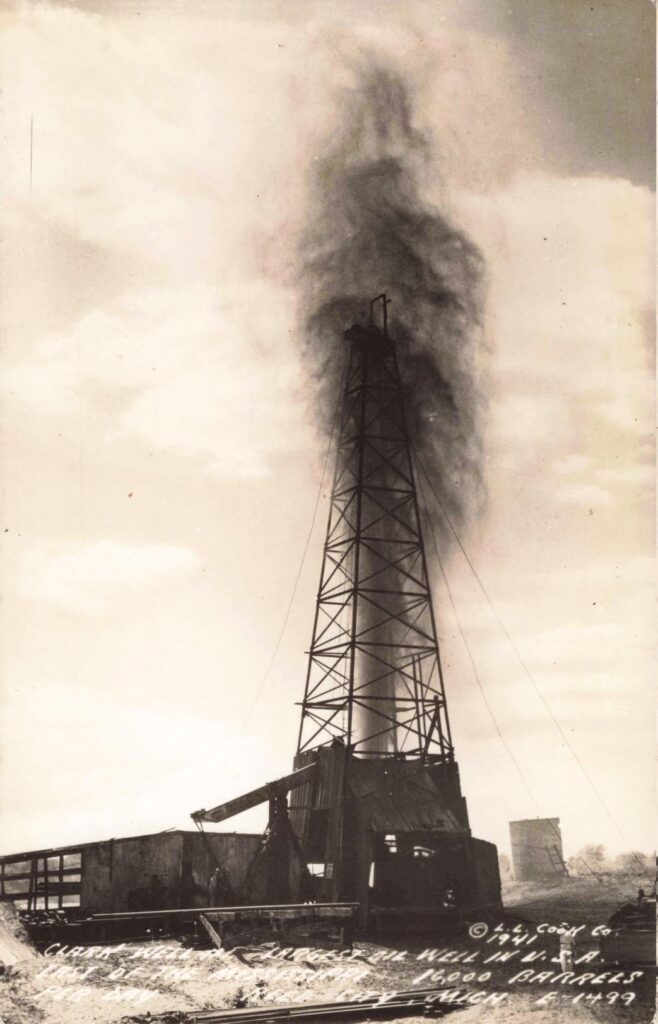
Clark Well No. 1 reportedly produced 16,000 barrels of oil per day, making it at the time the largest producing oil well east of the Mississippi River.
The moment suggested that Reed City might become part of America’s growing oil economy.
The sight of oil erupting from the ground must have been dramatic. Thick black plumes rose into the air as crews struggled to control the flow.
Yet the boom was short-lived.
Despite the early success of Clark Well No. 1, the region never developed into a sustained oil field. Production slowed and drilling operations gradually faded.
Still, the episode remains one of the most unusual chapters in the History of Reed City Michigan.
Automobiles Arrive in Reed City

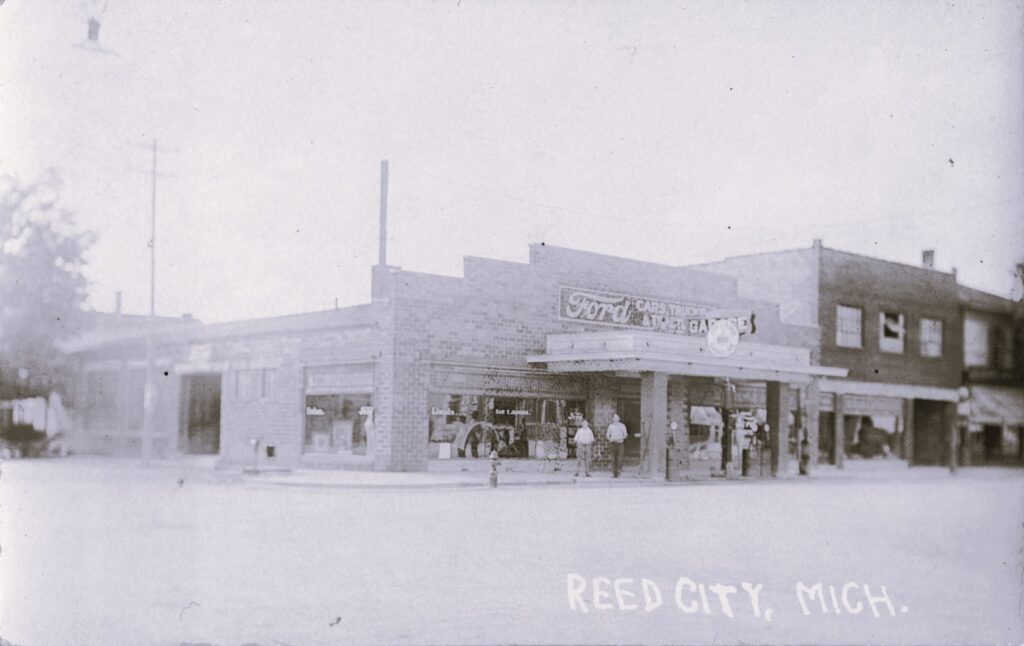
As the twentieth century advanced, transportation began to change.
Railroads still dominated long-distance travel, but automobiles were appearing in towns across the country.
Reed City was no exception.
An early Ford dealership opened in town during the 1910s, bringing the automobile age to local residents. Dirt roads slowly improved. Cars began to replace horse-drawn wagons.
The change reshaped daily life.
Travel became more flexible. Farmers no longer depended solely on trains or wagons to reach nearby towns. Businesses adjusted to new customers arriving by car.
Even with these changes, the railroad continued to influence Reed City’s economy for many years.
The Courthouse and Civic Identity

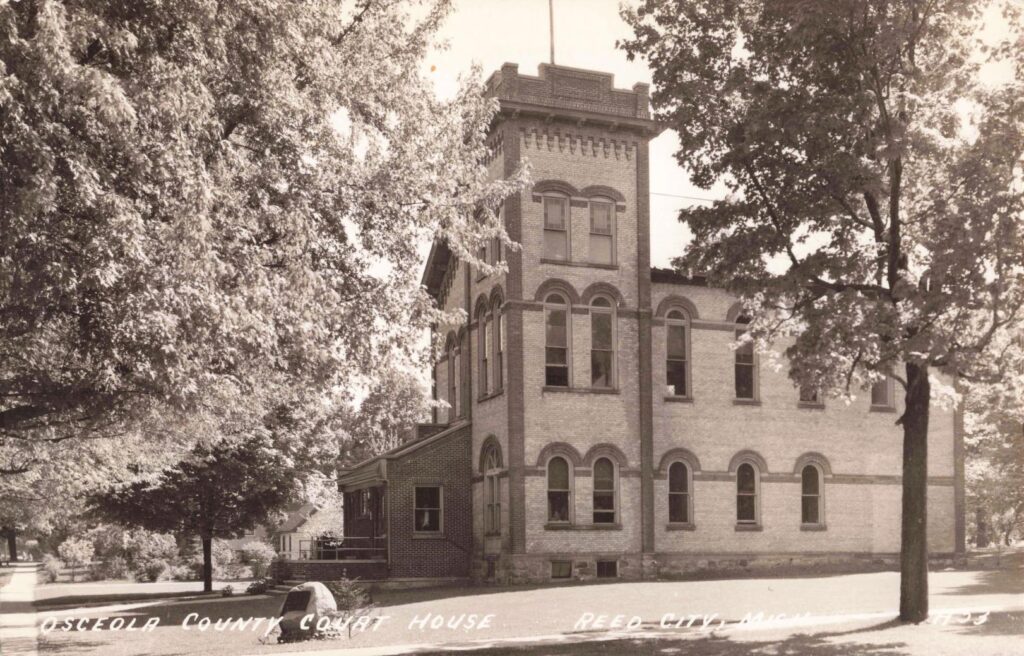
Every town needs a center of civic life.
In Reed City that role belonged to the Osceola County Courthouse.
The courthouse served as the location for county government, legal proceedings, and public meetings. Its presence reinforced Reed City’s role as the administrative heart of the county.
Residents from surrounding rural areas traveled into town to conduct official business. Court sessions, public hearings, and government offices kept the building active throughout the year.
The courthouse symbolized stability in a town that had grown quickly during the railroad era.
A Small City With a Big Role
Looking back, Reed City played a larger role in regional development than its population might suggest.
Railroads placed it at a strategic crossroads. Factories provided jobs. Farms surrounding the town supported commerce.
For several decades, Reed City served as a gateway between central Michigan farms and the ports along Lake Michigan.
Travelers moving through the region often passed through its train depot or stopped at its hotels.
The town became a connection point linking rural communities to wider markets.
The Legacy of Reed City’s Early Years
Today Reed City retains many reminders of that earlier period.
Rail lines still cross through town. Historic buildings remain along the streets. The surrounding farmland continues to support the regional economy.
The History of Reed City Michigan shows how a community can grow from simple beginnings when transportation, industry, and local determination work together.
It began as a railroad stop carved from forest.
It grew into a trading center for farmers.
It experimented with oil drilling and embraced new technologies like the automobile.
And through all those changes, Reed City remained a place where people gathered, worked, and built their lives.
That steady history still defines the town today.
Works Cited
“History of Osceola County.” Osceola County Michigan, Osceola County Government.“Reed City Railroad History.” Michigan Railroads.
“Reed City Historical Marker.” Michigan Historical Markers.
“Clarke Historical Library Michigan Local History Resources.” Central Michigan University.
“History of Oil and Gas Development in Michigan.” Michigan Oil and Gas Association.
“Michigan Oil and Gas Program History.” Michigan Department of Environment, Great Lakes, and Energy.
“Michigan History Center.” State of Michigan.