
Michigan Salt Industry History – 1800s Thumb Production, Decline & What Remains Today
In the late 19th century, Michigan salt production reshaped the state’s economy and placed the Upper Thumb at the center of a national industry. From deep brine wells near Saginaw Bay to block salt works along Lake Huron, Michigan salt fueled food preservation, shipping, and industrial growth across the Midwest.
By the late 1880s, Michigan had become one of the top salt-producing states in the United States, with 127 companies producing an estimated 5.2 million barrels of salt annually.

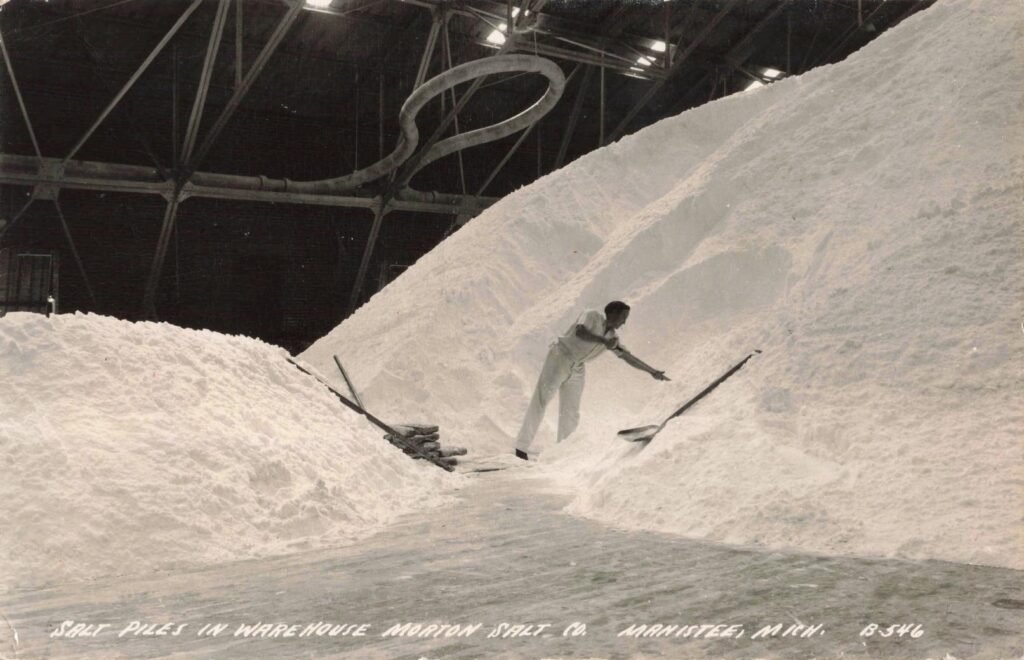
The first successful attempt to manufacture Michigan salt was made by the East Saginaw Salt Manufacturing Company in 1859. This company’s success led to the industry’s rapid development in the Saginaw Valley, where the blocks were operated alongside sawmills. This industry soon took off in Huron County in Michigan’s Thumb and across Lake Huron in Canada near Goderich, Ontario.
According to Michigan geological records, salt production peaked statewide during the 1880s.
What We Will Cover

Listen to this Story On the End of the Road in Michigan Podcast
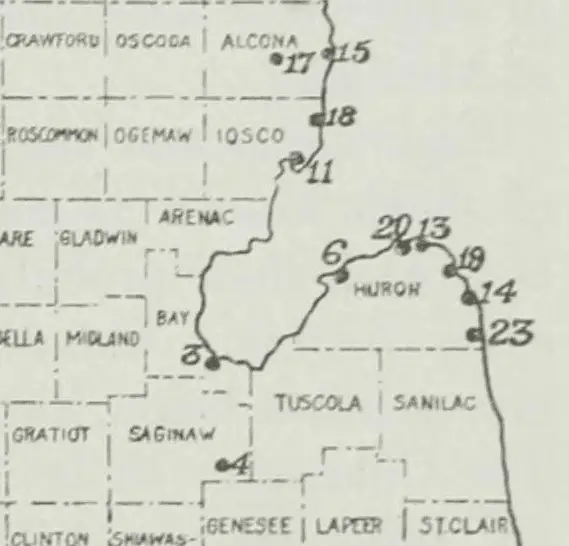
The industry soon spread to Midland and St. Louis and the lumbering towns on the shores of Lake Huron. Towns such as Caseville, Port Crescent, Port Austin, New River, Port Hope, Harbor Beach, and White Rock on the south side of Saginaw Bay; and Tawas City, East Tawas, Au Sable, and Oscoda to the north all started salt operations. A salt well was sunk in Bay Port, but it never produced. By 1888, there were 127 companies listed in Michigan producing 5.2 million barrels of salt annually. Michigan produced almost half of the nation’s salt in the 1870s and 1880s.
Why the Upper Thumb Became a Salt Production Center

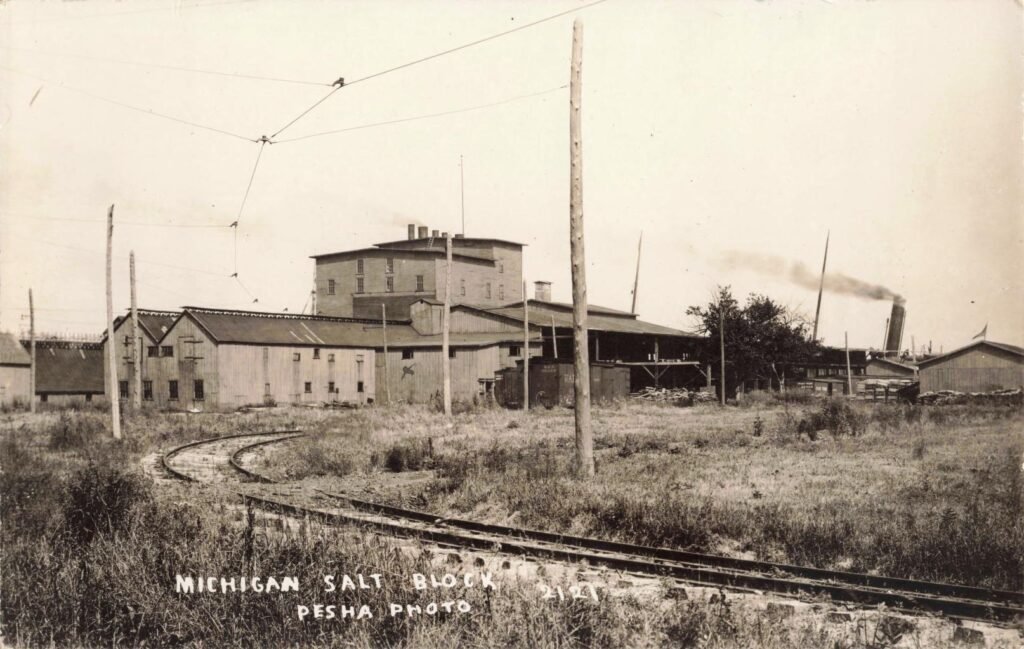
The Upper Thumb offered three advantages critical to salt manufacturing: deep brine deposits, access to Lake Huron shipping lanes, and railroad connections to Detroit and Chicago markets. Towns near Saginaw Bay and along the Lake Huron shoreline were positioned to move heavy salt cargo efficiently.
Michigan Salt Production in Huron County
The availability of salt deposits in the Thumb has been evident since ancient times. The SandRidge Indian Trail, which started near Saginaw and wound its way around the Thumb to Harbor Beach, was known as a path to access the area’s rich hunting and fishing grounds. It also provided access to three salt licks, which attracted game.
Commercial brine drilling began in 1859 with the East Saginaw Salt Manufacturing Company and spread across the Saginaw Bay region through the 1870s and 1880s. Michigan’s salt boom was tied to lumber mill refuse as fuel for evaporation pans, linking two core industries of the era.

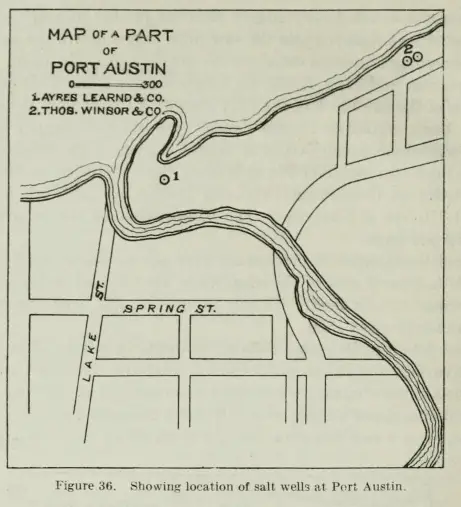
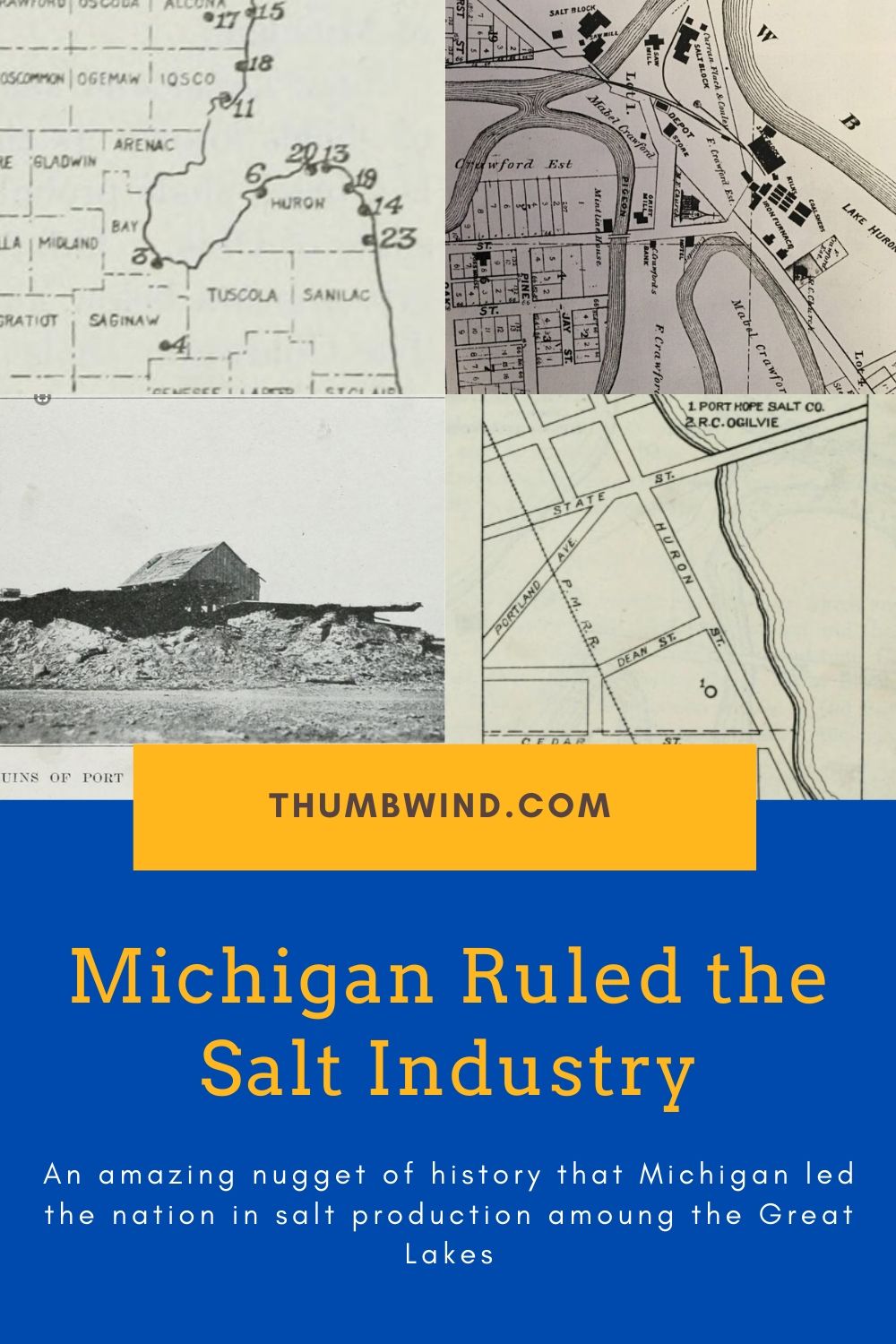
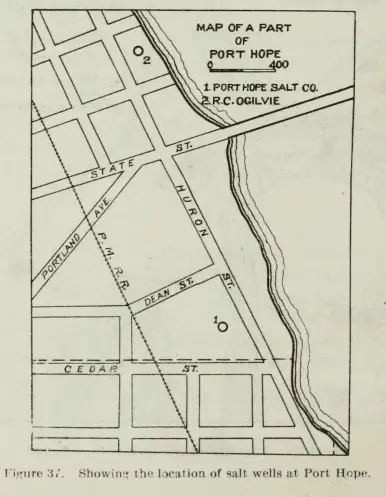
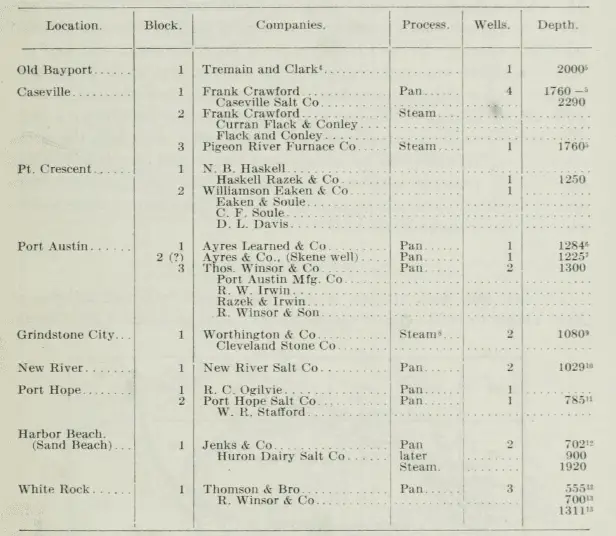
The first salt well in Huron County was sunk by Ayres and Co., at Port Austin in 1863. Later a salt block was erected, and the industry gradually spread to Caseville, Port Crescent, Grindstone City, New River (1874), Port Hope (1874), Harbor Beach (aka Sand Beach 1876), and White Rock (1872). A 2000-foot well and block were also erected at Old Bay Port, but never operated.

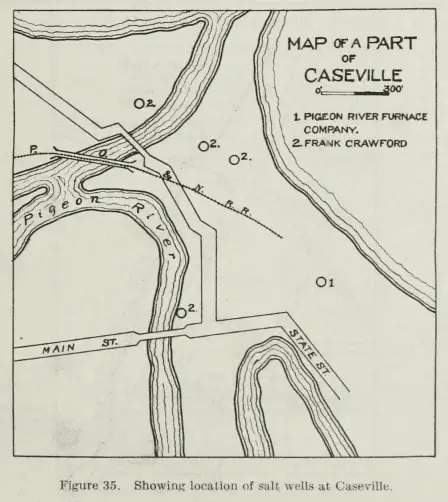
The brine wells extracted from the Berea sandstone, which occurs at depths varying from 495 feet at White Rock to 1,770 feet at Caseville.

Transportation and Great Lakes Shipping
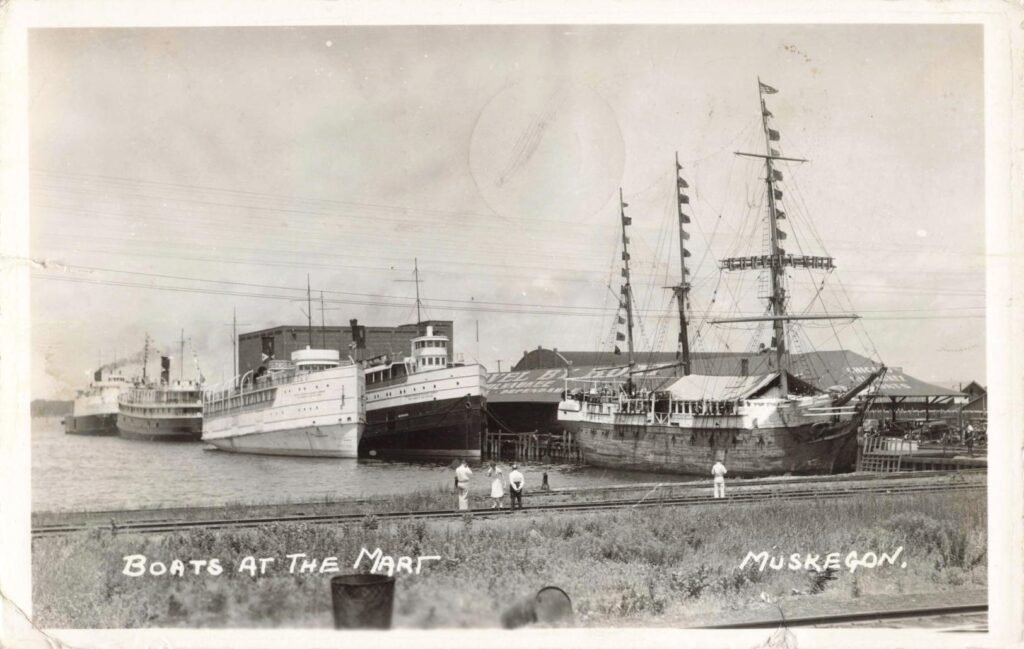
Salt from Michigan was moved primarily by lake schooners and later by steamships. Bulk cargoes traveled through the Great Lakes to urban centers, where salt was used for meatpacking, fish preservation, and winter storage.
Michigan Salt Production by the Numbers

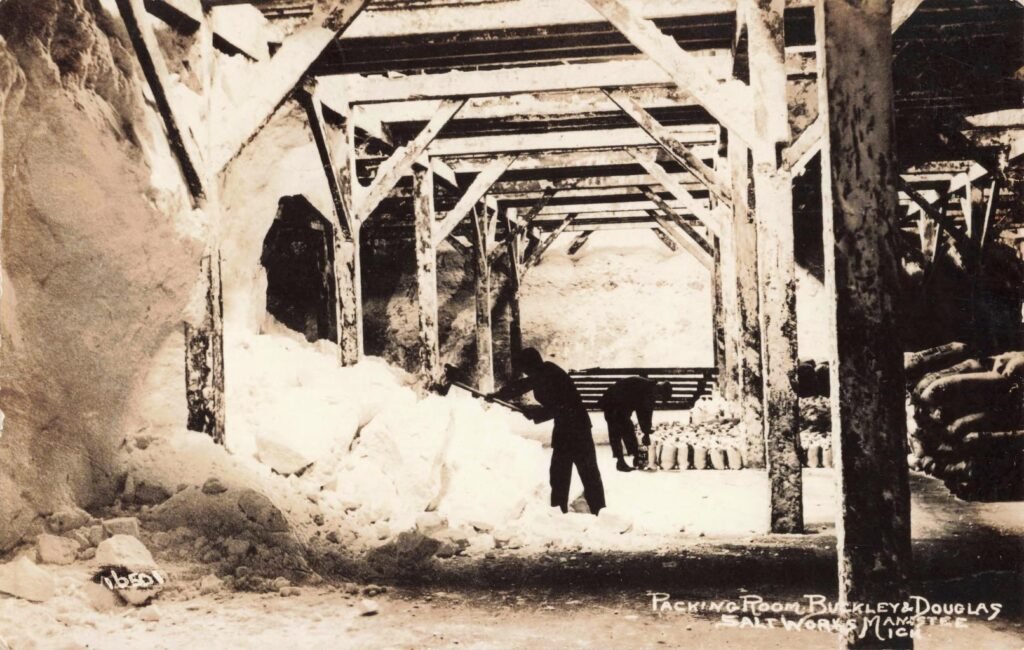
- Commercial salt production expanded rapidly after 1865
- By the 1880s, Michigan produced millions of barrels annually
- More than 100 salt companies operated statewide at peak production
- Salt supported fishing, lumber camps, and rail-served cities
- The industry declined sharply after 1896 due to price pressure and competition
The Salt Industry Declines in the Thumb

The salt industry was largely dependent upon lumbering operations. Salt block operations depended on sawdust, bark, and trimmings from sawmills for fuel. Wood fuel for steam and pan evaporation lasted until the forests were gone, as a result when lumbering ceased, major operations in the Thumb it became too costly to use alternative fuel such as coal.

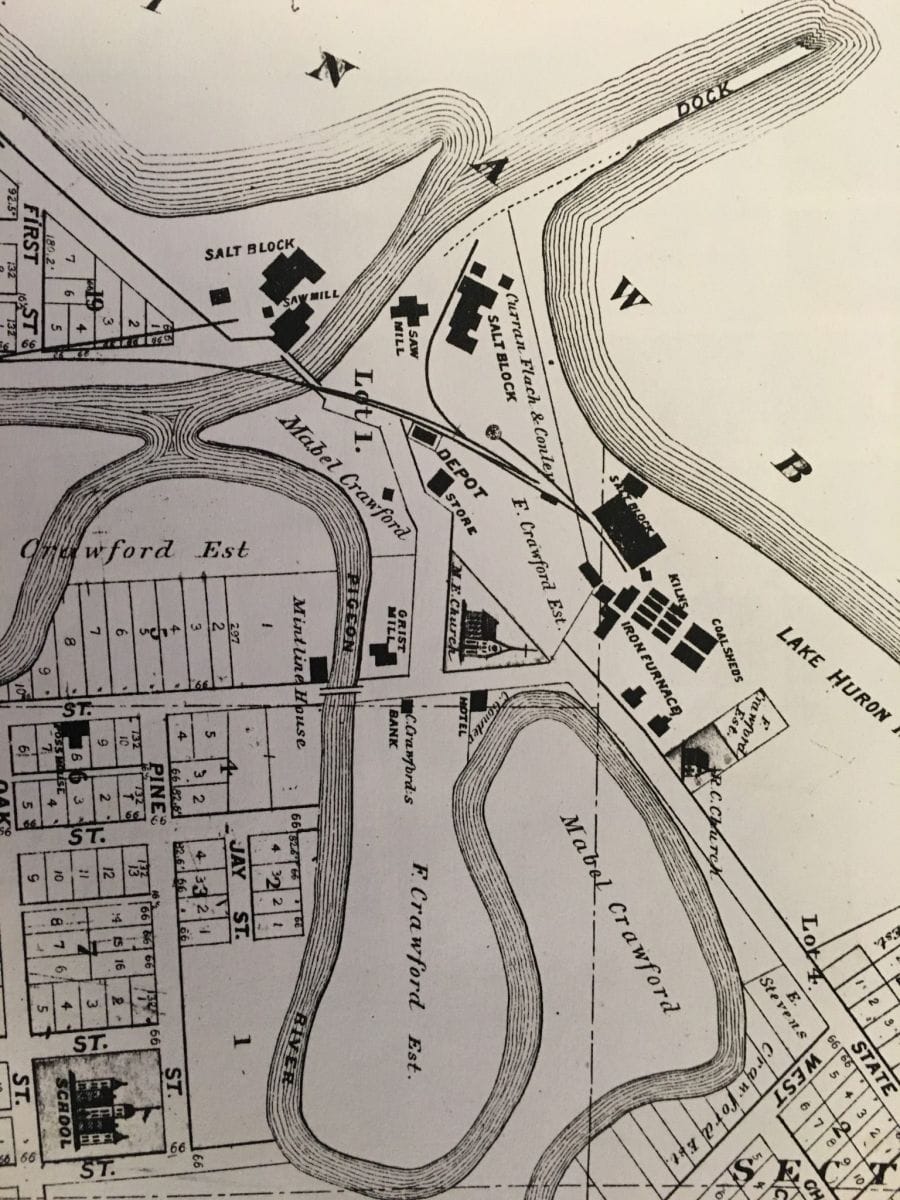
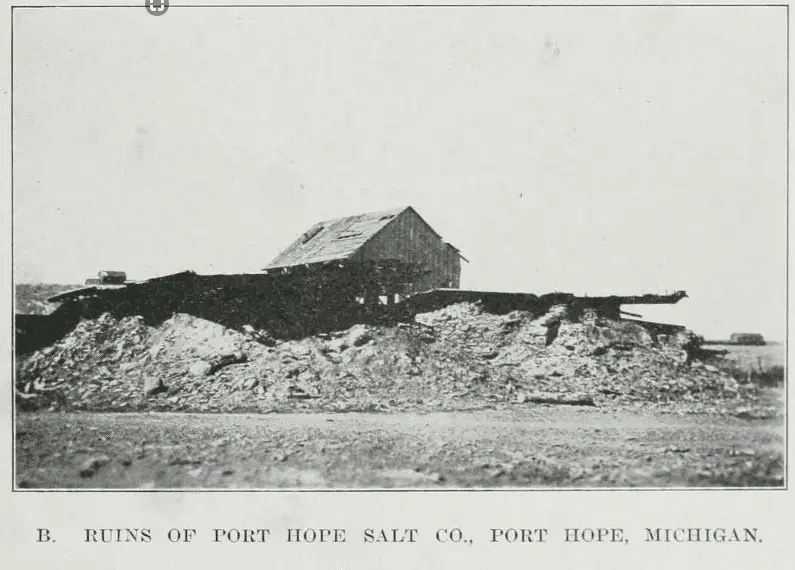
All salt production operations from the 14 companies ceased in Huron county by 1896, therefore by the early 1900s all the lakeshore plants had disappeared. Towns such as Port Crescent and New River no longer existed.

Why Michigan’s 19th-Century Salt Boom Ended
Despite early dominance, Michigan salt producers faced declining prices, rising competition from New York and Ohio, and rising fuel costs. By the late 1890s, many Upper Thumb salt works closed, leaving only a few large operations to carry production into the 20th century.
Michigan Salt Production Today
Salt remains an active industry in Michigan. Underground rock salt mining near Detroit and large-scale refining operations along the St. Clair River continue to supply road treatment and industrial uses across the Great Lakes region.
Today’s salt industry in Michigan still operates, with underground rock salt mining near Detroit supplying road treatment and industrial uses. The Detroit Salt Mine, first completed in 1910, extends more than 1,500 acres beneath the city and underscores the enduring economic role of salt in the state.
Related Michigan Salt Reading
- The Salt Industry in Manistee – By the 1870s, Manistee was already a booming lumber town and with the addition of the salt industry, it became an even larger manufacturing port city. The salt industry of Manistee can be attributed to the tenacity of lumberman Charles Reitz, who, throughout the 1870s, was a partner in the Reitz Brothers sawmill firm.
- Port Crescent- A Michigan Vanishing Village – If you stand on the bluff overlooking Saginaw Bay or stare at the mouth of the Pinnebog River and the crescent-shaped lines of the bay hard enough, you might catch a glimpse of ghosts of the past fluttering in the sunshine. If you listen closely, the ghostly pioneers of the vanished village of Port Crescent will tell you their stories in the whisperings of the wind and waves.
- History of Heavy Industry in Caseville – On the site of what is now the Saginaw Bay Marina, Caseville County Beach, and along Riverside Drive sat the Pigeon River Salt and Iron Works, which was built in 1873. The investors were S. O. Edison, uncle of Thomas Edison, Sanford, and Francis Crawford.
- The Vanished Company Town of New River Michigan – Near the tip of the eastern side of Michigan’s thumb lays a small cluster of neatly appointed cottages and mobile homes that come with a commanding view of Lake Huron. This neighborhood is situated near a creek called New River. There is a street named “Tip O Thumb Drive”. It describes the neighborhood perfectly.
- Manistee Salt City background, noting how Manistee produced over 1 million barrels annually in the 1890s and became known as a key salt port.
Michigan Salt Production Sources
- The brine and salt deposits of Michigan, their origin, distribution, and exploitation by Cook, Charles Wilford, 1882-
- Publication 8. Geological Series 6. Mineral Resources of Michigan with Statistical Tables of production and value of mineral products for 1910 and prior years
- C.M. Davis’ Readings in the Geography of Michigan (1964).