


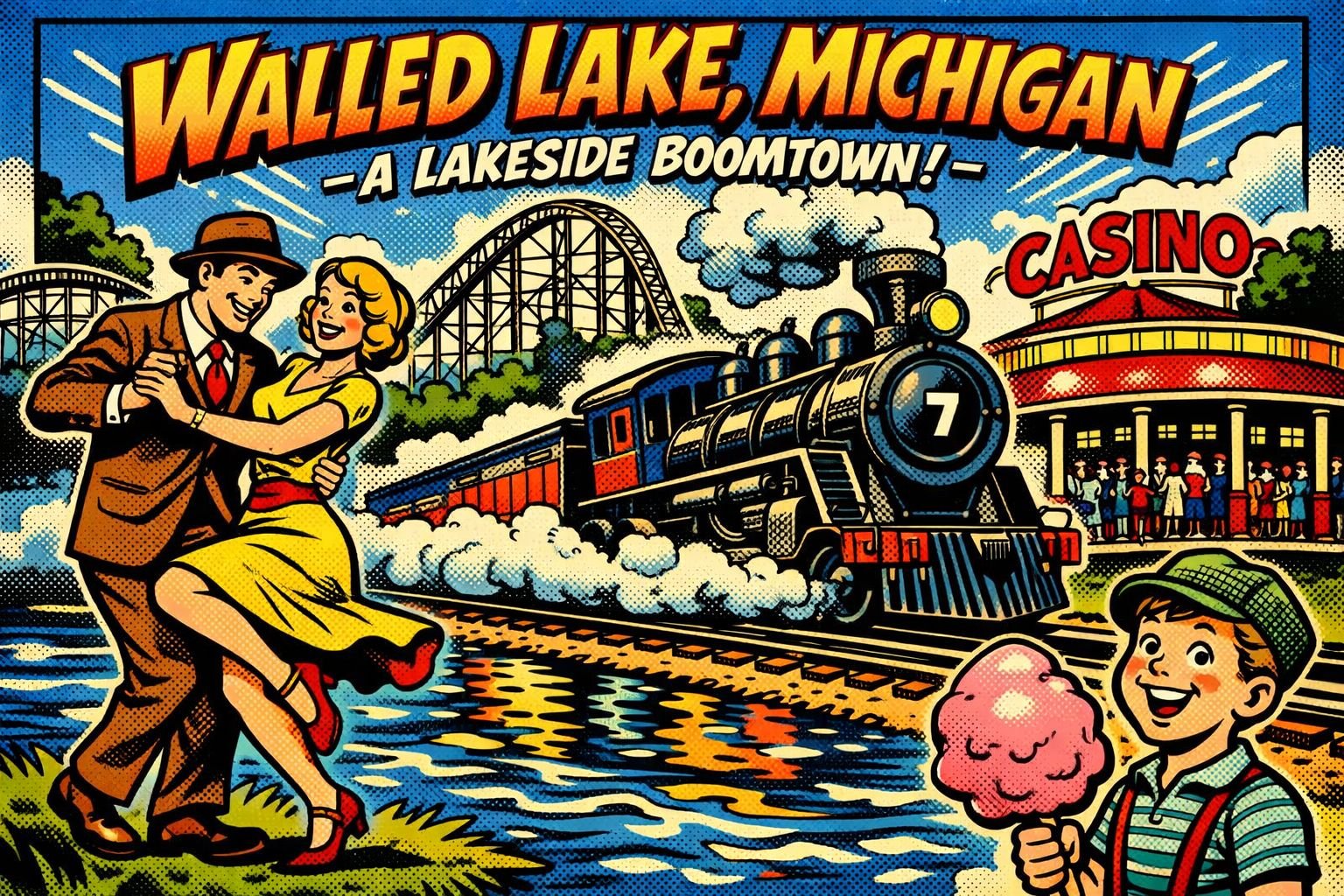
Amazing History of Walled Lake Michigan – 16 Old Photos Showing a Lakeside Boomtown
The history of Walled Lake Michigan begins well before the turn of the 20th century. This quiet village in Oakland County traces its roots back to 1825, when a settler named Walter Hewitt noticed what appeared to be a stone “wall” along the lake’s shore. In reality, geologists say, this “wall” was a natural pile of massive boulders left by glaciers under the water. The name stuck, however, and Walled Lake grew slowly through the 19th century.
Table of Contents
Video – Walled Lake – Summer Playground for Detroit

A Pioneering Village to An Escape from the City

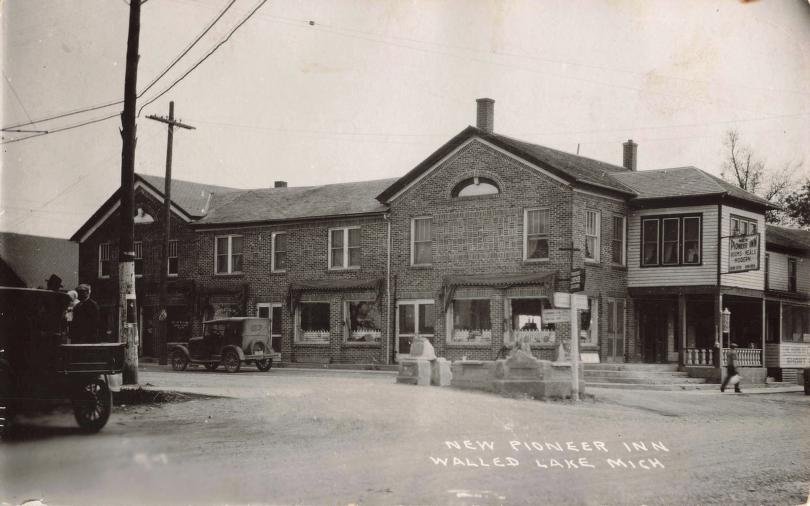
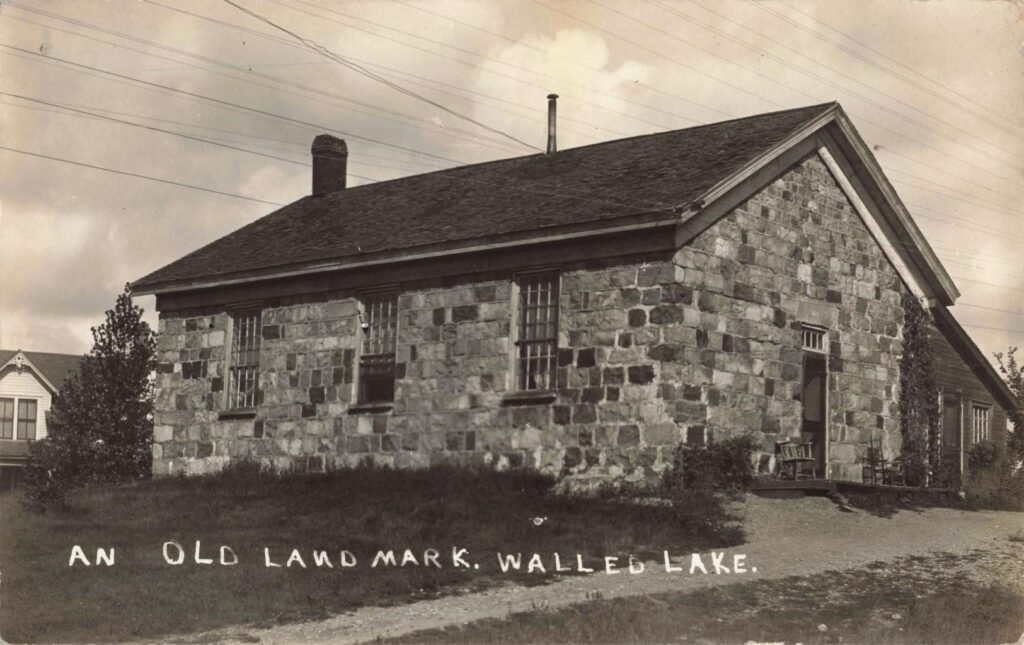
By the 1870s, it had around 400 residents – a general store, a post office, a sawmill, and a handful of churches and doctors serving the local farms. In 1840, a large inn called the Pioneer Inn (later the Peabody House) even stood on Main Street, with a ballroom that entertained early tourists. Life was simple: children learned the alphabet in a stone schoolhouse (still standing today as a relic of 1860), farmers hauled produce by horse-drawn sled, and families drew water from the town pump at the corner of Main and Liberty.

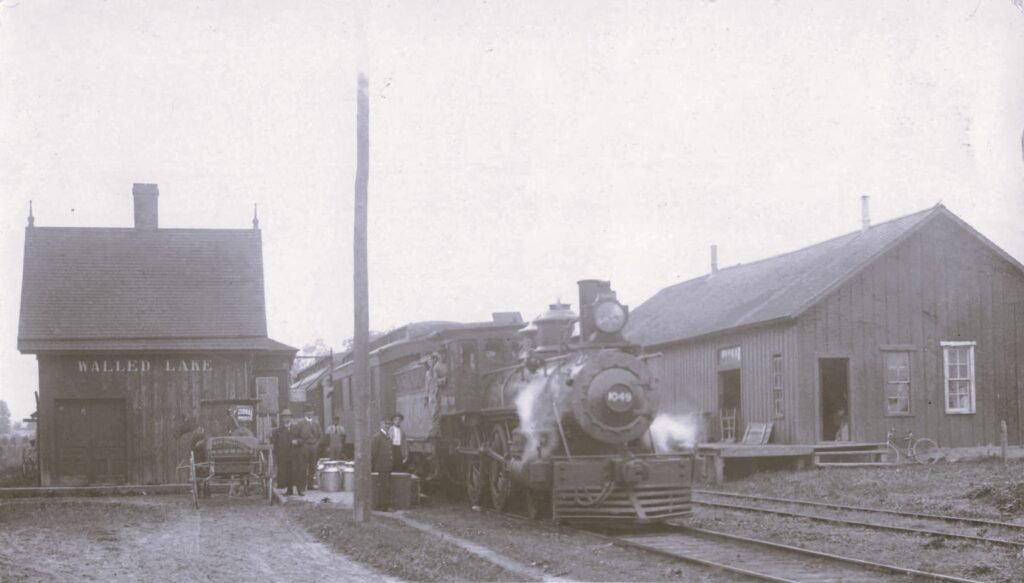
Development of Urban Entertainment on Walled Lake
The real boom began in the early 1900s, however, as automobiles became common. Car ownership allowed Detroiters to escape the city heat on summer weekends. The Walled Lake Museum notes that mass-produced autos meant “more Americans could explore areas outside urban centers,” and Walled Lake was the first beach west of the city.

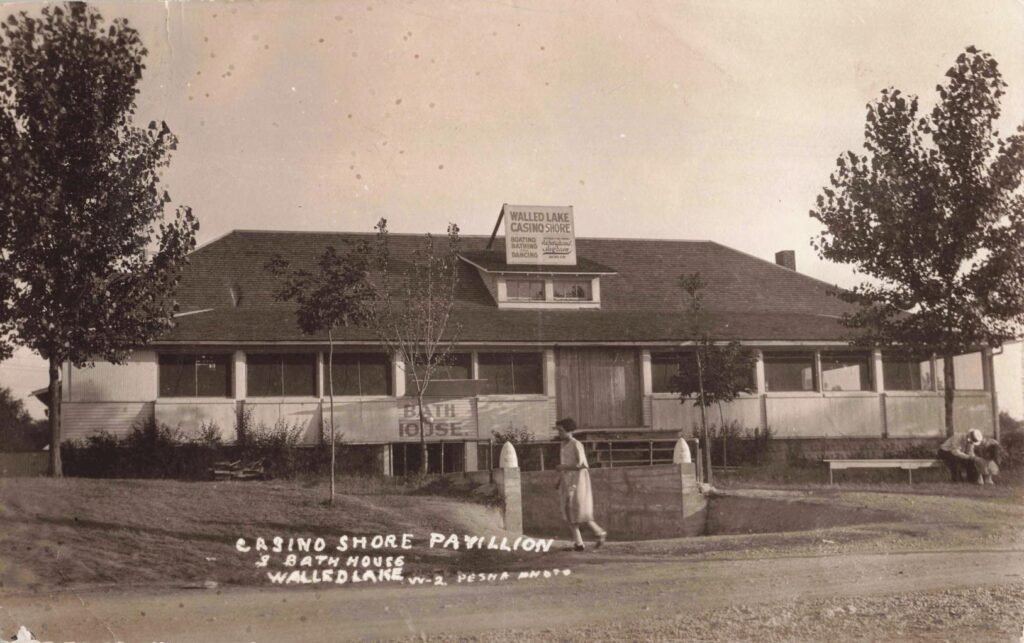
In 1919, brothers Jake and Ernest Taylor saw this opportunity and built a small dance hall and bathhouse at the south end of the lake. Almost overnight, Walled Lake transformed into a picnic-and-playground. On busy Sunday afternoons, families lounged on blankets by the water; children splashed under the boathouse; and as night fell, nearly a thousand people shuffled into a wooden dance hall to swing to jazz bands.

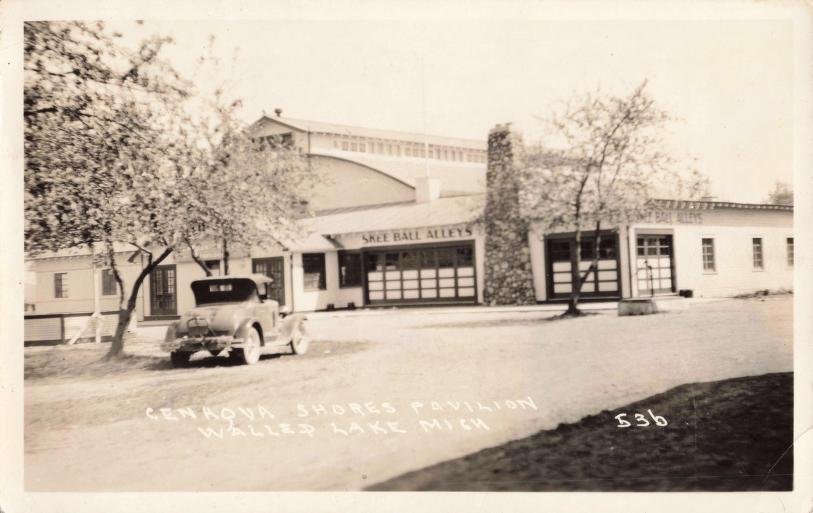
Not to be outdone, German-born entrepreneur Herman Czenkusch built a rival complex just across the road by 1921. He added a grander dance pavilion called Cenaqua Shores, a two-story wooden waterslide into the lake, and even showed silent movies. (When a mysterious fire burned down Czenkusch’s pavilion that November, he promptly rebuilt it bigger and added one of Michigan’s first motion-picture projectors.)
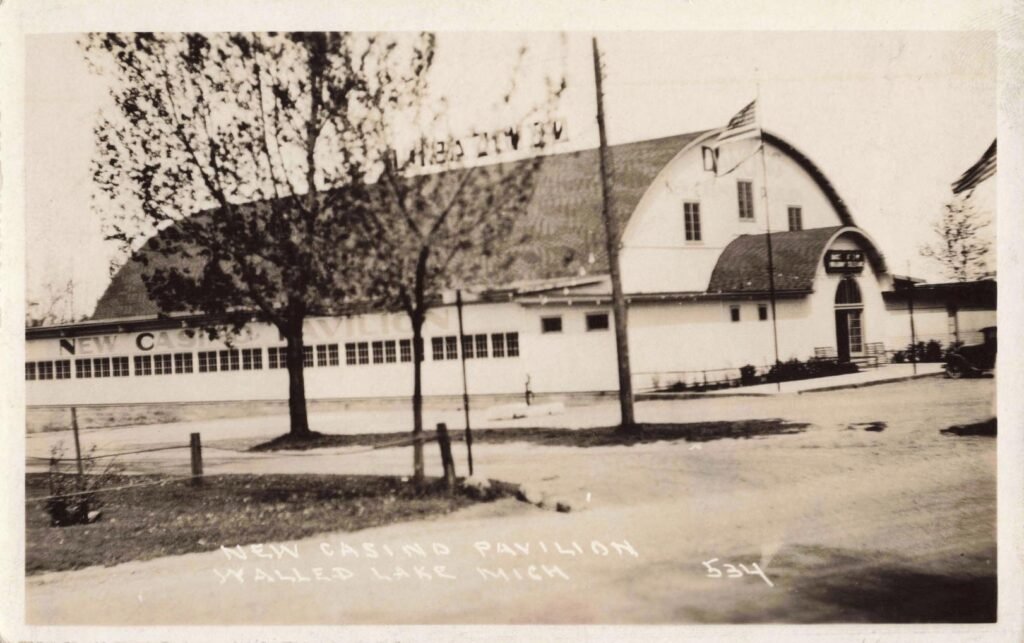
The Taylors responded by selling their property to Detroit grocer Louis Tolettene in 1923. Tolettene remodeled it as the Casino Shores Pavilion, opening in 1925 with a polished maple dance floor over 120×140 feet. In those days “casino” meant dance hall – people twirled to Lindy Hop and foxtrot rather than gamble. The rivalry continued: in 1928 Tolettene installed Michigan’s first mirrored disco ball under his ceiling, dazzling the crowd. He even booked the Broadway Collegians orchestra from New York, a novelty in small-town Michigan.
Images on this page may contain affiliate links in which we may receive a commission. See our affiliate disclosure for details.
Historic Photos of Detroit in the 50s, 60s, and 70s
Historic Photos of Detroit in the 50s, 60s, and 70s documents what a Metro Detroiter would have experienced through those decades, from the commonplace to a visit from John F. Kennedy.

Walled Lakes Education, Main Street and Social Life

By the 1920s, Walled Lake’s business district had swelled alongside the summer crowd. According to local historian H.O. Severance, the village by then had “around 1,000 cottages within a half-mile radius of the lake.”

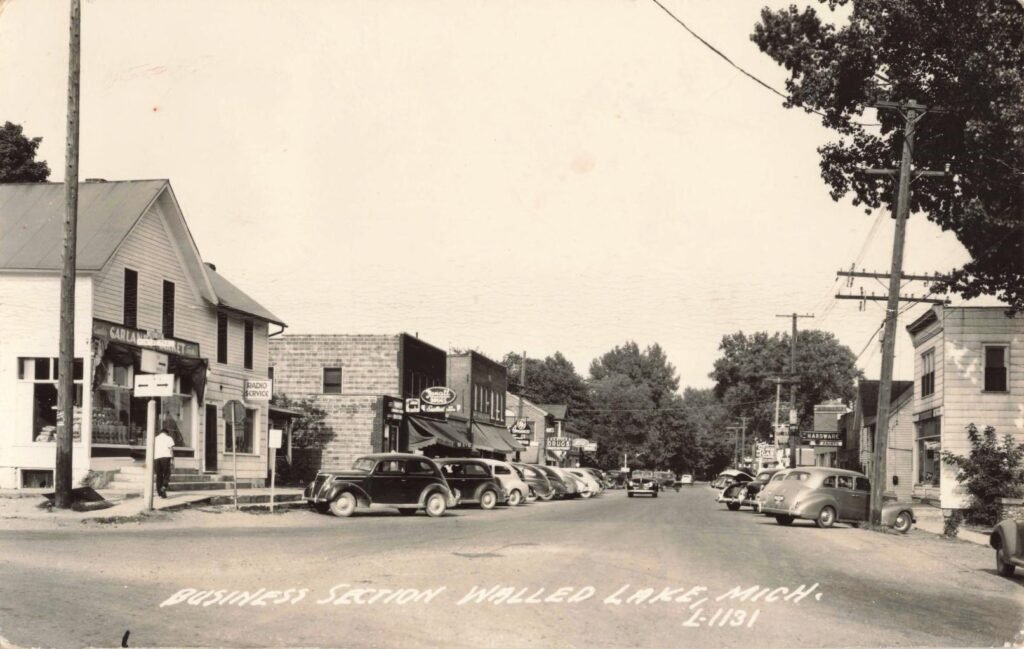
Main Street hosted two hotels, chain stores, restaurants, ice cream parlors, meat markets, a drug store, a bank, barber shops, hardware shops – even a fur company.
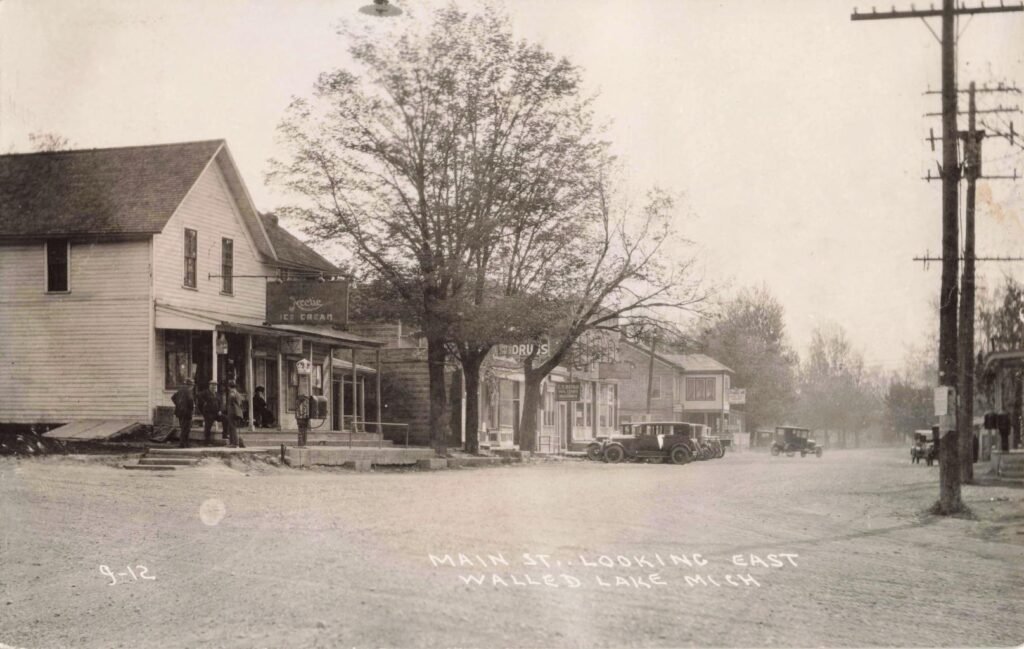
Picture storefronts like the Garfield Market (visible in a 1930s postcard) and an Arctic Ice Cream stand, all feeding the vacationers pouring in each Sunday. Agriculture remained important too: farmers shipped milk and produce to Detroit, and local men like Stephen Gage ran produce delivery to nearby towns.
Walled Lake’s Dance Casinos and Amusement Park

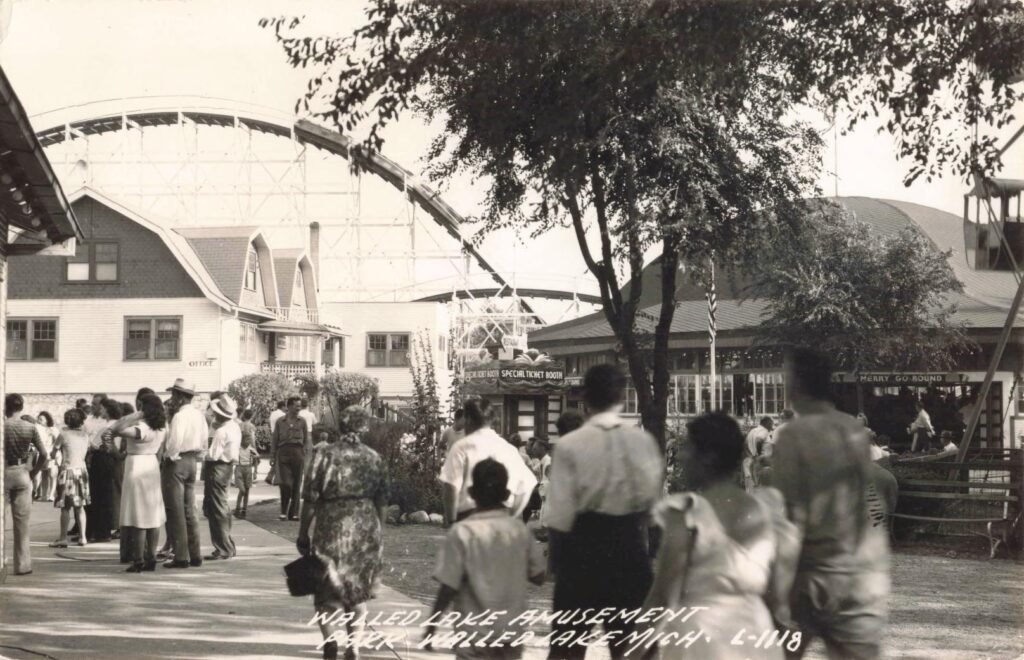
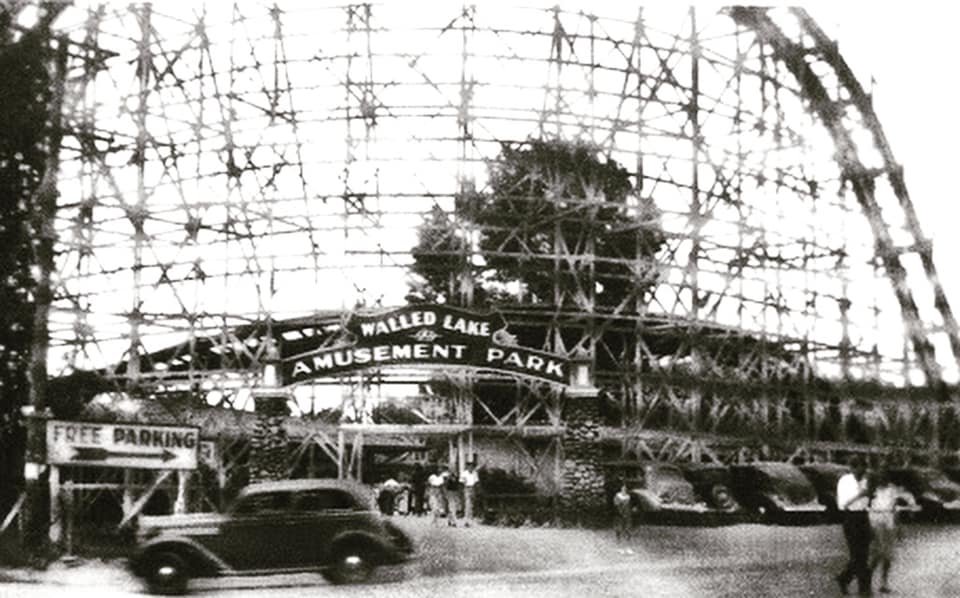
But it was Walled Lake’s attractions on the shore that defined this era. In 1929, Herman Czenkusch partnered with famed coaster builder Fred W. Pierce to create the “Flying Dragon,” a towering wooden roller coaster that launched Walled Lake Amusement Park. It opened Memorial Day 1929 with thrilling rides like the Flying Scooters and Tilt-a-Whirl, and a Ferris wheel visible from the street.

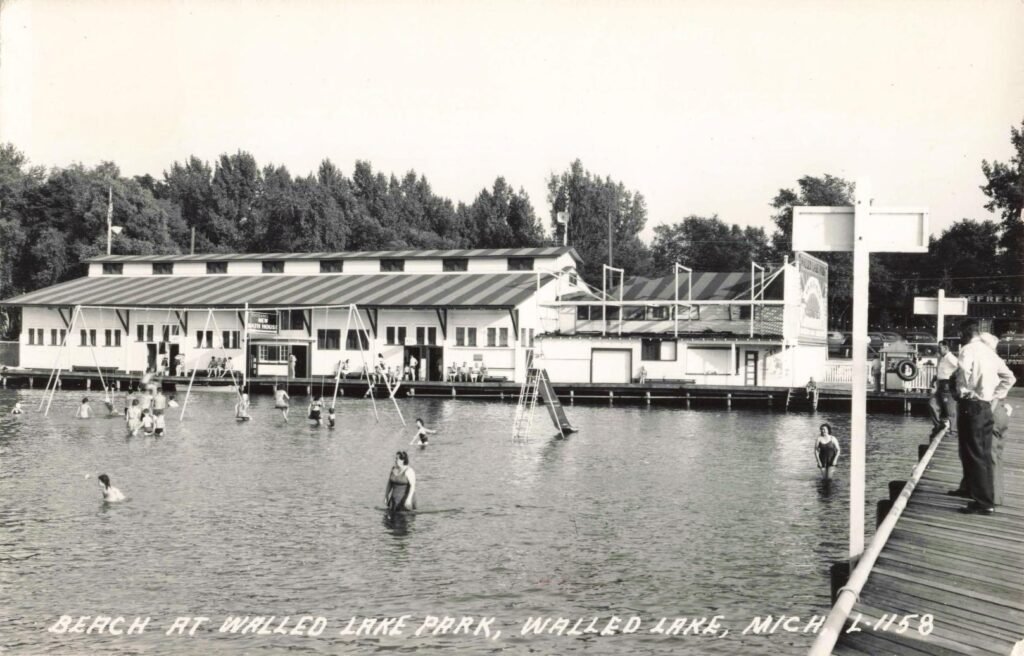
Families flocked to the beach: children sliding down slickers on toboggans, teenagers racing speedboats for 15 cents a spin. In fact, in the glamorous summer of 1929, Walled Lake boasted both the coaster’s roar and the gentle splash of feet in the water.

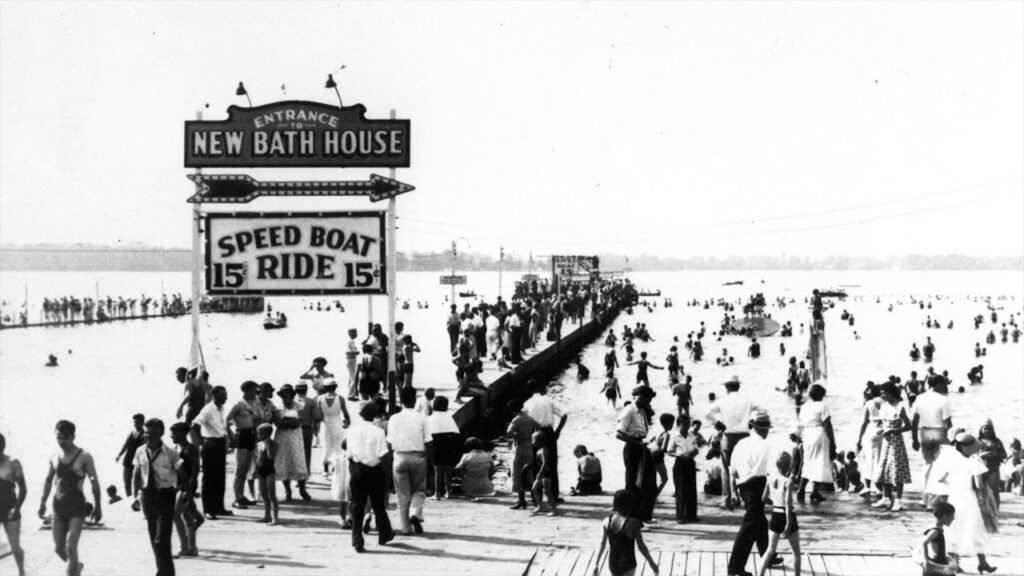
The local attractions even added radio broadcasts and multiple 500-foot piers so visitors could sunbathe and people-watch. The museum records cheerfully that the Casino Pavilion “introduced its own broadcast radio station” and constructed new water slides – “thrilling speedboat rides for just 15 cents” – even as the Great Depression began. It seems Americans still craved free summer joys, and Walled Lake delivered.
Dancing, Big Bands, and Jazz at Walled Lake

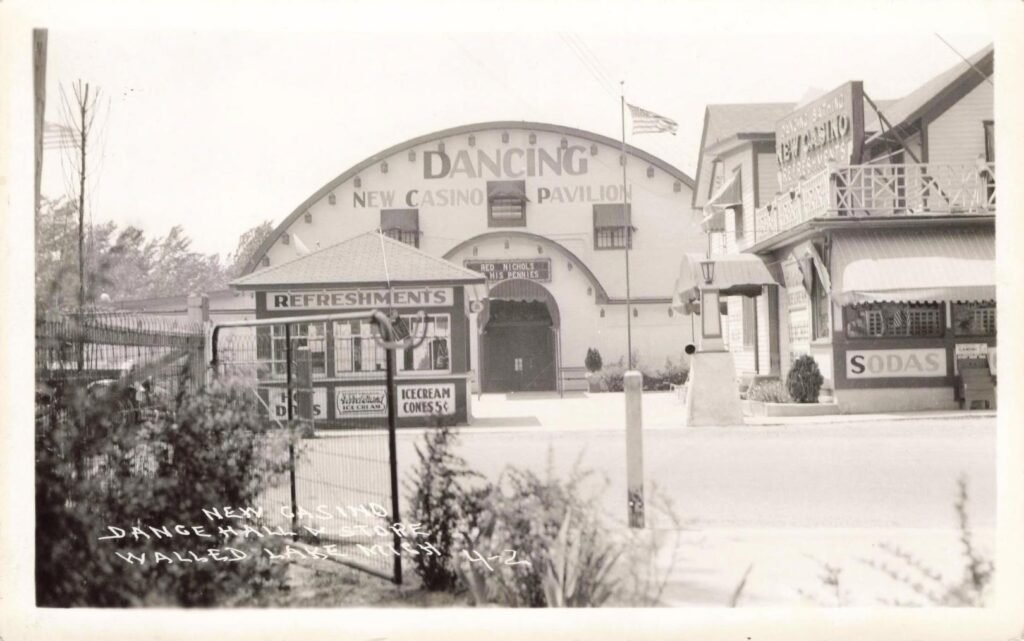
The dance halls were a particularly American dream. Record crowds would spin and twirl beneath the pavilion roofs. One contemporary account mentions that a contest would sometimes offer a free car to patrons, and the rival “Casino Shores” (Taylor’s old hall) countered by building an even larger venue in 1925.

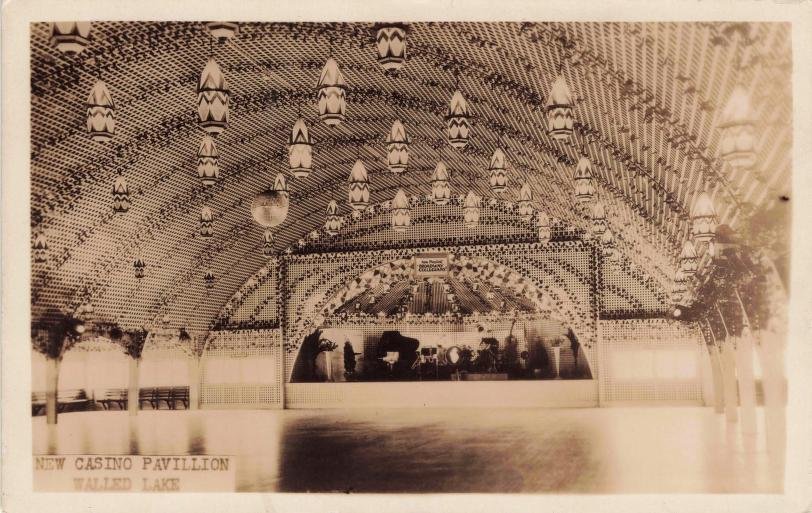
In these halls, locals rubbed shoulders with swing dancers in satin gowns. They were the birthplace of Michigan’s first mirrored disco ball and guest bands flown from Broadway. Even the name Walled Lake Casino (later the famous Casino Pavilion) needs explaining: it was no gambling hall, but a homey ballroom where handshake deals mattered more than slot machines.

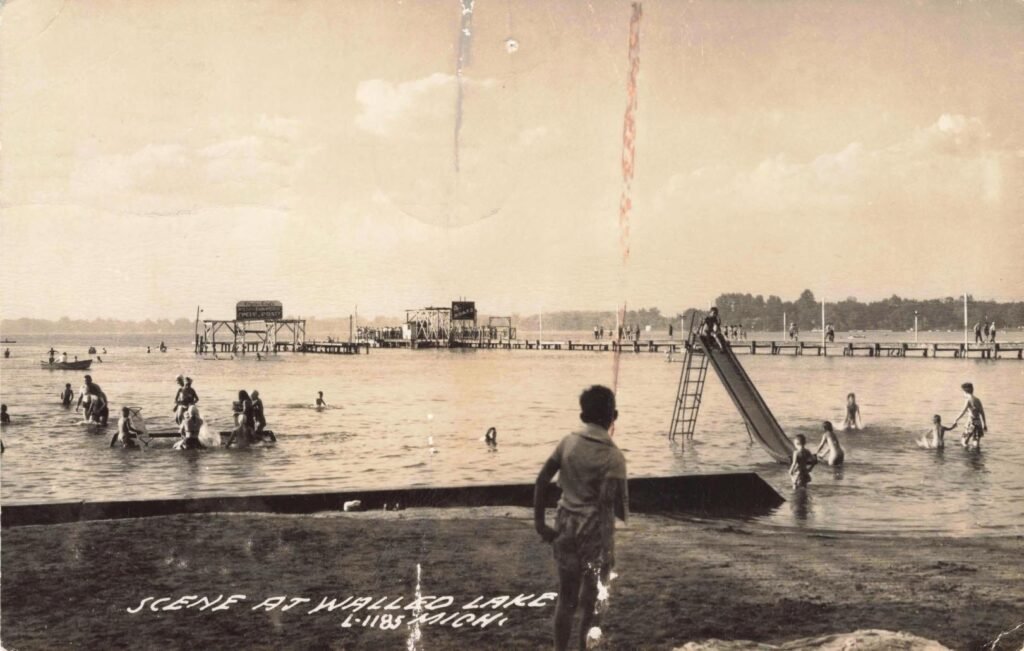
As the 1930s wore on, Walled Lake’s seaside glamour faced new challenges. The stock market crash and the Depression slowed growth, yet remarkably, the lake community never lost its spirit. The Casino Pavilion kept the music alive with broadcast radio and continued dances into the late 1930s. Children still splashed in the lake, and roller coasters continued running. Famous performers, including Louis Armstrong, would later grace the stage (though that was post-1940). World events would eventually quiet the party: the dance halls shut down temporarily during WWII, and by the late 1950s, the era of grand pavilions ended.
Key Points About Walled Lake in the Early 1900s

- Walled Lake was named for a natural glacial rock “wall” under the water.
- Starting around 1919, Walled Lake became a Detroit-area summer resort with dance halls, bathhouses, and cottages.
- Rival pavilions (Taylor’s Casino and Czenkusch’s Shore Pavilion) drew crowds with big bands and even the state’s first mirror ball.
- In 1929, Walled Lake Amusement Park opened, complete with the Flying Dragon roller coaster.
- By the mid-1930s, millions had visited, but changing times (TV, new pools, WWII) eventually ended the golden era.

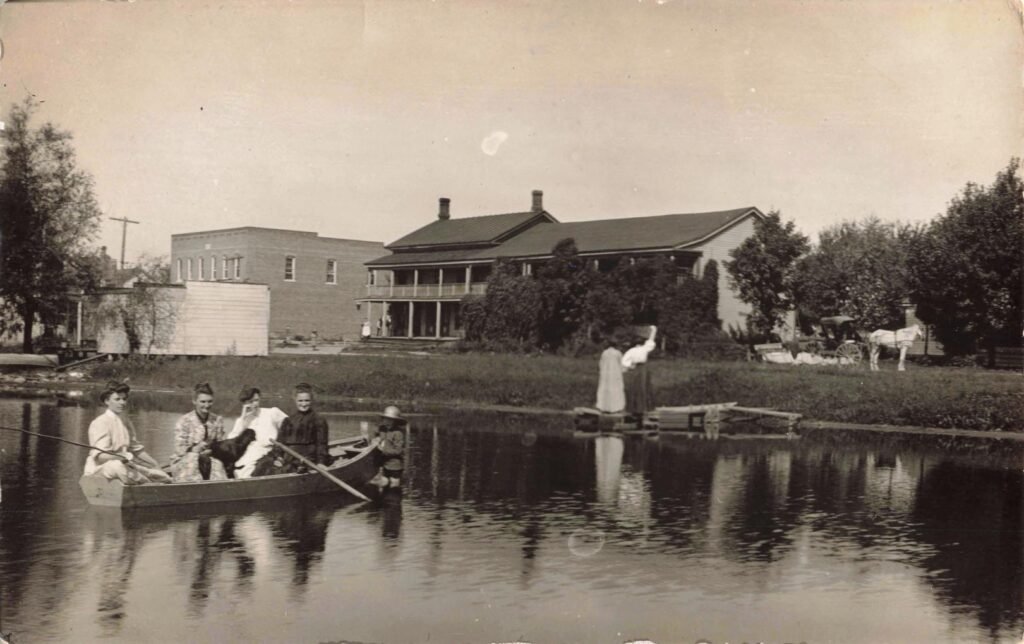
In recent years, Walled Lake’s turn-of-the-century heyday has become part of Michigan lore. The town’s history highlights how a sleepy village leveraged its natural beauty to become a lively resort, with railroads and roads to carry the crowds. This History of Walled Lake Michigan is a story of entrepreneurs (the Taylors, Czenkusch, Tolettene), community gatherings under the open sky, and the simple American joy of summer by the lake. Even if today the roller coaster tracks are gone, the memory lives on in vintage photos and the stories of old-timers. Walled Lake, Michigan, remains a testament to an era when even small towns could spin big dreams on wooden dance floors and Ferris wheels.
Works Cited — History of Walled Lake Michigan
Walled Lake – City History – City of Walled Lake Official Website.
Casino Shores & Walled Lake Amusement Park History – Walled Lake Museum & Historical Society.
Grand Trunk Western Railroad in Oakland County – Library of Michigan Digital Collections.
Historic Amusement Parks of Michigan – Michigan History Center.
Oakland County Townships and Early Settlement Records – Oakland County Historical Commission.
Stonecrest Schoolhouse (1860) – Walled Lake -Walled Lake Museum & Historical Society.
Tinder Collection of Michigan Photography – Walled Lake RPPCs – William L. Clements Library, University of Michigan.
Village Development and Resort Era in Southeast Michigan -Michigan State University Libraries – Michigan County Histories.
Walled Lake Casino Pavilion and Dance Hall Era -Detroit Historical Society Digital Collections.

